|
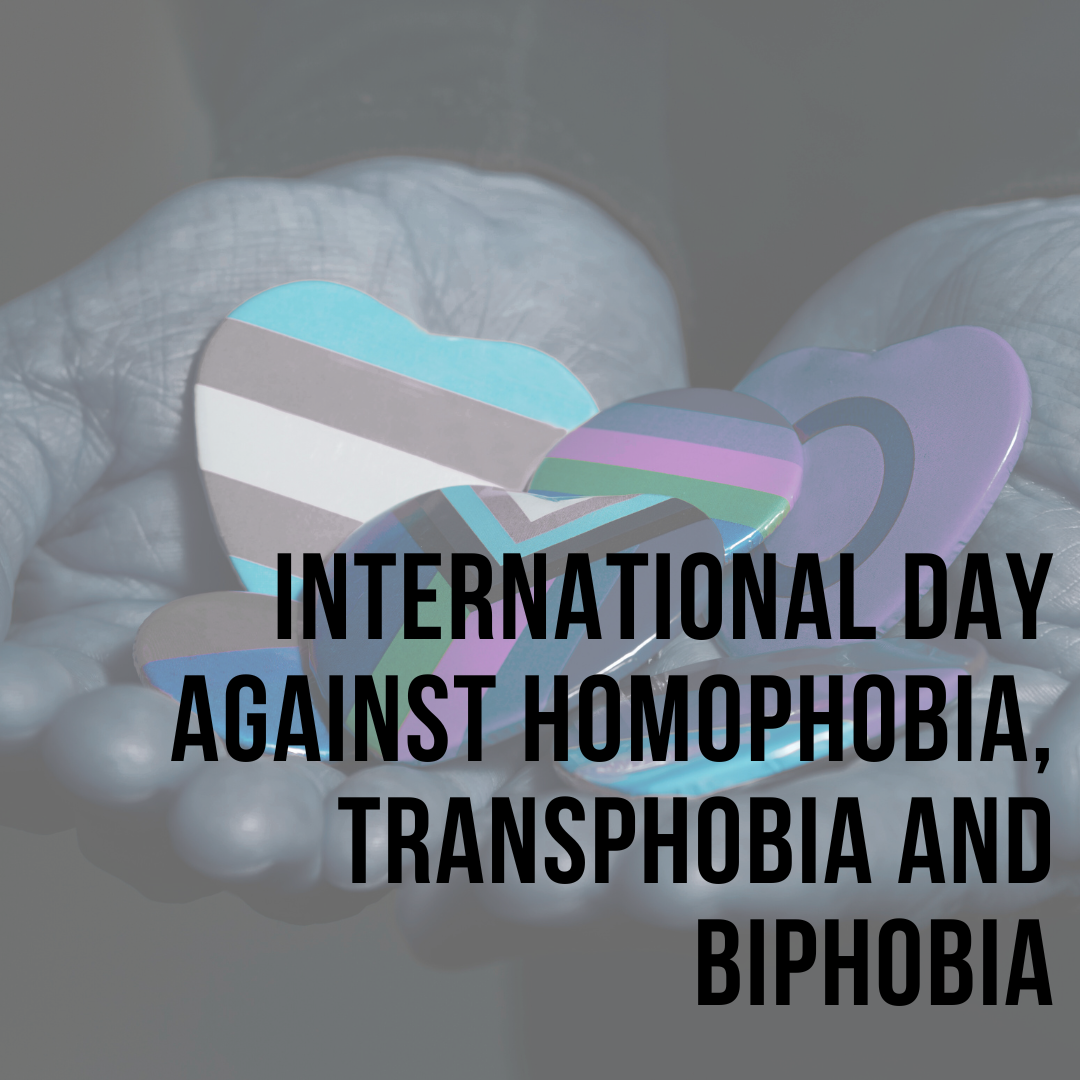
The International Day Against Homophobia, Transphobia and Biphobia is observed each year on May 17. It marks the day in 1990 when the World Health Organization removed homosexuality from its classification of diseases—a moment that signaled a shift in how people are seen, understood, and treated. Over time, this day has become an invitation to raise awareness of the discrimination and violence that many continue to experience around the world.
For some, this day carries deep personal meaning. For others, it may feel unfamiliar, uncomfortable, or even difficult to understand. People approach this topic from many different places—shaped by personal experience, cultural background, faith traditions, and even scientific perspectives. Some may feel a sense of affirmation, while others may wrestle with questions about what is natural or not, right or wrong.
This reflection is not meant to persuade or convince. It would be unrealistic to assume that we all share the same beliefs, experiences, or conclusions. That is not the goal.
Instead, this is an invitation to pause and remember something more fundamental.
Even when we do not agree…
even when we do not fully understand…
even when perspectives feel far apart…
we still share a common humanity.
As people of faith, we believe that every person is created in the image of God and carries a dignity that cannot be taken away. For those who may not share that belief, this same truth is often expressed in different ways—but it still points to the same reality: that every human life holds an inherent dignity that does not depend on agreement, understanding, or approval.
Within our Disarming Our Hearts journey, we are often invited to notice what arises within us—our reactions, our assumptions, our discomfort, even our resistance. Disarming does not mean setting aside what we believe. It does not ask us to abandon our convictions. Rather, it invites us to hold them with awareness, and to encounter others without closing ourselves off.
And perhaps this is where we are invited to reconsider what respect really means—and to gently challenge the idea that it must be earned.
Respect is not something we give because it has been earned. It reflects who we are.
At times, when people feel they are being pushed to accept something they do not believe in, it can feel like a lack of respect—and that can lead to defensiveness or withdrawal. That reaction is understandable. And yet, when this becomes our starting point, it can easily turn into a cycle, where each side feels dismissed and responds in kind.
Perhaps this is where the invitation becomes more personal.
We may not agree.
We may hold different convictions.
But we can still choose to remain grounded and respond with respect.
Respect does not require us to change our beliefs or abandon what we hold to be true. It asks something quieter, and often more difficult: to hold our ground without allowing defensiveness to turn into dismissal, or disagreement into harm.
This does not require us to abandon truth, nor does it ask us to affirm what we do not believe. It asks something simpler, and perhaps more demanding: to love our neighbor as a reflection of who we are called to be.
Respect does not require agreement or the abandonment of conviction. It simply asks us to recognize the humanity of the other person.
And perhaps that is where something meaningful begins.
Not in solving everything.
Not in reaching perfect understanding.
But in choosing, again and again, to respond with respect—
because of who we are, and the kind of world we hope to live in.
There are simple ways we might live this out:
- Take a moment to notice your own immediate reactions or assumptions, without judgment
- Listen to someone’s story or experience that is different from your own
- Choose one interaction today where you respond with intentional respect, even if you disagree
- Pause before reacting, and ask yourself: What is being stirred within me right now?
- Reflect on what respect means to you—not as something earned, but as something you offer.
- Consider one small way you can contribute to a more respectful and compassionate environment in your daily life
At the Peace & Spirituality Center, we hold space for that kind of reflection—not as something abstract, but as something that shapes how we see one another and how we live.
In that spirit, even small moments of reflection matter. They shape how we show up, how we listen, and how we respond to one another in our daily lives. What begins in awareness can quietly become part of who we are and how we live.
This International Day Against Homophobia, Transphobia and Biphobia is not about resolving every difference or debating what we believe. It is, at its core, a moment to remember something more fundamental: that nothing—no difference in perspective, belief, or experience—justifies exclusion, hostility, or harm.
Each of us will continue to hold our own views, shaped by our experiences, our beliefs, and our understanding of the world. But even within that, we are still invited to choose how we respond.
However you encounter this day, may it be an invitation to continue the quiet work of disarming our hearts—so that even in difference, we may choose respect, and in every encounter, we may recognize our shared humanity.
With gratitude and hope,
The Peace & Spirituality Center
|