DR EPIC Newsletter
For Arizona SNFs: Emergency Preparedness Infection Control
|
|
Infection Preventionist Call Planned 3/25… Please Send Contact Information
|
|
DR EPIC Tip Topic:
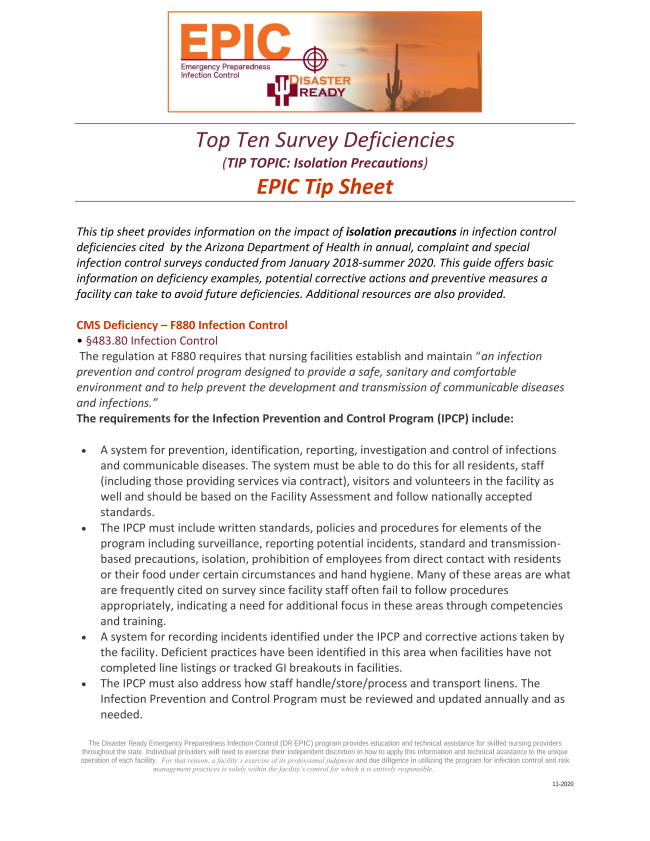
Isolation Precautions
It is important to know what issues are surfacing on state and federal SNF surveys on infection control. One of the “top ten” issues relates to isolation precautions. Citations include such things as improper use of food trays in an isolation room for a resident with C-diff and having a resident with C-diff cohorted with an immunocompromised resident.
|
|
|
Does your Facility Need PPE or Other
EP Equipment?
COVID-19 cases may be on the decline but having an adequate supply of PPE is critical to emergency preparedness (EP). Many of the counties in Arizona have PPE available to be used in health care facilities. If you are in need of PPE (N95s, gowns, gloves, masks, aprons) please contact the Public Health Emergency Preparedness (PHEP) Coordinator from your Tribe or County.
Also, AzCHER funds up to $5,000 per facility and funds are still available for other emergency preparedness equipment or items (radios, vests, etc.). Requests must be submitted before April 30, 2021.
|
New CDC Guidance for Tuberculosis Tests and mRNA COVID-19 Vaccines
New guidelines for receiving COVID-19 vaccines can affect when residents and facility staff should get required TB vaccines. The CDC has provided guidance for health care personnel and residents who require baseline TB testing and TB testing for all other reasons (annual/exposure). If an individual is due for a Mantoux skin test or other TB screening test per A.A.C. R9-10-113, they would normally do so per the CDC recommendations. However, if they have already received a COVID-19 mRNA vaccination and they are due for TB screening, the TB test should be deferred for 4 weeks after completion of 2-dose COVID-19 mRNA vaccination. Facilities need to document the reason for the late TB screening in the individual's medical or personnel record. Here is a link to more information: TB Tests and mRNA COVID-19 Vaccines | Dear Colleague Letters | TB | CDC.
|
|
Sign and Submit your
Current AzCHER MOU
|
It is important to be aware that any and all Memorandums of Understanding (MOUs) for the Arizona Coalition for Healthcare Emergency Response (AzCHER) signed prior to October 2020 are no longer valid.
Please click here and see if you are one of the 25 long term care facilities statewide that have signed and submitted the current MOU version. Participation in the MOU is voluntary and is not required for membership in AzCHER, however, the DR team highly recommends it.
Some benefits of the non-binding MOU to consider:
- E-Tag E0009 “Process for EP Collaboration’ is directly related to a facilities participation in their respective Regional Coalition - a signed and current MOU is evidence of compliance with this E-Tag for your state survey.
- The MOU assigns a Designated Administrator at each participating organization.
- The MOU outlines the financial responsibilities and liabilities of affected organizations without attempting to set pricing.
- The MOU outlines clinical responsibilities in the event of resident transfers.
|
|
COVID-19 Current Issues Explored
-
Use EPA-Registered Cleaning Agents: Are you cleaning and disinfecting your facility with an EPA-registered cleaning agent that is effective against COVID-19? CMS requires that facilities clean and disinfect the room surfaces with an appropriate disinfectant. Specifically, those that are on List N from the EPA website. Here is the current list N link. The list is updated regularly, so check back often before using a new cleaning agent.
-
COVID-19 Variants: An important aspect of our understanding of the COVID-19 virus is the emergence of variants in the structure of the virus. This is a moving target with new variants emerging on a regular basis. The CDC is the principal resource for guidance regarding these evolving variants. Scientists are working to learn more about how easily the variants spread and whether they cause more severe illness or whether currently authorized vaccines will protect people against them. Here is a link to the CDC guidance on SARS-CoV-2 variants: CDC Abbreviated Guidance.
|
|
Addressing Problems with Asbestos
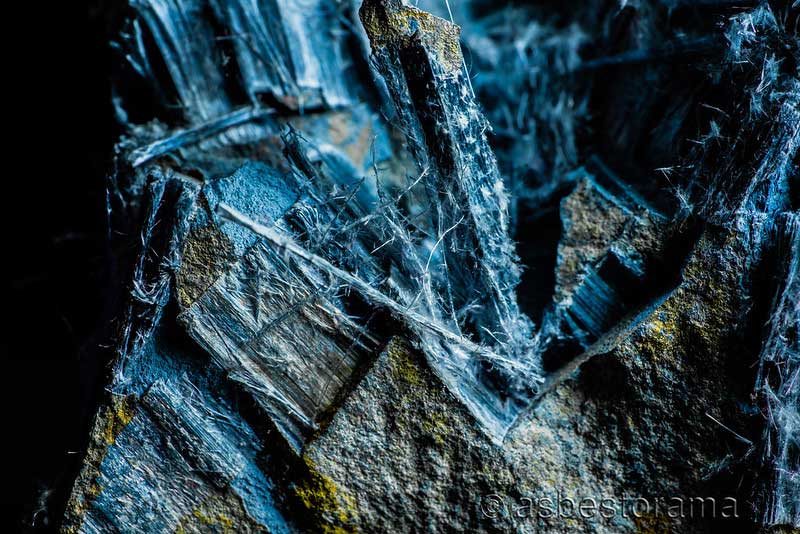
Asbestos refers to a specific group of federally regulated natural minerals. Since asbestos is found in both new and existing buildings, EPA and OSHA regulates asbestos in building materials and regulates worker inhalation exposure regardless of the age of the structure. It is strongly suggested that Arizona SNFs minimally have asbestos sampling conducted on materials regularly disturbed during the course of SNF business, such as lay-in ceiling panels and drywall systems. This will prevent regulatory citations and speed mitigation response to emergencies like fires and floods. Plus, it will allow you to protect your workforce and residents with confidence. Some materials should be presumed to contain asbestos fibers and must be tested before any capital improvements (e.g. roof replacement, flooring swaps, kitchen renovations, etc.).
For more information about asbestos or other industrial hygiene (IH) or indoor environmental quality (IEQ) topics affecting Arizona SNFs see the resources below:
If you have additional questions, please reach out to our DR EPIC Helpline at epic@azhca.org or call 602-241-4644.
|
|
ABHR: When Infection Control & Life Safety Compliance Intersect
One particular infection control measure that must comply with a specific Life Safety Code (LSC) provision pertains to the installation of alcohol-based hand rub (ABHR) dispensers within the means of egress (hallways). While providers have some relief in respect to the spacing and quantities of ABHR allowed within a single smoke compartment in the hallways of skilled nursing facilities under the CMS 1135 Blanket Waiver currently in effect, a LSC provision regarding the maximum protrusion that an ABHR dispenser can project into the hallway is limited to 4 inches (section 19.2.3 of the LSC, NFPA #101, 2012 edition as enforced by CMS). If a vendor is providing your facility with dispensers that protrude more than 4 inches into the hallway, your facility is at risk of a LSC deficiency (K-211). Contact Stan Szpytek, Life Safety / DR EPIC Consultant with any specific questions regarding this or other LSC matters at Stan@azhca.org or call him at 708.707.6363.
|
|
DR EPIC Helpline
Question of the Week
Is it possible for a National Institute for Occupational Safety and Health (NIOSH) approved N95 mask found on the CDC website to be counterfeit?
ANSWER:
The short answer is yes.
Additional Details:
-
KN95s are not N95s - N95 respirators can be mistaken with KN95 masks because they look similar to the layman. They are not the same.
- If you're buying through a third-party marketplace:
- Does the listing call the product "genuine" or "real"? Legitimate companies don't need to tell buyers their products are real - at least not in the product name.
- Have reviews been left on the product, or on the seller? Buyers unhappy with the product may reveal that it is poorly made or illegitimate.
- Is the price too good to be true? It probably is.
- Is the seller selling the same items over time, or keeping with trends? Legitimate businesses tend to stay consistent.
- Does the seller put their contact information in images? If so, they may be skirting around marketplace policy to keep interactions between buyers and sellers on the site.
- No markings means no approval:
- NIOSH-approved masks have an approval label on or within the packaging - either on the box or in the users' instructions.
- The respirator should also have an abbreviated approval marking.
- The approval number should begin with "TC."
-
The respirator should also have a NIOSH logo printed on it. This image from the CDC can help you identify the markings. Then, you can check for the approval number on NIOSH certified equipment list.
|
|
Check out our DR EPIC Helpline!
To submit questions, email the DR EPIC online Help Center at EPIC@azhca.org. You can also call the DR EPIC phone Helpline at 602-241-4644 and we will assist you.
Don’t forget to utilize our DR EPIC website for valuable infection prevention resources! Go to: EPIC.DisasterReadyaz.org to explore these tools.
|
|
Questions? Contact EPIC@azhca.org |This program is funded by ADHS HPP
The Disaster Ready Emergency Preparedness Infection Control (DR EPIC) program provides education and technical assistance for skilled nursing providers throughout the state. Individual providers will need to exercise their independent discretion in how to apply this information and technical assistance to the unique operation of each facility. For that reason, a facility’s of its professional judgment and due diligence in utilizing the program for infection control and risk management practices is solely within the facility’s control for which it is entirely responsible.
Copyright 2021.
|
|
|
|
|
|
|