EPIC Newsletter
Emergency Preparedness Infection Control for Arizona's SNFs
| |
Announcing IPC GO Funding Opportunity...
Apply Now!
| |
|
AHCA is pleased to announce a new and exciting program funded by the Arizona Department of Health Services, Office of Healthcare-Associated Infections (HAI) and administered by the Arizona Health Care Association. This program is known as IPC GO (Infection Prevention & Control Grant Opportunity). It allows skilled nursing facilities and assisted living centers to apply for funding to support efforts to enhance infection control and prevention.
The application provides a wide variety of recommended categories to select for funding or you can choose something else under the “other” category. Here is a link to the IPC GO application and attestation (click here). In addition to submitting the application and attestation, each provider will have to complete a pre-award survey which will be sent to you following the proper application and attestation submission. No money will be released until those items are completed in full!
This is a great opportunity to obtain additional resources for infection control and develop new best practices!
Only ONE (1) application per licensed building is permitted. You can apply for as much as $100,000 per AL or SNF, but understand that those applications for lower amounts, (i.e., $20,000) will be approved much quicker. With the total grant just under $5 million, it will run out quickly, so apply today!
All IPC GO applications are due October 15, 2023. The funding must be spent by providers by May 1, 2024. For more information, contact the AHCA office at 602-265-5331 or email dvoepel@azhca.org.
| |
EPIC Offers Antibiotic Stewardship and
Clinical IP Support - Free of Charge
The Emergency Preparedness and Infection Control (EPIC) grant administered by AHCA offers onsite technical assistance in infection prevention and control. Dr. Buffy Lloyd-Krejci and her team at IPCWell are contracted to provide this support to skilled nursing facilities and assisted living communities statewide in our 2022/23 grant. In fact, they’ve put together this short video explaining what they look for during an IPC visit in the link below.
Also, you may sign up to receive a technical assistance onsite visit from EPIC consultant Dr. Peter Patterson. It is a great opportunity to review your current operational strategies for antibiotic stewardship and cultivate new best practices.
The EPIC program will provide a one-time onsite visit for both clinical infection prevention and antibiotic stewardship, FREE of charge. If you would like to be on a list to receive this technical assistance, please contact Dr. Buffy directly at buffy@ipcwell.com and Dr. Peter Patterson at ppatterson5@cox.net.
| |
|
EPIC Onsite Industrial Hygiene Visits Underway
The team from Clark, Seif, Clark, Inc. (CSC) is currently conducting onsite visits to skilled nursing facilities and assisted living communities to help promote best practices in infection control from an industrial hygiene perspective. These services are available free of charge to Arizona providers and are funded by the Disaster Ready / EPIC grant.
The main purpose of this program is to provide onsite assistance to providers on topics including water management, asbestos testing, air quality, respiratory protection, and other environmental issues to help promote a safe environment of care.
With our current grant funding, these services need to be scheduled and completed in the next few months. Providers that have already volunteered to participate in this free, consultative service have been contacted by the CSC project coordinator (Jacque Denis) and should get their on-site visit scheduled as soon as possible.
To coordinate services for those who are participating in this program and have not yet scheduled, please contact Jacque Denis at jacqued@csceng.com or call the office at (480) 460-6334 at your earliest convenience. Contact Stan Szpytek, Disaster Ready / EPIC Consultant with any other questions about this program at Stan@azhca.org or call him at (708) 707-6363.
| |
|
|
Infection Preventionist Call
The EPIC Infection Preventionist call is scheduled for August 24th at 1:00 pm.
Please email Kay Huff with any questions or to receive the Zoom link for the monthly calls.
| | | | |
 |
Update on HHS’ Abbott BinaxNOW Test Kit Program
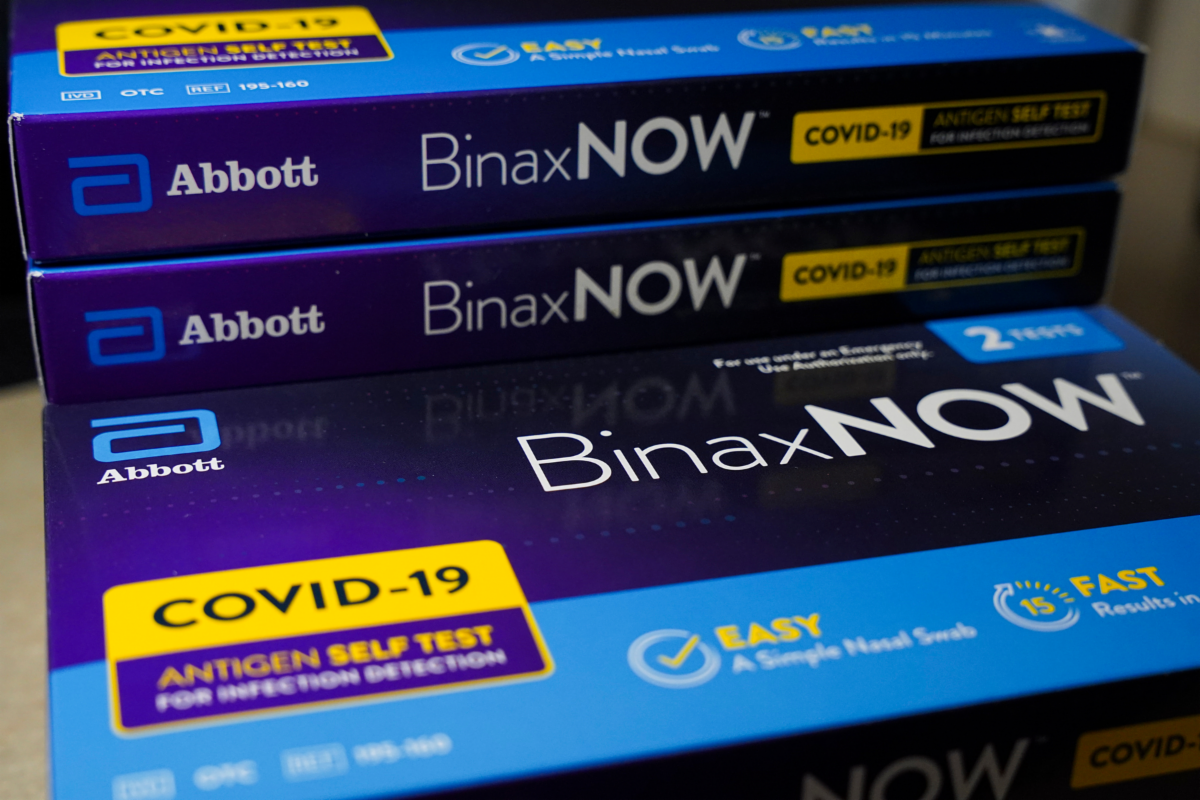
Skilled nursing facilities and assisted living communities continue to receive or are eligible to receive free monthly shipments of Abbott BinaxNOW over the counter (OTC) COVID-19 test kits from the Department of Health and Human Services (HHS). This program, which has been in place since 2020, will continue through at least the end of 2023. As a reminder, facilities/communities must have an active CLIA waiver to be eligible to participate in this program.
Shipments can be started and stopped, and test quantities can be increased or decreased by emailing here. The email must include:
- Name of the facility
- Facility address
- CLIA waiver number
- Request (stop, start, increase, decrease)
Please note, it may take a week or two to update the shipping information.
If you have an influx of test kits and aren’t sure how to use them, keep in mind that since the tests are OTC, you can provide them to visitors, staff, or residents for their personal use as well. All tests that have been shipped to long term care facilities have expiration dates in December or January. The exact expiration dates for the tests can be found at the link below.
For questions related to the HHS BinaxNOW distribution Program, email here.
| |
|
ADHS Booster Vaccine Program Offers Mobile Services
A common question asked is whether or not ADHS still offers mobile COVID-19 vaccine services for skilled nursing facilities. The answer is... yes, they do!
Residents and staff in skilled nursing facilities and assisted living communities are eligible to be vaccinated through the mobile ADHS Booster Vaccine Program. ADHS vendors will go onsite to provide the vaccines and will also provide in-room vaccination for bed-bound residents. All vaccines are free regardless of insurance status or immigration status, and there is no minimum person requirement to receive mobile vaccinations. To request an onsite vaccine clinic please complete this Request Form.
This statewide program operates in collaboration with Arizona Health Care Association (AHCA) and Health Services Advisory Group (HSAG) and is designed to help staff and residents residing in nursing homes, long term care facilities, skilled nursing facilities and assisted living centers stay up to date with their COVID-19 vaccinations.
|
Situational Awareness: Fungal Meningitis Outbreak
Public health officials are responding to a multistate outbreak of fungal meningitis among patients who received procedures under epidural anesthesia at River Side Surgical Center or Clinica K-3 in Matamoros, Mexico from Sunday, January 1 to Saturday, May 13, 2023. A highly resistant strain of Fusarium solani was isolated from one hospital patient’s tissue culture specimen.
If you have issues or concerns, please contact your local health department or get the latest details and guidance.
| | |
 |
Understanding
Infection Control Training Requirements
The requirement at F945 Infection Control includes that a skilled nursing facility must develop, implement, and permanently maintain an effective training program for all staff, which includes, training on the standards, policies, and procedures for the infection prevention and control program. At a minimum the training must cover the following:
- A system of surveillance designed to identify possible communicable diseases or infections before they can spread to other persons in the facility;
- When and to whom possible incidents of communicable disease or infections should be reported;
- Standard and transmission-based precautions to be followed to prevent spread of infections;
- When and how isolation should be used for a resident; including but not limited to: (A)The type and duration of the isolation, depending upon the infectious agent or organism involved, and (B) A requirement that the isolation should be the least restrictive possible for the resident under the circumstances.
- The circumstances under which the facility must prohibit employees with a communicable disease or infected skin lesions from direct contact with residents or their food, if direct contact will transmit the disease; and
- The hand hygiene procedures to be followed by staff involved in direct resident contact.
All training should support current scope and standards of practice through content that details learning objectives, performance standards, evaluation criteria, and addresses potential risks to residents, staff, and volunteers if procedures are not followed. There should be a process in place to track staff participation in and understanding of the required training. The complete requirement for F945 Infection control Training can be found in Appendix PP.
| |  |
 |
Addressing
F686 Pressure Ulcers
F686 Pressure Ulcers is the sixth most frequently cited deficiency in skilled nursing facilities in Arizona, and it is the ninth most frequently cited in the nation. This F tag requirement means that the facility must ensure that residents receive care that is consistent with professional standards of practice to prevent the development of pressure ulcers unless the individual’s clinical condition demonstrates that they were unavoidable. It also means that a resident with a pressure ulcer/s receives necessary treatment and services to promote healing, prevent infection and prevent new ulcers from developing.
This review will focus on the assessment and evaluation aspect of pressure ulcer requirements, as this is the reason most (more than 50%) of facilities have been cited this year. In this regulation, facilities should have protocols for daily monitoring and periodic documentation. Clinicians recommend evaluating a resident’s skin condition at least weekly, or more often if indicated and that staff should remain alert to potential changes in the resident’s skin condition.
Facilities must do a weekly evaluation of a resident’s pressure ulcer(s) and at least provide the following documentation:
- Size, depth, and the presence, location and extent of any undermining or tunneling/sinus tract.
- Exudate, if present include the type, color, odor, and approximate amount.
- Wound bed: Color and type of tissue/character including evidence of healing, or necrosis; and
- Description of wound edges and surrounding tissue) as appropriate.
Remember, the above is just the minimum documentation a facility needs to meet the requirement. If the assessment or evaluation is not completed weekly or one part of the documentation is missing the surveyor may cite deficient practice. Facilities should also use the Pressure Ulcer CE Pathway which can be found in Survey Resources to help ensure compliance. The complete requirement at F686 Pressure Ulcers can be found in Appendix PP. Please contact AHCA’s Kay Huff with further questions.
| |
|
Keep Your Exit Signs Illuminated
During an emergency like a fire in a long term care facility where the presence of smoke may compromise visibility in hallways and other affected areas of the building, an illuminated exit sign will often identify the path to safety. Here's the applicable section of the Life Safety Code (NFPA 101, 2012 edition) that requires exit signs to be illuminated at all times:
K-293: Exit Signage- 2012 EXISTING- Exit and directional signs are displayed in accordance with 7.10 with continuous illumination also served by the emergency lighting system. 19.2.10.1
As basic as it may seem, exit signs are not always illuminated due to burned-out bulbs and if observed by a surveyor, will be the cause of a deficiency (K-293). Facilities should train all of their staff members (not just the maintenance crew) to understand that exit signs are required to be illuminated at all times. Simply, look up at the exit signs as you walk around your building and if a sign is not illuminated, immediately create a work order to initiate corrective action. Providers can be in a constant state of Life Safety Code compliance and survey readiness by focusing on these types of basic requirements.
| | |
Issues to Consider in
Infection Control
One of the most common challenges in long term care infection control is the consistent usage of Alcohol Based Hand Rub (ABHR). Guidance from CMS indicates that each resident’s room should have ABHR with 60-95% alcohol. Ideally, ABHR should also be placed in every resident room. CMS guidance also directs facilities to place ABHR in all resident care and common areas. Many facilities believe this regulation puts them in direct violation of fire safety codes. However, it is possible to be in compliance with hand hygiene protocols and fire codes. Fire codes describe that hand rub solutions cannot exceed 95% alcohol by volume; and that the capacity of ABHR dispensers inside rooms, corridors, and areas open to corridors cannot exceed 1.2 liters. If dispensers are in suites of rooms separated from corridors, they can contain up to 2 liters. In addition to these large capacities, facilities can have up to 10 gallons (aggregate) of ABHR within a single smoke compartment, not including one dispenser per room. Clearly, facilities can adhere to CMS guidance about ABHR while remaining well within the parameters laid out in the fire safety codes.
Another misconception in infection control is the appropriate care of microfiber mops and towels. Health care grade versions of these cleaning supplies are highly effective at removing microorganisms. However, if these products aren’t laundered properly, microorganisms can potentially cross-contaminate anything they come into contact with. In order to comply with CMS regulatory requirements and keep residents safe from cross contamination, the best approach to laundering this product is to review and follow any and all Manufacturer Instructions for Use (IFUs). If the IFU states that the microfiber mop or towel should be dried in a dryer on a certain heat setting, your laundry staff must adhere to that guidance.
| |
 |
Personal Vulnerability Assessment
Preparedness vulnerability in emergencies is unique and different for each one of us. Our personal needs and those of our families are something that should take some time, consideration, and planning. The business world conducts Hazard Vulnerability Assessments (HVA) annually to determine the risks and threats to their businesses, Health care providers conduct similar HVA’s to determine threats not only to the business but also to the residents that they care for. The HVA usually consists of historical records as to what has happened in the past i.e., flooding, power outages, wind damage etc. The other items to consider are what is trending locally or nationally, pandemic, workplace violence, cyber security issues, or areas that we hope never occur but do occur randomly and unexpectedly i.e. active shooter, robbery. Having staff at work and minimizing staff shortages is part of an employer's expectation. It helps if staff understand their personal vulnerability and have their own emergency plans in place at home- so encourage your team to be disaster ready! One of the most complete and comprehensive sites to begin the personal planning process is linked below.
| |
Asbestos Testing Awareness in LTC Facilities and Senior Living Communities
A major citation against a senior living provider in California resulted in a 1.6 million dollar fine for failing to test building materials for asbestos prior to demolition and renovation at one of their properties. While most people think asbestos was outlawed sometime in the 1970s, the fact is that asbestos was never outlawed and remains a common component of multiple types of building materials today, even in new construction. Read what DR / EPIC Industrial Hygienist Derrick Denis has to say about this matter in this McKnights Senior Living article.
Providers need to understand that they are compelled to test material that can expose occupants to asbestos before disturbing those building materials including flooring, drywall, ceiling tiles, roofs, etc. during scheduled renovations or unexpected emergencies like flooding or a fire requiring demolition, recovery, and restoration services.
| |
Check out our DR EPIC Helpline!
To submit questions, email the DR EPIC online helpline at EPIC@azhca.org. You can also call the DR EPIC phone Helpline at 602-241-4644 and we will assist you. or valuable infection prevention resources! Go to: EPIC.DisasterReadyaz.org to explore these tools.
| |
Questions? Contact EPIC@azhca.org |This program is funded by ADHS
The Disaster Ready Emergency Preparedness Infection Control (DR EPIC) program provides education and technical assistance for skilled nursing providers throughout the state. Individual providers will need to exercise their independent discretion in how to apply this information and technical assistance to the unique operation of each facility. For that reason, a facility’s of its professional judgment and due diligence in utilizing the program for infection control and risk management practices is solely within the facility’s control for which it is entirely responsible.
Copyright 2023.
| | | | |