ANOTHER ATTEMPT TO UNIFY OPEC+
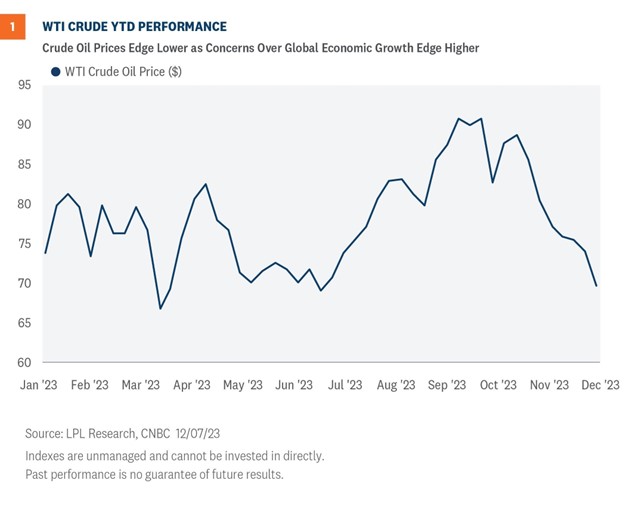
With Vladimir Putin’s visit to the Middle East completed, and following his OPEC+-related discussions with Saudi Crown Prince Mohammed bin Salman, Russia and Saudi Arabia, the two largest global exporters of oil, and both seemingly determined to put a floor under sagging prices, issued a joint statement urging all members of the energy consortium to cooperate with the need to reduce production “in a way that serves the interests of producers and consumers and supports the growth of the global economy.”
OVER SUPPLY THWARTING HIGHER PRICES
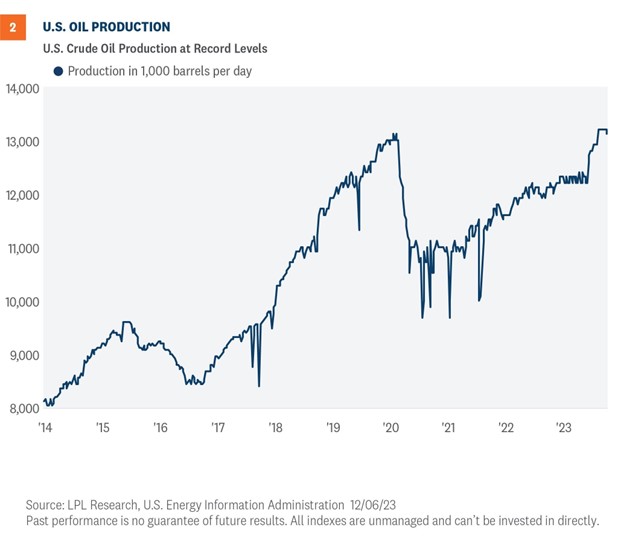
Consistent reports of oil oversupply have hindered the market’s attempt to drive prices higher. Production in the U.S. has reached record levels with 13.24 million barrels a day being added to supplies, which is more than supply from Russia or Saudi Arabia. Forecasts call for 2024 production to increase by an additional 500,000 barrels of oil a day.
Gasoline prices in the U.S. have fallen comfortably and have helped elevate consumer sentiment.
Iran has also been pumping more oil, although there are questions regarding the exact amount. Most analysts agree, however, that Iran currently has 26 million barrels of oil on floating storage facilities, which are designated for global sales.
Prices have received some support recently as the Biden Administration seeks to begin replenishing the Strategic Petroleum Reserve (SPR); however, the global oversupply of stockpiles counters the slow process of adding to the SPR.
A SOFTER GLOBAL BACKDROP—CHINA CONTINUES TO DISAPPOINT
As China’s economic recovery continues to disappoint, markets hope Beijing will introduce a broad fiscally-oriented program to bolster growth. Crude oil exports to China, the world’s largest importer of oil, have declined significantly as Beijing struggles to focus on the ongoing debt problems enveloping the once prominent property market.
Thus far, monetary measures have been introduced to help maintain liquidity in the failing sector. Consumer spending in China has suffered as the economy remains sluggish, and manufacturing has slowed.
The recent Politburo meeting offered a modicum of hope that Beijing is prepared to combine monetary policy with fiscal stimulus, although there has not yet been an announcement regarding numeric targets.
The important Third Plenum, during which medium-to-longer term economic and political plans are introduced, has apparently been postponed until 2024, even though it was expected this year. If the Plenum agenda includes a forceful program for fiscal spending it is expected to be a primary catalyst for oil as well as the broader industrial metals complex.
ECONOMIC CROSS CURRENTS IN THE U.S.
With a steady stream of economic data suggesting an imminent economic slowdown, recent data defies predictions. Payroll data surprised to the upside, and consumer confidence is also indicating a pickup in sentiment, all of which typically should help oil prices inch higher.
OPEC+ OPTIONS
The Saudis are still determined to negotiate an agreement so they can push prices into the $85–90 range. The Saudi budget demands higher prices as off-budget projects, in addition to an expensive welfare budget, were based on higher oil prices.
With lower income from crude oil products, the government has accepted there will be fiscal deficits as spending continues amid weaker prices, but even with low debt levels the need for higher prices remains acute.
Unless global growth ramps up markedly—and with global central banks at the end of their respective rate hiking cycles this is a possibility at the margin—the constant drumbeat of “recession” headlines may continue to hinder the ability for prices to extend gains.
The Saudis and Russia, their OPEC+ partner, appear determined to keep trying to forge a solid bloc to cut production dramatically enough to reach a higher price point but not so high as to ignite a global recession.
There's been chatter among energy analysts and oil traders that the Saudis could be inclined to repeat a desperate maneuver from November 2014 when OPEC decided to flood the market with oil to bring down prices dramatically to force higher cost producers—read U.S. shale producers—out of the market. Damage ensued across the industry, and it isn't likely they'll again resort to such measures.
It’s a delicate balance to be sure, but by all accounts, the Saudis continue to lobby member nations apparently with side deals for them to accept the cuts. A win on a unified announcement could help restore confidence in Saudi leadership within the cartel and, along with increasingly favorable seasonals, promote stability in oil prices.
|