Conservation in the Kootenays
Monthly eNews
| |
KCP respectfully acknowledges that our work and lives are situated in the traditional, ancestral, and unceded territories of the Ktunaxa, Secwépemc, Sinixt, and Syilx Okanagan peoples who have stewarded this land, water and all living things since time immemorial, and whose values and cultures continue to inspire and guide stewardship of this region. | | |
|
Spotlight on
Local Conservation Funds
| |
|
Highlights from KCP Board Meeting on January 8
• KCP workplan is proceeding as planned and on budget.
• Development of an updated Stewardship Framework is postponed until next fiscal year when the program has been better scoped.
• KCP will be seeking input from Indigenous communities on how to incorporate priority topics into the Conservation Ambassador Training modules.
• The 2025-26 notional KCP workplan has been developed and approved by the KCP Board (pending funding).
• KCP Winter Webinar series is up and running and has great registration.
• The Golden Conservation Action Forum check-in was held on January 23 in Golden.
• KCP won’t be conducting a partner survey this year but will wait until next winter.
• KCP has been scoping new directions for the Stewardship Solutions Toolkit.
• KCP has been considering a Landowner Stewardship Award (that partner organizations can provide to landowners for outstanding stewardship practices) but partners need to indicate their interest.
• The next KCP Fall Gathering is being planned for October 3 and 4, 2025 in Fernie!
KCP Partner organizations are welcome to participate in a KCP Board meeting. Our next meeting date has not yet been identified. Please contact us if you are interested!
| |
|
KCP and CMI present 2025 Winter Webinar Series
Webinars continue this month on February 13 & 27
Each year, KCP hosts a webinar series to facilitate the exchange of technical resources among partners and stakeholders, ensuring that local conservation efforts are informed by the best available knowledge and practices. The 2025 series, presented once again in collaboration with the Columbia Mountains Institute of Applied Ecology (CMI), focuses on the theme "Stewarding for Biodiversity". In this webinar series, we will explore stewardship of biodiversity from multiple perspectives, emphasizing that conserving biological diversity and caring for all living things requires a variety of people, viewpoints, and practices. The series aims to demonstrate how collaborative, multi-faceted approaches across various jurisdictions and scales can lead to more enduring biodiversity conservation. The series continues this month featuring presenters Ryan Durand with EcoLogic Consultants, and Jonaki Bhattacharyya with Elemental Stewardship Consulting. Pre-registration is required, and you can also watch the recordings of the first two webinars. Thanks to the generous support of our core funders, CMI, LGL Limited, and Ecoscape Environmental Consultants, this series is offered free of charge.
Click here for more information and to register.
Golden Conservation Action Forum
KCP co-hosted with Shuswap Band and Wildsight Golden
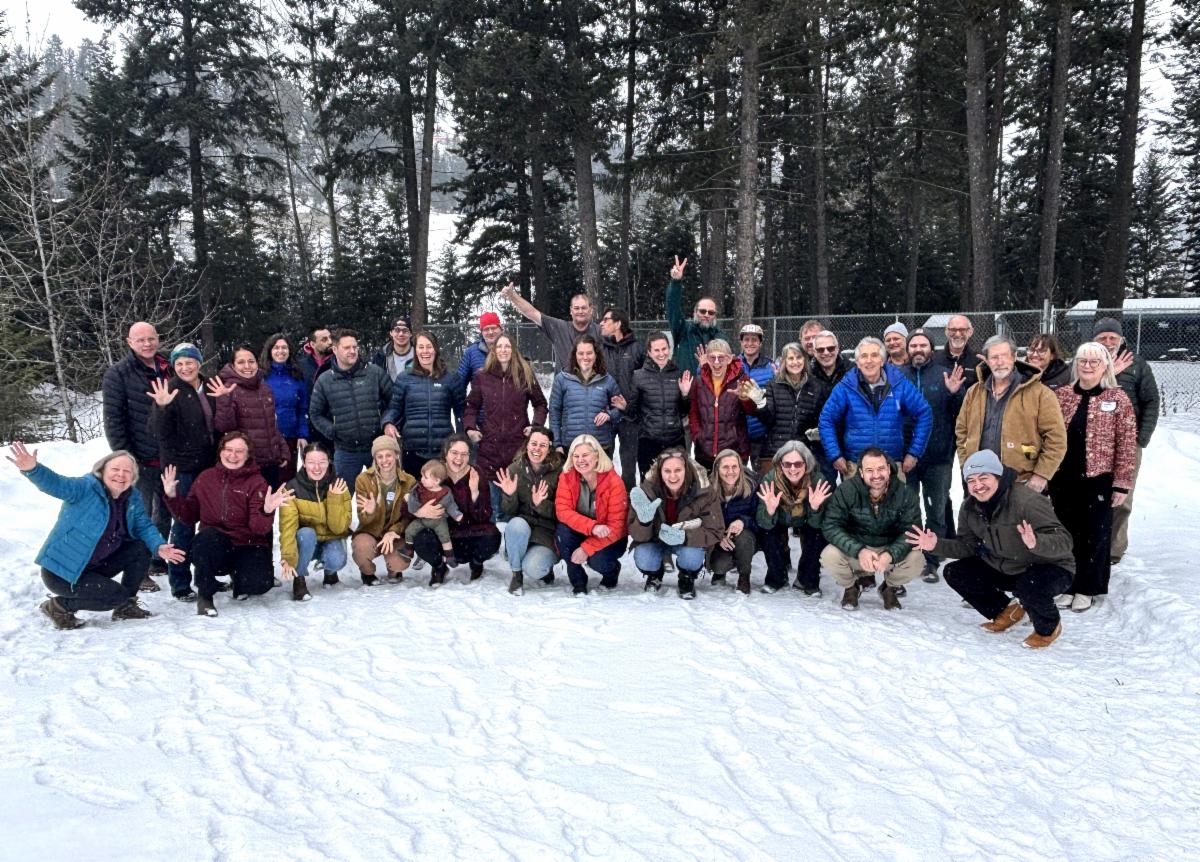
KCP recently teamed up with Shuswap Band and Wildsight Golden to co-host a Conservation Action Forum Check-in Meeting for the Golden region. Over 40 people from various local organizations participated in this dynamic event on January 23, coming together to review the progress being made on the five priority actions identified during the 2020 Golden Conservation Action Forum. Attendees also learned about upcoming Kootenay Connect projects in the Golden area, and shared updates on their conservation and stewardship projects occurring throughout the region.
Click here for a brief overview and to access the summary report when completed.
KCP featured in International Land Conservation Network News
New Conservation Collaborative looks to KCP for inspiration
The Kawartha Land Trust (KLT) and its partners in southern Ontario launched the Kawartha Resilient Lands Collaborative at a well-attended kickoff event in Peterborough, Ontario in October of 2024. The KLT is establishing a new conservation collaborative and looked to the Kootenays to provide inspiration and ideas. Juliet Craig, KCP Program Director, was invited to participate in this event, and delivered a presentation on the history and structure of KCP, six example collaborative initiatives (Kootenay Connect Priority Places, Conservation Action Forums, Stewardship Solutions Toolkit, building knowledge and skills, Local Conservation Funds, and serving as a network), and seven principles of effective conservation partnerships. The Kawartha Resilient Lands Collaborative was launched by the KLT with help from the Centre for Land Conservation (CLC), a national organization which has been monitoring the development of the collaborative to explore its potential to be replicated across other regions of Canada. In the US, the Regional Conservation and Climate Partnership (RCCP) model is prevalent, which aims to bridge sectoral divides among people and organizations working in land, water, climate, and conservation. There are over 550 Regional Conservation Partnerships (RCP) and RCCP organizations in the US, but only a handful are established in Canada, which is the gap that the Kawartha Resilient Lands Collaborative initiative seeks to address. Several organizations in Canada practice similar work to the RCCP, but predate this model from south of the border. Therefore, KLT and CLC looked to Kootenay Conservation Program, the Thompson-Nicola Conservation Collaborative, and Corridor Appalachien as inspiring landscape-scale initiatives working in the Canadian context.
Click here to read the the full story.
| | |
|
Wings over the Rockies Nature Festival
Field Event Leaders wanted – by February 14
The Wings Over the Rockies Nature Festival Society is proud to celebrate 28 years of connecting people with the incredible natural wonders of the Upper Columbia Valley! Each year, new field leaders join the team, bringing fresh perspectives and expertise to this celebrated tradition. Thanks to the invaluable contributions of the event leaders and the passion of countless individuals over the years, this festival has grown into the premier nature event in the Invermere region—a gathering that inspires deep connections with nature while strengthening our community. For new event leaders, this is a remarkable opportunity to showcase your organization’s mission and share your personal passion for nature with an engaged and enthusiastic community of like-minded individuals. Let’s work together to celebrate nature, inspire action, and create lasting connections. If you are interested, please contact Festival Planner Elizabeth Shopland at wingsovertherockies@gmail.com. All event leaders will be confirmed no later than February 14.
Click here to see a poster for more information.
Wildsight and Wolverine Watch
Report your Wolverine Sightings when Recreating in Wolverine Habitat
This is the time of year when wolverine kits are born into high-alpine dens, deep beneath the snowpack. As tough and tenacious as the wolverine is, kits are incredibly vulnerable for the first few months of their lives — and backcountry recreationalists are one of their biggest threats. Disturbance from skiers, snowshoers and sledders during this early period can lead mothers to abandon or relocate a den, both of which can be deadly for young wolverines. While backcountry recreation is just one of the many threats to wolverine survival, it’s also one of the easiest threats for us to start rectifying right away. If you get into the backcountry in the winter, with some extra knowledge and simple changes to your routine, you can help safeguard these iconic animals. Learn how to identify wolverines, their tracks and their dens, and how to report these observations. As wolverine density is extremely low, with only two every 1000 km², if you see evidence of wolverines, especially signs of denning or food stores, please recreate in another area.
Click here for more information, or click here to report observations.
Key Biodiversity Areas
Banking on a future for Spalding’s Campion
Spalding’s Campion is one of the rarest plants in Canada. Yaq̓it ʔa·knuqⱡi’it – Tobacco Plains Key Biodiversity Area in southeastern BC is the only place in Canada where it is found. Listed under the Canadian federal Species at Risk Act as Endangered, Spalding’s Campion is an unassuming perennial that is adapted to frequent low-intensity fires which reduce forest floor litter. Historically, the open forest conditions favoured by the plant were maintained by Indigenous burning practices. Fire history work at Tobacco Plains has shown that Ktunaxa, including Yaq̓it ʔa·knuqⱡi’it, regularly lit fires to reduce forest understory and foster grasses and other plants. Without frequent, low-intensity fire, fuel loads can build up and the inevitable hotter fire can kill the plant and destroy the organic soil it requires. To combat this, Yaq̓it ʔa·knuqⱡi’it has a very active ecosystem restoration program to reduce forest cover, restore wetlands and reintroduce low intensity fire where feasible. More widely, the Rocky Mountain Trench Ecosystem Restoration Program seeks similar benefits; however, this work is slow and expensive, often with mixed results. Nonetheless, monitoring activities in 2024 on the Reserve found a bumper year with hundreds of campion plants. Efforts to reintroduce fire to this landscape today are also challenged by invasive plants that more often than not take over these sites and outcompete native plants like the campion. These threats and the very limited distribution emphasize the importance of the seed collection work that forest ecologist Randy Harris is doing for Carrina Maslovat, Plant Conservation Specialist with BC Ministry of Water, Land and Resource Stewardship. Many partner organizations are working to establish a seedbank for species at risk and of cultural value in BC, and the Spalding’s Campion seeds were the first deposited into that bank.
Click here for the full story.
BC Parks Foundation & Regional District of Central Kootenay
Rosebud Lake Regional Park expanding to protect turtle habitat
BC Parks Foundation is proud to be part of the largest expansion of Rosebud Lake Regional Park in its 30-year history, expanding the park from 16 hectares to more than 80 - that's five times its current size. The foundation has purchased the land and worked along with Regional District of Central Kootenay (RDCK) staff to support the expansion of the park, located north of the Nelway border crossing between Creston and Salmo, to include much of the lake's shoreline. The shoreline of the lake is crucial nesting habitat for western painted turtles, which are the only native freshwater turtle species found in BC. Western painted turtles are a species of special concern under COSEWIC (Committee on the Status of Endangered Wildlife in Canada), and are especially vulnerable and under threat at their nesting stage, as both predators and humans can damage their eggs. As a result, only one in five hatchlings make it to adulthood. "We have worked hard to secure the protection of the western painted turtle and are happy to now have both the water and land protection to ensure their survival," said Hans Cunningham, RDCK Electoral Area G director. “We are excited for the public to continue to access the park as an outdoor recreation area."
Click here to read the full story.
Province of BC
Province takes additional steps to limit spread of Chronic Wasting Disease
Chronic Wasting Disease (CWD) is a fatal infection that affects species in the deer family (cervids) such as mule deer, white-tailed deer, elk, moose and caribou. CWD was detected for the first time in BC in January of 2024, in deer samples from the Kootenay Region. View the positive detections map to see the known cases of CWD in BC. Recently there was positive confirmation of a fourth case of CWD in a white-tailed deer in the Kootenay region. Surveillance and preventative measures have been ongoing in BC for over 20 years, with targeted efforts in the highest risk areas. The priority now is expanded surveillance and risk mitigation that aims to reduce disease transmission, prevent spread to new areas and limit the negative impacts of CWD as much as possible. Removal activities will include a special permitted hunt, with permits being issued to licensed hunters. Government is working with the Kootenay Wildlife Association to reach hunters and issue permits. The initial release will involve 50 permits, with the possibility of more. More information about this process will be shared in a short time. All animals removed during this special hunt will be tested for CWD. Early in a CWD disease outbreak it is unlikely to see animals exhibiting symptoms as most infected animals will appear healthy. That said, if you observe an animal exhibiting any of the following symptoms: weight loss, poor coordination, or stumbling and trembling; please report this to the RAPP line at 1-877-952-7277 or the BC Wildlife Health Program at CWD@gov.bc.ca or 250-751-3219.
Click here for more information on CWD, here for more details on the Provincial surveillance program, and here for the latest news from the Provincial government on these actions.
Nature Conservancy of Canada
New conservation area at Geddes Creek next to Kootenay National Park
The Nature Conservancy of Canada (NCC) has added a new conservation area that links to a network of already protected and conserved lands in the region to give wildlife the room they need to thrive. The new Geddes Creek Conservation Area encompasses 193 hectares (477 acres) of Douglas-fir and montane spruce forest, open grassy habitat and a seasonal creek north of Radium Hot Springs on the western slopes of the Rocky Mountains. The conservation area is adjacent to Kootenay National Park to the east and overlooks the Columbia Wetlands Wildlife Management Area in the valley bottom below. This makes it an important piece of the Radium wildlife corridor, identified by KCP’s Kootenay Connect Priority Places initiative as an area critical for at-risk species and wildlife movement. This crucial land purchase was made possible through funding from the partnership between the NCC and Parks Canada, the Fish & Wildlife Compensation Program and the Regional District of East Kootenay’s Columbia Valley Local Conservation Fund.
Click here for more details.
Central Kootenay Invasive Species Society & Province of BC
Detection of Whirling Disease in Kootenay Lake highlights need for Vigilance in Protecting Freshwater Ecosystems
The Central Kootenay Invasive Species Society (CKISS) is raising awareness about the recent detection of whirling disease in Kootenay Lake. Three trout samples from the lake’s southern arm have tested positive for Myxobolus cerebralis, the parasite responsible for the disease, which affects juvenile fish and can severely impact freshwater ecosystems. Damage to the brain stem and spinal cord results in an erratic “whirling” swimming pattern. These detections are the outcomes of enhanced whirling disease monitoring that the Province began earlier this year, in partnership with First Nations, the Canadian Food and Inspections Agency, and Parks Canada. Prevention is the only effective response to whirling disease, as there is no treatment for infected fish. CKISS strongly urges individuals to follow updated guidelines to stop the spread of this and other aquatic invasive species: 1. Handle Fish Carefully - never move fish or fish parts between waterbodies. 2. Clean, Drain, Dry: Always clean, drain, and dry boats, gear, and equipment before moving them between waterbodies. 3. Follow Decontamination Protocols: This includes submerging or treating equipment with appropriate disinfectants for a minimum of 10 minutes. For more information, please see the links below, or email WhirlingDisease@gov.bc.ca.
Click here to read the Province of BC news release, and here for more information from CKISS on prevention.
Province of BC
Columbia River Treaty Agreement-in-Principle Feedback Survey
Canada and the United States have reached an Agreement-in-Principle (AIP) on modernizing the Columbia River Treaty, first ratified in 1964 to enhance hydropower generation and manage flood risks. This proposal is intended to include, in addition to the existing Treaty purposes, new provisions to enhance ecosystems in both countries and address BC domestic objectives. The AIP is the result of six years of negotiations between Canada and the U.S. and over a decade of engagement with Canadian Columbia Basin Indigenous Nations, local governments and residents. While non-binding, the AIP provides a roadmap for drafting a modernized Treaty. The Province of BC is now seeking feedback from Indigenous Nations, local governments, and residents in the Canadian Columbia Basin on the AIP. The AIP is described through a variety of resources, including an Overview video, Backgrounder, and a document containing the content of the AIP. It is recommended that you review some or all of these resources before giving feedback in this questionnaire or in other ways, such as by attending a community meeting in the Columbia Basin or by sending your feedback by email to columbiarivertreaty@gov.bc.ca. The questionnaire will remain open until March 31.
Click here to access the questionnaire.
Province of BC
Report any Treponeme-associated hoof disease in elk
Treponeme-associated hoof disease (TAHD), previously called elk hoof disease, is a highly infectious syndrome associated with a bacterial infection that causes hoof deformities and severe lameness in elk. Research has shown that infection with bacteria in the genus Treponema is associated with a significant increase of cases beginning in 2007-2008 in southwestern Washington State. This disease has not been detected in BC, and there have been no suspected cases reported. However, it has been confirmed near our southern border, so awareness and early detection are important. This disease first appeared in southwestern Washington state in the late 1990s and early 2000s and has since been identified in Oregon, Idaho, Northern California, and other areas of Washington. The nearest reported or confirmed positive cases are in Washington State, with the majority occurring west of the Cascade Mountain Range. There is no treatment for TAHD. While measures to prevent spread are not in place in BC formally, the Provincial government encourages reporting of abnormal hooves and limping elk to the BC Wildlife Health Program. Hunters should consider removing elk hooves and leaving them on site. In other jurisdictions, anyone who hikes or drives off-road in known affected areas are encouraged to remove all mud from their shoes or tires before leaving the area. The Provincial Government is asking biologists, hunters, and the general public to report any signs of animals with lame limbs or hooves to Dr. Caeley Thacker at Caeley.Thacker@gov.bc.ca. Dr. Thacker, BC wildlife veterinarian, leads the BC Wildlife Health Program.
Click here for a distribution map and more information.
Province of BC
BC Mountain Goat and Wild Sheep observations wanted
The BC Wildlife Program is asking for your observations of Mountain Goat, Thinhorn Sheep and Bighorn Sheep from around BC. Specifically, observations that record the location and presence of newborn kids and lambs, along with later observations of nanny/kid and ewe/lamb groups throughout the year. The Provincial Wild Sheep and Mountain Goat Natal App allows conservationists and members of the public to easily submit what they see. The data collected will be used to inform BC’s Regional Biologists when making important decisions around wild sheep and goat conservation as well as provide information on the effects of changing climates and other environmental and human pressures on the wild sheep and goat populations. Use this app to consistently track your mountain goat and wild sheep sightings and you'll be contributing valuable data to conservation efforts, as your observations will help increase understanding of population trends and inform important management decisions.
Click here for more information.
| | |
|
2025 BC Nature & Habitat Conservation Trust Foundation Photo Contest
January 1 to March 15
The 2025 BC Nature and Habitat Conservation Trust Foundation (HCTF) Photo Contest is a celebration of the BC plants, animals, landscapes, conservation areas and other nature moments that show how naturalists of all ages spend their time outdoors. Whether you like to hike, bird watch, or master your photography skills on all things nature, consider sharing your favourite photos. Prizes will be awarded in the following categories: 1) People in Nature – showcasing people helping or enjoying nature; 2) BC Biodiversity – birds, all wildlife, landscapes, botany; 3) Conservation Lands (Karen Wipond Conservation Lands) – see description in rules and guidelines. 4) Youth Under 18 (can include any of the above categories). The contest is open until 4:30 pm PT / 5:30 pm MT on March 15.
Click here for more information and to submit a photo.
KBA Caretaker Network Webinar
February 4, Online
The Key Biodiversity Areas (KBA) team would like to invite you to their Caretaker Webinar, as an opportunity to provide updates on the Important Bird Areas (IBA) to KBA transition and a glimpse into the work we are doing to establish the KBA Caretaker Network. Whether you are an existing Caretaker, or interested in becoming involved with the KBA program, we would be happy to have you join this webinar. If you’re interested in becoming more involved with a specific KBA or multiple KBAs, consider becoming a KBA Caretaker and joining a network of over 300 individuals across Canada. Caretakers are community stewards, carrying out conservation actions at their KBAs to help slow the loss of biodiversity. Coordinated Caretaker activity will allow us to improve stewardship of particularly vulnerable sites, and highlight how KBAs already preserve biodiversity. The webinar will include a 1-hour presentation from KBA team members, followed by 30 mins of discussion and question period. The webinar will be recorded and shared. From 10 to 11:30 am PT / 11 am to 12:30 pm MT.
Click here to register for the webinar.
Balancing Biodiversity Conservation with Development Pressure in Urban Landscapes: Local Government Webinar Series
February 4 • 11 • 18 • 25, March 4 • 11 • 18, Online
Join the Thompson-Nicola Conservation Collaborative and the Ministry of Water, Land and Resource Stewardship for a comprehensive webinar series exploring the complex challenges of balancing rapid development with biodiversity conservation. As housing demands surge, municipal and regional jurisdictions face increasing pressure to accommodate growth while protecting our natural environment. This series will delve into existing case studies, essential information sources, and practical published tools to help planners and environmental professionals navigate these challenges. From gaining a foundational understanding of Critical Habitat and its implications, to learning about Best Management Practices for Invertebrate Species at Risk, and navigating the Riparian Area Protection Regulation program, these seven webinars are very comprehensive. The series will be relevant to local government staff, planners, environmental consultants, developers and builders, First Nations interested in development on private land, and community advocates. Each webinar will take place live on zoom every Tuesday from February 4 to March 18, from 12 to 1 pm PT / 1 to 2 pm MT. The webinars will be recorded and made available to registrants afterwards.
Click here for more information and to register.
KCP Winter Webinar Series: Bonanza Biodiversity Corridor – Crafting a Conservation Roadmap
February 13, Online
Join ecologist Ryan Durand to see how the Slocan Lake Stewardship Society has developed a living conservation plan drawn from years of ecosystem research in the Bonanza Biodiversity Corridor. This strategic conservation framework addresses a broad range of conservation values and biodiversity, from microscopic slime moulds to wide-ranging carnivores and old growth forests. Ecosystem mapping, rare species and habitat inventories, and landscape-level assessments inform a flexible roadmap to guide setting priorities, identifying on-the-ground stewardship projects, influencing land management and developing strategic collaborations. The live webinar is at 12 pm PT / 1 pm MT.
Click here for more information and to register.
Reuniting with Fire: Restoring Indigenous Fire Stewardship in Canada
February 18, Online
Indigenous peoples across what is now Canada have utilized fire to steward their territories to achieve cultural objectives. Fire is integral to Indigenous cultures and is a process used to uphold responsibilities and kinship systems, which were maintained through a complex knowledge system. This relationship with fire has been nearly severed by colonization, through the disregard for Indigenous knowledge and fire exclusion. Recently, there has been a resurgence of interest in Indigenous fire and a growing recognition of the importance of cultural burning practices, particularly in relation to increasing biodiversity and providing nature-based climate solutions. This free webinar co-hosted by CPAWS Southern Alberta and CPAWS Northern Alberta will discuss Indigenous fire knowledge, impacts of cultural severance, and reunion with fire. Dr. Amy Cardinal Christianson will facilitate the webinar; she is Métis and grew up in Treaty 8 territory, and works as the Senior Fire Advisor for Indigenous Leadership Initiative. She was formerly a Research Scientist with the Canadian Forest Service (Natural Resources Canada) and an Indigenous Fire Specialist in the National Fire Management Division of Parks Canada. From 11 am to 12 pm PT / 12 to 1 pm MT.
Click here for more information and to register.
2025 Invasive Species Forum: Advancing Community Action
February 18 to 20, Online
The aim of the Invasive Species Centre is to prevent the introduction and spread of high-risk invasive species in Canada by connecting stakeholders with knowledge and technology. Their virtual Invasive Species Forum is a free annual event that brings attention to invasive species issues, research, and advances in prevention and management occurring across Canada, and in neighbouring US states. The theme for the 2025 Forum is ‘Advancing Community Action’, and registration is open!
Click here for more information and to register.
Restoring flood conditions for wetlands
February 21, Online
In this webinar hosted by the Fish & Wildlife Compensation Program, learn how modern science and Indigenous knowledge is revealing that controlling nature through engineering can disturb natural functions. Across North America, dikes were built in the 20th century to store water in floodplains for migrating and breeding waterfowl. Now, two projects in our Columbia Region are using new restoration techniques and Indigenous knowledge to give the floodplain back to the river. Partnerships with First Nations and conservation groups are critical to the success of the projects. Project partners at Bummers Flats, near Cranbrook, include ʔaq̓am, The Nature Trust of BC and the Ministry of Water, Land and Resource Stewardship. Project partners at Moberly Marsh, near Golden, include BC Parks, with support from ʔakisq̓nuk Band and Shuswap Band as well as the Columbia Wetland Stewardship Initiative and BC Wildlife Federation. This webinar is presented by Matt Wilson, Head of Conservation Programs with Ducks Unlimited, and Morgana Eugene, Ktunaxa Language Coordinator with the Ktunaxa Nation Council. The webinar is at 12 pm PT / 1 pm MT.
Click here for more information and to register.
Invasives 2025
February 24 to 27, New Westminster
For the past 20 years, the Invasive Species Council of BC (ISCBC) Forum has been leading the way in tackling the challenges of invasive species and exploring innovative solutions to manage and reduce their impact. To celebrate this milestone year, ISCBC is excited to reflect on the themes, sessions, and insights that have shaped our community over the years. The “Back to the Future” theme reflects their commitment to learning from the past and celebrating achievements while envisioning a future with healthy landscapes and communities free of invasive species. Join for an electrifying reunion featuring some memorable speakers and popular sessions past, celebrating amazing achievements and exploring thrilling new opportunities! This forum will bring together invasive species practitioners, researchers, community leaders, Indigenous voices, ranchers, foresters and the broader public. Together, we’ll explore the connections and impacts of invasive species in your communities. Featured speakers include Dawn Carr, Director of Strategic Conservation with Nature Conservancy of Canada, and Dr. Chandra Moffat, Research Scientist in Entomology with Agriculture and Agri-Food Canada in Summerland.
Click here for more information and to register.
Native Bee Study Group
February 26, Online
The monthly Native Bee Study group is an opportunity for connecting and learning about native bees with others throughout the province. There is a unique theme each month, which is used as a jumping off point to share knowledge and learn from others. The theme for February is 'Getting Buzzy' Bee Mating Bee-haviour. Experts and complete beginners are all welcome! The study group is a show and tell format, and anyone who is interested in participating can create a slide on the shared google slides deck to share with the group (link sent with registration). Photos can also be sent to bcnativebees@gmail.com with a subject line of "Native Bee Study Group". The 90-minute session begins at 7 pm PT / 8 pm MT.
Click here for more information and to register.
KCP Winter Webinar Series: Code-Switch – Translating Stewardship Practice across Cultures
February 27, Online
How does stewardship work when small, Indigenous-led teams take a relational approach, rather than a prescriptive one? Join ethnoecologist Jonaki Bhattacharyya, PhD, who will walk us through boots-on-the-ground examples of Indigenous Protected and Conserved Areas (IPCA) establishment, cultural burning, and wildlife monitoring from BC’s southern interior, taking note of nuances and lessons learned. From Indigenous practice to trail cameras, stories to sample design – it turns out that cultural and methodological agility are as important as a good pair of field pants. The live webinar is at 12 pm PT / 1 pm MT.
Click here for more information and to register.
Creating wildlife trees and habitat for fishers and woodpeckers
March 5, Online
In this webinar hosted by the Fish & Wildlife Compensation Program, learn more about the initial results of a wildlife tree creation project on Tsay Keh Dene territory that is enhancing habitat for fishers and woodpeckers. More than 60 trees were modified and inoculated with heart rot fungus in 2018. Find out how the work was done and how the trees have performed, from Todd Manning, Wildlife Habitat Enhancement Specialist with Strategic Resource Solutions. The webinar is at 12 pm PT / 1 pm MT.
Click here for more information and to register.
Fish Identification Course: Columbia Basin Edition
March 17 & 18, Revelstoke FULL WITH A WAITLIST
The fresh waters of the world house spectacular diversity of freshwater fishes, accounting for over 40% of all described taxa in less than 0.01% of aquatic habitat by surface area. BC has a relatively small number of described native species (69) yet contains a considerable wealth of un-described diversity and endemic species. This course serves as an introduction to the biogeography, evolution, and identification of native and introduced freshwater fishes found in BC. Two lecture sessions focus on the biogeography, evolution of our fauna, as well as the morphological and genetic techniques used in fish identification. Two afternoons focus on morphological-based identification of fishes, particularly those of the southern Interior of BC. Attendees will also have the chance to try out a new photo guides to the freshwater fishes of BC. The course will focus on the theory and practice of morphological-based identification of freshwater fishes of BC with a focus on those found in the Columbia River Basin. We will also explore the use of DNA-based diagnostics in the lecture component. Each day is broken into a lecture component and a lab component. This course is designed for field-based fisheries professionals of the Columbia Basin; people involved in inventory or environmental assessments will benefit from this course as well. All are welcome.
Click here for more information and to register.
Groundwater and Agriculture in the Columbia Basin
April 2, Online
Careful management and allocation of groundwater is becoming increasingly important for agriculture as climate change impacts like drought intensify and demand for water increases. In the Columbia Basin, Living Lakes Canada has led a 400% increase in groundwater monitoring through the Columbia Basin Groundwater Monitoring Program and, more recently, an aquifer vulnerability assessment. Agriculture places significant demand on groundwater in the Columbia Basin and users have had to licence their groundwater wells to continue using the water for irrigation, which has given rise to many questions about groundwater resources. In this webinar, co-hosted by Kootenay & Boundary Farm Advisors and Living Lakes, producers will come away with an improved understanding of aquifer dynamics, the link between groundwater and agriculture, groundwater rights and policy, the available data and how to access it, and aquifers of concern or significance for agricultural use. Guest presenters include Braeden Toikka, water monitoring coordinator with Living Lakes, and Mike Wei, physical hydrogeologist and groundwater policy expert. Living Lakes gratefully acknowledges the financial support of the Province of British Columbia through the Ministry of Agriculture and Food, Columbia Basin Trust and RBC Tech for Nature. This live webinar is at 9 to 10:30 am PT / 10 to 11:30 am MT and is also open to interested members of the public beyond the agriculture sector.
Click here for more information and to register.
Ktunaxa Introductory Language Course
April 7 • 14 • 21 • 28, May 5 • 12 • 19 • 26, Online
Join Alfred Joseph and Mara Nelson for 8 weeks of Foundational Ktunaxa Language Learning. You will learn the sounds, words and some history of the Ktunaxa Language. The course is designed for you to garner skills that will enable you to carry Ktunaxa Language forward to your communities and on the land, and the course is open to everyone – both Indigenous and non-Indigenous participants who wish to learn the local language to help deepen understanding and knowledge of the land. Alfred Joseph is a highly respected Ktunaxa Elder and past chief of the Akisqnuk Nation, who teaches Ktunaxa Language and is very involved with sharing Ktunaxa Traditional Knowledge. Mara Nelson is ʔaqⱡsmaknik (a Ktunaxa person), whose family is from Yaq̓it ʔa·knuqⱡiʔit. She has a background in education as a Sign Language Transliterator and Education Assistant. This course is offered on Monday evenings, starting at 6 pm PT / 7 pm MT, for 90-minute sessions.
Click here for more information and to register.
What’s the Future of Grasslands and Rangelands in the East Kootenay?
May 1 to 3, Kimberley
The purpose of this symposium hosted by the Columbia Mountains Institute for Applied Ecology (CMI) is to tell stories, share knowledge, and explore ideas and solutions for improving grassland and rangeland health in the East Kootenay. This event will explore the related implications of changing grasslands in the East Kootenay for wildlife and livestock forage, vulnerable grassland-dependent species, Indigenous and regional food security, wildfire risk reduction, and invasive species. To this end, a multidisciplinary group of scientists, First Nations, natural resource professionals, land managers, and ranchers will gather to discuss current land management challenges, initiatives, knowledge gaps, and the cumulative impacts to ecosystem health. The underlying assumption guiding this event is that if you improve grassland health through restoration, protection, and stewardship, then you improve conditions for wildlife, grassland ecosystems, and communities whose cultures and livelihoods are tied to these spaces. This symposium will include presentations, panel discussions, field tours, and posters that share recent science, the current state of rangelands in the East Kootenay region, and case studies from other regions to help inform potential restoration and rangeland management practices.
Click here for more information and to register.
Wings over the Rockies Nature Festival 2025
May 5 to 11, Invermere – Save the Date!
The Wings Over the Rockies Nature Festival Society is proud to celebrate 28 years of connecting people with the incredible natural wonders of the Upper Columbia Valley! This year’s festival features over 85 incredible events, including field excursions, engaging luncheon and evening presentations, a special film screening, and an exclusive presentation. Highlights include the much-anticipated music event with multi-award-winning Canadian legend Harry Manx, and the traditional Gala Celebration—a sit-down dinner featuring keynote speaker Dr. Rob Butler, renowned ornithologist, author, and artist. In 2025, the events will center around the theme of ‘Our Place in Nature.’ Through thought-provoking presentations, immersive field experiences, and inspiring discussions, the keynote speaker, presenters, and field leaders will guide attendees in celebrating the wonders of nature while deepening our understanding of our role within it. Together, we’ll explore perspectives that connect us to our diverse cultures, rich histories, and our shared responsibility for the planet we call home.
Click here for more information as it becomes available.
Creston Valley Bird Festival
May 9 to 12, Creston – Save the Date!
The Creston Valley Bird Festival exists to foster awareness of birds and their habitats in the Creston Valley. Get ready to spread your wings for an unforgettable celebration of feathered friends and the vital wetlands they call home during their annual migration north. The Creston Valley Bird Festival is an exciting event that takes place every second weekend in May, where you’ll get the chance to rub shoulders with bird experts – explore and deepen your appreciation for the great outdoors with presentations, hikes, field trips, and tours by canoe or kayak. The Creston Valley Bird Festival is looking for some bird guides! Be a part of a wonderful event – mileage, meal, and honorarium are included. If interested, please email: info@crestonvalleybirds.ca. Registration opens on April 2.
Click here for more information.
2025 Invasive Species Research Conference - Getting ahead of the Invasion Curve: Bridging the gap between Research and Management
May 13 to 15, Kelowna – Call for Proposals due by February 3
The Invasive Species Council of BC is pleased to host the 2025 Invasive Species Research Conference on the theme of ‘Getting ahead of the invasion curve: bridging the gap between research and management’. Invasive species researchers, practitioners, and all those working or interested in invasive species research are encouraged to attend, and you can still submit your abstract for oral presentations (five or fifteen minute sessions) or poster presentations by the extended deadline of February 3. The conference will be held at the University of British Columbia Okanagan Campus in Kelowna.
Click here for more information and to register.
Field Ornithology: Improving Bird ID and Survey Skills through Sound
May 26 to 29, Revelstoke
For many field ornithology surveys, the ability to identify bird species by their calls and songs is an essential skill, while also being one of the hardest aspects of field work to master. However, technological advances in sound capture and visualization are pushing the ornithological frontiers with tools that make it easier than ever to learn field-identification by sound and to survey natural soundscapes (and their birds). This course will combine field-experience listening to bird calls and songs during three mornings at the height of the breeding season, with hands-on recording practice to generate sound files. Join course instructors Marc-André Beaucher and Rachel Darvill for this course in May. Marc-André, Head of Conservation Programs at Creston Valley Wildlife Management Area, has extensive experience with the identification of wetland birds in the Creston Valley. Rachel leads Lewis’s woodpecker and osprey projects on behalf of Columbia Wetlands Stewardship Partners for KCP’s Kootenay Connect project and is also the biologist for the multi-year Upper Columbia Swallow Habitat Enhancement Project administered by Wildsight Golden. The course starts on May 26 at 6:30 pm PT, and goes until May 29 at 2 pm PT.
Click here for more information and to register.
Field Soil Description & Classification Course
June 18 to 20, Revelstoke
This course covers procedures for observing, measuring, and describing soils in the field. The goal is to produce consistent data for soil inventory, mapping and classification using techniques that improve the consistency of determining soil properties in the field. Students gain experience with describing and classifying forest and wetland soils in the Revelstoke area using soil horizons and properties measured in the field, and discuss how soil data collected in the field can inform soil management practices relating to conservation, agriculture, forestry, mining, and oil & gas activities. The course starts in the classroom reviewing soil attribute data recording requirements, soil taxonomy, and field techniques. In the field students will practice the procedures for observing landscape context, site selection, and soil pit excavation. Participants describe and record soil horizon designations, depths for organic and mineral layers, soil texture, soil colour, % coarse fragments, structure, pH, roots, pores, carbonates, effervescence, clay skins, mottles, rooting depth, drainage, seepage water depth and root restricting layers. We conclude each site with a reporting out and discussion of management implications. From 9 am to 5 pm PT each day.
Click here for more information and to register.
Wetland Classification: An Introduction
June 23 to 25, Revelstoke
This course offered by the Columbia Mountains Institute of Applied Ecology is designed to introduce students to the basics of wetland identification and classification. Students will be introduced to the foundations of how to recognize, map, classify, and describe wetlands using the Canadian Wetland Classification System and will be provided an overview for identifying common wetland ecosystem sites and plant associations using the Wetlands of British Columbia and other updated Land Management Handbooks. The course will begin with a classroom session introducing how to identify and classify wetlands using the primary indicators of soils, hydrology and vegetation while utilizing resources to describe these indicators. The field component will include 3 to 4 field site visits around the Revelstoke area to local wetlands to practice classification and descriptions using site forms and the Wetlands of BC guidebook. Students taking this course should walk away with the ability to confidently identify and classify wetlands and gain familiarity with commonly used field forms and other resources. From 9 am to 5 pm PT daily.
Click here for more information and to register.
| | |
|
Community Foundation of the Kootenay Rockies
Deadline: February 15
Since 2003, thanks to the income earned from endowment funds as well as external project funding, the Community Foundation of the Kootenay Rockies (CFKR) has granted over $1 million to more than 300 local non-profit projects in our communities of Elkford, Sparwood, Fernie, Cranbrook, and the surrounding rural areas. CFKR takes a broad and inclusive view of what a community is, providing grants to the widest possible range of organizations and initiatives, including the environment as one area of interest. Eligible projects must show how they directly benefit the community and will effectively utilize a grant ranging from a few hundred dollars up to $2,000. The deadline to apply is February 15.
Click here for more information and to apply.
Yellowstone to Yukon (Y2Y) Partner Grants
Deadline: February 21
The Yellowstone to Yukon Conservation Initiative (Y2Y) is pleased to announce that its Partner Grants program has been extended to its 27th year. Since 1998, Y2Y has invested in grassroots organizations and other groups through their annual partner grants program. These on-the-ground projects complement the efforts of Y2Y and mobilize work that they wouldn’t be able to do on their own. The Y2Y Partner Grants program is made possible through the generous support of the Woodcock Foundation. Y2Y also thanks those individuals who choose to direct their personal donations to the partner grants program. Applicants must be associations, groups, organizations, First Nations, bands, agencies, partnerships or networks working within the Yellowstone to Yukon region in support of the Y2Y vision and mission. Individuals wishing to apply must find an eligible organization to sponsor their proposal. There is no requirement for organizations to have charitable status.
Click here for more information and to apply.
Action Grants, Habitat Conservation Trust Foundation
Deadline: February 28
Action Grants support projects that directly involve people and communities to change behaviours and/or practices leading to measurable conservation outcomes in BC. Projects should work to create solutions or sustainable practices, or mitigate human-caused impacts to prevent or reduce impacts to species or ecosystems. The main goals of HCTF’s Action Grants are to influence change in behaviours and/or practices towards conservation outcomes, and / or to implement actions by collaborating with individuals, organizations, or communities.
Click here for more information and to apply.
Capacity Grants, Habitat Conservation Trust Fund
Deadline: February 28
Capacity grants provide funding to build and strengthen the capability and capacity of organizations to successfully design and deliver conservation or restoration projects. The grant provides funds to support and develop strategies and abilities to initiate actions that benefit fish, wildlife, and habitat conservation aligned with objectives of the HCTF. Capacity Grants assist with the first steps in planning, designing, engaging, or implementing a project. In support of HCTF’s strategic plan, this grant will emphasize the following: Indigenous community-led fish, wildlife, and habitat conservation; climate change adaptation, mitigation, and cumulative effects on fish, wildlife, and their habitats; caribou habitat restoration or conservation projects taking place in current caribou herd ranges; and/or broad and diverse participation in HCTF programs and projects.
Click here for more information and to apply.
Community Grants, Habitat Conservation Trust Foundation
Deadline: February 28
Community Grants provide funding to organizations and individuals who need financial help to implement a conservation project. Since 1974, the Province of BC and the Habitat Conservation Trust Foundation have provided approximately $150,000 each year to help implement on-the-ground conservation work, with a focus on hands-on, community-based, and public awareness initiatives. Preferred Community Grant projects are those that have long-range benefits, involve as many volunteers as possible, and raise community awareness and involvement in conservation.
Click here for more information and to apply.
Nature Smart Climate Solutions Fund - Emission Reductions Intake
Deadline: ongoing
The purpose of the Nature Smart Climate Solutions Fund - Emission Reductions Intake is to fund projects that will contribute to Canada’s 2030 Emissions Reduction Plan targets by halting or reducing activities that cause greenhouse gas (GHG) emissions through land use or land cover change, and/or restoring areas into functional ecosystems that sequester and store carbon. NSCSF funding is available for projects that fall into one or more of the following natural climate solutions: 1) reducing the area of ecosystems being converted to other land uses (e.g. from forest to agricultural, urban or industrial lands) annually by halting the human activities that cause GHG emissions (i.e. threats); 2) implementing improved management activities where the land cover and land use stay the same (e.g. forest remaining forest), but the area is managed so that there will be additional emission reductions compared to the current or projected management (e.g. reducing the volume of timber harvest); or 3) restoration projects such as restoring ecological and hydrological functions of wetlands, or restoring annual croplands to perennial crops, native or tame grasslands. Please contact the BC regional representative at Pacifique.FSCAN-NSCSF.Pacific@ec.gc.ca for further information, to discuss any project ideas, or to obtain the application documents.
Click here for more information.
Seed Grants, Fish and Wildlife Compensation Program
Deadline: Ongoing
You can now apply for a Seed Grant any time of the year; you don’t need to wait for the FWCP annual grant intake. An FWCP Seed Grant—up to a maximum of $5,000—can be used to fill information gaps, prepare technical information, and explore the feasibility of your project idea. Think of a Seed Grant as a first step toward a future Large Grant application. The FWCP Columbia Region board will review Seed Grant applications and make decisions at its spring, fall, and winter board meetings. Apply early.
Click here for more information.
Healthy Habitats Community Service Grants for Youth, Invasive Species Council of BC
Deadline: Ongoing
Through this micro grant program, it is the goal of the Invasive Species Council of BC (ISCBC) to provide you with financial and project management support to help you grow your skills and make an impact in your community. ISCBC's Youth Engagement Coordinators will be happy to support you through every step of the project. The guidelines will walk you through the application process. The micro-grant program is designed to support youth in various stages of their projects or ideas. They supply three distinct tiers of funding, each aimed at different scopes and scales. Applicants can apply for one of the three tiers based on the needs of their project. The project must align with the goals of the grant program, and must show a reasonable effort to protect the environment at a local, regional, or national scale. This could include educational materials, art installations, research, field activities, etc. They encourage applicants to think freely, and not to feel discouraged if your project idea does not align exactly with their examples. Applicants must be between the ages of 15 and 30 at the time of application.
Click here for more information and to apply.
Grassland and Rangeland Enhancement Program
Deadline: Ongoing
If you have an idea that will maintain or enhance grassland resources while meeting conservation, environment and recreation objectives, this program could help support it. This program is delivered by the Kootenay Livestock Association.
Click here for more information and how to apply.
Fish and Wildlife Compensation Program Community Engagement Grants
Deadline: Ongoing
Got an idea for a project to support fish and wildlife in the Columbia region? Community Engagement Grants are typically $500 to $1000 and help stewardship groups and others take action to benefit local fish and wildlife.
Click here for more information and how to apply.
Land Securement Grants from Fish and Wildlife Compensation Program
Deadline: Ongoing
Securing critical ecosystems and habitats for conservation is an important way to help conserve and enhance fish and wildlife in watersheds impacted by BC Hydro dams. The Fish & Wildlife Compensation Program (FWCP) funds land securement projects and supports a partnership approach in their Coastal, Columbia, and Peace regions. Due to the time-sensitive nature of real-estate transactions, grant applications for land securement purchases can be discussed with the region managers at any time of year. Please contact Columbia Region Manager Jen Walker-Larsen at Jennifer.Walker-Larsen@bchydro.com with your questions.
Click here for more information.
| | |
|
The Nature Trust of BC
Seasonal Conservation Field Technician, Cranbrook
The Nature Trust of British Columbia (NTBC), a leading non-profit land conservation organization dedicated to protecting critical habitat for wildlife, fish, and plants in BC, is seeking a Seasonal Conservation Field Technician who will assist in a variety of land management activities on nearly 30 conservation area complexes within the Kootenay region. You will work on both NTBC and BC Provincial conservation areas to help achieve shared conservation objectives. You will work on a range of projects, including inspection of conservation areas, assessment and repair of boundary fences, invasive plant removal, and replacement of signage and infrastructure. You will report to the Kootenay Field Operations Coordinator, and work as a coordinated team to complete the annual work plan. This is a seasonal contract position based in Cranbrook. Please submit your résumé and cover letter by midnight on February 17.
Click here for more information and to apply.
Wildsight Kimberley Cranbrook
Program Assistant
Are you curious about environmental sustainability, food security, and community building? If you said “Yes!” and are under 30 years of age, the Wildsight Kimberley Cranbrook Branch has a summer job just for you! They are currently seeking a self-motivated and enthusiastic individual to serve as a full time Program Assistant for the summer season, from May through to August, with potential to extend into the fall. The ideal candidate would enjoy taking part in a diverse range of community projects, while working alongside the Wildsight team of staff, contractors and volunteers. The Program Assistant aids program supervisors in all Wildsight Kimberley Cranbrook conservation, education, and regeneration initiatives, and is given the opportunity to lead a small project that builds on their interests and strengths. Applications are accepted until 9 am MT on February 19.
Click here for more information and to apply.
Central Kootenay Invasive Species Society
Assistant Field Program Manager, Nelson
Reporting to the Field Program Manager, the Assistant Field Program Manager will be responsible for planning and coordinating fieldwork, training and supervising seasonal staff, managing select projects, carrying out invasive plant management field work, data management, reporting and other tasks to support the Field Program. This is a full-time, permanent job. From May to October, the role involves coordinating and delivering on-the-ground invasive species management activities including contractor and staff supervision, surveys and mechanical removal of invasive plants, sign installation, seeding and restoration, landowner outreach, biological control agent surveys, and treatment monitoring. From November to April, a substantial portion of the role involves managing and analyzing data, which requires a high degree of technical aptitude and attention to detail. The applicant will need to spatially analyze data using GIS, perform data cleaning, and conduct various analysis tasks to ensure high data quality and accurate reporting. Apply as soon as possible, as applications will be reviewed as they are received up until February 23.
Click here for more information and to apply.
Central Kootenay Invasive Species Society
Outreach & Operations Technician, Nelson
The Outreach and Operations Technician will support the CKISS Education Program with invasive species education and outreach programs three days a week and will support the Operations Program with invasive species management activities one day a week. Outreach duties include hosting educational booths at events, leading community weed pulls and youth field trips, updating the website, newsletters, press releases, and social media, distributing educational resources, creating original content for CKISS outreach activities, and supporting virtual and in-person events like webinars, workshops, and presentations. Operations duties include working as part of a small field crew to carry out invasive species management including surveys and manual removal of invasive plants in priority locations, sign installation and removal, and landowner outreach. Note that all candidates must be post-secondary students under 30 years of age. Apply as soon as possible, as applications will be reviewed as they are received up until February 23.
Click here for more information and to apply.
Central Kootenay Invasive Species Society
Invasive Species Technician, Nelson
The Invasive Species Technician (IS Tech) works as part of a small field crew to carry out invasive species management including surveys and manual removal of invasive plants in priority locations, sign installation and removal, landowner outreach, and biological control agent surveys. The IS Tech works primarily in the field with limited office time. Extensive driving will be required; a vehicle will be supplied for all job-related travel. The position requires good physical fitness and ability to complete physically demanding tasks including walking and driving long distances, lifting up to 50lb, use of hand tools to remove invasive plants, and potentially brushing and power tool operation. The IS Tech is expected to work outdoors in a wide variety of weather conditions and potentially in and around water. This is a full-time position from May through August. Note that all candidates must be post-secondary students under 30 years of age. Apply as soon as possible, as applications will be reviewed as they are received up until February 23.
Click here for more information and to apply.
East Kootenay Invasive Species Council
Invasive Species Education + Outreach Assistant, Cranbrook
As the Invasive Species Education + Outreach Assistant, you will be “boots-on-the ground” as the face of the East Kootenay Invasive Species Council. Together, with the direction of the Education and Outreach Coordinator, you will raise awareness and knowledge of the impacts of invasive species within the Regional District of East Kootenay (RDEK). You will travel across the region to present workshops and courses both online and in person, attend events, deliver basic courses about invasive species identification and management, guide invasive species walks, and contribute to social media platforms. From hosting weed pulls to delivering plant ID courses, most of your work is spent outside. You will also get an opportunity to work with the field team when they need a hand with monitoring and surveying. This is a full-time position from May through August. Note that all candidates must be post-secondary students under 30 years of age. Apply as soon as possible, as applications will be reviewed as they are received.
Click here for more information and to apply.
East Kootenay Invasive Species Council
Invasive Species Field Technician, Cranbrook
As the Field Technician, you will be our “weed warrior,” working hard to fight the impacts of invasive species within the East Kootenay Region. Together, with the direction of the Field Operations Coordinator, you will travel across the region to conduct fieldwork activities such as conducting invasive plant inventories, conducting lake monitoring for invasive mussels, reseeding disturbed sites, establishing and monitoring research trials, hand pulling weeds, monitoring invasive plant infestations and treatments, managing data collection, installing signage, and helping with research and monitoring of vegetation plots. From weed pulls to water sampling, all of your work is spent outside. You will also get an opportunity to work with the outreach team when they need a hand with community weed pulls, display booths, and delivering practical workshops. This is a full-time position from May through August. Note that all candidates must be post-secondary students under 30 years of age. Apply as soon as possible, as applications will be reviewed as they are received.
Click here for more information and to apply.
Wildight 2025 Youth Climate Corps
Climate Action Technician, Kimberley or Nelson
Applications are now open for both the West and East Kootenay 2025 Youth Climate Corps seasons. As climate change places increasing pressure on our global, regional and local ecosystems and communities, the need to respond with meaningful action could not be more pressing. Harnessing the energy and ambition of young adults, the Youth Climate Corps empowers you to inspire and implement solutions to the climate crisis through employment, training and leadership development. Much of the work we do is in partnership and collaboration with other organizations, and you will have the opportunity to work with a variety of groups committed to climate action. This position will primarily include hands-on work and skill-building, with some remote online programming as well. The online components will include training, plus regular communication and public outreach about your experiences. If you are between 17 and 30 years of age and motivated to be part of solutions to climate change, with a love for the outdoors and a passion for community building, consider applying. Applications are accepted as soon as possible, with positions beginning in April or early May.
Click here for more information and to apply.
Columbia Basin Environmental Education Network
Wild Voices Community Educator
Are you a forester or geographer? A biologist or mountain guide? A historian or holder of traditional knowledge? Do you have some unique knowledge, skill, or expertise you can share with students? If so, we’d like to connect with you! Wild Voices for Kids is a program of the Columbia Basin Environmental Education Network. It is a unique program in the Basin as it enables local specialists to develop programs connected to the local environment and tailored to their area of expertise and passion. Each educator brings their own unique knowledge of environment or natural history, adds their passion for education, and creates classroom or field-based programs that will both captivate students and satisfy the learning objectives of teachers. Community Educators are the heart and soul of the Wild Voices for Kids program! Wild Voices for Kids promotes presenters and their programs and provides cash honoraria to community educators. For more information, see link below, or email the Wild Voices program manager at education@cbeen.org.
Click here for more information.
| | | |
|
For a comprehensive list of up-to-date job postings, check the CBEEN Job & Volunteer Board, an excellent resource for Kootenay conservation career and volunteer opportunities.
| |
|
Recordings: Lab to Land 2025 – Advancing Soil and Water Research for Agricultural Resilience
BC Agricultural Climate Action Research Network
The BC Agricultural Climate Action Research Network connected online in January 2025 with researchers, farmers, agrologists, and policymakers from across the province. Participants grew their networks and engaged in thought-provoking discussions on adapting to climate change challenges at both farm and landscape scales. This multi-day workshop featured presentations, panels, and networking sessions exploring projects and research advancing agricultural resilience. Collaborative approaches to drought resilience across the province were explored, and featured projects addressed adaptation from the farm to watershed level, including research ranging from on-farm management to Indigenous co-governance. Research investigating how soil supports ecological and community resilience was examined as well, with discussions featuring farmer-led research evaluating soil management practices and highlighting collaborative soil stewardship integrating Western scientific and Indigenous methodologies.
Click here to access all six of the recorded webinars.
The owls are coming: positive effects of climate change in Northern ecosystems depend on grassland protection
Sales, Lillian P. and Parrott, Lael
The researchers ask if the rising temperatures and changes in precipitation regimes in western North America are likely to lead to an expansion of warm and dry-affiliated species, using the burrowing owl (Athene cunicularia) as a case study. This migratory species depends on grassland habitats for nesting and breeding, so they tested for the effect of the lack of grasslands on the occupancy of future suitable environments. They found that the burrowing owl could expand its geographic distribution by 3 to 10-fold towards Northern latitudes, especially under high-emission scenarios of climate change. However, nearly half of the suitable environments (up to 53,593 km2 of locations with suitable climate and soil) might not be covered by grasslands, due to conversion to agriculture and other human land uses which may prevent the establishment of breeding populations. Their results shed light on the pervasive effects of neglecting the preservation of grasslands across western North America, which could provide critically needed habitat for migrating species from lower latitudes. Enhancing and facilitating the colonization of novel species is a shift in the static paradigm of biodiversity conservation and a proactive measure for climate change adaptation.
Click here to access the full report.
Climate Resiliency Resources
Kootenay Boundary Farm Advisors
Farms in the Kootenay-Boundary region may face hotter, drier summers with less water available in peak times. Preparing for these changes in regard to drought, wildfire, and flooding is an important step for farms to take. The Kootenay Boundary Farm Advisors have compiled a list of helpful resources on these topics. In BC, drought may be caused by combinations of insufficient snow accumulation, hot and dry weather, or a delay in rainfall. These resources include how to conserve water on your farm and optimize irrigation. With less water available during peak season, it is important for producers to optimize their irrigation setups to save time and save money on the farm. The average summer temperature in the Kootenay-Boundary region is on the rise, and with it the risk of wildfire. Producers can find resources here to prepare for the changes in weather and temperature, including preparing for wildlife and help with readiness for potential flooding.
Click here to access all these resources.
New Resources available in the Susan Bond Memorial Library
Rocky Mountain Trench Natural Resources Society
The Susan Bond Memorial Library is updated once a year with new additions. You can check out the new additions by signing into the memorial library and finding the folder “2024 Susan Bond Library additions”. This was a very busy year, and the Rocky Mountain Trench Natural Resources Society added 156 new titles. One local highlight is the 2024 report East Kootenay Trench Species at Risk Surveys, which covers post treatment wildlife surveys on three Ecosystem Restoration projects: Lost Springs, Indian Springs and Wigwam Flats. The report was commissioned by the Trench Society and focuses on six grassland species at risk. Also of local interest are two papers on chronic wasting disease. As of now, four deer have been found with this disease in the forests just south of Cranbrook. These reports are information bulletins from the BC Government describing the disease and its management and join 4 reports from the Alberta government on the same disease. Other papers are general references that may be of help to local natural resource staff including an entire new folder under Range Policy for Range Plants and Communities in the main library.
Click here for more information and to access these resources.
Progress report on steps taken for protection of critical habitat for species at risk in Canada (October 2023 to March 2024)
Government of Canada
The Ministry of Environment and Climate Change has made a commitment to track and report on critical habitat protection for terrestrial species at risk with critical habitat identified on non-federal lands. In fulfillment of this commitment, a multi-species report summarizes existing legislation for species at risk with critical habitat identified on non-federally administered lands, describes steps taken to protect and conserve critical habitat for those species, and lists the species to which the report applies. Environment and Climate Change Canada is committed to continue regularly reporting on progress and steps taken towards critical habitat protection going forward.
Click here to read the full report.
Safeguarding Private Conservation Lands in Canada
Centre for Land Conservation
This report was published in October of 2024, following the publication of Forever Protected? The Potential for Sector-wide Approaches to Stewardship and Legal Defence of Private Conservation Lands by the Centre for Land Conservation (CLC) in 2022, which focused on the stewardship and legal protection of private conservation lands and agreements in Canada. Safeguarding Private Conservation Lands in Canada is implementing the recommendations in Forever Protected?. To enhance funding for operations and stewardship, it explores one approach, the feasibility of establishing a national conservation endowment match funding initiative that would enhance the capacity of private land conservation organizations to sustain their operations and steward their conservation lands and agreements effectively. It also explores the specifics of how a conservation defence insurance facility could work for legal protection of conservation lands and agreements and the next steps needed to support the sector in moving forward on this issue. The findings in Forever Protected? were reinforced through this study. Private land conservation organizations have consistently identified the need to enhance their capacity to sustain their operations, steward their conservation lands and agreements, and to be better prepared to manage legal disputes, a risk that they believe is growing. The CLC also hosted a webinar in December of 2024, summarizing the report and recommendations, called Recommendations on Conservation Endowments & Establishing Conservation Defence Insurance, and the recording can be viewed here.
Click here to access the full report.
Core Human Rights Principles for Private Conservation Organizations and Funders
United Nations Environment Programme
The international community is grappling with an unprecedented loss of biological diversity—a crisis that directly impacts both biodiversity and human rights. The degradation of biodiversity significantly impairs the ability of all people, particularly Indigenous Peoples and communities dependent on natural ecosystems, to enjoy their human rights. States are the primary duty-bearers under international human rights law; however, private conservation organizations and funders are crucial in driving conservation efforts and promoting a human rights-based approach. Despite their significance, a common understanding of their human rights responsibilities has been largely lacking. To bridge this gap, UNEP is introducing the ten Core Human Rights Principles for Private Conservation Organizations and Funders. These principles guide private actors toward a human rights-based approach to conservation, fostering more inclusive and equitable practices that protect and promote the rights of Indigenous Peoples and others in conservation. The Principles also provide general guidance for all stakeholders on how to center human rights in conservation efforts and contribute to achieving the goals and targets of the Kunming-Montreal Global Biodiversity Framework (KMGBF) through a rights-based approach.
Click here to access the full document.
Indigenous-led Conservation Reading List
Conservation Through Reconciliation Partnership
A project of the Conservation Through Reconciliation Partnership and others, The Indigenous-Led Conservation Reading List offers a wide range of reading recommendations. This list compiles literature relevant to the bourgeoning Indigenous-led conservation movement, be that through Indigenous Protected and Conserved Areas (IPCAs, Canada), Indigenous and Community Conserved Areas (ICCAs, global), or various other forms of Indigenous-led governance or co-governance mechanisms that elevate Indigenous rights, responsibilities, and legal traditions. The main intent of the collection is to highlight the possibilities, successes, and challenges associated with decolonizing conservation through Indigenous-led governance. The list is global in scope but has been shaped by the Indigenous Circle of Experts’ (2018) report, We Rise Together, which provides recommendations for facilitating IPCAs in Canada. The majority of the pieces are peer reviewed, however some print media has also been included.
Click here to access the list.
Recording: Modernization of Columbia River Treaty webinar
Province of BC
The Province of BC hosted a virtual information session on December 19, to share updates and answer questions about efforts underway to modernize the Columbia River Treaty. The session opened with remarks by BC’s Minister of Energy and Climate Solutions and Minister Responsible for the Columbia River Treaty, Adrian Dix, MLA Brittny Anderson, Kootenay Central, and MLA Steve Morissette, Kootenay-Monashee. Members of the Canadian Columbia River Treaty negotiation delegation summarized key elements of the Agreement-in-Principle reached between Canada and the US in July 2024, and next steps in the process to bring a modernized Treaty into force.
Click here to access the recording.
Recording: Lake Windermere Recreational Carrying Capacity Study Webinar
Lake Windermere Ambassadors
Lake Windermere Ambassadors hosted a live webinar in late November to discuss the recently published Recreational Carrying Capacity study. The panel consisted of Jason Schleppe. M.Sc., R.P.Bio, Luke Crevier. M.Sc., Jamie Self R.P.Bio, H.B.Sc., and Heather Larratt, R.P.Bio, H.B.Sc.)., who provided an informative presentation about the data from the study. The discussion covered various perspectives and was followed by a Q&A session with insightful questions that help deepen understanding of the data.
Click here to access the webinar recording.
The State of Canada’s Birds
Birds Canada and Environment & Climate Change Canada
The rise and fall of bird populations tells us how they, and by extension their habitats, are doing. Birds reflect our impact on the environment, tell us where conservation action is working, and show us where we need to focus more effort. This accessible visual report is a partnership between Birds Canada and Environment and Climate Change Canada. It explores the status of Canada’s bird populations today, how they have changed over time, and what we can all do to help the birds that call Canada home. This report highlights that Canada’s grassland birds are running out of time. The native grasslands on which they depend are the most endangered habitat in the country, putting these birds at the epicenter of a conservation crisis. This group has declined more than any other since 1970. Without substantial conservation action, several of these species are at risk of disappearing from Canada.
Click here to view the report.
Video: Central Selkirk Caribou Recovery
Arrow Lakes Caribou Society
The Arrow Lakes Caribou Society (ALCS) and Ktunaxa Nation Council work together to improve calf survival by putting caribou cows in a secure maternity pen where they have their calves and raise them—safe from predators—for the first few vulnerable weeks. Formed in 2019 the ALCS is ALCS is a non-profit organization headquartered in Nakusp, designed to provide a local voice in land use decision making regarding caribou recovery efforts of the Nakusp caribou herd of the Central Selkirk subpopulation. Recently, with support from the Fish & Wildlife Compensation Program, the ALCS has made a video about this fascinating, vital work.
Click here to watch the 8-minute video.
KCP Stewardship Solutions Toolkit
Resource updated with growing number of stewardship listings
Since 2019, KCP's Stewardship Solutions Toolkit, an easy-to-access stewardship resource for landowners and land managers in the Kootenays, has been available both in print and online. We keep this resource up to date, and encourage you to access all the available stewardship "solutions" (i.e. services and resources) available in each of the 14 Conservation Neighbourhoods. Visit the website, select your location on the homepage map, and you'll be brought to the growing list of stewardship options available in your region.
Visit the Stewardship Solutions website.
| | | | | |