Conservation in the Kootenays
Monthly eNews
| | KCP respectfully acknowledges that our work and lives are situated in the traditional, ancestral, and unceded territories of the Ktunaxa, Secwépemc, Sinixt, and Syilx Okanagan peoples who have stewarded this land, water and all living things since time immemorial, and whose values and cultures continue to inspire and guide stewardship of this region. | | |
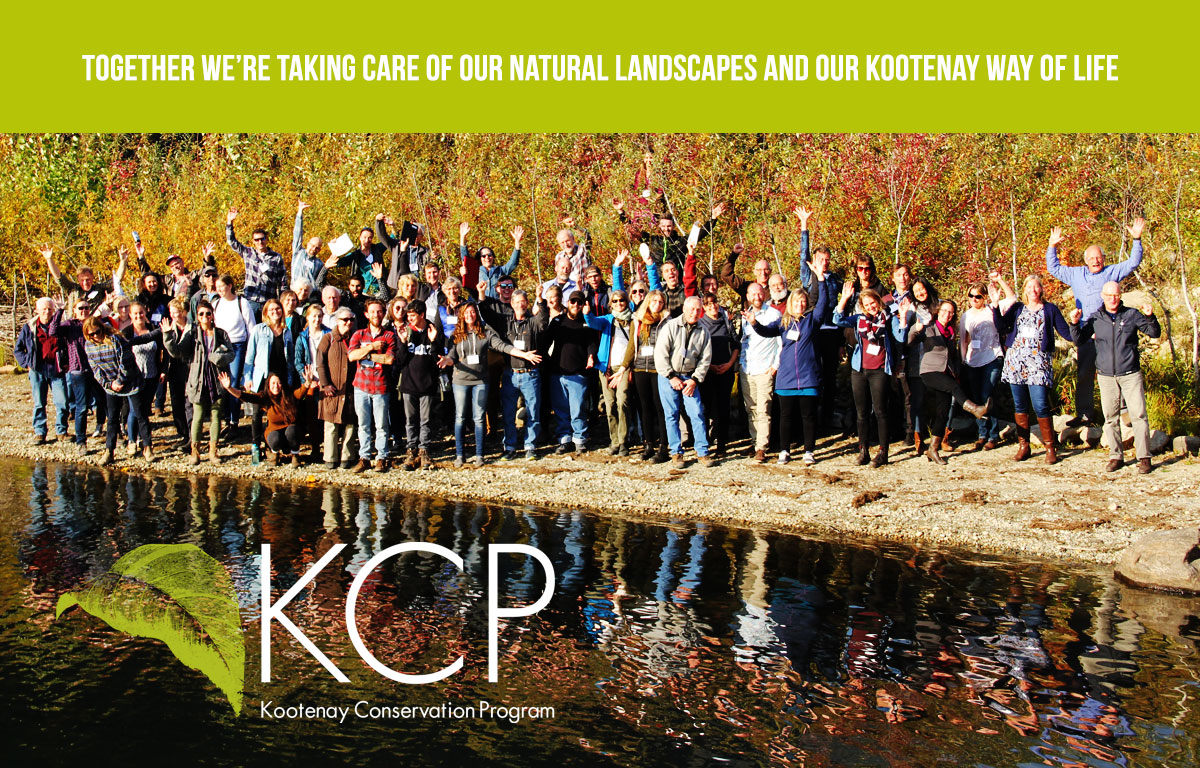
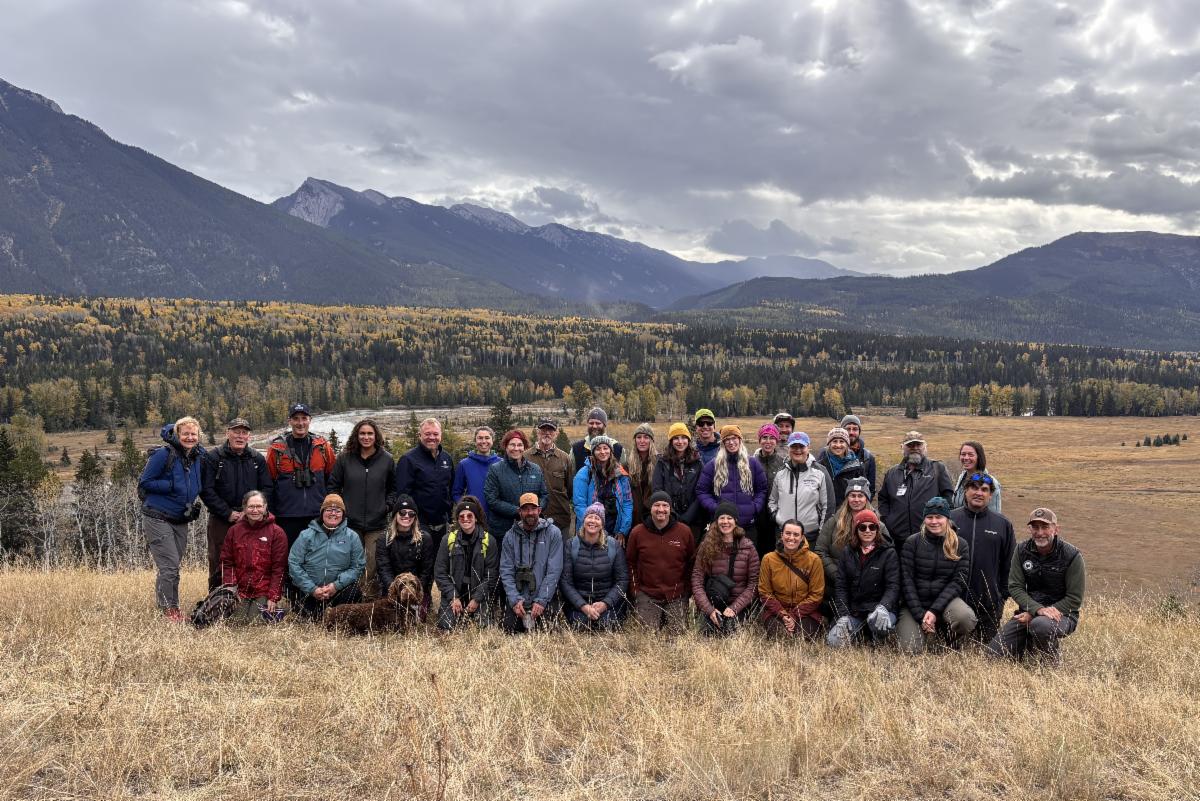
Fall Gathering 2025 was held in Fernie in early October
Thank you to all Funders and Participants
Kootenay Conservation Program would like to thank everyone who made the 2025 Fall Gathering such a success! We would like to thank the Yaq̓it ʔa·knuqⱡi'it First Nation who cohosted the event, and our program sponsors this year, who make this event and all of KCP’s work possible: Columbia Basin Trust, Fish & Wildlife Compensation Program, The Nature Trust of BC, Nature Conservancy of Canada, Environment & Climate Change Canada, and Habitat Conservation Trust Foundation. We also extend our appreciation to the event sponsors: FortisBC and Save-On Foods. A big thank you to our presenters and to everyone who attended the Fall Gathering. It wouldn’t be such a collaborative and inspiring event without each of your contributions and energy.
Click here for photos and the full summary.
KCP Communications
New 4-pager documents
KCP has created a set of four new new communications documents that highlight our work and initiatives to support conservation in the Kootenay region. These four visually-appealing digital or printed brochures explain the collective impact of the KCP Partnership, the importance of Local Conservation Funds, the significance of Kootenay Connect Community-Nominated Priority Places, and information for landowners about conserving private land in the Kootenays.
Contact kendal@kootenayconservation.ca for more information, or to obtain printed copies.
| | | |
Ducks Unlimited Canada, ʔaq̓am, The Nature Trust of BC, and the BC Ministry of Water, Lands and Resource Stewardship
North Bummers Flats Floodplain to be Reconnected to Kootenay River
Ducks Unlimited Canada (DUC), in collaboration with ʔaq̓am, The Nature Trust of BC (NTBC), and the BC Ministry of Water, Lands and Resource Stewardship (WLRS), have begun construction on the first phase of the Bummers Flats Floodplain and Wetland Restoration Project at the North Bummers Conservation Area. Located approximately 25km northeast of Cranbrook, Bummers Flats is a large floodplain situated along the east side of the Kootenay River. The floodplain is part of a 4,941-acre conservation complex collaboratively managed by DUC, NTBC and WLRS. The project will restore natural river-floodplain connections, enhance habitat for waterfowl, songbirds, amphibians and ungulates, boost climate change adaptation by improving water storage and providing downstream flood mitigation, and enhance collaboration with ʔaq̓am, recognizing that the project is adjacent to ʔaq̓am lands and in ʔamakʔis Ktunaxa.
Click here for the full story.
Elk River Monitoring Collaborative
Persistent drought underscores urgent need for local water action
In the Columbia Basin, persistent drought conditions are revealing how vulnerable local water systems are and why stronger local and Indigenous governance is needed to build resilience. A new “What We Heard” report from the Without Water Symposium calls for greater coordination and investment in watershed security to reduce risks to drinking water, wildfire response, and community well-being. Explore the key recommendations from more than 100 participants, including Indigenous leaders, industry, government representatives, and community members.
Click here to read the report.
Invasive Species Council of BC
2026 Invasive Species Centre Awards Nominations
Do you know a person or organization who is a leader in invasive species issues? Would you like to recognize and celebrate their contributions? Nominate them for a 2026 Invasive Species Centre (ISC) Award! The ISC Awards recognize those who champion and demonstrate values of excellence, innovation, and leadership in invasive species prevention and management in Canada. Award winners will be announced at the 2026 Invasive Species Forum, which is taking place virtually from February 17-19, 2026.
Click here to learn more and submit a nomination.
Nature Conservancy of Canada
Nature Conservancy of Canada purchases 37,000 ha of land in the Elk Valley
The Nature Conservancy of Canada (NCC) has purchased 37,000 hectares in B.C.’s Elk Valley. This acquisition for conservation follows the purchase of 8,000 hectares of land earlier in the year, marking one of the largest private land contributions in Canada. The area (previously owned by Doman Building Materials Group Ltd.) is part of an important wildlife corridor that species like grizzly bears, wolves, cougars and lynx use for migration, and will add on to an existing 7,000 km2 area of conserved lands in the Rockies and Crown of the Continent area. Initial efforts will focus on forest restoration and water conservation, and NCC will be working with recreational user groups to ensure responsible access.
Click here for more details.
| | | |
Canyon Goat River Watershed Sustainability Planning Open House
November 1, Kitchener • November 10, Canyon • November 12, Erickson
The Regional District of Central Kootenay (RDCK) in collaboration with yaqan nuʔkiy, is doing water sustainability planning to respond to growing concerns about water availability in the Goat River Watershed (includes the communities of Canyon, Erickson, Kitchener, Lister, Town of Creston, West Creston, Wynndel, and yaqan nuʔkiy). This effort aims to protect the health and resilience of the local watersheds that support communities, ecosystems, and economies. As part of Phase 2 of engagement, the RDCK will create and share educational tools to help them understand key issues and trends. These materials will be featured at open houses, starting with a drop-in session where you can explore the information displays about local water challenges, project goals, and watershed data. About an hour in, there will be a short presentation to summarize this information, followed by a discussion period where you can ask questions and share your thoughts. The Open House at the Kitchener Community Hall will take place from 1 to 3 pm PT, and the Open Houses in Canyon and Erikson will both take place from 5:30 to 7:30 pm PT.
Click here to learn more.
Webinar: Opportunities for Acquisition of Private Property in Canada
November 5, online
In webinar 1 of 2, the Coastal Douglas-fir Conservation Partnership will welcome Katie Blake and Robert Orland to explain the role of the American Friends of Canadian Conservation (AFCC) in assisting Canadian land trusts with acquiring private property in Canada from property owners who are US taxpayers. The presentation will explore specific opportunities and discuss a pilot project by AFCC to identify US-owned parcels in the Salish Sea for conservation, funded by HCTF and Sitka Foundation. In this pilot project, high-priority parcels were identified, with a portion having US addresses and a portion having corporate owners, using GIS modeling and title data. This webinar will be followed by a 1-hour workshop to share specific knowledge and tools to help conservation agencies incent US-based owners of private property in Canada to dedicate land for conservation. From 10 to 11:30 am PT.
Click here to learn more and register.
Pacific Americas Flyway Youth Forum
November 7 to 9, Online
Do you love exploring wetlands and watching migrating waterfowl? Calling all conservation leaders ages 18 to 35! This free three-day online forum offers hands-on workshops, expert-led webinars, and intergenerational dialogue to help you build skills, grow a cross-border network, and amplify youth leadership in flyway and wetland conservation across the Americas.
Click here for more details.
Wild & Scenic Film Festival
November 15, Invermere and online
The Wild & Scenic Film Festival returns to Invermere on the evening of November 15. Now in its 12th year, this Wildsight Invermere fundraiser is a high-spirited gathering where we come together to celebrate our wild landscapes—and explore the stories that help protect them. The program of ten films brings stories of wild places, bold expeditions, and grassroots solutions to the Columbia Valley. Can’t make it to Invermere? Watch the films online. Want to help even more? Check out the three great prizes in the online Raffle for the Wild.
Click here to purchase tickets.
British Columbia Protected Areas Research Network Researcher Forum
November 17 to 19, Kamloops
The British Columbia Protected Areas Research Forum (BCPARF) brings together researchers, advocates, managers, students, and community members to share knowledge and advance evidence-based decision-making for parks and protected areas across BC and beyond. Since 2006, BCPARF has worked with university and community co-hosts to create spaces for meaningful dialogue about protected areas research. This year's forum has received over 60 submissions, reflecting a holistic and multidisciplinary approach that prioritizes evidence-based decision-making and needs-based research. This gathering takes place November 17 to 19, at Thompson Rivers University in Kamloops, with a concurrent hub at the Centre for Dialogue at Royal Roads University in Victoria. An online hub will stream full days of programming from both physical locations.
Click here to learn more and register.
High-Elevation Five-Needle White Pines: 2025-2026 Science and Management Webinar Series
November 18 • December 16 • January 20, online
Join the Whitebark Pine Ecosystem Foundation (WPEF) for their “High-Elevation, Five-Needle White Pines: Science and Management Webinar Series”, on the third Tuesday of each month. All webinars are free and open to the public. This year we’ll hear from experts sharing the latest scientific findings and management initiatives on whitebark pine and other high-elevation five-needle pine species across Canada and the USA. Webinar recordings are archived on WPEF’s Whitebark Flix channel. From 11 am to 12 pm PT / 12 to 1 pm MT.
Find more details and the registration link here.
Webinar: Wildfire
November 19, online
In webinar 2 of 2, the Coastal Douglas-fir Conservation Partnership will welcome Jonathan Reimer to discuss the Braided Wildfire Knowledge Mobilization project, a new initiative to support landscape-level wildfire resiliency in the capital region. Fire governance is shared between 50 municipalities, First Nations, and other governing bodies, each with their own policies on open burning, wildfire response, and land management. The project will strengthen multi-jurisdiction coordination through knowledge and resource sharing activities. In this session, we will reflect on a few lessons learned so far about CDF ecosystems, disturbance ecology, and wildfire risk reduction activities. Joe Gilchrist of the Salish Firekeepers Society will also join the webinar to discuss the Society’s work to strengthen intertribal relationships and promote fire stewardship guided by principles of education, wellness, advocacy, research, and leadership. From 10 to 11 am PT.
Click here to learn more and register.
Kootenay Bighorn Sheep Workshop: From Summit 2022 to Action 2025 and Beyond
November 21, Cranbrook
The Wild Sheep Society of BC (WSSBC) invites you to collaborate on stewardship action for Rocky Mountain Bighorn sheep in the Kootenay area. It’s been 3 years since the BC Wild Sheep Summit in Prince George, when short-, medium- and long-term actions were outlined. This regional workshop is the next collective step following the Summit, with goals of examining the 2022 priorities, assessing progress on the assignments, and refocusing on those that have not yet been accomplished. WSSBC invites you to attend this day-long workshop to share your experience and interest in wild sheep and help to build a suite of actions that are deliverable and effective. The ‘Kootenay Bighorn Sheep Workshop: From Summit 2022 to Action 2025 and Beyond’ will be held at St. Eugene Resort near Cranbrook. Please contact Dr. Helen Schwantje with any questions.
Click here for more information and to register.
2025 Canadian Land Trust Summit
November 24 to 26, Victoria
The 2025 Canadian Land Trust Summit will take place in BC! From November 24 to 26, join the Alliance of Canadian Land Trusts for this event in Victoria, on the theme of ‘Conservation through Communities’. This event is your chance to build stronger networks, exchange innovative ideas, explore practical tools, and move conservation forward in Canada. Registration is open until November 12.
Click here for more information and to register.
4 Seasons of Indigenous Learning course
November 2025 to May 2026
Beginning in the fall and running until the spring each year, this course serves to support participants in deepening their understanding of Indigenous knowledge and perspectives while strengthening connections with the local land and supporting more respectful, reciprocal relationships. You can register for Seasons 1, 2, 3, or 4 of the course modules and presentations, or join for the seven Indigenous learning presentations only - offered by an incredible group of Indigenous leaders, elders and educators from across Turtle Island (North America). For 2025/2026, presenters include East Kootenay residents Mark Thomas, a Kinbasket descendant, member of the Shuswap Band (Kenpesq't), and Salmon Chief for his community, and Jenna Jasek, Director of Indigenous Learning for CBEEN & the Outdoor Learning School, who lives on the unceded territories of her ancestors, the Secwépemc and Ktunaxa people. KCP Partner organizations receive a 25% discount; please email megan@kootenayconservation.ca for the discount code.
Click here for more information and to register.
Invasive Species Council of BC: 2026 Invasive Species Forum
February 17 to 19, 2026, online
The Invasive Species Centre is pleased to announce the 2026 Annual Invasive Species Forum is now accepting presentation submissions. The event is taking place February 17–19, 2026 as a fully virtual and free event. The event theme, Progress Through Partnerships, highlights the vital role of collaboration in achieving successful invasive species prevention and management. They are inviting researchers, practitioners, Indigenous knowledge holders, community leaders, policy makers, educators, and others working in invasive species prevention and management to submit proposals to present at the Forum.
Click here to see the event webpage and to register.
| | | |
FWCP’s Columbia Region grants
Deadline: November 3
All grant applicants for the Fish & Wildlife Program (FWCP)’s grants in the Columbia region must start their application by submitting a mandatory notice of intent—a short description of your proposed project. Eligible grant applicants include Indigenous Nations, communities, and businesses; consultants, agencies, nongovernment organizations, individuals, and academic institutions. Applications are encouraged from Indigenous Nations, stewardship groups, and non-government organizations. FWCP is hosting an online information session on October 2 to provide more details about the required noticed of intent (NOI). The deadline for full grant applications is November 3.
Click here for more details and to apply.
Seed Grants, Habitat Conservation Trust Foundation
Deadline: November 7
HCTF understands that Fish & Wildlife projects often require initial planning, consultation and engagement, or preliminary work prior to a full project application. Do you have a project idea for the future, but need to lay the groundwork for it before you start? Seed grant funding may be right for you. Seed grants are for proponents who have an idea for a future Fish & Wildlife project but need to complete preliminary planning and work to develop their idea before submitting a proposal under the main Fish & Wildlife Grant intake. Proponents may apply for seed funding of up to $10,000 to help fill information gaps, explore project feasibility, identify project partners, and prepare technical information.
Click here for more information and to apply.
Fish & Wildlife Grants, Habitat Conservation Trust Foundation
Deadline: November 7
HCTF Fish & Wildlife Grants are available to anyone (provincial or municipal governments, First Nations, academic institutions, non-government organizations, industry) for projects that: focus on native freshwater fish, wildlife, and their habitats; have the potential to achieve a significant conservation outcome; and align with HCTF’s purposes as laid out in the Wildlife Act. One of HCTF’s priorities is to support fish and wildlife habitat enhancement and restoration, therefore, projects that involve on-the-ground habitat enhancement and/or restoration activities are strongly encouraged.
Click here for more information and to apply.
Caribou Habitat Restoration Grants, Habitat Conservation Trust Foundation
Deadline: November 7
The Caribou Habitat Restoration Fund (CHRF), administered by the Habitat Conservation Trust Foundation, supports the recovery of important caribou habitat in British Columbia through both functional and ecological restoration methods. Supported by contributions from the Province of BC and Environment and Climate Change Canada, the CHRF funds projects that aim to reduce caribou mortality in the short term by functionally restoring linear features, such as roads and seismic lines, and further restore these features to their adjacent intact habitat types through ecological restoration.
Click here for more information and to apply.
Land Stewardship Grants, Habitat Conservation Trust Foundation
Deadline: November 7
The Land Stewardship Grant provides three years of funding for operations and management activities on lands owned OR managed by non-governmental organizations (NGOs). Funding for this program is provided through an endowment fund provided to HCTF by the Province of British Columbia.
Click here for more information and to apply.
Habitat Stewardship Program for Species at Risk
Deadline: November 13
The Habitat Stewardship Program for Species at Risk (HSP) was established in 2000. It provides funding for projects submitted by Canadians that contribute directly to the recovery objectives and population goals of species at risk listed on schedule 1 of the Species at Risk Act and that prevent other species from becoming a conservation concern. Environment and Climate Change Canada (ECCC) administers HSP funds that support terrestrial stewardship projects while Fisheries and Oceans Canada is responsible for administering the HSP for Aquatic Species at Risk. Applications are accepted until 11 am PT / 12 pm MT on November 13.
Click here for more details and to apply.
Indigenous Partnerships for Species at Risk
Deadline: November 13
The Indigenous Partnerships for Species at Risk (IPSAR), formerly known as the ‘Aboriginal Fund for Species at Risk (AFSAR)’, is a Government of Canada program administered by Environment and Climate Change Canada. The program recognizes the important role Indigenous peoples have in wildlife conservation by supporting Indigenous leadership in the conservation, protection, and recovery of species at risk and culturally significant species, and their habitats on Indigenous lands or territories. The program also supports the development of Indigenous capacity to actively participate in the implementation of the Species at Risk Act (SARA). The IPSAR program supports projects for terrestrial species including birds, land mammals, reptiles, and plants. Applications are accepted until 11 am PT / 12 pm MT.
Click here for more details and to apply.
Watershed Security Fund
Deadline: November 17
The Real Estate Foundation of BC, the First Nations Water Caucus, and the First Nations Fisheries Council are working together to steward and co-develop a permanent entity for the Watershed Security Fund (WSF). The Province has made an initial $100 million investment and will have an advisory role. WSF funding is focused on land and freshwater systems within the watershed basins of BC. WSF supports projects that advance reconciliation, ecosystem health, and community resilience in the face of climate challenges like drought, wildfire, and flooding. Three funding streams accept applications of up to $50,000, $100,000 and $400,000 respectively. Funded projects do not need to spend their grant funding within a specific fiscal year. Projects can be short term or multi-year (up to 3 years), with the option to extend timelines if needed.
Click here for more details.
BC Conservation & Biodiversity Awards
Deadline: December 31
The BC Conservation & Biodiversity Awards Foundation was established in 2020 to recognize and financially support conservation-based initiatives in the Province of BC. The awards are given annually for the most impactful initiatives brought forward by BC based charities, for specific work contributing to the improvement of the natural environment of BC and the preservation of its wilderness and biodiversity. Award applications are accepted throughout the calendar year to December 31, with the annual award winners then chosen by the Selection Committee and announced on March 1st of the following year.
Click here for more information and to apply.
Small-scale Ecosystem Grants
Deadline: Ongoing until funding is committed
Do you have a small-scale project, that can be completed in two years or less, that helps improve ecological health and native biodiversity in the Basin? Small-scale Ecosystem grants are available to enhance a terrestrial and/or aquatic ecosystem, such as wetlands, fish habitat, forests or grasslands. Eligible applicants include registered non-profits, local governments and First Nations in the Columbia Basin Trust region. Applications are accepted on a first-received, first-served basis and are assessed as they come in and continue until all funding for the program has been committed. Contact the Trust to enquire about your project, email Melissa Johnson at ecosystems@ourtrust.org.
Click here for more information and to apply.
Climate Change Grants, Peter Gilgan Foundation
Deadline: Ongoing
The Peter Gilgan Foundation's Climate Change Grants support nature-based solutions, low-emission and renewable technologies, green building and living, and community resilience. Understanding that greenhouse gas emissions are the driver of climate change, they prioritize projects with the potential to enable large-scale emission reductions in Canada. For the nature-based solutions category, the Foundation support initiatives that protect and restore priority ecosystems, support Indigenous lands and protected areas, enhance natural infrastructure in our built environment, and/or decarbonize Canada’s agriculture and forestry sectors. The Foundation accepts applications for 3 types of grants: project grants, capacity-building grants, or general operating grants. Climate change grants typically range between $50,000 and $150,000 per year. There are no deadlines for the climate change program; expressions of Interest are accepted on a rolling basis.
Click here for more information and to apply.
Seed Grants, Fish and Wildlife Compensation Program
Deadline: Ongoing
You can now apply for a Seed Grant any time of the year; you don’t need to wait for the FWCP annual grant intake. An FWCP Seed Grant—up to a maximum of $5,000—can be used to fill information gaps, prepare technical information, and explore the feasibility of your project idea. Think of a Seed Grant as a first step toward a future Large Grant application. The FWCP Columbia Region board will review Seed Grant applications and make decisions at its spring, fall, and winter board meetings. Apply early.
Click here for more information.
Grassland and Rangeland Enhancement Program
Deadline: Ongoing
If you have an idea that will maintain or enhance grassland resources while meeting conservation, environment and recreation objectives, this program could help support it. This program is delivered by the Kootenay Livestock Association.
Click here for more information and how to apply.
Fish and Wildlife Compensation Program Community Engagement Grants
Deadline: Ongoing
Got an idea for a project to support fish and wildlife in the Columbia region? Community Engagement Grants are typically $500 to $1000 and help stewardship groups and others take action to benefit local fish and wildlife.
Click here for more information and how to apply.
Land Securement Grants from Fish and Wildlife Compensation Program
Deadline: Ongoing
Securing critical ecosystems and habitats for conservation is an important way to help conserve and enhance fish and wildlife in watersheds impacted by BC Hydro dams. The Fish & Wildlife Compensation Program (FWCP) funds land securement projects and supports a partnership approach in their Coastal, Columbia, and Peace regions. Due to the time-sensitive nature of real-estate transactions, grant applications for land securement purchases can be discussed with the region managers at any time of year. Please contact Columbia Region Manager Jen Walker-Larsen at Jennifer.Walker-Larsen@bchydro.com with your questions.
Click here for more information.
| | | |
Ktunaxa Nation
Manager, Aquatic Stewardship
The Ktunaxa Nation is hiring a Manager of Aquatic Stewardship to lead land use reviews, ensure Ktunaxa values guide decisions, and provide technical and strategic support for stewardship and aquatic resource initiatives. Applications are accepted until January 2, 2026.
Click here for more details and to apply.
Ktunaxa Nation
Natural Resources Manager, Cranbrook
The Manager of Natural Resources Stewardship is responsible to the Director and leads a team to ensure that Ktunaxa aboriginal titles, rights and interests, including land stewardship principles, are protected and enhanced in any lands and resources-based regulatory decision-making processes according to the team functions and work plan. The position leads a team of professional and technical experts to review land use applications, develop and set mitigation/conditions to reduce impacts to Ktunaxa rights and monitor for compliance. The position ensures Ktunaxa values and land stewardship principles are accounted for in land and resource use decisions within Ktunaxa homelands. Applications are accepted as soon as possible.
Click here for more information and to apply.
Ktunaxa Nation
ʔa·knusti Manager, Cranbrook
The term ʔa·knusti can be translated into English to include guarding over, watching out for, and tending to Ktunaxa people, land, plants, animals, water, and fish. This position will be responsible for development and implementation of the ʔa·knusti strategy, which will guide annual planning, and evaluation of the ʔa·knusti team. As a part of strategic and annual planning there must be a balance between the engagement, mentoring, and learning from Ktunaxa Elders and Knowledge Holders and western methodologies. A large part of the work for ʔa·knusti will come from the Lands & Resources sector but will also include all other sectors and the four Ktunaxa First Nations. The incumbent will work with a team to ensure on-the-ground protection and stewardship of Ktunaxa resources, including fish, wildlife, and archaeology, applying policy and procedures established by Ktunaxa Nation Council, as well as applying Ktunaxa world view and methods. Applications are accepted as soon as possible.
Click here for more information and to apply.
Ktunaxa Nation
GIS Analyst (Lands), Cranbrook
The GIS Analyst will support the Lands and Resources Sector through coordination and delivery of geospatial support services. This would include maintaining an up-to-date database that details Ktunaxa’s cultural and ecological values across ʔamakʔis Ktunaxa as well as the impacts and resource uses that threaten these values. The GIS Analyst will support a variety of work across all facets of land and resource stewardship, including strategic land stewardship planning, referrals management, aquatic stewardship, archaeology, environmental assessments and supporting ʔa·knusti (Ktunaxa Guardians). Along with providing GIS support to a team of multidisciplinary professionals and subject matter experts, the successful candidate should be knowledgeable on the topic of data sovereignty, data governance and able to collaborate on work related to this. Applications are accepted as soon as possible.
Click here for more information and to apply.
| | | | |
For a comprehensive list of up-to-date job postings, check the CBEEN Job & Volunteer Board, an excellent resource for Kootenay conservation career and volunteer opportunities.
| | |
Corridors and Crossings Forum: What We Heard Summary Report
BC Conservation Foundation, Government of BC, Okanagan Institute for Biodiversity, Resilience, and Ecosystem Services at the University of British Columbia, Parks Canada, Thompson-Nicola Conservation Collaborative, and Okanagan Collaborative Conservation Program
The Corridors and Crossings Forum, held June 11 to 13 in Kelowna, brought together more than 50 participants from First Nations, government agencies, academic institutions, NGOs, and community organizations to advance ecological connectivity and reduce wildlife-vehicle collisions (WVCs) in British Columbia’s Southern Interior. The Forum emphasized relationship building, knowledge sharing, and the identification of priority actions for wildlife corridors and crossing structures. The Corridors and Crossings Forum What We Heard Summary Report highlights mapping exercises, presentations and facilitated discussions that identified key themes regarding the importance of Indigenous participation, the need for improved data accessibility, and the urgency of coordinated action across jurisdictions to prioritize actions for wildlife corridors and crossing structures. This discussion paper, written by Melissa Butynski & Robin Blott from UBCO served as a foundational resource to frame and support regional efforts aimed at improving wildlife connectivity and reduce Wildlife Vehicle Collisions in BC’s Southern Interior.
Workbook to Create a Cultural Burn Pathway
First Nations Emergency Services Society (FNESS) and the Indigenous Leadership Initiative (ILI)
The Create a Cultural Burn Pathway workbook, released by the First Nations Emergency Services Society (FNESS) and the Indigenous Leadership Initiative (ILI), aims to help Indigenous Nations create cultural burn programs that reduce wildfire risk and revitalize a core part of our relationship with the land. Indigenous Nations bring a range of current experience with cultural fire. To meet Nations where they are, FNESS and ILI launched a multi-year community-based research project, involving over 50 Elders and knowledge holders, numerous gatherings and workshops, extensive peer reviews, and multiple edits to the workbook to reflect all the input. The result is a workbook containing seven worksheets that walk communities through the development of a strong cultural fire program—no matter what stage they are in.
Factsheets: Benefits of Riparian Areas
BC Ministry of Agriculture
The BC Ministry of Agriculture recently released four Benefits of Riparian Areas factsheets. All habitats within the agricultural landscape are important, but aquatic and riparian areas are especially significant to both biodiversity and agricultural production. A healthy riparian area provides many key ecological functions, including building and maintaining stream banks, reducing stream flow energy and minimizing floods, recharging groundwater, filtering water, shading the stream to reduce solar heat gain, and maintaining and enhancing biodiversity. Learn more about the benefits of healthy riparian areas with these factsheets: Healthy Riparian Areas and Agricultural Land; Flood Mitigation and Water Resources; Improved Pollination, Pest Control, and Biodiversity; and Soil Health.
Access all the factsheets here.
Buzzing with benefits: Short-term on-farm grassland set-asides support beneficial insects
M. Tsuruda, M. Clausen, D. Bondar, C. Kremen, and J. Carrillo
The researchers studied how on-farm grassland set-asides in BC affect the number and variety of both beneficial predatory insects and plant-eating insects compared to conventionally managed cropped fields. Farmers can help reverse the decline of terrestrial insect populations by creating non-crop habitats, such as short-term grassland restorations, which support beneficial insects that, in turn, can provide benefits to crop production. Two types of grassland set-asides were evaluated; one includes plant species that mimic historic tall grass habitats, and the other also includes flowering plants which can support beneficial insect populations (such as pollinators and predatory insects).
Click here to access the research brief or read the full report here.
KCP Stewardship Solutions Toolkit
Resource updated with growing number of stewardship listings
Since 2019, KCP's Stewardship Solutions Toolkit, an easy-to-access stewardship resource for landowners and land managers in the Kootenays, has been available both in print and online. We keep this resource up to date, and encourage you to access all the available stewardship "solutions" (i.e. services and resources) available in each of the 14 Conservation Neighbourhoods. Visit the website, select your location on the homepage map, and you'll be brought to the growing list of stewardship options available in your region.
Visit the Stewardship Solutions website.
| | | | | |