Conservation in the Kootenays
Monthly eNews
| | KCP respectfully acknowledges that our work and lives are situated in the traditional, ancestral, and unceded territories of the Ktunaxa, Secwépemc, Sinixt, and Syilx Okanagan peoples who have stewarded this land, water and all living things since time immemorial, and whose values and cultures continue to inspire and guide stewardship of this region. | | |
Creston Valley Conservation Action Forum Check-in
KCP co-hosted with Creston Valley Wildlife Management Area
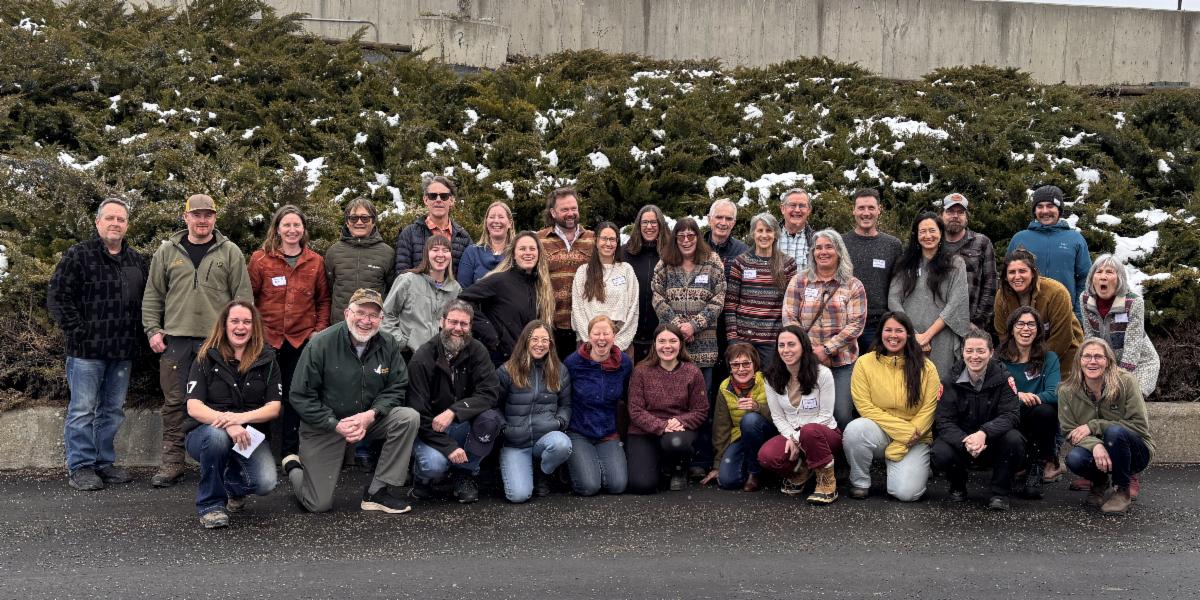
KCP recently teamed up with Creston Valley Wildlife Management Area to co-host a Conservation Action Forum Check-in Meeting for the Creston Valley. Over 35 people from 19 local organizations participated in this dynamic event on February 18, coming together to review the progress being made on the five priority actions identified during the 2020 Creston Valley Conservation Action Forum. Attendees also shared information on local research and restoration projects benefiting fish and wildlife, connectivity, biodiversity, grizzly bears, and fire restoration, to name a few. The afternoon was spent in breakout groups discussing next steps for key actions and potential collaborations. Stay tuned for the summary report!
Click here for a brief overview and to access the summary report when completed.
KCP Conservation Leadership Awards
Open for 2026 nominations
Do you know someone who deserves to be recognized for their conservation work in the Kootenays? The annual KCP Conservation Leadership Awards recognize individuals who have demonstrated leadership, innovation and dedication to conservation in our region. Nominees must be affiliated with a KCP partner organization and they must show a demonstrated commitment toward the KCP vision. Award winners will be announced at the KCP Fall Gathering. Nominations are accepted until June 15.
Click here to download the nomination form.
Thank you to KCP Partners
Partner Survey completed
KCP would like to give a big thank you to all the wonderful people who took time to fill out KCP's Partner Survey last month! Your input ensures that KCP is focused on the most important priorities for all partners and that together we are working towards our shared goals for private land stewardship and conservation in the Kootenays. Congratulations to our prize winner: Alli Banting (Wildsight).
Columbia Valley Local Conservation Fund
2026 projects have been approved by the Regional District of East Kootenay
Ten projects were recently approved by the Regional District of East Kootenay (RDEK) to receive funding this year through the Columbia Valley Local Conservation Fund (CVLCF). Projects include monitoring of local water bodies Lake Windermere and Columbia Lake for water quality and quantity by local water stewardship groups. The BC Wildlife Federation will continue restoration in the headwaters of the Kootenay River this year, as well as plan for restoration of two degraded historic beaver complexes near Invermere and Canal Flats. Columbia Wetlands Stewardship Partners will enhance habitat for species at risk by restoring wetlands and strengthening habitat connectivity. Four projects are focused on stewarding local wildlife including bighorn sheep (ʔakisq̓nuk First Nation and Wild Sheep Society of BC), bat species (Wildlife Conservation Society Canada), and bank swallows (Wildsight Invermere), and restoring and enhancing their habitat. Finally, the East Kootenay Invasive Species Council will receive funding to continue containing and reducing the spread of leafy spurge. A local government service that creates a dedicated fund for conservation, the CVLCF distributes funding each year to eligible projects taking place in the area between Spillimacheen and Canal Flats.
Click here for more information on 2026 projects, and here for info on all CVLCF projects.
RDCK Local Conservation Fund
2026 projects have been approved by the Regional District of Central Kootenay
Nine projects were recently approved by the Regional District of Central Kootenay (RDCK) Board of Directors to receive funding this year through the RDCK Local Conservation Fund (RDCK LCF). A pollinator highway project in the Slocan Valley (Elk Root Conservation Farm), along with a project helping landowners reduce invasive plants on private land and take long-term, independent stewardship action (Central Kootenay Invasive Species Society), will boost local biodiversity and community resilience. Grizzly Bear Coexistence Solutions will receive funding to provide a 50% cost share for electric fencing to reduce human-wildlife conflict, and projects led by Okanagan Nation Alliance and Wildlife Conservation Society Canada will work to conserve local bat populations. Living Lakes Canada is addressing climate pressure such as drought, altered precipitation patterns, and snowpack shifts by filling water data gaps in key watersheds. Two projects (BC Wildlife Federation and Friends of Kootenay Lake Stewardship Society) will focus on wetland restoration to improve water filtration, carbon storage, and climate resilience. Finally, the West Kootenay Watershed Collaborative Society will use innovative science to demonstrate how climate change and forest disturbance affect watershed stability and health. A local government service that creates a dedicated fund for conservation, the RDCK Local Conservation Fund distributes funding to projects in Electoral Areas A, D, E, F and H that are approved by RDCK Directors each year.
Click here for more information on 2026 projects and here for info on all RDCK LCF projects.
Kootenay Connect and the Science of Success
Kootenay Connect Priority Places featured in Canadian Geographic
The Kootenay Connect initiative and KCP’s Kootenay Connect Priority Places (KCPP) were the topic of a Canadian Geographic feature article last month! KCPP is based on a 2019 analysis by biologist Dr. Michael Proctor and ecologist Marcy Mahr, who identified a regional network of 12 priority connectivity areas linking valley‑bottom riparian/wetland complexes with surrounding uplands and mountain ranges. That science‑based framework has continued to guide where KCP’s partner organizations focus restoration and stewardship efforts. The article highlights a vivid, real‑world example of ecological connectivity, the GPS‑collared grizzly, “Drone Bear”, as it navigates the Columbia Valley using Kootenay Connect’s predicted corridors to move between the Purcell Mountains and Kootenay National Park in the Rockies. Creston’s Frog Bear Conservation Corridor, the Slocan Valley biodiversity project, and the ecological significance of the Columbia Lake Corridor are also featured in the article.
Click here to access the article.
KCP and CMI's 2026 Winter Webinar Series has wrapped up
Webinars recordings are all available to watch
Each year, KCP hosts a webinar series to facilitate the exchange of technical resources among partners and stakeholders, ensuring that local conservation efforts are informed by the best available knowledge and practices. The 2026 series was presented once again in collaboration with the Columbia Mountains Institute of Applied Ecology (CMI), and focused on the theme "Lessons for the next chapter of Restoration & Stewardship in the Columbia Basin". In this webinar series, we honoured the legacy and tried to capture the extensive knowledge of senior restoration and stewardship professionals in the Columbia Basin. Presenters reflected on key lessons from their careers in ecological restoration, land stewardship, and ecosystem monitoring. The series includes presenters who are both preparing to “pass the torch,” and some who have effectively “taken the torch”: Dr. Stewart Rood, Audrey Ehman, Randy Harris, Delaney Hall, and Dr. Suzanne Bayley. All of the recordings from this year's series, as well as previous year's webinars, are available to watch on our website.
Click here to access the recordings.
| | | |
Real Estate Foundation of BC
Nominations open for 2026 Land Awards - until March 5
The Real Estate Foundation of BC (REFBC) invites you to nominate an outstanding project or remarkable leader for the 2026 Land Awards. The Land Awards celebrate big ideas and bold leadership in sustainable, equitable, and socially just land use and real estate across BC. The awards recognize outstanding projects and remarkable leaders that protect the lands and waters we love and create sustainable, inclusive, and resilient communities. There are five categories for projects, including Land Use and Conservation, and two categories for individuals. The deadline to make a nomination is March 5.
Click here for more details.
Syilx Okanagan, Secwépemc and Ktunaxa
Salmon Warriors Gathering 2026 - apply by March 23
Syilx Okanagan, Secwépemc and Ktunaxa young adults ages 19 to 29 are invited to join the first Tri-Nation Salmon Warriors Spring Gathering, from May 11 to 13. New and returning Salmon Warriors are encouraged to apply. This is a Tri-Nation Road Trip to witness and celebrate this year's annual Salmon Fry Releases in the upper Columbia River region. Gather with Elders and community members from all three Nations to help Okanagan Nation Alliance's (ONA) kł cp̓əlk̓ stim̓ Hatchery and Fisheries Team release the fry that Salmon Warriors helped to collect as eggs and fertilize during the annual Broodstock Collection.
Click here for more details and here to apply.
Wildsight
Ellen Zimmerman Award - nominations due by March 31
Do you know a woman who has made an outstanding contribution to protecting nature or environmental education in the Columbia Headwaters region? Nominate them for the 2026 Ellen Zimmerman Award and support her ongoing work and commitment to protecting nature and inspiring about nature through environmental education. Ellen was a champion of the Columbia Wetlands for the past four decades, blazing a trail of conservation advocacy for future generations to follow. The award winner will receive a cash award to support their ongoing work and a commemorative art piece. This award is open to female-identifying individuals. Nominations are due by March 31.
Click here for more details and the nomination form.
Central Kootenay Invasive Species Society
Support for Creston Landowners & Farmers with Toxic Poison Hemlock
The Central Kootenay Invasive Species Society (CKISS) is asking private landowners, farmers, and residents in the Creston area to report poison hemlock wherever it is seen in the Creston area. Poison hemlock (Conium maculatum) is a highly toxic invasive plant that is deadly to people, livestock, and wildlife when ingested. CKISS can help remove this plant - including guidance, trained volunteer assistance, and financial incentives for treatment. Early reporting is critical to support planning for the spring 2026 treatment season, and even brief location details are helpful. If you have seen poison hemlock on your property or elsewhere in the Creston area, please report it by calling 1-844-352-1160 or emailing info@ckiss.ca. CKISS is also welcoming volunteers interested in learning how to safely treat poison hemlock, with cash rewards for completing approved treatment work by the end of June.
Click here for more information.
BC Ministry of Water, Land and Resource Stewardship
Supporting chronic wasting disease response through Cranbrook deer hunt
Results from a targeted deer hunt in the Cranbrook area show no new detections of chronic wasting disease (CWD), supporting ongoing efforts to contain and manage the disease in southeastern B.C. From January 5 to 31, a general open-season deer hunt was implemented in a defined area near Cranbrook to bolster sampling efforts and reduce the risk of CWD spreading to surrounding deer and elk populations. A total of 228 deer were harvested during the hunt, and all samples submitted for testing were negative for CWD. Although no animals tested positive, targeted hunts within the established management zone aim to reduce deer population and density, providing fewer opportunities for close contact between animals and limiting the risk of CWD spread.
Click here for more information.
Fernie Rod and Gun Club & Yaq̓it ʔa·knuqⱡi’it First Nation
Wigwam Flats Ecosystem Enhancement Project
The Wigwam Flats Ecosystem Enhancement Project had a successful first year in 2025. The five-year project is being led by Fernie Rod and Gun Club, in partnership with Biodiversity Pathways and Yaq̓it ʔa·knuqⱡi’it First Nation, to restore 250 hectares of grassland and open forest in the Wigwam Flats area near Fernie. Over $1.3 million has been raised for the project so far, with the largest contributions being $750,000 from Columbia Basin Trust and $250,000 from Elk Valley Resources. Small trees and brush in 85 hectares of mule deer and bighorn sheep habitat were thinned and pruned, and 83 hectares of land was treated for invasive weeds. Treatment prescriptions were undertaken on 1,165 hectares of land, and 37 trail cameras were set up to monitor wildlife and recreational use. Community support has been key to the project’s success.
Click here for more details.
Slocan River Streamkeepers
Water Monitoring in the Slocan Valley
The Slocan River Streamkeepers (SRS) is actively involved with water quality and temperature monitoring of creeks, streams, and rivers in the Slocan Valley. This included a second round of post-wildfire sampling in the spring of 2025 across seven wildfire-affected watersheds, and assessing stream health in Lemon and Winlaw Creeks using benthic macroinvertebrate samples. Temperature loggers were also maintained across multiple Slocan Valley watersheds, including the Slocan River, Little Slocan River, and surrounding creeks, tracking seasonal and long-term thermal trends. All water quality results and project details are available on the SRS website.
Click here for more details and to access monitoring results.
Central Kootenay Invasive Species Society
BC Remains Invasive Mussel-free
The Central Kootenay Invasive Species Society (CKISS) is pleased to share that all 191 water samples collected in 2025 from lakes and rivers across the Kootenay region tested negative for invasive zebra and quagga mussels. Results confirm that our local waterbodies remain mussel-free. CKISS conducted monitoring at priority lakes and rivers throughout the region, complementing and strengthening BC's broader invasive mussel prevention efforts. At the provincial scale, 880 plankton tow samples were collected from 91 priority waterbodies between June and October — all tested negative. To date, no live zebra, quagga, or golden mussels have been confirmed in BC waterways. Despite this good news, the threat of invasive mussels looms large. Please remember to Pull the Plug – it’s the law in B.C.
Click here for more details.
Haven for Ecology
New year, new Name, new Identity
As of January 2026, the organization formerly known as the Valhalla Foundation for Ecology is now Haven for Ecology with a fresh new name and a whole new look. "We couldn't be happier with our new name, our beautiful new logo and our new website, all reflective of our mission of creating havens for wild things," said Executive Director Lorna Visser, who wrote a blog post with more details about why they changed their name. "A name change was overdue after decades of being confused with the Valhalla Wilderness Society," said Visser. "It was a considerable amount of administrative work including updating our charitable designation and purposes but now that it’s done we're thrilled with the recognition that Haven for Ecology is getting.”
Click here to see the new website.
| | | |
Alternatives to Road Salt: Exploring Perspectives & Empowering Action
March 3, Online
Join Watersheds Canada, in collaboration with WaterWatchers and Water Rangers, for this free webinar. While there's scientific & civic consensus that road salt is a huge issue for our environmental systems, conflicting information abounds when it comes to salt alternatives. Are there chemical de-icers that are okay for our water bodies? How do natural alternatives like beet juice stack up? What should you be doing at home to move away from winter salt use? Sort through the realities, myths, and mysteries of alternatives to road salt, and receive some actionable takeaways for what you can do to help address salt pollution. From 3:30 to 5:30 pm PT / 4:30 to 6:30 pm MT.
Click here for more details and to register.
Kootenay Lake Fishery Recovery public meeting
March 9, Balfour
Join fisheries staff from the Ministry of Water, Land and Resource Stewardship for an evening presentation, Q & A session, and update about Kootenay Lake Fishery Recovery efforts. This meeting is free and open to the public. From 6:30 to 8 pm PT at Balfour Community Hall, 534 Charles Road.
Click here for a poster.
2026 Seed Bank Gathering
March 11, Online
Join the Coastal Douglas-fir and Associated Ecosystems Conservation Partnership (CDFCP) for an online gathering about the BC Seed Bank for rare and culturally significant plants. Because BC is home to 55 federally Endangered, 13 federally Threatened, and 349 provincially rare-listed vascular plants, the Seed Bank protects the unique genetic and species diversity of BC’s native plants by collecting seeds and preserving them. The gathering will include sharing project and funding updates, discussing what’s next for the network, and connecting through breakout discussions to guide the seed bank on data sovereignty, priority species lists, future research and more. More information including the agenda will be posted on this webpage closer to the event. CDFCP has honorariums available to support Indigenous participation; please e-mail Justine: coordinator@cdfcp.ca. From 9:30 am to 12 pm PT / 10:30 am to 1 pm MT.
Click here to register.
Open House at Central Selkirk Caribou Maternity Pen
March 13, Nakusp
The Arrow Lakes Caribou Society (ALCS) is hosting an Open House at the Central Selkirk Caribou Maternity Pen near Nakusp. The event begins at 9 am as Rick Desautel from the Sinixt Confederacy offers a blessing to honor the caribou and support their recovery. Continuing at 10 am, ALCS will provide a presentation about caribou recovery, the maternity pen project, and project partners. The event continues until 1 pm. Drive 10 km on Hotsprings Road, turn left on Kuskanax Forest Service Road for 1.5 km. Contact ALCS at al.caribou.society@gmail.com for more information.
Click here for more details.
Old Growth Forests by Terry Nelson
March 14, Fernie
Join local dendrophile Terry Nelson as he gives a fascinating presentation about Old Growth Forests. Terry's work is intended to create a broader public awareness of the importance of ecosystems that support the diverse habitats that are old-growth forests. The presentation is for all ages, with a slideshow and hands-on stations by the author. The event will be a fundraiser for Wildsight. Doors open at 6:30 and the presentation is from 7 to 9 pm MT.
Click here for more details.
Environmental Monitoring: Training in the Harrop Wetland
March 15, Harrop
Join Friends of Kootenay Lake Stewardship Society (FoKLSS) for a free, full-day environmental monitoring workshop focused on the organization’s 2026 Harrop Wetland monitoring program. This event will provide participants with foundational skills in environmental monitoring, species identification, and data collection, while offering a clear pathway to join FoKLSS’s monitoring team for the 2026 field season. The day will begin indoors with guided instruction at Harrop Hall, followed by a break for lunch and an afternoon field session in the Harrop Wetland where participants will practice techniques and complete their first surveys on site.
Click here for more details and to register.
Human-Wildlife Conflict: Monitoring, Mitigation and Management
March 16, Online
Hosted by the Centre for Indigenous Environmental Resources (CIER) and Climate Change Canada’s Canadian Wildlife Service (ECCC-CWS), this free training will focus on sources of human-wildlife conflict, and how to monitor, mitigate, and manage them. Various sources of conflict will be examined, such as attractants, encroachment, connectivity, as well as roads and other infrastructure, and potential solutions will be explored. This session will be led by Joey Chisholm (MSc), a Community Engagement Coordinator (Southern Mountain Caribou) at CIER. He has been involved in a variety of wildlife research and conservation projects over 15 years, working with many species at risk, including the American Badger, Grizzly Bear, Southern Mountain Caribou, Vancouver Island Marmot, and Western Painted Turtle. This session is open to participants from Indigenous Nations, organizations, and communities. French translation will be available. From 10:30 am to 12 pm PT / 11:30 am to 1 pm MT.
Click here to register.
High-Elevation Five-Needle White Pines: 2025-2026 Science and Management Webinar Series
March 17 • April 21 • May 19, Online
Join the Whitebark Pine Ecosystem Foundation (WPEF) for their “High-Elevation, Five-Needle White Pines: Science and Management Webinar Series”, on the third Tuesday of each month. All webinars are free and open to the public. This year we’ll hear from experts sharing the latest scientific findings and management initiatives on whitebark pine and other high-elevation five-needle pine species across Canada and the USA. Webinar recordings are archived on WPEF’s Whitebark Flix channel. From 11 am to 12 pm PT / 12 to 1 pm MT.
Find more details and the registration link here.
Reducing highway wildlife mortality in the Southern Rockies
March 20, Online
Sharing project results and collaborating to build capacity is a priority for the Fish & Wildlife Compensation Program (FWCP). This webinar is part of their annual series of information sessions about the projects they fund. Join this session to find out what’s being done to reduce wildlife mortality on roads, what’s working, and what’s ahead to help wildlife trying to get to the other side of the road. Presented by Emily Chow, Province of B.C., and Dr. Clayton Lamb with Wildlife Science Centre and Biodiversity Pathways. The live webinar is from 12 to 1 pm PT / 1 to 2 pm MT.
Click here for more information and to register.
Making Waves: a World Water Day Symposium
March 22, Nelson
The West Kootenay Watershed Collaborative (WKWC) is pleased to invite you to Making Waves: a World Water Day Symposium, a full-day gathering brings together advocates, organizers, and community members to explore how we can protect water systems through shared responsibility and meaningful collaboration. Join WKWC for this day of internationally renowned keynotes: Maude Barlow and Jenny Vega Cárdenas; prominent local activists and speakers; a stewardship panel discussion featuring Friends of Kootenay Lake, the Salmo Streamkeepers and the Slocan Streamkeepers; screening of "Trouble in the Headwaters", featuring Dr. Alila Younes; lively dialogue with community organizations and ecological crusaders endeavouring to protect water; and much, much more! This is a dynamic, ideas-forward gathering designed to spark connection, collaboration, and real momentum. For more info, or to register your organization for a table: admin@westkootenaywater.ca. This event is open to everyone: Members $15, Non-members $20. From 10 am to 6 pm PT.
Click here for more details.
Siwɬkʷ Water & Climate Forum
March 23 to 26, Kelowna
The siwɬkʷ Water & Climate Forum returns in 2026 as a two-day gathering—bigger, bolder, and more impactful than ever. This is not just a conference. It’s a pathway forward for water, land, and future generations. As climate impacts intensify, the Okanagan–Similkameen is testing what’s possible. This conference serves as a pilot for the future of watershed governance in B.C.— demonstrating how Syilx, Indigenous leadership, cross-jurisdictional collaboration, and innovative governance models can support long-term water security. This Forum will spotlight global, provincial, and regional climate-resilient water governance models, strengthen the Okanagan–Similkameen Collaborative Leadership Table (CLT) as a scalable approach for BC, help shape a 250-year responsibility plan for water, and align leadership, investment, and action across jurisdictions. Leaders, knowledge holders, policy makers, water professionals, post-secondary students, and anyone interested in protecting water are encouraged to attend. Contact the team at Waterforum@syilx.org, with questions.
Click here for more information and to register.
Native Bee study group
March 25, Online
This monthly discussion hosted by the Native Bee Society of BC is an opportunity for connecting and learning about native bees with others throughout the province. There is a theme each month, which is a jumping off point to share knowledge and learn from others. Experts and complete beginners are very welcome! The format is a show and tell style, and anyone who is interested in participating can create a slide on the shared google slides deck to share with the group (link sent with registration). Photos can also be sent to bcnativebees@gmail.com with a subject line of "Native Bee Study Group". From 7 to 8:30 pm PT / 8 to 9:30 pm MT.
Click here for more details and to register.
Earth Day events
April 1 to 30, Nelson and area
Coordinated by the West Kootenay Climate Hub, the Nelson and Area Earth Days events run for the whole month of April, with a full schedule of community events in support and celebration of our planet. Events include films, storytelling, guided birding walks, and much more. There is still an opportunity to lead or organize an event to be included in Earth Days 2026; reach out to Judith and Suzanne at earthdaysnelson@gmail.com to discuss.
Click here for event details.
Field Day: Electric Fencing for Large and Small Farms
April 2, Creston
Hosted by Kootenay & Boundary Farm Advisors (KBFA), this free Field Day will focus on electric fencing systems as an economical and effective way to protect crops and farm infrastructure from bears, on both large- and small-scale agricultural operations. Join KBFA and Creston Valley Grizzly Coexistence Solutions for an interactive day showcasing electric fencing at a large cherry orchard and a dairy yard, including stored feed and dead stock. Host farmers will share their firsthand experiences designing, installing, and managing these systems, with time for questions and discussion. Cost-share programs through Creston Valley Grizzly Coexistence Solutions and the Environmental Farm Plan that fund electric fencing projects to deter bears will also be discussed. From 9 am to 12 pm MT.
Click here for more details and to register.
Motus Technology helps track Birds & Bats
April 8, Online
Sharing project results and collaborating to build capacity is a priority for the Fish & Wildlife Compensation Program (FWCP). This event is part of their annual series of information sessions about the projects they fund. The Motus wildlife tracking system is an international collaborative research network that uses automated radio telemetry to provide data on migratory birds and bats. The Peace Region is a perfect location for Motus stations because it is on the Central and Western flyways—important bird migration routes. Presented by Amie MacDonald with Birds Canada, in-person in Prince George, with an online option. Registration link and time of event are coming soon.
Click here for more details.
Amphibian Identification and Survey Techniques
April 15 to June 18, Online and Revelstoke
This hybrid introductory course offered through the Columbia Mountains Institute of Applied Ecology (CMI), will provide students with an opportunity to improve their amphibian species identification skills, learn about standard survey techniques, permits and disease control, and get a hands-on experience surveying and handling amphibians, in a variety of settings. This course will include two half-days of online training sessions and a full day of outdoor field surveys (offered in Revelstoke or Squamish). Taught by Elke Wind, Registered Professional Biologist, who has more than 30 years experience studying amphibian populations.
Click here for more information and to register.
Whirling Disease in southeastern BC
April 23 & 24, Online
This online training is designed to equip those working in and around freshwater systems with the knowledge and practical tools needed to understand whirling disease and reduce the risk of its spread. Through a combination of expert presentations, real-world case studies, and applied guidance, participants will gain a clear understanding of the biology of whirling disease, how it spreads, and the risks it poses to fish populations. The course will also cover current regulatory requirements, lessons learned from Alberta’s response to the 2016 outbreak, and the current status of whirling disease in BC, with a strong focus on prevention and risk mitigation. Participation is free, but you must register to attend live. There will be two half-day online sessions; you are welcome to attend one or both.
Click here for more details and to register.
Columbia River Conversations field tours
April 25 • May 2 • 3 • 16, Golden, Revelstoke, Nakusp, Kaslo
This spring, join Wildsight for a one-day field tour on the upper Columbia River. Designed for adults and teens, participants will have a chance to explore the rivers that shape our region. Participants will learn about the Columbia River's history, ecology and the challenges it faces, while experiencing the landscapes of our reservoirs and considering their role in B.C.’s electricity system. These tours are a space to learn, reflect, and connect with this remarkable landscape and others who care about its future. Choose from one of four locations: Kinbasket Reservoir near Golden (April 25), Upper Arrow Lakes Reservoir near Revelstoke (May 2), Mid Arrow Lakes Reservoir near Nakusp (May 3), and Duncan Reservoir near Kaslo (May 16) — or experience them all. From 10 am to 4 pm local time.
Click here for more details and to register.
Spring Bird Walk
April 26, Creston
Leading up to the 13th anniversary of the Creston Valley Bird Festival, Wildsight Creston Valley is hosting spring bird walks. These walks are family-friendly, geared for anyone relatively new to birding, and led by Ulrike Silworsky, the Creston Valley Bird Festival Coordinator. There will be about 4 km of walking. Come out to learn about the valley’s birds and have fun. Please sign up in advance for this free event at Corn Creek Marsh, from 9:30 am to 12 pm.
Click here for more details and to register.
Wings over the Rockies Nature Festival 2026
May 4 to 10, Invermere
The Wings Over the Rockies Nature Festival Society is proud to celebrate 29 years of connecting people with the incredible natural wonders of the Upper Columbia Valley! This year’s festival features more incredible events, including field excursions, engaging luncheon and evening presentations, a special film screening, and an exclusive presentation. Through thought-provoking presentations, immersive field experiences, and inspiring discussions, the keynote speaker, presenters, and field leaders will guide attendees in celebrating the wonders of nature while deepening our understanding of our role within it. Together, we’ll explore perspectives that connect us to our diverse cultures, rich histories, and our shared responsibility for the planet we call home. Events calendar will be available on March 26, and regular ticket sales begin April 7.
Click here for more details and to buy tickets.
Creston Valley Bird Fest
May 8 to 11, Creston
Get ready to spread your wings for an unforgettable celebration of feathered friends and the vital wetlands they call home during their annual migration north. The Creston Valley Bird Festival is an exciting event that takes place every second weekend in May, where you’ll get the chance to explore and deepen your appreciation for the great outdoors with presentations, hikes, field trips, and tours with our expert bird guides. The 2026 Creston Valley Bird Fest includes guest speaker Dr. Julia Zarankin, who will talk about how birding makes us better people. and a special presentation by local bird enthusiast Gary Davidson about some of the weird and wonderful bird inhabitants of the Galapagos Islands. Registration opens on April 1 at 9 am PT / 10 am MT.
Click here for more information.
BC Protected Areas Research Forum
May 19 to 21, Kamloops - open for submissions until February 28
Since 2006, BCPARF has worked with university and community co-hosts to bring together researchers, advocates, managers, students, and community members who create, share, and use research and knowledge in parks and protected areas across BC and beyond. This year’s forum will be held at Thompson Rivers University in Kamloops; note that if you can't join in person, the programming will be streamed online. Submissions for the BC Protected Areas Research Forum (BCPARF) are open until February 28. Submissions that support evidence-based decision-making and needs-based research will be prioritized.
Click here for more details and to register.
Field Ornithology: Improving Bird ID and Survey Skills through Sound
May 25 to 28, Revelstoke - REGISTRATION IS FULL WITH A WAITLIST
This course is offered through the Columbia Mountains Institute of Applied Ecology (CMI) and taught by Registered Professional Biologists and experienced birders Marc-André Beaucher and Rachel Darvill. For many field ornithology surveys, the ability to identify bird species by their calls and songs is an essential skill. It is also one of the hardest aspects of field work to master. However, technological advances in sound capture and visualization are pushing the ornithological frontiers with tools that make it easier than ever to learn field-identification by sound, survey natural soundscapes (and their birds), and provide high-quality acoustical specimens for analysis and independent review. This course will combine field-experience listening to bird calls and songs during three mornings at the height of the breeding season, with hands-on recording practice to generate sound files.
Click here for more information and to register.
Field Soil Description & Classification Course
June 10 to 12, Revelstoke
Offered through the Columbia Mountains Institute of Applied Ecology (CMI), this course covers procedures for observing, measuring, and describing soils in the field. The goal is to produce consistent data for soil inventory, mapping and classification using techniques that improve the consistency of determining soil properties in the field. Students gain experience with describing and classifying forest and wetland soils in the Revelstoke area using soil horizons and properties measured in the field. Students discuss how soil data collected in the field can inform soil management practices relating to conservation, agriculture, forestry, mining, and oil & gas activities.
Click here for more information and to register.
International Symposium of the North American Lake Management Society
November 2 to 6, Kelowna - proposal abstracts due by May 22
With the annual North American Lake Management Society (NALMS) conference coming to Canada this year, the BC Lake Stewardship Society encourages everyone to consider attending the NALMS International Symposium in Kelowna this fall, the most water-scarce region of Canada. The theme is ‘Swimming Upstream: Tackling Environmental Challenges through Partnership, Innovation, & Science’ and proposals for presentations and/or posters on any aspect of lake and reservoir management are being accepted until May 22. Note that if you are interested in organizing a Special Session of themed presentations, please email Liz Favot (liz.favot@gmail.com) and Andrew Paterson (andrew.paterson@ontario.ca), Program Co-chairs, directly to coordinate no later than March 27. Sessions should consist of at least 4 presentations, or 3 presentations and a panel discussion.
Click here for more information.
| | | |
Habitat Acquisition Grants from HCTF
Deadline: April 15
The Habitat Conservation Trust Fund (HCTF)’s Habitat Acquisition Grants help organizations purchase land with high habitat values to conserve fish and wildlife. This grant is open to provincial and local land trust organizations, First Nations, and community organizations in BC; up to $500,000 is available annually. The application intake will open in mid-February, and the deadline to apply is April 15. See HCTF’s Habitat Acquisition Grant page for more information, and contact grants@hctf.ca before beginning an application to discuss 2026 changes in eligibility for this grant.
Investment Agriculture Foundation of BC Beneficial Management Practices
Deadline: Ongoing until funding is committed
The Beneficial Management Practices (BMP) of the Investment Agriculture Foundation of BC provides funding for projects and plans to improve a farm's environmental and sustainability goals. Through targeted investments, the BMP program supports producers by helping them reduce costs, improve operational efficiency and enhance long-term farm and ranch viability. Specific categories of BMP funding include biodiversity, riparian and grazing, and more. Applications will open for some categories on March 4 and are accepted until funding is fully subscribed.
Click here for more details and to apply.
Small-scale Ecosystem Grants
Deadline: Ongoing until funding is committed
Do you have a small-scale project, that can be completed in two years or less, that helps improve ecological health and native biodiversity in the Basin? Small-scale Ecosystem grants are available to enhance a terrestrial and/or aquatic ecosystem, such as wetlands, fish habitat, forests or grasslands. Eligible applicants include registered non-profits, local governments and First Nations in the Columbia Basin Trust region. Applications are accepted on a first-received, first-served basis and are assessed as they come in and continue until all funding for the program has been committed. Contact the Trust to enquire about your project, email Melissa Johnson at ecosystems@ourtrust.org.
Click here for more information and to apply.
Climate Change Grants, Peter Gilgan Foundation
Deadline: Ongoing
The Peter Gilgan Foundation's Climate Change Grants support nature-based solutions, low-emission and renewable technologies, green building and living, and community resilience. Understanding that greenhouse gas emissions are the driver of climate change, they prioritize projects with the potential to enable large-scale emission reductions in Canada. For the nature-based solutions category, the Foundation support initiatives that protect and restore priority ecosystems, support Indigenous lands and protected areas, enhance natural infrastructure in our built environment, and/or decarbonize Canada’s agriculture and forestry sectors. The Foundation accepts applications for 3 types of grants: project grants, capacity-building grants, or general operating grants. Climate change grants typically range between $50,000 and $150,000 per year. There are no deadlines for the climate change program; expressions of Interest are accepted on a rolling basis.
Click here for more information and to apply.
Seed Grants, Fish and Wildlife Compensation Program
Deadline: Ongoing
You can now apply for a Seed Grant any time of the year; you don’t need to wait for the FWCP annual grant intake. An FWCP Seed Grant—up to a maximum of $5,000—can be used to fill information gaps, prepare technical information, and explore the feasibility of your project idea. Think of a Seed Grant as a first step toward a future Large Grant application. The FWCP Columbia Region board will review Seed Grant applications and make decisions at its spring, fall, and winter board meetings. Apply early.
Click here for more information.
Grassland and Rangeland Enhancement Program
Deadline: Ongoing
If you have an idea that will maintain or enhance grassland resources while meeting conservation, environment and recreation objectives, this program could help support it. This program is delivered by the Kootenay Livestock Association. The Grassland and Rangeland Enhancement Program (GREP) aims to promote the stewardship of grassland resources, maintain and enhance biodiversity and long-term fish and wildlife productivity in public grassland ecosystems, and improve compatibility between livestock management and recreation use.
Click here for more information and how to apply.
Fish and Wildlife Compensation Program Community Engagement Grants
Deadline: Ongoing
Got an idea for a project to support fish and wildlife in the Columbia region? Community Engagement Grants are typically $500 to $1000 and help stewardship groups and others take action to benefit local fish and wildlife.
Click here for more information and how to apply.
Land Securement Grants from Fish and Wildlife Compensation Program
Deadline: Ongoing
Securing critical ecosystems and habitats for conservation is an important way to help conserve and enhance fish and wildlife in watersheds impacted by BC Hydro dams. The Fish & Wildlife Compensation Program (FWCP) funds land securement projects and supports a partnership approach in their Coastal, Columbia, and Peace regions. Due to the time-sensitive nature of real-estate transactions, grant applications for land securement purchases can be discussed with the region managers at any time of year. Please contact Columbia Region Manager Jen Walker-Larsen at Jennifer.Walker-Larsen@bchydro.com with your questions.
Click here for more information.
Columbia Basin Trust - Non-Trust Granting Directory
Resource for download
The Columbia Basin Trust recognizes that many projects require collaboration, additional partners and substantial funding. To assist with this, they’ve created a database of granting agencies and government grant programs that you can refer to, and made it available for download on their website.
Click here for more information and click here to download the directory.
| | | |
Columbia Shuswap Invasive Species Society
Outreach Assistant & Field Assistant, Revelstoke
The Columbia Shuswap Invasive Species Society (CSISS) is passionate about protecting the ecosystems of the Columbia Shuswap through collaboration, science-based action, and community engagement. Whether you’re interested in fieldwork, education and outreach, or program support, working with CSISS offers the opportunity to make a tangible difference while gaining hands-on experience in invasive species management. Candidates must be between 15 and 30 years of age at the beginning of the employment period, which is May 5 to August 22. Applications will be reviewed as they’re received, and positions may be filled prior to the deadline if an appropriate candidate is found. The deadline to apply is March 13, but apply early!
Click here for more information and to apply.
Nature Conservancy of Canada
Stewardship Contractor of Kootenay Forest Lands, Elk Valley preferred
Recently, the Nature Conservancy of Canada (NCC) acquired lands referred to as the Kootenay Forest Lands, which encompass 45,000 hectares within the Elk Valley and the Rocky Mountain Trench. These private timber lands were previously managed under an intensive forestry and harvesting regime over the preceding nine years. NCC is now beginning to manage these ecologically diverse lands for stewardship and community values, and is seeking a qualified contractor to support conservation land management through the provision of administrative and field services to support baseline data collection, risk assessment and site inspections on the KFL Lands. The contractor will provide services to NCC for three days per week (or equivalent hours) for a one-year term with the potential to renew for an additional one-year. The location of the role has flexibility, with a preference to be based in Elkford, Sparwood or Fernie. The deadline for proponent questions is March 16 at 4 pm MT, and the proposal submission deadline is March 31 at 4 pm MT.
Click here for more information.
BC Wildlife Federation
Junior Restoration Technician
The BC Wildlife Federation is looking for a Junior Restoration Technician to assist with the 10,000 Wetlands Initiative, which aims to use low-tech process-based restoration (LTPBR) to restore wetland, stream and floodplain habitats across BC. The successful candidate will assist with field assessments, project implementation, and effectiveness monitoring at restoration sites. Work may include installing and monitoring beaver dam analogues, post-assisted log structures, and other low-tech restoration methods. This role offers valuable, hands-on experience for individuals interested in pursuing a career in ecology, restoration, or conservation. Extensive travel within BC will be required, with up to 10 to 14 days away at a time. This position is from early May to late August, and applicants must be between 15 and 30 years old. Applications are accepted as soon as possible.
Click here for more details and to apply.
Living Lakes Canada
Communications Team Lead
Living Lakes Canada is seeking a Communications Team Lead to develop and deliver clear, compelling communications that support water science and stewardship programs, strengthen brand visibility, and build relationships with media, government, partners, and supporters. This role is ideal for a strategic thinker with exceptional writing skills and strong hands-on experience executing communications campaigns. The position will remain open until filled.
Click here for more information and to apply.
Elk Root Conservation Farm Society
Various Job Opportunities, Slocan Valley
Elk Root Conservation Farm Society (ERC) has exciting job opportunities for youth ages 16 to 30. With each position, you will have the opportunity to support the community, apply your creativity and most importantly, help protect and restore the environment around us for the future generations. ERC is committed to biodiversity, with a mission to provide inclusionary environmental education opportunities for the entire community. ERC’s commitment to diversity and inclusionary focus is reflected in their hiring practices and flexible scheduling. Opportunities range from Habitat Restoration & working in the Native Plant and Pollinator Gardens to working in the Apiary and Community Food Gardens. Applications are accepted as soon as possible.
Click here for more details and to apply.
| | | | |
For a comprehensive list of up-to-date job postings, check the CBEEN Job & Volunteer Board, an excellent resource for Kootenay conservation career and volunteer opportunities.
| | |
2026 Ecosystem Restoration Projects
Rocky Mountain Trench Ecosystem Restoration Program
The Rocky Mountain Trench Natural Resources Society has posted their proposed Ecosystem Restoration projects for 2026 on the Rocky Mountain Trench Ecosystem Restoration website. Projects planned include Quartz Pasture, Lost Springs, Old Kimberley Airport, and Indian Springs North and South.
Click here to access the tables and maps of 2026 projects.
Recording: Exploring the Co-existence of Wetlands and Agriculture
BC Wildlife Federation
This webinar is part of the BC Wildlife Federation (BCWF)’s Wetland Institute Speaker Series. See how the BCWF’s Watershed Team has been working for wetlands and watersheds and explore opportunities for wetland restoration in agricultural landscapes. BCWF’s restoration practitioner, Becky Dodge, and Glen Valley Organic Farm’s Chris Bodnar discuss the importance of wetlands in agricultural spaces, what wetland restoration can look like for farmers—highlighting a current project at Glen Valley Organic Farm in Abbotsford—and the importance of building trusted partnerships.
Click here to access the recording.
Recording: Ending the Great Water Giveaway: Modernizing Industrial Water Rates in BC
BC Wildlife Federation
This webinar was part of the BC Wildlife Federation (BCWF)’s Wetland Institute Speaker Series. B.C.’s water and watersheds are being pushed to the brink, putting the health, security, and economic prosperity of communities across the province at risk. This session explores why watershed security must be a critical priority in BC right now, and how ending the Great Water Giveaway by modernizing industrial water rates could provide stable, long-term funding for healthier watersheds, resilient communities, and local jobs. Drawing on new research from the Watershed Security Coalition, the presenters examine how aligning BC’s industrial water rates with other provinces could strengthen water management, reduce disaster costs, and protect the freshwater systems that underpin the province’s future.
Click here to access the recording.
Why forests can mitigate floods of all sizes: Evaluating the scientific basis for forest-based flood mitigation
Samadhee Kaluarachchi and Dr. Younes Alila
Rising flood frequencies and magnitudes worldwide are leading to severe socioeconomic impacts, underscoring the urgent need for effective flood management. While nature-based flood management has gained traction for its multiple benefits, it is at the center of a long-standing scientific controversy over the role of forest cover in mitigating (large) floods. Decades of forest hydrology research continue to maintain two contradictory sets of conclusions (i.e., forests do and do not mitigate large floods) with controversy more amplified now than ever before, impairing flood prediction, policymaking, and solution design at a time when strong management is critical. This demands a closer examination of whether all conclusions are equally valid or whether one rests on more defensible scientific ground. With rigorous, defensible knowledge, science can help develop strategies which meaningfully reduce flood risk and are practical for local, regional, and national governments.
Access the report here, and click here to read a related UBC article.
Video: Creating the world’s biggest wildlife corridor
Yellowstone to Yukon with Planet Wild
Roads now cut through animal habitat across North America, turning simple movement into something dangerous. There are millions of wildlife collisions every year, claiming countless lives and costing billions of dollars in damages. The film showcases how bridges, tunnels, and specialized fencing give grizzlies, elk, and wolves safe passage across dangerous highways. However, large infrastructure projects like this take extensive bureaucracy, government permits, and a huge amount of public funding — none of which happens without evidence. So, Planet Wild partnered with Yellowstone to Yukon (Y2Y) to gather the data and information needed to plan future crossings and shape a landscape where humans and wildlife can coexist. Share this film with your networks — the more people understand how wildlife crossings work, the easier it becomes to build support for future projects.
Click here to access the video.
Keeping Nature Connected
Thompson-Nicola Conservation Collaborative & Okanagan Collaborative Conservation Program
The new ‘Keeping Nature Connected’ website is live! Coordinated byThompson-Nicola Conservation Collaborative (TNCC) collaboratively with the Okanagan Collaborative Conservation Program (OCCP) and partners across the Thompson-Okanagan, this website is about tmixʷ / tmícw / all living things. It’s designed to make ecological connectivity easier to understand and act on, with clear info on why connected habitats matter, what’s happening in the Thompson–Okanagan landscape, and simple ways to get involved. TNCC is grateful to everyone who contributed ideas, feedback, and support to help bring this resource to life. Let them know your feedback, by emailing info@tnccollaborative.org.
Click here to see the website.
Podcast: Our Skies
Headwaters
The Headwaters podcast is a collaboration between two unique entities in the Columbia Basin: Columbia Basin Trust and Kootenay Mountain Culture Magazine. Episode 38 features Cori Lausen, Director of Bat Conservation with Wildlife Conservation Society Canada, among others. Headwaters visits property owners in Crawford Bay who had a meteorite land in their backyard, talk to a planetary scientist, the director of the Kootenay Stardome Foundation, visit a bat conservationist, and hear from an artist who specializes in capturing the mysteries of our deepest, darkest nights.
Click here to access the podcast.
KCP Stewardship Solutions Toolkit
Resource updated with growing number of stewardship listings
Since 2019, KCP's Stewardship Solutions Toolkit, an easy-to-access stewardship resource for landowners and land managers in the Kootenays, has been available both in print and online. We keep this resource up to date, and encourage you to access all the available stewardship "solutions" (i.e. services and resources) available in each of the 14 Conservation Neighbourhoods. Visit the website, select your location on the homepage map, and you'll be brought to the growing list of stewardship options available in your region.
Visit the Stewardship Solutions website.
| | | | | |