Conservation in the Kootenays
Monthly eNews
| | KCP respectfully acknowledges that our work and lives are situated in the traditional, ancestral, and unceded territories of the Ktunaxa, Secwépemc, Sinixt, and Syilx Okanagan peoples who have stewarded this land, water and all living things since time immemorial, and whose values and cultures continue to inspire and guide stewardship of this region. | | |
KCP Board of Directors
Become a KCP Board member - make a difference
Do you want to contribute to a partnership to cooperatively conserve the biological diversity and naturally functioning ecosystems of the region through land conservation and stewardship, while sharing knowledge and expertise, building financial support, and promoting collaboration, by becoming a KCP Board member? The role of the KCP Board is to balance inclusive decision-making with prioritizing limited resources while responding quickly to changing circumstances and emerging opportunities. As a Director, you will be part of a diverse and strategic Board that serves in a leadership role in the Kootenays. KCP Board members must be part of a KCP partner organization or First Nation and be willing to stand for election at the KCP AGM on October 15 in Nelson. Click here for more information on becoming a Board member. Please contact KCP Program Director Juliet Craig at juliet@kootenayconservation.ca to inquire further.
Click here to learn about the current KCP Board.
KCP Stewardship Committee Meeting & Spring Tour
East Kootenay event took place in June
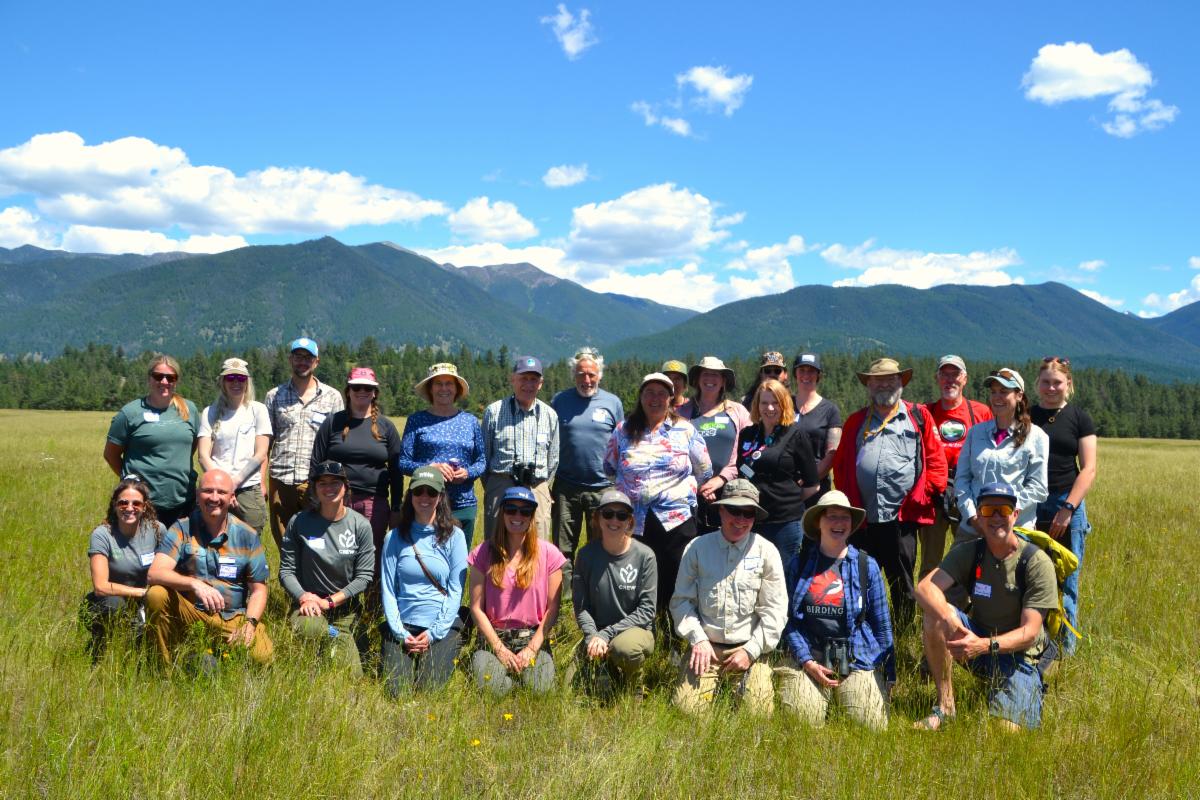
This year's East Kootenay meeting was held at Baynes Lake Hall, with stimulating discussions and inspiring updates from over 30 participants. The field tour was co-hosted with Yaq̓it ʔa·knuqⱡi'it Nation, to visit a wetland restoration project at Shottanana Lake, and a unique grassland that has been designated as a 'Key Biodiversity Area' (KBA). We are very grateful to the field tour leaders: Alex Gravelle, Emily de Freitas, and Ian Adams. We discovered more about the unique features of this area that had it designated, and were lucky enough to see an endangered Spalding's campion (Silene spaldingii) plant on this beautiful sunny day.
Click here for the photo gallery and full story.
The East Kootenay’s Changing Climate: Actions for a Resilient Future
Kootenay Connect Priority Places featured in 'The Trench' - now online
KCP’s Kootenay Connect Priority Places (KCPP) initiative is the topic of an article in the current Spring/Summer 2026 issue of The Trench. The article highlights research by Kootenay conservation ecologist Greg Utzig, who has spent four decades analyzing how climate change will impact the Kootenays’ ecological corridors. Also featured is the hydrological research and wetland restoration work supported by KCPP and conducted by Dr. Suzanne Bayley and her team with the Columbia Valley Stewardship Partners. You can find copies of the Spring/Summer issue of The Trench magazine at many locations throughout the East Kootenay/Columbia Valley, as well as in Creston.
Click here to access the online article.
| | | |
Regional District of Central Kootenay
Regional Parks, Trails and Water Access Strategy - public survey open until July 15
The Regional District of Central Kootenay (RDCK) wants your feedback on the newly developed Regional Parks, Trails, and Water Access Strategy. The strategy was created to help the RDCK achieve their goal of providing top-notch nature-based recreation opportunities while supporting the economic, social, and environmental objectives of the region. As a long-term roadmap, it will inform planning, decision-making, and management of the Regional Parks and Trails Services over the coming decades. Developed through extensive research, site assessments, stakeholder engagement, Indigenous outreach, public consultation, and collaboration with the Board of Directors and staff, the Strategy establishes a shared vision and clear direction for the future.
Find more details and access the survey here.
Province of BC
Kootenay Lake Forest Landscape Planning - public engagement open until August 22
The Kootenay Lake Forest Landscape Planning (FLP) project is in Phase 2 of the 5-phase process for developing a FLP. This phase focuses on “values identification and assessment” for the FLP, which involves learning the values local communities place on forest ecosystems to inform future forest management approaches. The Phase 2 public engagement period for community values is now open until August 22. First Nations and the B.C. government are working together on the FLP process, and will engage jointly with communities and interested parties to gather feedback and support in designing FLPs. Meaningful engagement with communities and interested parties enhances transparency and provides critical input for the success of FLP’s. The Kootenay Lake FLP team is gathering feedback in-person this summer, as well as through a short survey. Questions can be directed to KootenayBoundaryFLP@gov.bc.ca.
Click here for more info and to participate.
Province of BC
Biodiversity Forum for Local Governments
Calling all local governments. You are invited to share your biodiversity stewardship work on the new B.C. Biodiversity Stewardship Initiatives Map. This is a pilot year for participants of the B.C. Biodiversity Forum for Local Governments. All local government staff are welcome to join. To learn more or request access, please email BiodiversityForumforLGs@gov.bc.ca.
Province of BC
New wildlife overpass helps ensure long-term health for the area’s bighorn sheep herd
Drivers travelling along Highway 93 and 95 can expect safer conditions with the recently completed construction of a new wildlife overpass. The project, located south of Radium Hot Springs, is designed to reduce collisions involving one of the area’s last viable bighorn sheep herds. The overpass is part of a broader effort by the Ministry of Transportation and Transit to protect wildlife and enhance road safety in the region, where collisions between vehicles and bighorn sheep have been a growing concern. To date, the ministry has installed more than 600 km of wildlife exclusion fencing throughout B.C., more than any other transportation agency in North America. B.C. also has the most wildlife overpasses in Canada.
Click here for more information.
Goldeneye Ecological Services
Have you seen a badger or badger burrow in the East Kootenays?
Goldeneye Ecological Services is seeking reports of American Badgers and badger burrows, particularly from higher-elevation areas of the East Kootenays. While badgers are typically associated with valley-bottom grasslands, recent observations suggest they may occur in higher-elevation habitats more frequently than previously understood. If you have seen a badger, a badger burrow, tracks, or other signs of badger activity, we'd love to hear from you. Photos, dates, and GPS coordinates are especially helpful. Your observations will contribute to ongoing research and conservation efforts aimed at supporting the recovery of this endangered species and improving our understanding of movement corridors in the region. Please send observations to info@goldeneyeecological.ca.
Click here for a poster with more info.
Salmo Watershed Streamkeepers Society
Salmo River angler surveys
With fishing season on the Salmo River now open, the Salmo Watershed Streamkeepers Society (SWSS) is asking for your help. SWSS is conducting a voluntary, anonymous angler survey to better understand fishing pressure, angler preferences, and the overall health of the Salmo River fishery. Survey responses will provide valuable local information to support future fisheries management and conservation efforts. SWSS has over 20 years of population monitoring data for rainbow trout and bull trout, as well as temperature and discharge records, but are lacking angling information. Please help them spread the word by sharing this survey with other anglers who fish the Salmo River – information collected will also help assess whether the river is attracting increasing numbers of anglers from outside the West Kootenay, and how this may influence fishing pressure. Thank you for helping us better understand and protect this important fishery.
Access the survey here.
Salmo Watershed Streamkeepers Society
Turtle crossing season is underway at Erie Lake
The Salmo Watershed Streamkeepers Society (SWSS) is asking for the public’s help regarding western painted turtles crossing Highway 3 and adjacent roads around Erie Lake. In 2025, SWSS documented 147 turtle nests around Erie Lake and the West Erie Wetland, and in collaboration with Okanagan Nation Alliance, basking structures were installed, and nesting activity and road mortality risks were assessed to better understand how turtles are using the landscape and where conservation actions can have the greatest benefit. SWSS is now exploring the installation of silt fencing or other measures to reduce turtle crossings, as well as signage. Each spring and early summer, female turtles leave the water to find suitable nesting sites, making road mortality one of the greatest threats facing turtle populations. Please help spread the word, and: slow down when driving near Erie Lake and the West Erie Wetland, especially during warm mornings and evenings; watch for turtles on road shoulders and crossing the highway; and report any turtle mortalities or observations of turtles crossing the road. If possible, take a photo, and record the coordinates or general location, and send the info to chris@streamkeepers.bc.ca. Together, we can help ensure western painted turtles remain part of the Erie Lake ecosystem for generations to come.
Central Kootenay Invasive Species Society
Nature for Neighbourhoods program - from now until late October
If you live in the Regional District of Central Kootenay (RDCK) Areas A, D, E, F, or H, you can earn cash rewards for removing invasive plants like spotted knapweed, common tansy, and Scotch broom from your property. Register your property with the Central Kootenay Invasive Species Society (CKISS), and download the Crowdsorsa app – available until the end of October. Upload before-and-after videos of your work through the app, and get paid for your hard work. You can do the work yourself or have a friend, neighbour, or family member get paid to do the removal. Registration is open.
Click here for more details and to sign up.
Province of BC, Genome BC, Environment and Climate Change Canada
Help monitor and learn from pikas
Pikas help scientists such as Michael Russello and Leigh Anne Isaac track climate-driven changes in alpine environments. Warming temperatures and unpredictable snowpack may threaten pika populations or force them to find more suitable habitat either upslope or at higher latitudes. Scientists are tracking the resilience and adaptability of pikas, and documenting pika sightings provides vital data on changes in their distribution. Both the American (Ochotona princeps) and Collared (O. collaris) pikas are considered sentinel species for detecting climate-driven changes in alpine environments. There is great potential to use genomic tools to monitor American and collared pikas and protect them from climate change effects. Community involvement is a key part of the project. If you’re in B.C. or the Yukon, report your pika sightings directly on the Pika Patrol app.
Click here for a poster with more information.
Fish & Wildlife Compensation Program
Provide feedback on draft regional funding priorities - by November 13
The Fish & Wildlife Compensation Program (FWCP) is seeking feedback on draft funding priorities that will guide their funding decisions for future fish and wildlife compensation projects. New funding priorities will be finalized in early 2027 by their three regional boards, and the new priorities will guide their annual grant intake scheduled to open in summer 2027 for 2028-2029 projects. Your feedback will be considered by FWCP’s boards before the decisions are finalized. Use the online form to share your feedback before November 13. You can also register for an online information session on September 29, to learn more about FWCP’s funding priorities.
Click here to learn more and share your feedback.
Columbia Basin Trust
$2.3 million invested to strengthen Columbia Basin ecosystems
Six ecosystem enhancement projects—four large-scale, multi-year initiatives and two smaller-scale efforts—are moving forward across the Columbia Basin with $2.3 million in support from Columbia Basin Trust. The projects focus on improving the health, resilience and long-term sustainability of forests, brushlands and aquatic ecosystems. The Okanagan Nation Alliance is undertaking a five-year project to restore 26 hectares of red-listed brushland and open forest at Dove Hill near Castlegar. North of Canal Flats, the Nature Conservancy of Canada is leading a five-year project on 12 hectares to restore interconnected wetlands and upland habitats, returning more natural flow dynamics to Marion Creek. Working with regional partners, including ʔakisq̓nuk First Nation, Wildsight is leading a five-year project on the West Bench near ʔaknuqⱡuk (Golden), spanning 16 hectares to support beavers and the wetlands they maintain. With a range of partners, Wildsight is also leading a five-year project on 120 hectares in the Lower St Mary’s Valley near Kimberley, to thin dense understory vegetation and carry out prescribed burns. Two smaller-scale projects are also receiving funding.
Click here for more details.
West Kootenay Naturalists Society
Hummingbird banding sites needed
Do you have a passion for hummingbirds? Rocky Point Bird Observatory's hummingbird banding program is looking for high-traffic feeding sites in the Nelson, Castlegar, and Trail area. Monitoring your feeder could provide important information about hummingbird migratory, breeding, and behavioral patterns. The data obtained from banding and observing hummingbirds helps with learning about populations as a whole, as well as their health and migratory routes. For more information, call Sharon Lelliott at 250-365-1161, or visit the Rocky Point Bird Observatory website.
| | | |
Secwepemctsín (Shuswap) Introductory Language Course
July 7 to August 25, Online
The language of the Secwépemc (Shuswap) people is known as Secwepemctsín. Secwepemctsín comes from the land and is a reflection of Secwépemc identity. It serves as a translation key to everything relating to the Secwépemc. This is a beginner course designed to teach the basics of Secwepemctsín and is open to everyone – Indigenous and non-Indigenous adults who wish to support language revitalization. The course will be held on Tuesdays at 4 pm PT / 5 pm MT.
Click here for more information and to register.
Whitebark & Limber Pine Survey Methods & Health
July 8 & 9, Golden
Advance your field skills with Whitebark Pine Ecosystem Foundation of Canada (WPEFC)’s accredited, hands-on training in whitebark and limber pine restoration. This two-day field workshop covers species identification, restoration practices, blister rust and mountain pine beetle assessment, plus-tree selection, and best practices for collecting high-quality field data. Learn directly from leading experts while gaining practical field experience, gaining professional credit requirements, earning a recognized WPEFC certificate, and building skills you can apply immediately in the field.
Click here to register.
Kootenay Lake Forest Landscape Planning – In-person public engagement
July 8 & 15, Nelson • July 18, Creston • August 15, Kaslo
The Kootenay Lake Forest Landscape Planning (FLP) project is in Phase 2 of the 5-phase process for developing a FLP. This phase involves learning the values local communities place on forest ecosystems to inform future forest management approaches, and is open until August 22. First Nations and the B.C. government are working together on the FLP process, and will engage jointly with communities and interested parties to gather feedback and support in designing FLPs. Meaningful engagement with communities and interested parties enhances transparency and provides critical input for the success of FLP’s. The Kootenay Lake FLP team is gathering feedback in-person this summer, as well as through a short survey. Questions can be directed to KootenayBoundaryFLP@gov.bc.ca. Provide feedback to the FLP team on July 8 from 5 to 8 pm PT at Prestige Lakeside Resort; July 15 from 10 am to 2 pm PT at the Kootenay Co-op, Nelson; July 18 from 9 am to 1 pm PT at the Creston Farmer’s Market; August 15 from 9 am to 1 pm at the Kaslo Farmer’s Market.
Click here for more info and to participate.
Dove Hill Discovery Walk
July 9, Castlegar
Join the Central Kootenay Invasive Species Society (CKISS) and the Okanagan Nation Alliance (ONA) for a guided walk through Dove Hill that brings together ecology, culture, and stewardship in action. This interactive field experience will highlight the Dove Hill Enhancement Project and its ongoing work to restore and protect this important landscape. ONA will share knowledge about native plant ID cultural values, and the broader ecosystem, while CKISS will guide participants in identifying invasive species, how to manage them and understanding how to prevent their spread. Whether you're a land manager, trail builder, community member, or nature enthusiast, this walk offers a chance to deepen your understanding of the land and your role in caring for it. From 9 to 11 am PT.
Click here for more details and to register for this free event.
Barn Swallow Awareness Day at Kicking Horse Mountain Resort
July 11, Golden
Join Wildsight Golden and the Upper Columbia Swallow Habitat Enhancement Project for a Barn Swallow Awareness Day, celebrating a 6-year partnership with Kicking Horse Mountain Resort – which hosts what is believed to be the largest active barn swallow colony currently known in the Columbia Valley. This free, family-friendly event offers a chance to learn about the fascinating lives of swallows and the conservation efforts helping recover at-risk barn swallow and bank swallow populations in the Columbia Valley. Swallows are among Canada’s most effective natural insect controllers, with a single barn swallow capable of consuming hundreds of flying insects each day. Despite their ecological importance, both barn and bank swallows have experienced significant population declines over recent decades. This event includes guided educational walks for everyone, and a treasure hunt for children and families. From 9:30 am to 1 pm MT.
Click here for more details.
Briar Rose Treatment in Harrop Wetlands
July 17, Harrop near Nelson
Join the Friends of Kootenay Lake Stewardship Society (FoKLSS) at Harrop Wetlands to take on invasive briar rose (Rosa spp.) and spend a morning outdoors with others who care about keeping this habitat thriving. Whether you’re a regular or joining FoKLSS for the first time, it’s a great chance to learn more about wetland ecology, meet others in the community, and get your hands dirty for a good cause. Meet at Harrop Wetlands trailhead: beside Sunshine Bay Riding Club off Erindale Road in Harrop. From 10 am to 12 pm PT.
Click here for more details and the waiver to register.
Communities Pulling Together Event
July 17, Kokanee Creek Park
Join the Central Kootenay Invasive Species Society (CKISS) for a fun afternoon of conservation, community, and hands-on action at beautiful Kokanee Creek Park. Together, we'll help protect this special place by removing invasive greater celandine along the Thicket Trail Loop. Meet CKISS staff at the Kokanee Creek Nature Centre – they will provide all the training, tools, and support you need, just bring your enthusiasm! From 1 to 3 pm PT.
Click here for more details and to register.
17th Annual Community Weed Pull
July 18, Golden
Join Wildsight Golden and the Columbia Shuswap Invasive Species Society for the 17th Annual Community Weed Pull at Golden’s Disc Golf course, to continue last year’s efforts in removing invasive species at Hole 1. This family-friendly event is an excellent opportunity to learn more about invasive plants while working toward reducing or stopping their spread and associated threats to local biodiversity. Participants will learn how to identify, control, and properly dispose of invasive plants. Wildsight Golden will provide volunteers with gloves and tools for use, but you are welcome to bring your own. In addition, free pizza lunch will be provided to all registered volunteers. From 10 am to 1 pm MT. Please register in advance.
Click here for more details and to register.
Native Bee Study Group
July 22, Online
This monthly discussion hosted by the Native Bee Society of BC is an opportunity for connecting and learning about native bees with others throughout the province. The theme for July is "Summer Nesting Bees". Share knowledge and learn from others—experts and beginners are very welcome. The format is a show and tell style, and anyone who is interested in participating can create a slide on the shared google slides deck to share with the group (link sent with registration). Photos can also be sent to bcnativebees@gmail.com, with a subject line of "Native Bee Study Group". From 7 to 8:30 pm PT / 8 to 9:30 pm MT.
Click here to register.
2026 Cast for Conservation on Columbia Lake
July 24 to August 2, Columbia Lake
Everyone is welcome to participate in this exciting event hosted by the Columbia Lake Stewardship Society. In the ‘Cast for Conservation on Columbia Lake’ event, the target fish species are the invasive largemouth bass (Micropterus salmoides). Largemouth bass, dispersed throughout the Columbia River system, have adverse ecological effects on native species and ecosystems. They have resulted in the decline and local extinction of native prey species (fish and amphibians), in other regions where they have been introduced. They can also feed on juvenile salmon, thus posing a risk to recreational and commercial fisheries in B.C., and they are capable of carrying parasites that can harm native fish species. Help protect the waters of Columbia Lake by participating in this event.
Find more information here.
Plant Families from an Alpine Wildflower Perspective
July 27 & 28, Revelstoke
An essential first step in learning to identify any plant, including alpine plants, is becoming familiar with the diagnostic features that distinguish plant families. This course introduces participants to the key morphological characteristics of plant families, with a particular focus on alpine plant families, including the structures of flowers, fruits, and leaves, and the terminology used to describe them. This course combines classroom instruction with hands-on field and lab work.
Click here for more information.
American Bullfrogs are Bullies: An Info Session on American bullfrogs and the threat they pose to the East Kootenays
July 29, Online
American bullfrogs are not just a familiar “croak in the night” - in the wrong place, they become powerful invaders with serious ecological consequences. Join Maja, Education & Outreach Assistant at the East Kootenay Invasive Species Society (EKISC), for an engaging information session exploring American bullfrogs and the growing concern they present in the East Kootenays. Their presence can disrupt entire aquatic ecosystems, reducing biodiversity and putting pressure on species that are already sensitive to habitat change. Whether you're a landowner, outdoor enthusiast, or simply curious about local wildlife, this session will help you better understand one of the East Kootenays’ emerging invasive species challenges and how community awareness plays a key role in protecting biodiversity. From 11 am to 12 pm PT / 12 to 1 pm MT.
Click here for more info and to register.
Willow Identification, an Introduction
July 29 & 30, Revelstoke
Species in the genus Salix (willows) are widespread across a broad range of elevations, from sea level to alpine environments. This two-day course combines classroom instruction with hands-on field and laboratory work. Participants will examine both fresh and pressed specimens and learn to recognize the key features used in willow taxonomy. By the end of the workshop, participants will be familiar with the specialized terminology used in willow identification, understand the diagnostic features of female catkins and leaf morphology, and be comfortable using identification guides to distinguish willow species with greater confidence.
Click here for more information.
Bigger Fish to Fry: How Responsible Fishing Prevents the Spread of Invasive Fish
August 5, Online
Did you know that your fishing practices can make the difference between protecting our waters and unintentionally spreading invasive species? Join Kyle Scott, Education & Outreach Assistant with the East Kootenay Invasive Species Society (EKISC), for an engaging webinar exploring the impacts of aquatic invasive species and the important role anglers play in preventing their spread. Learn how invasive fish impact native ecosystems, recreation, and local economies, and how to identify, report, and properly handle invasive fish, as well as best practices before, during, and after fishing to help keep our waters healthy. Whether you're a seasoned angler or just getting started, this presentation will provide practical tools and knowledge to help you become a steward of our lakes and rivers. From 11 am to 12 pm PT / 12 to 1 pm MT.
Click here for more info and to register.
FWCP’s Introduction to the Notice of Intent for all grants
August 6, Online
Learn more about this mandatory first step for all Fish & Wildlife Compensation Program (FWCP) grant applicants in the Columbia or Peace Regions. Find out how the Notice of Intent (NOI) supports First Nations engagement in your project and allows FWCP to provide you with additional guidance ahead of submitting your grant application. All grant applicants must start their application by submitting a mandatory notice of intent by September 11. From 1 to 2 pm PT / 2 to 3 pm MT.
Join FWCP’s online information session to learn more.
Biodiversity Field School
August 9 to 15, East Kootenay / Columbia Wetlands
The Biodiversity Field School, offered by Living Lakes Canada, is a week-long, immersive field experience designed for emerging environmental professionals who want practical exposure to biodiversity monitoring and applied stewardship work. Participants will work alongside experienced biologists to conduct field-based biodiversity monitoring, apply established data collection methods, and carry out surveys across a range of ecosystems. The program will also include opportunities to connect with visiting speakers, including expert biologists, Indigenous land managers, and environmental practitioners working in applied monitoring and stewardship. The field school is intended for post-secondary students and recent graduates in biodiversity conservation or related programs, and is also open to post–high school youth who are exploring related careers. In 2026, three Biodiversity Field Schools will be delivered in three locations across BC, including one in the East Kootenay.
Find more information and apply here.
Toadfest
August 11 & 12, Summit Lake near Nakusp
Save the date for Toadfest 2026! Hosted by the Fish & Wildlife Compensation Program (FWCP), with support from many partner organizations, Toadfest is held at Summit Lake Provincial Park. Learn more about western toads and other species that call the region home at this free family-friendly event. On Tuesday August 11 from 4 to 7 pm PT, and Wednesday August 12 from 9 am to 12 pm PT. More details to come. Here is a summary, photos, and a video from last year’s Toadfest.
Meadow Creek Spawning Channel Open House
September 12, Meadow Creek
Save the date for the annual Meadow Creek Spawning Channel Open House. This free event is hosted by the Fish & Wildlife Compensation Program (FWCP), in partnership with the Province of BC. Talk to biologists and learn more about kokanee and the Kootenay Lake Nutrient Restoration Program. In addition to the open house, the spawning channel is open daily for viewing during the spawning season from 10 am to 2 pm. Please be aware that if there are too many bears in the area, the channel may be closed to the public by the Province of BC at any time. For more about the open house, please email fwcp@bchydro.com. The open house is from 10 am to 2 pm PT.
Click here for more information as it becomes available.
Launch of the 3rd Edition of Standards for the Practice of Ecological Restoration
September 24, Online
The Society for Ecological Restoration (SER) has published the third edition of its International Principles and Standards for the Practice of Ecological Restoration, widely recognized as the most comprehensive guidelines for the practice of ecological restoration. Join authors of the newly published third edition of the SER Standards for a discussion of what has changed and why, from a sharper definition of ecological restoration to more rigorous measurement and expanded guidance across the full project cycle. This session has three authors presenting for half an hour followed by half an hour of audience questions. From 7 to 9 am PT.
Click here for more details and to register.
Regional information sessions: FWCP’s draft funding priorities
September 29, Online
The regional boards of the Fish & Wildlife Compensation Program (FWCP) are seeking input on draft funding priorities that will, when final in 2027, replace priority actions in their current action plans. Learn more about FWCP’s ongoing work to renew their approach to funding fish and wildlife compensation projects, and find out how you can provide feedback, by registering for their regional information sessions. The Columbia Region info session will be at 9 am PT / 10 am MT.
Click here for more details and to register.
eDNA: Environmental DNA Theory and Implementation
October 1 & 2, Revelstoke
Environmental DNA (eDNA) is a proven and globally accepted method that is increasingly being used for survey of aquatic taxa. This highly effective, cost-efficient, and non-invasive method relies on the detection of genetic materials in aquatic ecosystems using laboratory analysis of water samples to detect DNA from the target taxa. Taught by professional biologist Jared Hobbs, this course is for anyone attempting to implement the eDNA methods. Jared has over 30 years of applied experience designing and leading species assessment and conservation projects at both the local and provincial scale. Since 2014, he has been applying eDNA methods into his standard practices, leading, or supporting delivery of over 80 eDNA projects in BC, Alberta, the Northwest Territories and Yukon. Initially his eDNA projects were focused on species-at-risk; more recently his focus has expanded to also include projects focused on fish and invasive species.
Click here for more details and to register.
Whitebark & Limber Pine Canadian Conference
October 14 & 15, Radium Hot Springs
Join the Whitebark Pine Ecosystem Foundation of Canada (WPEFC) this fall! This event will bring together researchers, restoration practitioners, Indigenous knowledge holders, students, and community members who share a commitment to conserving these remarkable high-elevation species. The theme is Collaboration for Recovery: Active Management in a Changing Climate, and active restoration, innovative research, and collaborative approaches to conserve these keystone species in a changing climate, will all be explored. Day one will feature presentations, workshops, and discussions on the latest research and restoration efforts. Day two will head into the field for hands-on learning and exploration of active whitebark and limber pine restoration projects. Early bird registration is now open. Stay tuned for speaker announcements, field session details, and the upcoming call for presentations. Email WPEFC at info@whitebarkpine.ca to help plan or organize the conference.
Click here for more information and to register.
2026 KCP Fall Gathering
October 15 & 16, Nelson
Save the date for KCP’s 2026 Fall Gathering, which will be held in Nelson! The theme this year is “Passing the Torch: Lessons for the Next Chapter of Restoration and Stewardship.” The event will include lunch and KCP’s AGM on Thursday, continuing through the afternoon with presentations, the Conservation Café, and the Conservation Leadership Awards ceremony (note that the order of agenda items may change). We will meet at the Prestige Lakeside Resort in Nelson. The Friday field tour will be a full day outing to see local restoration and conservation work, with lunch provided. This event will be another great opportunity to connect with KCP partners. More details to come in future newsletters!
Click here to see highlights from past Fall Gatherings.
CMI’s Annual Researchers Forum
October 22 to 23, Rossland - proposals due by September 4
The Columbia Mountains Institute of Applied Ecology (CMI) will hold its annual Researchers’ Forum in Rossland this year. This event travels the Columbia Mountain region to gather members of the scientific community, Indigenous and provincial land managers, stewardship groups, naturalists and community members to provide updates on ecological projects taking place in the area. This is a chance to share and get caught up on everything from new restoration projects and their associated community initiatives, to ecosystem monitoring, research, field trials, and land stewardship initiatives. This gathering has an informal atmosphere where everyone is invited to attend, mix, and mingle during a day of presentations and social events on Thursday, including a dinner and evening plenary, and field tours on Friday. Anyone interested in offering a 5, 10, or 15-minute presentation, bringing a poster, or leading a local field trip should submit their proposal(s) by September 4. Registration is coming soon.
Find more information here.
4 Seasons of Indigenous Learning Course
Fall 2026 to Spring 2027
Beginning in the fall and running until the spring each year, this course serves to support participants in deepening their understanding of Indigenous knowledge and perspectives while strengthening connections with the local land and supporting more respectful, reciprocal relationships. You can register for Seasons 1, 2, 3, 4, or 5 of the course modules and presentations, or join for the seven Indigenous learning presentations only. These seven sessions are offered by an incredible group of Indigenous Leaders, Elders and Educators from across Turtle Island (North America). For 2026/2027, presenters include veteran broadcast-journalist Shelagh Rogers, who is member of the Métis Nation, with family roots in Red River, Manitoba, and Faro Burgoyn, who sits on council for the ʔakisq̓nuk First Nation, part of the Ktunaxa Nation. KCP Partner organizations receive a 25% discount; please email megan@kootenayconservation.ca for the discount code.
Click here for more information and to register.
International Symposium of the North American Lake Management Society
November 3 to 6, Kelowna
With the annual North American Lake Management Society (NALMS) conference coming to Canada this year, the BC Lake Stewardship Society encourages everyone to consider attending the NALMS International Symposium in Kelowna this fall, the most water-scarce region of Canada. The theme is ‘Swimming Upstream: Tackling Environmental Challenges through Partnership, Innovation, & Science’. Early Bird registration closes on September 11.
Click here for more information and to register.
Camera Trap Survey Design and Data Management
November 11 to 14, Revelstoke
The number of projects employing camera traps to understand ecological phenomena is growing rapidly – as are the number of statistical tools to analyze the resultant data. Consequently, the management and analysis of camera trap data can seem complex and overwhelming. This course aims to guide participants in effective ways to store, manipulate and analyze camera trap data. Course content includes data storage and exploration best practices, and introductions to the major methods used to analyze camera trap data – all using real world camera data. The course will give participants the tools to manage, analyze and share camera trap data in an approachable and practical way. Participants can register for Day 1 only, or the entire course.
Click here for more details and to register.
| | | |
Transforming Systems Grants by the Vancouver Foundation
Deadline: July 6
Transforming Systems Grants (TSG) support organizations addressing the root causes of inequality and allow those most affected by systems that create unfair conditions to shape their own futures. The grant’s funding supports efforts that influence one or more of the six conditions of systems change: policies, practices, resource flows, relationships, power dynamics, and mental models. The TSG program will award around $9.5 million for the 2026 cycle, in two funding streams. ‘Explore’: those organizations beginning to explore root causes, and ‘Influence’: those organizations ready to test, deepen, or expand their influence. Stage 1 applications are open until July 6 at 5 pm PT / 6 pm MT.
Click here for more information and to apply.
Environment and Climate Change Canada: Environmental Science Opportunity
Deadline: July 7
Environment and Climate Change Canada (ECCC) is launching a new call for applications for a funding opportunity to engage experts in environmental science and advance projects that address critical environmental issues, such as climate change and nature. Applicants can apply to one of three funding streams for projects that will start in the current fiscal year. Nature Research is one funding stream, including nature-based climate solutions such as restoring biodiversity in converted or degraded ecosystems, or projects focused on species‑at‑risk research such as migratory birds, other migratory species, and species that span multiple Canadian jurisdictions. Applications are accepted until July 7 at 12 pm PT / 1 pm MT.
Click here for more information and to apply.
TD Friends of the Environment Foundation Grant
Deadline: July 15
The TD Friends of the Environment Foundation supports a wide range of environmental initiatives, with a primary focus on environmental education and green space programs. Eligible projects include schoolyard greening, park revitalization, community gardens, park programming and citizen science initiatives. Organizations eligible to receive funding include registered Canadian charities, educational institutions, municipalities, and Indigenous groups/communities.
Click here for more information and to apply.
Investment Agriculture Foundation of BC Beneficial Management Practices
Deadline: Ongoing until funding is committed
The Beneficial Management Practices (BMP) of the Investment Agriculture Foundation of BC provides funding for projects and plans to improve a farm's environmental and sustainability goals. Through targeted investments, the BMP program supports producers by helping them reduce costs, improve operational efficiency and enhance long-term farm and ranch viability. Specific categories of BMP funding include biodiversity, riparian and grazing, and more. Applications will open for some categories on March 4 and are accepted until funding is fully subscribed.
Click here for more details and to apply.
Small-scale Ecosystem Grants
Deadline: Ongoing until funding is committed
Do you have a small-scale project, that can be completed in two years or less, that helps improve ecological health and native biodiversity in the Basin? Small-scale Ecosystem grants are available to enhance a terrestrial and/or aquatic ecosystem, such as wetlands, fish habitat, forests or grasslands. Eligible applicants include registered non-profits, local governments and First Nations in the Columbia Basin Trust region. Applications are accepted on a first-received, first-served basis and are assessed as they come in and continue until all funding for the program has been committed. Contact the Trust to enquire about your project, email Melissa Johnson at ecosystems@ourtrust.org.
Click here for more information and to apply.
Climate Change Grants, Peter Gilgan Foundation
Deadline: Ongoing
The Peter Gilgan Foundation's Climate Change Grants support nature-based solutions, low-emission and renewable technologies, green building and living, and community resilience. Understanding that greenhouse gas emissions are the driver of climate change, they prioritize projects with the potential to enable large-scale emission reductions in Canada. For the nature-based solutions category, the Foundation support initiatives that protect and restore priority ecosystems, support Indigenous lands and protected areas, enhance natural infrastructure in our built environment, and/or decarbonize Canada’s agriculture and forestry sectors. The Foundation accepts applications for 3 types of grants: project grants, capacity-building grants, or general operating grants. Climate change grants typically range between $50,000 and $150,000 per year. There are no deadlines for the climate change program; expressions of Interest are accepted on a rolling basis.
Click here for more information and to apply.
Seed Grants, Fish and Wildlife Compensation Program
Deadline: Ongoing
You can now apply for a Seed Grant any time of the year; you don’t need to wait for the FWCP annual grant intake. An FWCP Seed Grant—up to a maximum of $5,000—can be used to fill information gaps, prepare technical information, and explore the feasibility of your project idea. Think of a Seed Grant as a first step toward a future Large Grant application. The FWCP Columbia Region board will review Seed Grant applications and make decisions at its spring, fall, and winter board meetings. Apply early.
Click here for more information.
Grassland and Rangeland Enhancement Program
Deadline: Ongoing
If you have an idea that will maintain or enhance grassland resources while meeting conservation, environment and recreation objectives, this program could help support it. This program is delivered by the Kootenay Livestock Association. The Grassland and Rangeland Enhancement Program (GREP) aims to promote the stewardship of grassland resources, maintain and enhance biodiversity and long-term fish and wildlife productivity in public grassland ecosystems, and improve compatibility between livestock management and recreation use.
Click here for more information and how to apply.
Fish and Wildlife Compensation Program Community Engagement Grants
Deadline: Ongoing
Got an idea for a project to support fish and wildlife in the Columbia region? Community Engagement Grants are typically $500 to $1000 and help stewardship groups and others take action to benefit local fish and wildlife.
Click here for more information and how to apply.
Land Securement Grants from Fish and Wildlife Compensation Program
Deadline: Ongoing
Securing critical ecosystems and habitats for conservation is an important way to help conserve and enhance fish and wildlife in watersheds impacted by BC Hydro dams. The Fish & Wildlife Compensation Program (FWCP) funds land securement projects and supports a partnership approach in their Coastal, Columbia, and Peace regions. Due to the time-sensitive nature of real-estate transactions, grant applications for land securement purchases can be discussed with the region managers at any time of year. Please contact Columbia Region Manager Jen Walker-Larsen at Jennifer.Walker-Larsen@bchydro.com with your questions.
Click here for more information.
Columbia Basin Trust - Non-Trust Granting Directory
Resource for download
The Columbia Basin Trust recognizes that many projects require collaboration, additional partners and substantial funding. To assist with this, they’ve created a database of granting agencies and government grant programs that you can refer to, and made it available for download on their website.
Click here for more information and click here to download the directory.
| | | |
Land Trust Alliance of British Columbia
Executive Director, Flexible within BC
The Land Trust Alliance of British Columbia (LTABC) represents 35 land trust members across the province. Reporting to the Board of Directors, the Executive Director provides strategic, operational, and financial leadership to advance the LTABC’s mission, deepen community awareness and impact, and strengthen long-term sustainability of the organization. The ideal candidate is a collaborative and visionary leader with a passion for land conservation and has a strong track record in relationship building, nonprofit leadership, and community engagement. The Executive Director represents the LTABC provincially in BC and federally across Canada and is responsible for the day-to-day operations of the LTABC, which are guided by the Strategic Plan and Board of Directors. The position location is flexible within BC, preferably within easy travel distance of Vancouver and/or Victoria, because travel to community events is expected. Applications accepted as soon as possible.
Click here for more information and to apply.
Wildsight
Communications and Engagement Lead, Columbia Basin
As the Communications and Engagement Lead for Wildsight, you’ll provide strategic leadership for the communications and engagement team, ensuring cohesive messaging, effective campaigns, strong public presence, and meaningful opportunities for people to engage with Wildsight’s work. Leading the Communications and Engagement team of three includes managing Wildsight’s traditional media profile, working with campaign and program leads to identify and deliver day-to-day communications, managing content and engagement needs, and stewarding the Wildsight brand. You will join a team that is passionate about protecting nature, dedicated to making positive change, and committed to learning and growing. The successful candidate will be able to work from their home office in the Columbia Basin region, with occasional travel. Candidates living in Kimberley can work at Wildsight’s head office. Applications are accepted until July 24.
Click here for more information and to apply.
Columbia Basin Environmental Education Network
Wild Voices Community Educator
Are you a forester or geographer? A biologist or mountain guide? A historian or holder of traditional knowledge? Do you have some unique knowledge, skill, or expertise you can share with students? If so, Wild Voices for Kids, a program of the Columbia Basin Environmental Education Network, would like to connect with you! Each educator brings their own unique knowledge of environment or natural history, adds their passion for education, and creates classroom or field-based programs that will both captivate students and satisfy the learning objectives of teachers. For more information, see link below, or email the Wild Voices program manager at education@cbeen.org.
Click here for more information.
Elk River Alliance
Volunteers wanted: Restoration, Monitoring & Outreach, Elk Valley
Elk River Alliance (ERA) relies on passionate and dedicated community members to help them make a difference. This year ERA needs you more than ever to help with fundraising, outreach, and restoration efforts in the field. Contribute to building a more science-conscious Elk Valley community by helping with education and outreach. ERA’s Cottonwood Restoration Program aims to plant native species on shorelines to stabilize the river bank and restore fish and wildlife habitat. Volunteers are needed to transplant plants and restore the ecosystem, as well as to conduct high-quality assessments of streams within the watershed.
Click here for more information.
| | | | |
For a comprehensive list of up-to-date job postings, check the CBEEN Job & Volunteer Board, an excellent resource for Kootenay conservation career and volunteer opportunities.
| | |
What we Heard Engagement Report for Goat River Watershed Water Sustainability Planning
Regional District of Central Kootenay - survey still open until August 1
The Regional District of Central Kootenay (RDCK), in collaboration with yaqan nuʔkiy, is doing water sustainability planning to respond to growing concerns about water availability in the Goat River Watershed (includes the communities of Canyon, Erickson, Kitchener, Lister, Town of Creston, West Creston, Wynndel, and yaqan nuʔkiy). This effort aims to protect the health and resilience of the local watersheds that support communities, ecosystems, and economies. This report brings together what was heard through engagement carried out in 2025 and into early 2026 regarding the Goat River Watershed Water Sustainability Planning, including a Water Values Survey, six open houses, the engage page, and a dedicated producer engagement initiative including on-farm visits with 15 producers. Together, these engagement streams reached a broad cross-section of residents, agricultural producers, and community members.
Click here for more information and here to access the report.
Wasa Lake Water Quality Summary Report
BC Lake Stewardship Society, Ministry of Environment and Parks
Through the BC Lake Stewardship and Monitoring Program (BCLSM), volunteers from the Wasa Lake Land Improvement District recently completed a Level 1 enhanced BCLSM. Wasa Lake was monitored between 2022 and 2024, and there is also some limited historical data available through a past BCLSM Program conducted between 2004 and 2006. Data collected through the current program showed warm surface water temperatures, surpassing the preferred range for salmonid species (>18 °C) deeper into the water column through each of the current years of monitoring. If increased heat penetration is a pattern in the lake, it could have many implications for the physical, chemical, and biological characteristics of Wasa Lake, so this should be monitored going forward. In addition, current dissolved oxygen depletion levels in the lake are possibly indicative of a mesotrophic or eutrophic lake. When considering this, coupled with the large algal blooms that Wasa has experienced in recent years, a Level 3 BCLSM program is recommended to provide more insight into the current trophic status of Wasa Lake.
Access the full report here.
Wildlife responses to nonmotorized recreation in the Southern Canadian Rockies: a multiscale analysis near Fernie, BC
Clayton Lamb and Emily Chow
Human outdoor recreation is expanding across natural landscapes, yet its effects on wildlife remain poorly understood across spatial and temporal scales and across different contexts. The authors assessed the responses of large mammals to nonmotorized recreation near Fernie, using a multiscale observational approach combining data from 66 camera traps and GPS telemetry from 21 grizzly bears (Ursus arctos). They evaluated the following: (1) how wildlife detections varied by trail type, relative to the broader landscape, and with varying levels of recreational users; (2) whether animals shifted activity to avoid peak human use; and (3) how collared grizzly bear movement responded to recreation trails compared to other anthropogenic features. The results have also informed an Infographic.
Access the report here.
Incomplete protection of critical habitat still plagues southern mountain caribou in BC
Eric C. Palm, Tim Burkhart, et. al.
Since their 2003 listing under Canada's federal Species at Risk Act (SARA), 15 subpopulations of southern mountain caribou (Rangifer tarandus caribou) have been functionally extirpated (Lamb et al., 2024). In 2020, the authors published an article explaining why the Government of Canada has been unwilling to exercise its authority under SARA to protect southern mountain caribou critical habitat on non-federal lands in BC, and found that 909 km2 of provincially managed critical habitat were logged between 2014 and 2019 following its legal identification under SARA in 2014. In the absence of non-discretionary protection on provincial land, critical habitat protection for southern mountain caribou would have to rely on alternative mechanisms such as intergovernmental agreements and the establishment of Indigenous Protected and Conserved Areas.
Access the impact paper here.
3rd Edition: International Principles and Standards for the Practice of Ecological Restoration
Society for Ecological Restoration
The Society for Ecological Restoration (SER) has published the third edition of its International Principles and Standards for the Practice of Ecological Restoration, widely recognized as the most comprehensive guidelines for the practice of ecological restoration. The conversation has shifted from why to how. This edition sharpens the definition of ecological restoration, strengthens its emphasis on Indigenous Knowledge and the people involved in and affected by restoration, introduces more rigorous measurement and clearer performance thresholds, and aligns more closely with global frameworks, including Target 2 of the Kunming-Montreal Global Biodiversity Framework and the UN Decade on Ecosystem Restoration. Join the authors for a virtual launch of the SER standards third edition, on September 24.
Read or download the third edition.
Fish habitat restoration priority planning - Pacific region
Department of Fisheries and Oceans Canada
Fisheries and Oceans Canada (DFO) is pleased to share the release of the Fish Habitat Restoration Priority Planning for Pacific Region (restoration priorities plan), a new foundational guide to support aquatic habitat restoration across B.C. and the Yukon. It identifies regional restoration goals and objectives applicable to all fish species and all aquatic habitats from headwaters to nearshore marine environments. The restoration priorities plan also provides guidance on how to set habitat restoration priorities that address habitat degradation and highlights the importance of planning and working across geographic and jurisdictional boundaries. This plan reflects years of collaboration, dialogue, and shared learning with First Nations, restoration practitioners, governments, non-governmental organizations, and community partners.
Access the restoration priorities plan here.
Global standards, local ecosystems - Identifying ecosystem Key Biodiversity Areas in BC
Wildlife Conservation Society Canada
BC is home to exceptional biodiversity – not only in its species, but in its remarkable variety of ecosystems, many of which are nationally or globally unique. The Key Biodiversity Areas (KBA) initiative is a standardized, science-based approach to identify sites that are critical to the persistence of biodiversity. While many species-based KBAs have already been identified in BC, work is now underway to identify ecosystem-based KBAs, focusing specifically on ecosystem types that are geographically restricted or at risk of collapse. However, identifying ecosystem KBAs is not straightforward. This webinar from May 2026 provides an overview of the work being undertaken by Wildlife Conservation Society (WCS) Canada and the BC government Conservation Data Center to identify ecosystem KBAs in BC.
Click here to access the recording.
Being Plantwise: Spring Gardening, Invasive Free
East Kootenay Invasive Species Council
In case you missed it, Brittany Eliadis, The East Kootenay Invasive Species Council (EKISC)’s Education and Outreach Manager, hosted an Ed Talk in Cranbrook this spring, all about PlantWise and invasive-free spring gardening. From learning about native plants and eco-smart gardening practices to discussing ways we can all help protect local ecosystems, it was an inspiring evening filled with great conversations, curious minds, and plenty of plant enthusiasm. One of the highlights of the evening was making seed packs alongside encouraging and passionate folks - it was wonderful to connect with community members who care so deeply about creating healthy, wildlife-friendly gardens in the East Kootenay. If you’d like to get your hands on one of the seed packs Brittany made, send an email to outreach@ekisc.com.
Access the recording here.
Recording: When the Forest Breathes, a conversation with Dr. Suzanne Simard
Sierra Club of BC
With her bestselling book ‘Finding the Mother Tree’, forest ecologist and West Kootenay resident Dr. Suzanne Simard changed how people view trees and their connections to one another and to other living things in the forest. Now, with her new book ‘When the Forest Breathes’, she uncovers the ways that nature’s deep-rooted cycles of renewal can ensure the longevity of threatened ecosystems. ‘When the Forest Breathes’ is an emboldening declaration that when we take responsible steps, reversing the effects of climate change and ecosystem degradation are within reach. Don’t miss this engaging and inspiring conversation with Suzanne about what nature has to teach us about adaptability, resilience, and community.
Access the recording here.
Guide to Species at Risk in the Slocan Valley & Bonanza Biodiversity Corridor
Slocan Lake Stewardship Society & Slocan River Streamkeepers
Ecologists Ryan Durand and Tyson Ehlers, working with the Slocan Lake Stewardship Society & Slocan River Streamkeepers through the Kootenay Connect Priority Places Initiative, created a Guide to Species at Risk in the Slocan Valley & Bonanza Biodiversity Corridor. The 137-page report introduces most of the species at risk (SAR) known to occur in the Slocan Watershed, focusing on the more obscure and understudied species. It is based on the collective knowledge of local biologists who have studied the watershed for decades, and a concentrated effort over the last 7 years of this Kootenay Connect Priority Places project to collect and summarize all known SAR records. This initial guide is intended to be a living document to build upon, share and provide guidance to all communities, residents, tenure holders and stewardship groups.
Click here to view the guide.
Outdoor Recreation Strategy updated
Province of BC
B.C.’s Outdoor Recreation Strategy is guided by five priorities: Inspire Action, Deliver Experiences, Invest in Growth, Support People, and Protect What We Love. Together, these priorities provide a framework for coordinated action across government and the broader recreation sector, enabling effective planning, focused investment, and stronger collaboration. Priorities include aligning conservation efforts with responsible recreation use and growth, expanding on current human-wildlife co-existence programs, including bear-safety practices, to support safe recreation and healthy ecosystems, and collaborating with the BC Parks Foundation, academia and other partner organizations to expand inventory, monitoring, and ecological research.
Access the Outdoor Recreation Strategy here.
KCP Annual Report 2025/2026
Kootenay Conservation Program
From managing and delivering the final year 7 of “Kootenay Connect Priority Places” projects in seven priority areas in the Kootenays, to co-hosting a 5-part winter webinar series with the Columbia Mountains Institute of Applied Ecology on the theme of ‘Lessons for the next chapter of Restoration & Stewardship in the Columbia Basin’, and administration and delivery of the Columbia Valley Local Conservation Fund and the RDCK Local Conservation Fund, the 2025/2026 year was another highly productive year for Kootenay Conservation Program. Our Annual Report contains more highlights and a summary of our various activities over the year.
Click here to view the Annual Report.
Kootenay Connect Priority Places Impact Report
Kootenay Conservation Program
Kootenay Connect Priority Places has been addressing the dual crises of decreasing biodiversity and intensified climate disruption in the Kootenay region, for seven years, across seven landscapes. Applying leading-edge practices, the initiative has supported a team of over 40 local partners and specialists with habitat-based projects in priority ecological corridors across the Kootenays. Species recovery depends on habitat recovery: these efforts have improved the overall capacity of wetlands, riparian areas, grasslands, and forests to withstand, recover and bounce back from stressors and major disturbances. This report shares the impact of Kootenay Connect Priority Places. It celebrates the remarkable work of local champions and partners—working together for the place we all call home, now and for the future.
Click here to view the Impact Report.
Creston Valley Conservation Action Forum Check-in Summary Report
Kootenay Conservation Program
KCP teamed up with Creston Valley Wildlife Management Area in February to co-host a Conservation Action Forum Check-in Meeting for the Creston Valley. Over 35 people from 19 local organizations participated in this dynamic event, coming together to review the progress being made on the five priority actions identified during the 2020 Creston Valley Conservation Action Forum. Attendees also shared information on local research and restoration projects benefiting fish and wildlife, connectivity, biodiversity, grizzly bears, and fire restoration, to name a few. The afternoon was spent in breakout groups discussing next steps for key actions and potential collaborations. The summary report is available for viewing.
Click here to access the report.
KCP Stewardship Solutions Toolkit
Resource updated with growing number of stewardship listings
Since 2019, KCP's Stewardship Solutions Toolkit, an easy-to-access stewardship resource for landowners and land managers in the Kootenays, has been available both in print and online. We keep this resource up to date, and encourage you to access all the available stewardship "solutions" (i.e. services and resources) available in each of the 14 Conservation Neighbourhoods. Visit the website, select your location on the homepage map, and you'll be brought to the growing list of stewardship options available in your region.
Visit the Stewardship Solutions website.
| | | | | |