|
Eighty years ago tonight, a low rumble rolled across the skies above London. There was no moon, and the tide of the River Thames was unusually low. From the darkness, the distant thunder swelled and a shower of fire began to fall.
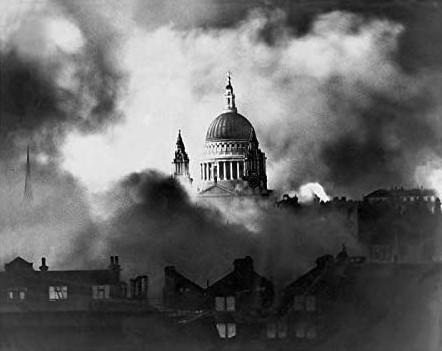
On December 29, 1940, German bombers unleashed tens of thousands of incendiary bombs and parachute mines over the City of London. Prime Minister Winston Churchill’s instructions were clear: at all costs, St. Paul’s Cathedral was to be protected.
Firefighters fought the inferno as flames spread, their efforts made even harder by the low tide, damaged water mains, and the continued bombardment from above. By morning, thick smoke blanketed the City. Yet through the gray veil, the silhouette of St. Paul’s emerged. Sir Christopher Wren’s architectural masterpiece had been saved.
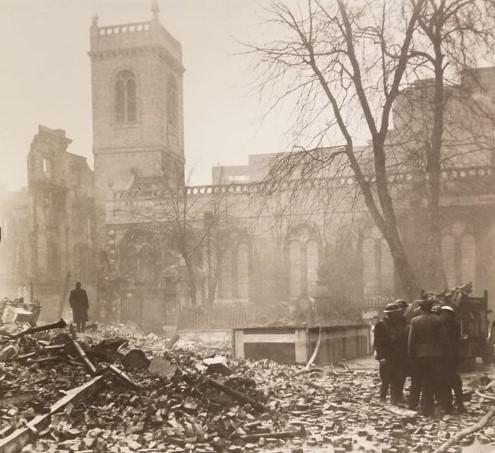
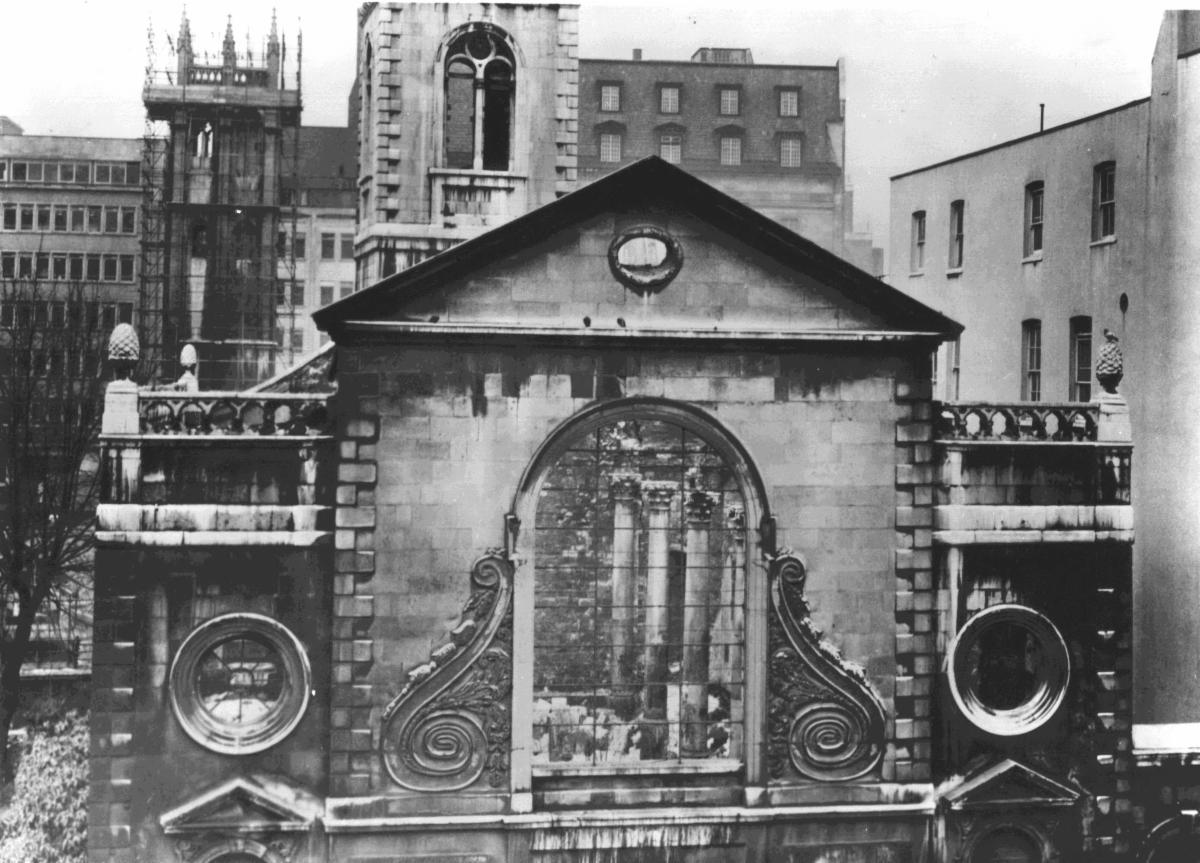
2,100 feet to the northeast, Wren’s Church of St. Mary the Virgin, Aldermanbury, met a very different fate. Its great gabled roof burned and collapsed. Its windows shattered. Inside, the pipe organ moaned as updrafts created by the fire sent eerie whistles through its pipes. When the smoke finally cleared, most of the church’s interior had been reduced to ash, leaving only an empty stone shell standing.
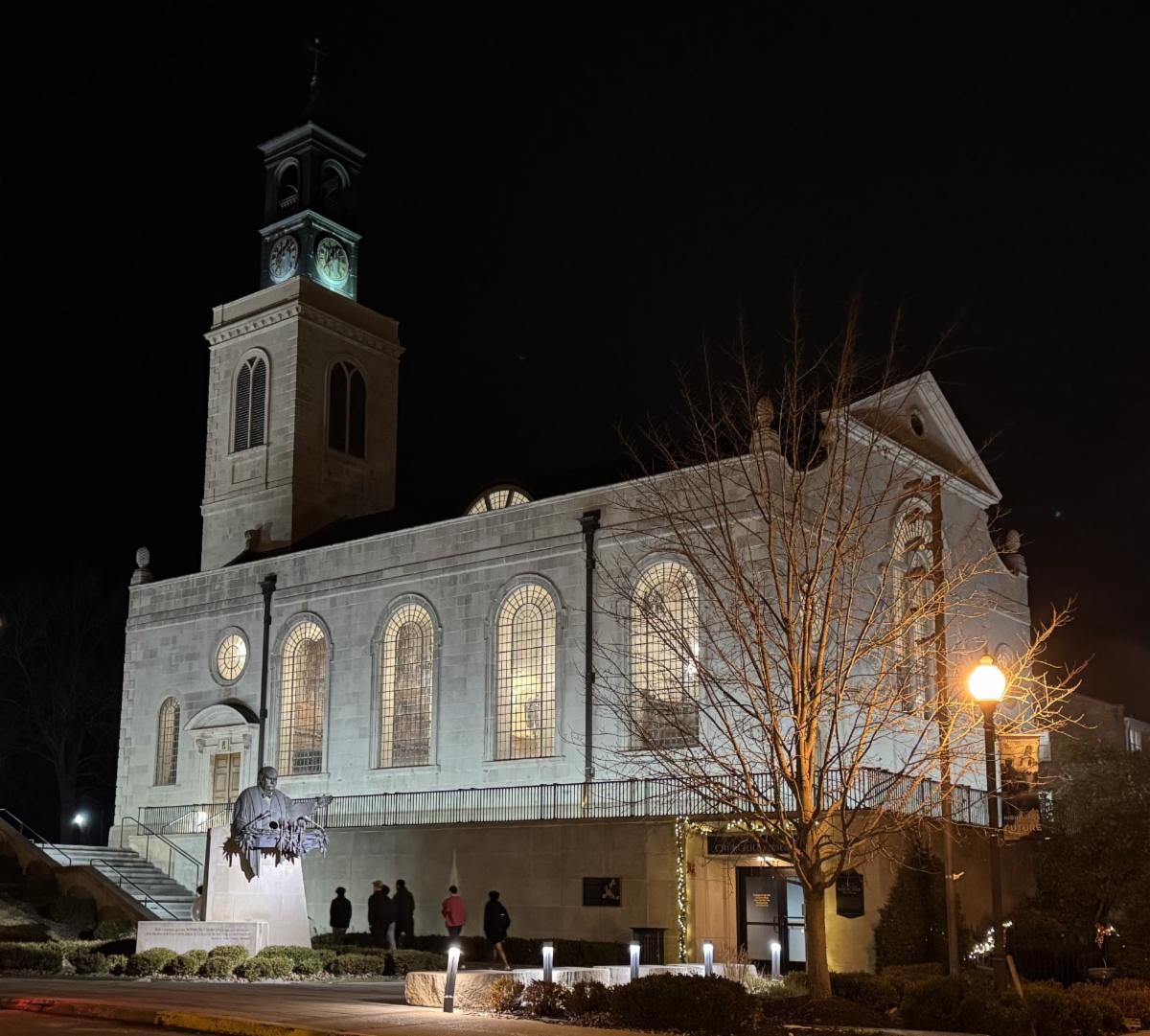
The ruins remained in London for nearly a quarter of a century. Then, with the consent of the Diocese of London, Westminster College carefully dismantled the church and transported it stone by stone to its campus in Fulton, Missouri.
Today, more than fifty-five years after its relocation, the rebuilt church stands proudly as a lasting memorial to Winston Churchill and to his 1946 “The Sinews of Peace” address—better known as the Iron Curtain speech.
Churchill, upon learning of the plan to rebuild the ancient church at Westminster College called it a “symbol of the ideals of Anglo-American association on which rest, now as before, so many of our hopes for peace and the future of mankind.”
Two weeks ago, the U.S. Senate unanimously passed legislation to designate America’s National Churchill Museum as a National Historic Landmark. A companion bill is now under consideration in the House of Representatives. Once approved, the legislation is expected to be signed into law, making America’s National Churchill Museum the nation’s newest historic landmark—a designation we are hoping to be complete by March 5, the 80th anniversary of Churchill’s famous speech at Westminster College in Fulton.
Because of your patronage, we are proud to be stewards of this extraordinary monument and Churchill’s legacy. Our vital work continues, and with your investment and support, we are introducing a new generation to an extraordinary and inspiring story—one rich with the lessons Winston Churchill cherished: vision, resilience, and the promise of a free and prosperous future.
As we look ahead to the coming year, I invite you to give a gift before December 31. Your endorsement of the Museum’s mission and purpose is meaningful and sincerely appreciated.
With kindest regards and best wishes for a happy New Year,
Timothy Riley
Sandra L. and Monroe E. Trout Director and Chief Curator
Churchill Fellow
|