|
Dear Friends,
After more than 45 years as a pharmacist, I still turn a skincare bottle around and read the ingredients before I read the promises.
That’s the scientist and chemist in me.
A beautiful bottle may catch my eye.
But what holds my attention is the formulation: What does each ingredient do? What form is it in? What evidence supports its use? And does the finished product justify the claims?
A mushroom on the label doesn’t answer those questions. Neither does a celebrity endorsement.
From Korean beauty routines to the latest botanical serum, there is always something new competing for our attention. I’m open to new ingredients. But research on an ingredient is not automatically proof that every cream containing it delivers the advertised results.
Here’s something many people don’t realize: The FDA regulates cosmetics, but generally does not approve cosmetic products or ingredients before they reach the market, except for certain color additives. Cosmetic claims must still be truthful and not misleading.
Being on a store shelf does not mean the FDA has verified a product’s promises.
That’s why I encourage you to ask questions—and why I explain the ingredients behind LabNaturalsSKINcare.
I began using pharmacist-designed and formulated skincare more than 25 years ago. I believed in the formulations then, and I still do today.
I’ve watched trends arrive, disappear and return with new packaging. My interest has stayed the same: thoughtfully chosen ingredients, purposeful formulations, and a routine you can use consistently.
The form of an ingredient matters. So does how it fits into the complete formula.
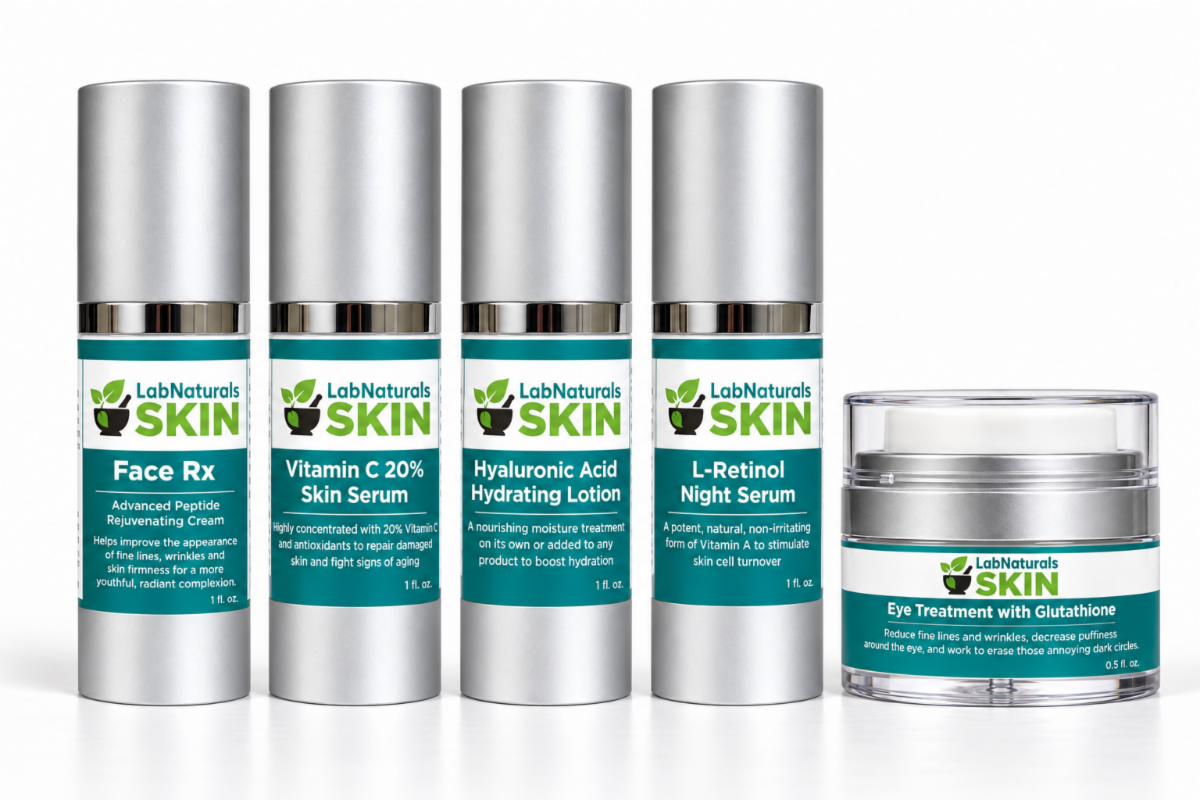
Those are the details I want you to understand when you explore my products—from Face Rx and Vitamin C Serum to Eye Treatment and Body Lotion.
I am continuing something I have personally used, believed in and valued for decades.
What else shows up on our skin?
As a teenager, I was crazy about a tan. Knowing what I know now, I wish I had been just as enthusiastic about sun protection!
UV exposure contributes to premature skin aging. Daily broad-spectrum SPF 30 or higher, along with shade and protective clothing, deserves a place in your routine.
Smoking and dietary habits can also affect how skin ages.
And I notice it in my own face: When I eat poorly, sleep poorly or feel stressed, my skin shows it.
A plastic surgeon once reminded me that repeated facial movements contribute to expression lines. His advice amounted to: Don’t want laugh lines? Don’t smile. Don’t want frown lines? Don’t frown.
Well, I’m keeping the smiling. 😉
My challenge to skincare influencers—and anyone selling a miracle in a jar—is simple: Explain the formulation. Show the evidence behind the promise. Help people understand what they’re buying.
You deserve that information.
Explore the products and read “Healthy Skin Starts with Science” blog at LabNaturalsSKINcare.com.
To your health,
Susan
|