|
Written by Kieran Delamont, Associate Editor, London Inc. | |
CULTURE
Fun at work isn’t frivolous after all
Many employees are keen to have more social events at work. Who knew?
| | |
THOUGH YOU MIGHT be one who grumbles every time a work-sponsored happy hour, lunch outing or after-work social event gets put on your calendar, a new survey from ADP Canada finds that these events remain “relatively infrequent” for many workers in Canada, as well as finding that the bulk of employees actually value these events, even with their less-than-popular reputation.
The data comes from ADP Canada’s latest National Work Happiness survey, which overall found that Canadian workers scored a 6.8/10 on the happiness scale — largely unchanged over the past year.
This survey also sought to get a read on what the social life of the average workplace looks like, and it found that workplace social events were infrequent, but that workers did ultimately find them valuable.
Fifty per cent of employees said their company organizes social events “at least quarterly,” but that one in five employees said their company organizes only a couple social events per year, with “team lunches or meals and holiday or seasonal events” the most common form. Forty per cent of employees said going to these social events created a greater sense of belonging, while 38 per cent said they improved teamwork, and 37 per cent said they improved morale.
“Creating opportunities for employees to connect in meaningful ways can have a lasting impact on the workplace,” said Heather Haslam, VP of marketing at ADP Canada. “Although lighthearted social events are relatively infrequent for many workers, employees consistently associate these moments with stronger relationships, a greater sense of belonging, improved teamwork and higher morale.”
Unfortunately for the millennials and Gen Zers out there, who are perhaps the most culturally dismissive of workplace social events, the evidence also found they are the most unhappy at work — although perhaps the real story is that boomers are far and away the happiest employees (and appear to be getting happier.) The simple takeaway? Attend the workplace lunch and the happy hour drinks, if you can. You might make a friend out of it — and friends at work are a valuable thing.
“Having friends at work is critical to success and engagement,” said Joe Hart, president of Dale Carnegie (a professional development firm founded by the original Carnegie). “Nurture your own friendships and encourage others to make friends at work. When you do, your company will benefit.”
| |
RECRUITMENT & HIRING
Back to the résumé
A new report shows that many jobseekers are editing their career back-stories, mostly to make them look more qualified to hiring managers
| | |
WHAT’S IN A résumé? These days, a lot more things than there used to be. A little white fonting to trick the screener, some very vague references to your graduation date, and…according to a team of Stanford researchers, a flux capacitor, for the large amount of time travelling going on in today’s résumés.
The research team recently published a paper indicating that just under 20 per cent of all workers have gone back and retroactively altered their past job descriptions or responsibilities for marketability purposes, a phenomenon they dub “time travel on professional profiles.”
The researchers say they discovered how much retroactive résumé editing was taking place while attempting to test a slightly different question about the validity of professional profile (e.g., LinkedIn) data, noticing that economists were “increasingly [using] professional profile data to reconstruct employment histories and measure skill supply.”
In attempting to show this method of research contained biases, they were able to point to this happening in real time: workers cramming their past job descriptions with markers of AI fluency to impress potential employers (or, increasingly, get screened well by automated AI systems).
“If I update my job description while still employed at a company, that could reflect either a change in how I describe my job or true changes in my responsibilities,” the research team, led by Stanford’s Nicholas Bloom, wrote. “If a worker has already left a job, their responsibilities cannot be changing, as the job is in the past. Thus, adjustments can only reflect a change in branding — the job is the same, but the way they talk about it has changed.”
One in five workers, the researchers found, has gone back and changed an old job description since 2020, and career coaches aren’t surprised. “Everybody’s keyword dumping,” one coach told the Wall Street Journal.
A lot of this is in response to AI, of course, but the researchers found the effect runs in the opposite direction as well. “The precipitous drop we see in the [rate of DEI words] coincides with the start of the Trump presidency,” researcher Gideon Slocum Moore told Fast Company. “If workers think there is less demand for DEI expertise given these changes, it’s unsurprising they’d remove this type of language from their professional profile.”
And yes, some of it is complete hogwash — especially when it comes to AI. Given the premium place on AI skills in the contemporary job market, it is not surprising people are spinning up fanciful ways to advertise mundane skills; after all, if a résumé is more a marketing document than a historical one, everything’s fair game. “It’s perfectly acceptable to say you leverage AI to support your daily projects,” said Dina Taylor of Hirevue, “or find ongoing areas of opportunity to add efficiencies into your life.”
Now, if you’ll excuse me, I have some high school job descriptions on my résumé that are looking a little stale…
| |
| |
Terry Talk: Why bossware is bad for your company
| Keystrokes. Mouse movement. Screen time. Productivity scores. Workplace surveillance software, or “bossware,” is exploding in popularity. But are organizations measuring productivity... or just activity? In this week’s Terry Talk, Ahria Consulting president & CEO Terry Gillis explores why over-monitoring can increase stress, erode trust and actually hurt performance. The highest-performing teams aren’t built on surveillance. They’re built on accountability, trust and commitment. | | | |
HEALTH & WELLNESS
Saving for the inevitable?
As workplace pressure, job insecurity and living costs increase, some professionals are building burnout funds to prepare for career breaks
| | |
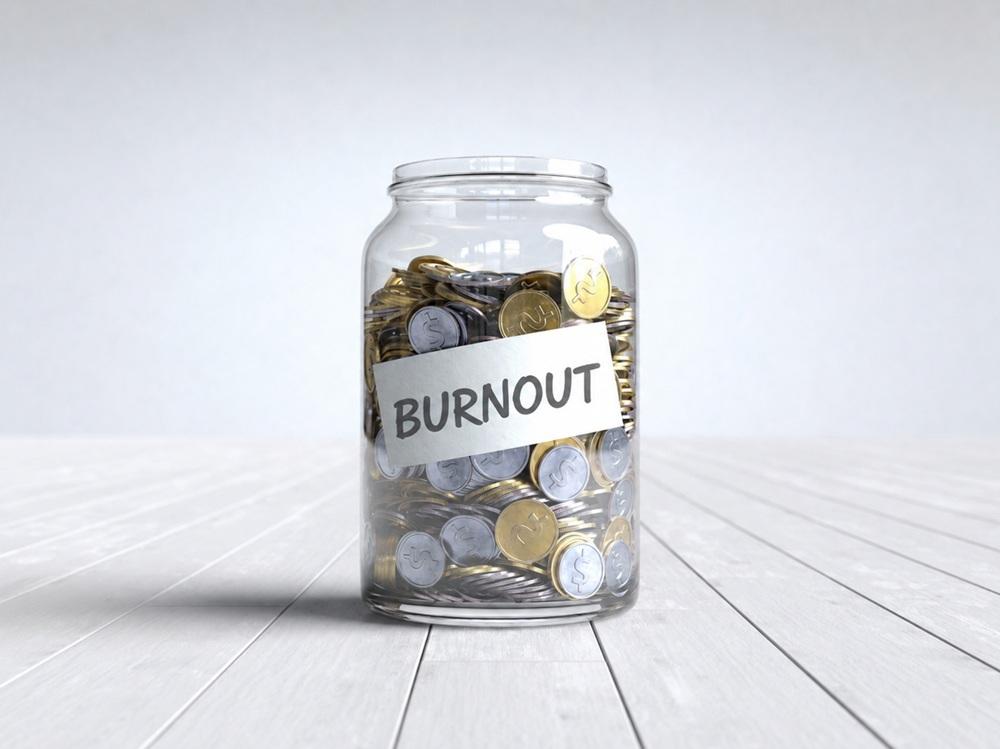
IF YOU’RE LUCKY, after all your bills are paid and your pantry stocked, there’s a little left over to sock away in savings at the end of the month. What to do with it becomes the next question. Vacation fund? Retirement account? Buying a home?
Or you could follow the lead of some workers, who are stashing cash for a more specific, 2020s-coded purpose: the “burnout fund.”
“A burnout fund is really intentional savings where you anticipate needing to take a break,” explained one financial advisor, speaking to Business Insider. Another added that the purpose of a burnout fund is to “build enough financial flexibility so you can have choices if a step back or career reset is needed.”
That is not wildly different from the idea of, say, an emergency fund or from the concept of savings in general. But the implications of a burnout fund specifically can be revealing in terms of how employees are thinking about their careers. They aren’t calling them job-loss funds or emergency funds, and their purpose isn’t simply to be there for a layoff or when their car’s engine blows up; they’re funds meant to give someone the ability to say, in essence, “I will not take any more of this.”
For some workers, it was the experience of burning out without funds stashed away that showed them the importance of having a burnout fund. One marketing consultant started a fund in anticipation of a second bout of burnout after white-knuckling her first bout. “It made me realize I needed to build some sort of avenue to allow me to step back when I’m burning out,” Tasmin Lofthouse said. “I think people are prone to burnout, especially in the world we operate in, and people need to see it as a foreseeable cost, rather than an unplanned emergency.”
But in that way of thinking, something else is revealed: white-collar professionals are no longer thinking about burnout necessarily as something that can be avoided or mitigated, but rather as something almost inevitable — a budget-able cost that will eventually need to be paid. That, say financial experts, reflects the bigger problem at hand.
“I feel kind of sad and anxious about the fact that folks are saving toward this financial goal,” said financial advisor Julie Beckham. “It’s a reflection of the pace at which they’re hustling to make ends meet and a reflection of the mental load that’s affecting more than just their finances.”
| |
CAREERS
Say hello to the 2 a.m. job interview
AI For a growing number of jobseekers, interviews are happening well outside of working (or any normal) hours
| | |
|
WHAT’S THE BEST time for a job interview? Say 10 a.m., while the interviewer is fresh for the day? Or how about 2 p.m., after they’ve had some lunch?
Well, what about 1 a.m., or whenever your robot interviewer is there and ready to chat?
With the rise in AI-based screening interviews, job candidates are increasingly able to schedule their first interview with a prospective employer pretty much whenever they want. Ealy morning, mid-evening or in the middle of the night, if you so choose. And increasingly, jobseekers are choosing. According to Ribbon AI, one of the preeminent AI-powered interview platforms, a quarter of all virtual interviews conducted on the platform took place between 10 p.m. and 2 a.m., a number that rises to 35 per cent when just looking at manufacturing roles.
“Candidates are busy,” Ribbon stated in a blog post. “For many parents, the first quiet 30 minutes arrive after the kids are asleep. Shift workers cannot step away from a factory floor or kitchen for a recruiter call. People looking for a job while they already have one may not want to interview from their current workplace.”
Ribbon cites these arguments in support of its larger claim that asynchronous, AI-powered interviews are a form of flexibility. “A 1 a.m. interview is not evidence that candidates love staying up late,” it wrote. “It is evidence that the hiring process can finally fit around their lives.”
Others in hiring tech echoed that argument. “For the first time in history, 100 per cent of applicants are being able to interview and show their worth to the job,” one recruiter said. “I would estimate that we'll begin to see more inclusion within roles and companies as well, as more and more people get their ‘at-bats’ in the hiring process.”
It’s an optimistic spin on things — and one that somewhat conveniently ignores the ubiquitous complaints from jobseekers that the role of AI in hiring has only served to make it more impersonal and opaque (though it does make it more flexible). Not all of those in hiring — even those who work in AI-powered hiring tech — are convinced it’s anything more than another example of the rough waters in which candidates swim.
“It’s a shitty time to be a candidate,” said Ophir Samson, head of voice AI at hiring software firm Greenhouse, speaking to Wired. “Your résumé goes into a black hole. You’re competing with thousands of candidates that are all using AI to write their résumés. So, good candidates can’t stand out.”
Or, as one candidate also told Wired, it wasn’t with enthusiasm for the flexibility that got him to do the interview at 1 am. It was to get the unpleasant robo-interview out of the way. “In today’s job market,” he said, “it feels like if you are going to scream, you’re going to scream into the void. And nobody is going to hear you.”
|
| | | | |