|
Doberman Pinscher Health Foundation Summer 2025
President’s Message
Greetings!
Welcome to the DPHF Summer Newsletter!
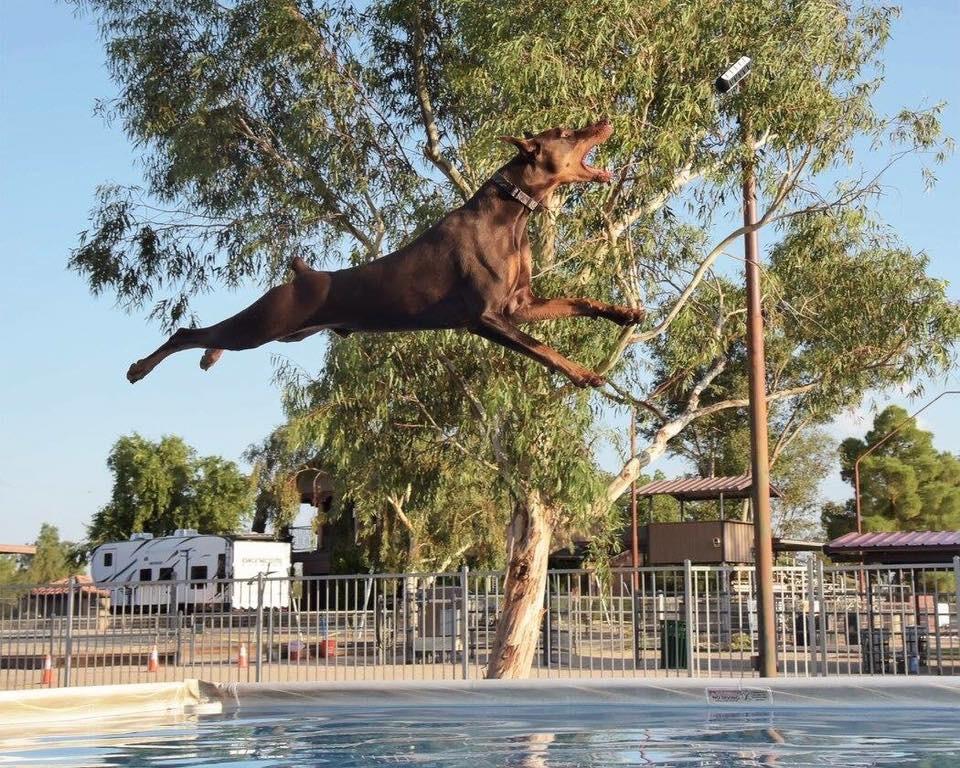
As I write this, much of the United States is experiencing particularly high temperatures. This is a timely reminder to keep your dogs safe, hydrated, and cool during the summer heat. In this issue, we’ve added a section with tips on recognizing signs of heat exhaustion in dogs and ways to prevent it.
We also have updates to share on our new grant process, as well as progress reports on currently funded projects.
We’re saddened by the loss of two long-time supporters and well-known Doberman competitors, Nancy Christenson and Beth Bishop. Their contributions to the Doberman community were profound, and we’re honored to pay tribute to them in this issue. Our hearts go out to their friends and families.
Looking ahead, the DPCA National is just around the corner. DPHF board members will once again be present, and we’re looking forward to connecting with supporters, sharing updates, and answering any questions.
Finally, we extend our heartfelt thanks to Susan Beckage for her dedicated service on the board. We wish her all the best in her future endeavors.
| | |
2025 Grant
The DPHF team is hard at work finalizing our 2025 grant award. While we had hoped to announce this year’s recipient in this newsletter, the decision has come down to two finalists—each with a compelling and impactful proposal. We’re committed to making the most thoughtful and responsible choice.
We take seriously the stewardship of the funds you so generously provide. Our research committee is seeking further clarification to fully understand the nuances of both proposals. This careful and deliberate process ensures our final decision will best reflect our mission and your generosity and will let you know as soon as that occurs.
| | |
Previoulsy DPHF Funded Grants
Ryan Fries DVM, Associate Professor, Cardiology
Diplomat ACVIM (Cardiology) - University of Illinois
“The Role of Myocardial Fibrosis in Dilated Cardiomyopathy”.
Dr Fries recently returned from the annual ACVIM Forum and is in the process of working through all of the data on this project.
In short, they have enrolled an impressive number of dogs (24 - DCM, 10 - Healthy). With the remaining budget, they hope to enroll the remaining 6 DCM dogs.
Nevertheless, they have presented preliminary data regarding this study at the North American Veterinary Cardiology Summit in Phoenix AZ on November 17th. This is an outstanding conference, and they were selected based on their work in this field.
Additionally, Dr. Fries was invited to present at an ACVIM Advanced Continuing Education course on Veterinary Cardiology Genetics. While the second conference wasn't an aim of the study primarily, they did find interesting results within our population.
Dr Fries provided us with a much more detailed summary of his results to date, which you can view here.
| | |
Dr. Chris J. Martyniuk, Amara Estrada - University of Florida
"Genome Editing in Induced Pluripotent Stem Technology (IPSC)-derived
Doberman Pinscher Cardiomyocytes"
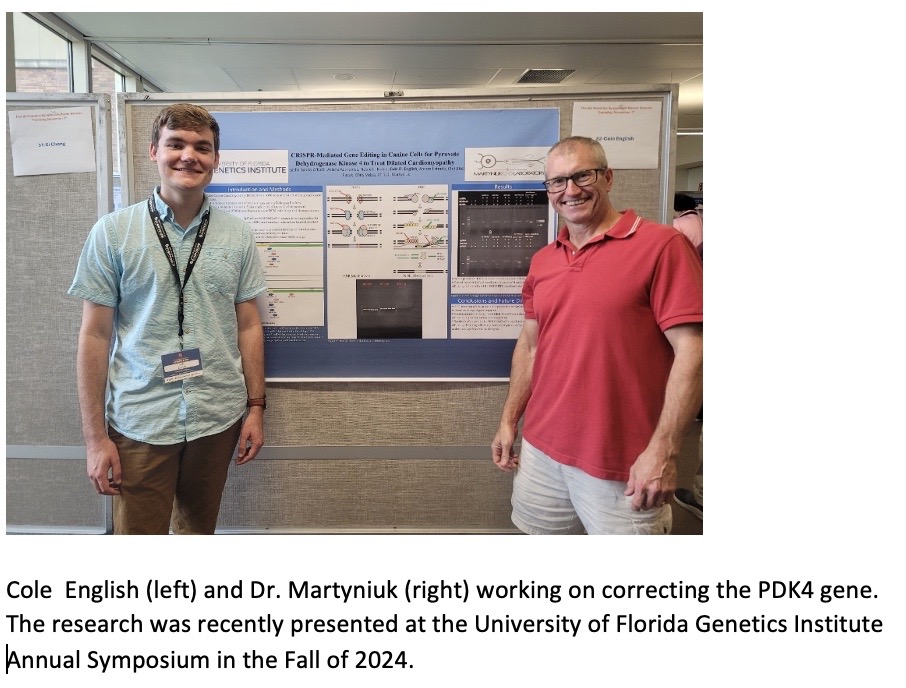
Dilated cardiomyopathy (DCM) is a cardiac disorder affecting both humans and animals. In Doberman Pinschers, two genetic mutations have been identified as being associated with DCM.
One mutation called DCM1 results in a 16-base pair deletion within the pyruvate dehydrogenase kinase 4 (PDK4) gene. PDK4 regulates cardiomyocyte energy metabolism, allowing for fatty acids to be preferentially oxidized above glucose. This leads to inappropriate metabolic fuel usage in the heart which can result in heart failure.
Researchers at the University of Florida have developed a tissue cell bank for Doberman Pinschers of primary fibroblast cell cultures with defective PDK4. The researchers have
“immortalized” these cell lines to facilitate future experiments – this will allow them to work with the Doberman cells without the need to harvest additional cells from patients with the genetic condition.
The team has successfully tested some candidate “gene editors” for their efficiency and one novel enzyme called KKH-Cas9 can cut the DNA surrounding the PDK4 gene. Once the DNA is verified as being cut, researchers can design an insert piece to replace the missing DNA piece from the gene.
This project aims to correct the defective gene using methods in gene editing, leading to improved heart function. Ultimately, these candidates, if successful, will be used to edit cardiomyocytes (heart cells) that have been generated from Induced Pluripotent Stem cells iPSC). These are stem cells that are reprogrammed into different cell types such as heart cells. iPSCs have the same properties as embryonic cells, so they self-renew and can differentiate in the body. With further investigation, clinical gene therapy may allow for treatment of DCM, a disease often treated exclusively palliatively once diagnosed.
Additional funding for this project has been granted from the American College of Veterinary internal Medicine (ACVIM), Morris Animal Foundation, and the American Kennel Club (AKC) Canine Health Foundation.
Support from multiple funders like the Doberman Pinscher Health Foundation ensures continued momentum for research breakthroughs in gene therapy for all canine breeds suffering from genetic-based diseases.
| | |
Dr Ilana Levinzon, DVM. Eduardo J Benjamin, DVM, MS, Diplomate ACVIM (Cardiology), Amara H. Estrada, DVM, Diplomate ACVIM (Cardiology) =University of Florida
"DCM3 / DCM4 Mutation in North American Dobermans"
The researchers have recruited and performed genetic testing on 106 Doberman Pinschers for the study, of which 63 had cardiac evaluation in the form of echocardiography, and 40 have had a Holter monitor performed.
The results indicate that the genetic mutations recently identified in European Dobermann Pinschers are present in our cohort of Dobermans living in North America, as 90.6% of dogs tested positive for DCM3 and 69.8% of dogs tested positive for DCM4.
The previously known mutations, DCM1 and DCM2 were present in 34.9% and 72.6% of the dogs in our cohort, respectively.
These results were presented at the 2025 ACVIM Forum in Louisville, KY, as a research report. The researchers are currently drafting the manuscript for publication in a peer-reviewed journal.
| | |
Judith Bertran, Ryan Freed, Marilia Takada - University of Florida
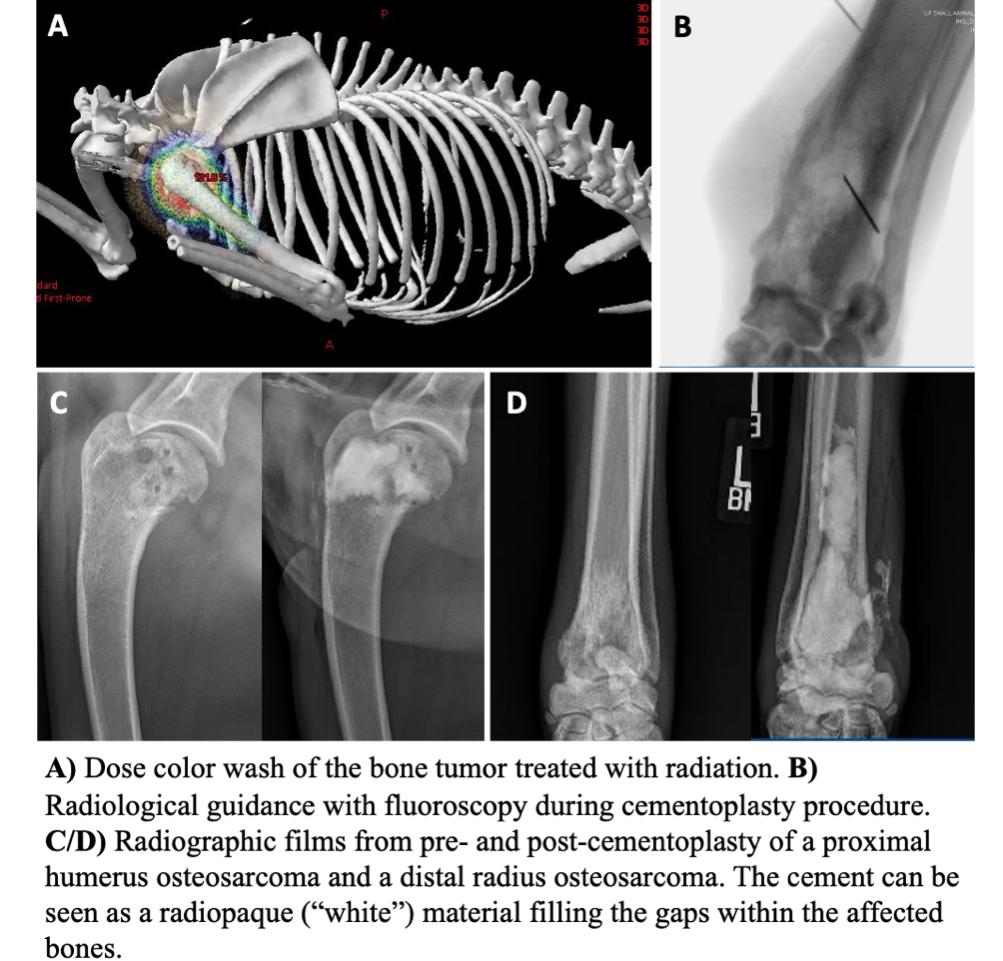
"Novel approach to treat dogs with appendicular osteosarcoma with percutaneous cementoplasty after stereotactic radiation therapy"
Doberman Pinschers and other large breed dogs are the most affected with a bone cancer called osteosarcoma.
Limb amputation is recommended for most patients due to the pain, lameness and a high risk of pathological fracture caused by the tumor. A clinical trial at University of Florida – Small Animal Hospital is being conducted to investigate an alternative treatment for amputation in dogs with appendicular osteosarcoma.
In this study, the affected limb is treated with a precise modality of radiation therapy called stereotcticradiation therapy, followed by a minimally invasive technique that injects surgical cement into the bone (percutaneous cementoplasty or PC). Our goal is to evaluate if PC is effective in relieving pain and keeping the bone from breaking after treatment with radiation, therefore, prolonging the time of limb function and improving quality of life.
To date, a total of three canine patients has been enrolled and successfully completed the treatment protocol. There were no surgical complications from the combination treatment. Preliminary results have shown improvement in objective pain evaluation and improvement in owner evaluation of their pet’s quality of life following the procedure. The study is ongoing and open for patient enrollment.
The researchers thank the Doberman Pinscher Health Foundation and the American College of Veterinary Radiology for their support on funding this study.
| | |
A Legacy of Integrity: Honoring Nancy Christensen and Renejade Dobermans
For those who love Doberman Pinschers—not just for their elegance and athleticism, but for their loyalty, intellect, and heart—Nancy Christensen’s name resonates like a lighthouse in the breed’s history. Through Renejade Dobermans, she built more than a kennel: she built a philosophy that continues to inspire breeders, trainers, and dog lovers today.
Nancy’s journey began in 1974 with Clyde A Scope UD, a Doberman who lit the spark of what would become a lifelong devotion to the breed. With fewer than 70 puppies across 13 litters, Nancy believed fiercely in quality over quantity. Her dogs were known not only for their stunning conformation but for their extraordinary performance abilities—excelling in obedience, agility, tracking, Schutzhund, flyball, and even search and rescue.
Nancy was a true pioneer, one of the first to champion natural-eared Dobermans in the show ring, defying convention and proving that beauty and functionality need not be sacrificed for tradition. Through strategic imports and selective breeding, she broadened the gene pool and elevated the breed’s versatility. As one handler once said, “Her dogs may not all look alike, but they all outmove anything else out there.”
But Nancy’s brilliance wasn’t limited to the ring or the pedigree charts. She was a passionate advocate for temperament testing, driving conversations around drive, resilience, and nerve structure long before it became fashionable. Her writings challenged breeders to consider what truly makes a Doberman a superior companion—not just structure, but spirit.
A respected AKC judge and educator, Nancy mentored countless enthusiasts with a blend of candor, compassion, and clarity. She didn’t just leave behind champions—she left behind principles. And those principles continue to shape the breed for the better.
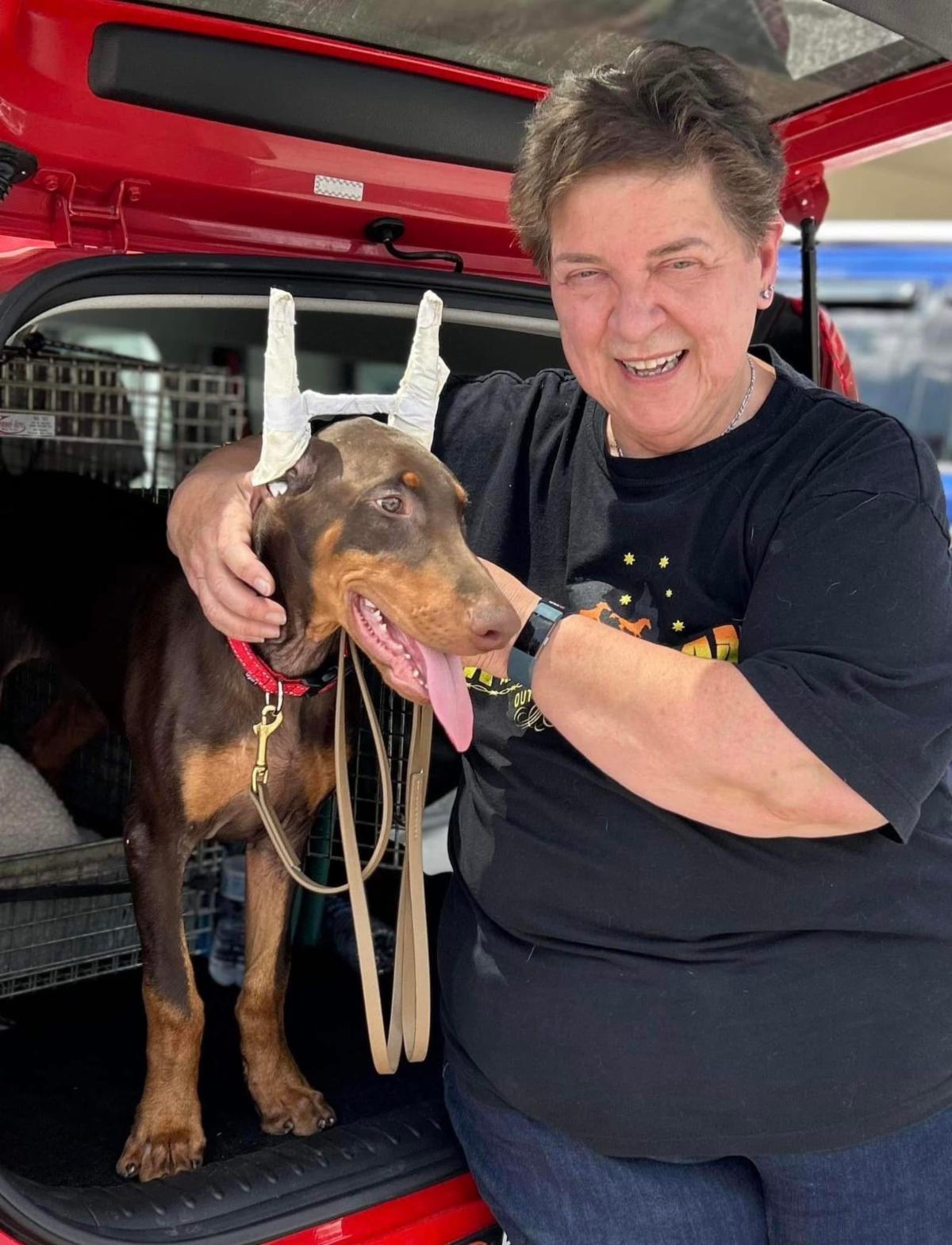
Nancy was a long-time supporter of the Doberman Pinscher Health Foundation (DPHF), and we are forever grateful for her unwavering dedication throughout her life—and the generous donation she left in her will, which continues to strengthen our mission and inspire our work.
| | |
In Every Search, Her Spirit Endures: Remembering Beth Bishop
Within the scentwork community—and especially among Doberman enthusiasts—Beth Bishop’s name evokes more than expertise. It calls forth a legacy of empathy, joy, and unmatched dedication to dogs doing what they love most: using their noses.
A lifelong student of nature and behavior, Beth began her professional journey as a zoologist and entomologist. But it was in the company of her Dobermans—keen, loyal, endlessly curious—that she found her true calling. Through Canine Coaches, her training business in Bath, Michigan, she introduced countless handlers to the transformative power of K9 Nose Work. From beginner sniffers to titled competitors, Beth fostered confidence, connection, and camaraderie in every dog-handler team.
Beth wasn’t just an instructor. She was a Certifying Official with the National Association of Canine Scent Work (NACSW), a thoughtful mentor, and a tireless advocate for enrichment-based training. Her Dobermans weren’t just athletes—they were partners, ambassadors, and mirrors of her philosophy: that every dog deserves to feel successful, challenged, and joyful.
Beth passed in June 2025 after a courageous battle with pancreatic cancer—but her influence hasn’t faded. It’s alive in the Michigan nosework community she nurtured, in the dogs still joyfully hunting odor thanks to her guidance, and in the annual Beth Bishop Memorial Sniff and Go, where sniffing became celebration and fundraising became a tribute.
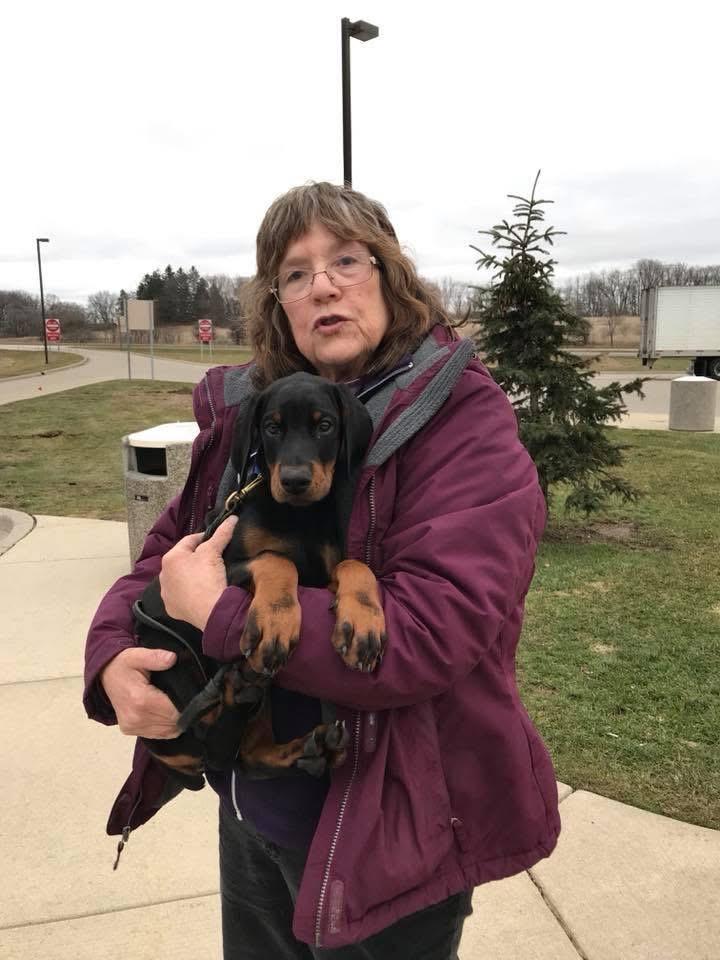
Beth was a proud supporter of the Doberman Pinscher Health Foundation, and the proceeds from her memorial event help fund research and support initiatives that align perfectly with her values. Her students and colleagues carry forward her teachings, and in each successful search, we feel her presence—cheering us on, gently guiding, always celebrating the bond.
Beth taught us that in scentwork, as in life, the journey matters as much as the find. We are forever grateful for the path she carved and the joy she shared.
| | |
Enjoying the Summer with your canine companions
Summer is a special time of year. There is nothing like spending time outside with your friends and family, including our canine companions.
However, extreme high temperatures and outdoor activies can pose risk to humans and animals alike. Here are some signs of heat exhaustion to look for in our canine companions and tips for enjoying the beautiful weather with them.
Prevention Tips for Warm Weather Adventures
- Always carry fresh water and a collapsible bowl so your dog can hydrate regularly.
- Opt for early morning or evening walks when temperatures are lower
- A coat that can be soaked in water—especially one that covers the belly—helps regulate body temperature.
- Pavement and concrete can burn sensitive paw pads. Use booties or paw wax when surfaces are hot.
- Frequent pauses in shaded areas help prevent overheating.
- Heatstroke can escalate quickly. Watch for these warning signs:
- Excessive panting or drooling
- Bright red or pale gums and tongue
- Rapid heart rate
- Vomiting or diarrhea (sometimes with blood)
- Disorientation, staggering, or collapse
- Seizures or unconsciousness in severe cases
If you suspect heatstroke:
- Move your dog to a cool, shaded area immediately
- Offer small sips of cool (not ice-cold) water
- Apply damp towels to the belly, paws, ears, and neck
- Use a fan or cooling mat to aid heat dissipation
- Monitor temperature if possible—stop cooling once it drops to 103°F
- Contact your veterinarian right away, even if symptoms improve
With thoughtful planning and awareness, summer can be a season of joy, wellness, and wagging tails. Let’s make every outing safe, refreshing, and full of happy memories
| | |
2026 DPHF Calendar Contest
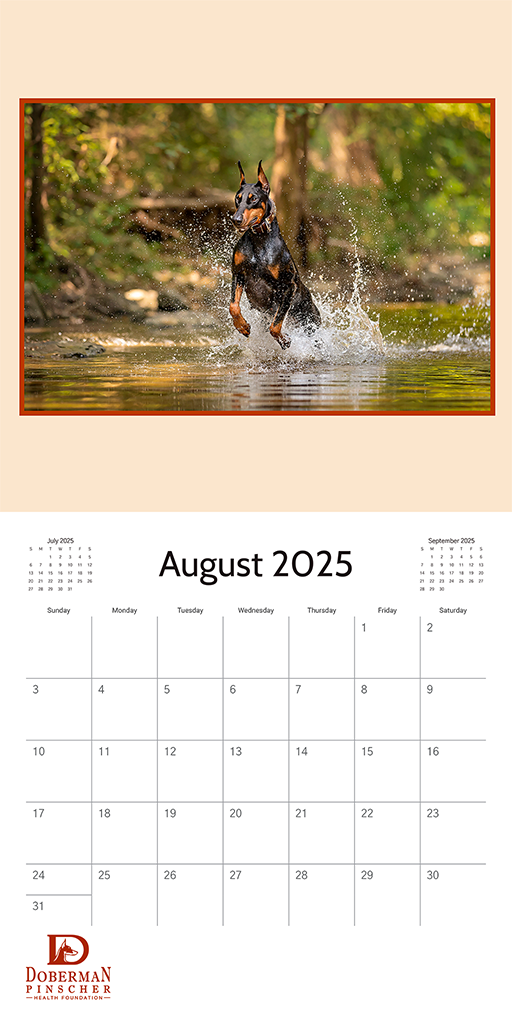
We're excited to announce the return of our annual DPHF Calendar, celebrating our incredible supporters and their beloved dogs.
Our calendar features photos of your canine companions alongside vital health tips to help keep them safe and thriving in the year ahead.
Keep an eye on our Facebook page for details about our upcoming photo contest and how to enter. It is one of our favorite traditions, and we look forward to seeing your submissions light up our feed again this year.
From playful pups to seasoned seniors, your photos are the heart of this fundraiser—and we're deeply grateful for your enthusiastic support year after year.
Thank you for helping us make this campaign a success!
| | |
Join the DPHF Board of Directors!
Do you have a passion for Dobermans and a commitment to preserving the health and integrity of the breed? The DPHF Board of Directors currently has an open seat—and we are looking for a dedicated individual(s) who shares our mission and enthusiasm.
Do you have experience in fundraising, research or are a Veterinarian with a passion for Doberman health?
This is a unique opportunity to help shape the future of Doberman health initiatives and make a meaningful impact within our community.
Interested?
We’d love to hear from you! Please reach out to us here to learn more or express your interest.
| | |
Thanks Again
Finally, we would also like to thank all of our supporters, the promising research described in this newsletter would not be possible without you!
One final note that the Doberman Pinscher Health Foundation is a 501 c(3) charitable organization, as such, your donations are tax deductible. The easiest way to donate is to visit our website here.
We are grateful for and humbled by the support we receive.
Sincerely,
DPHF Board of Directors:
Niccole Atwell
Jenn Cannerelli
Mike Dellorto
Libby Hargrove
Kaye Krueger DVM
Sue Lynch
Denise McKay
Shirlee Walker
Linda Zaeske
| | | | |