|
Course Overview:
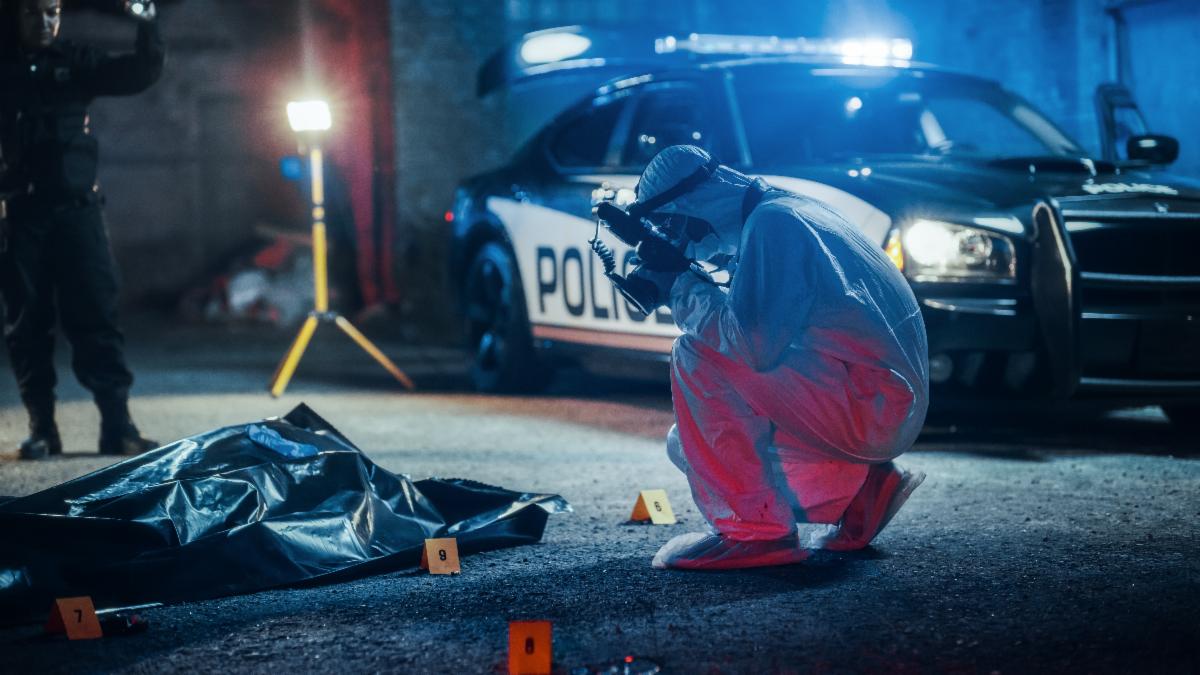
When an officer discharges their firearm at a moving vehicle, the investigation enters uniquely complex territory. Split-second decisions unfold against a backdrop of constant motion, rapidly closing distances, and life-threatening dynamics that challenge even the most experienced investigators. This specialized webinar equips you with the critical knowledge and technical skills needed to thoroughly investigate these high-stakes incidents.
Designed for criminal investigators, internal affairs personnel, agency administrators, crime scene technicians, and patrol officers, this training addresses the distinct challenges that separate vehicle-involved officer shootings from static encounter investigations. We will discuss how to capture, measure, and reconstruct scenes where every fraction of a second matters and where the physical evidence tells a story of motion, speed, and human response under extreme stress.
Vehicle-involved OIS cases demand more than standard investigation protocols. The vehicle's speed, the officer's perception-reaction time at both the threat's onset and conclusion, and the physics of time-distance relationships all become critical factors in determining what happened. This webinar bridges the gap between crime scene documentation and human performance science, giving you a comprehensive framework for these complex investigations.
Explore how sympathetic nervous system activation affects the officer’s performance during vehicle encounters. Understand the physiological responses that impact decision-making, motor control, and memory formation—knowledge that's essential for both scene reconstruction and officer interviews. Understand the officer’s true field of vision vs. the field of vision of a bystanders camera or a static security camera that presents a completely different visual perspective.
Develop expertise in using bullet impact angles to determine vehicle position at the moment each shot was fired. Learn how to integrate ballistic evidence, vehicle dynamics, and human factors into a coherent timeline of rapidly unfolding events.
Whether you're conducting criminal investigations or administrative reviews, this training provides the foundation for thorough, objective, and scientifically sound analysis of officer-involved shootings at motor vehicles.
|