hdr_top.jpg

Hormone Balance Hotline - July 2026

Dear Friends,


Welcome to a new issue of the Hormone Balance Hotline! In recent decades, Polycystic Ovary Syndrome (PCOS) has risen to epidemic levels among women. Some medical researchers estimate that 1 in 8 women now suffer from PCOS, with even higher levels among women of reproductive age.


Years ago, Dr. John Lee studied this disorder. He wrote clearly about the causes of PCOS and told women how to deal with them. In this issue, we’ll present Dr. Lee’s expert advice about PCOS and discuss the new name that the medical community recently gave this disorder. We’ll also offer you free resources to support the health of your ovaries and manage your blood sugar. And if you have not ordered products from our Web Shop on Fullscript, we’ll give you an extra discount on your first order. Keeping reading to learn more!


As you read this issue, remember that when you visit our website to place an order on our Web Shops, you help us to keep JohnLeeMD.com on the Internet. Thank you for your orders, and thank you for your support!


Yours for good health,

The Official Website of John R. Lee, M.D., JohnLeeMD.com


P.S. There's one other way you can support us that we deeply appreciate! Share this email with your friends on your social media accounts! Just click the buttons below and feel free to add good words about us to your post. Thank you for your support!

X Share This Email
LinkedIn Share This Email
Pinterest Share This Email
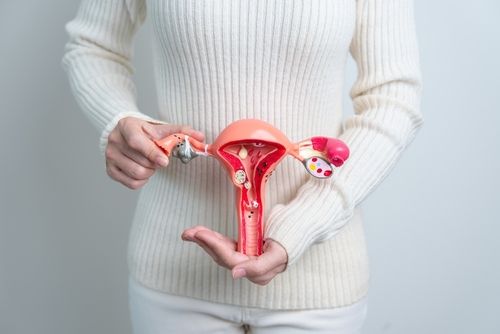
Woman holding Uterus and Ovaries model. Ovarian and Cervical cancer_ Cervix disorder_ Endometriosis_ Hysterectomy_ Uterine fibroids_ Reproductive system and Pregnancy concept

Polycystic Ovary Syndrome (PCOS) – What Dr. Lee Taught Women About It


Over the last several decades, Polycystic Ovary Syndrome (PCOS) has become one of the most prevalent hormonal disorders that women face. Despite its name, PCOS is not just an ovarian health problem. Symptoms of PCOS include irregular or skipped periods, lack of ovulation, cysts on the ovaries, excess facial and/or body hair, male pattern baldness, acne, weight gain, and difficulties managing blood sugar, among other problems.


Because PCOS involves many different symptoms – and because not all women who suffer from it have cysts on their ovaries – an international coalition of more than 50 medical and patient organizations recently decided to give PCOS a new name: Polyendocrine Metabolic Ovarian Syndrome (PMOS). “Polyendocrine” refers to disorders that affect multiple glands in the endocrine system. It relates to medical issues where hormonal imbalances impact several body systems. The new name emphasizes the fact that this syndrome is a hormonal and metabolic disorder that can harm one’s reproductive system, cardiometabolic health, blood sugar, skin health, and more.


While we welcome this new name for PCOS, we also must point out that this only changes the name of the disorder. It does nothing to change how doctors treat the syndrome. Sadly, those treatments have done little to stem the rising rates at which women are getting PCOS.


Fortunately, Dr. John Lee studied PCOS at great length. He knew the syndrome was a hormonal and metabolic disorder first and foremost, and he told women how to address those underlying disorders. To learn more, click here to read an excellent article Dr. Lee wrote about PCOS. And if you know anyone who may be suffering from PCOS, please share this email and the article with them. It may dramatically improve their health for the better!


Click Here to Read the Full Article!

Get Free Health Resources…and A Discount on Your First Order at Our Web Shop on Fullscript!


If you read Dr. Lee’s excellent article on PCOS that we discussed above, you know that raising your progesterone to healthy levels and reducing your sugar intake are important steps you can take to improve your health. That’s true not only for women who have PCOS, but for all of us!


With that in mind, we’re offering you two free resources from our Web Shop on Fullscript that can help you take important steps towards better health. These resources contain excellent advice about how to boost your wellness using safe, natural methods. Click on the links below to read these resources and download them to your computing device. Please note that your device must have Adobe Acrobat installed to read and download these resources.


Speaking of our Web Shop on Fullscript, we have an exclusive offer for you if you have never ordered from us! Here’s our offer.


For customers with U.S. shipping addresses, visit our Web Shop on Fullscript for the first time by or before July 31, and we will give you an extra 5% discount on your first order, for a total discount of 25%! Just click here or on the “Place Order” button above to start your first visit!


Our Web Shop on Fullscript lets our customers with U.S. shipping addresses buy more than 20,000 professional-grade nutritional supplements and other natural health products at a 20% discount from retail MSRP prices. You will receive this discount on every item you order, and get an extra 5% discount on your first-time order if you place it by or before July 31. Please take advantage of this offer, with our thanks for your support!

Guidelines for Taking a Break From Progesterone Cream


One of the things women often ask us for is instructions on how to use progesterone cream. That’s why we’ve posted a full list of Dr. Lee’s guidelines for using progesterone cream on JohnLeeMD.com. Click here to read them!


Menopausal women often ask us if they need to take breaks from using their progesterone cream. The answer is a resounding “Yes!” Here is what Dr. Lee told one woman who asked him this question.


That’s a Good Question

From the November 2000 Issue of the John R. Lee M.D. Medical Letter


“Q. In your book you say that in the first three months of a menopausal woman using progesterone, much of the progesterone can be “lost” in body fat. Should I use the progesterone every day of the month until the progesterone builds up in my body? The progesterone has really helped me. Thank you so much!”


“A. It’s important to always take 5 to 7 days off per month when using progesterone cream, in order to “refresh” your receptors. Except for women who have endometriosis, I can’t think of any exceptions to this. Even though some of the progesterone cream will migrate to body fat you will still be getting a measurable amount in your system immediately. In fact, according to Dr. David Zava, who does saliva hormone testing, it shows up in your saliva within seconds of application and reaches peak absorption in three to four hours.”

Thank you for reading our newsletter! And again, please share this email with your friends on your social media accounts! Just click on the buttons below and feel free to add good words about us to your post. Thank you for your support!

X Share This Email
LinkedIn Share This Email
Pinterest Share This Email

The products on JohnLeeMD.com are not offered for the diagnosis, cure, mitigation, treatment, or prevention

of any disease or disorder nor have any statements herein been evaluated by the Food and Drug Administration (FDA).

We strongly encourage our customers to discuss topics of concern with their health care professionals.