hdr_top.jpg

Hormone Balance Hotline - March 2026

Dear Friends,


Welcome to a new issue of the Hormone Balance Hotline! March is Women’s History Month, dedicated to honoring the contributions, accomplishments, and history of women. We add our support and our voices and our actions to women, for women, just as we and Dr. John Lee, M.D. have done for over 35 years of our history, here at JohnLeeMD.com.


We honor YOU for all of your contributions and accomplishments! For your help and support for women, throughout your history! Showing up and helping how you can. Carrying on, and helping others along their path, when times are tough. Giving generously of your time and resources and efforts. Showing fortitude and strength, and great resilience. Thank you, we see you and appreciate you!


March is also National Endometriosis Awareness Month, and Dr. John Lee had important things to say about this painful health condition. We feature his insights in our first article, including the important role progesterone can play in getting relief from endometriosis symptoms. Speaking of progesterone, read our final article to discover what Dr. Lee told his readers about interactions between natural progesterone and prescription drugs.


As you read this issue, remember that when you visit our website to place an order, you help us to keep JohnLeeMD.com on the Internet. Thank you for your orders, and thank you for your support!


Yours for good health,

The Official Website of John R. Lee, M.D., JohnLeeMD.com


P.S. There's one other way you can support us that we deeply appreciate! Share this email with your friends on your social media accounts! Just click the buttons below and feel free to add good words about us to your post. Thank you for your support!

X Share This Email
LinkedIn Share This Email
Pinterest Share This Email
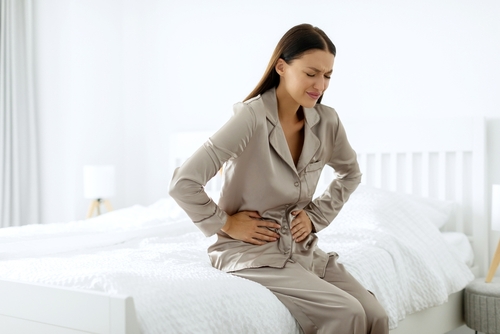
Lady feeling stomach pain in the morning_ sitting on bed and touching belly_ having menstruation cramps_ copy space

Dr. Lee’s Research and Wisdom About Endometriosis


If you or someone you love suffers from endometriosis, you know how painful this health issue can be. Endometriosis is a condition in which endometrial cells – the cells that make up the tissues lining the inside of the uterus – spread to areas outside of the uterus. Endometrial tissue cells may attach to the ovaries, the bladder wall, the intestinal walls, and other areas in the abdomen. This tissue swells and expands as estrogen levels rise during the menstrual cycle, causing severe pain, inflammation, and even infertility.


Based on health research, endometriosis may affect around 1 in 10 women of reproductive age. It is most prevalent among women in their 30’s and 40’s, though it can occur in women of all ages. Sadly, a recent research study estimates that endometriosis rates rose 32% from 2017 to 2024.[1]


As Dr. Lee points out in his books, there is a strong connection between endometriosis and hormonal imbalances, especially estrogen dominance. Dr. Lee also stated that many women may experience relief from their endometriosis symptoms by balancing their hormones and restoring their progesterone to healthy levels. To learn more about this health issue and Dr. Lee’s recommendations for getting relief from it, we encourage you to purchase and read his book, What Your Doctor May Not Tell You About Premenopause.


March is National Endometriosis Awareness Month. To honor this event, we’ve posted a new article to JohnLeeMD.com for you to read. It contains an exchange between Dr. Lee and a woman who suffered from endometriosis. Click here to read this article, or click on the link below, and share this article with a friend or family member who may need it!


[1] Bartelt K, Keane G, Gracianette M, Barkley E. Endometriosis Rates Increasing Across All Ages, Most Common in Women 35–49. Epic Research.https://www.epicresearch.org/articles/endometriosis-rates-increasing-across-all-ages-most-common-in-women-35-49. July 29, 2025.

Click Here to Read the Full Article!

Save Money on Natural Progesterone Creams at Our Web Shops!


If you read the article above, you know that natural progesterone – and not progestins – can play an important role in helping women experience relief from the painful symptoms of endometriosis. In addition, natural progesterone can help people dealing with other health issues associated with estrogen dominance…and there are many of them! Click here to see a list!


If you experience any of these health conditions, we encourage you to take our free Hormone Balance Test and read Dr. Lee’s books to learn more about the hormone imbalances you may have. If you decide to use a natural progesterone cream, the good news is that you can purchase the progesterone creams we recommend at some of the best prices on the Internet!


  • If you live in the United States, you can visit our Web Shop on Fullscript where you can buy natural progesterone creams and more than 20,000 other professional-grade nutritional supplements products at a 20% discount from retail MSRP prices. Click here to learn more!
  • If you live outside the United States, you can visit our Web Shop on iHerb.com where you can buy natural progesterone creams and thousands of other healthy products for shipment to customers in more than 185 countries. Click here to learn more!


We hope you accept our invitation to order from our Web Shops on Fullscript and iHerb.com. When you purchase any product at our online shops, you will not just save money. You will also financially support the Official Website of John R. Lee, M.D., as it receives a small commission from each order. Thank you for your support!

Does Natural Progesterone Interact with Drugs?


We often get emails from our readers that contain the question, “Can I use a natural progesterone cream if I’m taking the drug ______?” Thanks to Dr. Lee’s research, we can always answer “Yes.” Because natural progesterone is molecularly identical to the progesterone that our own bodies produce, it does not contain substances that are foreign to our bodies and that can interact badly with drugs. Here’s how Dr. Lee explained this to a woman who wrote him with the same question.


That’s a Good Question

From the November 2000 Issue of the John R. Lee M.D. Medical Letter


“Q: My doctor is worried that if I use progesterone cream it will interact with the drugs I’m taking. What drugs does progesterone interact with, and what are those interactions ?”


“A: Remember, in a premenopausal woman, the body produces 15 to 30 mg of progesterone daily for about half of the menstrual cycle, and even after menopause the adrenal glands naturally keep producing a little progesterone, so we’re not talking about a drug-drug interaction. The only way that a normal, physiologic dose of progesterone cream would affect the body relative to a drug, is if it brought some function back to normal. For example, if you’re taking a diuretic for bloating and water retention and progesterone solves the problem by opposing estrogen’s tendency to cause the body to retain water, then you might no longer need the diuretic.”

Thank you for reading our newsletter! And again, please share this email with your friends on your social media accounts! Just click on the buttons below and feel free to add good words about us to your post. Thank you for your support!

X Share This Email
LinkedIn Share This Email
Pinterest Share This Email

The products on JohnLeeMD.com are not offered for the diagnosis, cure, mitigation, treatment, or prevention

of any disease or disorder nor have any statements herein been evaluated by the Food and Drug Administration (FDA).

We strongly encourage our customers to discuss topics of concern with their health care professionals.