|
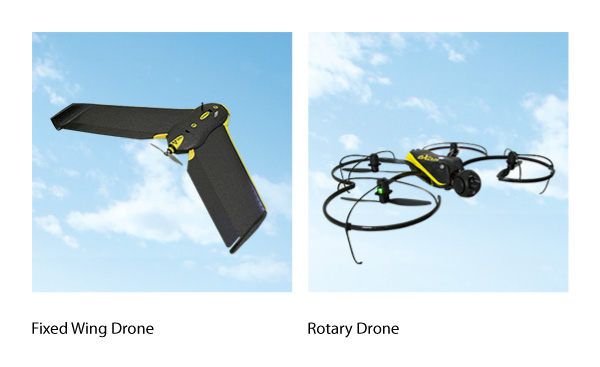
There are two Unmanned Aircraft Systems (UAS) Platform Types of drones: fixed wing and rotary. Fixed wing drones generate lift through wings while rotary drones generate lift by rotating propellers. This allows rotary drones to land and takeoff from the ground while fixed wing drones must be started by throwing them into the air. Fixed wings have longer endurance times, are generally faster, and are more efficient for large areas. Rotary drones are more flexible, can hover, fly lower, and are better for inspections/higher resolution pictures. Both drones can be autonomously flown using apps or by defining a set path.
Benefits:
Drones can be used to collect ecological data by aerial surveillance without disturbing sensitive environments or species thus limiting human interaction that can often be damaging to the environment. Drones have also been applied to situations to minimize the risk of human injury such as surveying elevated heights or assessing conditions that may result in physical danger. The usage of drones also provides efficiency in surveying. For example, drones are used to survey
pipeline corridors from remote stations saving both time and energy by not using aerial flight to photograph corridors.
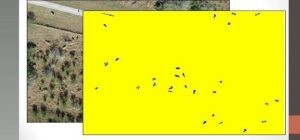
The Texas A&M AgriLife Extension Service Ecosystem Science and Management Unit has demonstrated drone use in range land application. The drones map out the area surveyed and then computer software is used to search for the shape of the cattle and take out the back ground aerial image leaving only the cattle, as seen on the right side with the yellow background. The program then counts the number of cattle to be presented in the rangeland survey.
|