|
“Who’ll Stand With Us?” Music, Veterans, and the Power of Showing Up
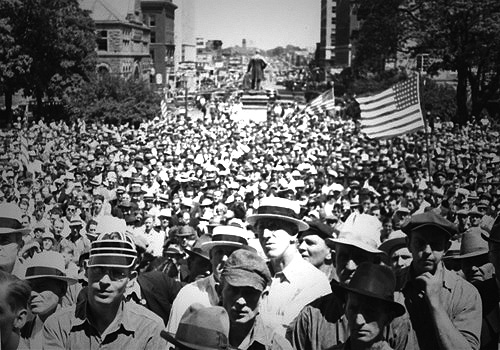
When the punk legends Dropkick Murphys hit the stage on the National Mall this afternoon, it won’t be just another gig—it’ll be a rallying cry. Backed by an electrified crowd of veterans, unionists, and allies, the Boston band will deliver the live debut of Who’ll Stand With Us?, a fierce anthem for a new generation of resistance.
The rally—organized by the grassroots coalition Unite for Veterans—is anything but your typical march-and-mic event. Instead, organizers are weaving together music, personal testimony, and hard truths to spotlight how budget cuts and mass layoffs are hitting America’s veterans—especially those working in the federal government.
“This wasn’t our fight—but it became our fight,” Dropkick Murphys frontman Ken Casey said on this week’s Labor Heritage Power Hour. “Veterans are being scapegoated and silenced. We’re here to turn up the volume.” And as veteran organizer William Attig, who helped spearhead the rally, said on the show, “Artists, workers, veterans—we’ve always led the way in fighting for justice. Today, we’re doing it together.” It’s a protest with power chords. A concert with conscience. And a promise that this is just the beginning.
Unite for Veterans. Unite for America. Concert & Rally
2p today on The National Mall, just north of the Smithsonian National Air and Space Museum, where 6th Street crosses the Mall. Click here for the livestream.
| | |
Just added; new GLAE workshop!
Use Your Voice: The Power of Digital Storytelling
In this interactive workshop at the upcoming Great Labor Arts Exchange, led by SEIU Digital Program Manager Ashley See, participants will explore the power and necessity of digital storytelling in today’s social and labor movements. Read more here. GLAE runs June 20-22 in Silver Spring; check out the updated schedule here and register here.
| | |
Labor Arts News Briefs
Vox Media Union Workers Deliver Strike Pledge to Management: On Tuesday, Writers Guild of America East (WGAE)-represented staff at Vox Media delivered a strike pledge signed by 95% of the bargaining unit to management, demanding a fair contract. Read more here.
Production Workers at Wilmington’s Grand Opera House Join IATSE: Production workers at The Grand Opera House in Wilmington, Delaware, have voted to form a union with Theatrical Stage Employees (IATSE) Local 8. Read more here.
International Labor History Association Announces 2024 winners: The International Labor History Association’s 2024 Book of the Year Award goes to Lori A. Flores of Stony Brook University for her book Awaiting Their Feast: Latinx Food Workers & Activism From World War II to COVID-19 (University of North Carolina Press, 2025). Read more about the winner and the honorable mentions here.
Sources: AFL-CIO Daily Brief, Wisconsin Labor History Society newsletter
| | |
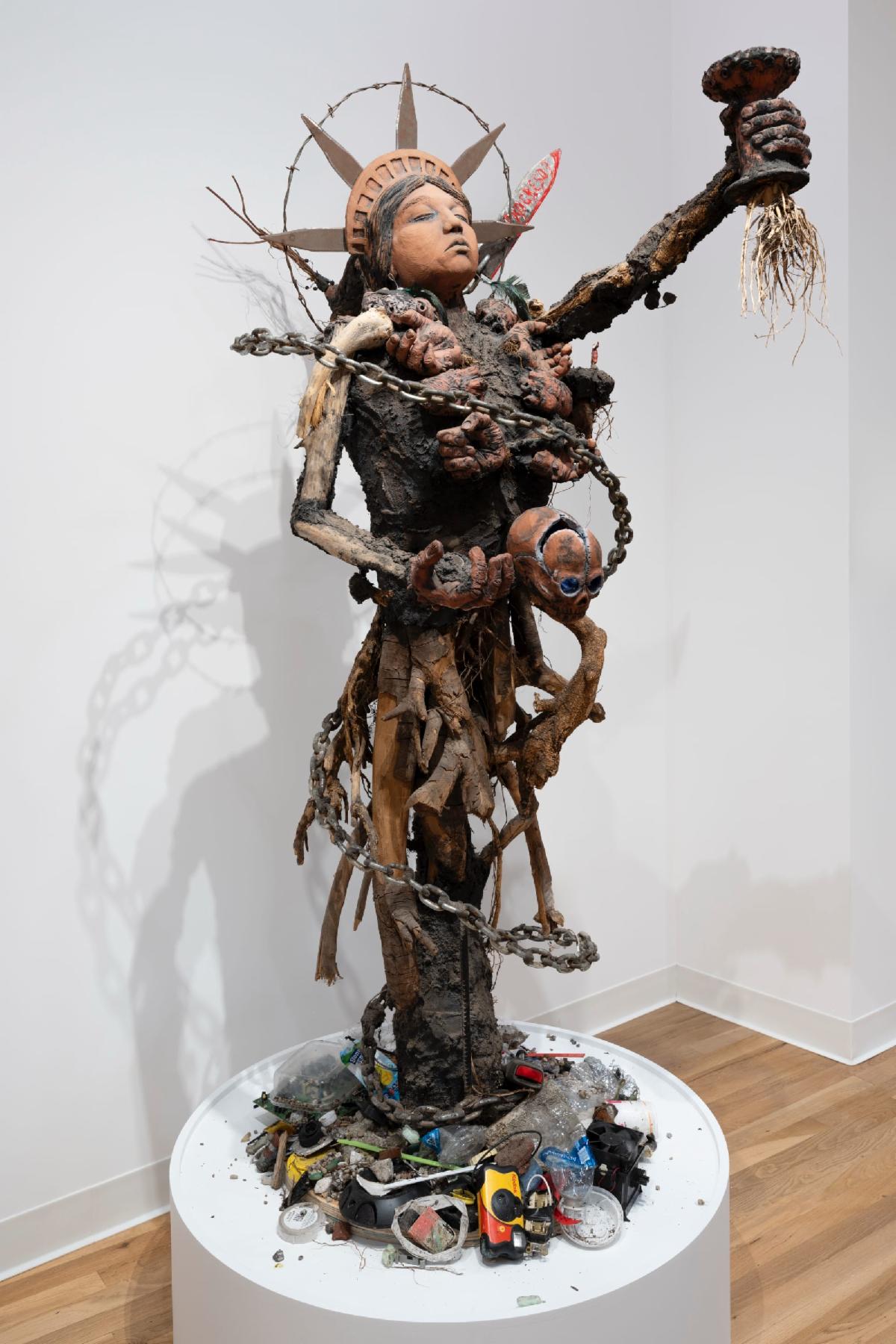
An Exhibition Celebrates the Self-Taught Immigrant Artists Shaping Chicago
Built on the traditional homeland of the Sauk, Fox, and Potawatomi peoples, Chicago is a city of immigrants. Just 13 years after the city was incorporated in 1837, more than half of its residents were born overseas, having flocked to the region from across Europe and Asia alongside tens of thousands of others. Today, Chicago is home to 1.7 million immigrants, totaling 18 percent of the population. The inaugural exhibition at the newly renovated Intuit Art Museum celebrates this history by bringing together 22 artists with ties to the city. Read more here.
| | |
Your Voice/Readers Write: “Shape of Power” at SAAM, not NPG
“Just for your information, the exhibit, Shape of Power, is not in the National Portrait Gallery,” writes Laura Unger in response to our Trump Fires National Portrait Gallery director; Arts Advocates Push Back report. “It is a (wonderful) exhibit at the Smithsonian American Arts Museum, which does share the building with the Portrait Gallery. They have their own director. Jane Carpenter-Rock is the acting director since 2024. She hasn’t been fired yet, though she probably will be.”
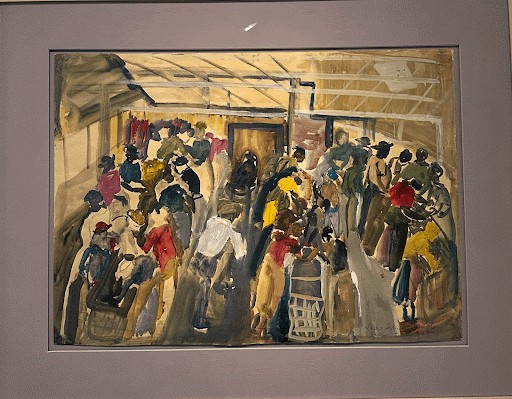
| | Dropkick Murphys "We Shall Overcome" | | Oyster Factory (1939) is a striking depiction of Black oyster shuckers working in a South Carolina factory. This watercolor and colored pencil work – on view at The Phillips Collection -- offers a vivid portrait of Black working-class life in America in the early 20th century. While the painting does not directly reference labor unions, its depiction of forced labor, racial inequality, and collective effort resonates deeply with the struggles they sought to address during this period. Read more here.
LHF intern Mircy Coca Soriano is a junior at Union College in Schenectady, NY. | | |
Through crime and crusade
Our labor, it’s been stolen
We’ve been robbed of our freedom
We’ve been held down and beholden
To the bosses and bankers
Who never gave their share
Of any blood
Of any sweat
Of any tears
Dropkick Murphys, Who’ll Stand With Us?
| | Like this newsletter? Help us spread labor art by passing it along! | | CLICK HERE for our complete labor arts calendar; look for our Labor Arts Calendar edition on Monday | | |
June 6, 1937
A general strike by some 12,000 autoworkers and others in Lansing, Mich. shuts down the city for a month in what was to become known as the city’s “Labor Holiday.” The strike was precipitated by the arrest of nine workers, including the wife of the auto workers local union president: The arrest left three children in the couple’s home unattended.
| | |
The Conductorettes
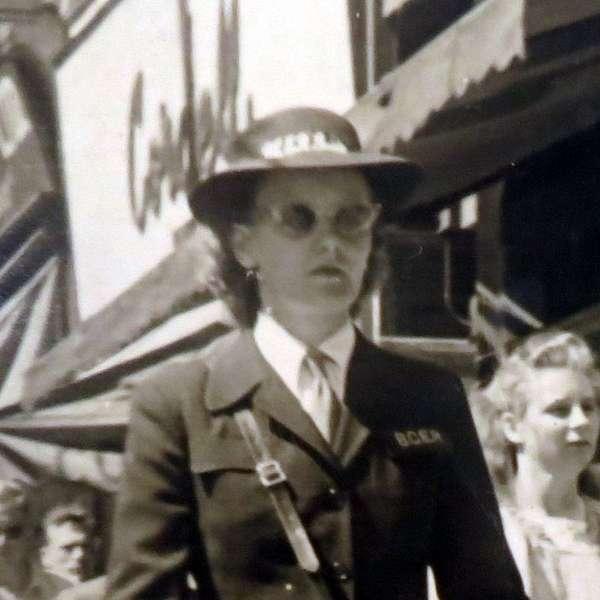
On this week’s Labor History Today: "This drunk came on and he started showing me a bad time, and I up and popped him and knocked him out. The soldier got one arm, I got the other and we put him beside the telephone pole. We got back in, gave a bell, and away we went. Never knew what happened to the guy. He could still be sitting there—I don’t know."
That was Pearl Wattum, one of Vancouver’s legendary “conductorettes”—the women who kept the city’s streetcars running during World War II while the men were away fighting fascism. On today’s show, from our colleagues at On The Line: Stories of BC Workers, we share their stories—firsthand accounts of grit, humor, and union solidarity from the front lines of public transit. It’s a powerful look at gender, labor, and what it took to keep a city moving in wartime.
And, on Labor History in 2:00: The Day Rosie the Riveter Died.
| |
| Which of these is NOT true? The Pageant of the Paterson Strike… | | | | LAST WEEK’S QUIZ: On June 1, 2000, Dakota Beef meatpackers won their 7-hour sit-down strike over speed-ups in St. Paul, Minn. | | |
"The worker must have bread, but she must have roses, too."
Please CLICK HERE NOW to pledge your financial support to our 2025 program, which includes our annual Solidarity Forever Award, the Great Labor Arts Exchange, the DC Labor FilmFest and much more (check out our website for details!).
Donations are tax-deductible to the extent allowed by law.
| | | | |