Issue 685 - October 2, 2026

IN THIS ISSUE


  • NEWS: Controversial Law to Provide Free Drug Paraphernalia to Addicts Signed Into Law
  • NEWS: New Tax Credit Should Encourage More Media Production in The First State
  • OPINION: Governor Vetoes Reform Bill, Choosing to Retain Unlimited Power Over Citizens

NEWS

Controversial Law to Provide Free Drug Paraphernalia to Addicts Signed Into Law


Governor Meyer Issues an Executive Order to Implement the Law, Addressing Earlier Concerns Raised by House Republicans


Gov. Matt Meyer signed into law this week legislation to provide free supplies to facilitate the use of illicit drugs by people suffering from substance addiction.


Senate Bill 249 (as amended) requires the Division of Substance Abuse and Mental Health to license public programs for distributing items used for “injecting, ingesting, inhaling, or otherwise introducing substances into the human body.” These supplies include “needles, syringes, cookers, cotton, tourniquets, clean water, mouthpieces, filters, and straws.”


These programs would be designed to encourage “peer-to-peer distribution” of state-supplied sterile drug paraphernalia. Participants would be granted anonymity, but would receive referrals for primary and behavioral healthcare and vaccinations, assistance with transportation and housing needs, and enrollment in public benefits programs.


The legislation also decriminalizes the possession of drug paraphernalia, but maintains felony violations for selling, delivering, or manufacturing the same items.


When the measure was debated in the House three months ago, State Rep. Nnamdi Chukwuocha (D-Wilmington), a prime sponsor of the bill, characterized the legislation as an extension of the needle exchange program, which Delaware authorized 20 years ago. The program was updated in 2023, dropping the requirement for a one-for-one needle exchange in favor of a needs-based approach, which the new law mimics.


During the House debate in June, State Rep. Valerie Jones Giltner (R-Georgetown), a nurse and a member of the House Health & Human Development Committee, said that while the needle exchange program has been successful in its goals of reducing the spread of infections, she questioned the wisdom of expanding the drug paraphernalia distributed by the state.


“We are basically engaging in malpractice,” she said. “We are taking the research from a needle exchange program and translating it to mean that by giving them a cooker, cotton, and tourniquets, we’re going to reduce overdoses.”


Rep. Jones Giltner said the bill should be restructured to focus on what studies have verified as effective in reducing overdose deaths. “Let’s stick with the science,” she urged her colleagues.


State Rep. Mike Smith (R-Pike Creek Valley) also weighed in during the floor debate, echoing Rep. Jones Giltner's perspective. “My mother and my uncle both died of an overdose, he said. “I found both of them…I can understand the emotion behind wanting to support (this bill).” 


Rep. Smith said the bill's proposals should first be piloted and evaluated before full statewide implementation. “This is the type of thing you want to be science-based," he told the chamber. "You want it to be data-driven before we make the decision, because we want that statistic to continue to go down.”


Ultimately, House and Senate Democrats passed the bill without any amendments addressing the Republican suggestions.


However, Governor Matt Meyer apparently agreed with the points made by Reps. Jones Giltner and Smith. In signing the bill on Wednesday, he also issued Executive Order 28,

establishing protocols for implementing the new law. The order requires medically informed regulations, measurable outcomes, phased implementation, and ongoing consultation with public health and public safety officials.


Under the order, the Department of Health and Social Services (DHSS) will prioritize existing syringe services and other interventions with an established evidence base, including naloxone distribution, infectious disease screening, drug-checking supplies, wound care, overdose education, safe disposal, and connections to treatment, housing, and other services.


For components of the law where the evidence is still emerging, the executive order establishes additional safeguards. Any subsequent expansion of state funding for drug supplies will require a written determination from the DHSS Secretary that the preceding phase of the initiative produced positive public health results without significant unintended harm.


The order also requires DHSS to establish clear baseline measurements and track performance outcomes, report its findings to the governor, and share them with the public.


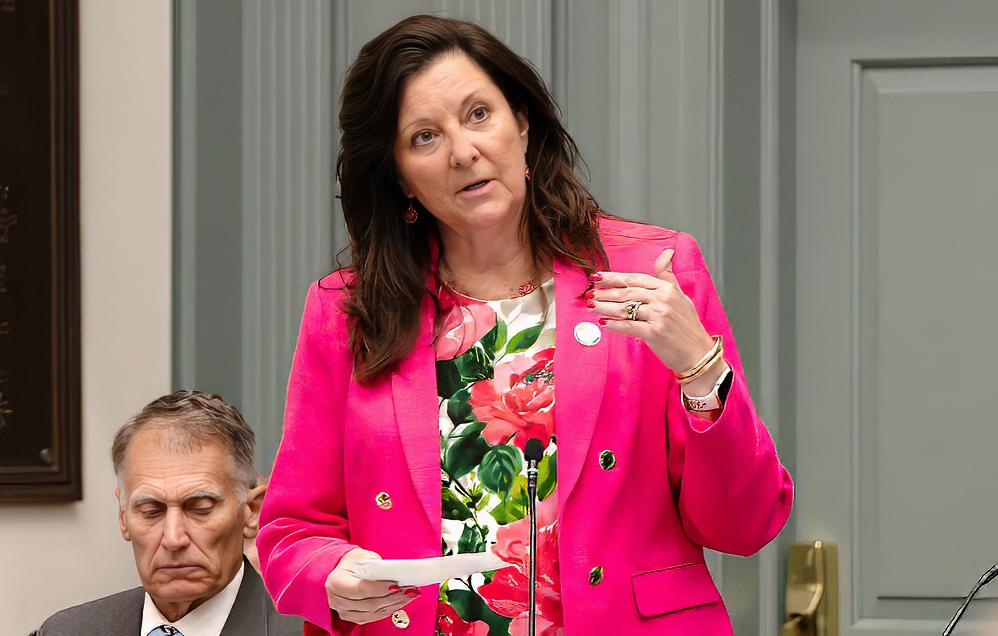
IN PHOTO: State Rep. Valerie Jones Giltner (R-Georgetown) discusses SB 249 during the House floor debate in June.

NEWS

New Tax Credit Should Encourage More Media Production in The First State


Governor Matt Meyer ceremonially signed legislation on Wednesday establishing Delaware’s first entertainment production tax credit.


House Bill 364 (as amended) created the new benefit to encourage media production activity in the First State.


"I’m excited about the new opportunities it will create for Delawareans, especially our creatives, our young people, and our small businesses," said State Rep. Kerri Evelyn Harris (D-Dover East), one of the bill's sponsors.


To qualify for the credit, companies would need to demonstrate that they invested more than $100,000 in eligible activities over 12 months. Qualified companies could then receive a tax credit equal to 30% of those investments, which they could apply toward certain Delaware state taxes. Independent verification of spending would be required, along with public reporting requirements and interagency oversight.


The bill also prioritizes productions that hire Delaware residents, use Delaware businesses, and make long-term commitments to the state.


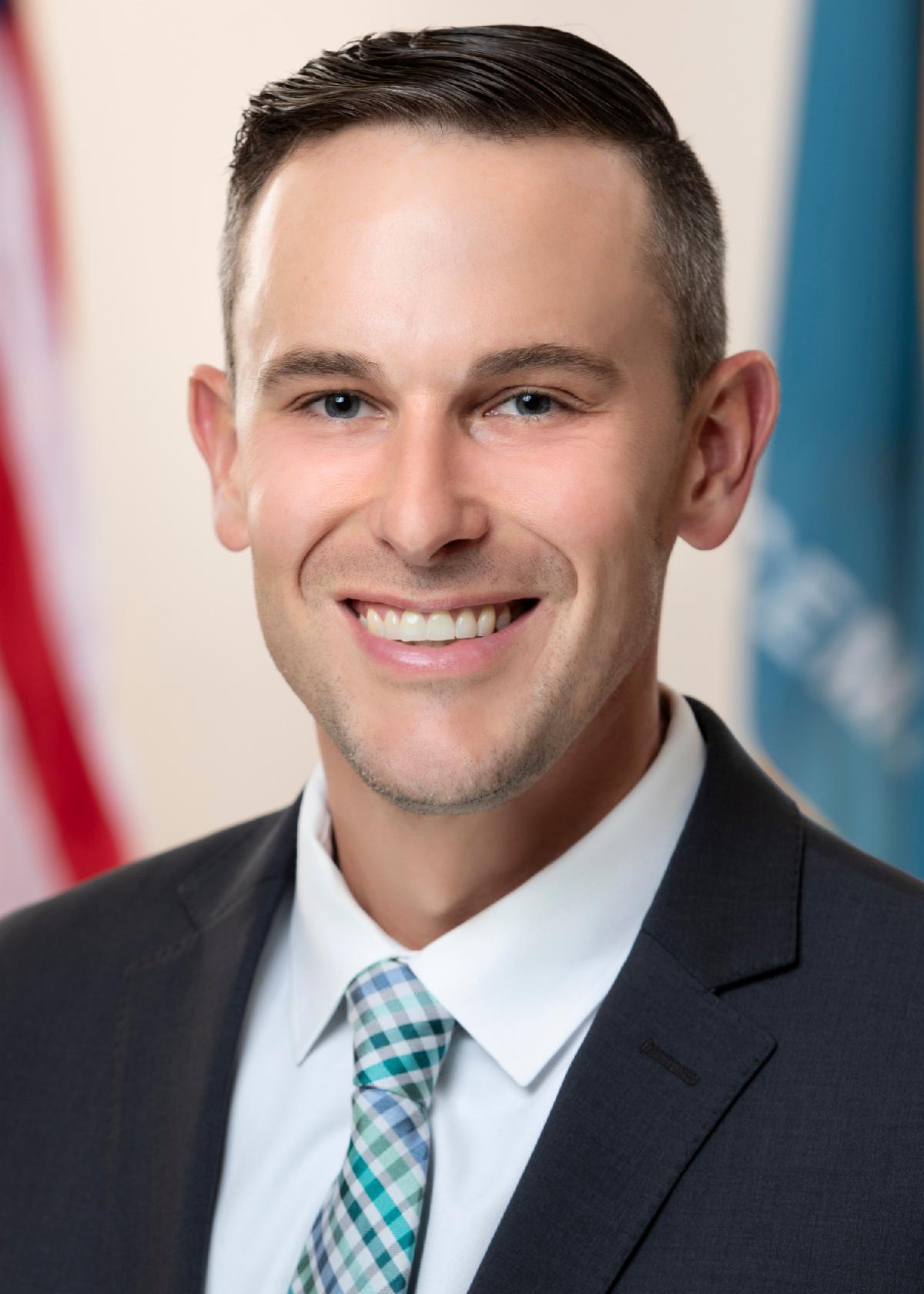
“After trailblazing this effort with HB 237 last year, I was proud to work with Rep. Harris on HB 364 to give Delaware a competitive tool to attract the film production industry,” said State Rep. Mike Smith (R-Pike Creek Valley), in photo, a prime sponsor of the proposal. “This measure is intended to bring new revenue to local businesses and create real jobs for Delaware workers. With most states already offering similar incentives, this bill ensures we stay competitive and strengthens our economy through smart, accountable economic development.”


Delaware is geographically well positioned in an existing entertainment production corridor stretching from New York south through Philadelphia, Baltimore, Washington, D.C., and Virginia. In Delaware, productions can access a variety of shooting locations, including cities, historic communities, beaches, farmland, suburbs, and commercial settings, all near one another.


Delaware hosted major aspects of the feature film Dead Poets Society in 1989. The production reportedly spent about $8 million locally during roughly 10 weeks of filming.


More recently, the state has served as a venue for productions including Beloved, Failure to Launch, and the television series Lioness, as well as commercials and smaller television productions. The new incentive is intended to turn those occasional productions into a more consistent pipeline of projects that generate long-term opportunities for Delawareans.

OPINION

Governor Vetoes Reform Bill, Choosing to Retain Unlimited Power Over Citizens


By Joseph Fulgham

Director of Policy & Communications

Delaware House of Representatives

Republican Caucus


Earlier this week, Governor Matt Meyer rejected a bipartisan effort to reform Delaware law and add a check on the unlimited power his office wields during a State of Emergency.


On Wednesday, the governor vetoed House Substitute 1 for House Bill 329 (as amended) – a decision he delayed until the last possible moment, when he was legally forced to act.


To understand what is at stake, a little context is needed.


At present, a governor can declare a State of Emergency in response to an emergency or disaster, or when such an occurrence is imminent. A State of Emergency can be maintained for up to 30 days and then renewed for an additional 30 days, an unlimited number of times. During the State of Emergency, the governor becomes an autocrat, able to unilaterally issue executive orders that carry the weight of law.


No one disputes that the state’s chief executive needs such power to quickly and decisively deal with a manmade or natural occurrence that suddenly endangers the public welfare. This sweeping authority had never been questioned until COVID-19 appeared.


After declaring a State of Emergency in March 2020, Governor John Carney maintained it for two years through a series of rolling renewals, issuing hundreds of edicts contained in dozens of executive orders during that span. These orders carried the weight of law and impacted the daily lives of every Delawarean in countless ways.


Delaware had never experienced a State of Emergency maintained for such a long span. It quickly demonstrated the need for change.


Over those two years, thousands of Delawareans contacted their state legislators expressing wide-ranging concerns about the governor’s orders. Those constituents often cited valid concerns about equity, safety, effectiveness, violations of constitutional freedoms, business viability, the quality of remote public education, and more. State lawmakers could do little beyond sharing their objections with the governor’s office and asking his staff to bring them to his attention. Citizens were powerless to impact the process because their elected officials had no recourse when the governor issued an order.


Under the circumstances of the pandemic, the courts were also not much of a check on gubernatorial authority.


The purpose of HS 1 for HB 329, sponsored by State Rep. Rich Collins (R-Millsboro), was to give Delaware citizens the ability to be heard, through their elected representatives, should such a situation ever recur.


Under the proposal, the governor would continue to be able to declare and maintain a State of Emergency for up to six consecutive months (180 days). The governor could renew the order, but the General Assembly could amend or terminate any subsequent renewal through a concurrent resolution.


The bill also pointedly included a clause that it would not take effect until after Gov. Meyer left office, even if elected to a second term. This legislation would not affect his administration.


In his eight-page veto message, the governor complained that the bill “tries to give the General Assembly the power to act with the force of law without requiring it to follow the constitutional lawmaking process.” That objection is transparently hypocritical. This is precisely the authority the governor’s office currently wields during a State of Emergency. Giving the state legislature the ability to check the governor’s unfettered power does not skew the process; it balances the scales.


The governor’s veto message also contended that “in an emergency, divided command means delayed action, confused responders, and blurred accountability. When public safety is at stake, Delaware needs one clear chain of command and one official the public can hold accountable.”


Both points are ludicrous. As previously noted, the reform bill keeps the governor’s ability to declare and maintain a State of Emergency for up to six months intact, as well as the unlimited authority to issue unquestioned orders. The emergency declaration could still be maintained afterward. The only change would be that after the first 180 days, state lawmakers would have a seat at the decision-making table.


The second aspect of the governor’s objection, accountability, strikes at the heart of the matter. At present, citizens have no available option to hold a governor accountable during a State of Emergency. None. The governor is driving the car, and citizens are restrained in the back seat along for the ride.


At an unfortunate time in our state and nation, when Republicans and Democrats cannot seem to agree on anything, Delaware’s lawmakers found common ground on the need for reform. This bipartisan bill cleared the House and the Senate unanimously.


When the 154th General Assembly convenes next year, legislators should return to this topic and seize the opportunity to improve our state’s emergency response laws, safeguarding the right of all Delawareans to have their voices heard.