|
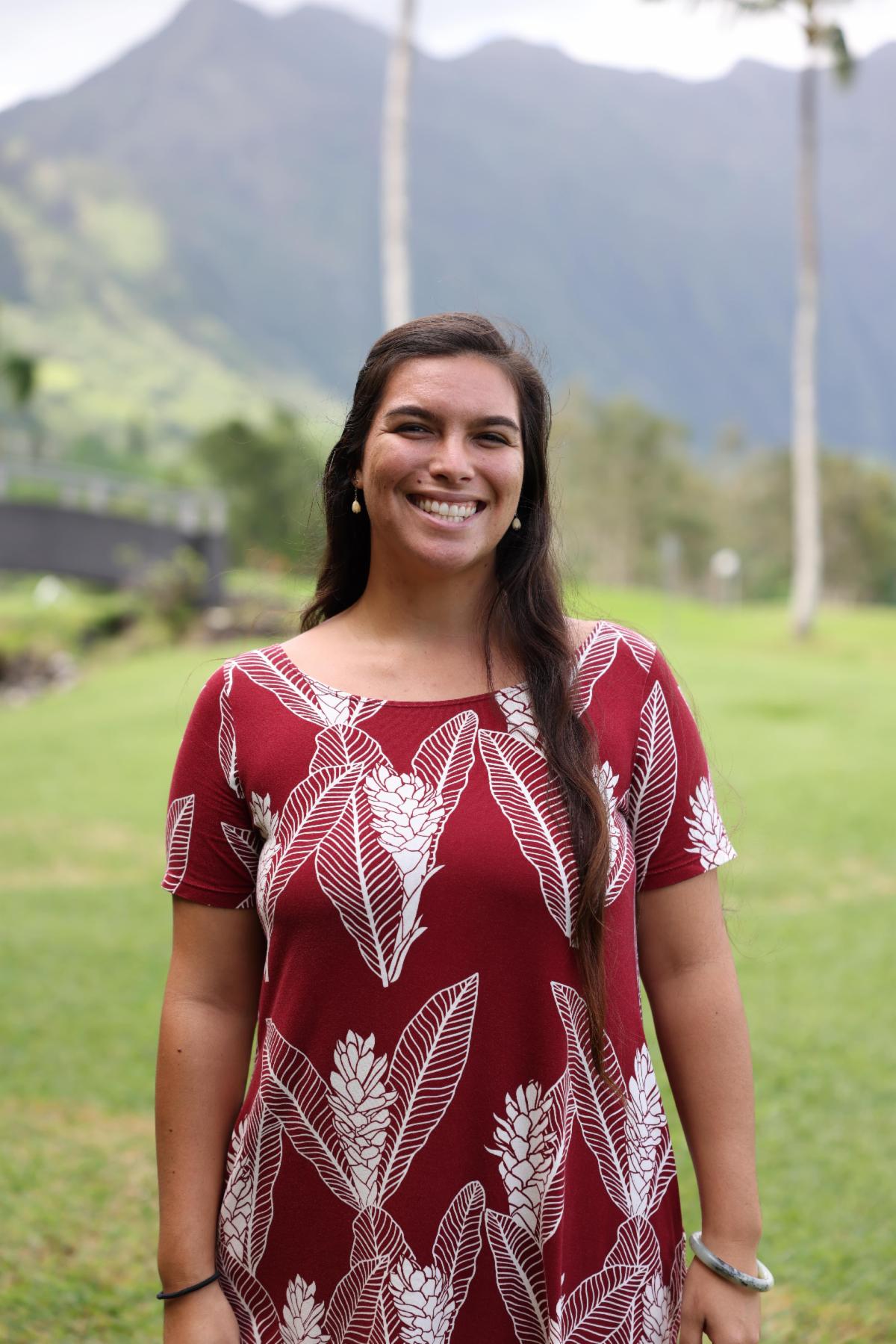
Alyssa Nicole ʻĀnela Purcell
Birthplace/Hometown:
Waiau, Pearl City, Oʻahu
High School:
Kamehameha Schools Kapālama
UHM Degrees:
BA in Hawaiian Studies (2018)
MLIS in Library and Information Science (2021)
Currently pursuing PhD in Indigenous Politics
Current Occupation:
Graduate Research Assistant at the Native Hawaiian Place of Learning Advancement Office and Hawaiʻinuiākea School of Hawaiian Knowledge;
Part-Time Instructor for Social Sciences of Oceans Degree
What inspired the path for your academic major?
Gist: ʻIke kūpuna (ancestral knowledge)!
My academic path is deeply rooted in my ancestral ties across Oceania (Hawaiʻi, Aotearoa, Samoa) and Asia (China, Korea), which instill in me a profound kuleana to steward and amplify Indigenous knowledge systems. My work in Hawaiian librarianship and politics has been guided by moʻokūʻauhau consciousness—a recognition of intergenerational responsibility and a commitment to reclaiming knowledge systems (shout out to the scholarship of Dr. Noenoe Silva).
My previous experiences as an archivist at the Hawaiʻi State Archives and as the project leader of the Moʻopono - Hawaiian Ancestry Project (under the direction of Dr. Lilikalā Kameʻeleihiwa) exemplify this commitment. Engaging with more than 9,000 pages of Hawaiian archival materials, I’ve sought to make ʻike kūpuna accessible, enabling communities to reclaim narratives long marginalized by colonial frameworks. These experiences inspired me to pursue a PhD in Indigenous Politics, where I focus on transforming academic and information spaces into dynamic ʻāina that empower cultural and political sovereignty.
What are your future goals in your work?
Short version: Normalize ʻike kūpuna
My vision is to embody Haumea in academia—cultivating fertile ground for Indigenous knowledge and relationality to thrive. I aspire to create academic and community spaces and frameworks where moʻokūʻauhau and ʻāina are foundational to teaching, research, and praxis. By activating Hawaiian studies, librarianship, and politics, I will birth a model that supports Indigenous self-determination globally while uplifting Kānaka voices and stories. Through my future work, I envision establishing decolonized knowledge institutions that embody aloha ʻāina as a framework, transforming them into spaces of cultural resurgence and resilience. My ultimate goal is to empower future generations to navigate both academic and cultural landscapes with a sense of sovereignty and aloha.
How do you see your time at UH shaping the way you aloha ʻāina?
The ʻōlelo noʻeau, Nana i waele mua i ke ala, mahope aku mākou, na pōki‘i—“They first cleared the path and then we younger ones followed”—captures my understanding of the genealogies of aloha ʻāina within the UH system. These genealogies, rooted in ʻōiwi voices and resilience, are documented in countless institutional reports, testimonies, and data, and they have paved the way for students like me to thrive in spaces of learning and advocacy. My kuleana as a Kanaka ʻŌiwi student is to connect with, honor, and transform this legacy to address today’s challenges.
My academic journey, from earning a B.A. in Hawaiian Studies, a MLIS in Library and Information Science, and now a PhD in Indigenous Politics, has been rooted in ʻike kūpuna, moʻokūʻauhau, and mālama ʻāina. This foundation has taught me that aloha ʻāina is not just an ancestral value but a transformative force that informs teaching, research, and systemic change.
Through my roles as an instructor and researcher, I guide others in navigating and transforming research landscapes. At the Native Hawaiian Place of Learning Advancement Office, I strive to embed aloha ʻāina into academic and community practices, furthering its legacy as a framework for justice and regeneration. Overall, here at UH Mānoa, I engage aloha ʻāina as a dynamic, collective effort to empower future generations while honoring those who cleared the path before us.
What does UHM as a Hawaiian place of learning mean to you?
To me, UH Mānoa as a Hawaiian place of learning represents the convergence of ancestral wisdom and contemporary innovation, cultivating an educated, connected, and grounded community of leaders. It is a space where ʻŌiwi knowledge systems are not only preserved but celebrated and integrated, creating pathways for practices like moʻolelo and moʻokūʻauhau to inform modern methodologies. In holding this vision, I see UH Mānoa as a lamakū—a guiding light—where ʻōlelo Hawaiʻi and cultural protocols are living, evolving practices that permeate academic and community life. It is a place where technology becomes a tool to enhance accessibility and engagement while respecting cultural values, and where institutional growth reflects the needs of our lāhui and the depth of Hawaiian knowledge. This commitment to being a Hawaiian place of learning calls for more than representation; it demands systemic change that centers ʻāina as both source and guide. As both an active learner and teacher within this system, I strive to contribute to this vision, ensuring that UH Mānoa remains a dynamic site of aloha ʻāina that fosters resilience, justice, and regeneration for future generations.
|