|
Our office focuses on implementing report recommendations from the last 30+ years that guide UH Mānoa in becoming reflective of Hawaiʻi's language, culture, values, and knowledge systems from which all people learn, connect, grow, and heal:
- Hawaiʻi-Guided Student Success
- Hawaiʻi-Grounded Staff and Faculty Development
- Cultivating Hawaiʻi Environments
- Hawaiʻi-Reflective Community Engagement
We cannot do this work alone. It is our mission to foster the potential within each of you to positively contribute to our collective kuleana to make UH Mānoa reflective of Hawaiʻi. These monthly newsletters, with written reflections that cover the preceding month's happenings, are meant to keep you connected, highlight your work and continue to inspire you.
| | |
Cohort Kaulua October 2025
Na Hope Matsumoto
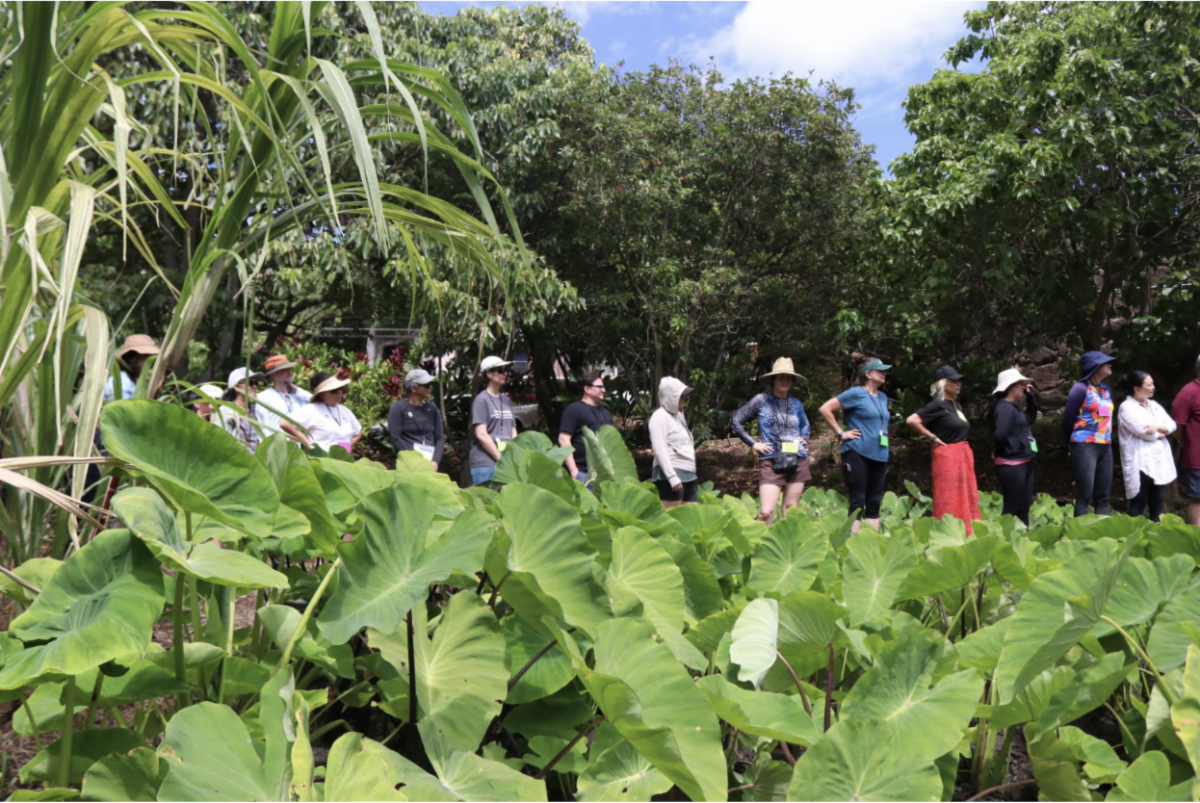
| | Cohort Kaulua participants learning about kalo at Ka Papa Loʻi ʻo Kānewai with large leaves of kalo and kō (taro and sugarcane) in the foreground. | | |
As a graduate student in the College of Arts, Languages, and Letters and team member of our HPoKA NHPoL office, I am so grateful for the opportunities that I am afforded during our cohort sessions. By meeting new people from all across our UH Mānoa campuses, these experiences allow me to continue to cultivate pilina and meaningful, lasting relationships. Working with the various units of our university provides me with a wonderful and larger perspective of all the work and beauty that takes place in our respective spaces. During our current October session visit to Ka Papa Loʻi ʻo Kānewai, as I was explaining the varieties of kalo (taro) that were purposefully and intentionally planted in the loʻi named Ahuwale, one of our participants from the College of Tropical Agriculture and Human Resilience offered our conversation an additional perspective about their work and research on kō (sugarcane). Since then, I have been continuing to build my own pilina with the many varied cultivars of kō, some of which are growing at Kānewai along the banks of the loʻi.
Check out our cohort website here for more information.
| | |
Hoʻomaikaʻi Awardees Wright & Hosoda!
Na HPoKA NHPoL Advancement Office
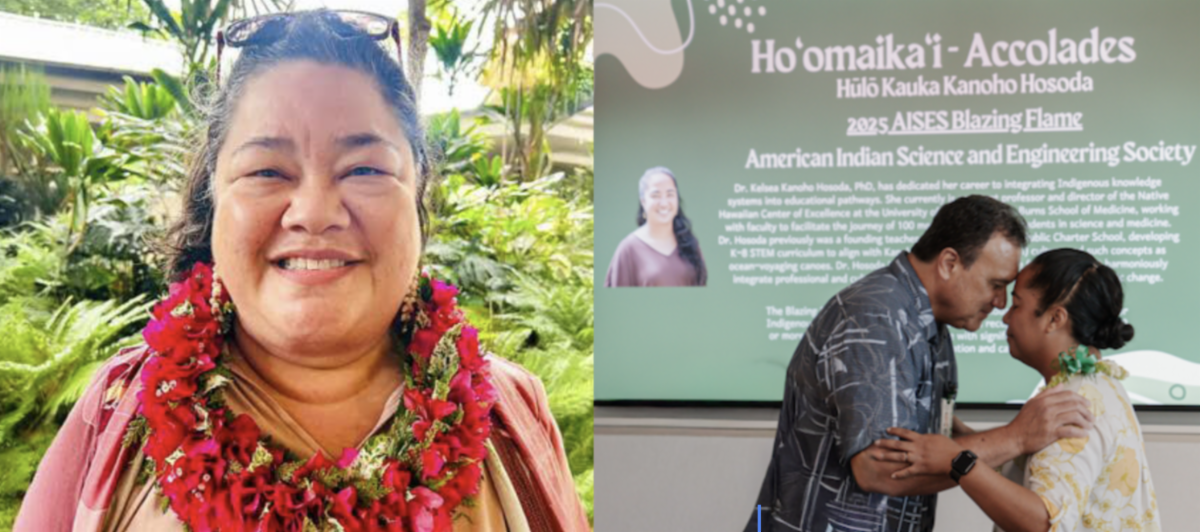
| | The left panel features Erin Kahunawaikaʻala Wright adorned in lei, and the right panel depicts Kelsea Kanoho Hosoda receiving recognition from Joseph Keaweʻaimoku Kaholokula. | | |
Hoʻomaikaʻi to UH Mānoa interim Associate Vice Provost for Student Success and Dean of Students Erin Kahunawaikaʻala Wright for her national recognition as one of the Pillars of the Profession, awarded by the National Association of Student Personnel Administrators (NASPA). Mahalo for all of your work here at UH Mānoa!
Click here to read more about her story and to check out the UH News article.
Hoʻomaikaʻi to Kelsea Kanoho Hosoda for being awarded the American Indian Science and Engineering Society’s (AISES) Blazing Flame Professional Award! As director of the Native Hawaiian Center of Excellence at the John A. Burns School of Medicine, this award recognizes Hosoda’s decades contributions to expanding opportunities, scholarships, and internships for her students and mentees.
Click here to read more from JABSOM.
Check out the UH News article.
| | |
He Aliʻi ka ʻĀina Conference
Na Kawehi Goto
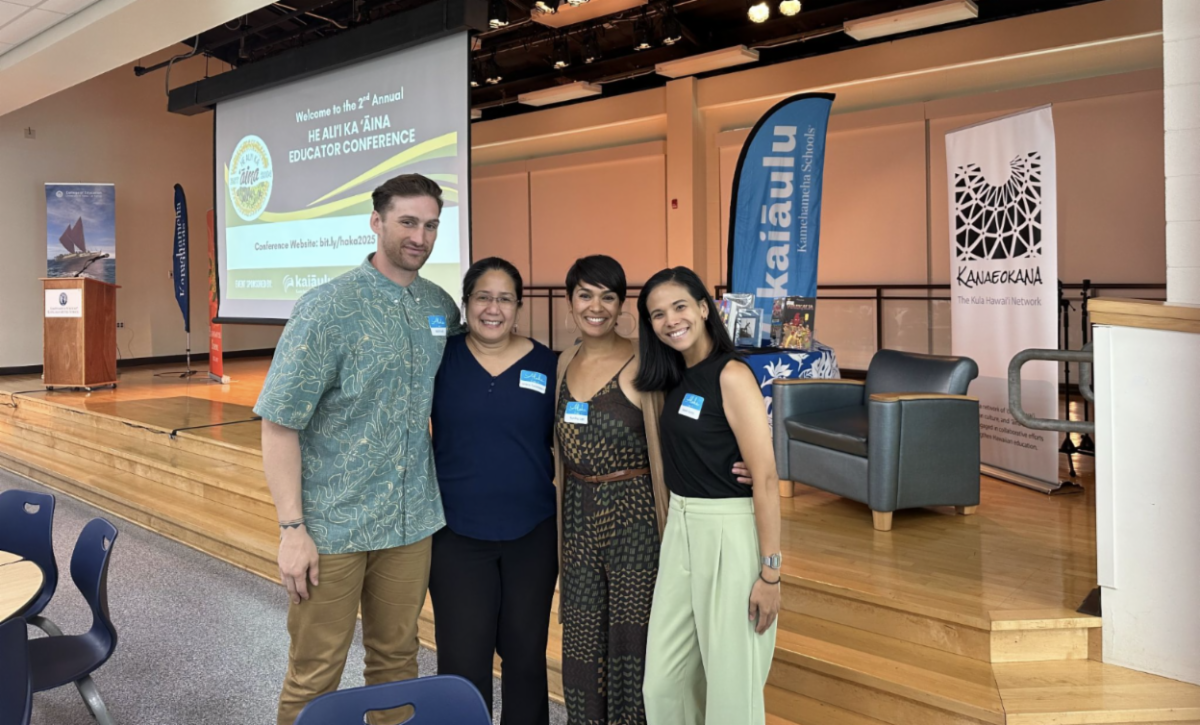
| | HPoKA team members at He Aliʻi ka ʻĀina Conference from October 9-10, 2025 in Kapālama. | | The 2025 He Aliʻi Ka ʻĀina Educator Conference at Kamehameha Schools Kapālama Campus contextualized pilina to ʻāina within the educational landscape. At the opening keynote, Pualani Lincoln Maielua shared her story highlighting her mother and ʻāina as her first and second classrooms, which reminded me of my late tūtū and the lessons she taught me about Hāna, Maui at her tūtū’s house. In the moʻolelo, Pualani situated practical experience and application to remind those listening and learning to reflect on: WWKD or “What would kūpuna do?” with an invitation to draw on ʻike kūpuna, such as the Hawaiian constitution to address contemporary issues. In a guest appearance on stage Kauʻi Sai-Dudoit added, “If not you, then who?” These reminders made me feel comforted, inspired, and motivated to continue to carry the lesson of “He Aliʻi Ka ʻĀina” as the principle of the conference with me. How do you embody this wisdom and practice in your life? | | |
Hoʻākea ʻEwa, Mauka to Makai
Na Nick Childs
| | |
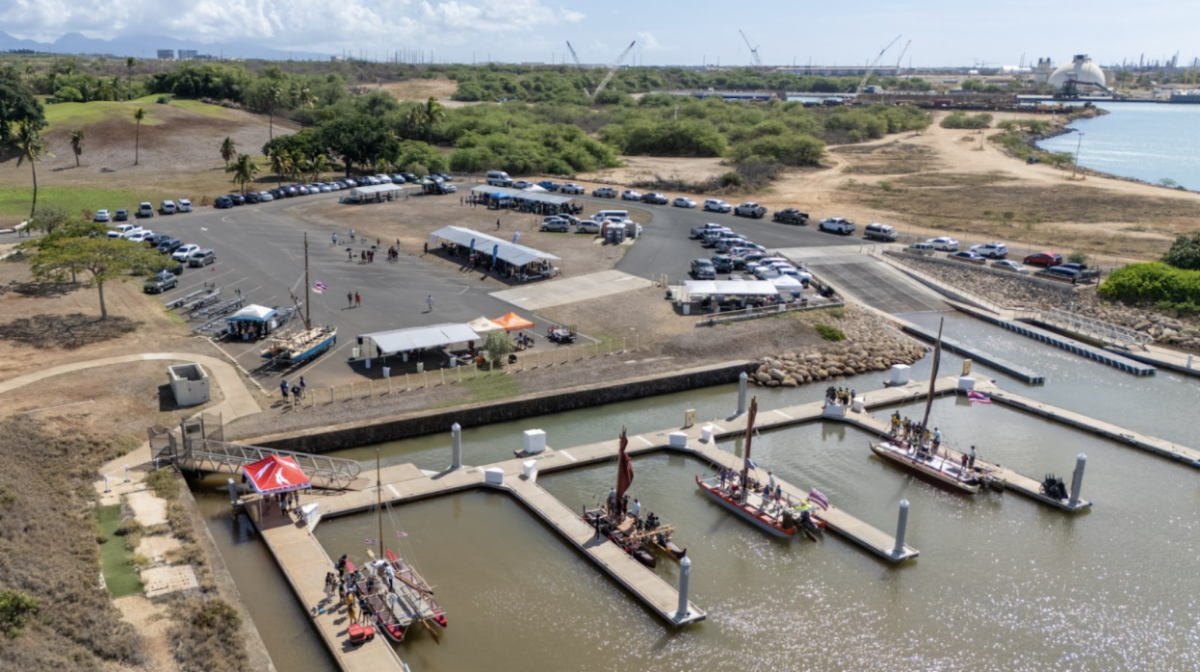
Image Description: An aerial view of people and waʻa in the Ko Olina boat harbor.
Photo Credit: Keoni Fernandez of Mākaha Studios.
| | |
On October 15th, I joined Hoʻākea ʻEwa, Mauka to Makai, at the Ko Olina Boat Harbor on the lovely Leeward coast of Honouliuli. Led by Jenna Ishii Menen of Mālama Learning Center, and in collaboration with the DOE, Hui Waʻa Honua, and aloha ʻāina organizations, Hoʻākea ʻEwa invited 4th grade students from the Campbell-Kapolei school complex to learn about wayfinding, aloha ʻāina, and mālama honua. I was so privileged to volunteer at this event, being a witness to students who are on their pilina-building journeys with place and the living practices and histories around them.
E lauhoe mai nā waʻa; i ke kā, i ka hoe; i ka hoe, i ke kā; pae aku i ka ʻāina! Mahalo hou to Jenna and the Hoʻākea ʻEwa crew for all that you do in creating welcoming and inspirational spaces that perpetuate the lessons learned from our pilina with waʻa.
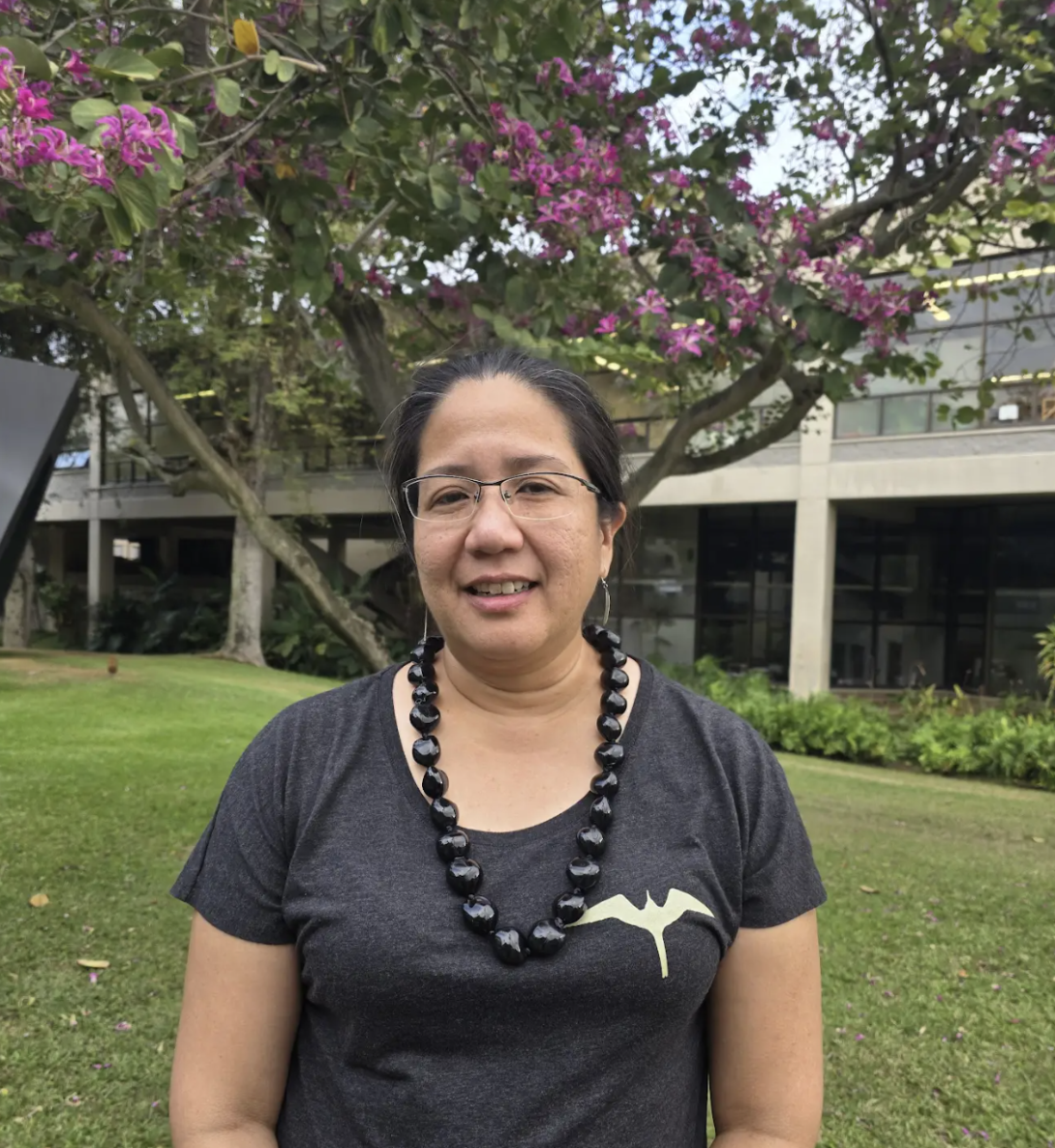
| | Nā Lamakū o ke Aloha ʻĀina is our office’s monthly feature that illuminates the light within each person’s contributions to positively shape our UH Mānoa campus as a Native Hawaiian place of learning committed to mālamalama. We feature an individual who exemplifies and demonstrates aloha ʻāina through their actions and involvements on our campus, particularly as leading lights in their own respective communities and disciplines of engagement. Through this interview, we aim to honor the ways in which the featured lamakū’s time at UH Mānoa has shaped and ignited the flame for/within their practices. | | Leiana Naholowaʻa, this month’s featured Lamakū. | | |
Leiana San Agustin Naholowaʻa
Birthplace/Hometown:
Dédidu, Guåhan
High School:
Academy of Our Lady of Guam
Degrees Acquired/Being Pursued:
BA, Literature and Writing Studies, California State University, San Marcos
MA, English, University of Guam
PhD Student (current) in English, University of Hawaiʻi at Mānoa
Current Occupation:
Graduate Research Assistant, Institute of Hawaiian Language Research and Translation
| | |
What inspired/inspires the path for your academic major?
From a young age, I have been interested in myths and legends and have come to learn about the storytelling traditions of the CHamoru people back home in Guåhan where I grew up. Here at UH Mānoa, I have had the opportunity to study moʻolelo, kaʻao, and koʻihonua with Kanaka Maoli scholars. I have also been able to extend my research to the wider Micronesian and Pacific region. These storytelling traditions can be found in folklore, educational materials, children’s literature, wonder tales, and many different literary genres and artistic forms, and since I am interested in both the oral tradition and the publishing history of storytelling in the Pacific, I have found the English department to be the best place for me to do this kind of work.
What are your future goals in your work?
I hope to return to Guåhan to continue my research in CHamoru and Micronesian storytelling traditions and to work as a teacher and support emerging scholars in the region. I have been able to reconnect with my Hawaiian heritage in my time studying at UH Mānoa and forever see my studies of ʻōlelo Hawaiʻi and the nūpepa archives as part of my lifelong learning.
How do you see your time at UH shaping the way you aloha ʻāina?
Not long after I arrived in fall 2020, I attended a talk by Maya L. Kawailanaokeawaiki Saffery, and her words still resonate with me. She spoke about ʻāina education and helped me to see the limitations of place-based learning, especially on a Pacific island like Oʻahu whose genealogies and histories can be easily erased through overdevelopment and overpopulation. From her, I learned the importance of not just connecting with a place but with the people who have ʻike, ancestral ties, and kuleana for that place. Her work and my time at UH in working and learning from others has helped me think about both the historical erosion of aloha in Hawaiʻi as well as its resurgence. A Hawaiian place of learning can also be a Hawaiian place of healing.
What does UH Mānoa as a Hawaiian place of learning mean to you?
I have been inspired by the intellectual worldview of Kānaka Maoli in the Hawaiian kingdom era when it had one of the highest literacy rates in the world and where writers and editors were actively documenting the wealth of knowledge passed down for hundreds of years in the oral tradition. UH Mānoa as an R1 research university most closely continues this intellectual tradition since full-time professors here have less of a teaching load and different pressures in producing scholarly research work. UH Mānoa as striving to become a Hawaiian place of learning is also a good setting for thinking about the history of pilina between Kānaka Maoli and settlers who have arrived on these shores. Early interactions of Kānaka Maoli with European and North American people with intentions of exploring and exploiting the Pacific to the arrival of the first missionaries who taught literacy and to agreements with England and France in acknowledging Hawaiʻi’s sovereignty mark the ways that pilina was built over time. The forced annexation of Hawaiʻi and the quashing of ʻōlelo Hawaiʻi are some examples of how this pilina has been broken. When I think about studying at the other universities in the UH system, I imagine that I might experience less of the heaviness of history in being further away from what at times feels like the epicenter of trauma – a few miles from the palace prison of Queen Liliʻuokalani, the congestion and houselessness of urbanization, and the disenfranchisement of Kānaka Maoli especially from prime real estate and beachfront areas. Seeing progress over time – the rebuilding of pilina – and learning these histories and how UH Mānoa has become more of a Hawaiian place of learning when for a long time, it was not – is not for the faint of heart, and this learning environment has been like strength training for my mind and spirit.
| | | | |