|
Our office focuses on implementing report recommendations from the last 30+ years that guide UH Mānoa in becoming reflective of Hawaiʻi's language, culture, values, and knowledge systems from which all people learn, connect, grow, and heal:
- Hawaiʻi-Guided Student Success
- Hawaiʻi-Grounded Staff and Faculty Development
- Cultivating Hawaiʻi Environments
- Hawaiʻi-Reflective Community Engagement
We cannot do this work alone. It is our mission to foster the potential within each of you to positively contribute to our collective kuleana to make UH Mānoa reflective of Hawaiʻi. These monthly newsletters, with written reflections that cover the preceding month's happenings, are meant to keep you connected, highlight your work and continue to inspire you.
| | |
Welina Mānoa Workshops for NGSO and NFO
by Hope Matsumoto
| | |
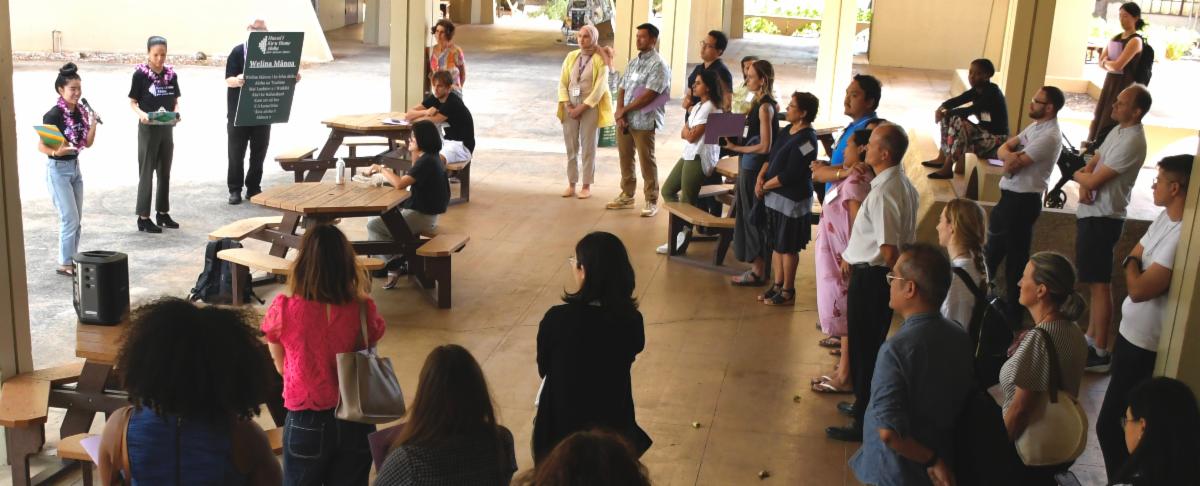
New Faculty Orientation participants gathered for the workshop on August 21, led by
Kawehionālani Goto and Hope Matsumoto. Photo Credit: Marween Yagin
| | To begin this fall semester and welcome both new and returning students, faculty, and staff members to our UH Mānoa campus, our office offered chanting workshops on Welina Mānoa, written by Kumu Keawe Lopes Jr. (Director of Kawaihuelani) and Kumu Tracie Lopes (Professor at the Department of Theatre & Dance). I had the privilege of co-leading this workshop with my coworkers Nick and Kawehi at the New Graduate Student Orientation and New Faculty Orientation, respectively, and we really enjoyed hearing everyone engaging their voices and deepening pilina with the ʻāina of our campus. Because I have so much aloha for this place, these workshops are a wonderful opportunity and co-learning opportunity for me to share and reciprocate appreciation for Mānoa. | | |
Hawaiʻi Sea Grant Pilina Circles
by Beth Lenz, University of Hawaiʻi Sea Grant College Program Kumukahi Hui
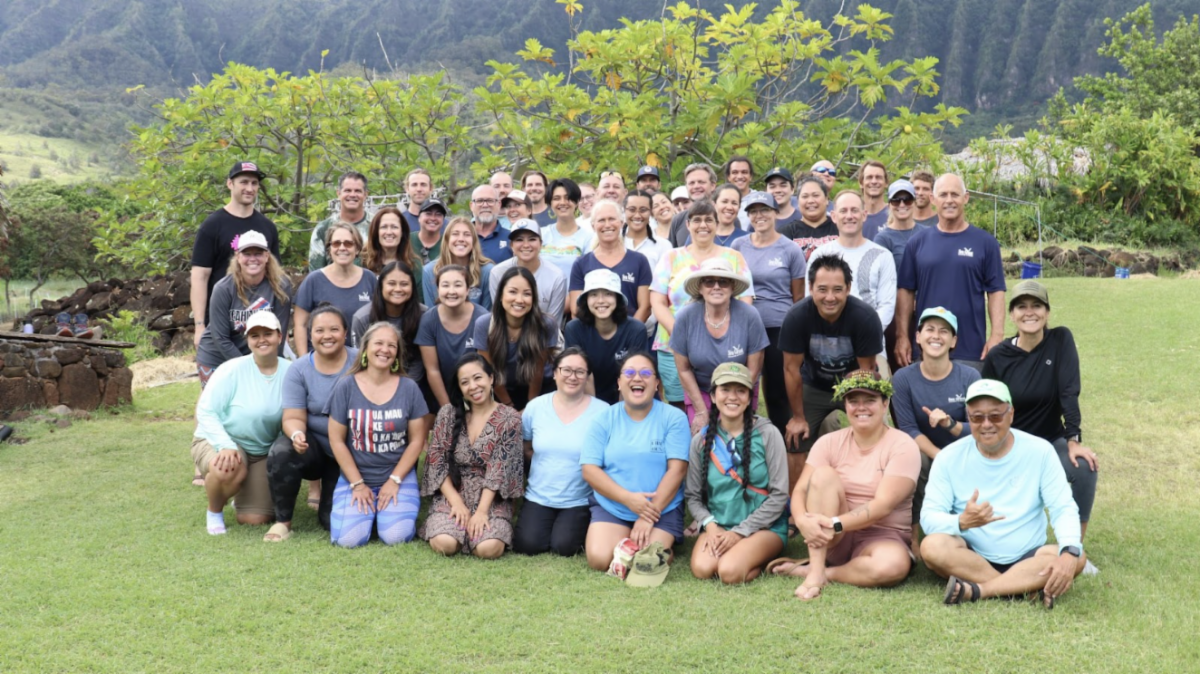
| | Sea Grant members gathered at Kaʻala Farm in Waiʻanae. | | |
Hawai‘i Sea Grant deeply values our growing relationship with the Hawaiʻi Papa o Ke Ao Native Hawaiian Place of Learning Advancement Office (“HPoKA Office”). Through their guidance, we are learning to more intentionally center pilina (relationships), mālama (care), and ʻike kūpuna (ancestral knowledge) in how we engage with one another, with community, and with ʻāina.
This past spring, their support of two key milestones in our program’s internal growth and strategic planning has made a lasting impact. On May 9, the HPoKA Office held space for a Pilina Circle with 47 of our faculty, staff, graduate students, and fellows at UH Mānoa. It was a grounding and rejuvenating moment that reminded us of the importance of slowing down, reconnecting, and caring for the people behind the work. In June, 32 of our faculty, staff, students, and fellows joined us once again—this time in Waiʻanae at Kaʻala Farm—as we got our hands in the soil, reflected on our values, and envisioned the future of Hawai‘i Sea Grant during a visioning exercise as part of our next strategic planning cycle.
Additionally, the HPoKA Office has been a critical partner in our Pili Nā Moku project, supporting efforts to hire Moku Resilience Stewardship Coordinators who are based on Kauaʻi, Oʻahu, Molokaʻi, Maui, and Hawaiʻi Island. Their participation in the interview process ensured a values- and place-based approach to welcoming new team members grounded in kuleana to the community and ʻāina.
Mahalo nui loa to the Hawai‘i Papa o Ke Ao Native Hawaiian Place of Learning Advancement Office for walking alongside us in this work. Your partnership strengthens our ability to be more pono, more pilina-based, and more connected in our efforts to serve Hawaiʻi’s communities and coastlines.
| | |
Student-Led Survey on Reducing Plastic Bottle Waste
by Hope Matsumoto
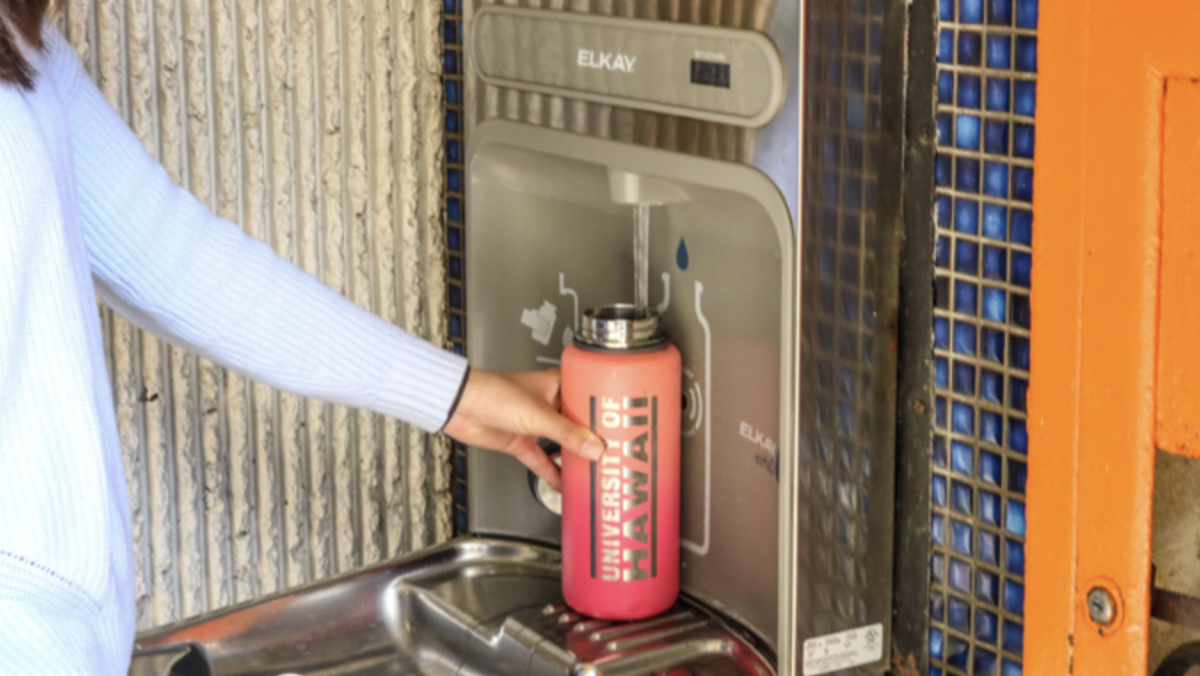
| | A water refill station dispensing water. Photo courtesy of UH News. | | |
The equivalent of over one million plastic water bottles were saved from entering landfills, according to a recent survey on UH Mānoa’s water refill stations. Cherish Hose, the student who led this water refill station project through the UH Office of Sustainability, found that out of all 46 upper campus buildings, only 20 buildings have a working refill station. The survey also found that between June 2024 and March 2025, about 3,920 plastic bottles were saved—just in one day. Cherish is our featured Lamakū this newsletter, so don’t forget to scroll down to read more from her about her work!
Check out the UH News story here.
| | |
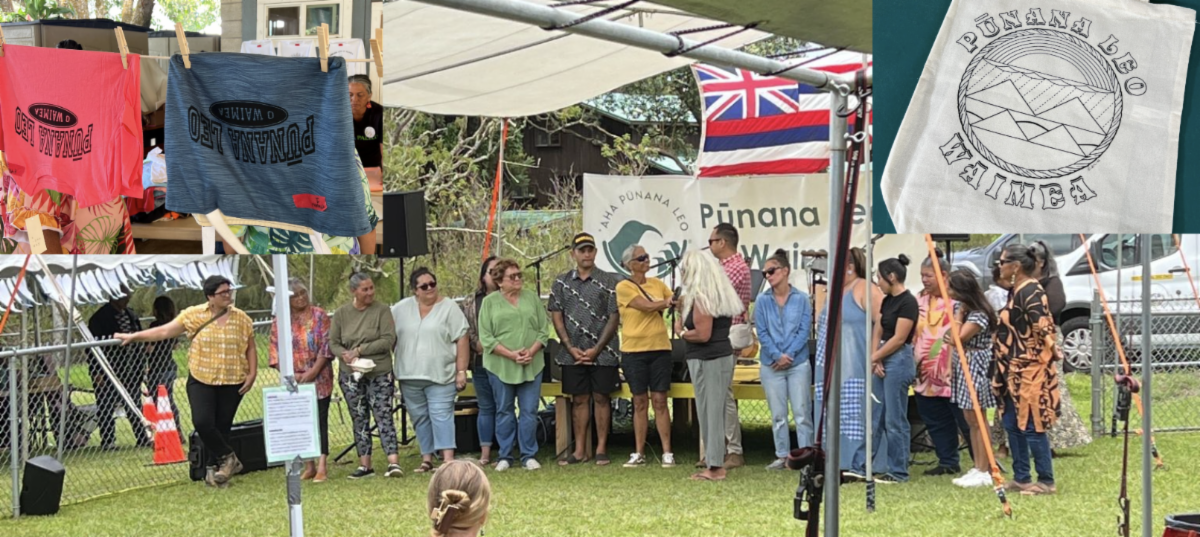
Pūnana Leo o Waimea Fundraiser
by Ethan ʻAnalū Lee
| | Festivities at Pūnana Leo o Waimea’s Hoʻolauleʻa 30 Makahiki (30th year celebration). | | |
Hoʻomaikaʻi e Pūnana Leo o Waimea in celebrating 30 years! On July 20, 2025, Pūnana Leo o Waimea hosted an event that had educational booths, ʻono food and music, and acrylic screen printing for bags and shirts in celebration of 30 years.
I also wanted to send a special mahalo to Kumu Kalā Akima-Akau, ʻAnakē Keomailani Case, and the pūʻulu wahine that hoʻolālā Pūnana Leo o Waimea since the start. Mahalo for your efforts in teaching generations of haumāna, culture, mele, and ʻōlelo. I also got to visit with some of my kumu from my own wā kamaliʻi including: ʻAnakala Chadd Paishon and ʻAnakē Pomai Bertelmann, ʻAnakē Deedee Bertelmann, Sister Kainani Kapuniai, ʻAnakē Auhea Puhi, and ʻAnakē Kuʻulei Keakealani.
Please visit Pūnana Leo o Waimea’s website here.
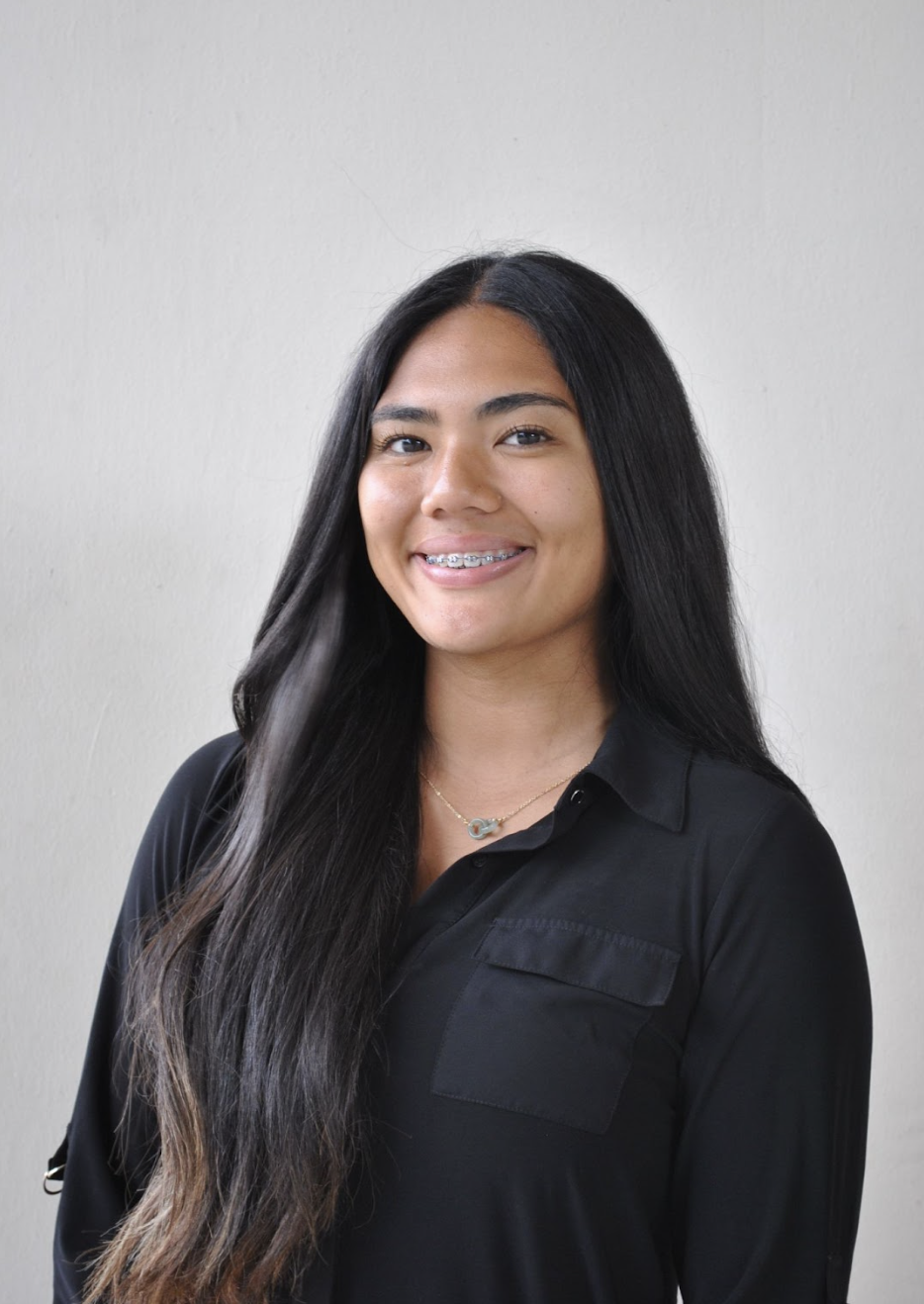
| | Nā Lamakū o ke Aloha ʻĀina is our office’s monthly feature that illuminates the light within each person’s contributions to positively shape our UH Mānoa campus as a Native Hawaiian place of learning committed to mālamalama. We feature an individual who exemplifies and demonstrates aloha ʻāina through their actions and involvements on our campus, particularly as leading lights in their own respective communities and disciplines of engagement. Through this interview, we aim to honor the ways in which the featured lamakū’s time at UH Mānoa has shaped and ignited the flame for/within their practices. | | Cherish Hose, this month’s featured Lamakū. | | |
Cherish Makana Ola Pualena Hose
Birthplace/Hometown:
Waiʻanae, Hawaiʻi
High School:
Waiʻanae High
UHM Degrees:
BA in Public Health (Fall 2025)
Current Occupation:
Sustainability Data Analyst
at UH Office of Sustainability (UHOS)
| | |
What inspired/inspires the path for your academic major?
Throughout my college years, I had switched my major three times trying to figure out where I belonged and where I was meant to serve. I went from a Nursing major to a Biology major, to finally becoming a Public Health major. I felt that I misunderstood what public health really meant, and being someone who enjoys research and data logging, I felt that this was the perfect major for me to explore and help my community.
What are your future goals in your work?
In the end, I would hope to have completed my PhD and be a part of the Disease Outbreak Control here in Hawaiʻi. I would like to do my part here at my home island before I go anywhere else.
How do you see your time at UH shaping the way you aloha ʻāina?
Here at UH, I was given the opportunity to express my interests in various projects to take over while being employed at the Office of Sustainability. Among the various projects that I wanted to take over and begin, my current project is to install more water refill stations around campus. I chose this project due to the lack of water source I had during my sophomore year here at the University. I would make daily trips to the cafe just to retrieve water and use my meal swipes, while also using them at the Mānoa Marketplace located down by the freshman dorms to stock up on water and save that trip to the cafe. There were constant nights where I would see students carry over two bottles of Menehune Water, and it made me wonder about the current water resources we have on campus.
To aloha ʻāina, I am currently still trying to do my part in installing more water refill stations while also focusing on the quality of water as well. To take care of those around me, I want to ensure quick and efficient water to the students (and I) that go through long days of classes, including those who are also athletes. I also want to take care of the staff who are teaching these long and exhausting classes throughout the week. I want this project to really allow the community to thrive and simply be hydrated so that they are able to be their best version of themselves.
What does UH Mānoa as a Hawaiian place of learning mean to you?
It is a privilege to be Hawaiian and be able to learn at a Hawaiian place. It is a privilege to have various opportunities to give back to the ʻāina and the community and be able to use my voice that most did not have before. I feel blessed to be able to stay here and thrive in an area and island that I have grown up in. The collective research that I have done relating to saving bottles and learning more about water quality allowed me to open my eyes to see what we have here in the beautiful Hawaiʻi.
When I was researching more about the amount of water bottles that we would eliminate daily through simple tasks such as using a reusable water bottle, it made me realize that we can totally make the community cleaner and more accountable for the cleanliness of our ʻāina. This is extremely important to me as I notice so many bottles that are thrown on the ground and are sometimes inches deep into the ground (showing that it was there for a long time). This shows how much of a difference reusable water bottles can really make. I feel blessed and rewarded to know that I am able to tell the next generation that they are capable of doing what their heart desires, they just need to do it. Anyone can do it, they just need to have the want and drive. Even through the hard days that make it almost impossible to accomplish anything, those are the days that matter the most. So, to have a Hawaiian place of learning as a Hawaiian, I feel nothing but blessed and grateful for every opportunity that is thrown at me.
| | | | |