|
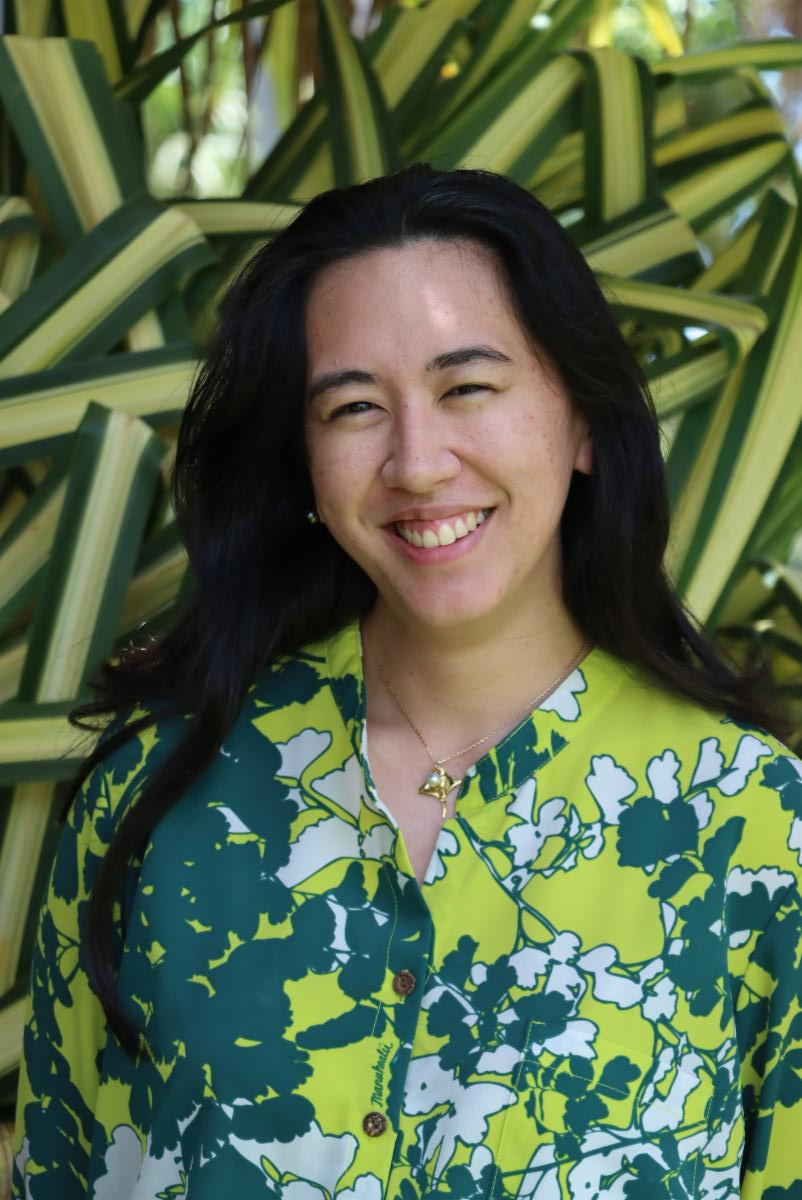
Joy Nuuhiwa
Birthplace/Hometown:
The Great Nation of Waiʻanae, Oʻahu
High School:
Kamehameha Schools Kapālama
UHM Degrees:
B.A. in Anthropology (2024)
M.A. in Indigenous Political Science (currently pursuing)
Current Occupation:
Kapaʻakea Graduate Research Assistant
at Native Hawaiian Student Services
What inspired the path for your academic major?
I ultimately entered my program because I deeply admire the work of the kumu and haumāna who are currently in or have graduated from this field. I simply wanted to be surrounded by those who I think are the best at what they do and hope some of their energy rubs onto me too. I have always been quite engaged and interested in history, politics, and the environment. I have found that this department is a soft place I can call home in the middle of those interests. I am inspired daily by the aloha ʻāina I get to interact with every day in this program. Through this program, I’ve also had my beliefs and convictions challenged in the best way possible.
I have often thought of myself as part of a large sea of ʻike, simply another freshwater spring spilling and bursting forth into this vast ocean. Iʻm lucky that I get to be surrounded by (who I believe are) the best parts of this ocean.
What are your future goals in your work?
This is a question that I’ve honestly been struggling with after entering graduate school. The more I learn, the more I realize I don’t know anything. The more I read, the more I realize I could spend my whole life not knowing what I can contribute to our lāhui.
My future goals in my work all relate to perpetuating the deep connection between our ʻāina and lāhui. I admit I’m unsure what that concretely looks like. What I do know is that I feel best when I spend time on ʻāina. I want every Hawaiian to be able to heal in that way, and to understand the importance in that relationship. Through my studies, I continue to find inspiration in the work of our kūpuna and their many different ways they achieved this goal. I simply hope to be able to continue even a portion of that hana nui.
How do you see your time at UH shaping the way you aloha ʻāina?
It’s tempting to think of and treat UH Mānoa as the concrete jungle that blocks you from real connection. I’ve fallen into this trap so many times it’s silly, wishing that I could hurry and graduate so I can leave the ivory tower and engage with the ever-shifting concept of our “lāhui” and ʻāina.
Learning about student activism here at UH Mānoa has heavily shaped the way I understand social movements. What it means to love something, what it means to protect something. The privileges and importance in student-led movements. So many of these are based in aloha ʻāina, for example in the formation of my office and the Hawaiʻinuiākea School of Hawaiian Knowledge. In my program, I’ve also been exposed to incredible, critical thinkers and writers who also shape the way I connect and care for the people and communities I love.
What does UH Mānoa as a Hawaiian place of learning mean to you?
I have always firmly believed that UH Mānoa as a Hawaiian place of learning means centering and privileging Native Hawaiian understanding(s) of the world. It also means providing Native Hawaiians with the means to participate in higher education, whether that be through financial, academic, vocational, etc. support here at the university. It also means reckoning with the frankly violent history of UH Mānoa and the different Native Hawaiians who paved the way and painted their names in blood so that we can enjoy certain rights and privileges. I’m happy to work somewhere on campus that actively works towards these goals.
|