Our office focuses on implementing report recommendations from the last 30+ years that guide UH Mānoa in becoming reflective of Hawaiʻi's language, culture, values, and knowledge systems from which all people learn, connect, grow, and heal:


  • Hawaiʻi-Guided Student Success
  • Hawaiʻi-Grounded Staff and Faculty Development
  • Cultivating Hawaiʻi Environments 
  • Hawaiʻi-Reflective Community Engagement


We cannot do this work alone. It is our mission to foster the potential within each of you to positively contribute to our collective kuleana to make UH Mānoa reflective of Hawaiʻi. These monthly newsletters, with written reflections that cover the preceding month's happenings, are meant to keep you connected, highlight your work and continue to inspire you.

ʻAha ʻImi ʻIke Conference: Manu Kaʻiama

Na Hope Matsumoto

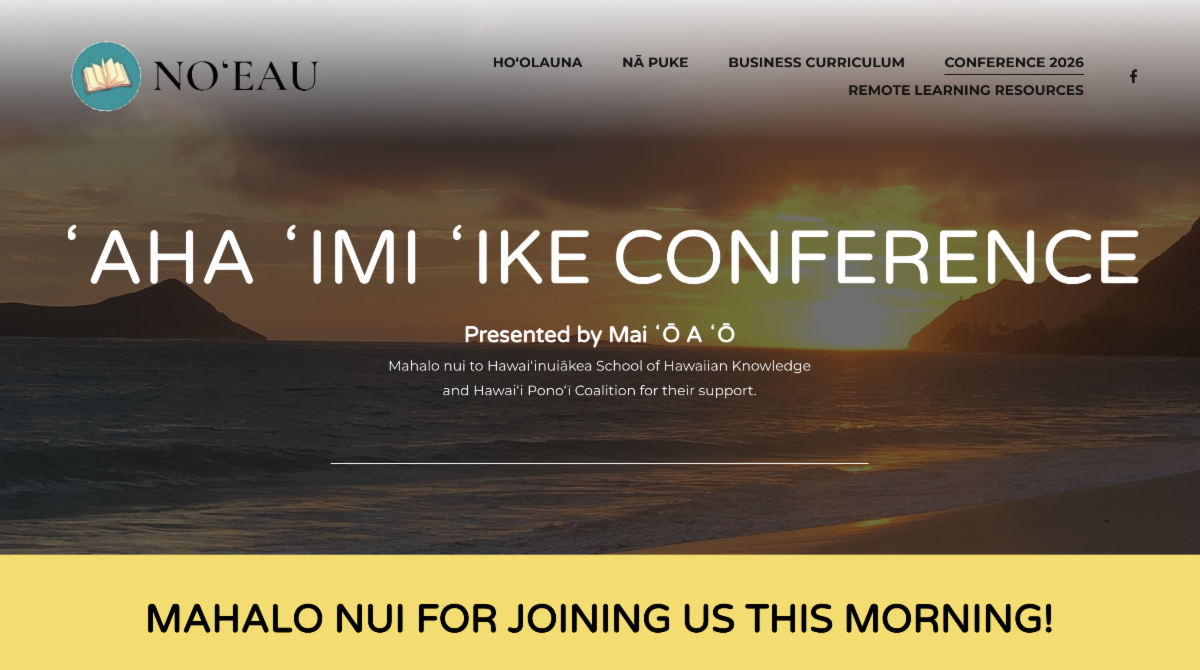
Screengrab from the 2026 ʻAha ʻImi ʻIke Conference, which featured a dozen virtual presentations throughout the day.

On the new moon of June 13th, I had the privilege of attending Kumu Manu Kaʻiama’s session of the 2026 ʻAha ʻImi ʻIke Conference: Being a Professional in Non-Kanaka Settings. I immensely appreciated that Kumu Manu’s presentation was full of moʻolelo from her life, even stories that were told to her from her parents, since this talk addressed how to respond to the bizarre (at best) questions that are asked of us as Kānaka Maoli (like if we live in grass huts and take our waʻa canoes to work). Through sharing moʻolelo and speaking from her perspective as a community leader and as the one Kanaka Maoli faculty member at Shidler College of Business, Kumu Manu humorously and compassionately navigated how to respond to these bizarre questions. Her advice to be patient and to take the time to understand other perspectives is a deeply generous approach, shaped by the encouragement, grace, and humor of her own parents and their stories. While being incredibly humble about her own work and life experiences, Kumu Manu has inspired me to realize all the ways we can choose to be graceful in our lives. 


Visit their website to learn more and check out all the amazing resources, including online educational books in ʻōlelo Hawaiʻi by Kumu Sam Noʻeau Warner!

https://www.noeau.org/ 

Hawaiʻi Institute of Marine Biology Celebrates 33 Hale Members for Completing Cohort Kumukahi & Kaulua

Na Aimee Sato

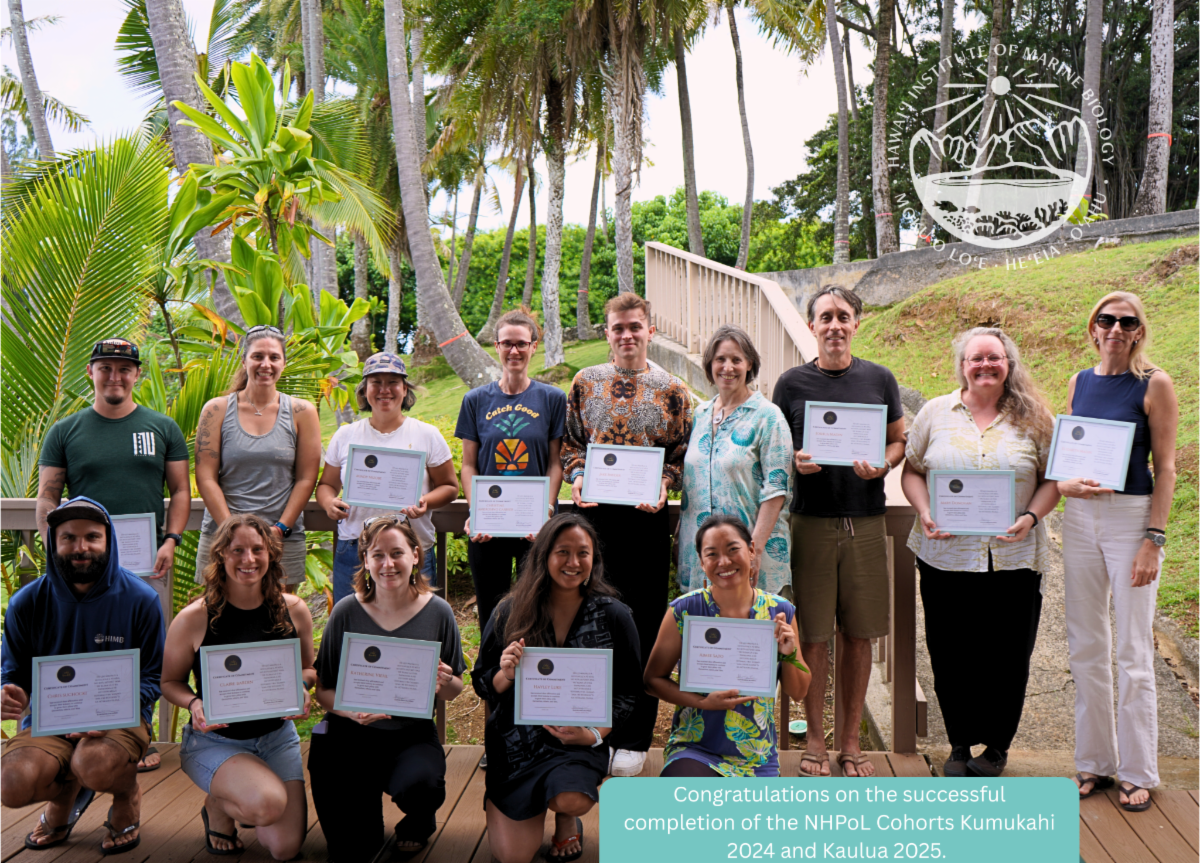
Congratulations to the HIMB members of Cohorts Kumukahi and Kaulua! We are incredibly proud of this diverse group of students, faculty, and staff from labs across the institute who are shaping our future as a Native Hawaiian Place of Learning. Photo by Danica Castillo.

On May 13, the Hawaiʻi Institute of Marine Biology (HIMB) ʻohana gathered to celebrate 33 dedicated graduates from Cohorts Kumukahi and Kaulua for their completion of the intensive five-day Native Hawaiian Place of Learning (NHPoL) professional development training. Facilitated by the Hawaiʻi Papa o ke Ao Advancement Office, this initiative breathes life into the Mānoa 2025 strategic plan, equipping our team to shape a five-year roadmap rooted in aloha ʻāina. At the celebratory luncheon, graduates were officially awarded their certificates by HIMB Director Megan Donahue, marking a major milestone in HIMB's collective kuleana to cultivate a campus that is deeply rooted, resilient, and responsive to our home. 


Celebrating this achievement, HIMB Director Megan Donahue shares, "HIMB staff, students, and faculty showed tremendous dedication to NHPoL training. These 33 graduates provide a foundation for the HIMB ʻohana as we build a Native Hawaiian Place of Learning here on Moku o Loʻe: weaving an understanding of place and responsibility into our culture and empowering us to build a more inclusive, grounded, and impactful research community at HIMB." 


Chair of the NHPoL hui for HIMB and Stewardship Coordinator Aimee Sato also comments, “It’s amazing to see our HIMB leadership value this commitment, and see the smiles on everyone's faces as they were celebrated with an ʻono lunch together. I also want to send a huge mahalo to my HIMB hui members, Lauren Van Heukelem, Mindy Mizobe, Hayley Luke, Chris Suchocki, Christine Carrier, Maria Frostic, Mariko Quinn, who have helped be the driving engine to make HIMB be reflective of Heʻeia and Hawaiʻi values. This milestone advances our commitment to 'auamo—collectively carrying the responsibility to ensure Hawaiian foundations are central to our daily work, science, and community engagement.”


Click here for the HIMB Seminar recording with HIMB’s Native Hawaiian Place of Learning Hui: Diving Deeper into the Moʻokūʻauhau (Genealogical story) of Moku o Loʻe.

ʻAha ʻImi ʻIke Conference: Bruce Kaʻimi Watson

Na Hope Matsumoto

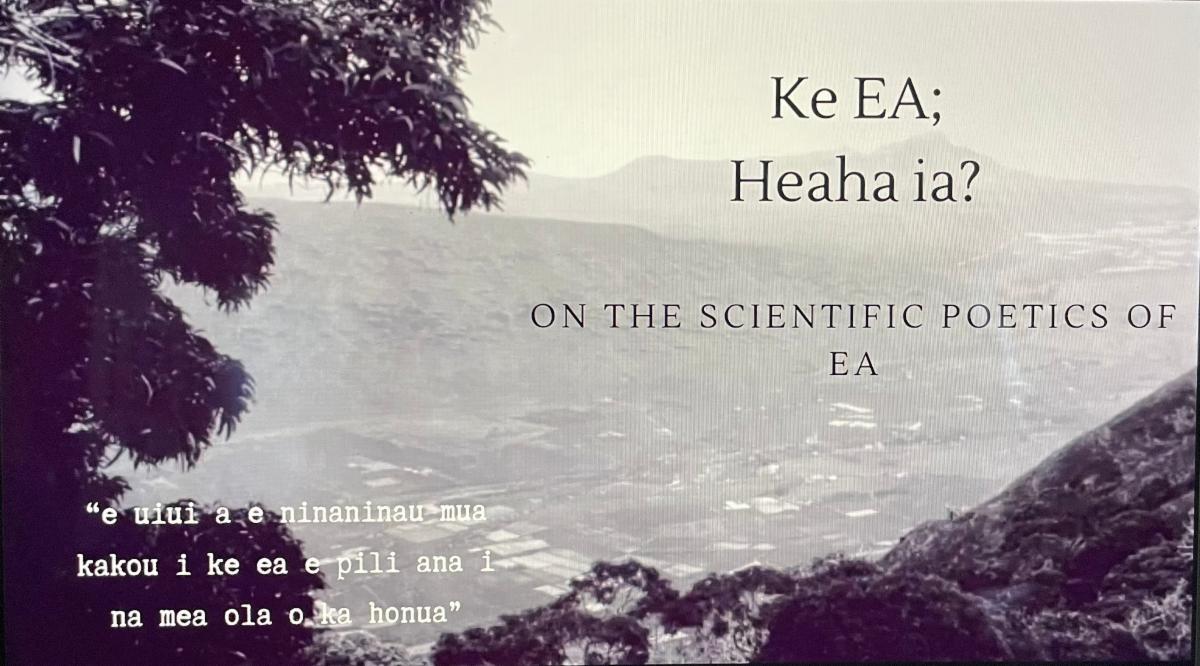
Screengrab of the title slide: “Ke EA; Heaha ia? On the Scientific Poetics of Ea” with the quote “e uiui a e ninaninau mua kakou i ke ea e pili ana i na mea ola o ka honua.”

At the 2026 ʻAha ʻImi ʻIke Conference, Kumu Bruce Kaʻimi Watson delivered an invigorating presentation on Davida K. Kahalemaile’s famous speech in Mānoa, which was transcribed and published in Ka Nupepa Kuokoa on August 12, 1871. Kumu Kaʻimi’s talk delved into detail how “Kahalemaile outlined a Hawaiian taxonomy in which ea is the organizing principle—a scalar progression in which ea is the operative relation at every level.” Working within and across geoscience, philosophy, political theory, and ʻike Hawaiʻi, Kumu Kaʻimi emphasized the importance of words and speech in making meaning in Hawaiʻi and aural societies. As such, this revisiting of Kahalemaile’s speech opened possibilities of understanding beyond singular translation. In the line “Ke ea o na i-a, he wai,” Kumu Kaʻimi encouraged us to think about wai as more than just water and iʻa as more than just fish. Rather, he discussed wai as the three-dimensional liquid medium that iʻa require to live. This relationship points to the reciprocal life-giving qualities that are shared between liquid and the life it sustains. 


Check out their website for more information about the ʻAha ʻImi ʻIke Conference!

https://www.noeau.org/conference

Pilina Circles in the Nānākuli Community

Na Hope Matsumoto

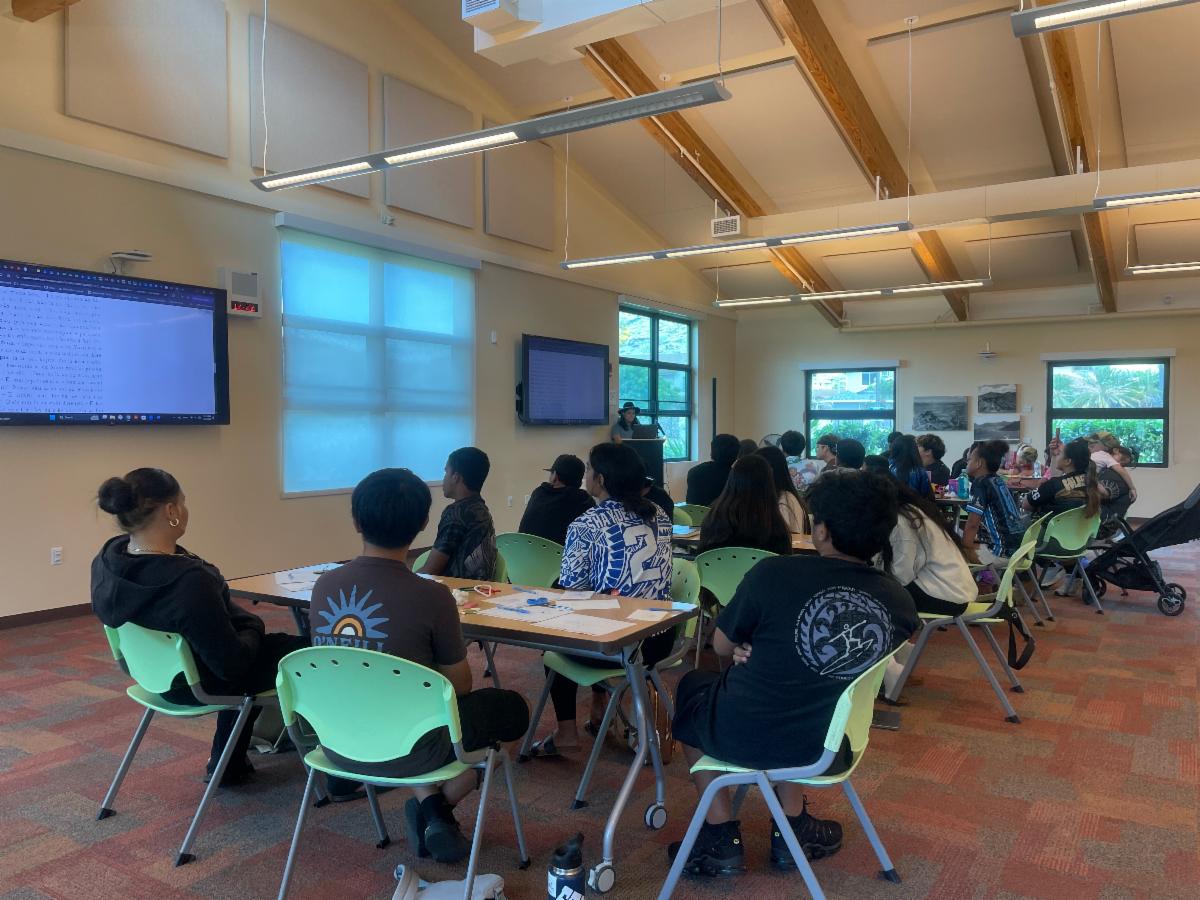
Students at the Community Learning Center in Māʻili learning more about moʻolelo and historical accounts of Māui in Waiʻanae from Emily States of Kaulumaika.

On June 9th, beneath a Kāloapau crescent moon, our team was invited to co-facilitate Pilina Circles to support the beginning of a three-week summer program called Kuʻu ʻĀina, Kuʻu Kulāiwi. This program serves students from Nānākuli, and it was a privilege for me as a co-facilitator to share stories with one another in the moku of Waiʻanae, where the walls of the valleys helped to hold our space and time together. After Pilina Circles, the students were able to participate in an amazing workshop with Emily States of Kaulumaika, where they began the process of designing a quilt and dying fabric squares using different freshly-gathered plant materials. She also emphasized the importance of returning to moʻolelo to learn more about why our kūpuna cherished the beloved, historical ʻāina of Waiʻanae. During our time together, I reflected on the importance of building pilina for these young students as they deepen their lasting relationships with one another and with their ʻāina kulāiwi.

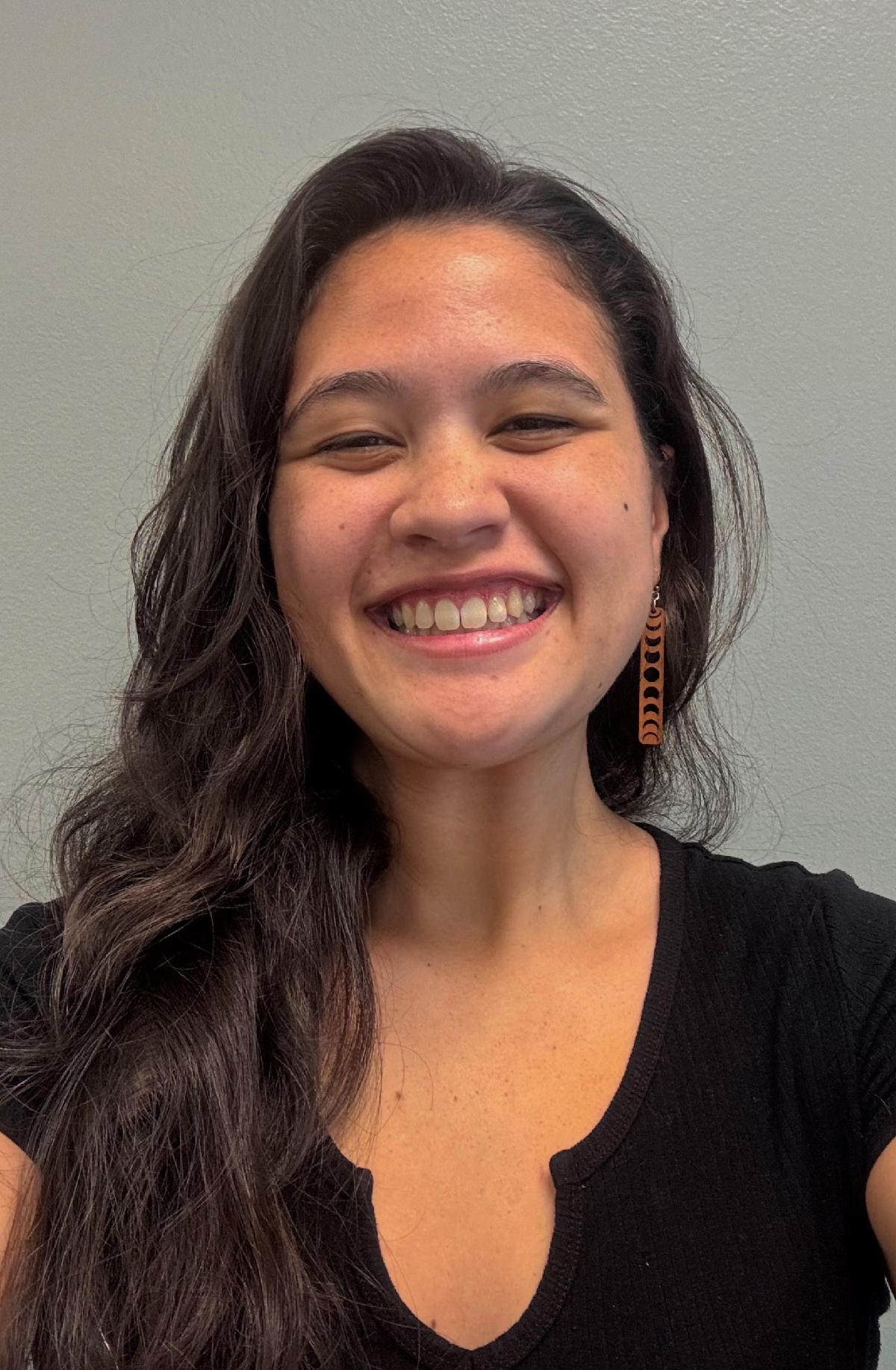
ʻAulani Wagner, this month's lamakū feature.

ʻAulani Ashlyn Wagner


Birthplace/Hometown:

Heʻeia, Koʻolaupoko, Oʻahu


High School:

Kamehameha Schools Kapālama


UHM Degrees: 

BA English (2024)

BA Women's, Gender, & Sexuality Studies (2024)

MLIS Library and Information Science (currently pursuing)

MA American Studies (currently pursuing)


Current Occupation:

Graduate Assistant at

Hamilton Library Hawaiian & Pacific Collection


What inspired/inspires the path for your academic major? 

Throughout my academic journey I have followed my heart and pursued degrees in topics I was and am passionate about, no matter the subject. I trusted my naʻau to lead me to where I was meant to be, and that is within the Library and Information Science and American Studies departments. I grew up in libraries because of my mother being a librarian, and they have always been a safe space for me; choosing to major in LIS feels like I’ve come full circle and am returning home. There are so many people who don’t know how important libraries are for our communities, and even more who are simply too afraid to step foot inside of one. I want to become a librarian for these people and help them to realize that libraries are for everyone, even them. 


My choice to double-major in American Studies comes from my interest in Indigenous Studies. As a Kānaka ʻŌiwi, I think it is of great importance to find and strengthen connections between Native people across Moananuiākea in order to support each other in caring for ʻāina and resisting colonial and imperialist influences. I find this degree to pair well with LIS, as I use knowledge gained here to inform the ways I think about librarianship and caring for knowledge as a whole. Many systems created by and for Native people on Turtle Island can be adapted to suit the needs of Kānaka here in Hawaiʻi, and through collaboration we can build off of them and uplift not only our lāhui, but other Native communities as well.


What are your future goals in your work? 

My goal for the future is to become a librarian who helps to further the systems in which we steward and preserve ʻike Hawaiʻi in respectful ways. Caring for ʻike is a lifelong endeavor, and I want to not only ensure its protection, but ensure that it will be interacted with meaningfully and with proper protocols by future generations. This is not something I will be able to accomplish on my own––the most crucial element of my work is how it is grounded in community and the connections formed with others. I look eagerly to the future as I know that I will continue to learn from even more people throughout my life and be able to guide others with the knowledge I have gained.


How do you see your time at UH shaping the way you aloha ʻāina? 

My time at UH has connected me with a plethora of people who have made me realize the importance of learning not only through lectures, but through ʻāina as well. To learn from ʻāina is to mālama ʻāina, and the very act of mālama ʻāina comes from a place of aloha. I am so fortunate to have found myself surrounded by mentors and peers who view and understand ʻāina as a living being rather than a thing to possess, and as such I have been given many opportunities to learn from and connect further with my own one hānau. This type of education can be found elsewhere, but I believe that attending school in Hawaiʻi is the only way I would have been able to truly understand what it means to aloha ʻāina in a way that resonated with how I was raised and have come to understand the world.


What does UH Mānoa as a Hawaiian place of learning mean to you? 

When I envision what Mānoa could look like as a Hawaiian place of learning, I think about respect for ʻike Hawaiʻi at all levels of decision-making, curriculum that is grounded in Hawaiʻi’s and Hawaiian culture, and active support for sovereignty by the University. UH cannot simply claim to be a Hawaiian place of learning––it must actively show how it supports ʻike Hawaiʻi and Kānaka. This university is unique because it is the only one that claims to be a Hawaiian place of learning, so Hawaiian students should feel supported throughout their academic journey and ʻike Hawaiʻi should be prominent; if not, what makes this school different from the countless others across the world?

Instagram  Email  Web