|
Our office focuses on implementing report recommendations from the last 30+ years that guide UH Mānoa in becoming reflective of Hawaiʻi's language, culture, values, and knowledge systems from which all people learn, connect, grow, and heal:
- Hawaiʻi-Guided Student Success
- Hawaiʻi-Grounded Staff and Faculty Development
- Cultivating Hawaiʻi Environments
- Hawaiʻi-Reflective Community Engagement
We cannot do this work alone. It is our mission to foster the potential within each of you to positively contribute to our collective kuleana to make UH Mānoa reflective of Hawaiʻi. These monthly newsletters, with written reflections that cover the preceding month's happenings, are meant to keep you connected, highlight your work and continue to inspire you.
| | |
Kū ka Maile i ka Lā:
Notes on Starting My First Season as Interim Director
Na Noelani Goodyear-Kaʻōpua
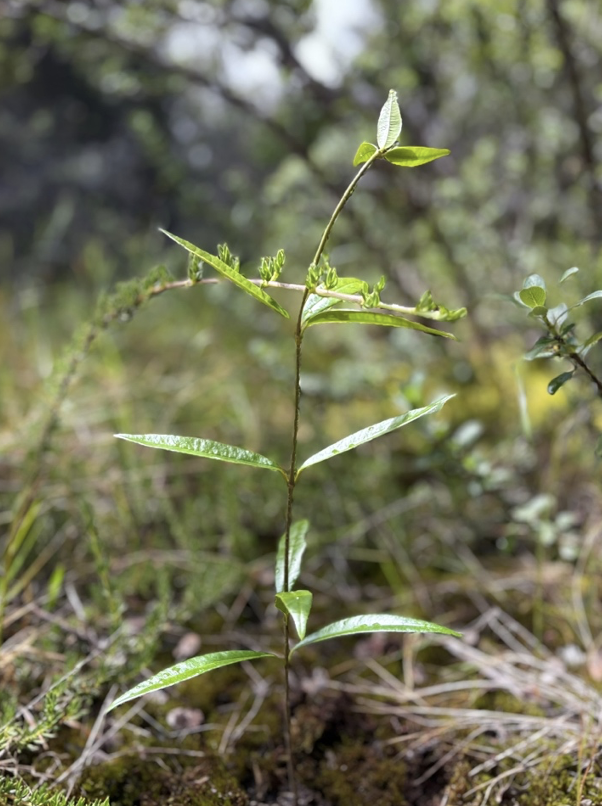
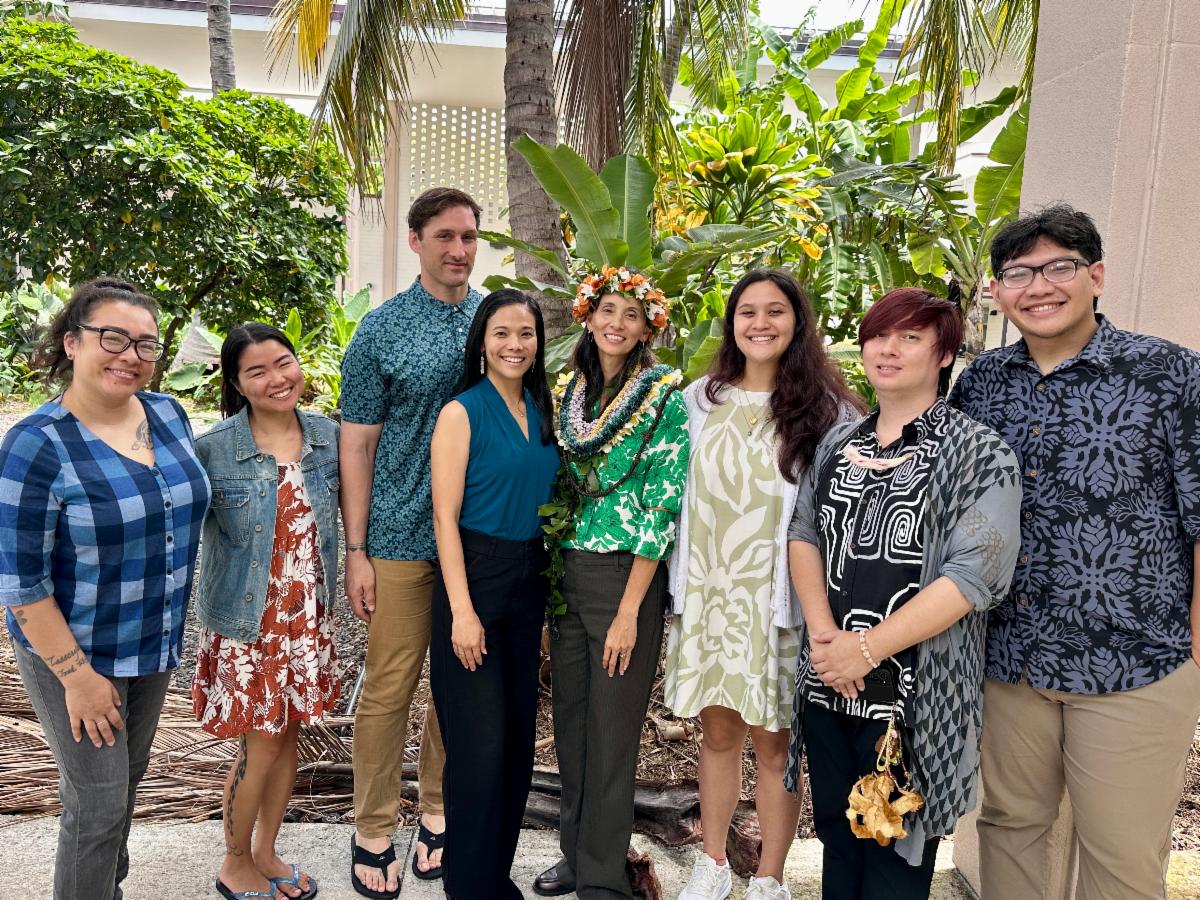
| | Left Photo: A maile plant growing in the sunlight. Right Photo: A team photo after the Board of Regents Meeting announcing Noelani Goodyear-Kaʻōpua as the office Interim Director. | | |
Aloha nō kākou, mai ka hikina a ka lā i Kumukahi a i ke kau ʻana i ka mole ʻolu o Lehua; he welina aloha hoʻi kēia!
I step into the role of interim director with deep appreciation for my predecessor, Punihei Lipe. Punihei led this office with the spirit of the ʻaʻaliʻi —rooted, resilient, and responsive—and in my first month on the job, I have already experienced the ways she touched many hearts and opened new pathways. I am fortunate to have inherited the fabulous team that she nurtured here in the Hawaiʻi Papa o ke Ao office. On July 16, 2026, UH President Wendy Hensel selected the Hawaiʻi Papa o ke Ao office as the University's nominee for the 2026 Governor's Award for State Team of the Year for their contributions to campus, university, and broader communities! I celebrate the opportunity to join this team this year and to continue advancing Native Hawaiian places of learning.
Earlier this month—in the ahupuaʻa of Kapāpala, in the moku of Kaʻū, Hawaiʻi—I experienced the depth of insight and connection that can come from Native Hawaiian places of learning. My kumu was Dr. Nāmaka Whitehead, a kupa of South Kona who earned her PhD in Ethnobotany at UH Mānoa. She guided a small group of us through the forests of Hōnaunau, Keālia and finally, Keauhou in Kaʻū.
On our last day in Kapāpala, Dr. Nāmaka led us in planting 50 maile shoots. Choosing where to place each little vine meant watching and listening to her. Maile can't spread far on its own anymore. The native fruit-eating birds who were its natural dispersers are now extinct, and the introduced birds who replaced them don't carry maile seeds, even though they find maile enticing. So, we stepped gingerly amid ʻōhiʻa, pūkiawe, and other native forest plants, looking for good spots to kanu these young maile into the ground. Is there enough soil in this spot? Will this baby get enough light? Who is growing nearby, and will this one have friends to climb?
Nāmaka taught me the ʻōlelo noʻeau, “Kū ka maile i ka lā.” Maile always reaches toward the sun. They climb other plants without strangling. Alone, they can travel far up the canopy, but when two or more maile vines twist and twine around one another, they become even stronger and climb even higher. Nāmaka's dissertation, Kū ka Maile, traces how there are at least ten named varieties of maile across our islands, distinguished by growth stage and form, each shaped by its own conditions. Few native plants carry that many names. Maile have always been diverse, adaptable, thriving in sunny dry forests and dense wet forests alike. Crouched under an old ʻōhiʻa, I patted soil around a maile in the moe kahi phase. I chanted softly to them. Grow, baby, grow! May you find your friends and reach toward the sun.
I enter into this position and take up this kuleana with Hawaiʻi Papa o ke Ao during the season of Kū, the season of Hoʻihoʻi Ea. And it is fitting that I found inspiration in a huakaʻi to Kaʻū.
This office exists because of a different Kaʻū – the Kaʻū Report issued in 1986 by a task force of UH system educators who were at the forefront of calling the University into its kuleana to operate as a higher education institution that is truly “of Hawaiʻi.”
This year, we celebrate the 40th anniversary of the Kaʻū report; we honor the vision and courage of those kumu—Isabella Abbott, Ilei Beniamina, Kekuni Blaisdell, Lucy Gay, Alberta Pua Hopkins, Kauanoe Kamanā, Lilikalā Kameʻeleihiwa, Edward Kanahele, Pualani Kanahele, Larry Kimura, Davianna Pōmaikaʻi McGregor, Edith McKinzie, Richard "Dutch" Mossman, Midge Oler, Abraham Piʻianāiʻa, David Sing, Haunani-Kay Trask, and Ilima Williams. Their vision changed the course of my life; it changed the conditions of possibility for me when I was an undergrad at UHM in the 1990s and when I was hired as an assistant professor of political science in 2007. Their efforts remain a guiding light, nurturing new growth.
The Hawaiʻi Papa o ke Ao office continues reaching toward the sun, strong in the belief that ʻike Hawaiʻi can enhance and advance every unit on our University of Hawaiʻi system campuses. We look forward to working with you this year.
E kū nā maile i ka lā!
Ke aloha ʻāina nō,
Noelani
| | |
ʻAʻaliʻi in Chicago
Na Hope Matsumoto
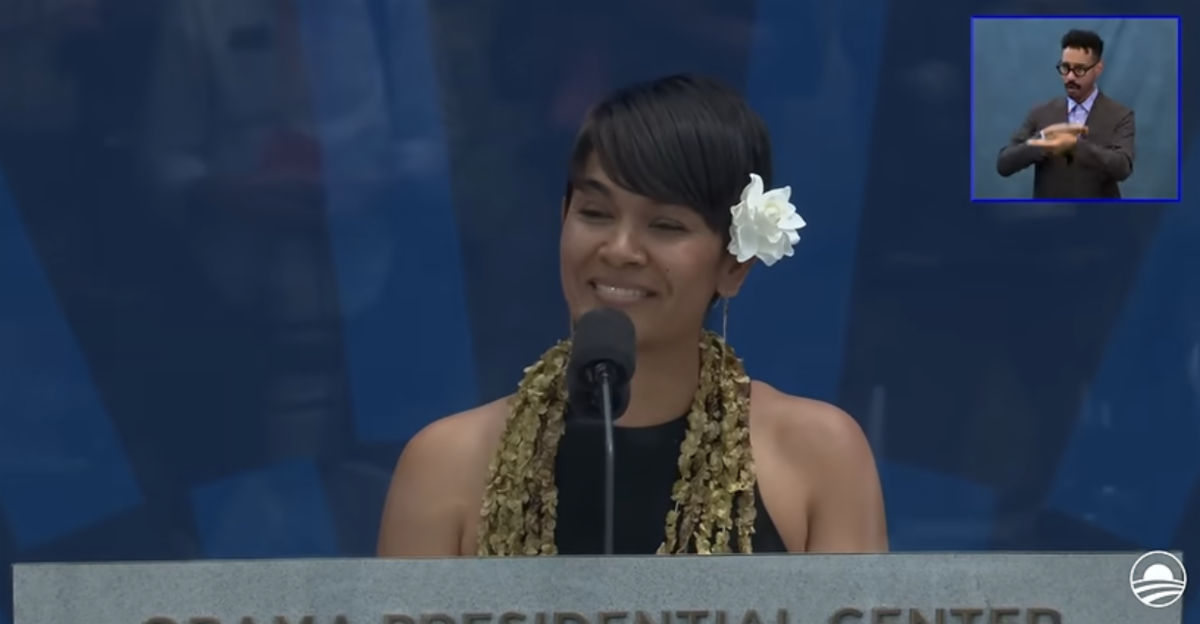
| | Dr. Kaiwipunikauikawēkiu introducing President Obama for the opening of the presidential library in Chicago. | | |
He ʻaʻaliʻi mai au—ʻaʻohe makani nāna e kūlaʻi!
As a graduate student, I understand how much representation matters. So imagine my excitement to see and hear Dr. Kaiwipunikauikawēkiu representing the ʻaʻaliʻi of Hawaiʻi nei as she introduced President Barack Obama at the grand opening of the Obama Center in Chicago. Hearing ʻōlelo Hawaiʻi on the stage reminded me of the importance of bringing our ʻōlelo makuahine into different spaces and representing the ʻāina of Hawaiʻi in meaningful ways and grounded language.
Read the UH News story here to learn more.
| | |
New Chancellor Welcome
Na Hawaiʻi Papa o Ke Ao Office
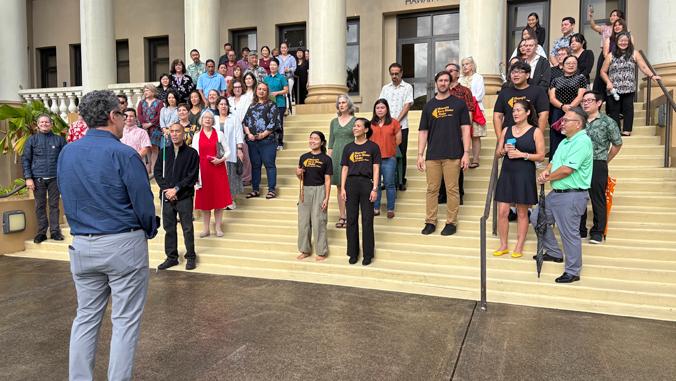
| | UH Mānoa faculty and staff gathered on the steps of Hawaiʻi Hall chanting “Welina Mānoa” in the morning sunlight. | | |
On Wednesday, July 1, 2026, campus faculty and staff gathered outside of Hawaiʻi Hall to reintroduce Vassilis Syrmos to the UH Mānoa campus and welcome him into the role of chancellor. For a brief moment, the ʻāina responded to the collective voices surely as a reminder of the importance and commitment to staying rooted in Hawaiʻi's values. As we listen and learn together, we look forward to cultivating our commitment to the kamaʻāina of Mānoa and the important kūlana of Hawaiʻi in shaping our kuleana to Hawaiʻi's past, our community's present, and the university's future.
Check out this UH News article to read more.
| | |
Hawaiʻi Sea Grant Annual Art Exhibit
Na Beth Lenz
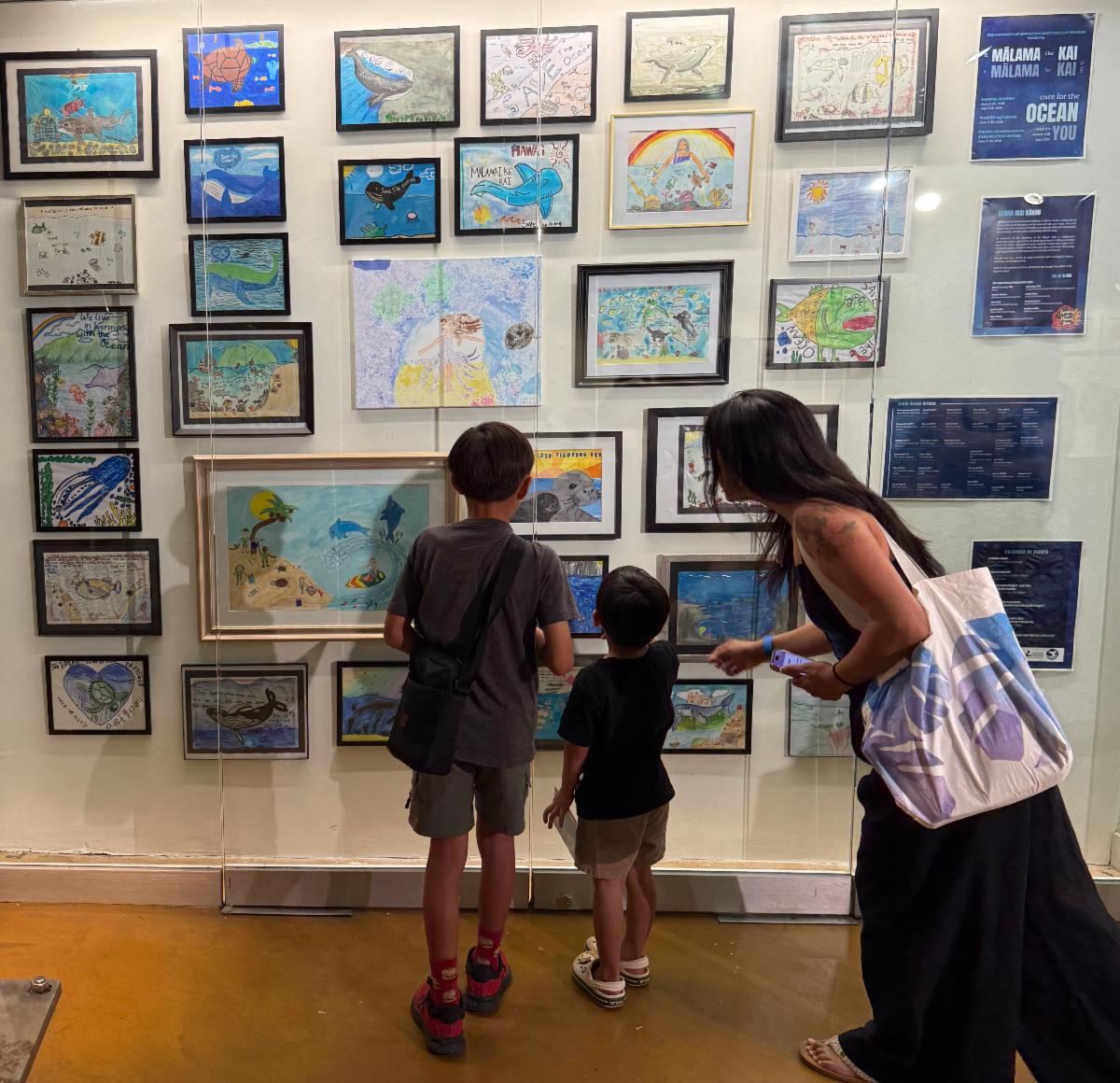
| | The student art exhibit at Capitol Modern centered around the theme: E mālama i ke kai, a mālama ke kai iā ʻoe (Care for the ocean and the ocean will care for you). | | |
The University of Hawaiʻi Sea Grant College Program (Hawaiʻi Sea Grant) curated its annual sci-art exhibit featuring youth ocean art at the Waikīkī Aquarium, Pacific Islands Ocean Exploration Center, and Capitol Modern in Honolulu, HI. This inspiring multi-venue gallery showcased the creativity, deep cultural ties, and ecological understanding of local keiki (grades 3–12) expressing their own pilina (relationship) with the ocean.
The exhibition is a direct community extension of the "Symphony of the Hawaiʻi Seas". The Symphony began as a one-of-a-kind collaboration among cultural practitioners, marine science researchers, animators, educators, and composers who transformed stories based on observations and understanding of the ocean into a symphonic experience. Seeking to amplify the voices of the next generation, students across Oʻahu were invited to share their own voices, understandings, and visions for the future of Hawaiʻi’s ocean.
The resulting exhibition was centered entirely around the theme: "E mālama i ke kai, a mālama ke kai iā ʻoe" (Care for the ocean and the ocean will care for you). Through the eyes of Hawaiʻi’s youth, visitors were reminded that our connection to the sea is not only ecological, but also cultural, emotional, and deeply personal.
Please visit seagrant.soest.hawaii.edu/symphony-of-hawaii-seas-art for more information.
| | |
Write the Seas Poetry Workshop
Na Hope Matsumoto
| |
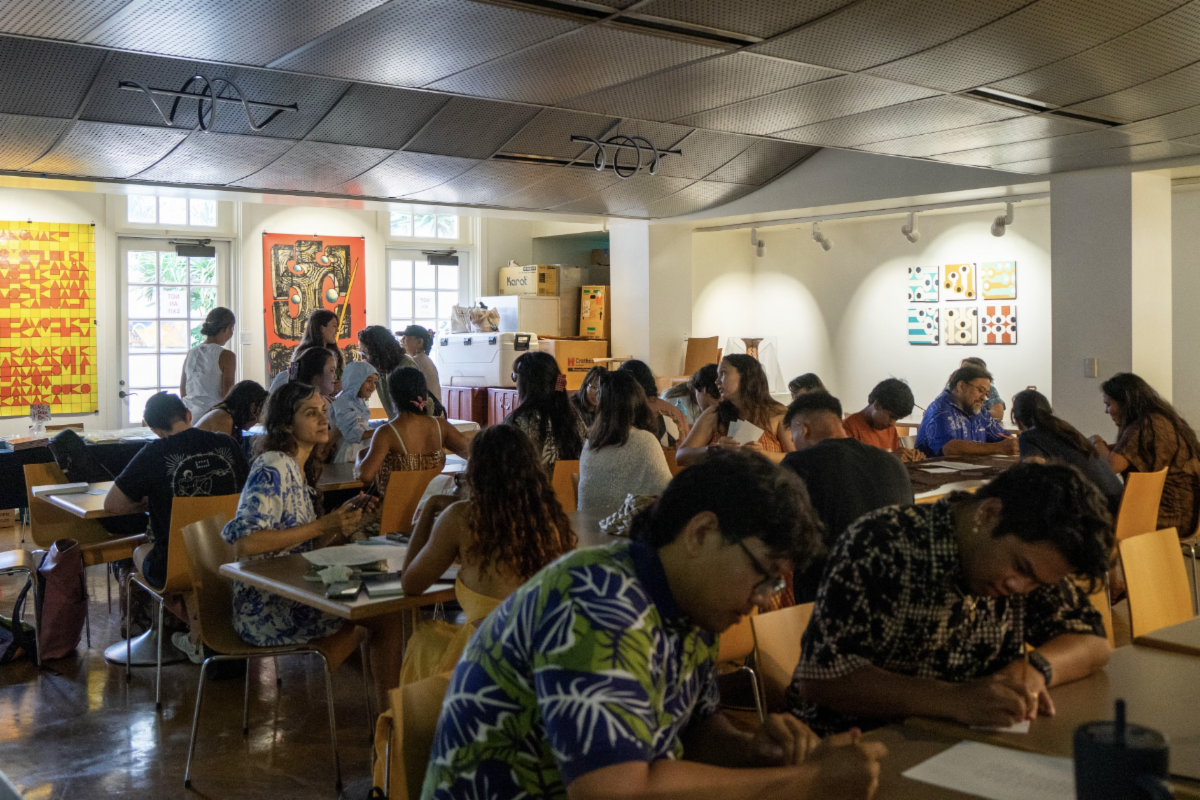
Participants seated at tables attending the Write the Seas workshop at Capitol Modern.
Photo Credit: Kalilinoe Detwiler
| | On Saturday, July 11th, beneath a Lono moon, I had the immense privilege of reading a few of my poems to open a poetry workshop at Capitol Modern for Write the Seas, an extension of Hawaiʻi Sea Grant’s Symphony of the Seas. Mahalo nui to Kalilinoe and Beth for inviting me to participate and for putting together such a wonderful event! It was such an honor sharing space with poet and UH Mānoa professor Brandy Nālani McDougall, who read poems from her most recent book of poetry ʻĀina Hānau. While some participants were old friends, many of them were folks I met for the first time, and it was comforting knowing that we were all there for the same reasons: poetry and the ocean. As we wrote and decorated poems for the ocean on postcard activity handouts, I felt our collective pilina deepening through our shared love for the sea. The ocean connects us all, and it was a wonderful experience to write and share poetry within such a generative space. Mahalo again to everyone who made this poetry event possible and so successful! | | |
Pilina Circles in the Nānākuli Community
Na Nick Childs
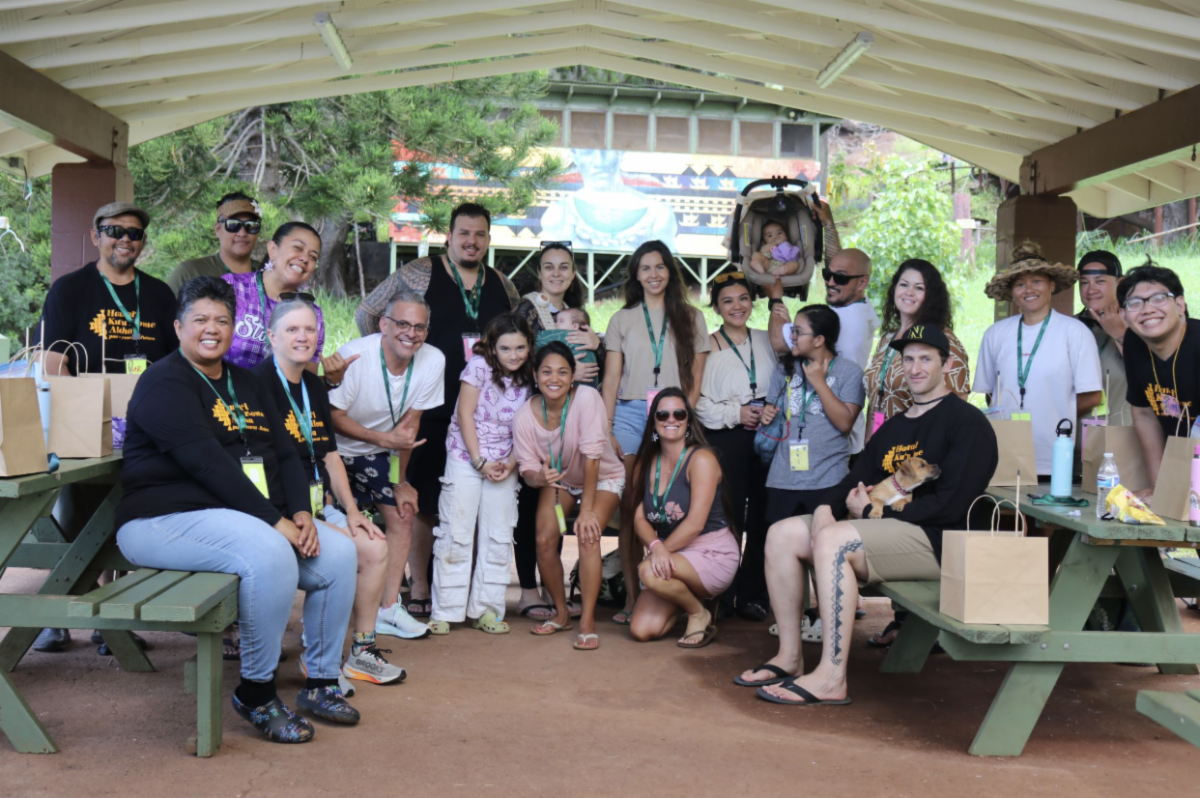
| Participants of Pilina Oʻahu Komohana under the pavilion at Camp Pālehua. | |
ʻO kau aku, o kā ia lā mai, pēlā ka nohona o ka ʻohana. From the tall peak of Pālehua, to the shores of Kauluokahaʻi, we spent a weekend feeding our ʻEwa and Waiʻanae ʻohana with tools for building pilina with their stories, inviting them to (k)new wahi pana - ka waonahele o Pālehua, and to engage with Hawaiian practices and ʻike kūpuna through hulu and kāhili paʻa lima. In return, our ʻohana fed us with lessons from their moʻolelo, committed to making authentic connections, and nourished the many legged beings that call our pae ʻāina home with laughter, joy, and friendship.
Oftentimes, some members of our team refer to what we do as our “pilina gym,” and participants from our June Pilina Oʻahu Komohana event emphasized to me that our events are spaces to exercise our ʻohana muscles. While spending the morning in a Pilina Circle, eating ʻono food from Kalapawai Cafe, and learning how to work with and take care of hulu manu, relationships were being cultivated. I am reminded of the last day of a summer camp; everyone is about to leave and all the students race around exchanging phone numbers. That is how we ended the day, with mākua, kūpuna, keiki all who were strangers only six hours prior running around saying, “Hūi! Take my number, call me!” These relationships are the result of selflessly giving into one another, and that is the way of the ʻohana.
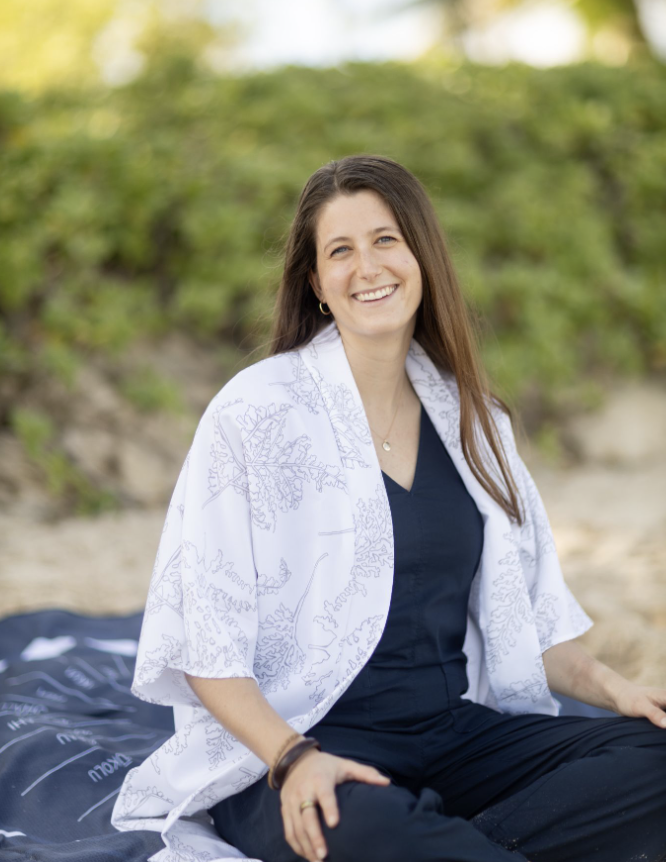
| | Katey Peck, this month's lamakū feature. | | |
Katherine (Katey) Elizabeth Peck
Birthplace/Hometown:
Arlington, VA (Nacotchtank, Piscataway, and Manahoac lands)
High School:
McLean High School
UHM Degrees:
Master of Public Health (2020)
Current Occupation:
Yoga Guide, Facilitator, and Tutor
What inspired the path for your academic major?
I worked for some time in the field of global public health, traveling to different places to understand how governments, non-profit organizations, and communities can better deliver services and care. I studied public health as an undergraduate and lived in Santiago Atitlán, Guatemala. I anticipated enjoying a long career in this sector. Little did I know, relocating to Hawaiʻi as a military spouse would shape the trajectory of my life in the best way.
How did your academic major lead you to the work you are currently doing?
Exposure to the history and realities of Hawaiian health through settler contact and colonization pushed me to learn more. I was fortunate to come to UHM at a time when Hawaiʻi Papa o ke Ao Native Hawaiian Place of Learning Advancement Office (HPoKA NHPoL) was growing. I applied to the inaugural student-community cohort in 2019, which introduced me to concepts that now guide my work and life: moʻokūʻauhau, kaikuaʻana and kaikaina, and kuleana. My public health background still deeply shapes how I see and move through the world, and I now have a much sharper analysis of how forces of separation, including racism and colonization, influence our wellbeing. My pilina to UHM and Hawaiʻi informs my kuleana to uplift Indigenous knowledge and support healing between peoples and lands.
How do you see your time at UH shaping the way you aloha ʻāina?
As a white settler raised on the east coast of Turtle Island, I was taught that land is separate from humans: something to be enjoyed recreationally, but also something we can control, change, and exploit. My time at UHM gifted me an embodied understanding that we are not separate from ʻāina, and a recognition that aloha ʻāina comes in many forms. Of course, it can involve us literally loving the land and putting our hands on the earth. But it can also come in learning the stories or language of a place, supporting its stewards through action and advocacy, and in the many small decisions we make each day that compound (like how we spend our money and time). More than anything, I’ve come to appreciate that each person who visits Hawaiʻi can build and sustain pilina to her people, places, and practices. Every place we visit or live is someone’s beloved or sacred land, and there are people(s) who bear an ancestral relationship to that land. I try to make decisions with this in mind.
What are your future goals in your work?
Right now, some of my biggest goals are around language learning. During my time at UHM, I didn’t fully appreciate the history and living practice of language reclamation, and what a gift it was to be around multiple generations of ʻōlelo Hawaiʻi speakers! Hawaiʻi’s journey deeply inspires other communities, including Twulshootseed (Southern Lushootseed) speakers in the Puget Sound region. As a still new resident of Siʔal/Seattle, I am taking Twulshootseed classes to deepen my relationship to people, places, and beings, and to inform my teaching and facilitation. I am also invested in supporting Native-led initiatives in the Puget Sound and Cascadia regions around Indigenous sovereignty, land stewardship, language reclamation, and healing. As a pilina circle co-facilitator who has had the great privilege of seeing how HPoKA NHPoL programs have changed hearts and inspired action, it is a dream of mine to see some similar programing in the Siʔal/Seattle area.
What does UH Mānoa as a Hawaiian place of learning mean to you?
We uplift Hawaiʻi: her land, her language, her people, and her practices. In this, every person who steps foot on campus can understand where they fit, and how they can contribute to an ecosystem of reciprocity. Knowing our place and our roles helps us to build pilina: the relationality needed to weather the inevitable conflict, challenge, and change that we face in life.
| | | | |