|
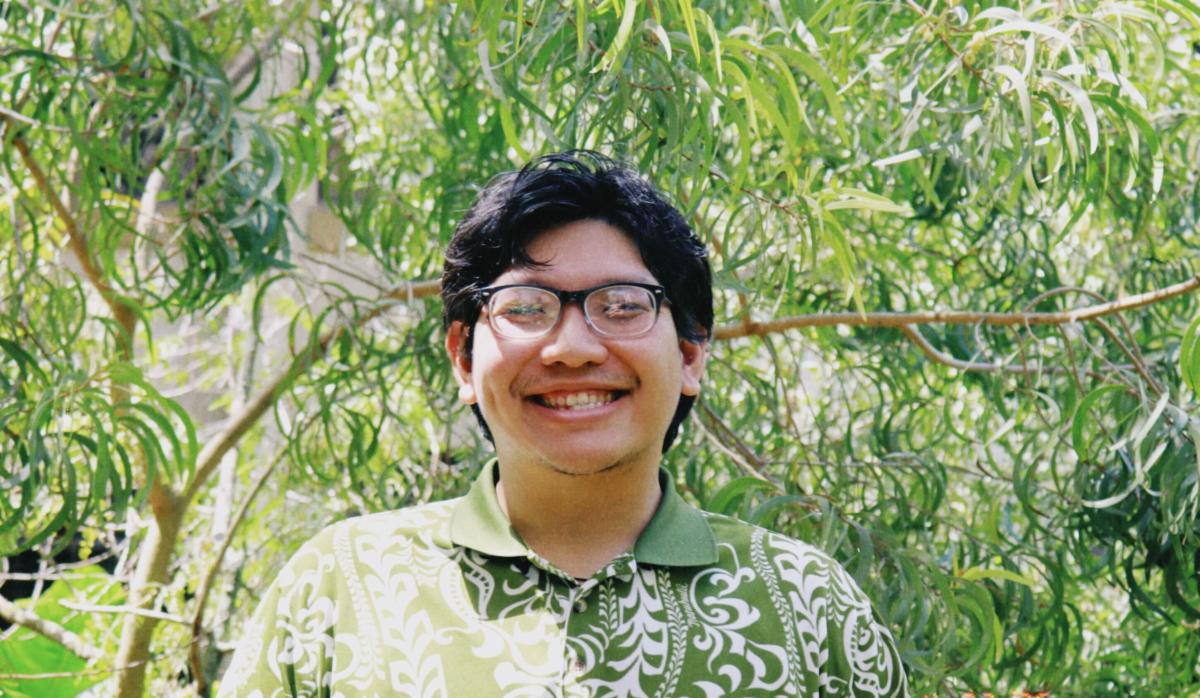
Timmy Minh Hiền Trần
Birthplace/Hometown:
Kaimukī, Oʻahu
High School:
Kalani High School
UHM Degrees:
Bachelors of Arts in Digital Cinema (2025)
Bachelors of Arts in English (2025)
Masters of Arts in English (Currently Pursuing)
Current Occupation:
Mānoa Journal Intern
Graduate Research Assistant at Hawaiʻi Papa o Ke Ao Native Hawaiian Place of Learning Advancement Office
What inspired/inspires the path for your academic major?
I am so fortunate to have many inspirations within my life to provide a path within my academic major. But, I would say that my main inspiration stems from bedtime stories with my mother when I was a child. Every night she would tell me Vietnamese fairy tales and I was so enamored by them all, so much so that I can recall all of these stories by heart and even when she would change the story, I would always correct her. The usage of stories and how they connect people, that is what inspires me to follow the path of my academic major, which is creative writing. Storytelling is an art that has been passed down in my family, and through my mother’s ways of telling stories, my aunties, and my cousins, they have inspired me to tell stories of my own and to create stories that resonate with others. The resonation and connection of narratives, whether through poems or long prose, screenplays, or through spoken words, that is the true desire that I crave and love to taste for. Stories of old and new, listening, telling, these practices help sustain the ritual of storytelling which is a ceremony that I am so appreciative of, all because of my bedtime stories with my mom.
I love the feeling of being moved by stories and lessons of others, and the idea that I can move others with my own work is something that I want to do. I want others to be seen and heard the way that I felt represented within stories that my favorite authors wrote. That intense feeling of representation and empathy is what also inspires my path within creative writing.
What are your future goals in your work?
One of my future goals within my work is to emphasize my learning here within Hawaiʻi as a body of knowledge within my own pedagogical work as a writer, student, and teacher. I recognize the privilege of my positionality as an Asian Local in Hawaiʻi and I want to first uplift the voices of Kānaka Maoli, be peers within my community or outside of academia, that is the crux of my goals. I wouldn’t be the person I am today without many amazing Kānaka Maoli teachers, professors, uncles, aunties, cousins, and friends, and so, I find it so crucial to go back to them and honor their stories and the ʻāina that nourishes me as well.
My long term future goal is to become a professor here at the University of Hawaiʻi at Mānoa, specifically within the English Department where I am teaching creative writing. While growing up, I felt that my career goals were unclear as there were conversations of going into STEM, either a marine biologist or a nurse. But as I continued my academic journey, I found myself being the type of person who would help my peers and I loved being that shoulder they could rely on. While I was in my first year of college, I was unable while I was in my Pre-Nursing major. I felt like the calling that I had was a little lost. However, once I made my switch into film and then into creative writing, I felt so much happier. And I wouldn’t necessarily say switching from STEM to Humanities was the fix, but rather my calling was to help others, to nurture them and build community. Though my intentions were clear within my STEM aspirations, to help others, I couldn’t find community. But through the Humanities, I was able to find a writing community that I love so much and found a home here. Now, I find so much joy in teaching others and nurturing their own writing. I find this fulfilling to my soul and just the process of helping others and allowing them to grow, watching them grow makes me ecstatic.
How do you see your time at UH shaping the way you aloha ʻāina?
There are so many ways that my time at UH Mānoa has/is shaping the way how I aloha ʻāina and I know there is so much more that I don’t know yet, and that is exciting. If I could focus on one way, right now at this moment, I would say I have been so much more observant and intentional about how I perceive the world around me. Though I wouldn’t say that what I’m practicing is “kilo” as that term has so much cultural significance, I want to say I am trying to be more intentional with what I’m seeing, trying to notice the plants around campus, the birds, the people around me. This allows me to stay present and live in the moment, allowing me to appreciate what is around my life rather than stressing about my school work or the future. I feel so much more grounded by noticing what’s going on around me, the clouds, the winds, and rains. I feel so connected to the elements themselves because of my desire to learn their name and wanting to see them and call to their names. This attention to detail reshapes the way I prioritize things, rather from a more western perspective where I need to get my academics done and focus on my work, my perspective shifted in a way where I prioritize building relationships and being more attentive to everything around me. Creating and building relationships that lasts and noticing how it grows everyday, whether it be with people, places, and practices, I am noticing the small and large changes and so honored to be growing alongside ‘Āina.
What does UH Mānoa as a Hawaiian place of learning mean to you?
For me, UH Mānoa being a Hawaiian place of learning means becoming a pillar that holds and uplifts the cultural values, practices, people, histories, language, and a myriad of aspects of all Hawaiian ʻike. There is so much weight and responsibility that comes with this, and part of what makes UH Mānoa as a Hawaiian place of learning is the commitment into fulfilling this name and duty and going beyond. What that looks like to me is incorporating ʻike Hawaiʻi into the pedagogy of not only just the UH Mānoa identity but to push this within the departments and professors that teach. I believe that there are no other universities like UH Mānoa because of this push for using ʻike Hawaiʻi within academia, not just as a branded identity, but as a system that uplifts Native Hawaiians, diaspora Hawaiians, and the community involved. That being said, I further believe what makes UH Mānoa a Hawaiian place of learning is the act of supporting locally owned Native Hawaiian businesses. This integration of relationship building allows UH Mānoa to give back and allow a reciprocal relationship between the community and academia.
I also believe that UH Mānoa being a Hawaiian place of learning is an institution that supports all Kānaka Maoli students in every shape and form, from the physical, mental, and spiritual sense. UH Mānoa should be a safe space that provides comfort and confidence that their culture, language, and values are protected and encouraged.
The merging, uplighting, and prioritization of Hawaiʻi’s cultural values, language, and life, meeting academia, which has been such a western dominated space: That is what makes UH Mānoa a Hawaiian place of learning for me.
|