Our office focuses on implementing report recommendations from the last 30+ years that guide UH Mānoa in becoming reflective of Hawaiʻi's language, culture, values, and knowledge systems from which all people learn, connect, grow, and heal:


  • Hawaiʻi-Guided Student Success
  • Hawaiʻi-Grounded Staff and Faculty Development
  • Cultivating Hawaiʻi Environments 
  • Hawaiʻi-Reflective Community Engagement


We cannot do this work alone. It is our mission to foster the potential within each of you to positively contribute to our collective kuleana to make UH Mānoa reflective of Hawaiʻi. These monthly newsletters, with written reflections that cover the preceding month's happenings, are meant to keep you connected, highlight your work and continue to inspire you.

HAWAIʻI-GUIDED STUDENT SUCCESS

Ola Ka ʻĪ, The Hawaiian Language Thrives

na hope matsumoto

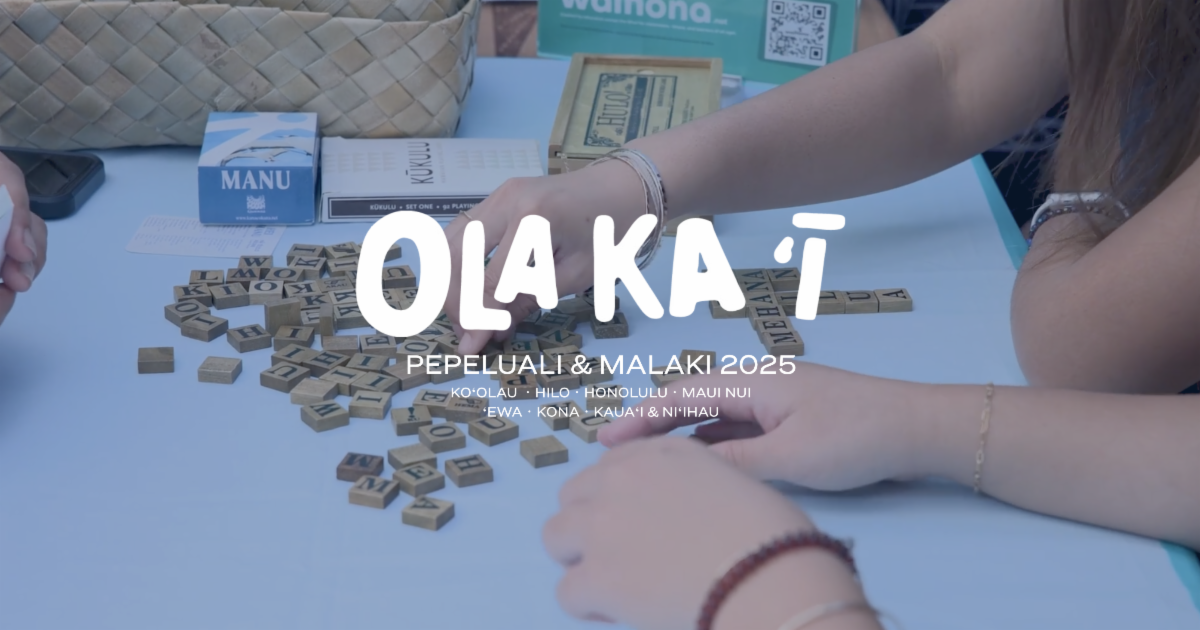
Ola Ka ʻĪ participants playing games in ʻŌlelo Hawaiʻi at an event table.

No ka hoʻolauleʻa ʻana o ka Mahina ʻŌlelo Hawaiʻi i ʻākoakoa mai ai ka poʻe i aloha i ka ʻōlelo o kēia ʻāina nei. ʻO Pepeluali ka Mahina ʻŌlelo Hawaiʻi, akā naʻe e hoʻōla mau kākou i ka ʻōlelo makuahine i nā lā a me nā mahina ā pau. Ma ka hopena pule mua o Malaki i mālama ʻia aku i Ola Ka ʻĪ ma Kona (Hawaiʻi) a me Kauaʻi me Niʻihau. I kēia manawa, ʻo wau ka haumāna ʻŌlelo Hawaiʻi, a ma kēia mau hanana kaiāulu au e aʻo mai ana mai kā nā keiki ʻī ‘ana me ka ikaika loa a me ka makaʻu ʻole. ʻO nā keiki hanauna kaʻu kumu, a ʻo nā haumāna ka lamakū e ʻā aku ana i ka wā ma hope. E ola nō ka ʻŌlelo Hawaiʻi! 


Description: In celebration of the Hawaiian Language Month in February, people gathered together out of our love for the language of this place. During the first weekend of March, there were Ola Ka ʻĪ events at Kona (Hawaiʻi) and Kauaʻi with Niʻihau. I’m currently studying the Hawaiian Language, and during these community events, I learn so much from the students who speak strongly and fearlessly. The youth of the next generation are my teachers, and these students are the leading lights burning bright for the future. May the Hawaiian Language live!

HAWAIʻI-GROUNDED STAFF AND FACULTY DEVELOPMENT

Cohort Kaulua

by Kawehionālani Goto

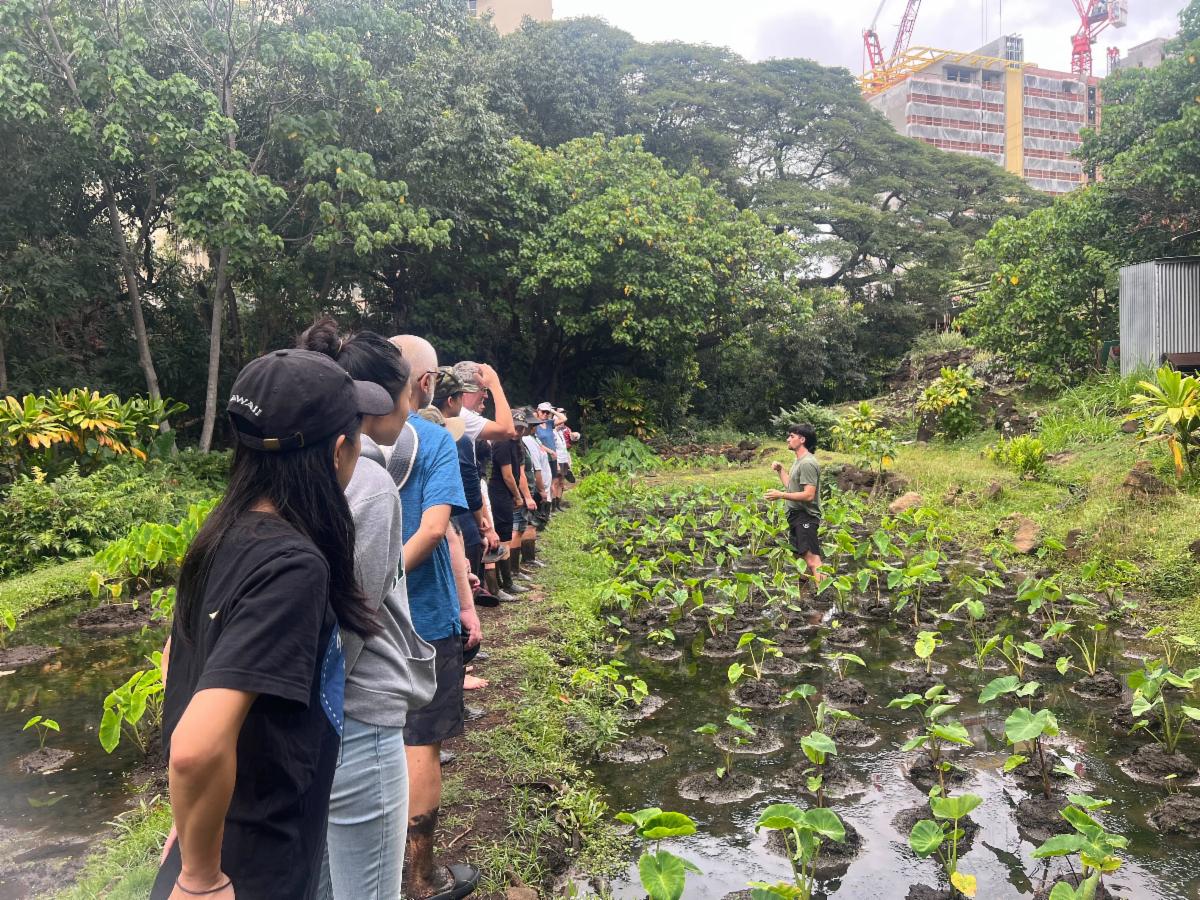
Cohort participants learning about ʻāina at Ka Papa Loʻi ʻo Kānewai.

On March 17th, 2025, we gathered together with our Mānoa campus community for the first session of Cohort Kaulua. As an accompaniment - the second of its kind - to Cohort Kumukahi, it was exciting to witness this second iteration as a guiding star on our journey, hear stories like echoes of those from Kumukahi but in new form, and be inspired by the pathway forward (re)introduced with and by this collective. I believe we learned a lot about ourselves (once again), each other, and our physical ‘āina from Pilipili to Ka‘ākaukukui. Something that I learned last week – and want to share with you, gentle reader – is that in reading this newsletter you are connected to Mānoa. I also (re)membered how my process of becoming more pili to this place is informed by my attention to the physical architectural structures of our campus and my intention focused on embodiments of ʻāina that were slowly blooming in this season. And so, I invite you to become more pili with UH Mānoaby reflecting on the following: “What at Mānoa is taking the most of my attention?” and “how can I be more intentional when building pilina to my academic space?”. To learn more about this session or to revisit our last day together, I invite you to read hope’s Day 5 Blog.

CULTIVATING HAWAIʻI ENVIRONMENTS

Mālama Hāloa Kalo Festival & Symposium

by hope matsumoto

The ʻohana Kahakalau speaking at the Mālama Hāloa Kalo Festival Youth Symposium at Bishop Museum.

During the 17th annual Mālama Hāloa Kalo Festival and Symposium at Bishop Museum, we honored the ʻApuwai, a cultivar of kalo known for its ʻapu-shaped leaves that hold rainwater. After a particularly dry Hoʻoilo (wet and rainy winter season), we celebrate the ʻApuwai’s characteristics that emphasize the importance of our fresh water, including the continuation of the water cycle. During the first Youth Symposium for Mālama Hāloa, which included middle and high school students from various schools around Oʻahu, we had the opportunity to hear from multiple generations of the ʻohana Kahakalau from Waipiʻo, Hawaiʻi and from the Kīpahulu ʻOhana from East Maui. This experience was so inspiring to see multitudes of people from many generations from across our pae ʻāina (archipelago) come together and continue our commitment and relationship to kalo with such appreciation and determination.

HAWAIʻI-REFLECTED COMMUNITY ENGAGEMENT

Namahana School Opening

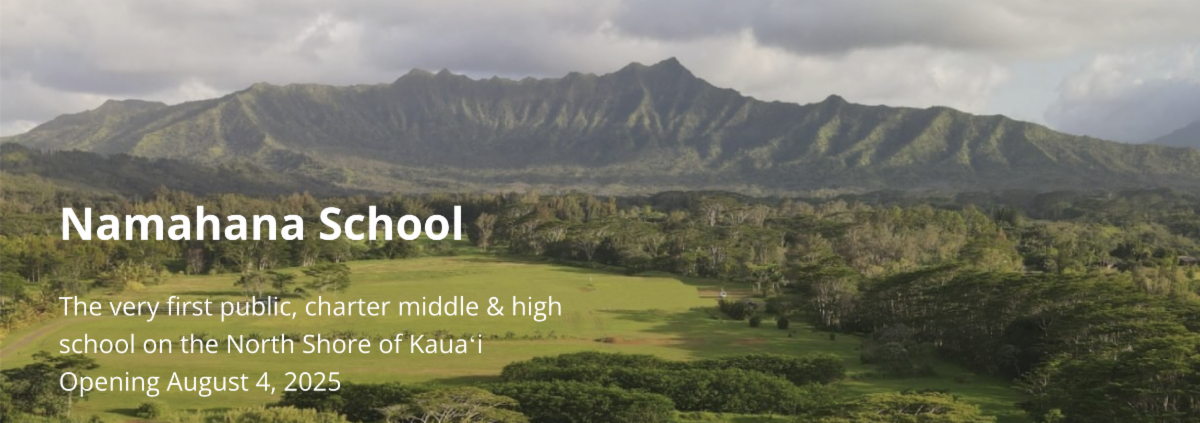
Namahana School, the very first public, charter middle & high school on the North Shore of Kauaʻi, is opening

August 4, 2025.

Namahana School is opening in August! They are looking to hire an inaugural cohort of teachers for 7th and 8th grade. They are looking for Hawaii educators who are passionate about working with young people, excited to work both in a classroom and outdoors in ʻāina ulu (field study) learning environments and believe that all students can succeed. To learn more about Namahana School check out their Namahana School website. If you are interested in learning more about open positions or what it means to be an educator at Namahana School, check out their Join Us page here.

NĀ LAMAKŪ O KE ALOHA ʻĀINA

Nā Lamakū o ke Aloha ʻĀina is our office’s monthly feature that illuminates the light within each person’s contributions to positively shape our UH Mānoa campus as a Native Hawaiian place of learning committed to mālamalama. We feature an individual who exemplifies and demonstrates aloha ʻāina through their actions and involvements on our campus, particularly as leading lights in their own respective communities and disciplines of engagement. Through this interview, we aim to honor the ways in which the featured lamakū’s time at UH Mānoa has shaped and ignited the flame for/within their practices.

Ryse Akiu, this month's lamakū.

Ryse Kahikuonalani Akiu


Birthplace/Hometown:

Pauoa, Kona, Oʻahu


High School:

Kamehameha Schools Kapālama


UHM Degrees: 

BA Philosophy (2019)

MA Philosophy (2022)

PhD Political Science (currently pursuing)


Current Occupation:

Educational Specialist, Ka Papa Loʻi ʻo Kānewai


What inspired/inspires the path for your academic major? 

Like a stream, my sources are many. Like the varied sources and punawai which give life to ʻāina, all aspects of my life influence my thinking and being and those sources help to give structure to my understanding. As a keiki, sports taught me many lessons – I come from a family of athletes. I also was interested in art and drawing. As I grew older, much of my life was dedicated to music and drumming. Then, it became philosophy. And then I encountered Kānewai. All these things built upon each other, mutually informing and evolving. But I understand that my journey is part of a longer moʻokūʻauhau – extending from my kūpuna who gave me the iwi in my body – to ʻāina that structure the iwi of reality. These sources reside in the dense uplands, extending up toward the stars, and down toward the sea depths and at the core of the earth. I could not walk without those who walked before me; I mahalo all those who helped create and clear the paths and possibilities – to Kaʻimi and to the many forms of wai that nurture and continually branch. All these things inspire.


What are your goals in your work?

A goal of my work is to constantly make connections. My experience has taught me that the academy seeks to divide – to make more and more categories of things – to be more and more definitive, more correct, more right. That was my engagement with Philosophy as a discipline. However, spending time in ʻāina has allowed my thinking to expand and make connections. To understand that what we experience is not only a product of many types of genealogies but is vast and many-layered – it is important to acknowledge all sources of knowledge. The lyrics of Steel Pulse are just as important as what was written in the academic book. The security guard aunty at Mānoa shopping center has manaʻo just as important as the professor eating lunch. The academy exists because of what is not the academy.


How do you see your time at UH shaping the way you aloha ʻāina?

One of the most influential moments that has helped to shape my path is my time at Kānewai. I am grateful for all those kūpuna and kānaka who have helped to make Kānewai what it is and am grateful for the opportunity to mālama Kānewai right now. The best way to engage with Kānewai is he alo a he alo.


What does UHM being truly reflective of Hawaiʻi mean to you?

It means having a different kind of awareness of and relationship with the things that give life, especially our island resources because we live on an island. We know the rain cycle is a cycle, what is upstream affects downstream; what happens downstream affects upstream. It also means understanding a future where it is possible to rejuvenate your own soil with the things of your own place, rather than needing to go elsewhere and take someone else’s stuff. We use hau and kukui to fertilize our loʻi as was taught to us and like it shows in our moʻolelo – the ʻāina takes care of the rest. The ʻāina is just as much an active participant in the process of growing kalo as the mahiʻai.

Donate Here!
Instagram  Email  Web