Summer's Invitation to Slow Noticing: A Creative Practice

Pastor Liv Larson

Director for Evangelical Mission

It's too hot to cook tonight. It's also too hot to insist that the boys get off the iPad, though I want them to. It's almost too hot to do anything. Then I remember the river.


We pack a picnic and head for our new favorite spot. We jump in and swim. Our bodies cool and our brains come back into focus. There is a great blue heron standing upstream in the river and an osprey nest above us. We eat our picnic slowly on shore, one set of toes on each of our bodies wanting to jump back in the cold, healing water. 


Summer is weird, rhythm-wise. Folks are always coming and going on trips. Days are long and unstructured, which can be both a gift and a curse. What day is it anyway? 


As God's people, each season brings a fresh perspective on our relationship to the Creator, the author of the seasons. What is God up to in summertime? Napping? Swimming? I hope a bit of both.


Earth is also rather productive in summer, bearing all kinds of delicious fruits for our benefit. We can join this creative flow. But I think that participation in the creative life begins with a spiritual practice of slowing down and noticing. Noticing. 


Here are a couple of summer prompts for noticing God's movement around you:


  • What plants have bloomed or gone to seed near you in the last few days? Draw them. 


  • What hills or fields near you have changed in color recently? Write a story or poem from the field's perspective. 


  • What new or different smells greet you as you walk around your neighborhood? List everything you sense. 


  • Color me surprised when I came across a synchronous thought about creative practice, spanning at least 900 years: 

Hildegard of Bingen taught that the human soul was the instrument on which God played music. Rick Rubin, music producer and founder of Def Jam records, writes, "No matter what tools you use to create, the true instrument is you. And through you, the universe that surrounds us all comes into focus." What? How are these two souls so in tune that they express a nearly identical thought about God and human creativity? 


Let's try it...


Take a slow walk in your back yard or in a nearby park. What colors and smells come into focus? What holds your attention? Heed that. Lean in. 


Summer gardens are an embarrassment of riches. (I myself can't grow a single tomato...) But the point is that God, the good Creator, has fashioned you to be a creative leader. And step one of the creative life is slowing down our pace and simply taking notice of everything happening all around us. 


Tell me what you find!


Happy noticing,

Liv

Presiding Bishop Curry

Beloved in Christ,


Grace and peace be with you in the name of our Lord Jesus Christ.


Today, I write with a heavy heart.


Recently, the Supreme Court issued a decision that will allow this administration to proceed with terminating Temporary Protected Status (TPS) for more than 330,000 people from Haiti and 3,800 from Syria, many of whom have lived in this country for decades. They are not strangers. They are part of the fabric of our whole society. The termination of TPS threatens to separate families, destabilize local economies and force people to return to countries where they may face severe humanitarian crises, violence and threats to their very lives.


This ruling comes amid a series of changes in U.S. policy that have increasingly restricted legal pathways for immigrants and those seeking protection. Last week the Supreme Court upheld a policy allowing individuals to be blocked from applying for asylum at the U.S. border. At the same time, we are witnessing the deportation of people with pending asylum claims after perfunctory mass hearings — often without access to legal representation. The refugee resettlement program, once a sign of this nation’s commitment to welcome, remains largely closed to most nationalities and races, with a narrow exception for white South Africans.


We are a people shaped by the Word of God, called by the apostle Paul to “welcome one another … just as Christ has welcomed you, for the glory of God” (Romans 15:7). As Lutherans, we confess a faith that compels us to welcome and protect the vulnerable, to honor the dignity God gives every human being, and to uphold laws and policies that provide refuge to those fleeing violence, persecution and profound hardship.


In this moment, I invite this church to prayer, lament and action.


As a church, we pray for protection and justice for all TPS holders — from Haiti and Syria, and for the more than 1.3 million people who may be affected by this decision, including those from Venezuela, El Salvador, Myanmar, Ethiopia, Somalia, South Sudan and many other nations. May God’s mercy surround them and sustain them in the days ahead.


As a church, we pray for the churches, ministries and leaders of the ELCA who walk alongside immigrant communities through accompaniment, advocacy and immigration services. May they be granted wisdom, strength and courage for the work to which God has called them.


As a church, we lament the dehumanization of immigrants through rhetoric rooted in racism, white supremacy, xenophobia and fear — particularly against Black and Brown immigrants. We reject the spread of lies and conspiracy theories that falsely accuse these communities of harm. And we recommit ourselves to speaking truth, honoring dignity and recognizing every person as made in the image of God.


As a church, we call on the administration to do what is just — to extend TPS protections where conditions remain dangerous and unstable, and to support comprehensive immigration reform that reflects both justice and mercy, offering welcome to those who seek safety within our borders.


And I ask each of you, faithful people of God, to continue the work of love: through prayer, through advocacy, through accompaniment and through faithful witness in your communities.


Beloved, in times like these, it is easy to grow weary. But we are not alone. The God who calls us is faithful. The risen Christ invites us forward. The presence of the Spirit fills us with the power and courage to act.


Together, we walk the way of Jesus — with courage, with compassion and with hope.


May the peace of God, which surpasses all understanding, guard your hearts and minds in Christ Jesus.


Amen.


In Christ,


The Rev. Yehiel Curry

Presiding Bishop

Evangelical Lutheran Church in America


I invite you to connect with AMMPARO, our church’s strategy for accompanying migrants with protection, advocacy, representation and opportunities, to support accompaniment with immigrants and those forcibly displaced. And you may engage through an Action Alert on TPS through ELCA Witness in Society.

Update: Solar Kitchen for Tumaini Lutheran Seminary

As noted in the April edition of the NWIM Synod Newsletter, our synod has pledged to provide 100% of the funding for a new SOLAR ELECTRIC COOKING SYSTEM at the Tumaini Lutheran Seminary, a secondary school in Malinyi, Tanzania, overseen by the Ulanga-Kilombero Diocese. Over 250 students and staff are fed from this kitchen three times daily when school is in session.


The solar kitchen will eliminate 100% of the harmful emissions produced by the existing wood-burning kitchen, including carbon monoxide and formaldehyde. The solar kitchen contractor and engineer are scheduled to complete the installation by September 30, 2026.


The updated cost of the solar kitchen is projected to be approximately $77,000 after carbon offset credits are applied. Approximately $12,000 has already been committed to the project by NWIM Synod and churches within the synod. NWIM Synod Council has set a target date of June 30, 2033, to complete the funding for the project. This equates to less than $120 per congregation each year.


Donations can be given online through the DONATE link on the NWIM Synod website www.nwimsynod.org. Indicate the contribution is for Global Mission: Tanzania. Alternatively, checks can be mailed to the NWIM Synod office, noting the funds are for the UKD Solar Kitchen. Together, we can make a big difference in the health of the students and staff at Tumaini!

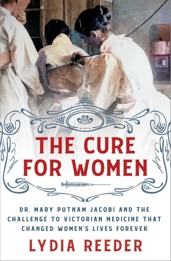
The Cure for Women

by Lydia Reeder

Sometimes it is easier to talk about a difficult subject by talking about what is happening somewhere else in the world or by talking about what happened during a different time period. For those of you who want to talk about reproductive healthcare, I recommend this book: The Cure for Women.

How Victorian male doctors used false science to argue that women were unfit for anything but motherhood—and the brilliant doctor who defied them


After Elizabeth Blackwell became the first woman to graduate from medical school, more women demanded a chance to study medicine. Barred entrance to universities like Harvard, women built their own first-rate medical schools and hospitals. Their success spurred a chilling backlash from elite, white male physicians who were obsessed with eugenics and the propagation of the white race. Distorting Darwin’s evolution theory, these haughty physicians proclaimed in bestselling books that women should never be allowed to attend college or enter a profession because their menstrual cycles made them perpetually sick. Motherhood was their constitution and duty.


Into the midst of this turmoil marched tiny, dynamic Mary Putnam Jacobi, daughter of New York publisher George Palmer Putnam and the first woman to be accepted into the world-renowned Sorbonne medical school in Paris. As one of the best-educated doctors in the world, she returned to New York for the fight of her life. Aided by other prominent women physicians and suffragists, Jacobi conducted the first-ever data-backed, scientific research on women's reproductive biology. The results of her studies shook the foundations of medical science and higher education. Full of larger than life characters and cinematically written, The Cure for Women documents the birth of a sexist science still haunting us today as the fight for control of women’s bodies and lives continues.

Idahoans United for Women and Families collected more than 110,000 signatures for the ballot initiative. The Reproductive Freedom and Privacy Act will be on the Idaho ballot this fall. The initiative would legalize abortion until fetal viability or in cases of emergency–essentially re-establishing the abortion rights Idahoans had before the U.S. Supreme Court overturned the Roe v. Wade decision four years ago. The initiative would also enumerate rights related to reproductive health, such as protections for access to contraception and IVF, and privacy in medical decisions.


Abortion is a morally complex issue, no doubt about it. Should we talk about it as a church? I believe the answer is YES. After you read A Cure for Women, you might revisit the ELCA’s 1991 Social Statement: Abortion and accompanying study guide. Wartburg College professor Caryn Riswold’s ReEngaging ELCA Social Teaching on Abortion is a wonderful small book that looks at all that has changed since 1991 and ends with a variety of pastoral letters to readers. The ProVoice Project has collected the stories of women seeking reproductive healthcare and stories of the doctors caring for them. Abortion as healthcare is an intersectional issue, so you can add in our ELCA Social Statements on Economic Life; Healthcare; and Faith, Sexism, and Justice.

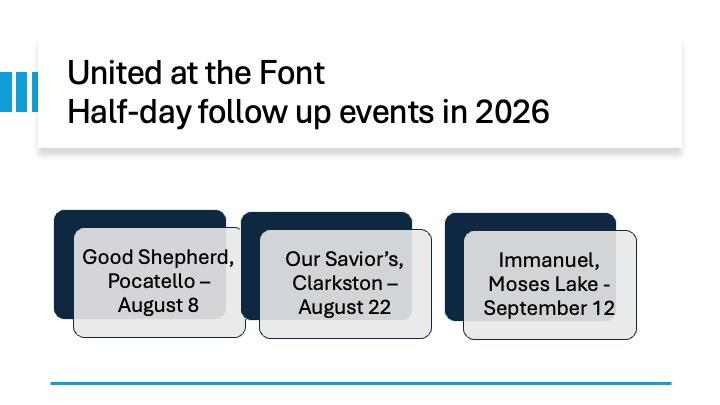
United at the Font

Half-day Events


Gray Area Thinking

We’ve all heard the phrase, “inclusion”, but what does it actually mean to make an organization or even our personal lives more inclusive? How can we get beyond grouping and labeling of other humans according to the color of their skin, the religion they practice, their political views, or the country in which they were born? Can we really build a just and inclusive world, especially in this time of such division? Even more, how can we make our organizations and lives more inclusive of those who are “Other” and different from “us?” Isn’t it time to at least consider a new approach to human inclusivity—where all humans regardless of differences are valued?


Join national speaker, transgender writer and “human inclusionist” Ellen “Ellie” Krug as she talks about organizational culture and culture change and conducts her highly valued human inclusivity training, Gray Area Thinking®. This workshop will provide an easy-to-understand toolset on how to be more welcoming of anyone who is “Other” in our society.

Bible Free Shipping


Youth Gathering Volunteer Corps

Make an impact next summer.


The 2027 ELCA Youth Gathering doesn’t happen without people such as you.


Two of our three volunteer opportunities are now open — and this is your invitation to step into something meaningful. To serve. To lead. To help create a space where thousands of young people will encounter God, community and a faith that lasts.


Whether you’re welcoming participants, assisting behind the scenes or helping bring large-scale moments to life, every volunteer plays a vital role in shaping the Gathering experience.


Now accepting applications for:

Gathering Volunteer Corps (GVC)


Serve throughout the full week of the Gathering in Minneapolis. From Mass Gatherings to program support and logistics, this team helps make everything happen smoothly. GVCs receive housing and meals while at the Gathering.


Are you a young adult and wanting to SERVE? Your time is coming.

If you’re a young adult feeling called to walk alongside youth and their congregational groups in a deeper way, we see you! Servant Companion applications aren’t open yet, but they will be coming later this year.


Servant Companions build relationships with youth groups, accompany them throughout their SERVE experience and help create space for reflection, faith conversations and connection. This is more than volunteering — it’s mentorship, leadership and accompaniment.


Applications open Dec. 1 and will close Jan. 15, 2027.

Upcoming Dates

View as Webpage

Web  Facebook

Northwest Intermountain Synod of the ELCA | 245 E. 13th Ave, Suite A | Spokane, WA 99202 US