e-Newsletter | April 25, 2025 | | |
1770 Newburyport Tea Tariff Protest Revealed
by Bill Quigley
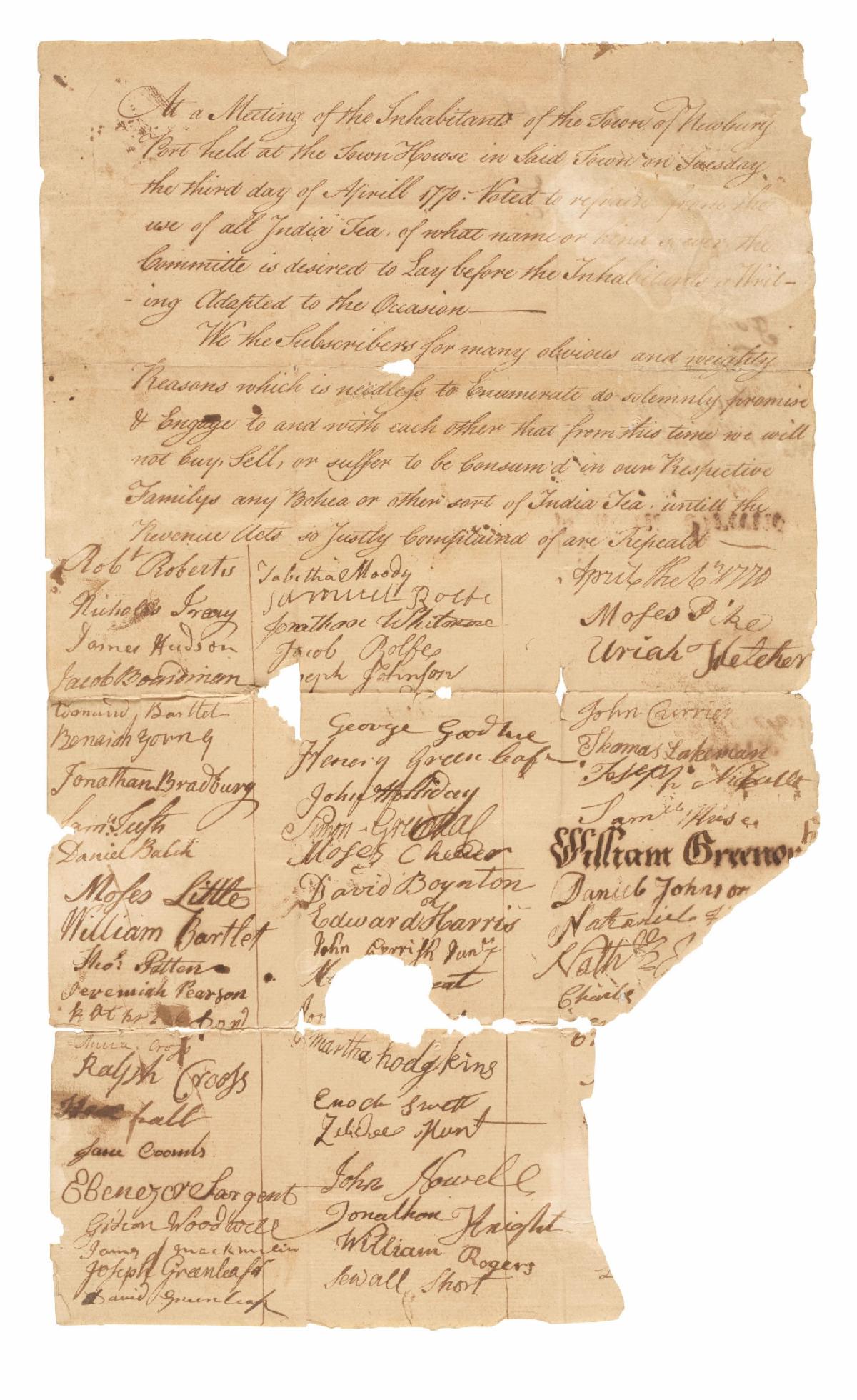
The leadership of Newburyport residents protesting hurtful tariffs came to light this spring in the auctioning of a valuable document. Privately owned and absent from the historical record until its emergence for auction by Bonhams, the single-page declaration bears the signatures of more than 66 Newburyporters protesting, in April 1770, tariffs enforced on them by an administration acting in defiance of revolutionary Americans’ understanding of constitutional government.
Read more following event announcements...
| | We know it is frustrating when events sell out quickly, so we are staggering registration dates to give everyone a chance. Please click the image or link below to check out all of our upcoming events! | | Funded, in part, by the Massachusetts Office of Travel and Tourism | |
| | |
Sunday, April 27
1:00 p.m.
Bridges & Boats, Trains & Planes:
Local Innovations
in Transportation
Come join us for a fascinating event showcasing the history of advancements in transportation within our local community. Tickets here
| | | |
| | |
Sunday, May 4
10:00 a.m.
Architectural Walking Tours: Newburyport’s Fashionable Old Houses
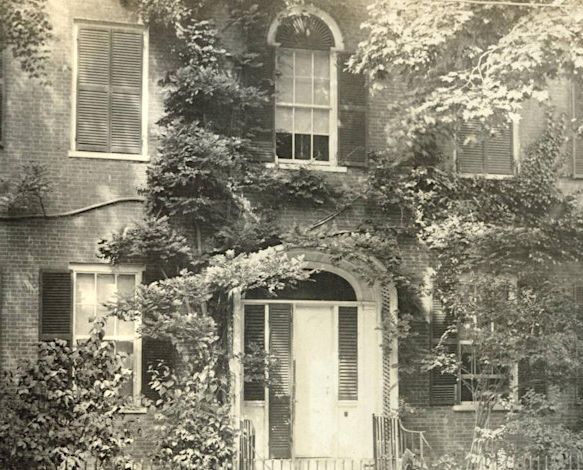
Join us for a walking tour of Newburyport’s architectural styles from the 18th and 19th centuries as found along High Street and the neighborhood near the Museum of Old Newbury.
Tickets Here
| | | |
| |
Saturday & Sunday,
June 7 & 8, 2025
10:00 a.m. - 4:00 p.m.
46th Old Newbury Garden Tour
Enjoy two days of exclusive access to stunning gardens in greater Newburyport.
Tickets here
| | | | |
Save the Date for these Upcoming 250th Events! Click here for more information.
Newburyport’s Road to Revolution Part IV:
Black Newburyporters
Thursday, May 8, 7:00 p.m.
Newburyport City Hall Auditorium - Tickets here
Burying Ground Tour 2: First Parish and Newburyport's Road to Revolution
Saturday, May 10, 10:00 a.m.
First Parish Burying Ground - Tickets here
Newburyport’s Road to Revolution Part V:
Powder & Shot
Thursday, May 22, 7:00 p.m.
St. Paul's Episcopal Church - Tickets here
Walking Tour: Road to Revolution in downtown Newburyport
Saturday, June 14, 10:00 a.m.
at Museum of Old Newbury - Tickets available May 10
Newburyport’s Road to Revolution Part VI:
Bunker Hill - Heroes & Cowards
Thursday, June 18, 7:00 p.m.
at Firehouse Center for the Arts - Tickets here
Burying Ground Tour 3: Sawyer Hill and Newburyport's Road to Revolution
Sunday, June 29, 6:30 p.m.
at Sawyer Hill Burying Ground - Tickets available May 11
| | |
We are SOLD OUT!
Thanks to all of you for your support of the Museum of Old Newbury.
| | |
1770 Newburyport Tea Tariff Protest Revealed
by Bill Quigley
| | |
Document signed by more than 66 Newburyporters on April 6, 1770
The leadership of Newburyport residents protesting hurtful tariffs came to light this spring in the auctioning of a valuable document. Privately owned and absent from the historical record until its emergence for auction by Bonhams, the single-page declaration bears the signatures of more than 66 Newburyporters protesting, in April 1770, tariffs enforced on them by an administration acting in defiance of revolutionary Americans’ understanding of constitutional government.
Though our Museum participated in the bidding, hoping to add the declaration to our collection, the competitiveness of the bidding affirmed the document’s historic value. A collector bought it for $25,000 ($32,000 with the auction premium), more than our Museum could afford, though our community rallied together and raised more than double its estimate. Alas. But, the silver lining is that its existence is now known, and we have digital copies of its front and back sides.
| | |
William Greeno(ugh) wanted his name to be seen.
The declaration’s historical significance is its plain affirmation of swelling dissent among Newburyporters against the increasingly authoritarian rule of the administration in London. Legend has it that John Hancock enlarged his signature on the American Declaration of Independence so that King George III could read it without his spectacles. More than six years earlier, Newburyporters—ordinary townspeople, men and women, alongside leading citizens—boldly signed their names to this declaration of “Subscribers [who] for many obvious and weighty Reasons which is needless to Enumerate do solemnly promise to Engage to and with each other that from this time we will not buy, Sell, or suffer to be consum’d in our Respective Familys any Bohea or other sort of India Tea, until the Revenue Acts so Justly complained of are Repeal’d.”
Seven months earlier, in September 1769, Newburyport had been one of the first towns throughout the Massachusetts province joining in a non-importation agreement—a boycott of British goods—to protest the British government’s draconian enforcement of tariffs on them. In June 1767, Prime Minister Lord North’s administration had determined to make the colonists pay tariffs to defray the cost of Britain’s governance of them. After fiery colonial protests caused that administration to revoke the Stamp Act tax on all paper goods produced in Britain’s American colonies, North’s administration then called for Parliament to impose taxes on numerous goods—including paper, glass, paint, lead, and tea—imported into British American colonies. Faced with protests of those tariffs, the North administration deployed British troops to enforce their collection and demanded that colonists shoulder the expense of that martial law enforcement. Protesters and smugglers alike were denied due process in the courts of their own governments and prosecuted in British military courts.
| | |
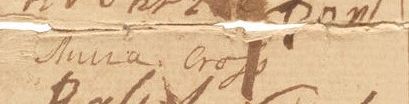
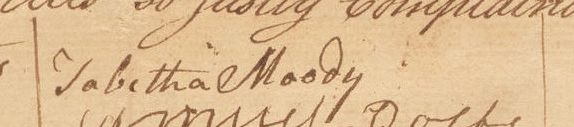
Anna Cross and Tabitha Moody signed.
Resistance to the Townshend Duties (named for the North administration’s chief treasury officer, Charles Townshend) galvanized quickly among residents of Newburyport. Just three years earlier, in 1764, the General Court (legislature) of Massachusetts had recognized Newburyport as a township apart from Newbury, and the townspeople’s newborn self-governance filled them with prideful appreciation of their civic responsibilities and civil rights. Their seaport served much of northern Massachusetts and the colony of New Hampshire, and the North administration’s imposition of tariffs depressed their economy. Moreover, the tariffs struck them as unfairly discriminatory, for they bore on no other British subjects but those in America, and wrongfully imposed without the consent of their elected legislators.
The declaration of more than 66 Newburyporters, pledging their boycotting of tea imported from British East India, is dated April 6, 1770—four and a half weeks after the “Boston Massacre,” when British troops fired on Boston protestors who had taken to throwing ice balls and rocks at them, killing five Massachusetts men. The Newburyporters vowed nonviolent resistance, though, as the course of human events would show, their declaration was neither feckless nor empty and meaningless. The United States of America sprouted from like seeds of democracy throughout the colonies. Some of the first such sprouts took root in Newburyport.
| | |
So did Jane Coombs ...
Town records and history have recorded the townsmen’s vote in March 1770 to boycott imported British tea. Weeks later, on April 3rd, townsmen assembled again in the Market Square Town House, consequent to reports of such tea having been smuggled into town, and appointed a 10-man Committee of Inspection authorized to police the town’s resolve “entirely to refrain from the use of all India Teas of what kind or name so ever.” Violators were to be publicly named, such “that they may be known & avoided as if Pests of Society & Enemies of the Country.”
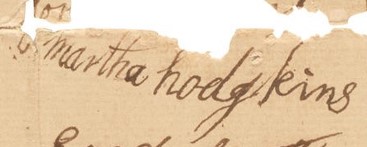
This April 6th declaration, though, is the first extant evidence of that resolution’s execution by the people of the town. And, as the Museum’s executive director, Bethany Groff Dorau, points out, its actors included women! Rarely were women so openly involved in 18th-century colonial American political affairs. Among the 60 signatures fully legible on the declaration are those of four women: Anna Cross, Jane Coombs, Tabitha Moody, and Martha Hodgkins.
| | |
...and Martha Hodgkins.
Also among the signatories are two sons of Eleazer Johnson, the leader of Newburyport’s tea party. Legend has it that Johnson, owner of a Newburyport shipyard, led a band of ship builders that burned imported tea in Market Square sometime before the Boston Tea Party of December 16, 1773, though town records show that their protest occurred in the winter of 1774. Signing this declaration in April 1770, Johnson’s eldest son, 27-year-old William Pierce, and his second-born, 26-year-old Joseph, resolved to refrain from using British India tea along with their 27-year-old cousin, Daniel Johnson, son of Eleazer Johnson’s eldest brother, the Rev. William Johnson, Jr.
Two signatories were men who would later serve in the town’s revolutionary Committee of Safety: Capt. Jonathan Greenleaf and Edward Harris. Together with Tristram Dalton, Greenleaf and Harris would address a special town meeting on March 9, 1774, calling for the town to censure Eleazer Johnson and company’s “ill advise[d] & precipitate conduct.” In the Boston Tea Party’s turbulent wake, they had not seized the British India tea from importers or smugglers but from its impoundment by the revolutionary Committee. The townsmen unanimously scorned their misdirected action as “by no means Justifiable.”
| | |
Jonathan Greenleaf and Edward Harris later served on the town's Committee of Safety.
But Newburyporters united against tyranny. It’s likely that other Newburyporters signed declarations such as this one, but they have not surfaced. Even this exceptional artifact is missing the signatures of about half a dozen people who signed its lower right-hand corner, somehow torn away and lost to history. But, in this 250th-anniversary year of the American Revolution’s onset, this remarkably preserved paper testifies to the boundless aggregate power of the people.
| | |
The Mysterious Deck Fragment of the John N Cushing
by Bethany Groff Dorau
| | |
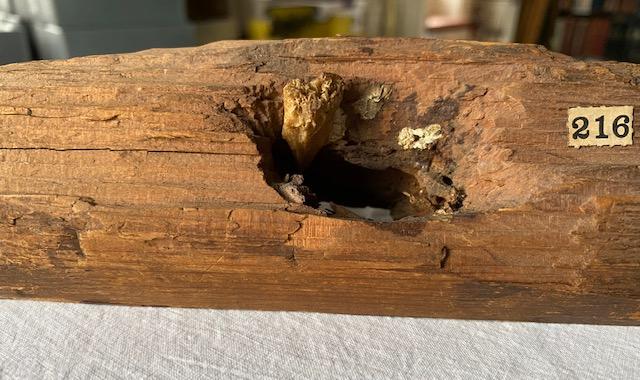
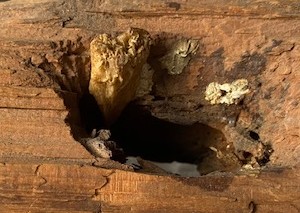
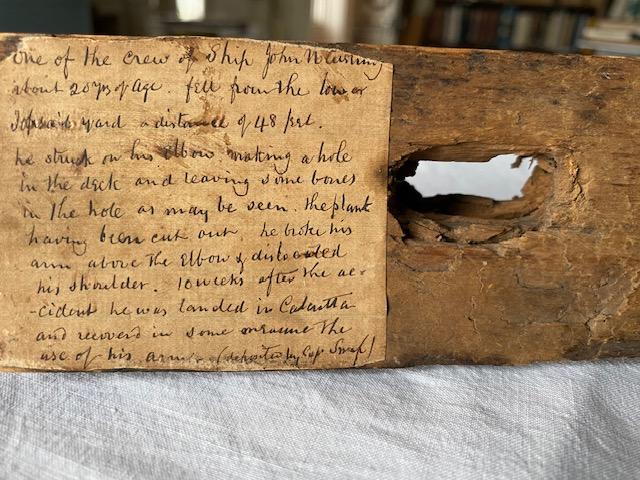
Some of you you may recall when I first came to this museum, I enthusiastically claimed that one could find a fingerbone here somewhere (read that lie here). Well...fingerbone, no. Arm bone, yes.
This inconspicuous piece of wood has a mysterious (and a bit gruesome) history.
The card tacked to the back of this piece of wood tells the tale.
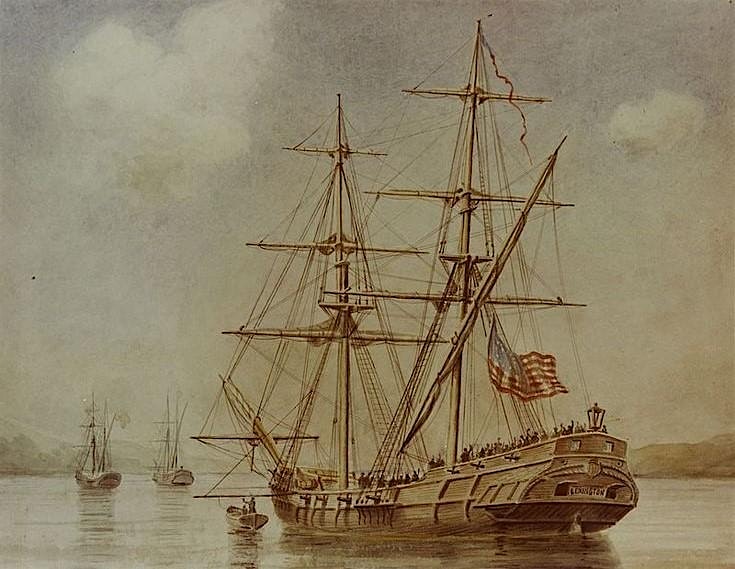
"One of the crew of the Ship John N Cushing about 20 years of age fell from the lower topsail yard, a distance of 48 feet. He struck on his elbow, making a hole in the deck and leaving some bones in the hole, as may be seen, the plank having been cut out. He broke his arm above the elbow and dislocated his shoulder. 10 weeks after the accident, he was landed in Calcutta and recovered in some measure the use of his arm."
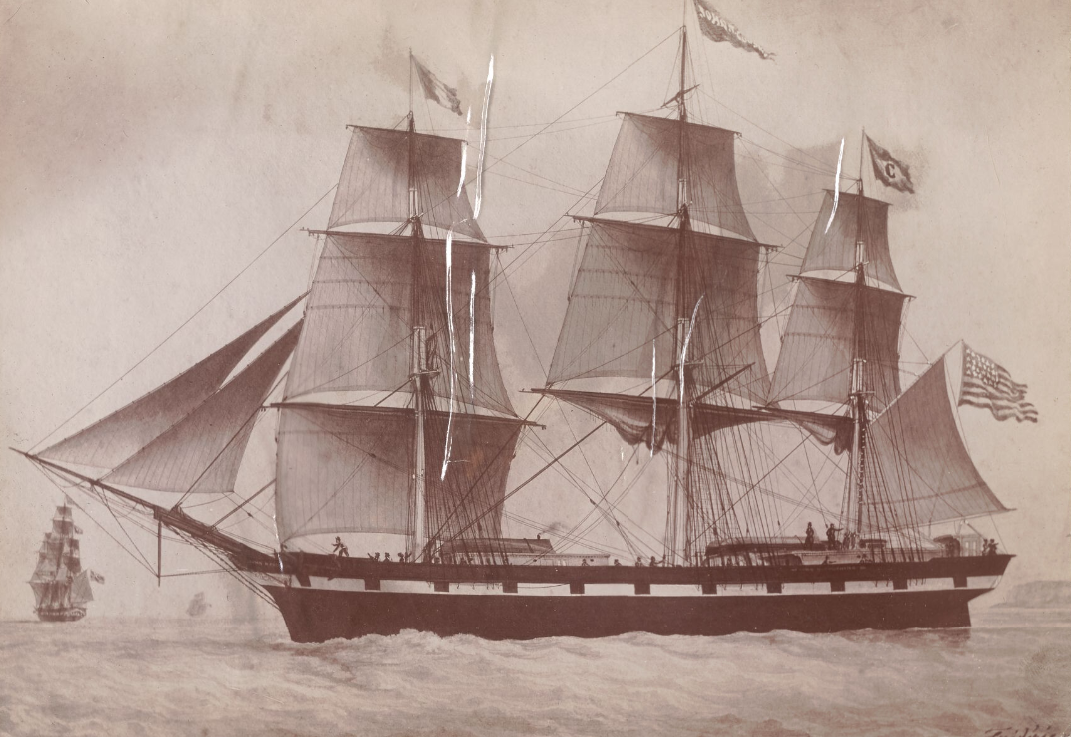
This piece of the deck with a shard of bone firmly embedded, passed to the Newburyport Marine Society after the death of William H. Swap in 1882 in Manila. He had been captain of the John N Cushing.
We are desperately curious to know whose arm bone this is, and what became of this young man. There is no mention of this incident in the newspapers that we can find, and without a year given, it is hard to find logs of crew lists. The vessel was known to have sailed from 1853 through 1867. Any clues would be most welcome!
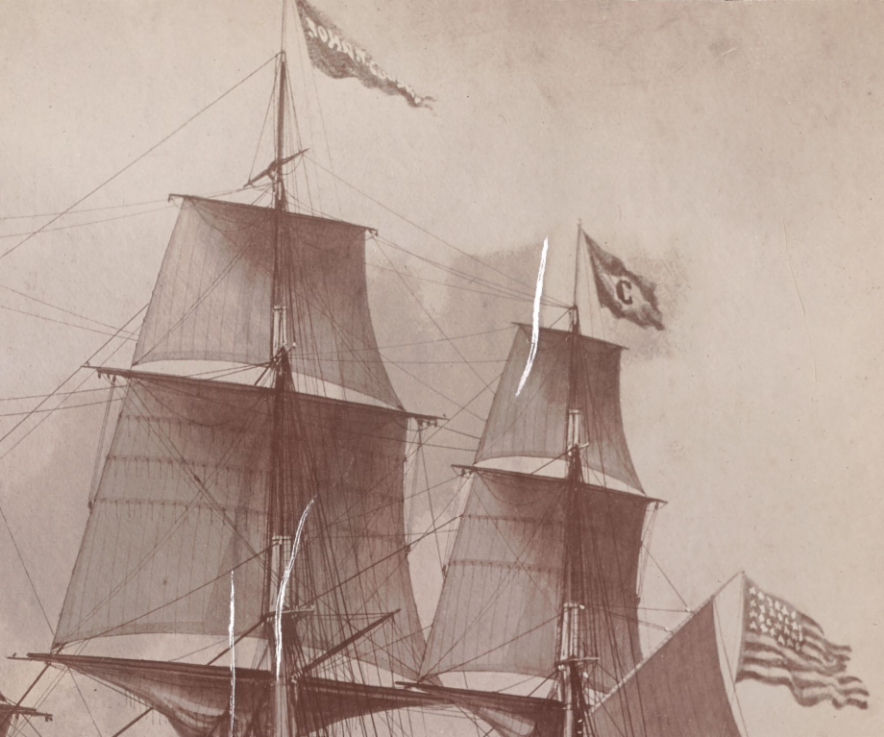
| | This photograph of a print of the ship John N Cushing is in the collection of the Museum of Old Newbury. The flags tell us the ship's name, identify the owners (C for Cushing), and tell you the nationality of the vessel. | | Something Is Always Cooking... | | |
Orange Poppyseed Tea Cakes
Ingredients
- 1⁄2 cup unsalted butter, softened
- 3⁄4 cup granulated sugar
- 1 tablespoon fresh orange zest
- 2 large eggs
- 3⁄4 teaspoon orange extract
- 1⁄8 teaspoon vanilla extract
- 1 cup plus 2 tablespoons cake flour
- 1⁄2 tablespoon poppyseeds
- 1⁄8 teaspoon baking powder
- 1⁄8 teaspoon fine sea salt
- 1⁄16 teaspoon baking soda
- 1⁄4 cup heavy whipping cream
- Orange Glaze (3⁄4 cup fresh orange juice, strained of pulp, 3⁄4 cup sugar)
- Garnish: 24 dried apricot roses (roll dried apricots with a rolling pin until thin, then assemble a "rose" by winding the thin strips into a spreading circle)
Directions
- Preheat oven to 375°. Spray a mini muffin pan with cooking spray with flour or grease and flour.
- In a large bowl, beat together butter, sugar, and orange zest with a mixer at medium speed until light and fluffy, approximately 3 minutes. Add eggs, one at a time, beating well after each addition. Beat in extracts.
- In a small bowl, whisk together cake flour, poppyseeds, baking powder, salt, and baking soda until combined. Add to butter mixture alternately with heavy cream, beginning and ending with flour mixture, beating at medium-low speed.
- Using a 2-teaspoon levered scoop, drop 2 scoops batter into prepared wells. Lightly tap pan on countertop to settle batter and release air bubbles.
- Place pans in oven and immediately reduce oven temperature to 350°.
- Bake until edges are light golden brown and a wooden pick inserted in centers comes out clean with a few crumbs sticking to it, 7 to 9 minutes. (Don’t overbake, or tea cakes will be dry.) Carefully transfer tea cakes to wire cooling racks. Let cool completely. Store in an airtight container with layers separated by wax paper until ready to glaze.
- Quickly dip tea cakes into glaze, and transfer to wire racks. Serve within 4 hours, or place in an airtight container, refrigerate, and serve within 2 days.
- Just before serving, garnish with a dried apricot rose, if desired.
Enjoy!
| | |
Click the image to do the puzzle
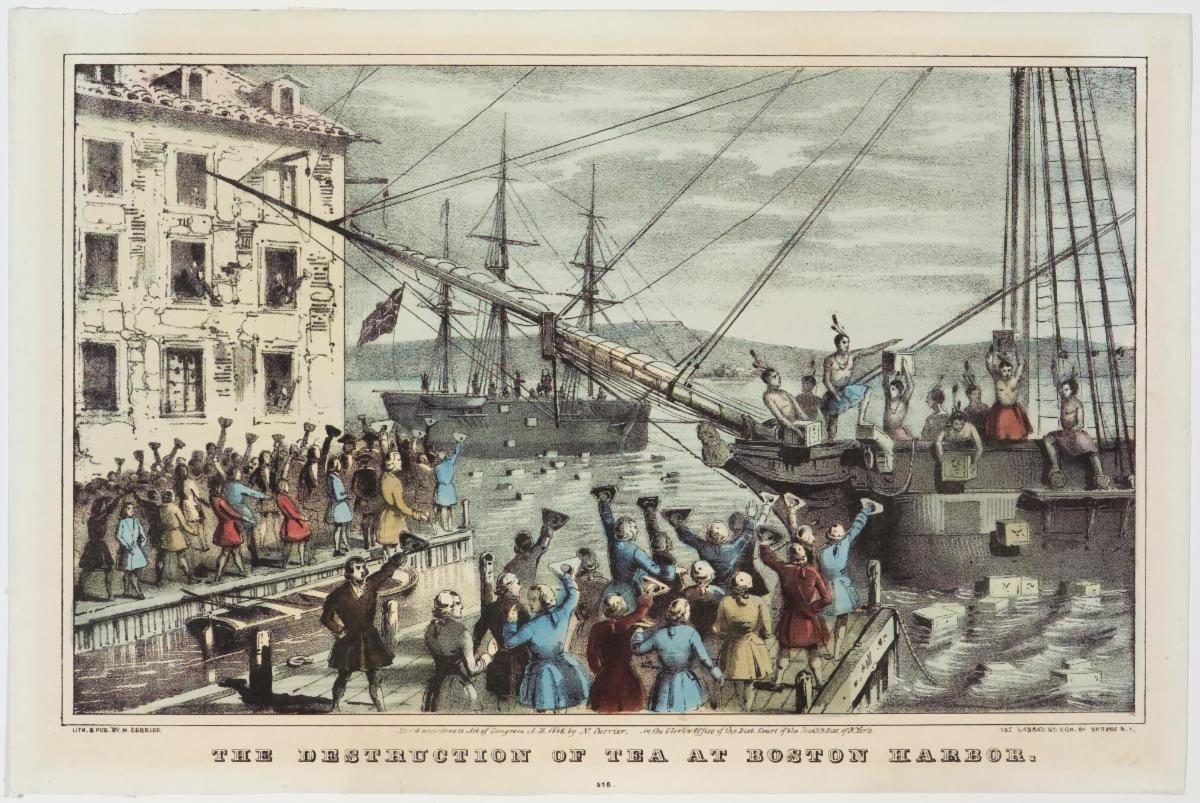
The Destruction of Tea at Boston Harbor, by Nathaniel Currier, printed in 1846.
| | |
Museum e-Newsletter made possible through the
generosity of our sponsors:
| | | | | |