e-Newsletter | August 15, 2025 | | |
Enemy in the City: Dalton Diary Details the Burning of Washington, D.C.
by The MoON Interns
| | |
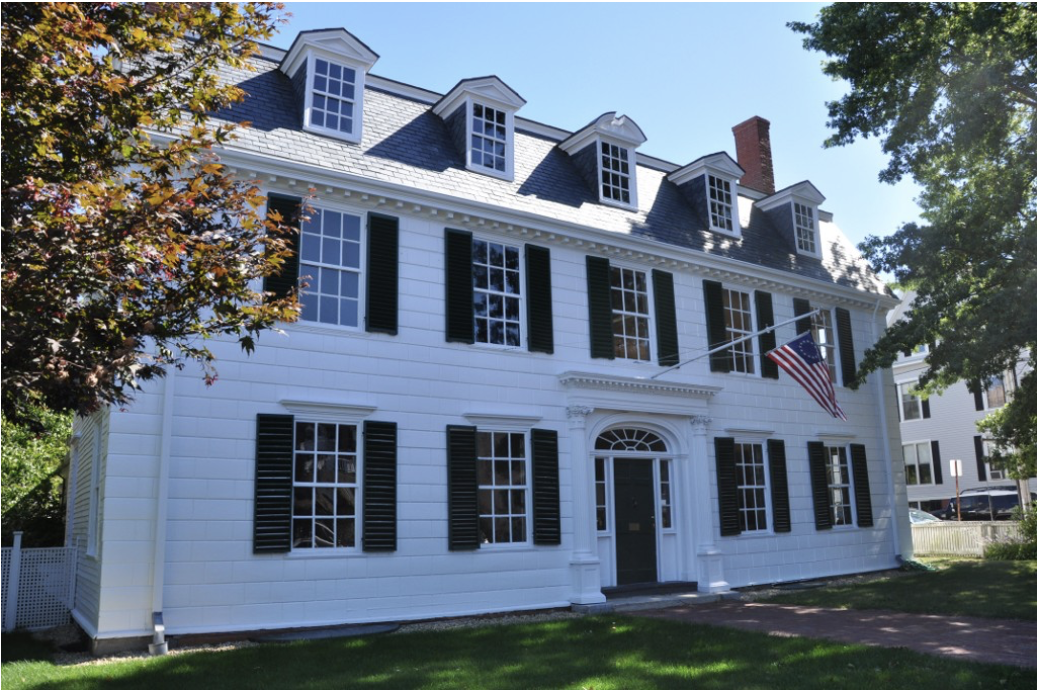
The Dalton House, c.1746 on State Street in Newburyport
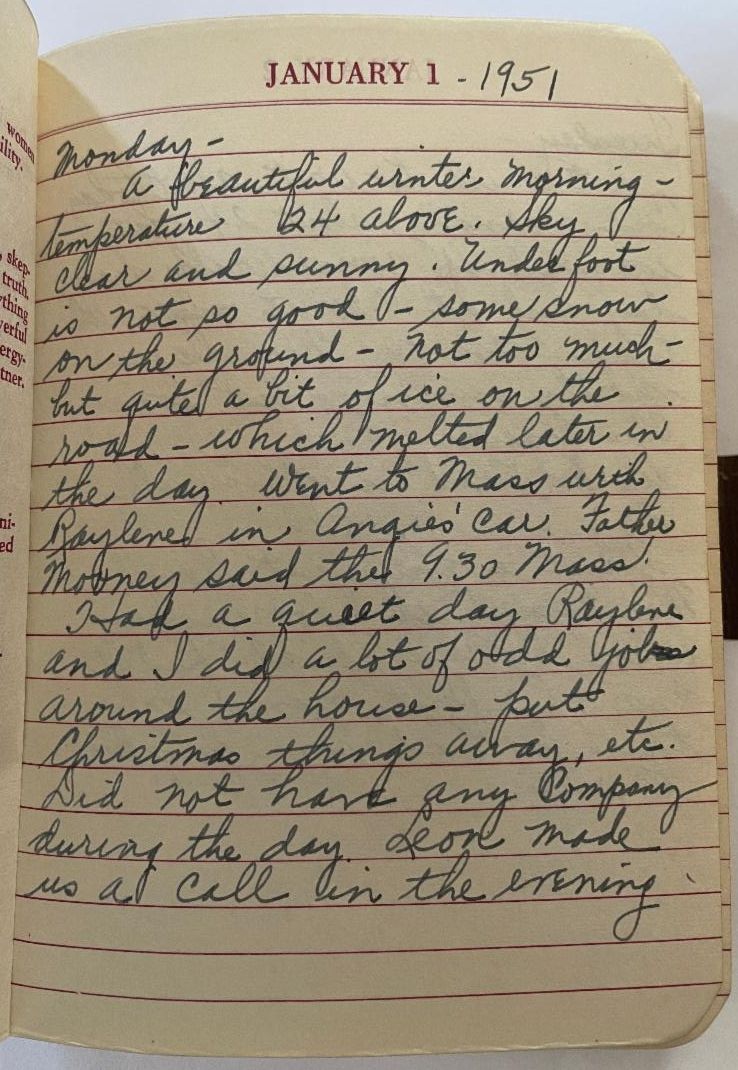
Hello again! Some of you may remember us interns–Annabelle, Lilly, and Ella–from last summer, and our series of articles on Ruth Graves. We’ve added some new friends to our group - Freddy, Melina, and Oliver, this summer, and we are back with another fascinating story from what we have been working on this summer. We’ve spent most of the summer in the new Perkins Art and Research Center! In addition to reading many many more Graves’ family letters with the other interns and volunteers, the three of us have also been reading and transcribing the diaries of Mary Dalton White (1771-1839) and Ruth Hooper Dalton Deblois (1767-1827).
Continued below Museum events...
| | More Upcoming Museum Events | |
| |
June to October, 2025
Thursday-Sunday
11:00 a.m. to 5:00 p.m.
Museum of Old Newbury Guided Tours
Take a tour through this 1808 Federal mansion, containing art and artifacts from the past four centuries. Hear the story of Old Newbury and the growth of Newburyport.
Tours on the hour, last tour at 4 p.m.
Tickets here
| | | |
| |
Sunday, August 24, 2025
10:00 a.m.
Architectural Walking Tours: Newburyport’s Fashionable Old Houses
Join us for a walking tour of Newburyport’s architectural styles from the 18th and 19th centuries as found along High Street and the neighborhood near the Museum of Old Newbury.
Tickets here
| | | |
| |
Sun, August 24, 2025
4:00 p.m.
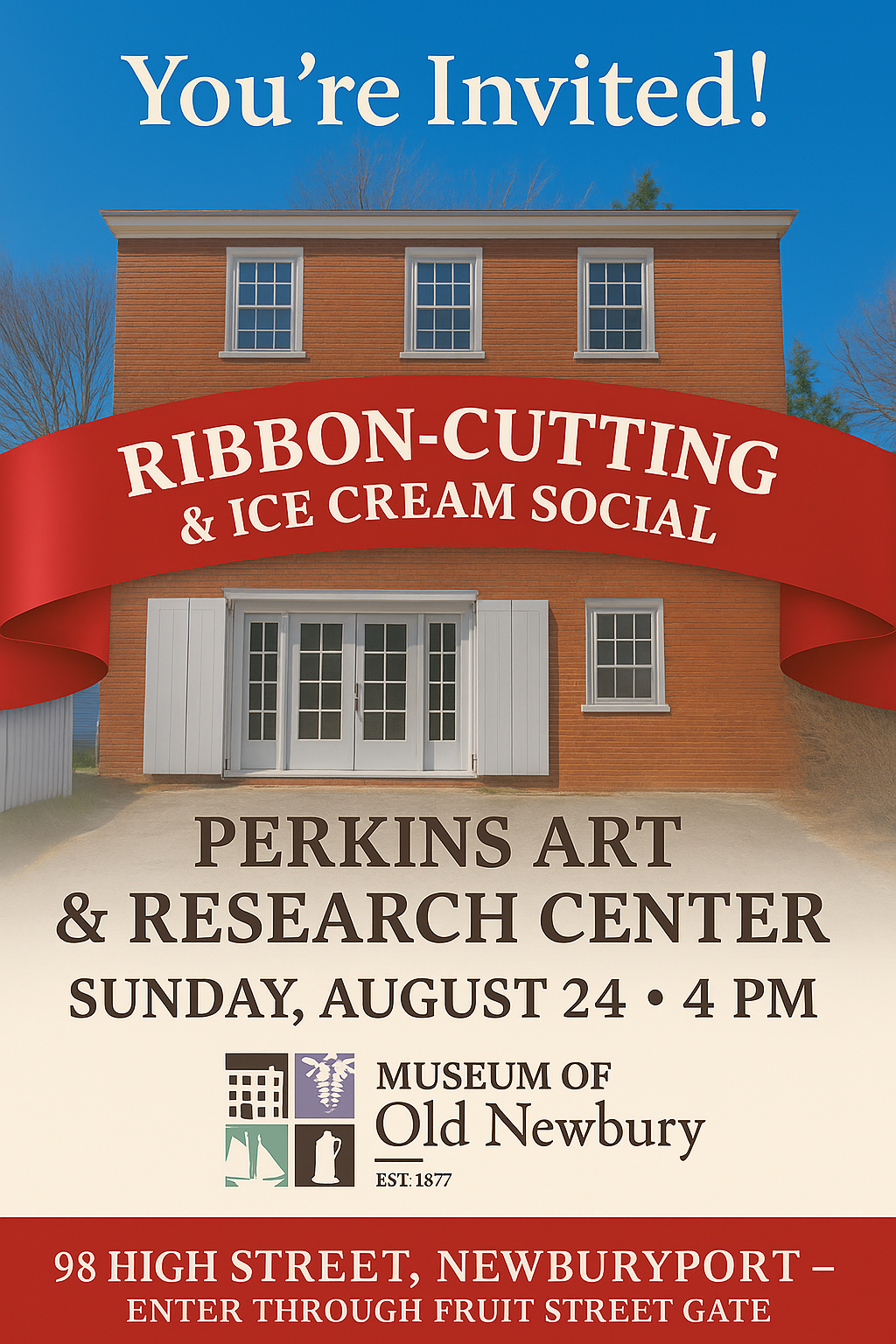
Party for Perkins! Grand (re)Opening, Ribbon-Cutting and Ice Cream Social!
The historic 1808 Perkins building has lived many lives—and now it begins an exciting new chapter! You're invited to join us as we celebrate its grand (re)opening as the Perkins Art & Research Center.
This is your chance to see how history, art, and community come together under one roof.
For More Info
| | | |
| |
Wednesday, September 10, 2025
6:30 p.m.
New Acquisitions for Old Newbury: 2025 Member Reception and Annual Meeting
Join us for an exciting evening at the New Acquisitions for Old Newbury event! This is your chance to connect with fellow members and celebrate our organization's achievements over the past year.
We will gather to reconnect with friends and neighbors who share our passion for preserving the rich history of the Newburys.
Please note: This event is free for members, but registration is required as space is somewhat limited. Please reserve your place by registering here.
For Tickets
| | | |
| |
Friday, September 12, 2025
6:30 p.m.
Miniature Painter Revealed: Amalia Kussner and the Gilded Age
Join author and historian Kathleen Langone for a richly illustrated lecture on the life and work of Amalia Kussner, one of the most celebrated miniaturists of the Gilded Age—and discover her surprising connections to Newburyport’s own renowned portrait miniaturist, Laura Coombs Hills.
For Tickets
| | | |
| |
Friday, September 19, 2025
7:00 p.m.
Nbpt's Revolution: Through a Howling Wilderness: 1775 March to Quebec
Exactly 250 years to the day after Benedict Arnold led his troops out of Newburyport, join us for a captivating lecture by historian and author Tom Desjardin on one of the most extraordinary—yet often overlooked—episodes of the American Revolution.
For Tickets
| | | | |
Enemy in the City: Dalton Diary Details the Burning of Washington, D.C.
By: The MoON Interns
| | |
Hello again! Some of you may remember us interns–Annabelle, Lilly, and Ella–from last summer, and our series of articles on Ruth Graves. We’ve added some new friends to our group - Freddy, Melina, and Oliver, this summer, and we are back with another fascinating story from what we have been working on this summer. We’ve spent most of the summer in the new Perkins Art and Research Center! In addition to reading many many more Graves’ family letters with the other interns and volunteers, the three of us have also been reading and transcribing the diaries of Mary Dalton White (1771-1839) and Ruth Hooper Dalton Deblois (1767-1827).
Mary and Ruth were the daughters of Tristram and Ruth (Hooper) Dalton. Tristram Dalton was a prominent Newburyport businessman and United States senator. The Daltons were one of the wealthiest families in Newburyport, but lost much of their fortune and Tristram Dalton spent the remainder of his career as a clerk in the Boston Customs House. The Dalton daughters detail this in their diaries, listing their father’s debtors and describing his several nights in jail for his debt. In the diaries they often detail the events of their day, who they visited, and what letters they received.
Both of Dalton's daughters married in their early twenties. Ruth wedded Lewis Deblois, from a prominent loyalist family in Boston, in 1789, and Mary married Leonard White of Haverhill in 1794.
| | |
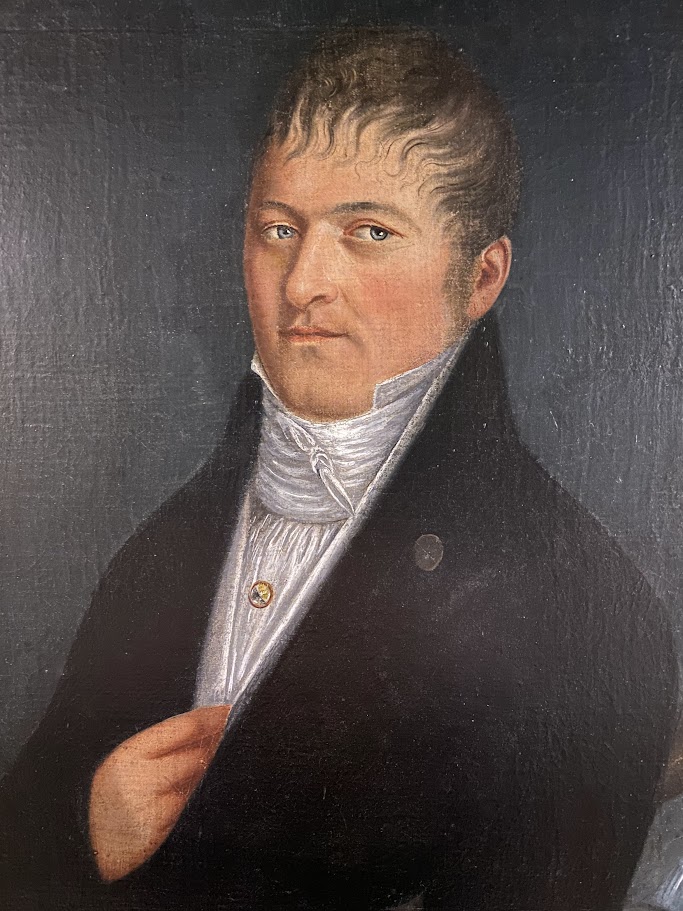
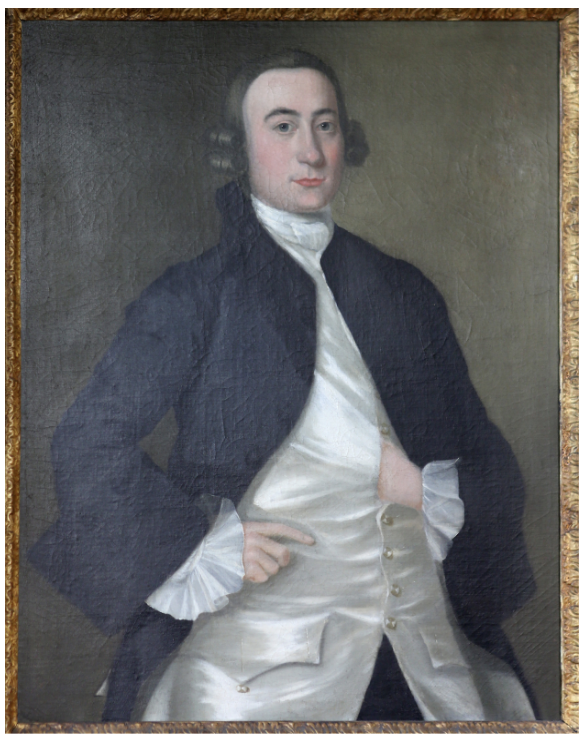
Portrait of a young Tristram Dalton of Newburyport, Massachusetts, painted between 1750 - 1758 by Joseph Blackburn
One of the Daltons’ most interesting qualities was their prominent connections. Tobias Lear (1762-1816), the personal secretary to President George Washington, was often in communication with Tristram for business matters. Along with many other notable figures, John Quincy Adams also befriended the family when he stayed in Newbury clerking for Theophilus Parsons in 1785. An 18-year-old John Quincy Adams writes about Ruth Dalton in his diary dated October 18, 1785, rudely noting: “His eldest Daughter, Ruth, is the fattest Person of her age I ever saw. Moderately speaking I suppose, her circumference equal to her height, and she is not short. She is but little turn'd of 18 years. Mr. Dalton has three other Daughters, one of whom is unwell. I have not for a long while seen a family, that has struck me so agreeably….” (Diary of John Quincy Adams, Volume One)
| | |
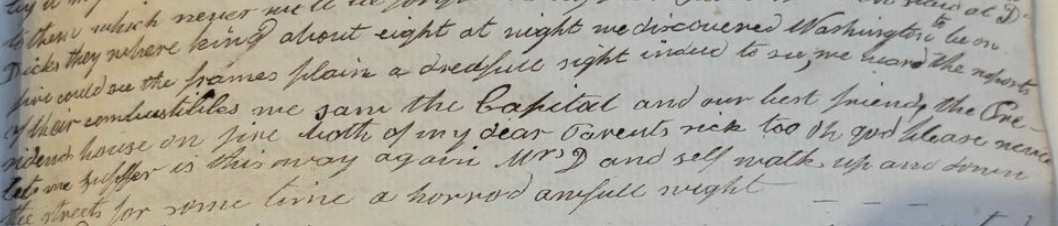
Diary entry of Ruth Dalton White detailing the burning of Washington
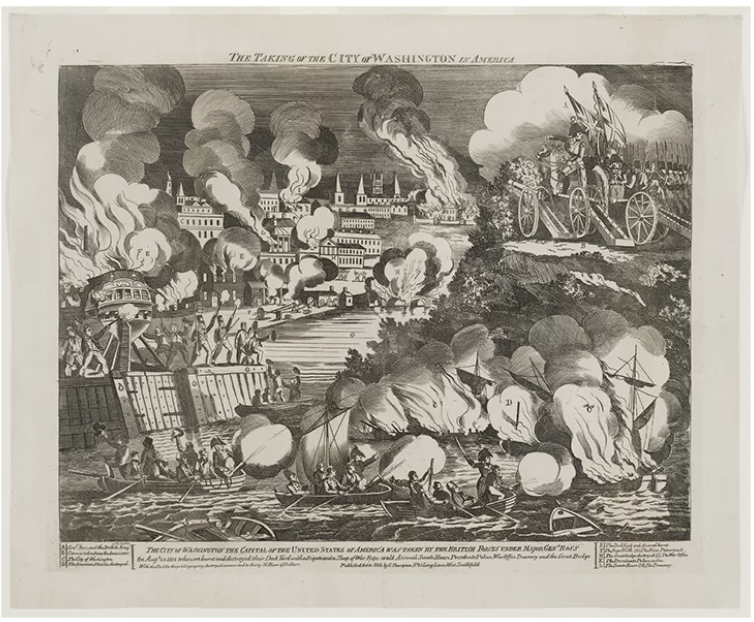
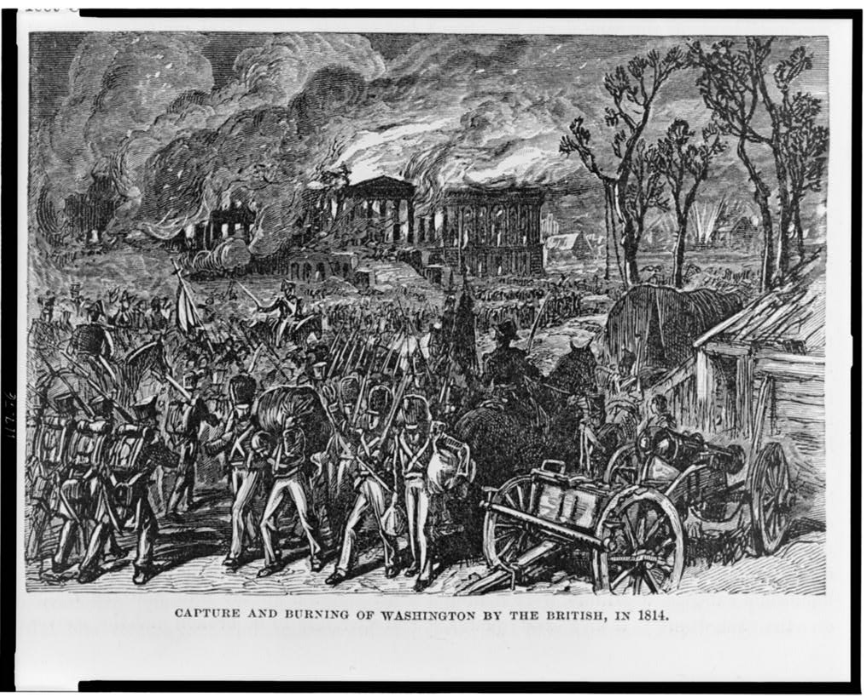
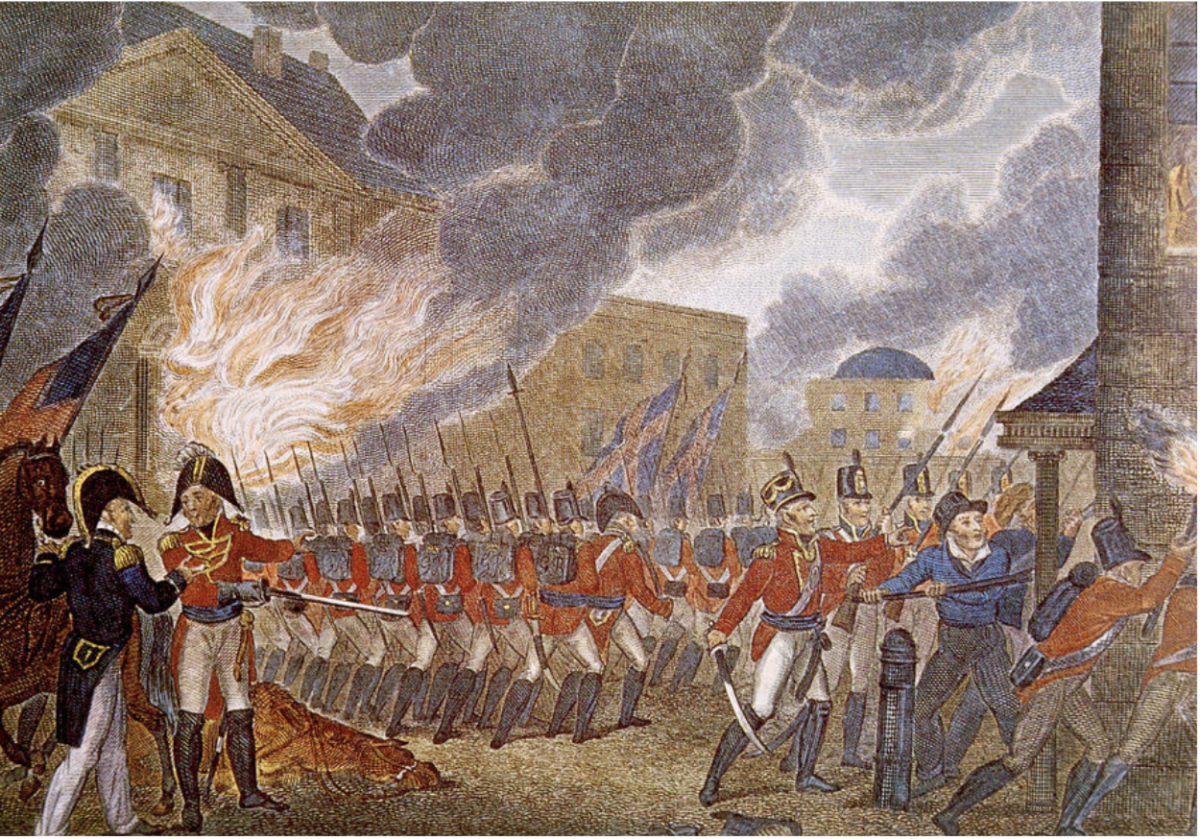
These diaries open a window into the lives of women in early American society. Today, we’d like to highlight several entries written during Ruth Dalton’s time living around Washington DC, alongside her parents. The daughters greatly admired Dolly Madison and frequently recount their interactions with the Madisons. The Dalton daughters lived in DC during the War of 1812. During the early 19th century the US and UK faced conflict about trade, westward expansion, even the ownership of Canada. Provoked by the UK blockade, impressment of US sailors, and British support of Native American tribes, the United States declared war on the UK on June 18, 1812. In August of 1814, Washington DC was burned on the order of British Admiral Cockburn in retaliation for the American siege of York, Canada a year prior.
The war touched those the Dalton family personally knew. Ruth copies a letter detailing the death of Henry S. Langdon, a young sailor from Portsmouth, NH on April 7, 1814, during an altercation between the USS Wasp and HMS Reindeer. She writes: “...Henry S Langdon - who was shot in the engagement between the Wasp & Reindeer and died … sweet youth my heart bleeds for thy parents for this irreparable loss for myself I mourn the deprivation of a sweet young friend…”
| | |
Depiction of the Burning of Washington. West Smithfield, [London] : Published by G. Thompson No. 43 Long Lane, 1814 Oct. 14. Library of Congress
On August 25, the British troops move into their town and Ruth writes of their interactions with the British Admiral Cockburn, the one responsible for the siege. After waving a flag of truce that happened to be a white handkerchief belonging to Ruth, the British promise that “they would not injure the town if there was no resistance.”
While we know from other historical records that it was the actions and orders of the British, led by Admiral George Cockburn, that resulted in the burning of Washington, that information has not yet reached Ruth and her family. Instead, Ruth details the serious rumors that, as it appears from her diary entry, seem to be from the British giving their own version of events to the town: “they say the President's house the Capitol and the war and the [treasure officers] and the ropewalks indeed all the public buildings our navy yard was [destroyed] by the order of our officers on learning that the enemy was in possession of the City.” According to the rumors that Ruth relies on, due to the scarcity of information, it is the United States and not the British who have burned the capital. Later that day she writes of how “we heard the disgracefull news that … our men had retreated.” Ruth further shares her strong feelings, colored by the influence of false information, about who the fault of the events should fall upon: “our commanding officeres they are much to blame general Armstrong and Winder are considered to be traitors they aught to be hung.” Ruth notes in her diary however that: “[some] blames the President I am no juge but if I thought he was I never would mention it (as) he is a dear friend to us.” Their favor to the Madisons remains throughout the war.
| | |
1876 drawing / Library of Congress
The Dalton daughters witnessed history unfold before their eyes and luckily detailed their findings for us to read years later. This August marks the 211 anniversary of the Burning of Washington DC, an event that shaped this family and their perspectives on life. These diaries are just some of the fascinating items we have in the MOON’s collection! We look forward to uncovering more stories as we explore the treasures in the Perkins Art and Research Center!
| | Community Treasure: The Archival Collections at the Museum of Old Newbury | | |
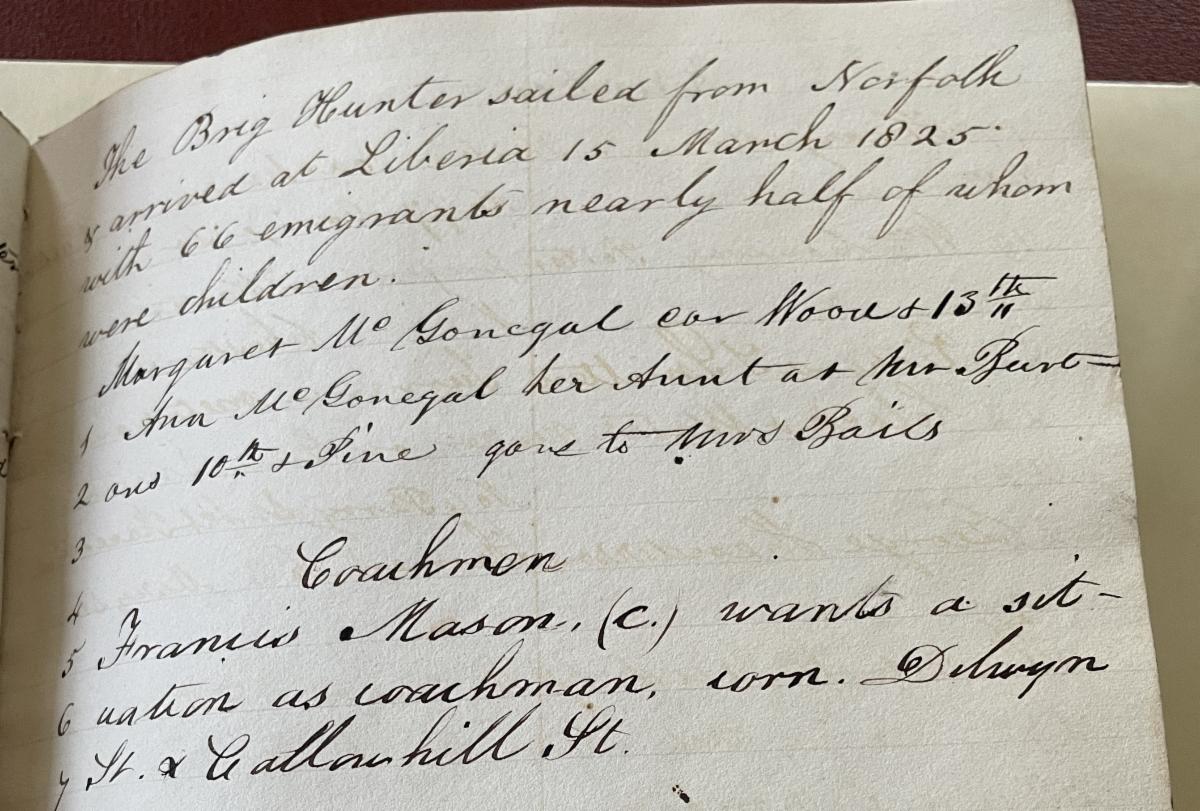
At the Museum of Old Newbury, our mission is simple: to collect, preserve, and share the stories of Newbury, Newburyport, West Newbury, and the surrounding region (by which we mean...Byfield). That mission lives in our collections—an extraordinary archive of more than 100,000 books, documents, and artifacts that capture centuries of local history.
These materials range from the earliest printed works in Newburyport to family papers, ship logs, diaries, photographs, maps, and ephemera. They are not only treasures for researchers but also windows into the everyday lives, triumphs, and challenges of the people who shaped our community. Many of these items are fragile—daguerreotypes, albumen prints, early town records, pamphlets, and broadsides—and require careful storage to ensure they can be enjoyed for generations to come.
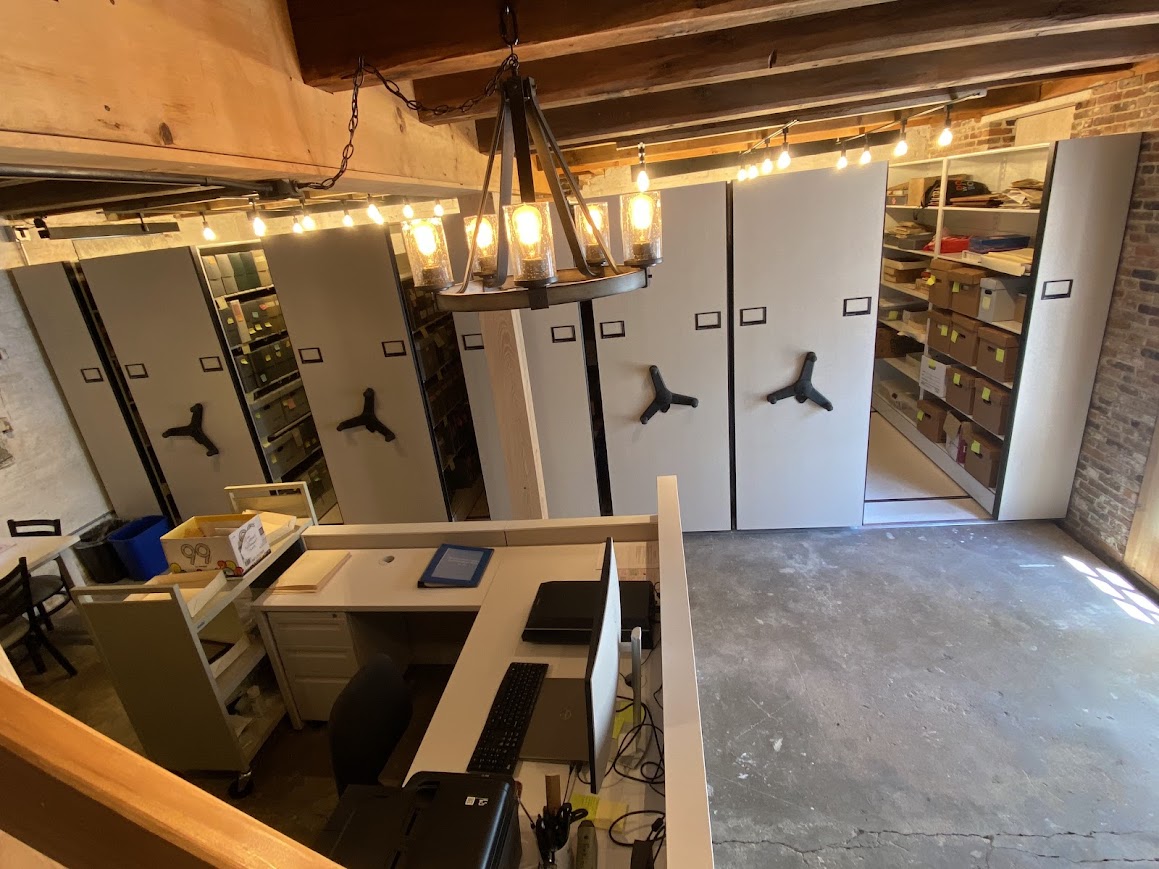
Enter...the Perkins Art & Research Center. This installation, which will finally preserve and store our world-class collection, is the culmination of many years of preservation and study at the museum, however, beginning with the foundation of the Antiquarian and Historical Society of Old Newbury in 1877 and, in recent years, with the investment in the services of a professional archivist, Sharon Spieldenner, by former executive director Susan Edwards with generous support from Alice and Thom Gould.
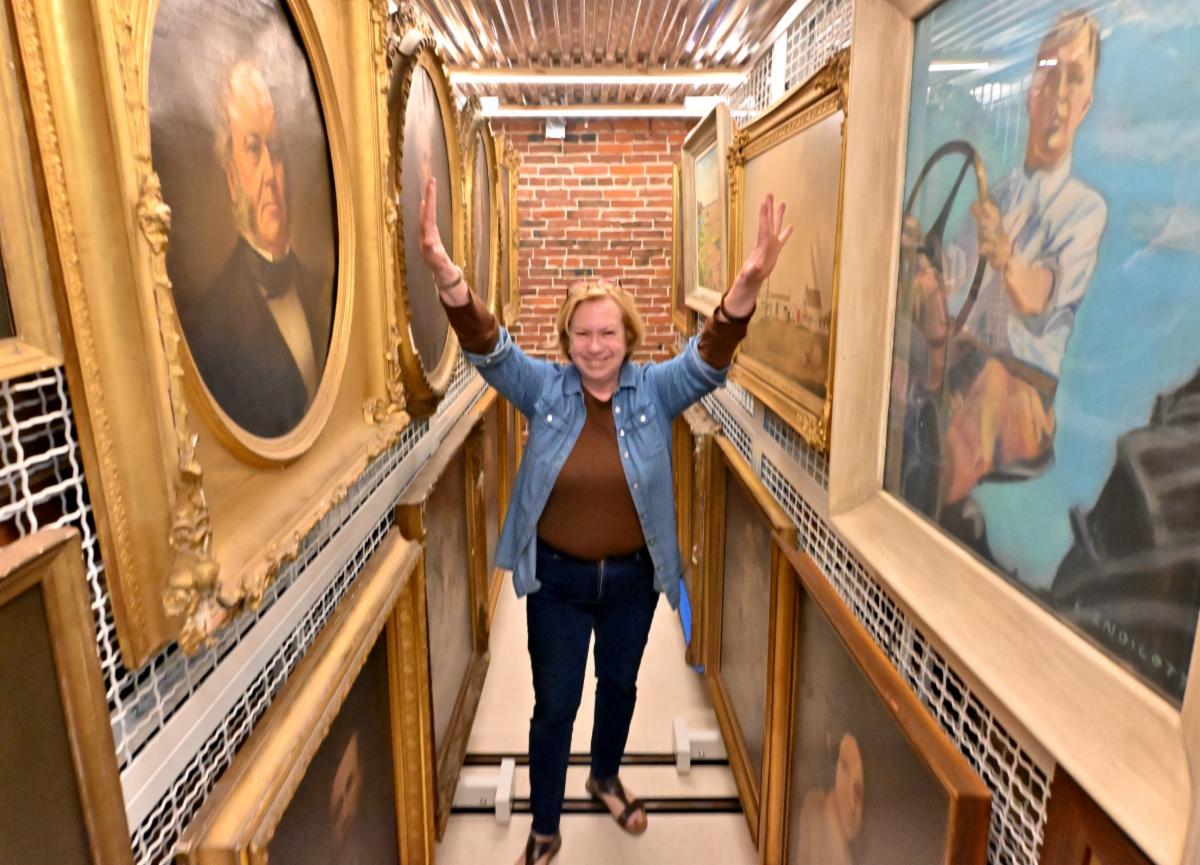
| So what is in these fancy rolling shelves exactly? Well, thanks to years of careful organizing (though we have much more to do), here are some highlights. | | |
Our holdings feature works connected to some of Newburyport’s most celebrated citizens. One highlight is a small but fascinating collection from poet Hannah Flagg Gould (1789–1865), including her 1822 booklets Epitaphs on Friends, Newburyport. These humorous verses offer a playful glimpse into the personalities of local notables—Gould included.
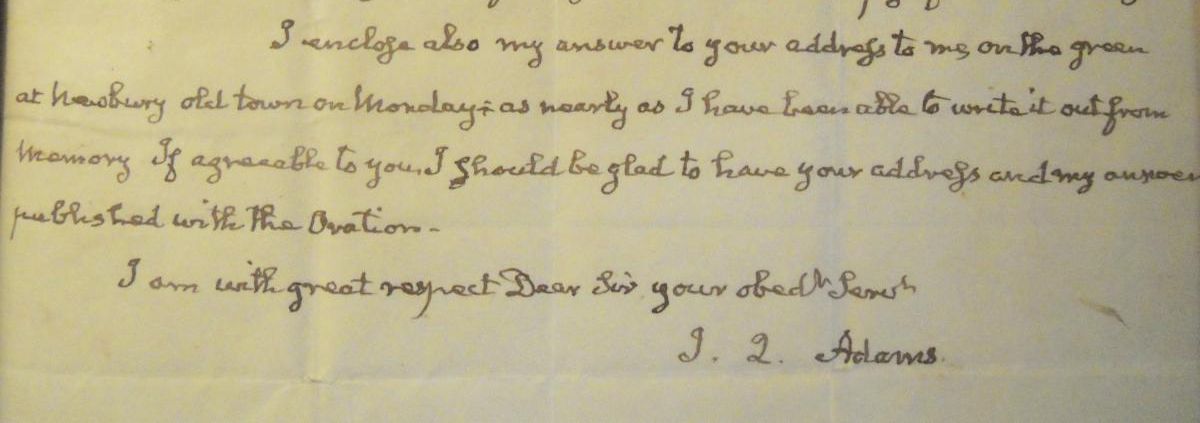
We also hold the handwritten Oration Address of John Quincy Adams, delivered during a July 4, 1827 visit to Newburyport. Adams, who studied law here under Theophilus Parsons from 1787 to 1789, returned decades later to address the town’s citizens. The address, along with several letters, provides an intimate link to one of America’s most important statesmen.
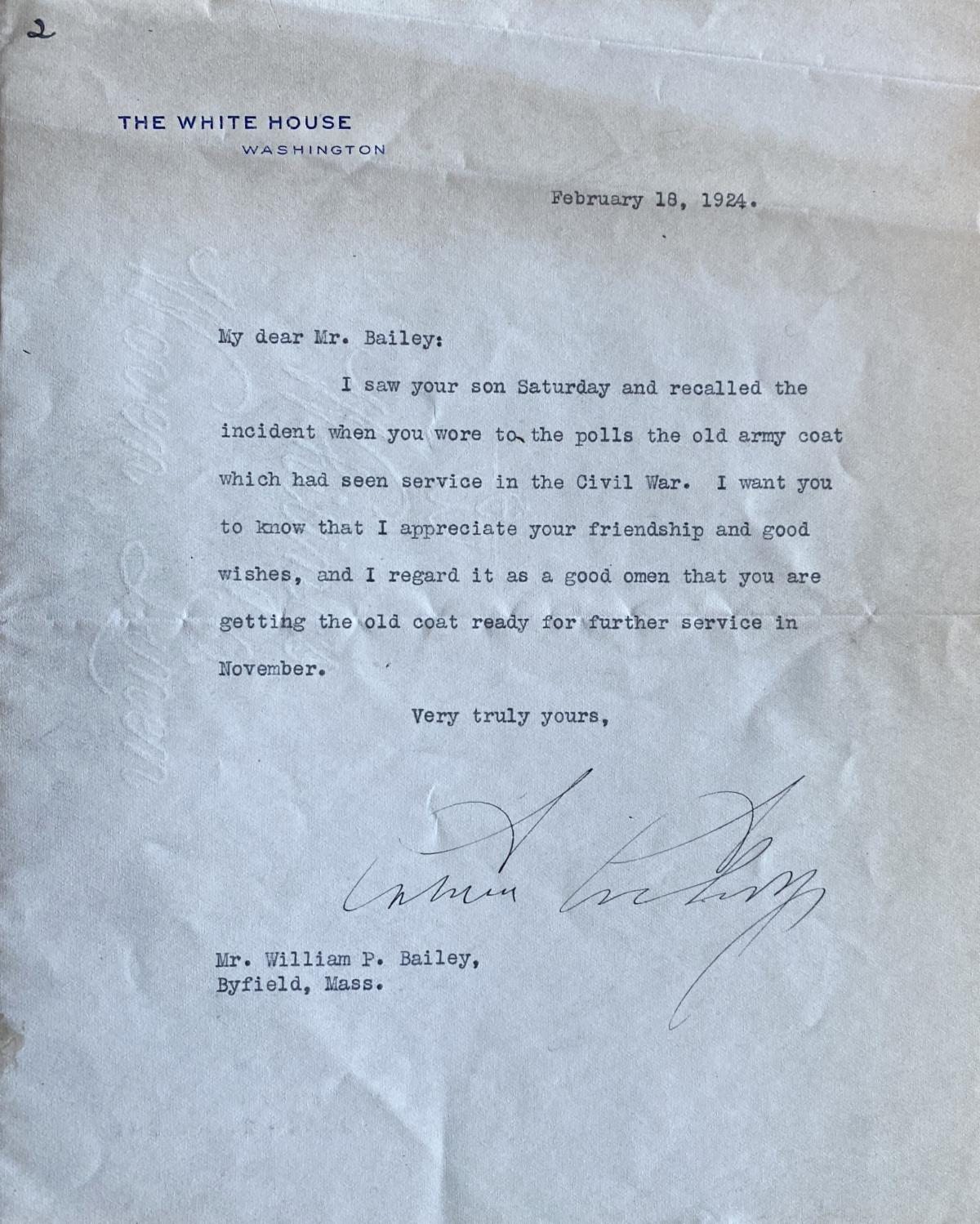
In the realm of presidential history, our archives preserve a 1924 signed letter from Calvin Coolidge to William P. Bailey of Byfield—just one example of the unexpected treasures you can find in our files.
| |
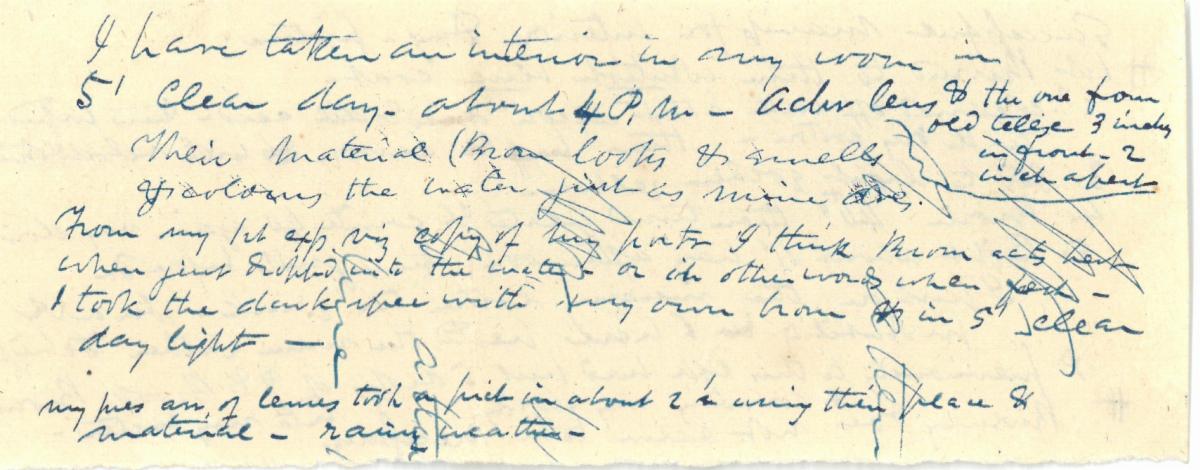
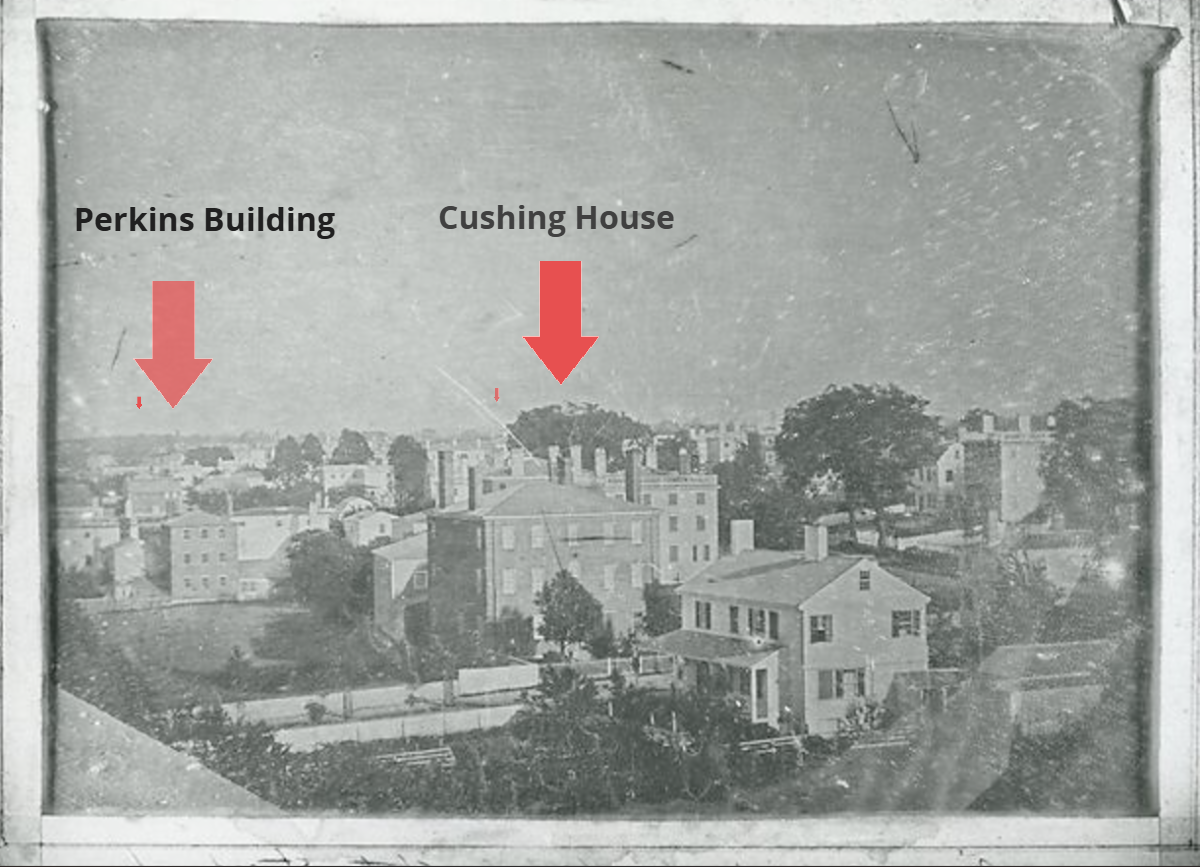
One of our most significant collections centers on Dr. Henry Coit Perkins (1804–1873), a Newburyport native, Harvard-trained physician, scientist, and pioneer of early photography. Born in the Old Wolfe Tavern, Perkins witnessed the Great Fire of 1811 as a young boy—a vivid memory he later shared with his biographer.
Perkins’s scientific interests ranged from chemistry and geology to atmospheric studies, but his experiments with photography in 1839 stand out. The Museum of Old Newbury holds his original plates, the earliest photographic records of the city. The Perkins Collection also includes personal correspondence, essays, medical notes, and scientific publications, offering unparalleled insight into a brilliant 19th-century mind.
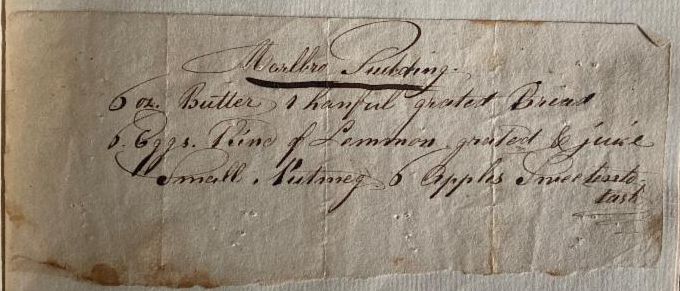
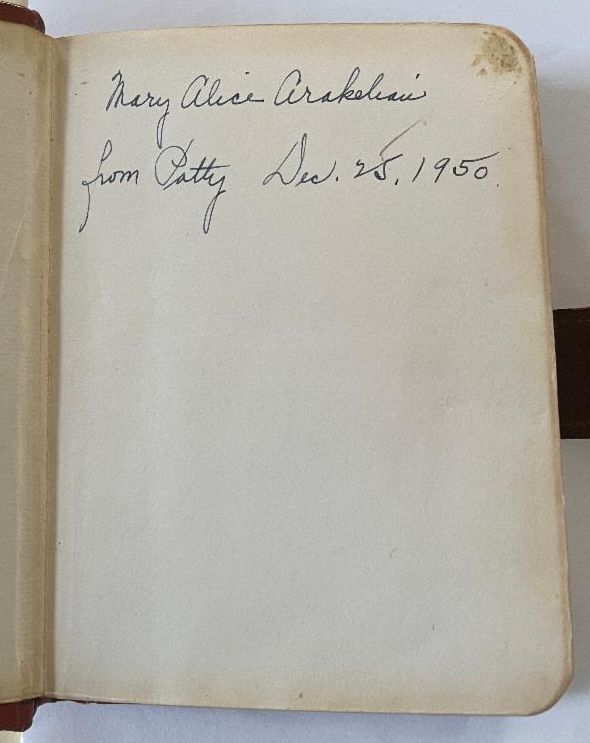
| Not all our treasures are political speeches or technical records. Domestic life is richly represented, too—perhaps most charmingly in Our Dear Mother’s Receipt Book (1784–1855). Possibly belonging to Mary A. White, this handbound volume contains recipes for puddings, cakes, gingerbread, and even a home remedy for consumption. Tucked among the pages is an “infallible” method for cleansing bedsteads—domestic wisdom from another era. | | |
Our region’s maritime legacy is preserved in collections like the Union Marine and Fire Insurance records (1793–1814), which document policies, claims, and protests, including incidents involving French and British privateers. One 1810 case involves the schooner Humming Bird, accused of insurance fraud and deliberate sinking—a dramatic chapter in local shipping history.
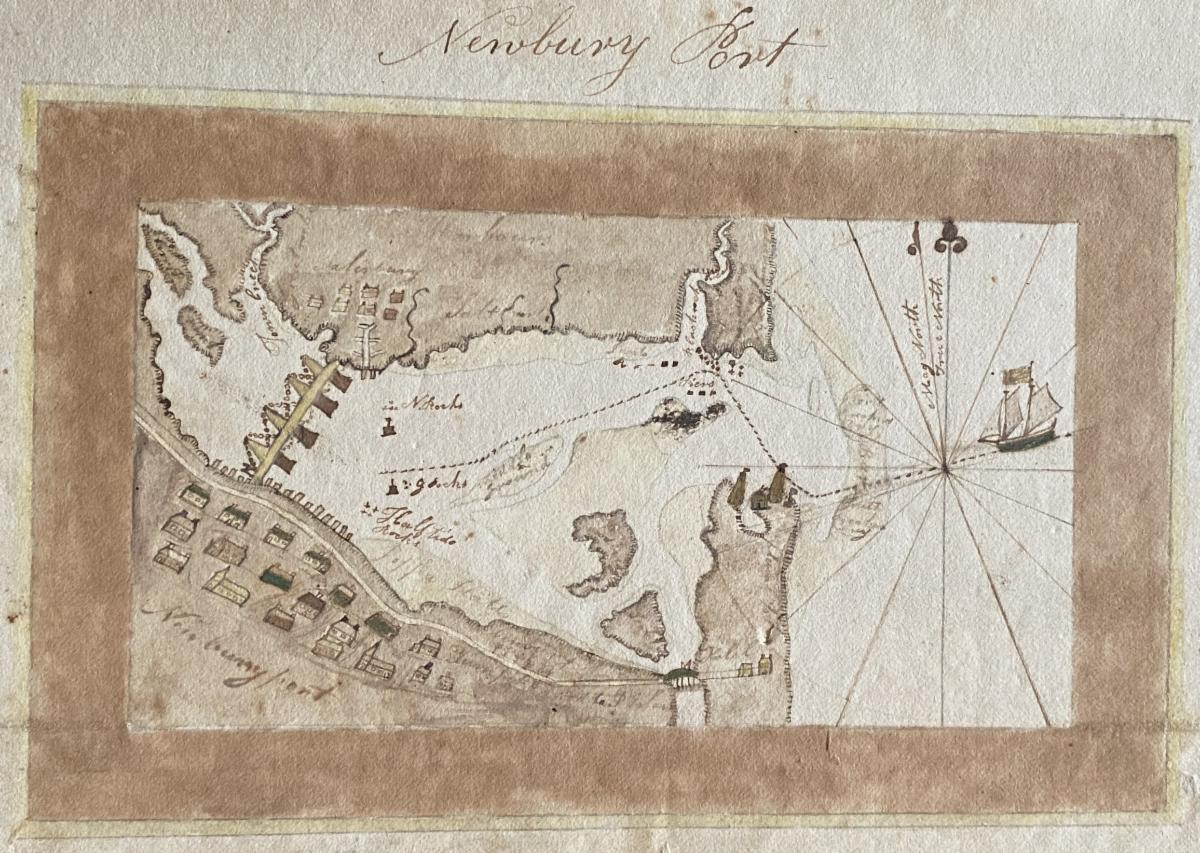
We also treasure the illustrated 1826 copybook of Joseph Lunt, a young mariner. His careful sketches of sailing ships, navigation tools, and an annotated map of Newburyport and Plum Island reveal both the skill and artistry of seafaring life.
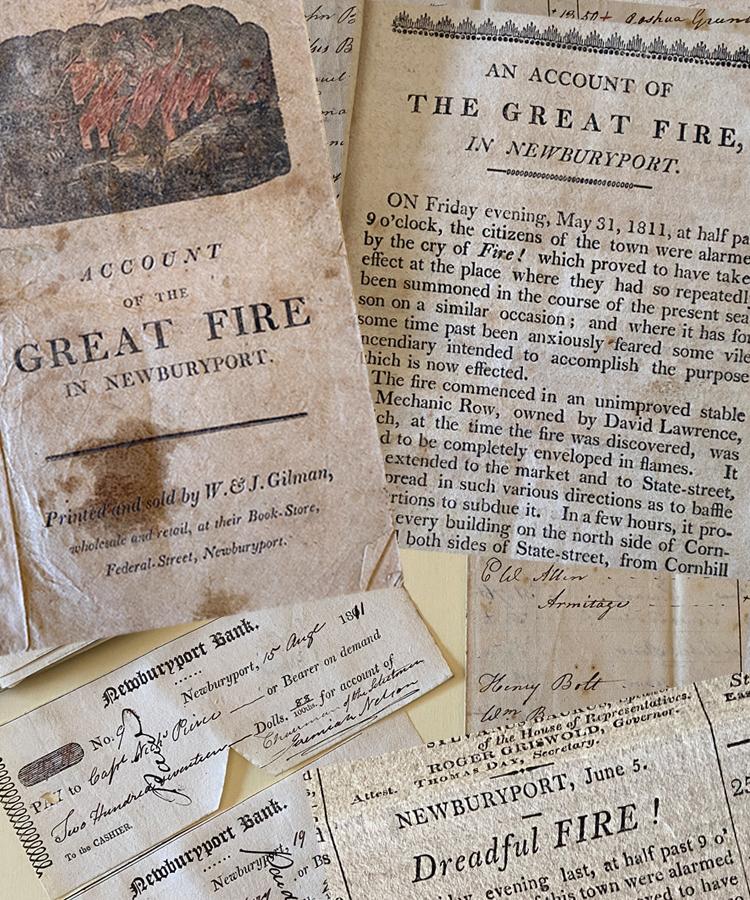
| | Among our most sobering holdings is the Great Fire of 1811 Collection, which contains firsthand accounts, newspapers, and records related to the devastating blaze that destroyed much of downtown Newburyport. Eyewitness Lois Jackman’s deposition captures the immediacy of that night, when 63 houses, 23 warehouses, and numerous businesses were reduced to ash. In the aftermath, the town mandated brick construction with firewalls for taller buildings—a regulation that shaped the city’s architecture for decades. | | |
The Museum’s holdings also document the networks, industries, and civic organizations that built Newburyport’s prosperity. Highlights include:
Society for the Colonization of Liberia records (1820–1831)
Newburyport Turnpike records, nine boxes documenting the road’s founding in 1803
Streetcar logbooks (1913–1922) from conductors on the Newbury–Plum Island route
Towle Silver Company archives, with correspondence, reports, and photographs chronicling one of Newburyport’s most famous manufacturers
| | |
The move to the Perkins Art & Research Center offers the safe storage and improved access that are essential to preserving and sharing these collections. Many items require specialized care, from temperature-controlled environments to archival-quality enclosures. As stewards of these materials, we are committed to ensuring their survival—and to making them accessible to researchers, students, and the public.
In the coming months, we will introduce you to more recent acquisitions, including the Fran Dalton Collection and the memoirs of Andrew Lunt, who spent his childhood in Joppa in the first years of the 19th century.
Every document, photograph, and artifact in our care tells part of the larger story of our community. Together, they form a rich, interconnected record of Newburyport’s people, places, and events—from everyday life to watershed events.
By supporting the Museum of Old Newbury—whether as a member, donor, or volunteer—you help us protect these irreplaceable resources. You will help to ensure that these treasures will still be here to inspire and inform in another hundred years.
Our past is alive in these collections. With your help, it will remain alive for generations to come.
| | Something Is Always Cooking... | | |
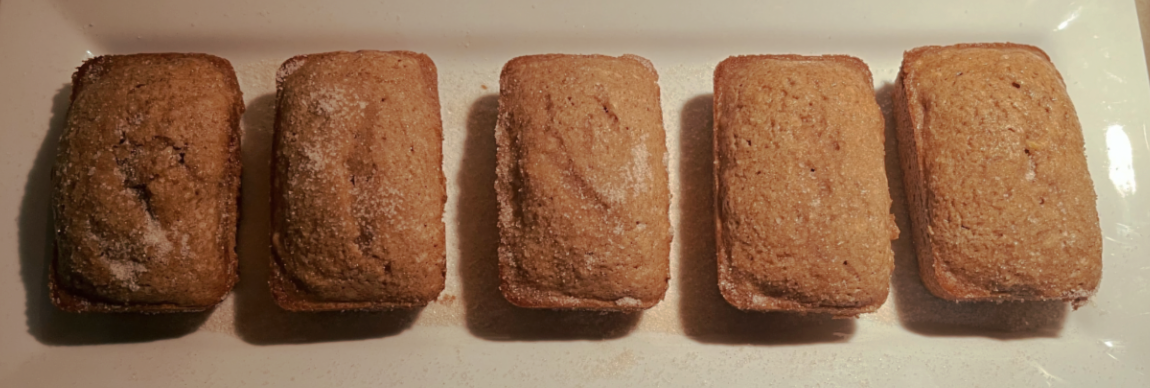
Dolley Madison’s Woodbury Cinnamon Tea Cakes
Recipe courtesy of The Historical Homemaker
Ingredients:
1 large egg, separated
Pinch of salt
1 cup granulated sugar
1 cup milk
1 tsp vanilla extract
1 cup of flour
2 TBSP melted butter
1 tsp baking powder
1 TBSP ground cinnamon
Directions:
Preheat the oven to 350 degrees and grease either a bundt pan or mini bundt pan (I used mini loaf pans). You can also use a square baking pan.
Butter and then flour the pan so the cake will easily come out of the forms after baking.
Beat the egg white with a pinch of salt until soft peaks form. Gradually add the sugar and continue beating until stiff peaks form.
In a separate bowl, whisk together the milk, egg yolk, and vanilla; slowly fold it into the egg whites.
Fold in the flour, melted butter, baking powder, and cinnamon until just combined.
Pour mixture into prepared baking pan or mini pans.
Bake for 20-25 minutes or until a toothpick inserted in the middle comes out clean. Invert the cake onto a metal rack for cooling.
Immediately, while the cake is still warm from the oven, brush on the additional 2 tablespoons melted butter. Then sprinkle cinnamon-sugar over the cake.
Enjoy!
| | |
Click the image to do the puzzle
This image is a depiction of the Burning of Washington, D.C. from the 1816 book The History of England, from the Earliest Periods, Volume 1 by Paul M. Rapin de Thoyras.
| | |
Museum e-Newsletter made possible through the
generosity of our sponsors:
| | | | | |