e-Newsletter | December 17, 2021 |
|
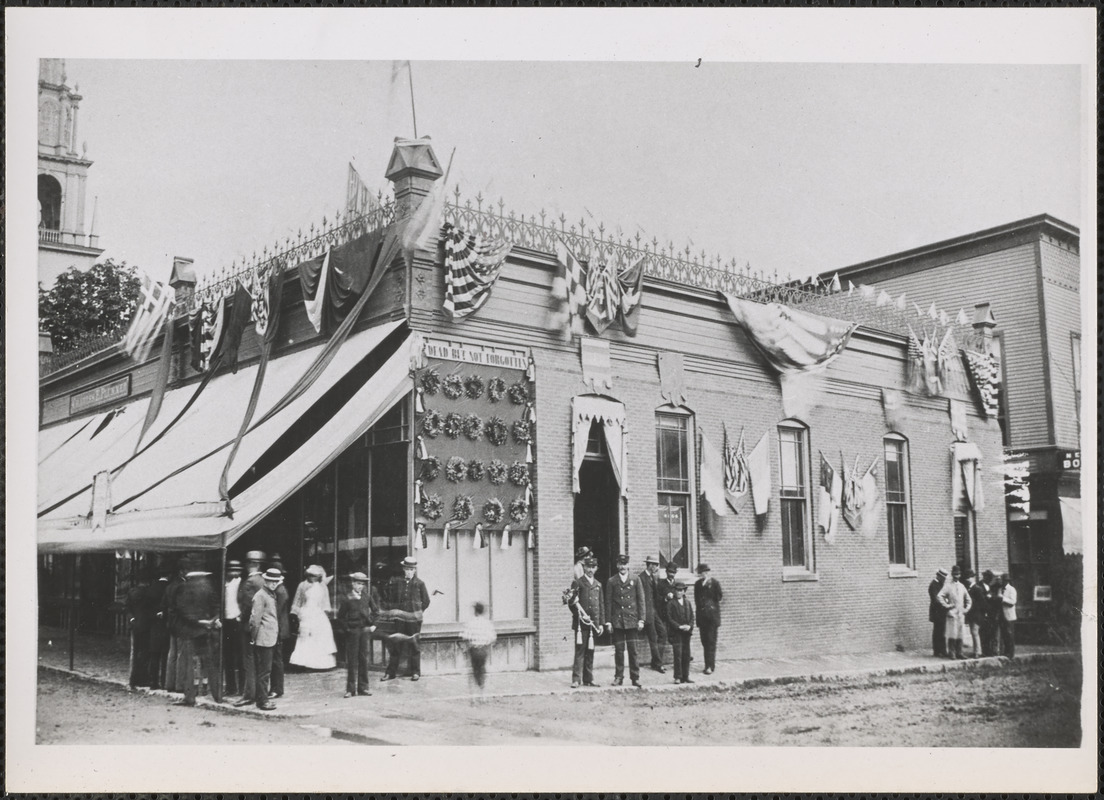
Inn Street side of 16 Pleasant Street where 19 wreaths hang under a sign that reads “Dead But Not Forgotten” in honor of the men lost in the Greely disaster. |
|
Behind the Images: The Greely Disaster |
|
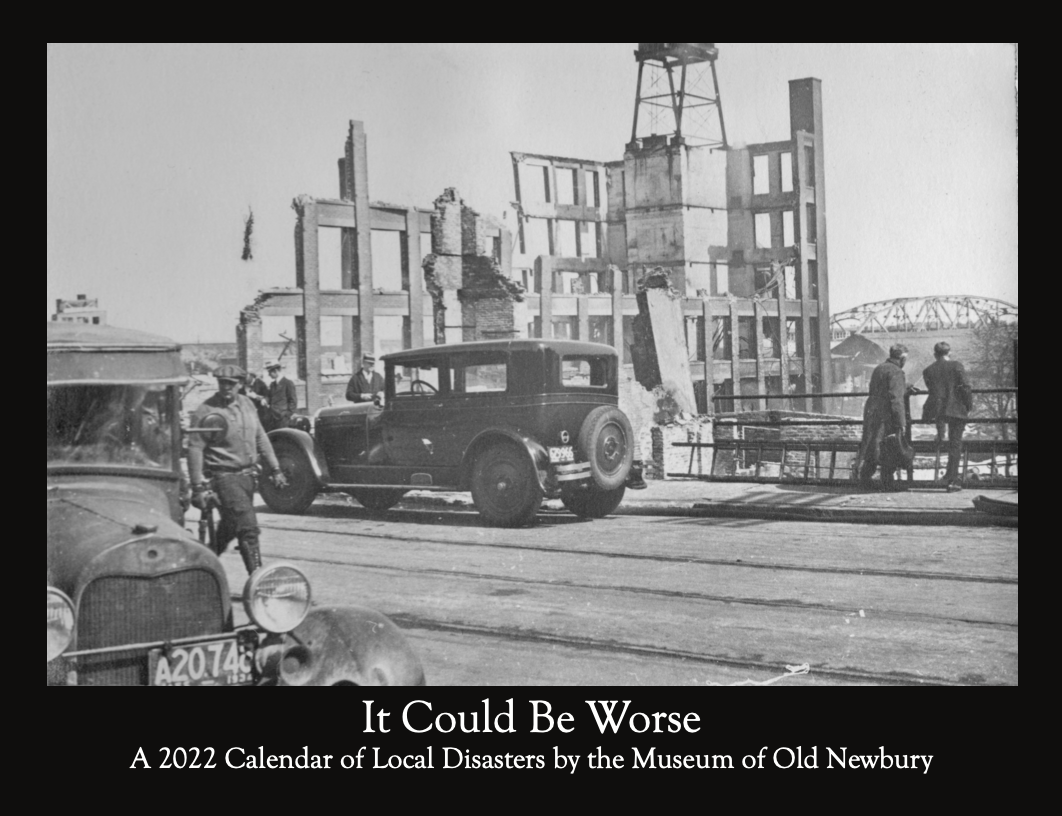
The 2022 Museum of Old Newbury calendar, It Could Be Worse: A 2022 Calendar of Local Disasters (purchase here), seems to evoke a wide range of responses. Some, like yours truly, find it darkly humorous. Others, like a recent purchaser of the calendar from Iowa, collect images of disasters as a hobby. Some find these images disturbing and wish for the old days when our calendar featured pretty houses and winter scenes.
We had long, wide-ranging discussions about which images to include in this calendar. We wanted geographical diversity (as much as possible in the Newburys), a wide date range and varied subject matter. The collections of the Museum of Old Newbury are so vast that we could have easily had a dozen calendars of only explosions in the 19th century. Heck, we could have a couple calendars of only factory explosions from one block downtown!
But there was no image, no episode in our disastrous history that we hemmed and hawed about quite as much as our August image, and it is, at first glance, the least graphic. The image is of a heavily festooned Pleasant Street post office, located where Oregano Pizzeria & Ristorante is today. A parade appears to have just ended – there are two men in uniform, one holding a mace, or band leader baton. Men, women and a child stand or walk about, the long exposure leaving gossamer trails around them. The focus of the image is on the Inn Street side of the building where 19 wreaths hang under a sign that reads “Dead But Not Forgotten.” Despite its rosettes and festive atmosphere, this is, unquestionably, an image of a local disaster, or at least the commemoration of one, and it has the highest mortality rate of any image in our calendar. And yet, this disaster took place thousands of miles away, in the frozen expanses of Ellesmere Island and Cape Sabine.
|
|
Adolphus Washington Greely deserves more justice than I can give him here, where we offer only the barest outline of a fascinating life. Greely was born on March 27, 1844, to John Balch Greeley and Frances Dunn (Cobb) Greely. His father is listed as a shoemaker in the 1860 census. His mother was from Maine. Adolphus was her only surviving child, though his father had seven children with his first wife.
The Greely roots in Newbury are a story for another time, but his father’s family had been in Newbury since the 17th century. A quick game of townie bingo reveals that Adolphus is my 4th cousin, 4 times removed. Like so many other Newbury(port) native sons and daughters (though not my family, apparently), he was eager to get out of town.
When the Civil War broke out, 17-year-old Adolphus saw his chance. As he was constitutionally averse to telling a lie, according to family lore, he wrote the number “18” on the bottom of his boot so he could tell the recruiter he was “over 18.”
After a successful, though bloody, war service which included a bullet to the jaw, among other serious injuries, he climbed through the ranks as a professional military man. He was detailed to the Army Signal Corps and was back in Washington by 1870 to help organize the United States Weather Bureau, which is how he caught the polar craze.
There is a long story here, complete with international intrigue, murder, cannibalism, even sea shanties, but let us just say that Greely was swept up in a push to loosen the British grip on Arctic achievement, further his career, establish a weather station and do some meteorological experiments while he was at it.
|
|
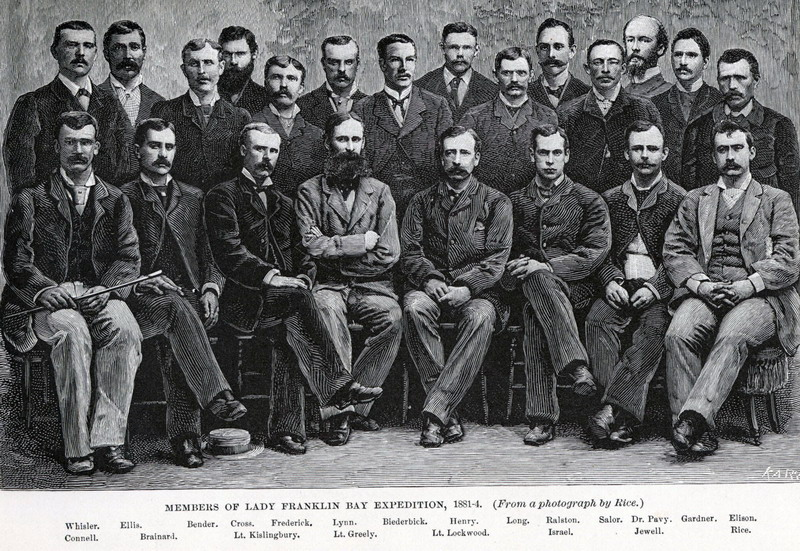
This etching, based on a doctored photo of the expedition after Greely replaced several original members, was widely circulated in the international press prior to the expedition. |
|
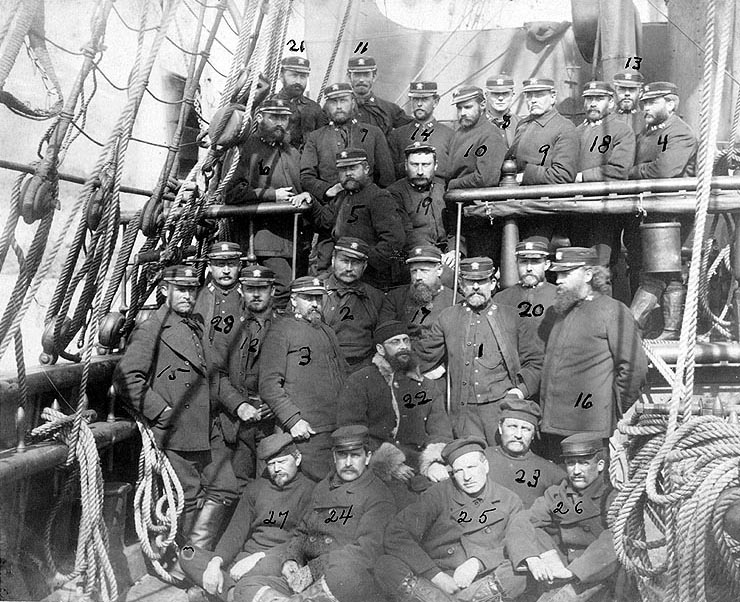
The six survivors of the U.S. Army's Greely Arctic expedition with their U.S. Navy rescuers, at Upernavik, Greenland, 2–3 July 1884. Probably photographed on board the USS Thetis. Adolphus Greely is number 22, 23: Julius Frederick, 24: David L. Brainard, 25: Henry Bierderbick, 26: Maurice Connell, 27: Francis Long.
|
|
In August 1881, Greely and the 24 men under his command had built a camp on the shore of Lady Franklin Bay and were busily settling in before the long Arctic winter. They were well supplied, and a resupply ship was due the following year, and again in 1883. If the ships were not able to reach Greely's encampment, they were to leave supplies in various locations.
Since we already know that this expedition was a calendar-worthy disaster, you can likely guess the rest.
1882 came and went with no resupply ship. When help also failed to materialize in the early summer of 1883, Greely waited until August 9 and then left their camp in small boats, taking 40 days’ rations and scientific equipment and records.
By October, the group was in serious trouble, having abandoned their boats and made a makeshift camp on Cape Sabine, about 200 miles south of their camp. The caches of supplies were scant or non-existent, and they were trapped in the Arctic winter in a hastily built stone enclosure with a boat for a roof.
The horrors suffered by these men over the next eight months were predictably gruesome, and when they were finally rescued on June 22, 1884, lying under a collapsed tent, only seven men, including Greely, were still alive. One died almost immediately afterward, one had been executed for stealing and seventeen had starved and frozen to death. These nineteen dead are memorialized by the wreaths on the side of the Newburyport Port Office.
Adolphus Washington Greely and his surviving crew mates were taken straight to Portsmouth where on August 4, over 20,000 people turned out to welcome him. Not to be outdone, Greely was greeted as a hero upon his return to Newburyport ten days later.
|
|
The city had been planning for the celebration since the moment his rescue was confirmed, and the city turned out for parades, receptions and speeches by Greely, the mayor, and the governor, recitations by school children and more.
City Hall, the Post Office, the library and most houses and businesses were festooned with bunting and banners.
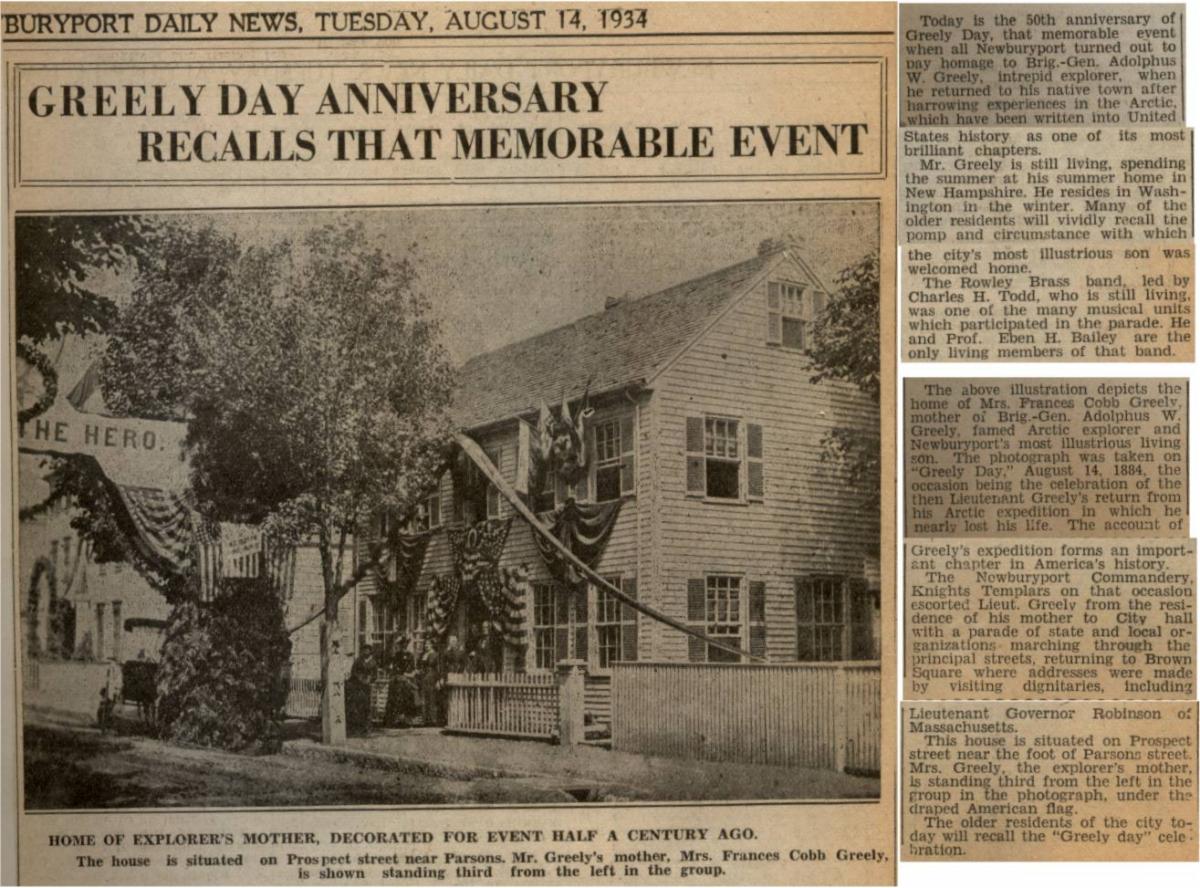
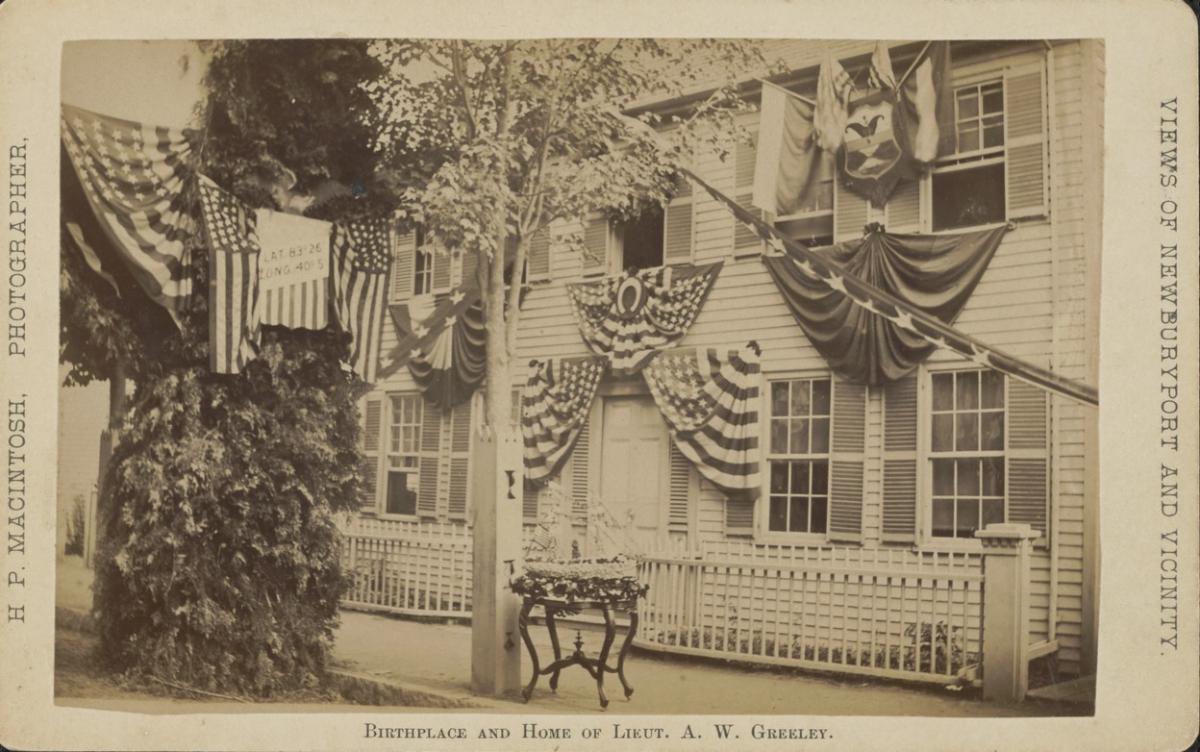
Greely’s mother’s house, now 107 Prospect Street, was the beginning and end of the parade. “The pulse of Newburyport has been stirred to its depth,” declared the front page of the Newburyport Daily Herald. Fifty years later, in 1934, the Newburyport Daily News ran the photo of Greely’s mother standing in a small group outside her decorated home, declaring the Greely’s expedition is one of “the United States’ most brilliant chapters.”
Newburyport’s banners were still up when the New York Times published a series of shocking allegations about the expedition, including cannibalism, government malfeasance and poor leadership. Two bodies were exhumed and showed evidence of butchery, though Greely claimed to have no knowledge of such activities.
Greely had a long and distinguished career after the Artic unpleasantness, but that is a story for another time. For now, I leave you to ponder these nineteen wreaths and think of how this community processed this particular disaster, 137 years ago.
|
|
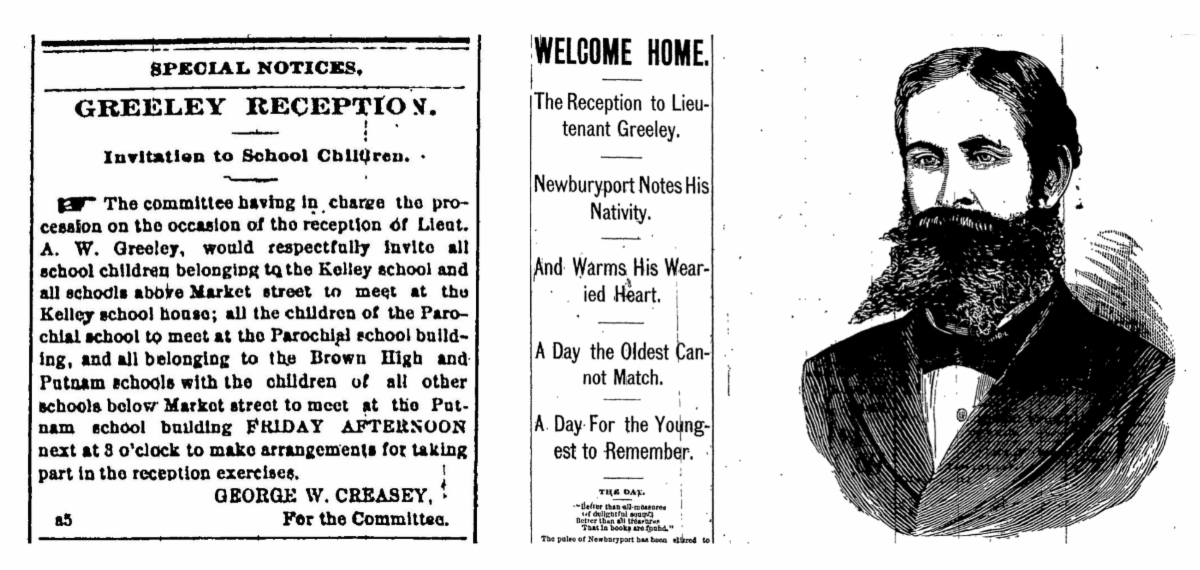
In the News: three different stories appearing in Newburyport papers. An invitation to school children to participate in the welcoming festivities from the Daily Herald, August 7, 1884; a Welcome Home story in the August 15, 1884 Daily Herald; and a remembrance of the celebrations 50 years later in the Newburyport Daily News, August 14, 1934 edition, featuring the explorer's mother's home on Prospect Street. |
|
The 2022 "It Could be Worse" Calendar...the perfect last minute gift! |
|
Each month of the It Could Be Worse: A 2022 Calendar of Local Disasters features a different image of a Newbury-area disaster (including August's Greely Day Celebration image). The photos and broadsides span the 18th, 19th, 20th and 21st centuries. The block-style calendar is perfect for jotting down appointments and reminders; and a notes section at the end is perfect to keep important numbers and names.
The 12-month calendar measures 11"Wx17"L when opened; 11"Wx8.5"L when closed and is printed on heavy, semi-gloss paper. Informative text and image credits accompanies each month's selection. A preview calendar of 2023 precedes the notes page at the end.
Starting at $18 each for members who stop by the museum to pick up, this calendar is perfect for gift giving. Click here to order. |
|
Annual Fund 2021 piece takes a peek inside the museum.
|
|
Running now through the end of the year, the team at the MOON will share their favorite family recipes, including a blog about its evolution and the significance of the item. Next week, Kristen digs into her recipe box.
|
|
Say "Cheese!"...a recipe and guest blog by Colleen Turner Secino |
|
My grandmother, Winifred Alice (McLean) Curran, was not the warm and fuzzy kind. In fact, when we kids would misbehave, my mother (her daughter) would threaten to send us off to "visit Nana." Truth is, she was a pretty serious woman, but she sure did know how to make a Lemon Cheese Pie, but more about this misnomer later.
Her dour demeanor was not totally without cause. Born November 23, 1891, Win emigrated to America in 1910 at the tender age of 19, not meeting and marrying my grandfather Bartholomew until 1923, a full thirteen years later. That’s a long time to live in a new country, alone in the small town of Norwood, Massachusetts.
My grandfather passed long before I was born in 1961, so once again, Nana was solo for a large part of her life.
|
|
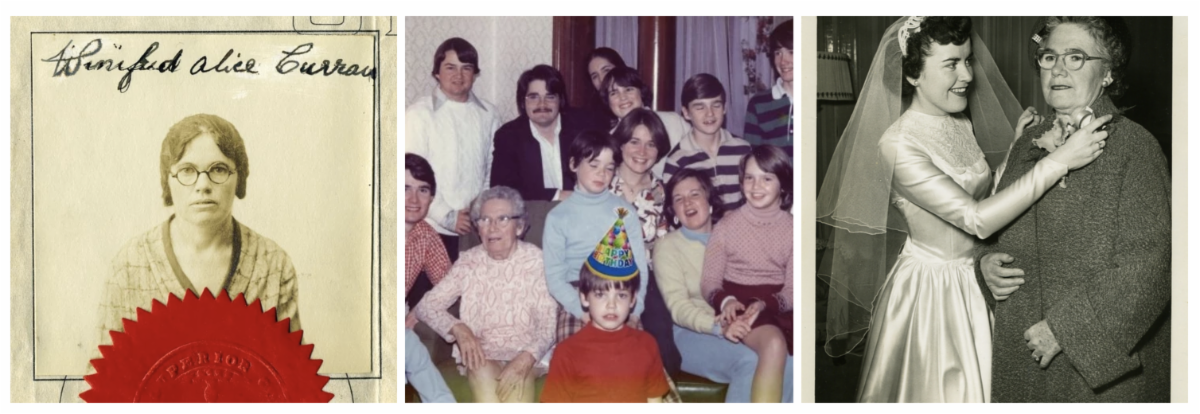
“I am smiling.” Win’s U.S. Citizenship photo; Win with 13 of her 15 grandchildren. The author is next to her cousins Kevin (with the mustache) and Greg (eyes closed); and my mother on her wedding day pinning a corsage on Win, January 3, 1953. |
|
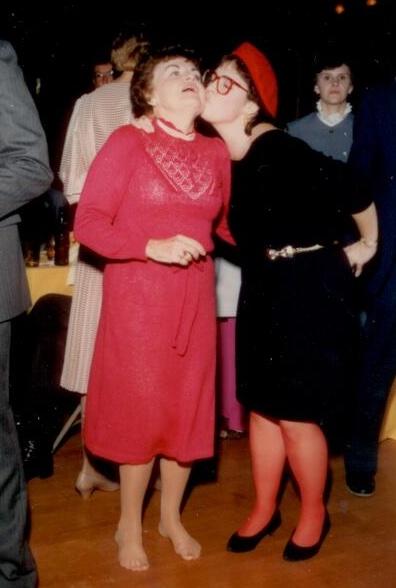
Sweet Mary Alice and Colleen at Chris Turner’s wedding, October 15, 1983. Note: that is Mary's red beret, saved from her professional working days in the early 1950s, before marrying my father. |
|
Conversely, my own mother, Mary Alice, Nana’s middle child, was about a silly as you get, quick to laugh (usually at herself) and extremely loving.
I learned much later in life that she made up her mind to instill in her own family the importance of public displays of affection by example. To this day, we Turners and our extended family of Currans are a very huggy-kissy bunch.
Aside from always telling me she never pursued her driver’s license because "those dang automobiles are just a fad," Nana was one of those cooks who pan fried the ever-lovin’ daylights out of meat and made the best lumpy Cream of Wheat (I never did figure out how to give that backhanded compliment without earning said backhand).
But when it came to sweets, she exhibited a much softer touch. Her pie crusts were legendary and every holiday season she would make her signature Lemon Cheese Pie. Unfortunately, she refused to share the recipe. When she passed in 1980, it passed with her.
|
|
Flash forward to my own sweet mother. Mary Alice did not like to cook. Sing, shoot hoops and chick-chat ’til the cows come home, yes. Yet, with a family of six, she was pressed into meal prep multiple times a day and she was quite talented, despite her lack of enthusiasm. Desserts, as a result of this aversion, were relegated to special events and birthdays.
She, too, loved her mother’s cheese pie, but could never quite replicate it, so she came up with a cheater’s version she called Lemon Chiffon Pie as her go-to treat. It was a delicious, light, fluffy custard complemented by the sweet crumbly crunch of a graham cracker crust (again, her disdain for cooking precluded the making of pie crusts). The primary base was sour cream and a Lemon Chiffon pudding made by Jell-O. In the 70s, when Jell-O discontinued the product, Mom discontinued making the pie. Insert sad face here.
I, however, always wanted to figure out what made Mom's and Nana’s pies so delicious, somewhat similar, yet completely different from one another.
Enter Mildred Martha Theresa Studley Kelly (she of Perfect Pumpkin Bread fame whom you met this past November). Milly helped me decipher what was in each pie based on collective family recollections and she correctly pointed out that based on the described taste and texture, Nana’s Lemon Cheese Pie was probably more of a custard-like cheesecake. And Mom’s Lemon Chiffon Pie using Jell-O as well as sour cream as the base may have tasted similar, but was in fact, more of a pudding.
I now had a mission. Tracking down and tasting different cheesecake versions, be it at a restaurant, party, store or bake sale, became my focus. And let me tell you, there are numerous iterations of cheesecake. From the dense NY style to the no-bake variety. Some with crusts, others without. Fruit topped or swirled with everything from chocolate to pumpkin. And despite my many attempts to find something similar to Nana’s pie, especially, every recipe fell woefully short.
Until one morning as I watched a morning news show before work, a chef came on talking about her recipe for creamy, pudding-like cheesecake that will win you over in an instant. This was back in the 80s, before everything could be found on the internet, so I grabbed pen and paper and scribbled furiously as I watched her make this magical dessert. I knew I was close to the perfect version of Win’s dessert, this just from watching.
|
|
Milly, again, comes to mind when ticking off why this particular recipe struck a hopeful nerve with me. She taught me that a creamy, pudding-like texture in a cheesecake results from slow cooking in a steam bath. Check. She also explained that mixing the ingredients in a particular order is a science and must be followed to the letter. Check. I couldn’t wait to dig out my own springform pan and purchase all the necessary ingredients.
The TV version used ladyfingers as the crust (ick) and no lemon zest (egads!), encouraging me to improvise right from the start. After a bit of tweaking over the years, this is what many have told me is the lightest, most creamy and delicious lemon cheesecake they have ever tasted. And, frankly, I have to agree. It’s foolproof and will dazzle at any event, just don’t skimp on the cooking and resting times listed. This process ensures a crack-free cake and the perfect consistency.
One might say it’s a “Win"-ner!
|
|
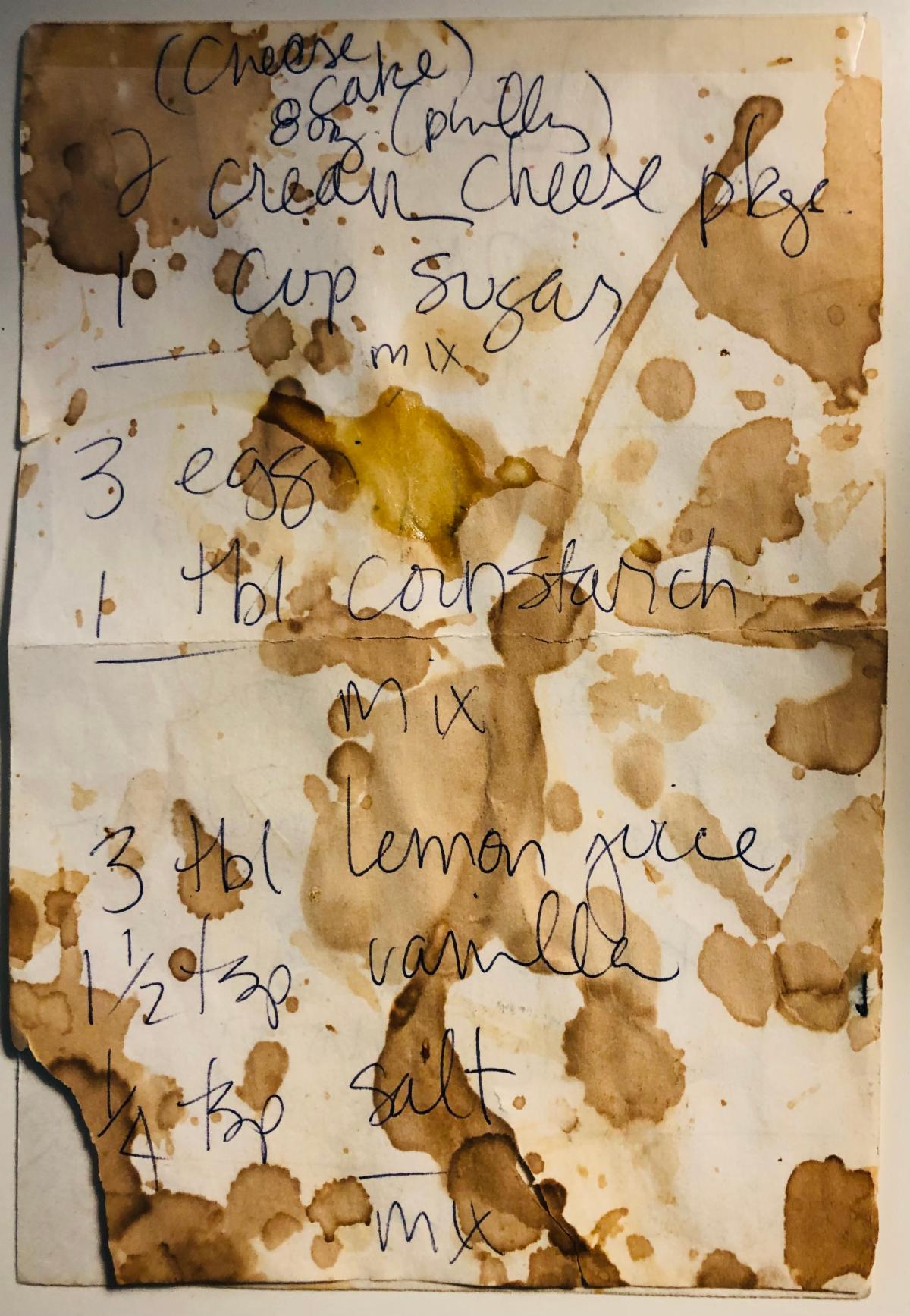
The original scrap of paper used to scribble the recipe on while watching the chef make it on TV. |
|
Creamy Lemon Cheesecake
Crust
1 1/4 cups finely crushed graham crackers (8 whole pieces)
1/4 cup sugar
1/3 cup butter, melted
1/4 cup pecans, coarsely chopped (optional)
Preheat over to 375ºF. Mix all ingredients until well blended. Pour mixture into a springform pan and evenly press firmly onto the bottom, pushing up sides approximately 1/4-1/2 inch (use a 1/4 cup measure to push crust tightly into the edge). Bake 8-10 minutes until lightly browned. Let cool completely.
Filling
2 8-ounce packages cream cheese (Philly brand is best), room temperature
1 cup sugar
3 eggs
1 tablespoon cornstarch
3 tablespoons fresh lemon juice
Zest of that lemon
1 1/2 teaspoons vanilla
1/4 teaspoon salt
3 cups sour cream
In a stand mixer (or large mixing bowl if using a hand mixer), place cream cheese and sugar. Mix well. Add eggs and cornstarch. Mix well. Add lemon juice, zest, salt. Mix well. Add sour cream. Mix well. Consistency should be smooth and creamy. Take cooled graham cracker crust and wrap outside of pan in foil (two sheets in a crisscross pattern is best). Pour in filling. Gently tap pan against countertop to remove any air bubbles. Place tinfoil wrapped pan into baking dish and pour in enough hot water to reach up two inches on the pan. Bake on middle rack in a 350ºF oven for 1 hour. Turn off oven and let cake sit in cooling oven for 1 hour. Remove cake from water bath and let sit on a rack on the counter for 1 hour. Place in refrigerator. Let sit on counter for 1 hour before serving to enjoy the creamiest texture. For slicing, a thin knife dipped in warm water or dental floss (seriously) ensures a smooth and accurate cut.
|
|
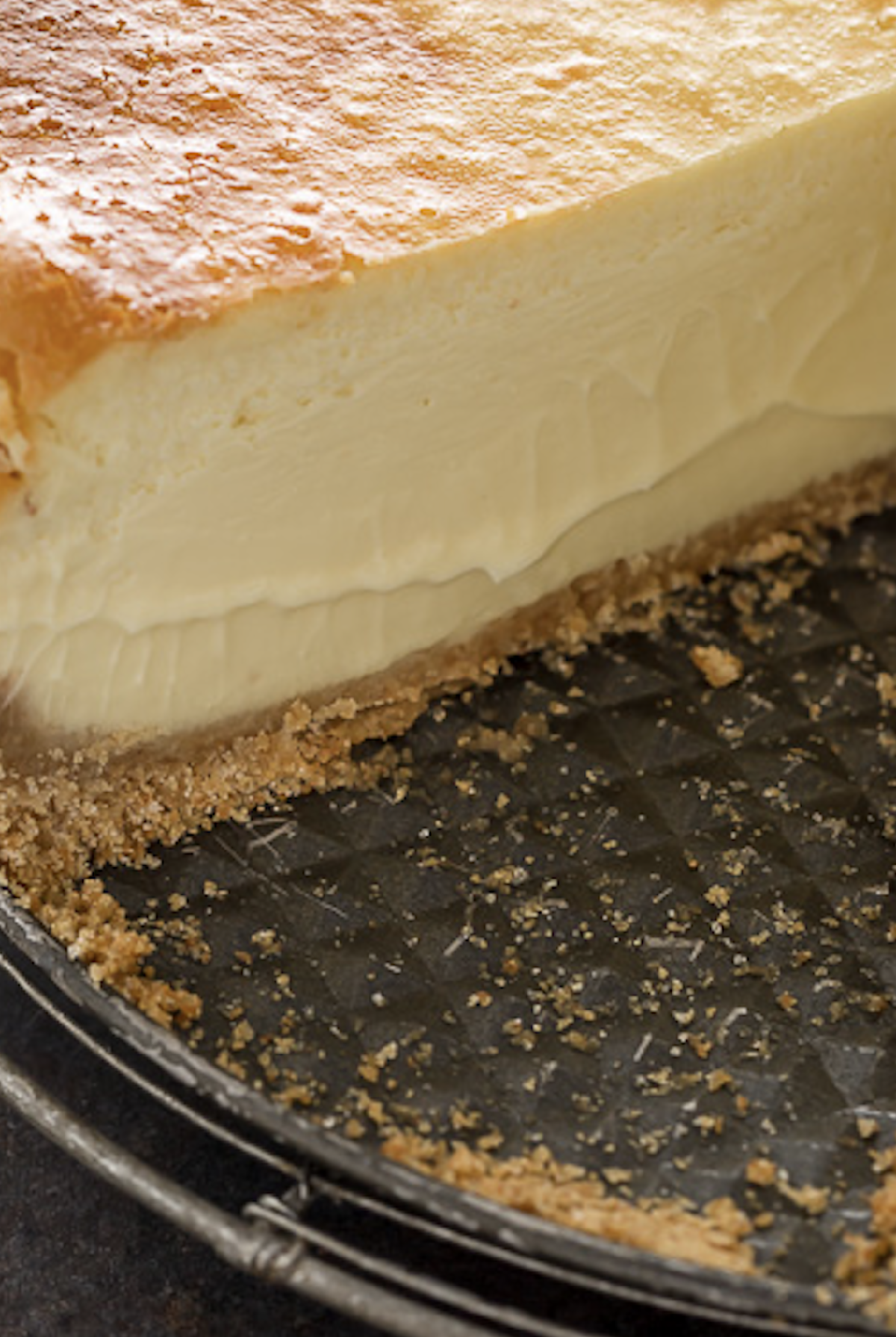
Truly a sight to behold. And yes, it really is that smooth and creamy! Serving tip: use dental floss (unflavored, of course) if pre-slicing for serving to large crowds. Simply stretch a strand across the center and pull straight down, through the crust. Cross that line and pull straight down again (you should have four even wedges). Rotate and continue slicing until desired slice count is reached. I opt for 16 slices, but 32 can work as well. |
|
Learn about upcoming programs, register, find Zoom links and catch up on previous presentations here. All of our virtual programs are free, however donations are gratefully accepted to help defray speaker fees.
|
|
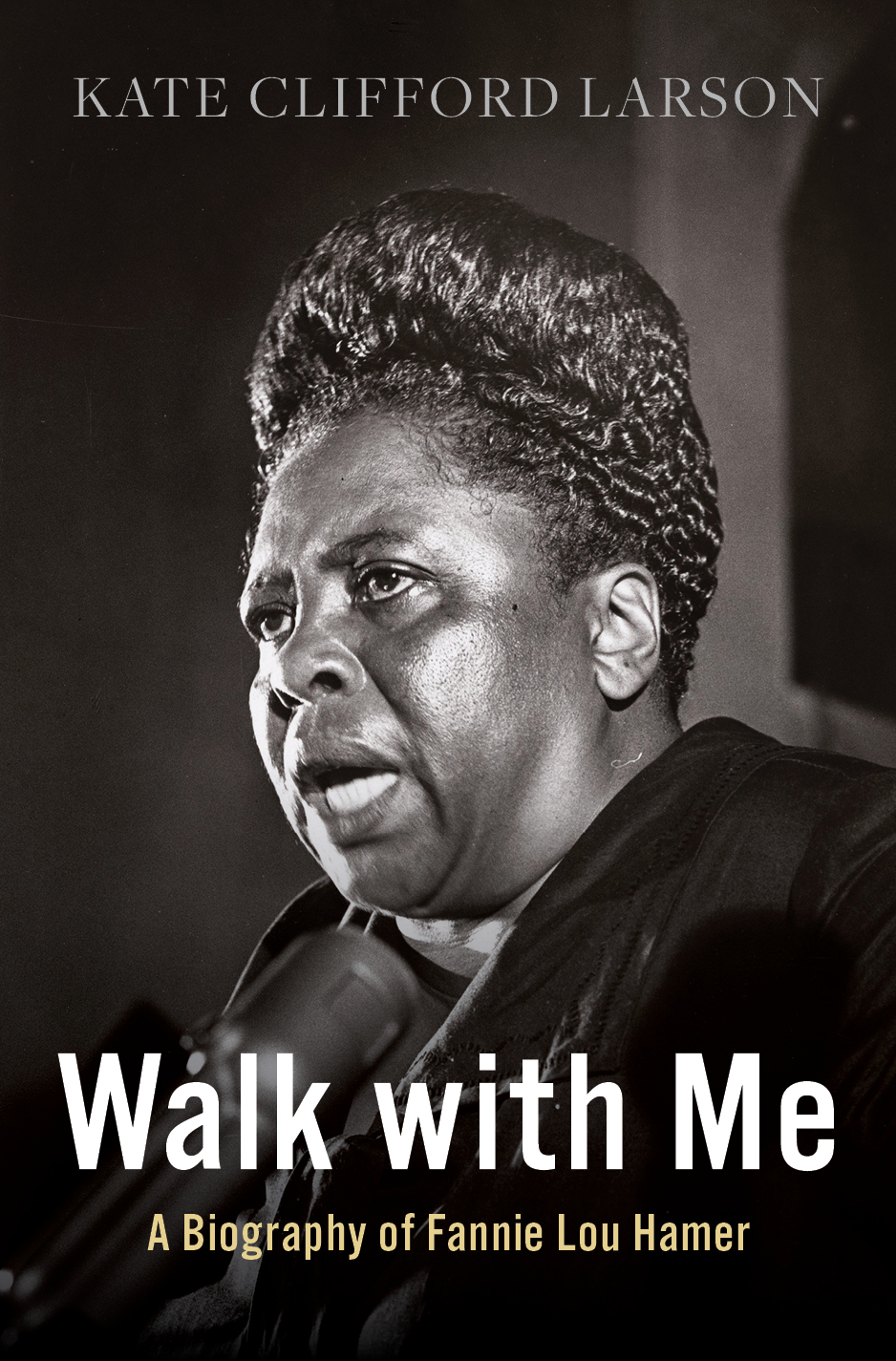
Walk with Me: A Biography of Fannie Lou Hamer
Online Zoom Event
In this program, featuring Kate Clifford Larson’s Walk with Me: A Biography of Fannie Lou Hamer, she will delve deep into the issues with which civil rights activist Fannie Lou Hamer wrestled—discrimination, poverty and disenfranchisement. She will share how Fannie's mission and life's work lives on in voting rights and registration campaigns, anti- racism and Black Lives Matter marches, the #MeToo movement, anti-poverty activism and justice reform.
This is a virtual event. Zoom link will be sent the day before.
Please click here to register.
|
|
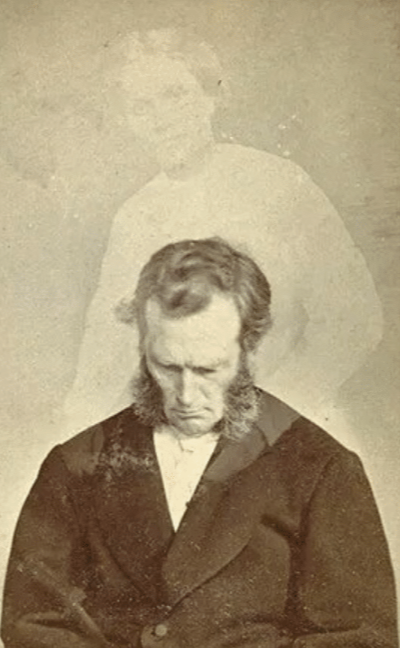
Secure the Shadow: Victorian Spirit & Post Mortem Photography
Tuesday, January 18, 2022 | 7:00 p.m.
Newburyport Public Library | 94 State Street | Newburyport, Mass.
|
|
|
|
Early photography had a magical quality, even for those who understood the science behind it. For many in the 19th century, the relationship between science and the supernatural was unclear.
Sympathetic photographers and charlatans set up a brisk business “securing the shadow,” memorializing deceased loved ones, and, for the right price, revealing their ethereal presence still hovering around the living.
Local historian and Executive Director of the Museum of Old Newbury, Bethany Groff Dorau, takes attendees on an illustration exploration of Victorian photography from beyond the grave.
Presented in partnership with the Newburyport Public Library, this is an in-person event and masks must be worn at all times in the library.
No registration required.
|
|
Puzzle Me This...
Birthplace and home of Lieutenant Adolphus Washington Greely, Prospect Street, Newburyport. This image captures the celebration of August 14, 1884, when Greely returned from his fateful Arctic exploration. H.P. Macintosh, Photographer.
From the collections of the Museum of Old Newbury.
Click on image to begin.
|
|
During this difficult period of COVID-19, we rely on your support more than ever. We continue to develop new, online programs for you to enjoy and keep us connected and look forward to in-person events as protocols for safety loosen. We hope, if you are able, that you will consider a donation to the museum. Thank you for your continued support.
|
|
Museum e-Newsletter made possible through the
generosity of our sponsors:
|
|
|
Museum of Old Newbury
98 High Street
Newburyport, MA 01950
978-462-2681
|
|
|
Your copy should address 3 key questions: Who am I writing for? (Audience) Why should they care? (Benefit) What do I want them to do here? (Call-to-Action)
Create a great offer by adding words like "free" "personalized" "complimentary" or "customized." A sense of urgency often helps readers take an action, so think about inserting phrases like "for a limited time only" or "only 7 remaining!"
|
|
|
|
|
|
|