e-Newsletter | December 31, 2021
|
|
A note from your friends at the Museum of Old Newbury
As 2021 draws to a close, it has been heartening to see our much cherished museum become vibrant again with on-site programs and events, as well as a steady stream of researchers and volunteers working on various projects.
Over five hundred of you attended our Holiday Open House and Members' Party on December 4 and 5. It was our first open weekend in two years.
Nearly two years ago, on February 14, 2020, we began our weekly e-newsletter to keep in touch with our members during the quieter winter months. Little did we realize that it would be our only contact with many of you these last twenty-three months as COVID-19 raged around us. Like so many small museums, we scrambled to re-invent ourselves with virtual programming and the weekly e-news to keep you informed about our happenings and share with you stories of Old Newbury and our collections.
The response from you has been enthusiastic and supportive, and we are particularly grateful for those of you who continued to renew your membership, supporting our work even as we remained physically closed.
As we begin the new year and forge ahead with new projects, programs and events, we will be issuing the e-newsletter every other week. We will continue to offer history stories, blogs, program announcements, recipes and puzzles for your entertainment, but you will have a little more time to read and enjoy.
Stay tuned for an action packed year ahead. We look forward to continuing to share the rich legacy of our community. Be sure to check your email box for the first e-newsletter of 2022 on January 7.
We wish for a year of peace, prosperity and rewarding engagements with you, our members and friends.
|
|
Once Upon a Time
By Jack Santos, Guest Contributor
This weekend marks yet another New Year. All Hail 2022! But knowing when the year changes, and when the clock should strike 12, was not all that easy in times past.
Once upon a time the only way to tell what the correct time was, was to go outside and look up. There was no television, no radio, no National Bureau of Standards, no phone number that would give you the current time, no Internet time to keep all those nonexistent computers in sync with the correct time. Our earliest ancestors would look for where the sun, or moon, was in the sky. With the sun at its highest, you could be assured it was noon, or with the full moon at its highest, midnight.
Discoveries like fire, wheels and machines, led to clocks. In later years, if you were lucky enough to own a watch or a clock, to set it you could go to the closest church or tower clock to find out what the correct time was.
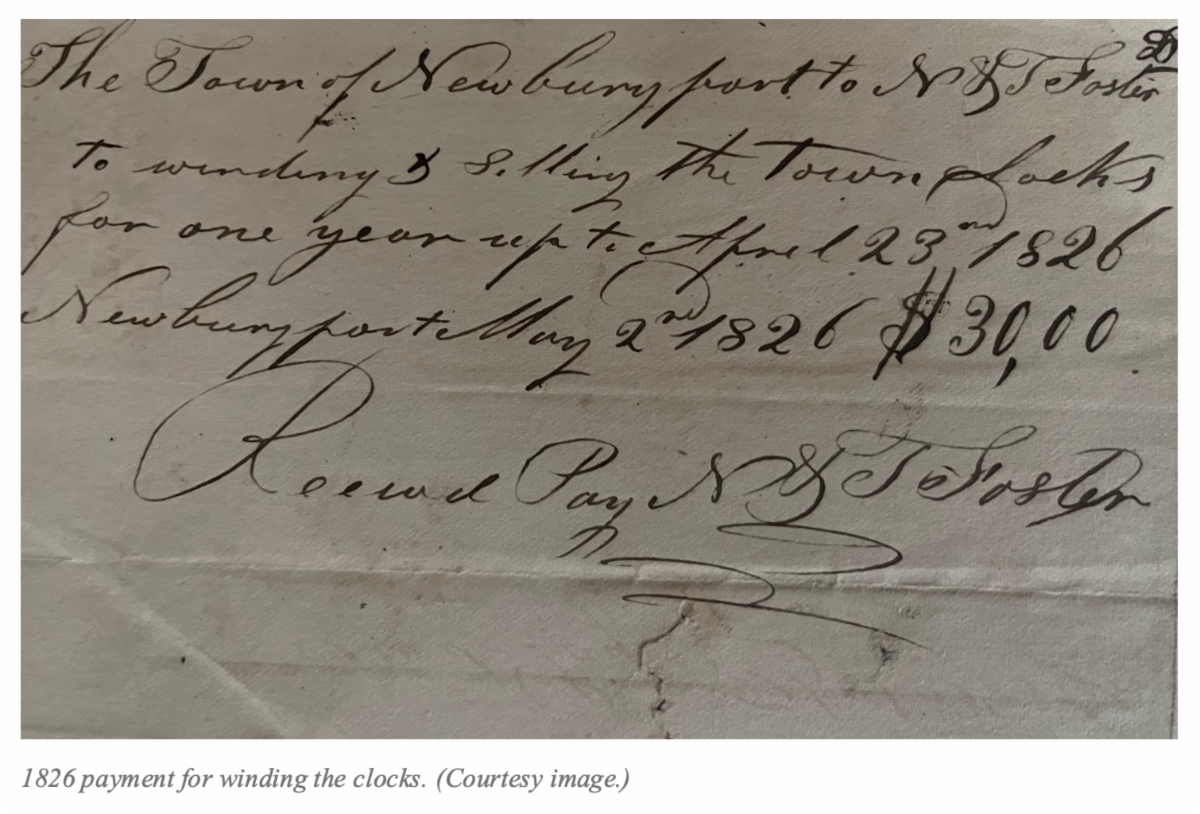
Ship captains set their ship time by tower clocks; factory managers made sure their clocks agreed with tower clocks. It was so important that the town of Newburyport, and later the city of Newburyport, would pay someone to maintain the clocks and make sure they kept telling the correct time.
|
|
Newburyport has 10 public clocks (12 if you count Newbury’s First Parish and the Newburyport Bank street clock, also in Newbury) – street clocks, tower clocks and outdoor wall clocks. Each one meticulously maintained, and records kept.
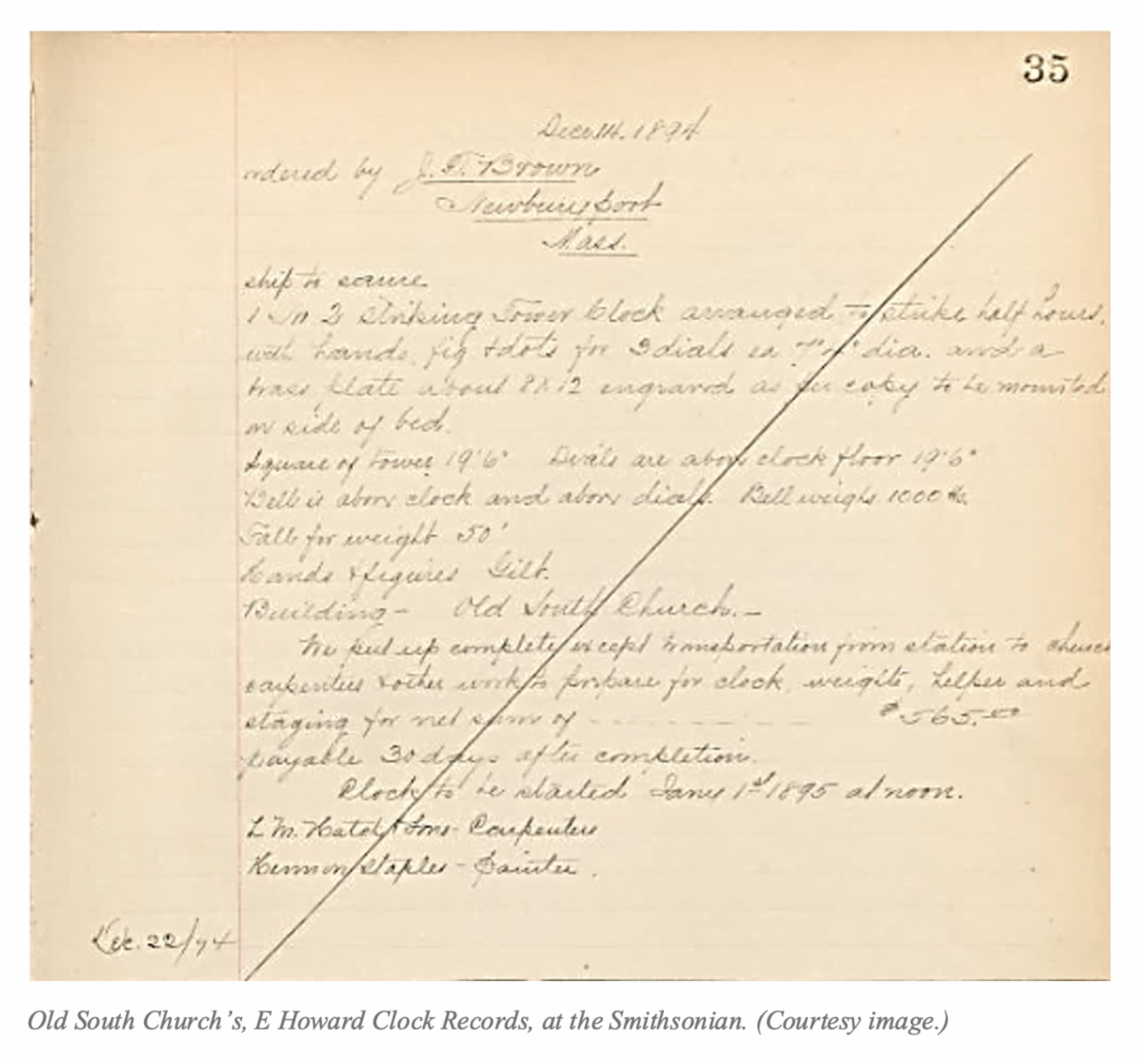
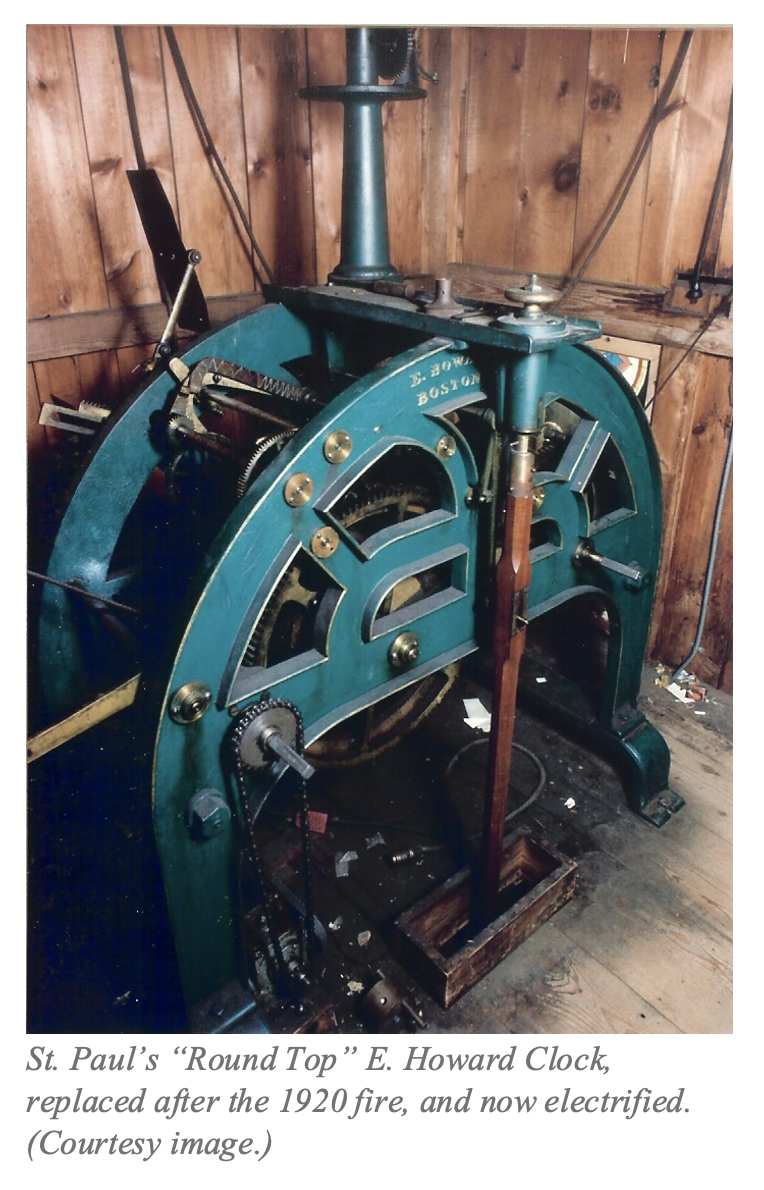
Many of the tower clocks we look at today were bought in the late 1800s from Boston’s E. Howard & Co, clock maker. We know when they were installed, when they first started chiming, who paid for them, to whom they were dedicated and much more.
|
|
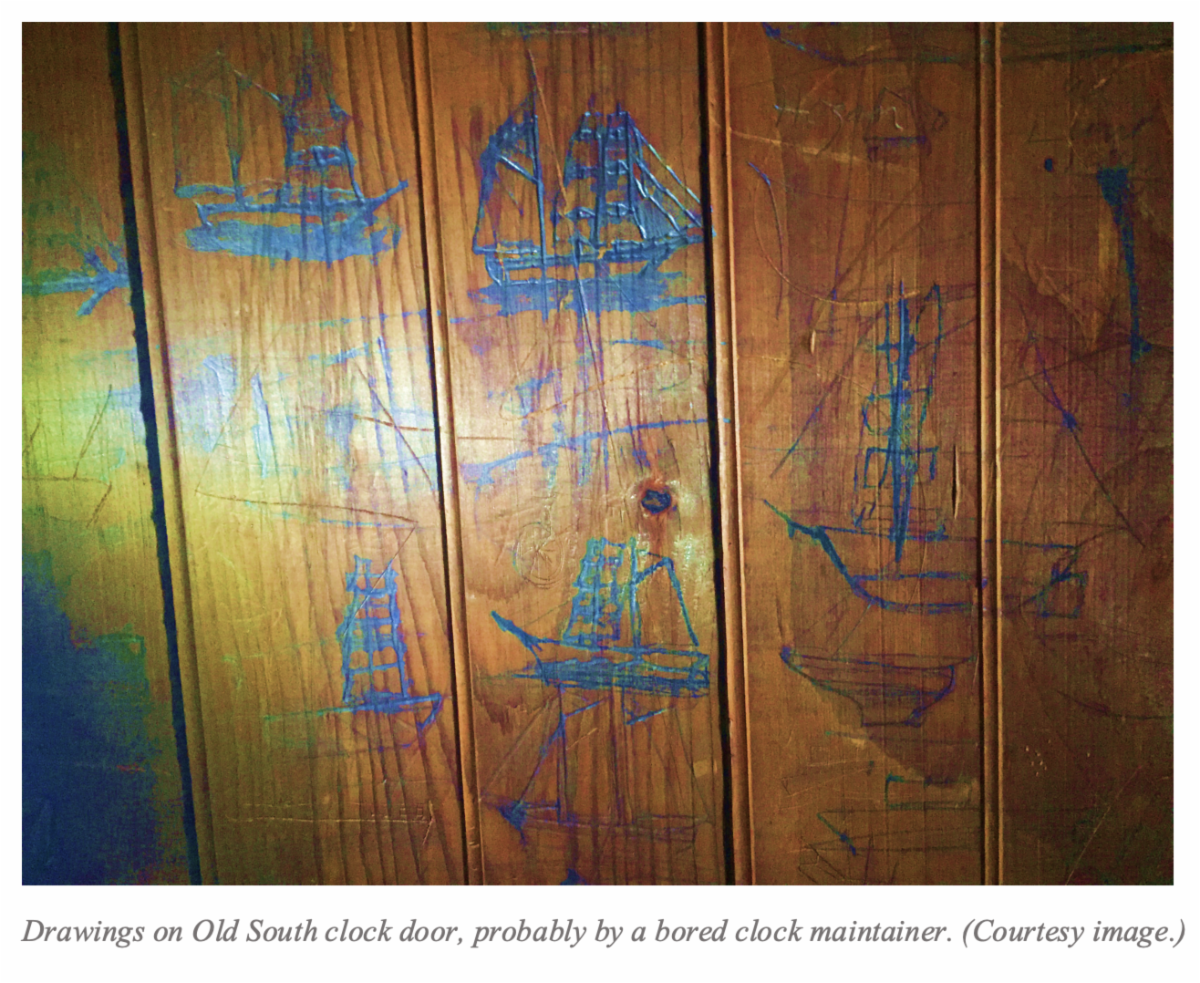
For instance, Old South’s clock cost $565 in 1895. It was arranged through the guidance of John T. Brown (more about him later – he figures prominently in many of our clocks). It was installed by L.M. Hatch. The clock face was painted by Hermon Staples.
Old South’s clock replaces an earlier one the was installed in 1785. We know that David Wood, a noted Newburyport clock maker, was paid to maintain it, but it’s not clear who made it. (Possibly Wood?)
Certainly, the clocks, as pieces of machinery, reflect an art that has been replaced by sterile, antiseptic electronic mechanisms – of which an Apple Watch is the epitome. But it’s not that cold steel and bright brass makes up for an interesting story of tower clocks – it’s the people. The clock makers, the clock donors, the people to which the clock is dedicated.
In Old South’s case, the clockworks are dedicated to Albert Plumer, and were given by his sisters, Jane, Maria and Mehitable. Like the many park benches we have scattered throughout Newburyport today, dedicated to living and past loved ones, the plaques on our clocks are the ultimate gift of time given in memory of a dear one.
Today, when working on the Old South clock, I often make conversation with “Albert,” as if Albert Plumer lives on in the clock itself.
|
|
|
|
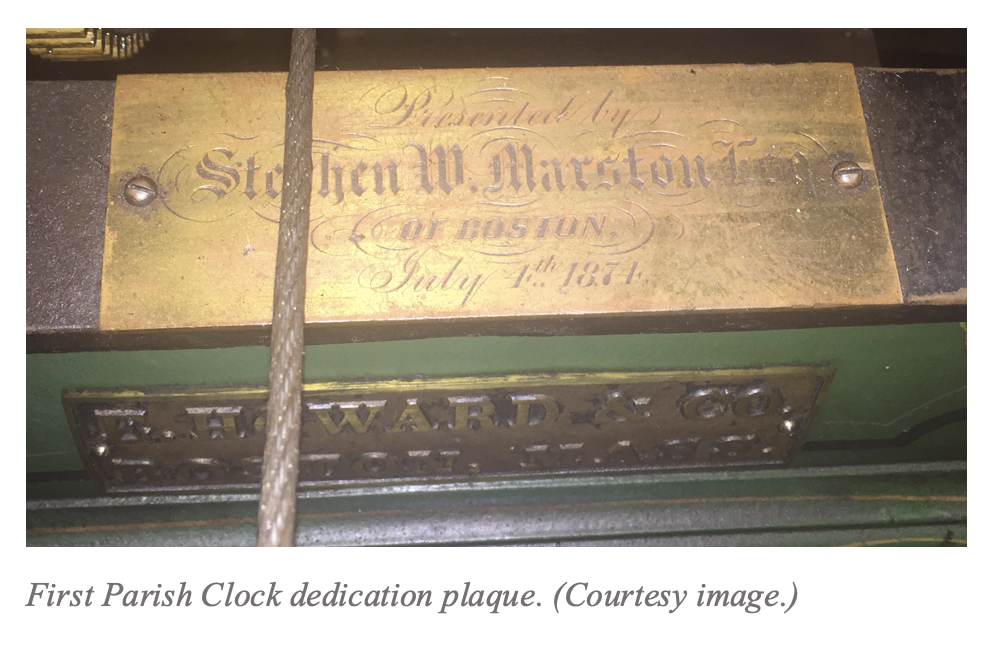
Stephen Marston of Boston donated the 1st Parish Clock on High Road in Newbury. His father was Justice of the Police Court in Newburyport, elected President of the Newburyport Bank in 1836 and was also President of the Newburyport Steam Cotton Company.
Elizabeth Gerrish lived in the Gerrish family home on Ring’s Island. She paid for the Center Congregational Church Clock and dedicated it to her parents.
|
|
That clock, to this date, is referred to as “Old Betsy.” It is said that besides memorializing her parents, Elizabeth wanted to be able to see the clock and hear it chime from her bedroom in Rings Island – true to this day.
A common Newburyporter intertwined in almost all of the tower clocks established or replaced in the late 1800s (Old South, North Church/Congregational, St Paul’s, Belleville, and the Firehouse) was John T. Brown.
We know of his service in the civil war, during which he became a part of the military’s telegraph corps. Upon return from the civil war, he married Ellen T. Brown; he became a grocer on State Street, but soon followed the call to go west, and established a grocery in Muscatine, Iowa.
In Muscatine, he was robbed and barely escaped death due to the injuries from the robbery. He returned to Newburyport and used his civil war telegraph experience to become a telegraph operator in the Western Union office on State Street.
|
|
|
Imagine, the advent of the telegraph and the train system (1839 in Newburyport) meant many things – faster transportation, more communication with the outside world and a need for accurate time so that trains wouldn’t collide (not to mention passengers would know when to expect one).
John Brown quickly rose to become manager of the Newburyport Western Union office, a lucrative position.
It was in 1893 that Ellen Brown passed away and it was also the start of an amazing philanthropic streak by John T. Brown. Historically, his family migrated from Hampton to Newburyport, so John T. Brown decided to honor his wife, and the path of his family, by funding church clocks between here and Hampton: The Salisbury East Parish Methodist Church Clock on Route 1, a clock in Hampton in the (now demolished) Odd Fellows building (today it sits in front of the middle school) and a clock at the First Baptist Church of Hampton Falls.
You probably wondered why those clocks had, instead of roman numerals to tell time, the letters “MEMORIAL GIFT.” That was the sign of a John T. Brown gift, in memory of his wife and family history.
As someone familiar with the acquisition and installation of clocks from E. Howard, he was also instrumental in most of the Newburyport clocks of that era, including one that was originally on “West Row” in Market Square (possibly above today’s Vera Restaurant), but was moved in 1839 to the newly built firehouse. That clock was replaced in 1895 by an E. Howard clock paid for by Brown and replaced again in the 1970s with the current electric clock. The original clockwork is on display in the Firehouse Center for the Arts lobby.
John Brown also donated the Parker Street entrance to Oak Hill Cemetery and a small cast iron flower setting across from Atkinson Common adjacent to the Cornelius J. Doyle Triangle. He lived his final year as a full-time resident of the Wolfe Tavern and left in his will the money to build the Ellen T. Brown memorial chapel at the entrance to Oak Hill Cemetery.
So, as we make our way from 2021 into 2022, and celebrate the passage of time, let’s take a moment to also remember all that time has given us in “Ould Newbury” – the clocks that mark time’s passage, the people we honor in the course of time and the cherished history of our community.
Happy New Year!
Jack Santos, local amateur historian, is a lover of all things Wheelwrights, not to mention a pretty swell guy, too. He co-host's “Yeat Yeat, Don’t Tell Me!” with the MOON's Colleen Turner Secino. Find the link below and try your hand at December's questions. Bragging rights and a random winner are honored each month.
|
|
Annual Fund 2021 invites you to take a peek inside the museum.
|
|
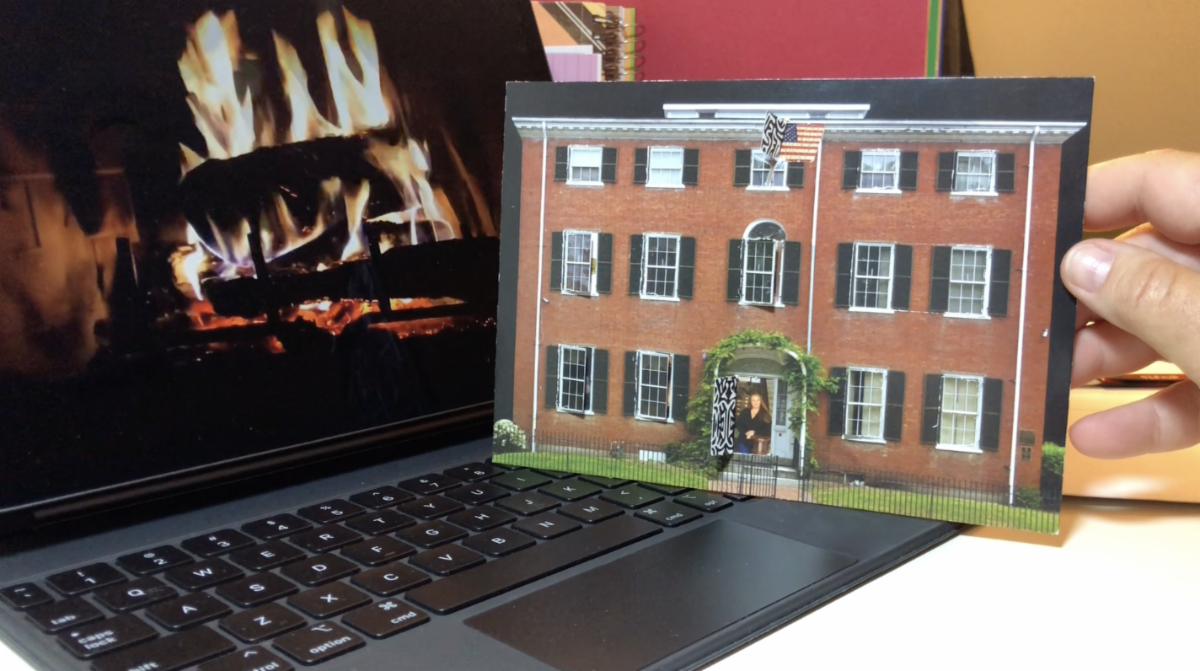
Running now through the end of the year, the team at the MOON will share their favorite family recipes, including a blog about its evolution and the significance of the item. Next week, we delve back into the "Cushing House Cooks" recipe box.
|
|
The Perfect (Gin and) Tonic for 2022...a recipe and blog by Bethany Groff Dorau
I am a high school drop-out. Around about 1990, convinced that I had nothing left to learn in high school, and possessed of an insatiable urge to hang out with my friends and haunt the smoky doorways of clubs like The Channel and Man Ray, I gave the remainder of my secondary education a hard pass. It didn’t last. Three years and a whole lot of waitressing later, I arrived at UMass Amherst clutching my GED and fell completely in love with history.
Professor Neal R. Shipley was not the first professor who I passionately adored, but he was the one who fostered my love for the subversive side of history, my belief that as much can be learned by studying those who broke the rules as those who made them. I remember his description of the autopsy of a famous nicotine poisoning victim in France, the smell of the Thames River in the middle of the 19th century, so foul that it knocked men unconscious. He recited the lyrics to a naughty song from the trenches of World War I with obvious delight and draped the history of gin around the slums of London and the khakied empire builders of India like a tatty feather boa.
I came from a dry house. My great-aunt Emily hid the elderly bottle of cooking wine in the cellar stairway, behind ancient cans of SPAM, and I can say, hand on my heart, that I was a complete novice when I had my first sip of foamy beer from a keg hidden in the woods near March’s Hill.
I was never much of a drinker, though I had my moments. Thank goodness I came of age at a time when any picture taken of us had to pass the scrutiny of the guy in the booth at Fotomat, and so these moments remain blessedly undocumented.
But I digress. At the end of my undergraduate years at UMass, Neal Shipley gave me an extraordinary gift. He sent me to Oxford. Or to be precise, he helped to find ways to fund a few months abroad and gave me a research project that could only be completed at Oxford.
I was shoehorned into an existing study program, so I had room and board at Trinity College, and off I went. And in the stone halls and paneled rooms of Oxford, I found myself in possession of one sublime gin and tonic after another.
|
|
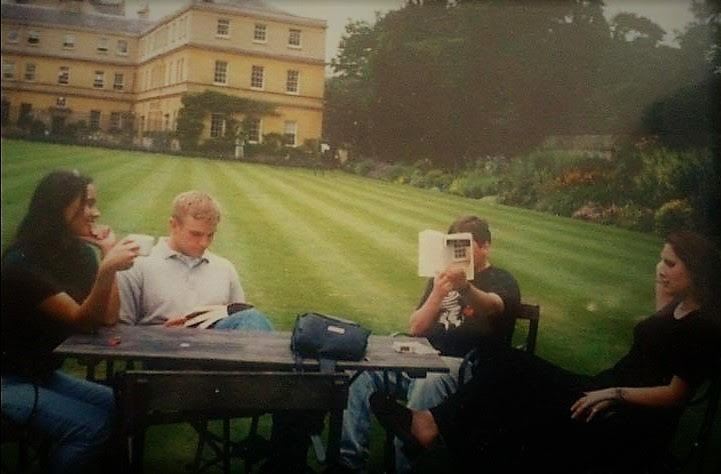
The author, far right, studying with friends at Trinity College, Oxford. |
|
Up to that point, everything I knew about gin I had learned from Neal Shipley. Most scholars agree that we have the Netherlands, and William of Orange in particular, to thank for gin.
As our Newbury brethren were soberly (ha!) establishing this community, British soldiers fighting in the Netherlands were drinking a local elixir made with juniper (“jenever” in Dutch), thought to cure the plague (sadly, untrue).
When William of Orange ascended to the English throne in 1689, one of his first acts was to encourage British production “of brandy and spirits from corn (grain)…” to alleviate a shortage caused by hostilities with France. The British drinking public was happy to consume their domestic elixir in quantity, and gin consumption skyrocketed. By 1743, cheap spirits were consumed at a rate of 2.2 gallons per capita per year, a ten-fold increase from 1700.
|
|
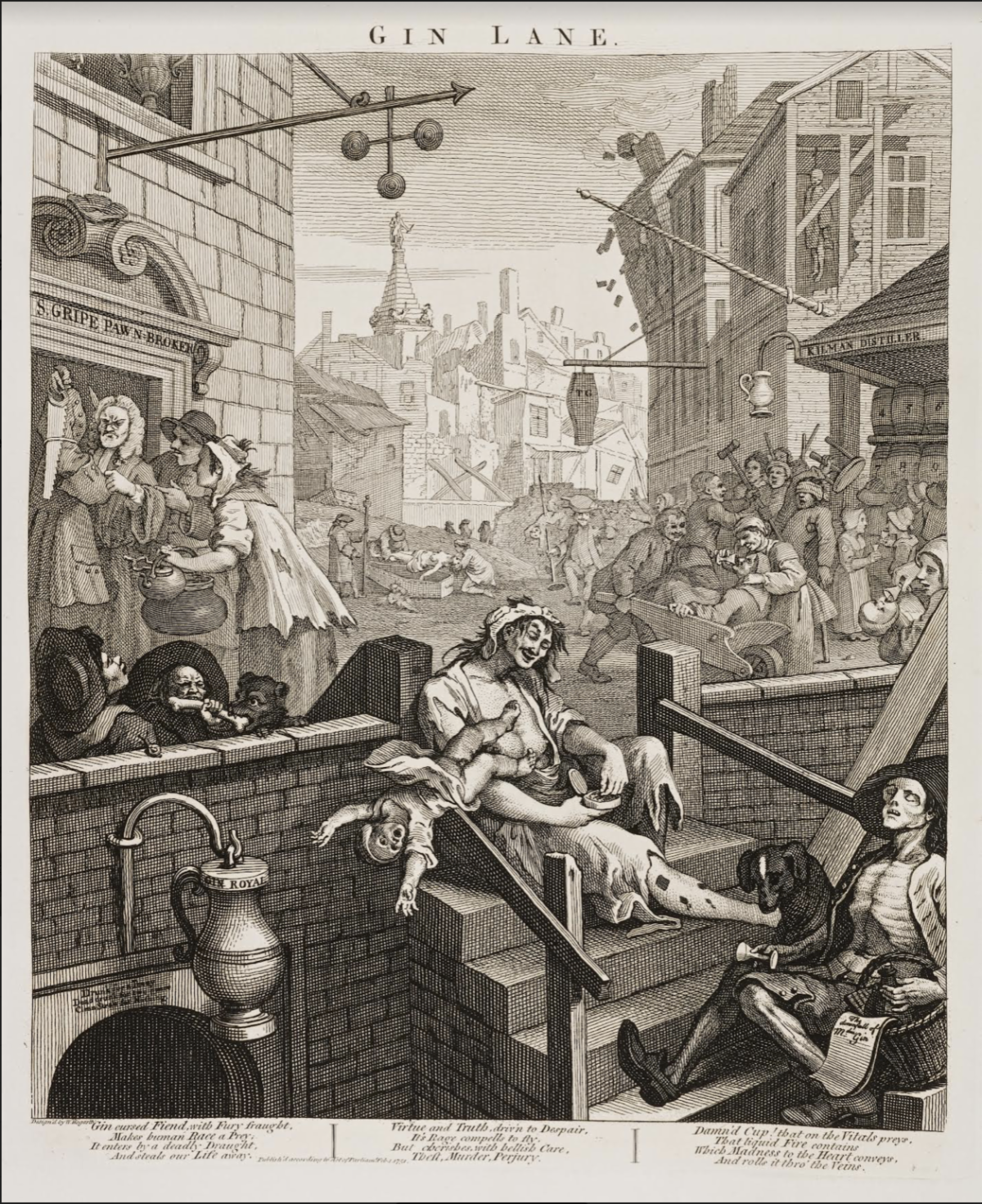
William Hogwarth's 1751 etching and engraving depicting the evils of consuming gin. (Courtesy image.) |
|
I remember staring, slack-jawed at the 1751 Hogarth print “Gin Lane,” projected onto the walls of Shipley’s classroom as he explained that by the mid-18th century, the regulatory tide had turned firmly against domestic distilling. There was a real social cost to all this imbibing, for sure, but the crackdown on gin was helped along by a strong pro-beer lobby, painting beer drinkers as orderly and respectable next to the pie-eyed, slatternly gin-soak.
Gin itself became a symbol of social issues, with Dickens, a century, later opining, “gin-drinking is a great vice in England, but wretchedness and dirt are a greater (vice).”
But it is malaria, and the British empire in India that we must thank for the gin and tonic. As the British arrived in India in droves in the 19th century, they discovered that quinine, contained in the bark of the chinchona tree, was the key to combating ubiquitous malaria. Some genius convinced his fellow squatters that the best way to get the bitter quinine down the hatch was to combine it with gin, water, sugar and lemon.
None of what I learned of gin in Neal Shipley’s class rendered the substance particularly attractive. It seemed that drinking gin was a straight path to becoming an insane wastrel, sharing scraps in the gutter with the rats. Nor did I wish to choke down a medicinal concoction known primarily for its bitterness.
But, since the first time I read C.S. Lewis and Tolkien, I have believed that the good dons of Oxford hold the secrets of the world, and so this is how, another century after the death of Queen Victoria and British India, I nodded and smiled when handed a G&T in the office of one of my professors.
That first sip was one of the great surprises of my life. Far from the syrupy medicinal slug I was expecting, it was light, dry, sparkly, endlessly lovely. Perfect. I did not morph into a Victorian guttersnipe. I came to love an afternoon G&T with my soggy cheese and pickle sandwich.
|
|
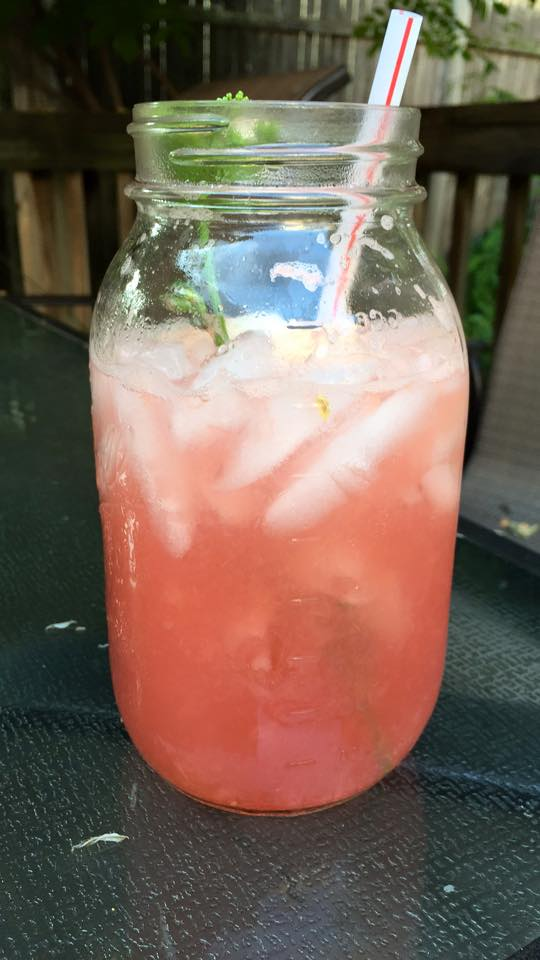
A refreshing twist on the G&T with grapefruit juice and mint. |
|
G&Ts stateside have been a bit of a disappointment, honestly, with their soda gun tonic and their limes (why, America, why?).
But on a sunny summer Sunday, I will make my own version of that perfect Oxford G&T, with a few adjustments, because I just can’t help myself.
B’s Summer Gin
5 oz London dry gin (I am currently enjoying Sipsmith, but Bombay Sapphire never disappoints)
6.8 oz bottle Fever Tree Indian tonic water
Juice of one lemon
Half oz of St. Germaine elderflower liquor
Grind of black pepper
Fill a 24-ounce mason jar with ice. Add gin, lemon and St. Germaine and shake vigorously. Top off ice, add tonic, and top with a grind of black pepper and garnish with a lemon peel.
Drink that sucker slowly, all afternoon.
|
|
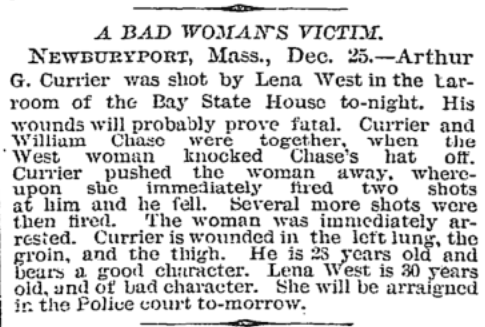
Helena Barrett, alias Lena West, had her moment of fame under the influence of "hot gin," her crime reported in the New York Times on December 26, 1883. |
|
This year, I have moved into the previously unexplored realm of mulled gin, fingered as a prime contributor to a notorious Christmas Day shooting in Newburyport in 1883.
To make a long story short, one Lena Barrett West, under the influence of “hot gin,” shot Arthur Currier twice for “insulting her” at the Bay State House, a hotel on Merrimac Street. “I drank four or five times on Tuesday,” she said, “always hot gin.” She had been ill, she explained, and had imbibed Christmas morning on her way to the Bay State House, “had three hot gins before going,” and again Christmas night, when “I had trouble in the bar room.”
Hot, or mulled gin has its own fascinating history. It first became wildly popular in the 18th century winter markets along (and on) the Thames, known as Frost Fairs. The cheap, rot-gut spirit was made palatable with the addition of citrus, honey and spices, and warmed imbibers both inside and out.
I like a hot gin on a cold day, though it is not so much a staple of my drink rotation as the G&T. My favorite hot gin has a splash of amaro for depth, but you should experiment with what makes your toes tingle.
|
|
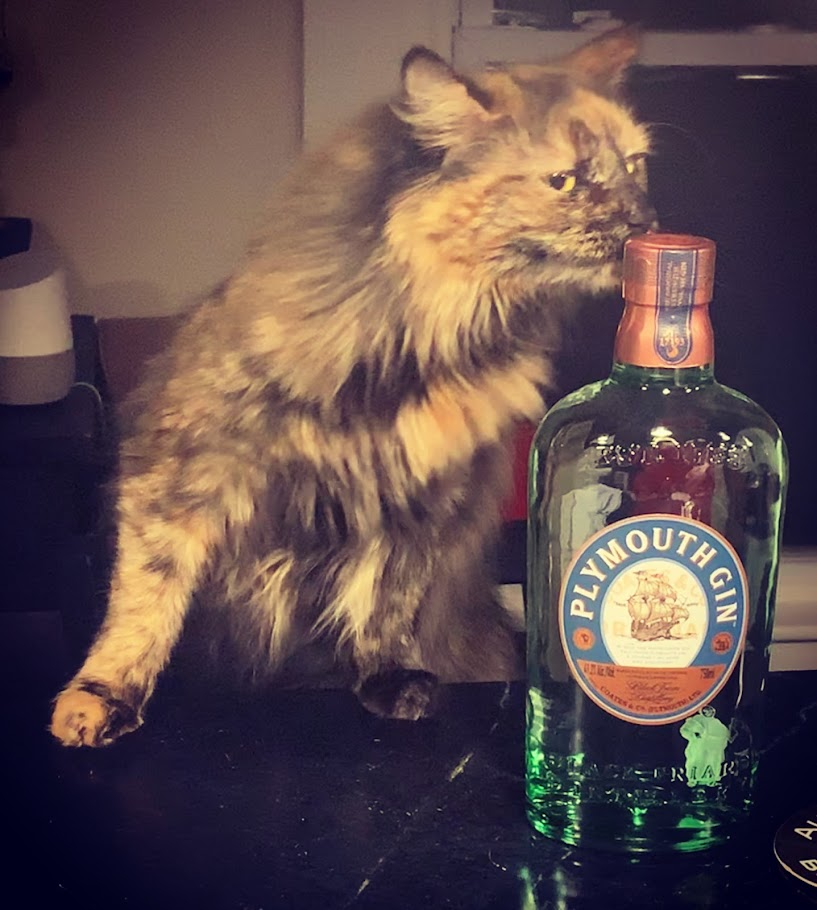
Miriam the cat inspects the ingredients for our hot gin cocktail. |
|
B’s Winter Gin
4 oz Plymouth gin
2 oz Montenegro amaro
2 oz freshly squeezed orange juice
2 oz lemon juice
2 cloves
2 cardamom pods (if available)
1 cinnamon stick
2 juniper berries, lightly crushed
2 tsp honey
Pour the gin into a large mug.
Mix 3/4 cup of water in a pan with the rest of the ingredients and heat on low until steaming. Strain the mixture and pour over gin. Garnish with lemon slice. If no cardamom is available, a light grate of nutmeg is a nice addition.
Try not to shoot anyone at the Bay State House after drinking this.
|
|
And so, my fellow history lovers, I raise my glass to you at the end of another wild year. I wish you safety and health, and a lovely sip of whatever warms your spirit.
And Professor Shipley, wherever you are, thank you for everything, even the drink in my hand.
|
|
Learn about upcoming programs, register, find Zoom links and catch up on previous presentations here. All of our virtual programs are free, however donations are gratefully accepted to help defray speaker fees.
|
|
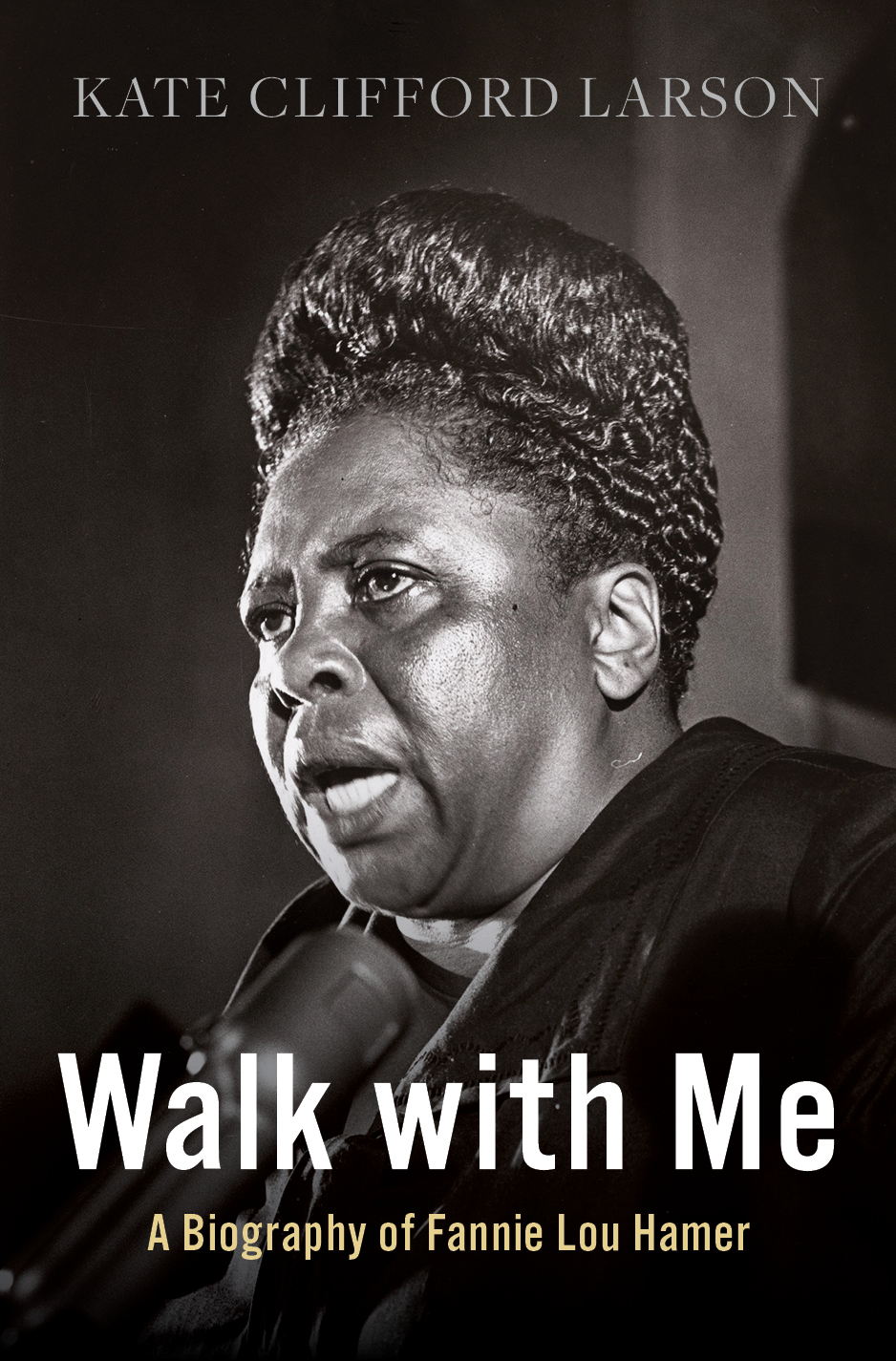
Walk with Me: A Biography of Fannie Lou Hamer
Online Zoom Event
In this program, featuring Kate Clifford Larson’s Walk with Me: A Biography of Fannie Lou Hamer, she will delve deep into the issues with which civil rights activist Fannie Lou Hamer wrestled—discrimination, poverty and disenfranchisement. She will share how Fannie's mission and life's work lives on in voting rights and registration campaigns, anti- racism and Black Lives Matter marches, the #MeToo movement, anti-poverty activism and justice reform.
This is a virtual event. Zoom link will be sent the day before.
Please click here to register.
|
|
|
Secure the Shadow: Victorian Spirit & Post Mortem Photography
Tuesday, January 18, 2022 | 7:00 p.m.
Newburyport Public Library | 94 State Street | Newburyport, Mass.
|
|
|
|
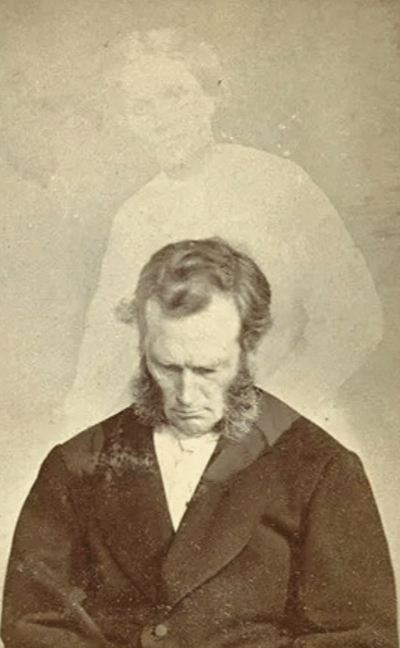
Early photography had a magical quality, even for those who understood the science behind it. For many in the 19th century, the relationship between science and the supernatural was unclear.
Sympathetic photographers and charlatans set up a brisk business “securing the shadow,” memorializing deceased loved ones, and, for the right price, revealing their ethereal presence still hovering around the living.
Local historian and Executive Director of the Museum of Old Newbury, Bethany Groff Dorau, takes attendees on an illustrated exploration of Victorian photography from beyond the grave.
Presented in partnership with the Newburyport Public Library, this is an in-person event and masks must be worn at all times in the library.
No registration required.
|
|
Have you played the December Quiz for "Yeat Yeat, Don't Tell Me!" Yet?
This month's "Yeat Yeat, Don't Tell Me!" quiz is now available. Skip right to the questions by typing joinmyquiz.com/pro into your browser, then enter the code 15316873 to join.
NOTE: this is a timed quiz, so read the questions and get your choice made as quickly as possible.
|
|
Puzzle Me This...
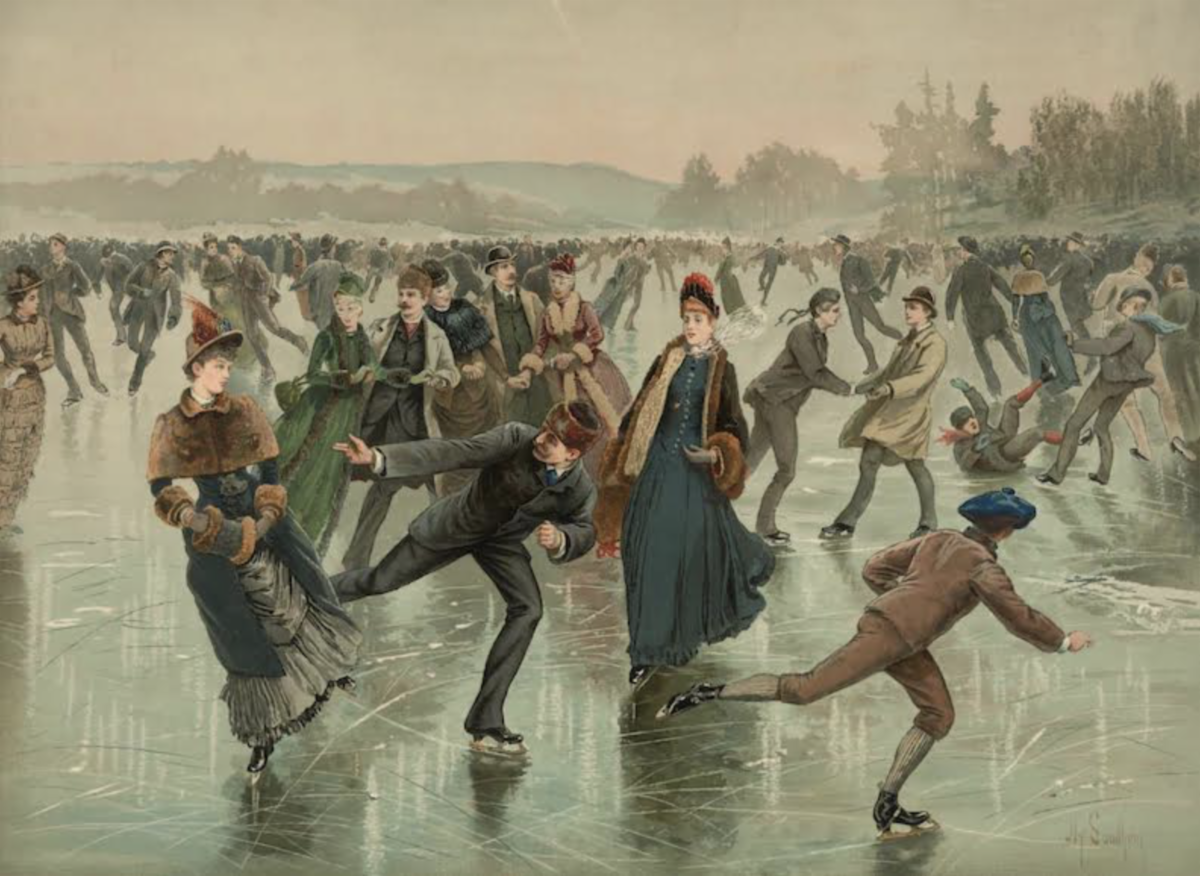
The Museum of Old Newbury wishes its members and friends clear ice and smooth skating for 2022. (Courtesy photo.)
Click on image to begin.
|
|
During this difficult period of COVID-19, we rely on your support more than ever. We continue to develop new, online programs for you to enjoy and keep us connected and look forward to in-person events as protocols for safety loosen. We hope, if you are able, that you will consider a donation to the museum. Thank you for your continued support.
|
|
Museum e-Newsletter made possible through the
generosity of our sponsors:
|
|
|
Museum of Old Newbury
98 High Street
Newburyport, MA 01950
978-462-2681
|
|
|
|
|
|
|
|