e-Newsletter | December 8, 2023 | |
|
"A Good and Sufficient Jail" Part II: Stuart J. Parks, Esq.
by Bethany Groff Dorau, Executive Director
| |
|
This is a continuation of a previous article. For the last installment, click here.
Note: “Jail” and “Gaol” were used interchangeably during this time period, but for ease of reading, we have employed the modern spelling.
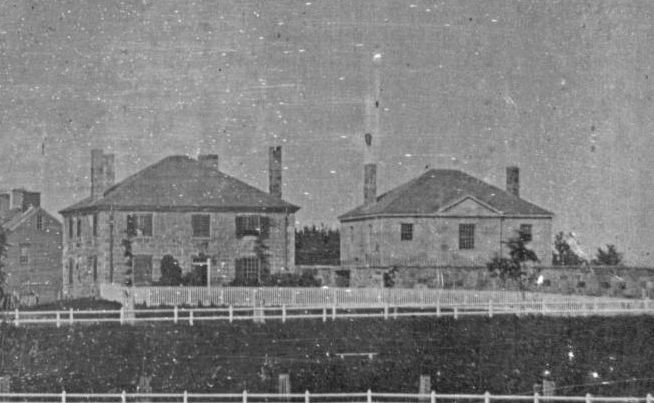
In January, 1824, the Prisons Committee of the state of Massachusetts gave the Newburyport Jail on Federal Street a very bad review. “We found the apartments in this jail offensive, probably owing in part to the age and construction of the building and then necessity of placing a number of prisoners together. The jailer declared it impossible to make the apartment sufficiently warm in winter.” This report, issued in January, ended on a positive note, however. “A Contract has lately been made for building a new stone jail at Newburyport of the same dimensions and equal in all respects to that of Salem.”
| |
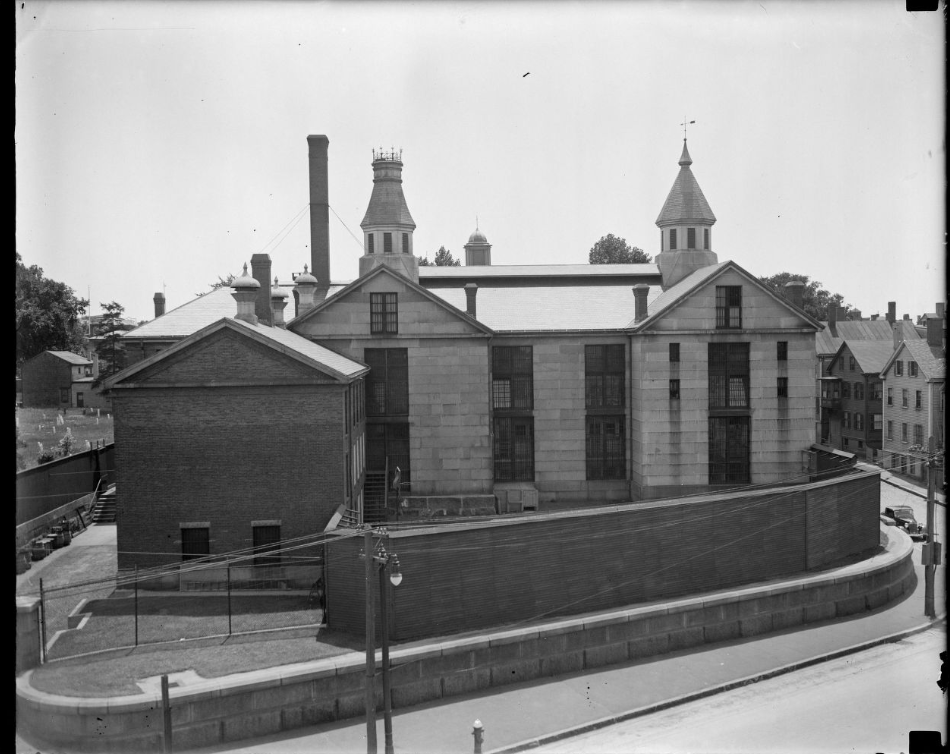
Salem Jail, built in 1813, architect unknown, photo from 1933. | |
The Salem Jail, built in 1813, was considered an excellent example of a modern prison. Unlike Newburyport’s old 1744 wooden jail with an open “yard” in which many prisoners could walk freely for city blocks, the Salem jail was a fortress of stone, unbreakable and sequestered from the community. Newburyport would soon have a fortress of her own. | |
|
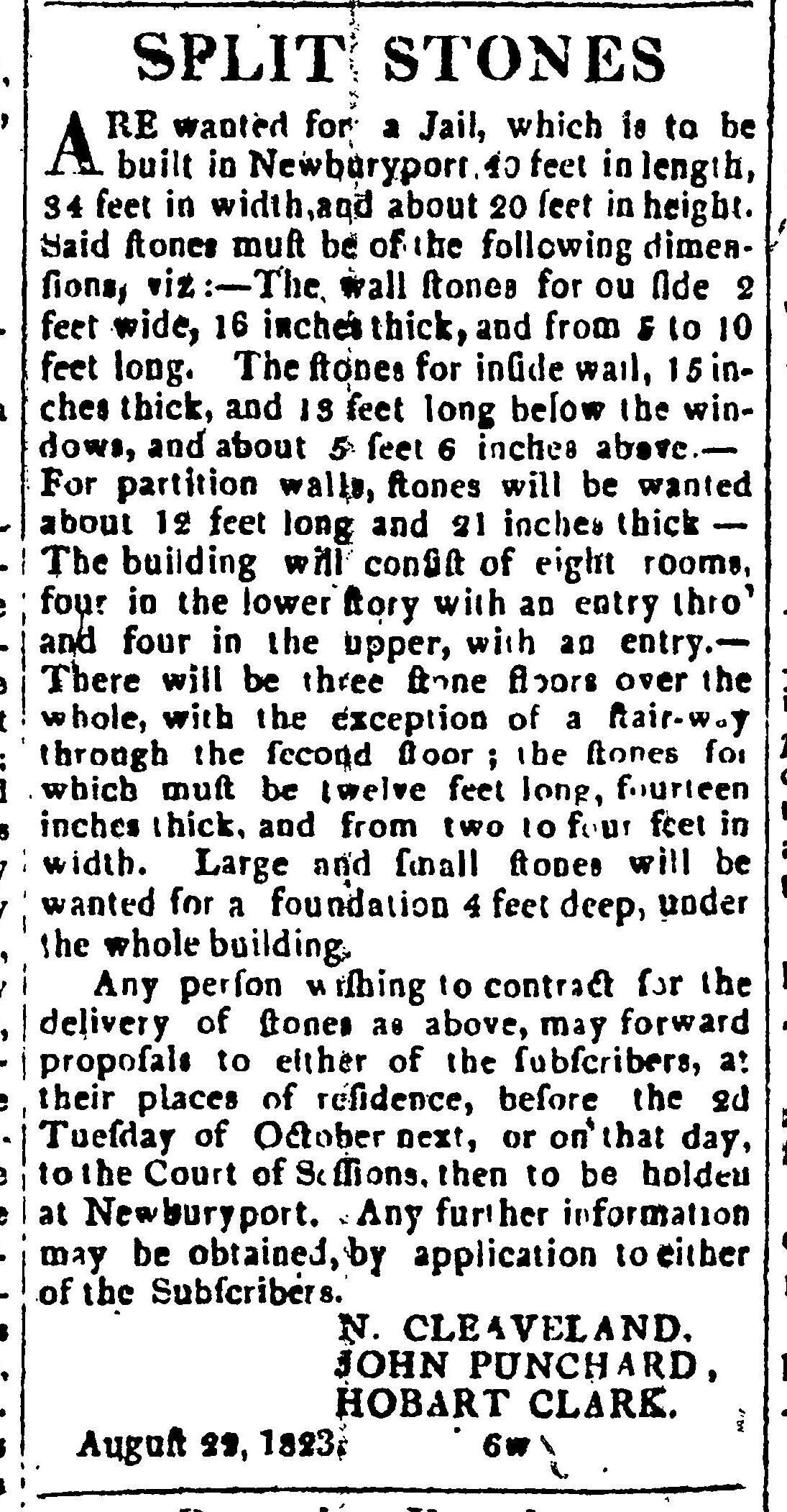
Six months earlier, in August, 1823, a large advertisement ran for weeks in the Newburyport Herald, calling for massive quantities of split stone and laying out the plan for the new jail. “The wall stones for outside (must be) two feet wide and 16 inches thick and from 8 to 10 feet long. The stones for the inside walls (must be) 15 inches thick and 13 feet long below the windows, and about 5 feet 6 inches above. For partition walls, stones will be wanted about 12 feet long and 21 inches thick.” There were more measurements for the floors, the foundation, and the entryway. Anyone wishing to obtain the contract for these stones was welcome to send their proposals to the county agents or attend the next court session.
One year later, the stone for the jail and the jailkeeper’s house was laid, and the builder needed help finishing the job. On August 6, 1824, an advertisement called for “any person or persons who may wish to contract for all the woodwork of a stone dwelling house to be built on the county land in this town, also the glazing, the plastering, and the painting of said house. Proposals will be received on or before Wednesday the 25th of August at Pearson’s hotel in Newburyport. A plan of the house may be seen by applying to S. J. Park Esq.”
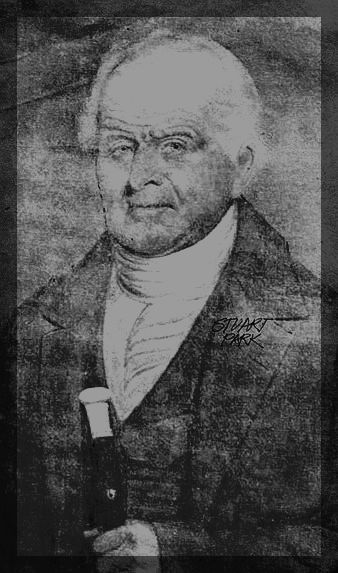
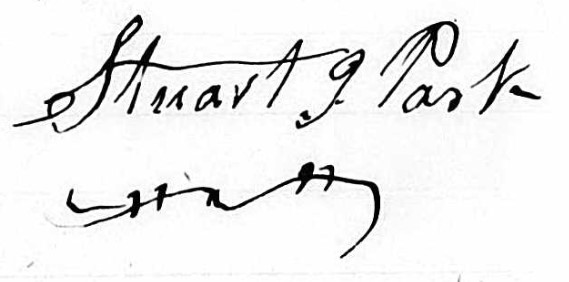
S. J. Park, Esq. is Stuart James Park (1773-1859), a man whose presence in the historical record is surprisingly fleeting, despite a truly, and literally, monumental career. By the time Stuart J. Park was hired to design and build the jail in Newburyport, he was known throughout New England for his imposing public buildings. He built the New Hampshire State House in 1819, as well as the Massachusetts, Vermont and New Hampshire State Prisons, in 1803, 1808, and 1810 respectively. He built bridges, dry docks, locks, canals, and stone prisons from Worcester to Portland, Maine, even helping to design the Bunker Hill Monument. Park’s work as a designer and builder can be seen all over New England. And yet, when he died in 1859 at his estate in Groton at the ripe old age of 86, he is listed as a “stone mason”.
| |
|
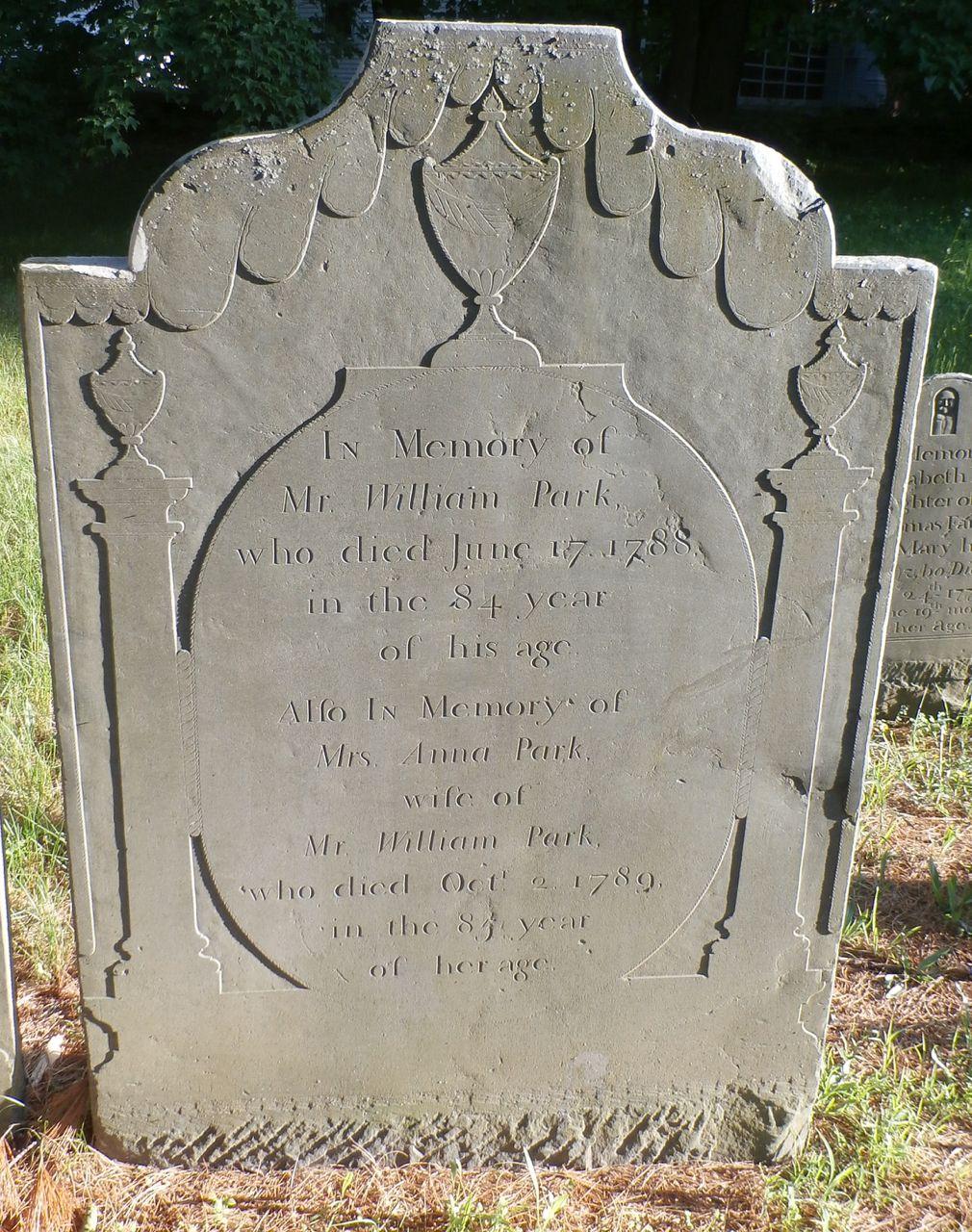
Stuart J. Park's Glasgow-born grandfather, William Park (1704 to 1788), was a well-known gravestone carver. His stone, which he likely carved, is in the Old Burying Ground in Groton, Mass.
Stuart James Park was the son and grandson of Scottish-born stonemasons. His grandfather, William Park, came to the United States from Glasgow in 1756, settling in Groton, Massachusetts, where he became a gravestone carver. His wife and children joined him more than a decade later, in 1767. William Park’s eldest son John was thirty-six when he came over to join his father, and already an established stone mason and builder in the employ of the Duke of Argyll. John Park did not intend to stay in New England and was asked to return to Scotland by the Duke to work on renovations to Inveraray Castle, but the American Revolution changed those plans.
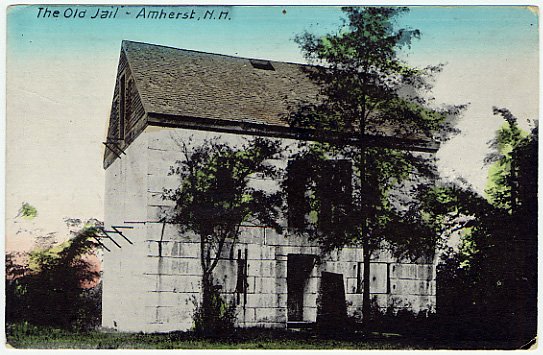
Stuart James Park, youngest son of John, went into business with his father, who had introduced the process of splitting granite with flat steel wedges into this country. With his father, Stuart built stone jails in Worcester and Concord. Stonecutting was dangerous work, as Stuart James Park’s memory of his father’s death in 1793 illustrates. “My father undertook the building of a jail in Amherst NH, and while attempting to move a very large stone with four oxen and large levers, the chain around the stone to which the oxen were attached slipped upon the stone and the stone tipped on one end of a very heavy oak beam and the other end struck my father under the chin with such force as to destroy his consciousness and shatter the whole bony structure of his head, causing his death in about 24 hours after the accident occurred.”
| |
|
The stone jail in Amherst, New Hampshire that killed John Parks in 1793.
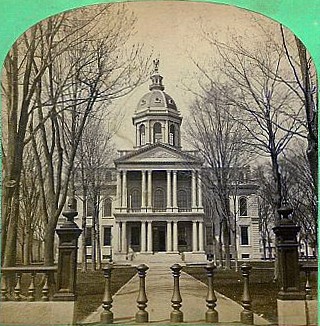
After the death of his father, Stuart J. Park went into business on his own, building a series of stone jails. His most visible and celebrated commission was the New Hampshire State House in Concord, today the oldest state house in which the legislature meets in its original chambers. Park Street flanks one side of the building, named in honor of its architect, Stuart Park. After this, there was a dam in Boston, another prison in Dover, New Hampshire, and then, beginning in 1823, the jail in Newburyport. After the completion of the Newburyport jail, Stuart Park had two more commissions – the first dry dock in the Charlestown Navy Yard and the Boston and Lowell Railroad. Then, having made a lasting contribution to public architecture and infrastructure in New England, he retired to his farm in Groton, emerging to serve as a Massachusetts State Senator for three years, beginning in 1837.
.
| |
|
This image of Park's New Hampshire State House is from a stereo-view, c. 1870
It is somewhat puzzling that Stuart James Park is not better known today, as the buildings he designed and constructed are landmarks all around New England. The Newburyport jail is no exception, appearing in one of the earliest landscape photographs in the country, and later in postcards and stereo-views of the city.
Is it possible that the design of jails was not considered as worthy of praise or as much of a high art as court houses and libraries? Perhaps. It is also possible that Park’s papers were not saved to be pored over by future generations – this writer has not found an archive with detailed records of his work.
I like to think that Stuart J. Park was a hands-on worker like his father and grandfather, chaining massive blocks of granite to straining teams of oxen, as much brawn to offer as brains. Whatever the case, in the end, and perhaps most importantly, he seems to have been a kind and careful man, recalling with pride that he was also a good boss. “In all the small jobs which I have taken in addition to the public works above enumerated, I never had any quarrel with the hands under me or in my employment.”
|  | |
Stay tuned for Part III of this series, where we join the Boston Prison Discipline Society on a visit to the Newburyport Jail.
Special thanks to Charles Griffin for inspiring this research and cheering us on!
| |
|
'Tis the Season -
Donate to the Annual Fund!
| |
|
New Date Added - December 20 - for Solstice in the Cemetery: Night Walk Through Oak Hill!
Click on the image below to purchase your tickets.
| |
|
Silverware, Sex, and Stirpicults: John Humphrey Noyes and Oneida Community Silver
...by Bethany Groff Dorau, Executive Director
| |
|
Part Two
This is a continuation of a previous article. For the last installment, click here.
| |
|
First, an apology. It has been a month since the last installment of the wild and wonderful tale of John Humphrey Noyes, founder of the Oneida Community, whose family hailed from Newbury, and whose exploits were breathlessly reported in the sizzling pages of the Newburyport Herald. When last we left our dubious hero, it was 1848, and the good people of Putney, Vermont had just called for his arrest, based on a scandalous letter inviting a woman into a "complex marriage". He was facing charges of “adulterous fornication”, and had failed to convince his neighbors of his Perfectionist inability to sin. It was high time for Noyes and his band of self-identified Bible Communists to get out of New England.
Destination: Oneida, New York, naturally, in an area of the country so swept with spiritual fervor, emotional revivals, and the fire of religious awakening, it had become known as the Burned-over District. It was here that Noyes would build his Perfectionist community, and where I would spend my 9th wedding anniversary.
| |
|
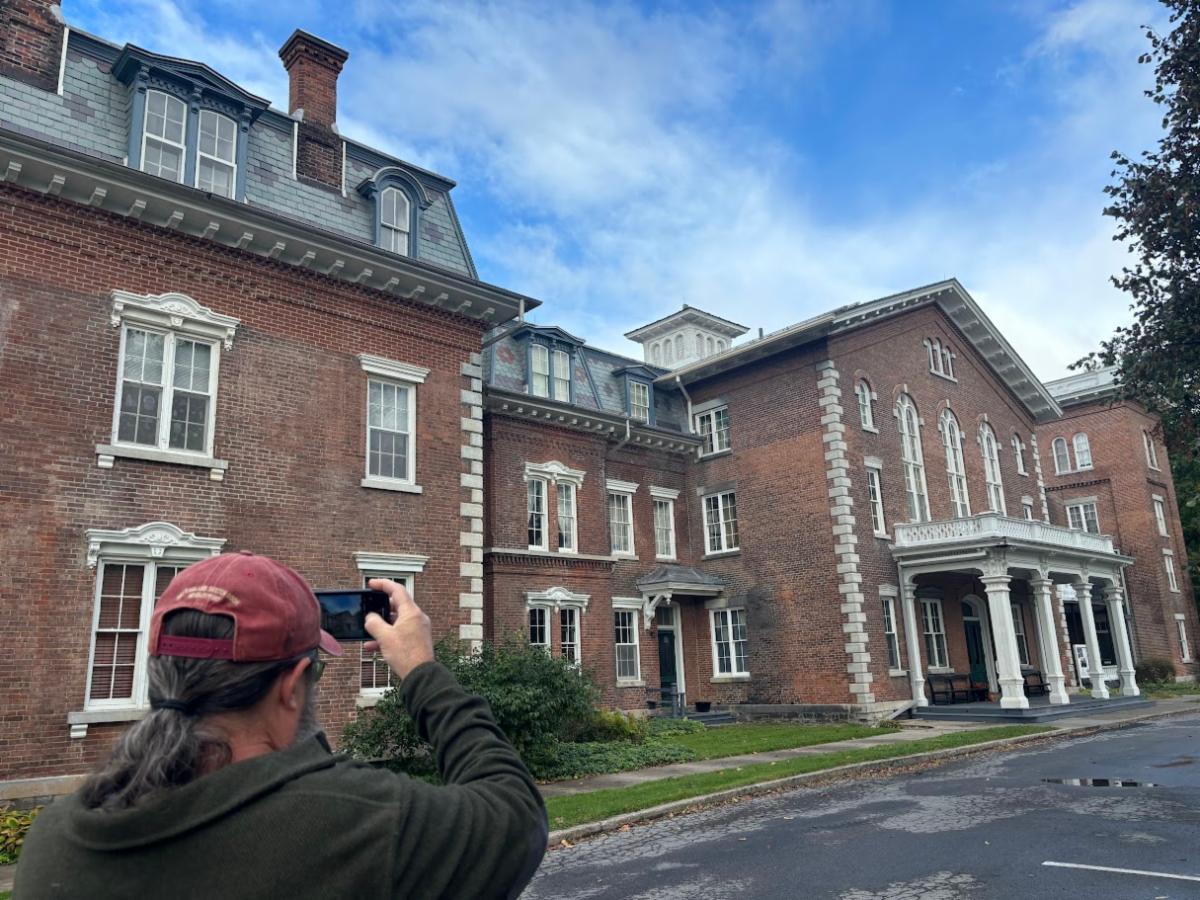
My one and only spouse, James, snaps a pic at the Oneida Mansion House, October 12, 2023.
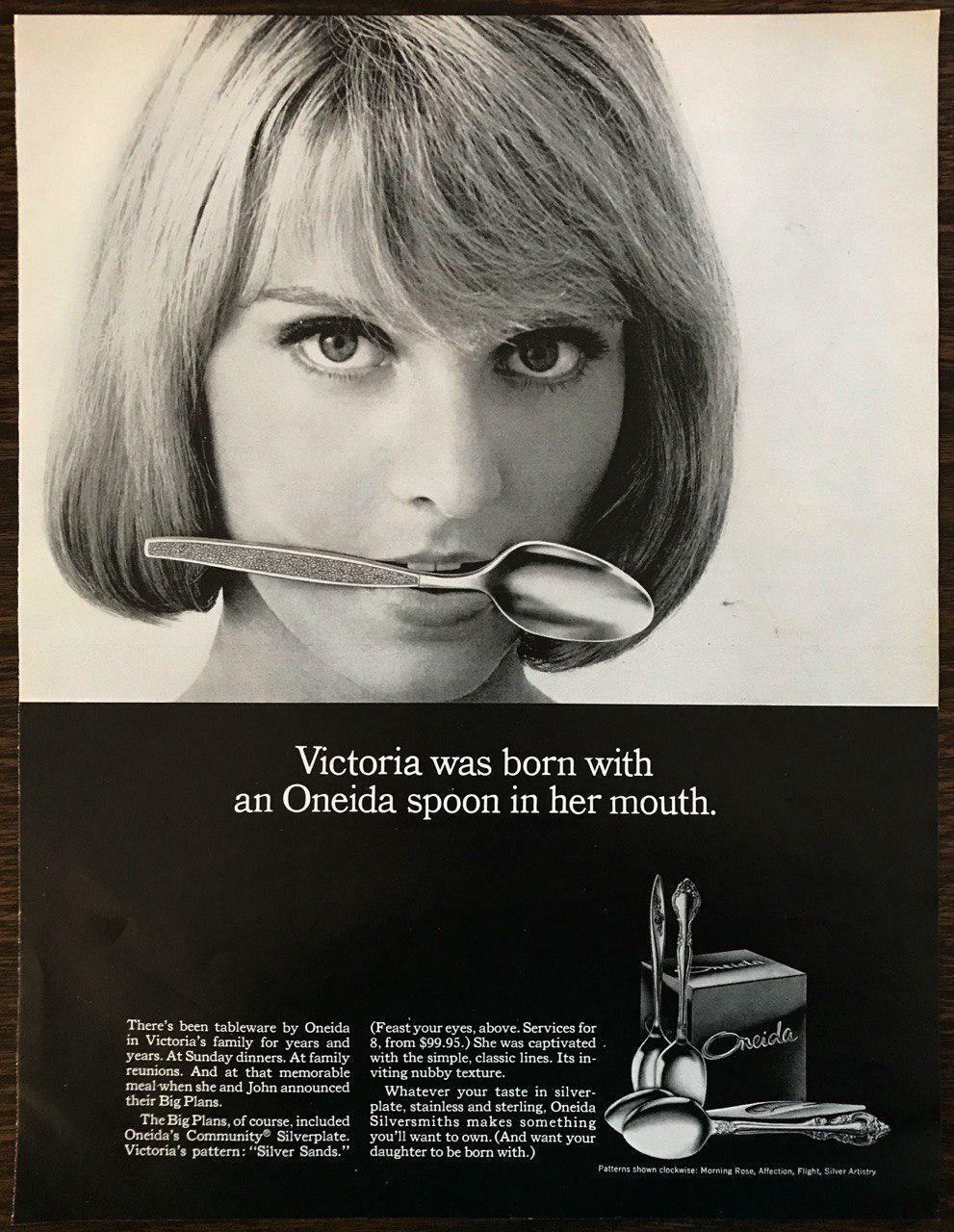
Nothing says romance like a night in a free-love commune, right? Upon discovering that John Humphrey Noyes is my third cousin (5x removed), and that it was possible to stay in the mansion, I announced to my long-suffering husband that he would be joining me for ten hours in the car and an overnight in the place where spooning had a whole other meaning. "You mean Oneida like the silverware?" he said. I rolled my eyes. "I'll catch you up on the way," I said. And off we went.
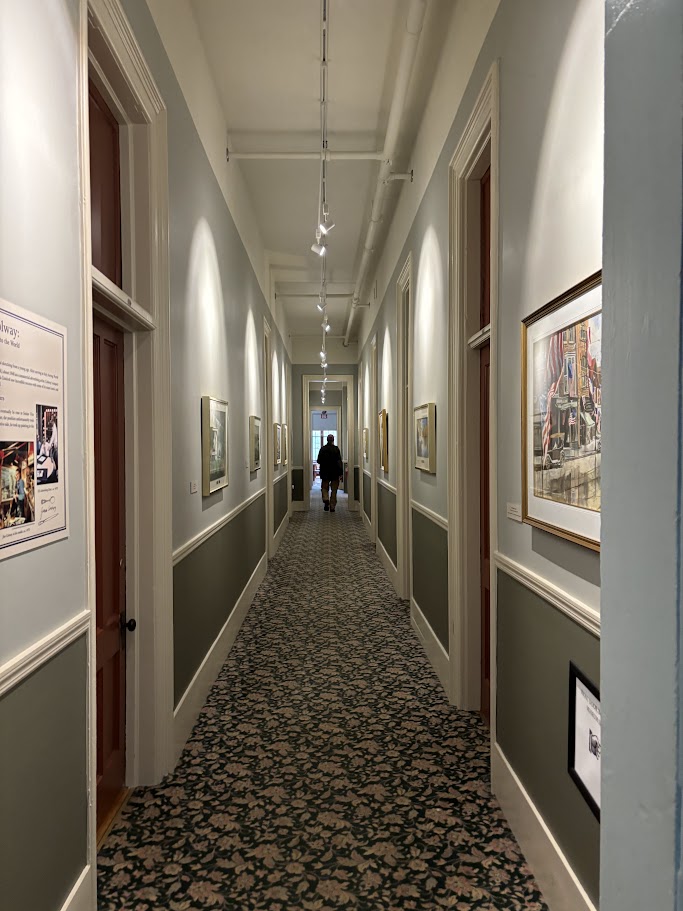
The Oneida Mansion House in its current incarnation is part modern hotel, part museum, and part apartment complex. After five hours of highway, past a looming fluorescent casino and miles of cornfields, there she was, atop a rise, surrounded by neat little houses that seemed nearly all from the first half of the 20th century. We were the only hotel guests, though several of the apartments in the rear of the building were occupied. Our room was beautiful, clearly very recently renovated. We were given the keys to the building and left to wander at our leisure. When the staff left for the night and we were alone, the long halls and disorienting stairways took on a bit of "The Shining" vibe.
| |
|
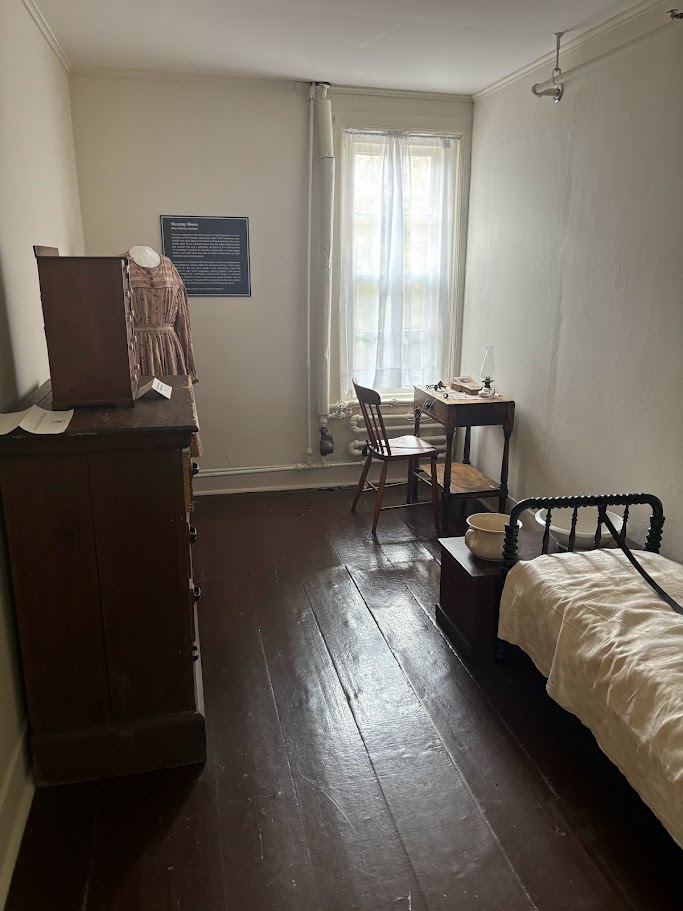
The Oneida Mansion House sleeping rooms, unlike public spaces, were plain and utilitarian.
Down the hall from our room was a very different kind of space. The "sleeping rooms" of the Oneida Community reinforced their core beliefs. They were sparse and plain, unlike the beautifully decorated, well-appointed common rooms nearby, which included a theater, libraries, and sitting rooms. Community members were encouraged to spend as much time as possible with each other. There was a small space for personal items, as most everything was to be held in common. And, of course, the bed was very small. Nobody was supposed to get too comfortable. "Sticky" or individual attachments were to be avoided.
The sexual visits or "interviews" held in these rooms were private, but prolonged coupling was discouraged. After all, everyone in the community was married to everyone else. At the core of Noyes' teaching was the idea that non-procreative (though heterosexual) contact produced a kind of electricity, charging the spiritual battery of the community and bringing its members closer to God. The more "interviews", the better.
| 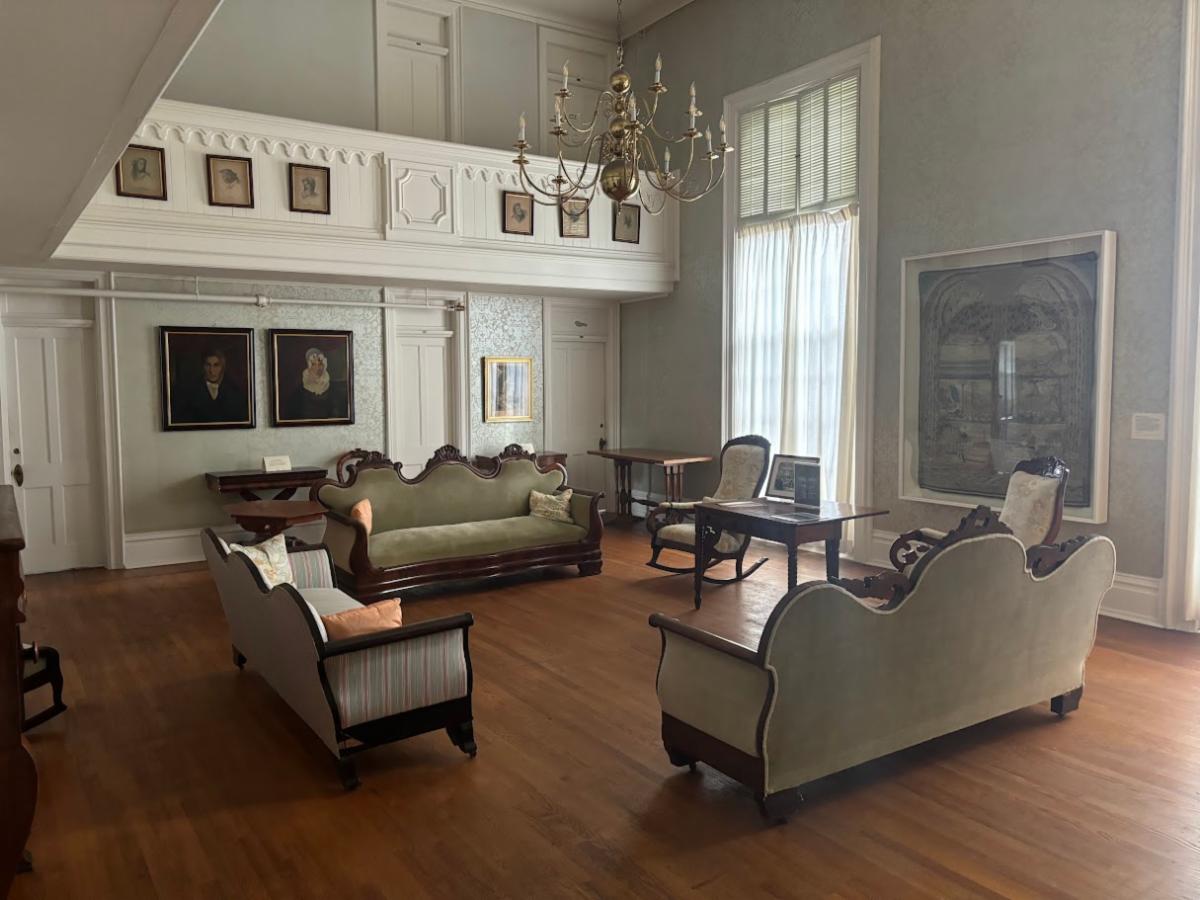 | |
One of several communal sitting rooms in the Oneida Community Mansion.
John Humphrey Noyes fled to Oneida in 1848, after his unorthodox sexual doctrine led to his arrest in Vermont. Noyes and his followers, now called the "Community" were given land by a Perfectionist sympathizer. Determined to live without "egoism and exclusiveness", Noyes oversaw the construction of a common house for all 84 members of the Community. Within the next five years, he also established branches in Brooklyn and Wallingford, Connecticut.
By the 1860's, the community had outgrown the original mansion house, and another, much larger complex was built, including a separate house for the rearing of children, who could be occasionally visited by their parents. Undue attachment was punished with prolonged separation, however.
| |
|
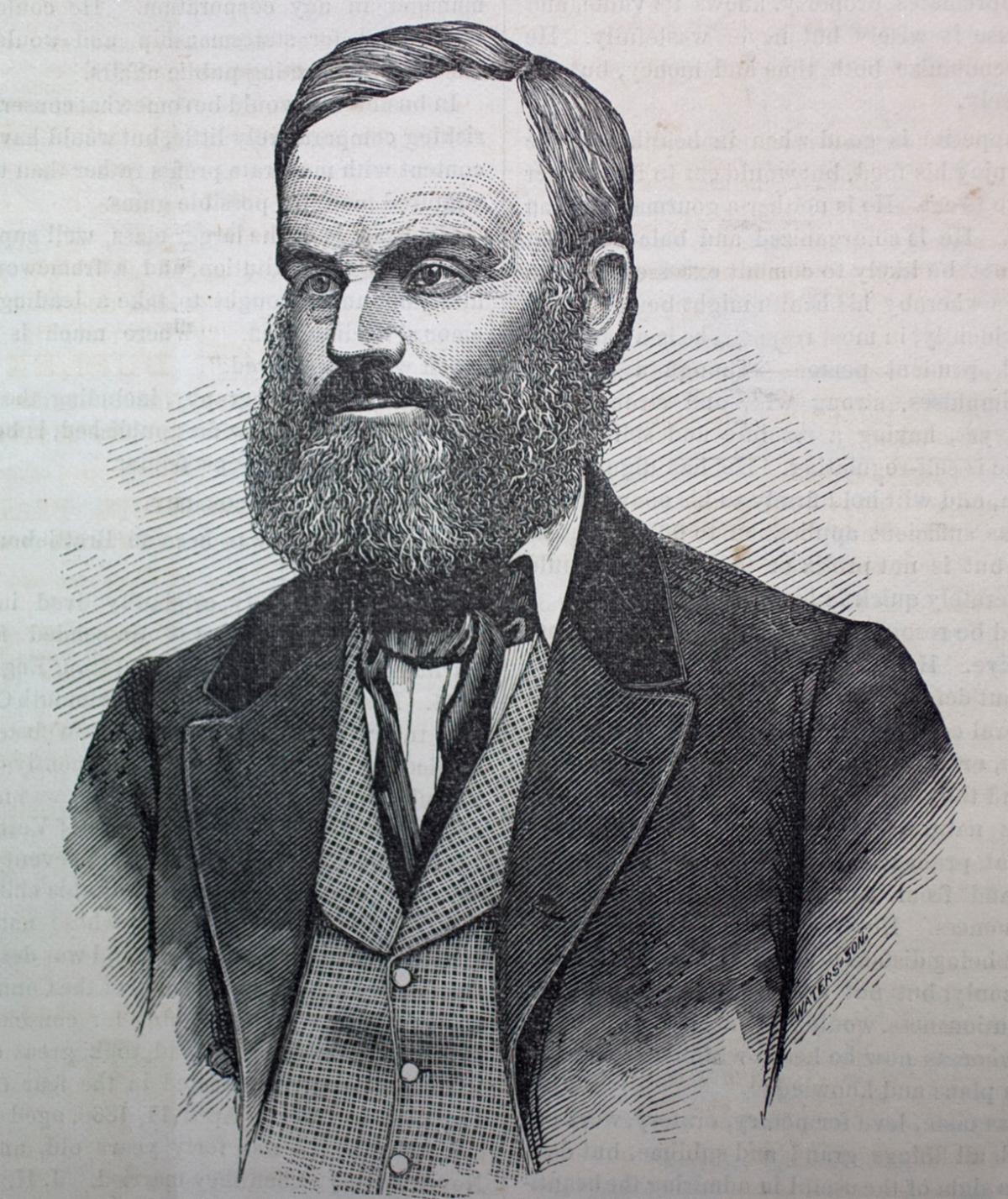
Oneida Community founder John Humphrey Noyes (1811-1886). Private collection.
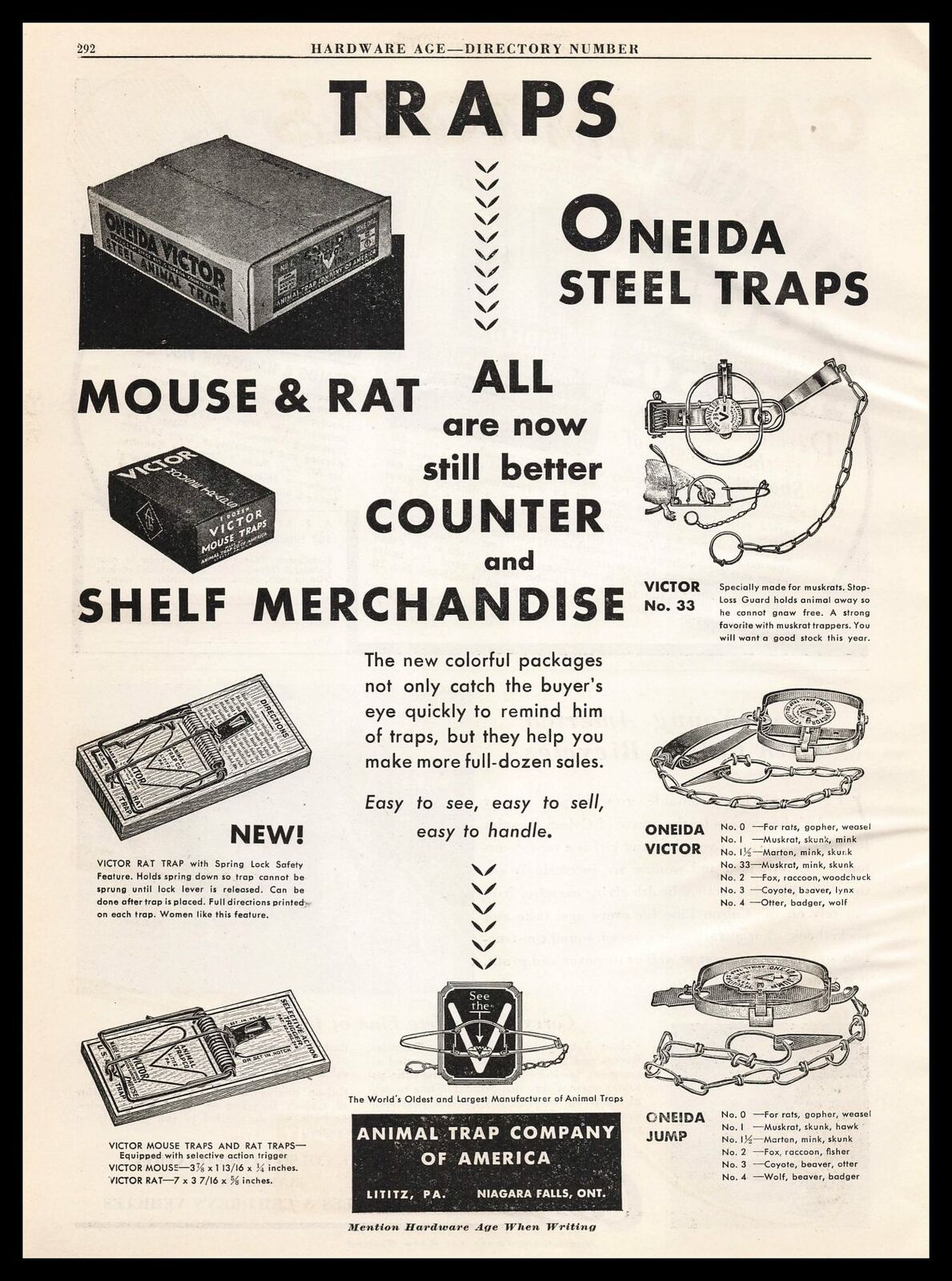
Freed from the demands of motherhood and the management of a household, women were free to work at whatever best suited them. They cut their hair short, wore pants, and served as journalists, accountants, or worked in the fields and factories as they wished. Thus fortified with a full and vigorous workforce, the Community embraced capitalist endeavors, first attempting to grow and preserve fruit for sale, and then, when a Community member turned out to be an excellent trap-maker, throwing their energy into trap production. Later, the Community added silk thread twisting to their endeavors, and after 1877, they began to make the spoons that would found their silverware empire. Community members believed deeply in self-improvement, however, and work was limited to six hours a day, with the remainder of the time for socializing, music, and education.
| |
|
The Oneida Trap Company laid the groundwork for a utopian community grounded in manufacturing.
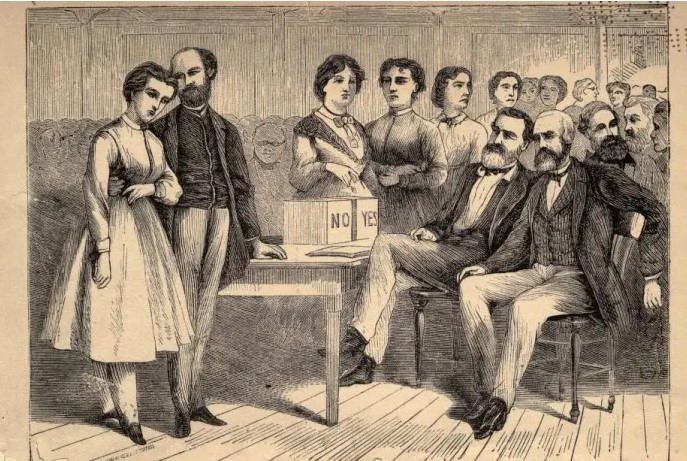
As the Oneida Community became more prosperous, an ageing Noyes began to look to the future. Inspired by current evolutionary theories, he began his own selective reproduction program in 1869. He called this "stirpiculture", and instituted a process whereby morally and physically suitable couples in the community could apply to have a child. Noyes, of course, thought of himself as the most evolved member of the community, and in the end, 10 of the 62 children, called "stirpicults", born between 1869 and 1879 were fathered by him.
| |
|
This satirical illustration of a young couple applying to be parents was published in 1870.
The Oneida Community's success in its communal phase was dependent on the magnetism and energy of John Humphrey Noyes, and on the devotion of his followers. The stirpiculture program, from which some were excluded, caused rifts in the Community, and there was no clear successor to Noyes, who was growing increasingly deaf and inflexible. Then in June 1879, amid national debate over the Mormon practice of polygamous marriage, Noyes, believing he was about to be charged with statutory rape, left New York for Canada, never to return.
Stay tuned for Part 3, as the Stirpicults rebrand themselves as humble farmers and build an empire from the ashes of the Oneida Community.
| |
Something Is Always Cooking... | |
|
1723 Fish House Punch
There's a little place just out of town,
Where, if you go to lunch,
They'll make you forget your mother-in-law
With a drink called Fish-House Punch.
-The Cook, 1885
Attendees at last weekend's Holiday Party for our cherished members may have sampled a version of this traditional rum punch, which is said to have been first served in 1732 at Philadelphia's fishing club, the State in Schuylkill. This version, much diluted from the original, is meant for a punch bowl, but still packs a punch, so be careful!
1 cup dark rum
1 cup light rum
1/2 cup cognac
1/2 cup Slivovitz or plum brandy
1 cup lemon juice
1 cup sugar (to taste)
5 cups water or lemon seltzer
Sprinkle of nutmeg
Combine ingredients in a punch bowl. Add lemon slices and cranberries in an ice ring or large block. Sprinkle with nutmeg. Enjoy in small glasses.
| |
|
Click the image to do the puzzle
Do the puzzle and enjoy this glimpse of a local gal (well, sort of), spotted by our executive director on her anniversary trip to Oneida, New York! Do you know that Wonder Woman has a Newburyport connection? Read all about it here.
| | |
Museum e-Newsletter made possible through the
generosity of our sponsors:
| |
| | | |