e-Newsletter | February 16, 2024 | |
|
Roland Hayes and Langston Hughes Lift Their Voices for Equality
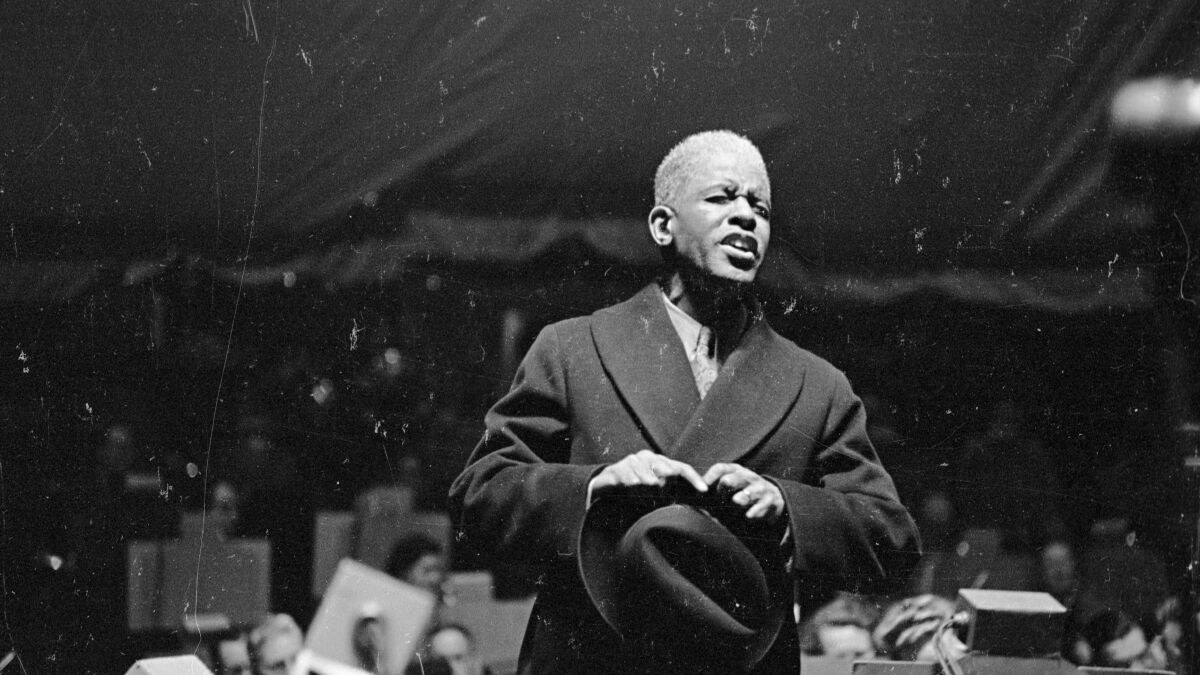
In 1942, an off-duty policeman savagely beat and handcuffed famed tenor Roland Hayes after a disagreement in a shoe store in Rome, Georgia. Poet Langston Hughes turned his rage into verse, penning "Roland Hayes Beaten", and "How About It, Dixie".
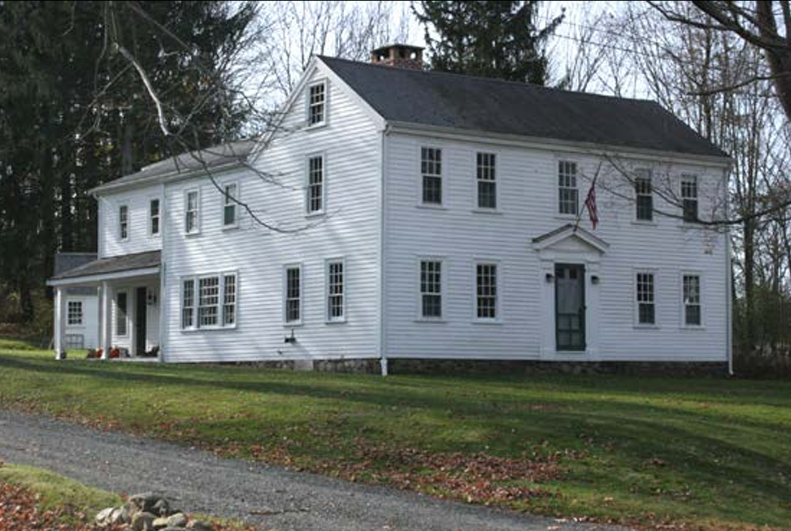
Four years later, Roland Hayes moved his family to a farmhouse in West Newbury...
Read the title story following event announcements!
| |
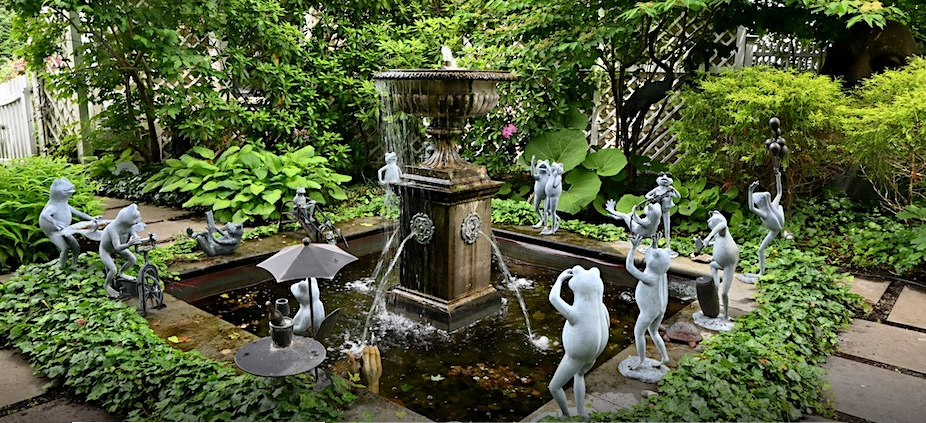
Flower Power: Wander Down the Garden (Tour) Path with Bob Watts!
Thursday, February 22, 7:00 p.m.
| |
Craving some lush spring blooms in the middle of winter? Join us for an illustrated romp through the gardens of the Old Newbury Garden Tour with photographer Bob Watts. Watts is the creator of the popular "Come for a Walk With Me" social media series and board member/volunteer with the Museum of Old Newbury.
For the past 45 years, the Museum of Old Newbury has offered Garden Tour participants the chance to be inspired and delighted by the exquisite gardens in our community, and for the past three years, Bob Watts has been there to capture these gardens and the stories behind them on (digital) film.
Enjoy flower-themed refreshments and special discounts on tickets to our 45th Annual Old Newbury Garden Tour as Watts takes us on a wander through gardens past, interweaving photography tips and stories from the field with a selection of images.
Come for a winter Garden Tour walk with us!
Free for members of the Museum of Old Newbury; $10 for non-members.
| |
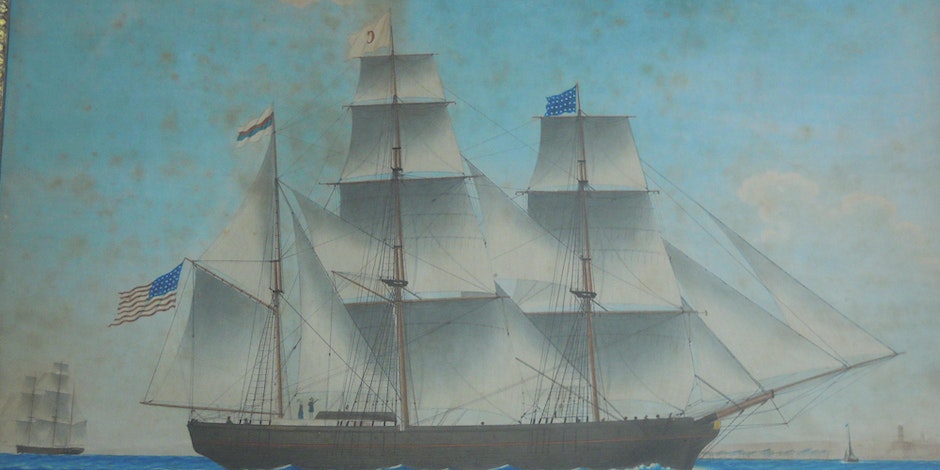
Ice Ship to Calcutta: Captain Pritchard and the Ultimate Ephemera
Tuesday, Feb 27, 2024, 7:00 PM
| |
History of Old Newbury in 3 Drinks: Part II: RUM 1700-1800
Friday, Mar 22, 2024, 6:30 PM
| |
Using Your DNA Test for Genealogy
Wednesday, Apr 3 and Wednesday, Apr 10 2024, Noon - 1:00 PM
| |
|
Roland Hayes and Langston Hughes Lift Their Voices for Equality
...by the West Newbury Historical Commission and Bethany Groff Dorau
| |
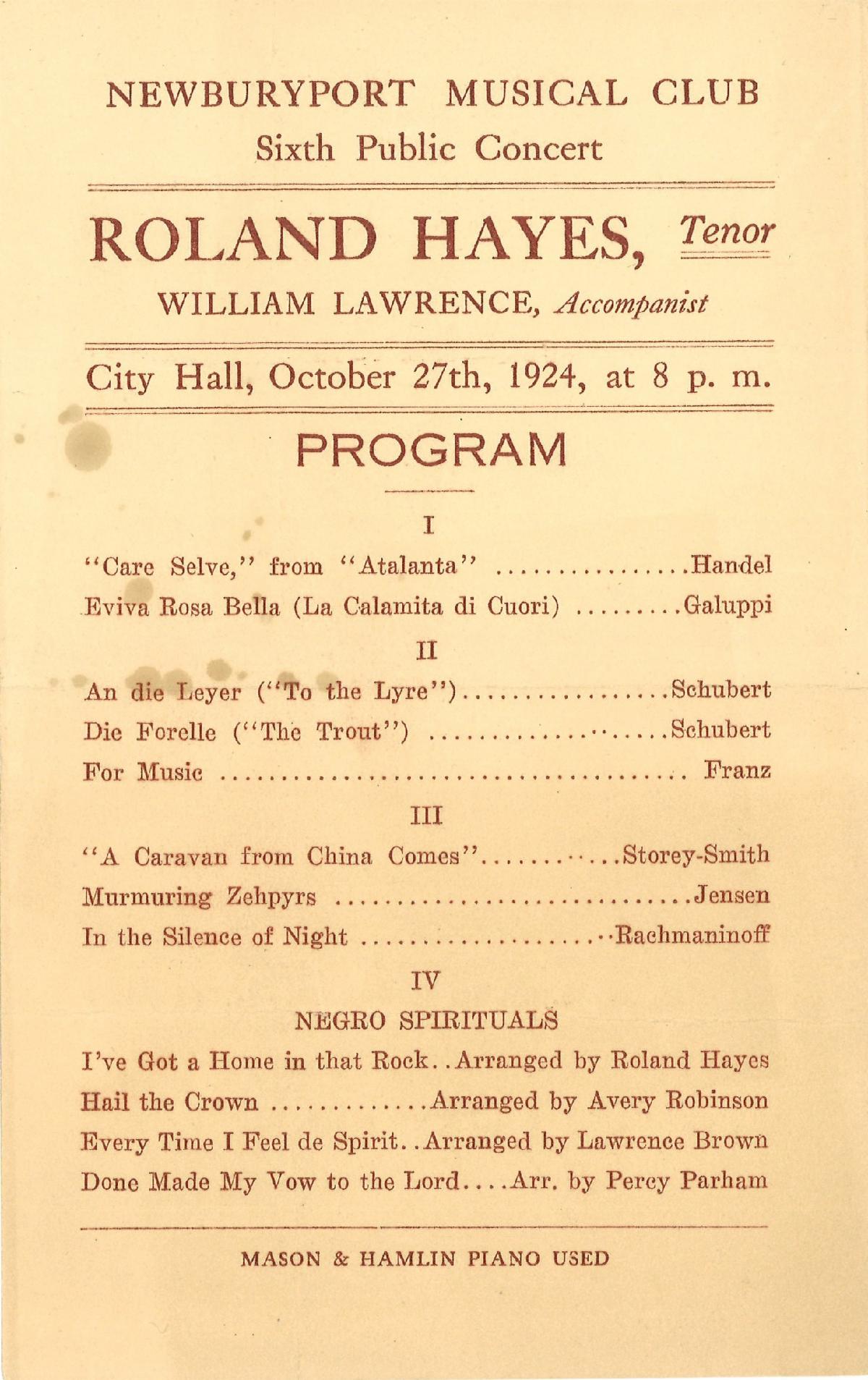 | |
The archives of the Museum of Old Newbury contain all manner of ephemera - theater tickets, brochures, posters, and records of the ubiquitous musical performances that took place in Newbury(port).
On Monday, the concert program above was brought to my attention by archivist Sharon, and as so many of these items do, it was a window into an extraordinary life.
Roland Hayes, born to a formerly enslaved mother in 1887 in Georgia, became one of the best-known Black musical performers in America and beyond, singing in numerous languages and touring the world. He also risked his life to live and perform in the South, where Jim Crow laws enforcing segregation and racist violence were rampant. His concerts were acts of extraordinary courage and defiance.
In 1942, Hayes, described by one biographer as a "gentle, mild, and slight", was beaten by an off-duty policeman in Georgia after Hayes wife sat in the wrong section of a shoe store. Rocks were thrown through his window when he moved to Brookline. Famed Black poet Langston Hughes (1901-1967) gave voice to his outrage, writing at least two poems in response to the treatment of his friend.
As excited as I was to research and share the story of his life, and his time in my hometown of West Newbury, it became quickly apparent that the West Newbury Historical Commission and its champion, EJ Grammer, had researched and written an excellent piece on his life. It follows in full, with gracious permission.
Roland Hayes Beaten (later renamed Warning)
by Langston Hughes
Negroes,
Sweet and docile,
Meek, humble and kind:
Beware the day
They change their mind!
Wind
In the cotton fields,
Gentle Breeze:
Beware the hour
It uproots trees!
-Bethany Groff Dorau
|  | |
|
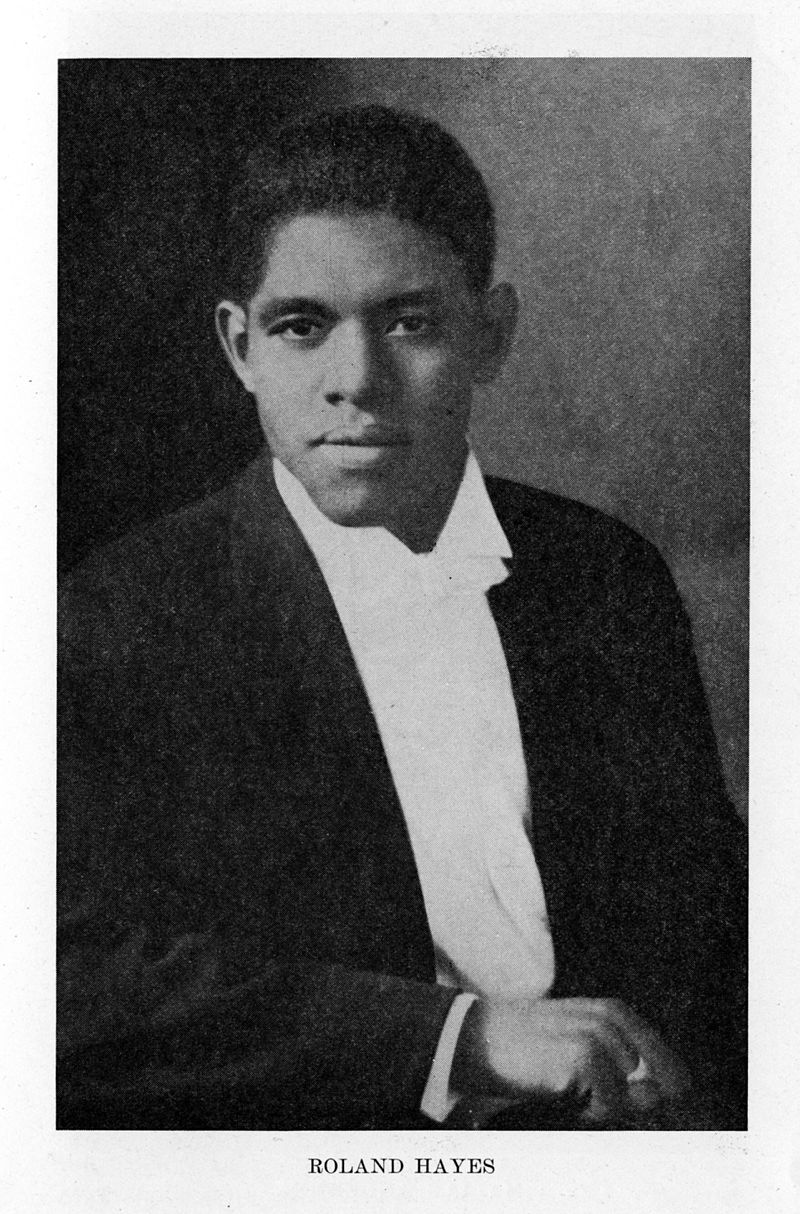
Lyric tenor Roland Hayes, West Newbury’s preeminent concert virtuoso, was born on June 3, 1887 at the plantation in Curryville, GA, where his mother, Fannie Mann, had been enslaved and the family continued as tenant farmers.
His father, William, died when Hayes was 11, and the family moved to Chattanooga, TN.
Hayes’ talent and drive were apparent at an early age: he sang in the church choir, found voice instruction, and in 1911 was invited to become the lead tenor at Fisk University’s Jubilee Singers. At the same time, he worked several jobs to support himself and his family. When the Jubilee Singers toured, Hayes decided to stay behind in Boston.
In Boston, Hayes worked as a page at John Hancock and saved money to support his music career. Notwithstanding the insistence of his mother, voice teacher, and others in the music world that audiences would never listen to a black man as a serious concert performer, he persevered. Managing his own career, he sang in churches and other venues and by 1913 was known as the “Negro Caruso,” performing both classical pieces and spirituals, which he did much to preserve.
In 1920 Hayes sailed for Europe. In 1921 he gave a command performance for England’s King George V. After his triumphant return to the States in 1923, Hayes became the first African-American soloist appearing with the Boston Symphony Orchestra.
He toured all over the country and the world, including this corner of it. The October 1, 1924 Newburyport Daily News stated, “When Roland Hayes, internationally famed tenor comes to this city Monday evening, Oct. 27, for his song recital on the program of the sixth public concert of the Newburyport Musical club, his choice of selections will afford an unusually varied and interesting revelation of his powers both as a musician and as an artist, of extraordinary scope and ability,” citing selections ranging from Handel and Schubert to spirituals.
Hayes maintained a home base in Brookline with his wife Helen Mann Hayes and their daughter Afrika. He also purchased the 600-acre estate in Georgia where his family had been enslaved, renaming it Angel Mo’ after his mother. The Hayes family summered there.
In July of 1942, nationwide news stories made it clear that wealth and fame provided the Hayes family no immunity from gratuitously violent police action in support of the Jim Crow regime. During a shopping excursion in Rome, GA, Helen Hayes and her daughter sat in a shoe store’s front “whites-only” seats. Words were exchanged; Mrs. Hayes was arrested. When Roland Hayes appeared on the scene, an out-of-uniform policeman beat him, handcuffed him, and jailed Roland and Helen. Rome’s police chief later denied the assault, and Georgia’s governor declared that anyone displeased with segregation laws should stay out of the state. The Boston Globe was among many papers printing editorials expressing outrage at Hayes’ “brutal and wanton” treatment.
On November 14, 1946, the Newburyport Daily News ran the headline, “Roland Hayes, Noted Singer, To Be Eagerly Welcomed As Resident of West Newbury.” Julian Steele, a civil rights leader in Boston and himself an important person in West Newbury’s history, was instrumental in the Hayes’ decision to buy a home here. Located at 155 Crane Neck Street, the Hayes’ house sits on the hilltop site where Enoch and Elizabeth Little first settled and was built by their descendants. The Hayes kept their West Newbury home until 1953. The Newburyport Daily News described Roland Hayes as “beloved by his West Newbury neighbors.”
A typical Newburyport Daily News story of the time described a concert benefiting Anna Jaques hospital: “Roland Hayes sang for grateful neighbors last evening—and with ingratiating warmth and friendliness, sharing his great and unique artistry with utmost generosity, enthusiasm, and sincerity.”
In his later years, Hayes mentored African-American vocalists and taught voice in Boston. Roland Hayes died there on January 1, 1977, at age 89. His voice resonates to this day: click here, and imagine yourself in Old Town Hall on March 4, 1949, at a concert benefiting the Town water system’s extension to Crane Neck Street.
| |
Roland Hayes and his family lived at 155 Crane Neck Street in West Newbury in the summer from 1946 until 1953. | |
Something Is Always Cooking... | |
|
Skillet Chocolate Chip Cookie
On Monday night, Newburyport's own Portermen, a group of friends who sing maritime and traditional songs together, gathered around my kitchen to rehearse (yes, they rehearse). :-)
My husband, James, the baker in the family, whipped up a skillet of the most delicious, chewy cookie(s) I have had in ages. Naturally, I asked for the recipe, which he had modified slightly from a New York Times article, eliminating walnuts and using chunks of his favorite Tony's chocolate bar. It was a quick and easy way to make dessert for a crowd.
-Bethany
Ingredients:
8 tablespoons unsalted butter, at room temperature
½ C packed dark brown sugar
½ C granulated sugar
1 large egg
1 Tbsp vanilla extract
1 ½ C all-purpose flour
¾ tsp baking soda
¾ tsp kosher salt
1 C chopped semi-sweet chocolate
- Heat the oven to 350 degrees.
-
In a large bowl, with a wooden spoon or an electric mixer on medium, combine the butter, brown sugar, and granulated sugar and beat until smooth and creamy, about 1 minute. Add the egg and vanilla and beat to combine.
-
Add the flour, baking soda, and salt to the butter mixture and mix until just combined.
-
Mix in the chocolate.
- Spread the batter evenly in a 12-inch oven-safe skillet. It will be thin.
- Bake until golden brown and set but still slightly gooey in the center, 20 to 22 minutes.
- Let stand for at least 5 minutes before serving warm or at room temperature.
The cookie is best the day it’s made, but leftovers will last, well-wrapped, up to 3 days at room temperature.
| |
|
Click the image to do the puzzle
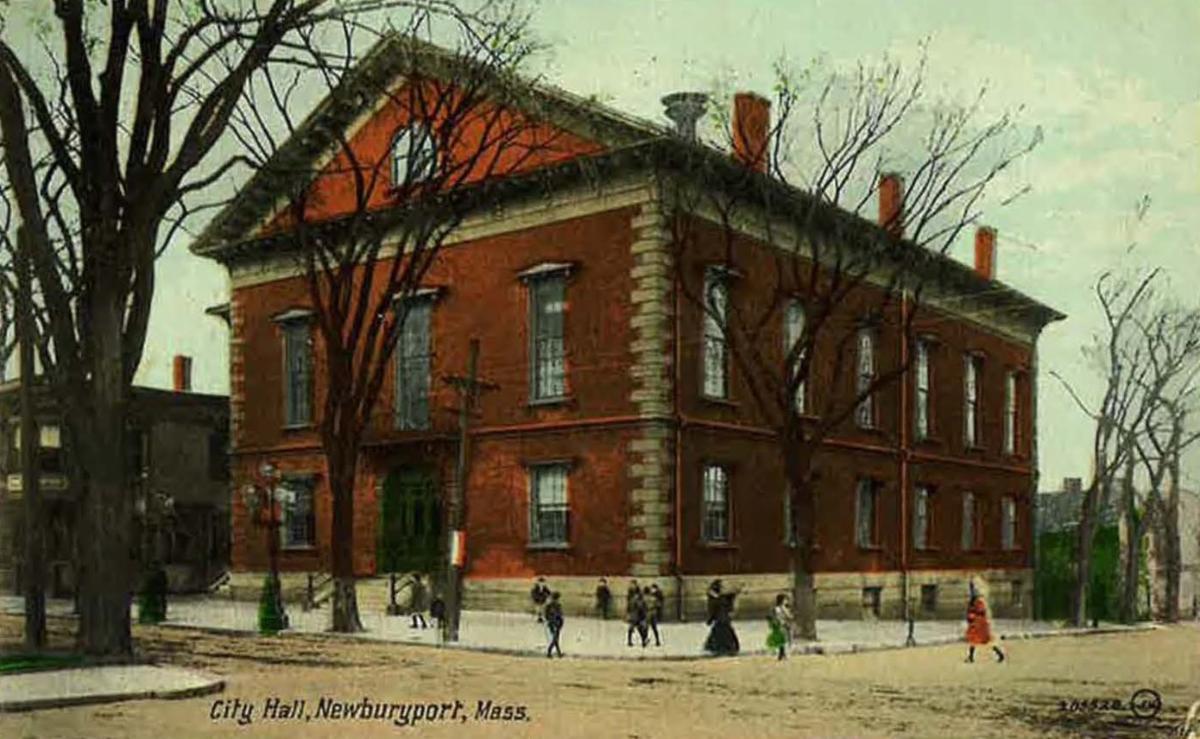
This postcard of Newburyport City Hall was mailed February 27, 1912. Roland Hayes performed there 12 years later, and the program from that event is in the archival collection of the Museum of Old Newbury.
| | |
Museum e-Newsletter made possible through the
generosity of our sponsors:
| |
| | | |