e-Newsletter | February 2, 2024 | |
|
What's in a Name? The Legacy of General Wolfe in Newbury(port)
During the American Revolution, images of British icons like General James Wolfe were desecrated and despised. How did this man's name and face survive for nearly two centuries in this patriot town?
Read the title story following event announcements!
| |
Flower Power: Wander Down the Garden (Tour) Path with Bob Watts!
Thursday, February 22, 7:00 p.m.
| |
Craving some lush spring blooms in the middle of winter? Join us for an illustrated romp through the gardens of the Old Newbury Garden Tour with photographer Bob Watts. Watts is the creator of the popular "Come for a Walk With Me" social media series and board member/volunteer with the Museum of Old Newbury.
For the past 45 years, the Museum of Old Newbury has offered Garden Tour participants the chance to be inspired and delighted by the exquisite gardens in our community, and for the past three years, Bob Watts has been there to capture these gardens and the stories behind them on (digital) film.
Enjoy flower-themed refreshments and special discounts on tickets to our 45th Annual Old Newbury Garden Tour as Watts takes us on a wander through gardens past, interweaving photography tips and stories from the field with a selection of images.
Come for a winter Garden Tour walk with us!
Free for members of the Museum of Old Newbury; $10 for non-members.
| |
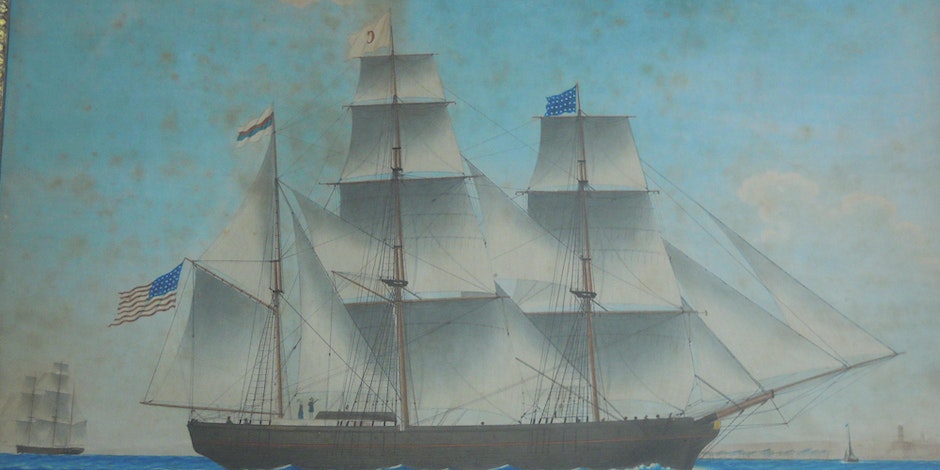
Ice Ship to Calcutta: Captain Pritchard and the Ultimate Ephemera
Tuesday, Feb 27, 2024, 7:00 PM
| |
History of Old Newbury in 3 Drinks: Part II: RUM 1700-1800
Fri, Mar 22, 2024, 6:30 PM
| |
|
What's in a Name? The Legacy of General Wolfe in Newbury(port)
...by Bethany Groff Dorau, Executive Director
| |
|
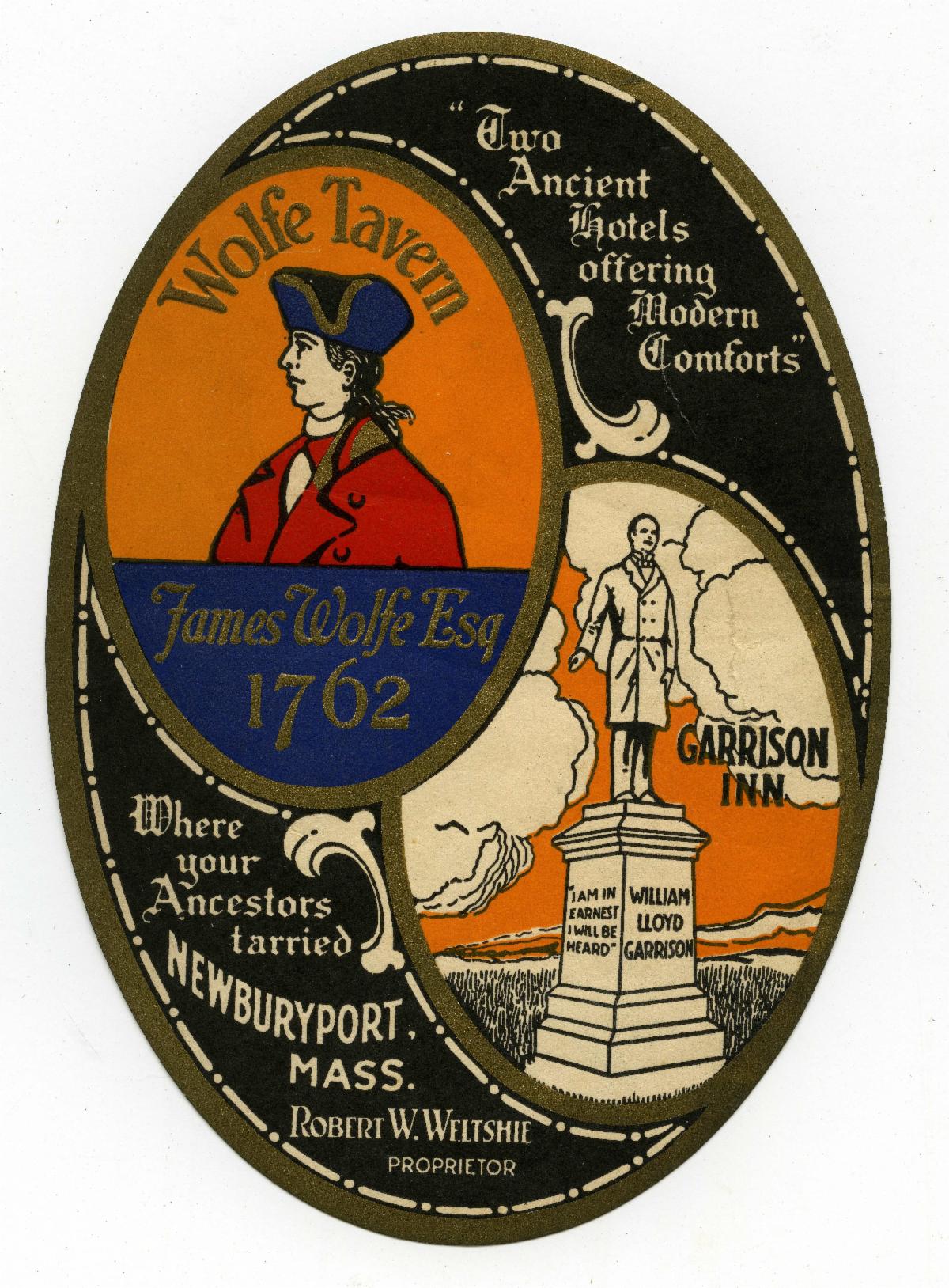
In our last newsletter, we discussed the relationship of Benjamin Franklin to Newbury(port)'s Davenport family. In case you missed it, Franklin's sister was the step-mother of William Davenport, who opened Wolfe Tavern in Newbury in 1762, two years before the waterside part of the town became Newburyport.
Research on the Davenport family piqued my interest in Wolfe Tavern, which in turn sent me in search of its inspiration, General James Wolfe. It is a story of courage, honor, and divided loyalties, of a man whose personal courage transcended political divides, at least in Newburyport.
| |
|
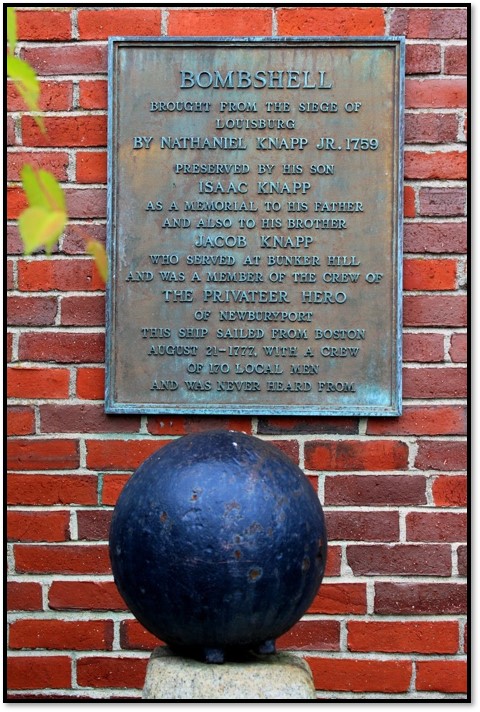
The famed Louisbourg (also spelled Louisburg) bombshell has been a fixture of Newburyport in several locations, since it was brought back by Nathaniel Knapp, who served with Davenport and Wolfe. It is now located in front of the courthouse on Bartlet Mall.
Last Thursday, the Museum of Old Newbury hosted an evening in honor of General Wolfe. At the end of the event, an attendee approached me. "Remind me what Newbury men were doing in Quebec in the first place," he said. And so, if you will indulge me, first, a quick review.
France and Great Britain had long been vying for control of North America, with its plentiful natural resources and opportunities for trade and economic expansion. Newbury was part of a British colony, and most everyone here had a friend or relative who had suffered at the hands of the French and their allies. Anti-French and anti-Catholic feelings ran strong. Raiding parties had attacked Newbury in 1695, and devastated Haverhill, Deerfield, York, and more. In 1756, Great Britain once again declared war on France, kicking off the Seven Years’ War, known as the French and Indian war in the colonies, and marking another chapter in a long imperial struggle between Britain and France. British Prime Minister William Pitt poured money into efforts to defeat the French at their headquarters in present-day Nova Scotia and their capital city of Quebec.
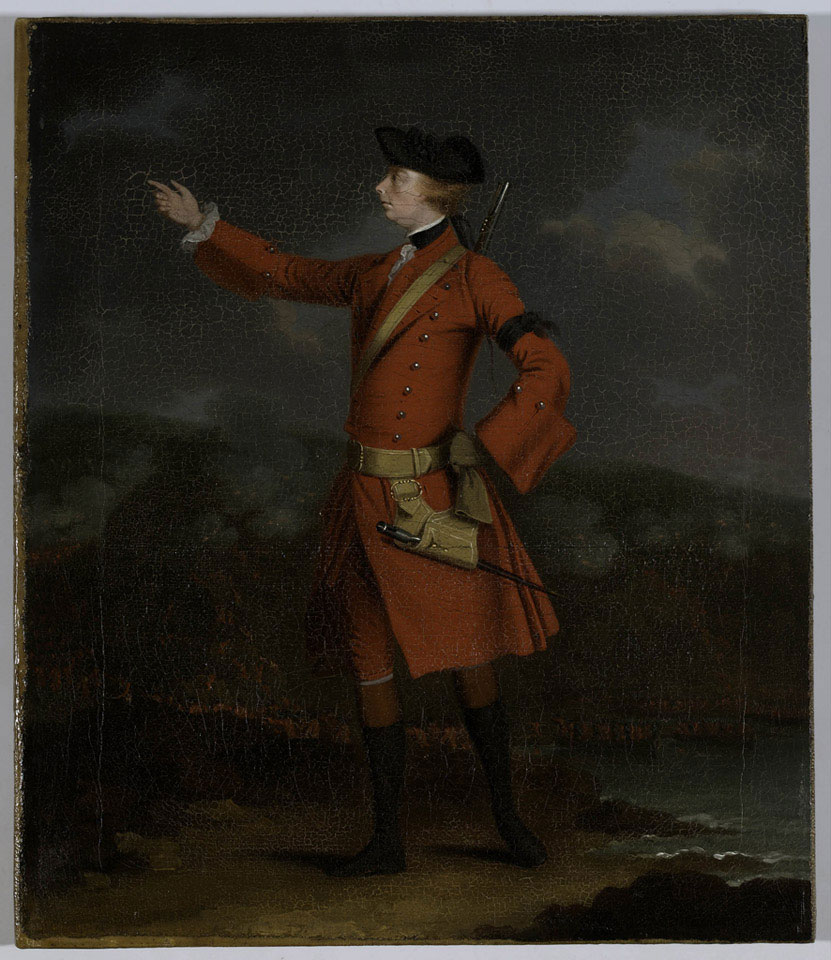
Meanwhile, a gangly young British officer caught the attention of Prime Minister Pitt. James Wolfe, born in 1727 in Kent, was selected to lead the siege of the fort at Louisbourg, which guarded the entrance to the St. Lawrence River in present-day Nova Scotia.
Between 500 and 800 men from New England towns joined the effort, including several companies from Newbury. The French surrendered the fort in June, 1758, and the path was clear for an attack on the French capital in North America, Quebec City.
| |
|
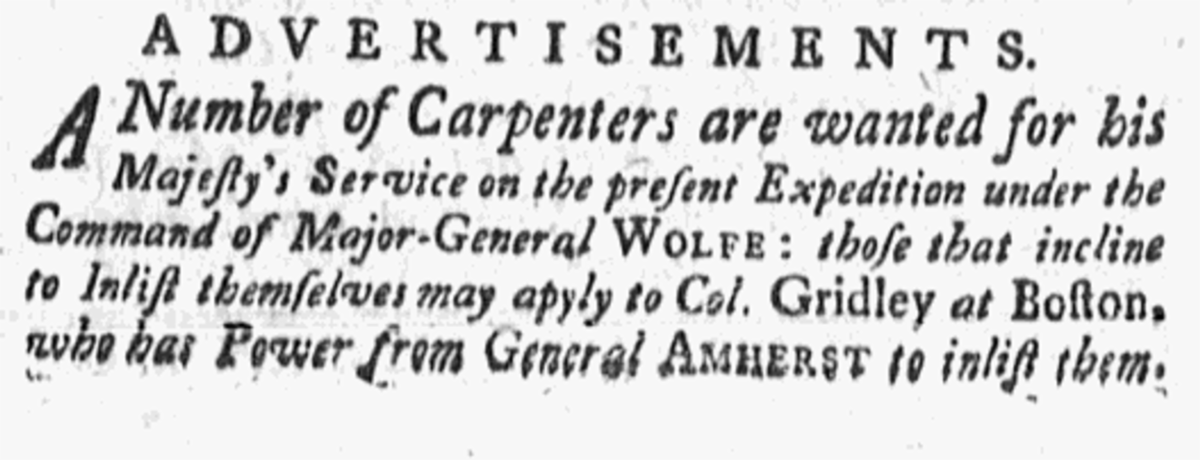
This advertisement in the March 3, 1759 Boston Evening Post, meant to entice craftsmen to serve under General Wolfe, would have been seen in Newbury.
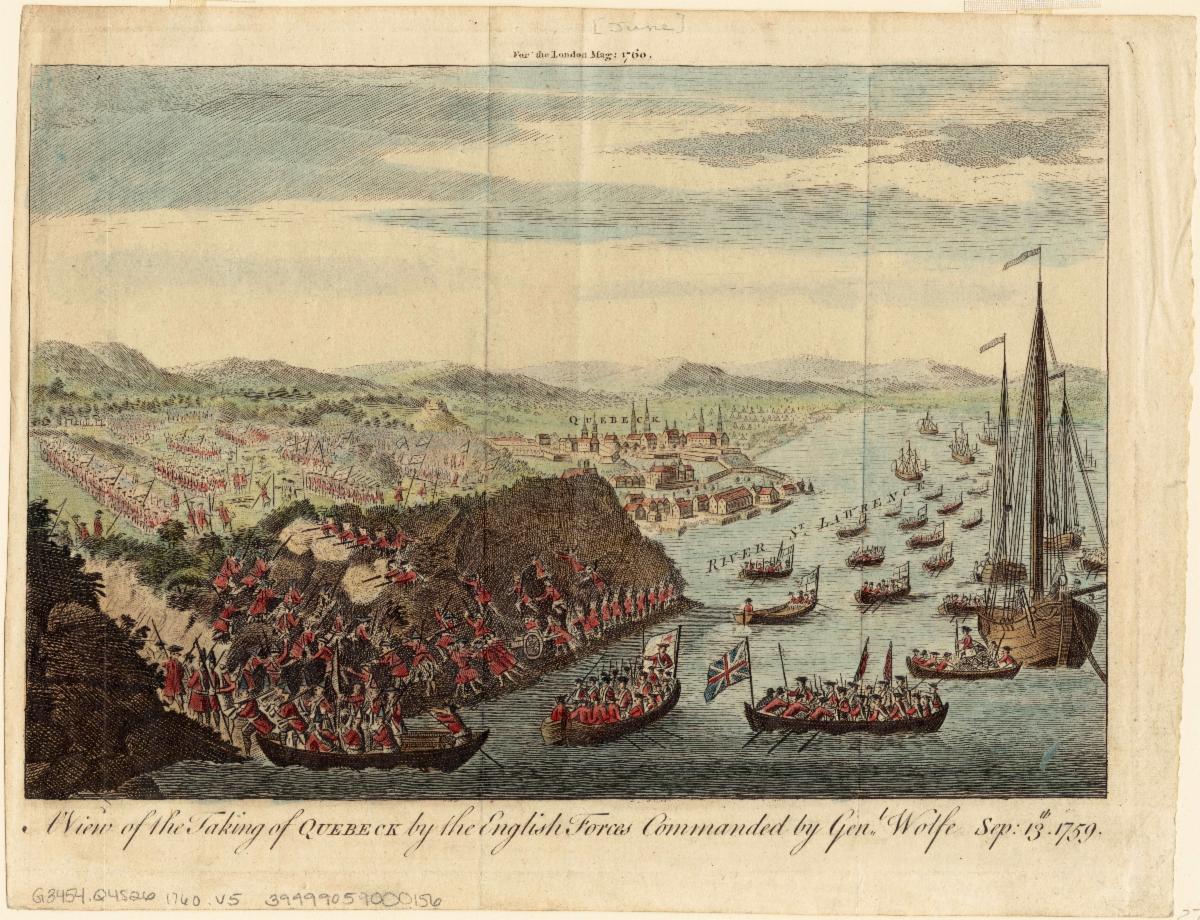
To make a very long, and pretty amazing story, shorter, in 1759, General Wolfe managed to sail with his troops up the St. Lawrence River, scale the cliffs outside the walled city of Quebec, and on a high flatland called the Plains of Abraham, was shot three times, dying gallantly at the moment of victory on September 13, 1759.
Quebec was taken, the French retreated, and then, on September 8, 1760, they surrendered, leaving North America in the hands of the British where it would remain until first the United States and later Canada gained their independence.
| |
|
Top: A View of the Taking of Quebeck by the English Forces Commanded by Gen'l Wolfe portrays the difficulties faced by the attacking forces, including companies from Newbury. Courtesy Amherst College.
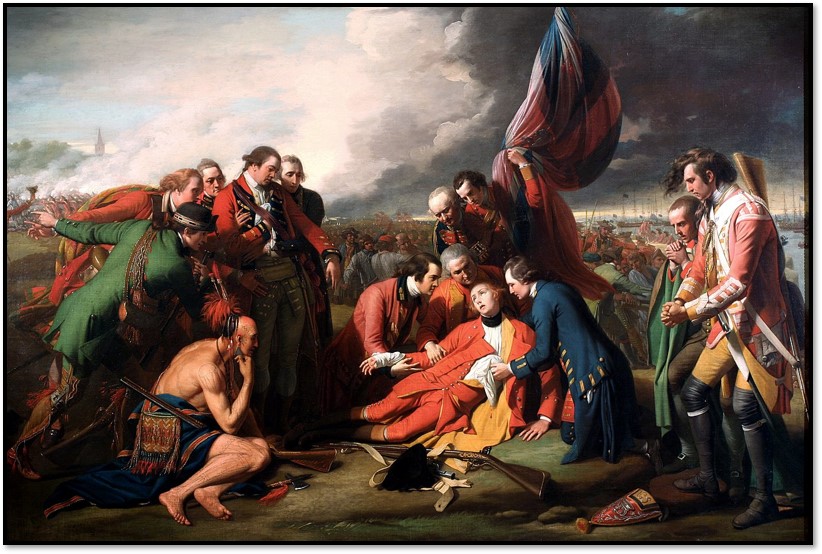
Bottom: The Death of General Wolfe is a 1770 painting by Anglo-American artist Benjamin West. Images like these were widely circulated through engravings, and helped to establish Wolfe's legacy as a heroic figure. Courtesy National Gallery of Canada.
| |
|
General Wolfe's death became the stuff of legend, almost overnight. Paintings of the scene proliferated, and subsequent engravings spread the news of his heroic demise.
Back in Newbury, newspapers began publishing lengthy poetic tributes to the fallen leader of so many of their men. Songs were composed, souvenirs such as mugs, jugs, and banners were quickly manufactured, battlefield relics were collected as keepsakes, and people named babies, horses, and businesses after the fallen general.
| |
|
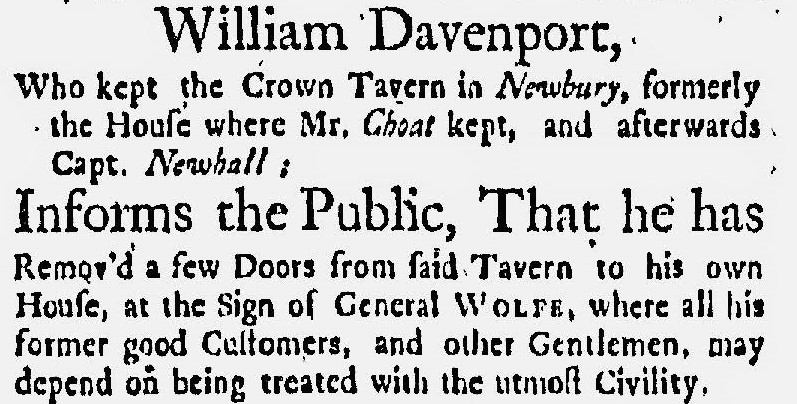
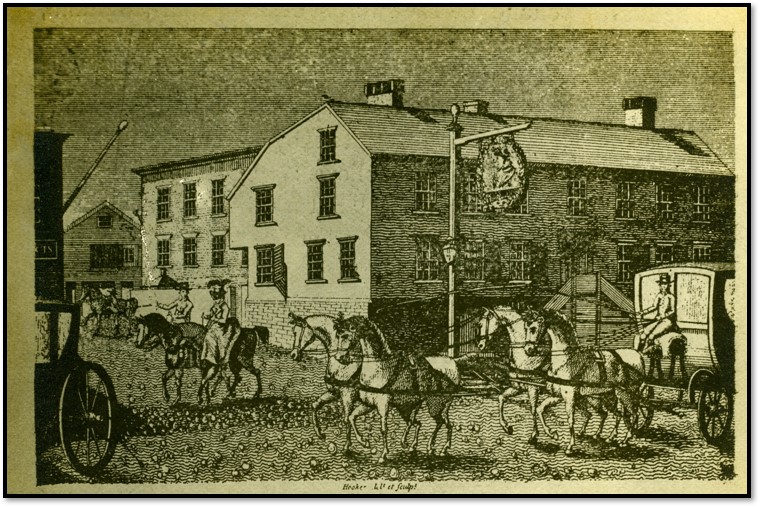
William Davenport, who had served with General Wolfe in Quebec, had been managing the Crown Tavern in Newbury. When he went into business for himself in 1762, he chose to rename his house Wolfe Tavern, taking in guests at the corner of now State Street and Threadneedle Alley.
Davenport was not alone. Wolfe Taverns sprung up across New England and beyond in the wake of the General's death. There were Wolfe Taverns in Brooklyn, Connecticut, Rochester, New Hampshire, even in nearby Georgetown, and dozens more.
| |
|
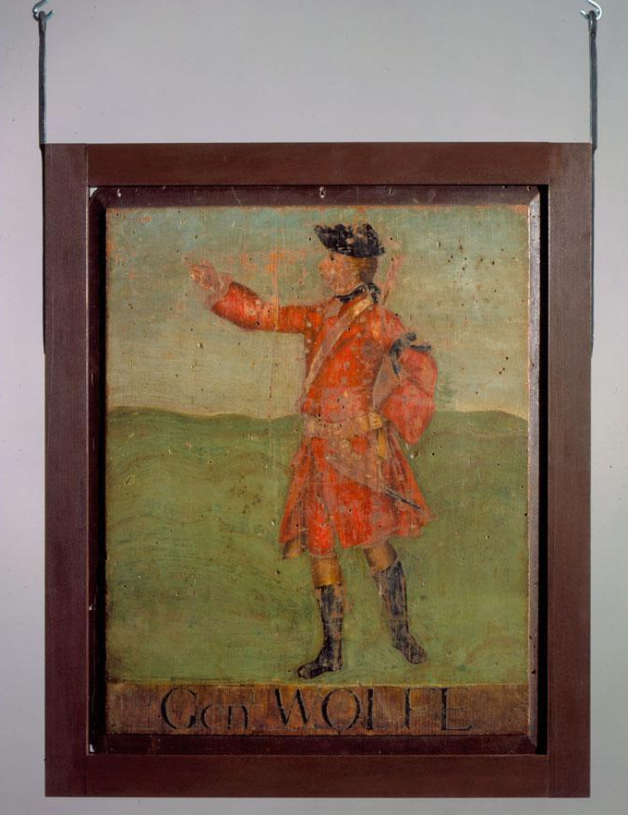
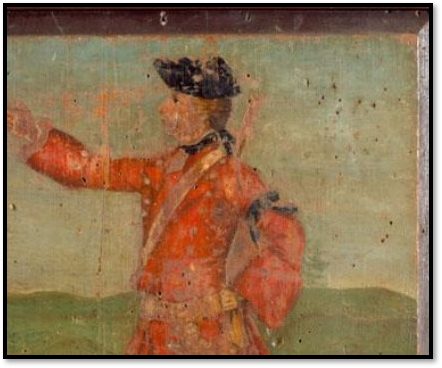
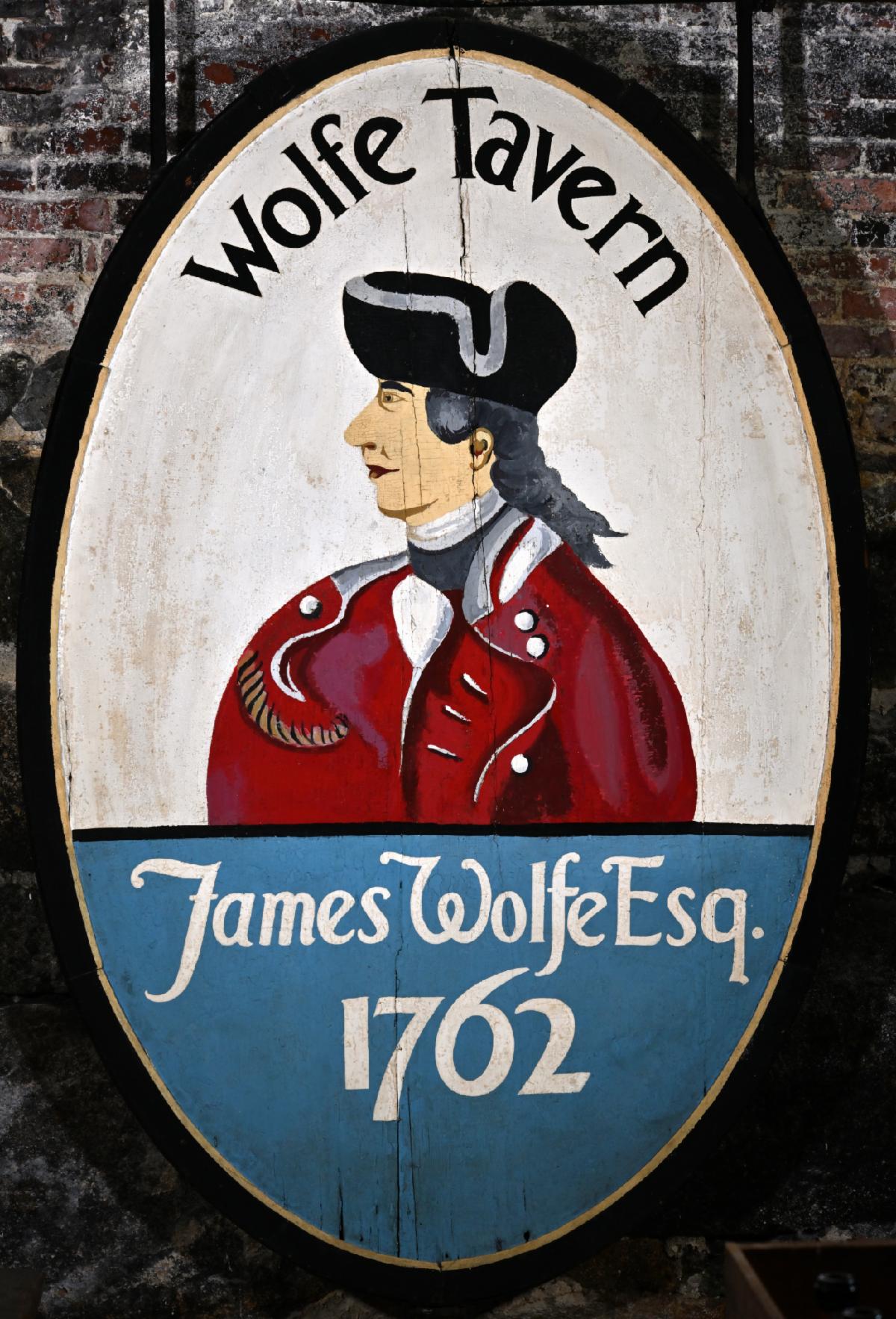
This c.1768 historic sign, from the General Wolfe tavern in Brooklyn, Connecticut, is riddled with buckshot. Courtesy of the Connecticut Museum of Culture and History
And then...William Pitt, the minister who had first encouraged the promotion of General Wolfe, began taxing the colonies to help pay for the war that they had helped to fight, and Newbury began moving, along with her colonial neighbors, toward revolution.
In Newburyport, gangs of men armed with clubs roamed the street, beating up anyone who did not oppose the Stamp Act. British officials were burned in effigy, British goods were thrown in the harbor, you know how it ends.
And across the colonies, the image of General Wolfe, so dear to the hearts of so many who had fought with him, became of symbol of the hated oppressor. Wolfe Tavern signs were taken down and burned. Surviving Wolfe signs from Brooklyn and Georgetown taverns are shot full of bullet holes. According to the Essex Journal, Newburyport's the Wolfe Tavern sign was "an insult to the inhabitants of this truly republican town."
| |
|
How then did Newburyport's Wolfe Tavern not only survive, but thrive for nearly two centuries?
The relationship of innkeeper William Davenport with General Wolfe provides a clue. Not only had he fought in Louisbourg, he had been present at the death of Wolfe in Quebec, and at the surrender of the city. The sign was as much an homage to the service of the Newbury militia as it was to any specific person, argued historian John J Currier. Many Newburyport men thought of Wolfe as one of them, and they were profoundly uncomfortable with his association with the British leaders just a decade later.
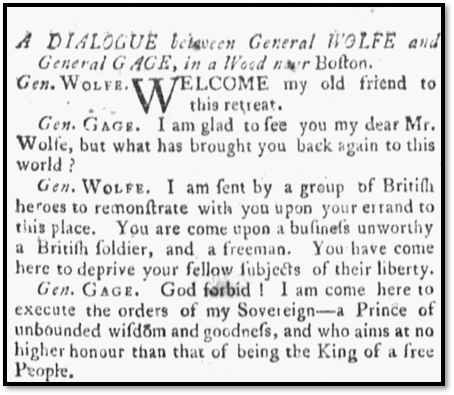
In fact, so conflicted were the residents of Newbury and beyond about the British-ness of their beloved General Wolfe, that attempts were made to turn him into an advocate of revolution. A remarkable dialogue was published in several Massachusetts newspapers on January 23, 1775, with Wolfe returning from the grave to talk some sense into the hated General Gage, who was the despised commander of British forces in America and recently appointed governor of Massachusetts. It ends with Wolfe giving an impassioned plea to his fellow British soldiers to refuse to fight their colonial countrymen in Massachusetts.
You did not give up your privileges as a citizen when you put on your sword. British soldiers are not machines to be animated only by ministers of state. They distain those ideas of submission which preclude them from the liberty of thinking for themselves...
Thus brought, posthumously, over to the patriot cause, General James Wolfe remained beloved by Newburyporters for nearly two centuries. When Wolfe Tavern moved to its final location at the corner of State and Harris Streets and changed its name to the Merrimac House, the Wolfe sign continued to hang outside, and letters to the editor complaining about the name change were regularly submitted until it was changed back.
Want to know more? Join us on February 21 at noon at the Newburyport Senior Center for a talk on the history of Wolfe Tavern, part of the Greater Newburyport Village Talk series. More information here.
| |
Something Is Always Cooking... | |
|
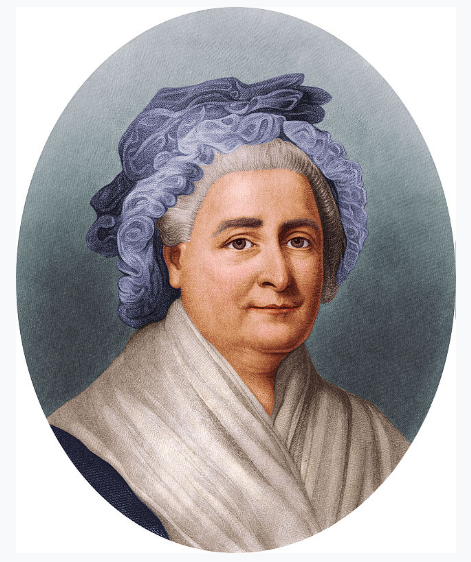
Martha Washington’s Great Cake
Attendees of our recent celebration of General Wolfe got to sample “Martha Washington’s Great Cake,” a rich pound cake with (or without) brandy-soaked currants.
According to the Colonial Williamsburg website, “Family history tells us that Mrs. Washington would make this cake every Twelfth Night to not only celebrate the 12th day of Christmas but also her wedding anniversary with General Washington on January 6th, 1759. The earliest version of a Great Cake recipe that we know Mrs. Washington owned came from a book of recipes passed down to her from her first husband, Daniel Parke Custis’, family. The book has gone on to be published as Martha Washington’s Booke of Cookery however its origins are in the Parke and Custis families with some recipes dating back to the 16th and 17th centuries.”
Mrs. Washington’s original Great Cake recipe:
Take 40 eggs and divide the whites from the yolks and beat them to a froth then work the four pounds of butter to a cream and put the whites of eggs to it a spoonful at a time till it is well worked then put 4 pounds of sugar finely powdered to it in the same manner then put in the yolks of eggs and five pounds of flour and five of fruit. Two hours will bake, add mace and nutmeg. ½ pint of wine and fresh brandy.
40 eggs?!
Here’s a slightly downsized version for the modern baker:
Ingredients
1 lb. eggs (I used 6)
1 lb. butter
1 lb. sugar
1 ¼ lb. flour
1 ¼ lb. currants soaked in brandy
Mace and nutmeg to taste
Instructions
-
Soak the currants in brandy until they plump. Warming the brandy a little will help this go faster.
- Preheat oven to 350 degrees.
- Grease a 10-inch Bundt pan and set aside.
-
Strain the currants and pat dry. Toss in a little flour. This will keep them from sinking to the bottom of the cake pan.
-
In a mixer, cream butter until light; add the sugar. Continue to mix until light and fluffy until the mixture has the consistency of whipped butter.
-
Separate the eggs. Whisk the egg whites into a meringue; you want stiff peaks. Whisk the yolks until they are pale and creamy in texture. Gently fold the yolks into the butter/sugar mixture until just combined. Fold the meringue into the flour, being careful not to deflate too much of the meringue.
-
Carefully combine both mixtures. Fold in the currants and add the spices.
- Pour the batter into the cake pan leaving an inch at the top for the cake to rise.
- Bake at 350 for 45 minutes to an hour, or until a toothpick comes out clean. As we like to say: Bake until done.
-
Let rest for 30 minutes on a cooling rack. Put a plate face down on top of the cake pan. Flip it over and the cake will release from the pan. Poke small holes in the top of the cake with a wooden skewer. Once every few days, douse with a shot or two of brandy. Keep the cake covered with plastic wrap until ready to serve.
Recipe courtesy of Colonial Williamsburg
| |
Puzzle Me This...and BONUS Puzzle! | |
|
Click the image to do the puzzle
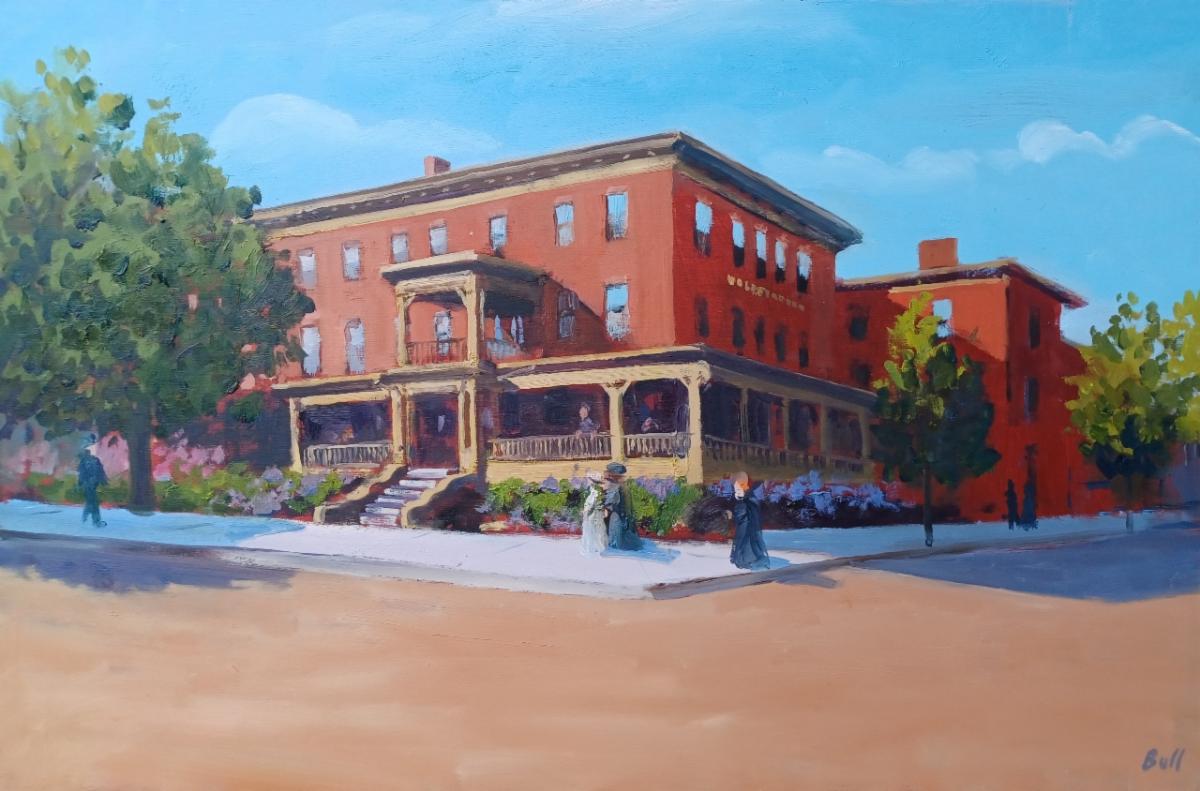
The Wolfe Tavern continues to inspire members of our community! This painting of Wolfe Tavern is by noted artist Alan Bull, and is for sale. He has promised to paint in the historic sign if any of you would like to purchase this for the museum. :-)
| |
|
BONUS PUZZLE!
We heard from several of you that because of a glitch in the puzzle program you were not able to complete last week's puzzle. Lois' bridge club, this one's for you! Here it is again (but we made it harder for those of you who completed it last week).
Click the image to do the puzzle
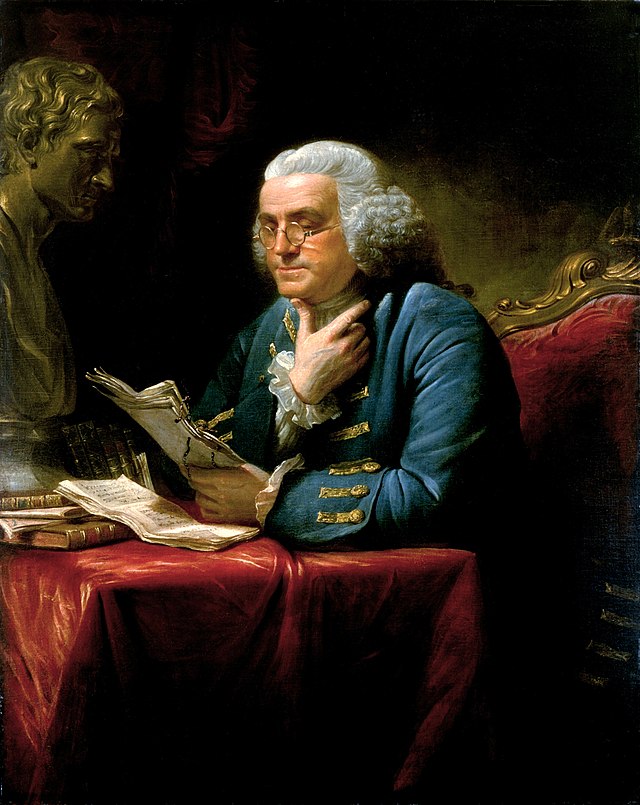
This 1767 portrait of Benjamin Franklin by Scottish painter David Martin (1737–1797) hangs in the White House Green Room.
| | |
Museum e-Newsletter made possible through the
generosity of our sponsors:
| |
| | | |