e-Newsletter | February 28, 2025 | |
|
A Revolutionary Night!
Newburyport's Road to Revolution Part I: Roots of Rebellion, packs the Firehouse.
images by Bob Watts
| |
|
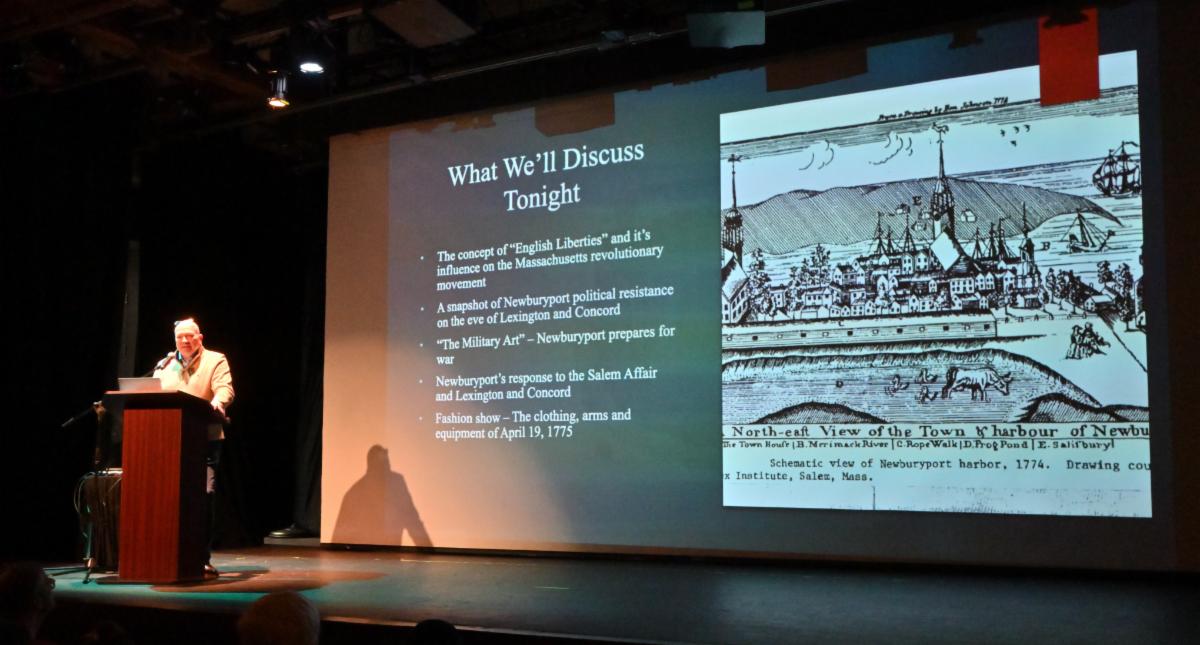
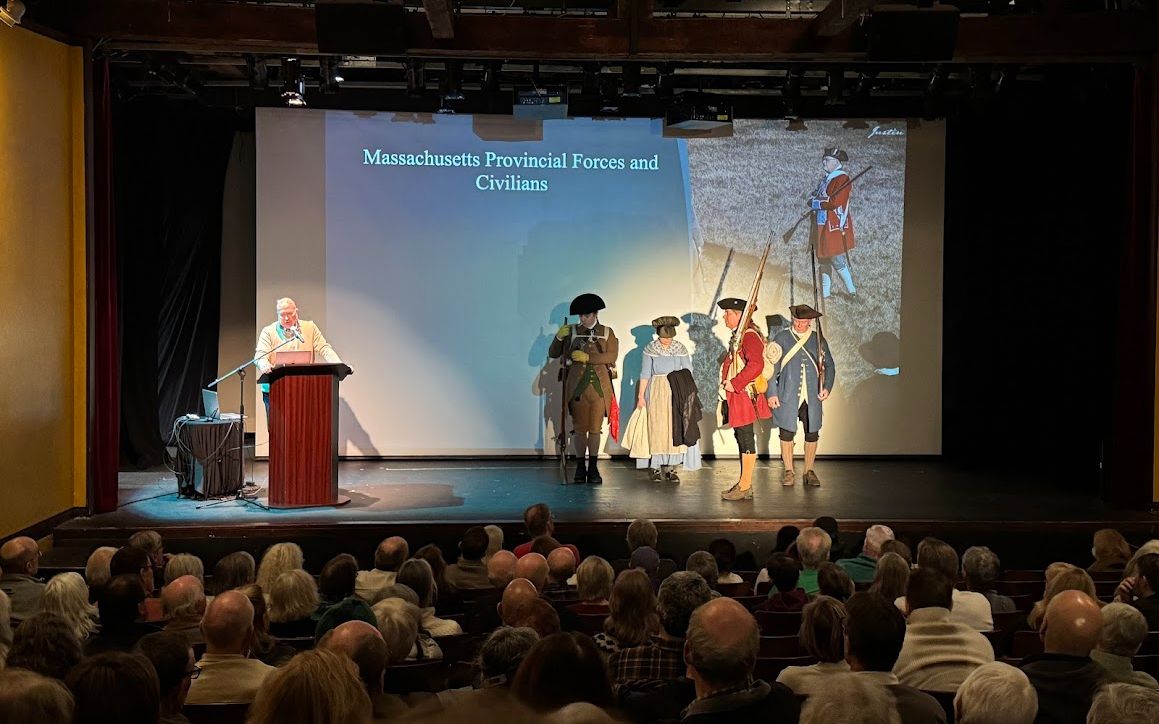
On Thursday, February 28, historian and author Alexander Cain kicked off the commemoration of Newbury(port)'s Road to Revolution with an incredibly informative and entertaining event. The sold out lecture at the Firehouse Center for the Arts addressed the concept of English liberties, the rights that the colonists held dear, the importance of Newburyport in the earliest efforts to mobilize against the British, and even a surprise scandal involving Amesbury, our friends across the river! Here are some highlights of this sold out event at the Firehouse Center for the Arts.
If you missed this event, never fear - a recording will soon be available on our website. Stay tuned!
| |
|
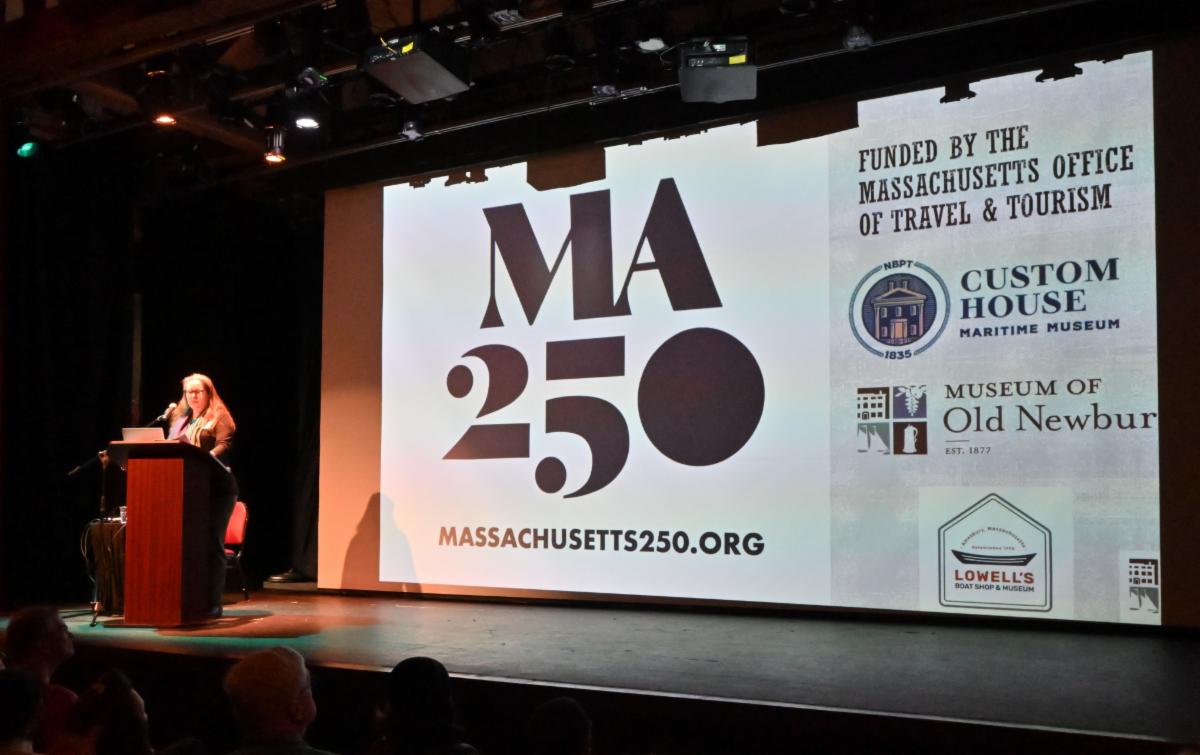
Museum of Old Newbury executive director Bethany Groff Dorau thanked all of the partners in the Newburyport's Road to Revolution campaign, which will explore and promote Newburyport's crucial role in the earliest days of the American Revolution, with special thanks to the Custom House Maritime Museum.
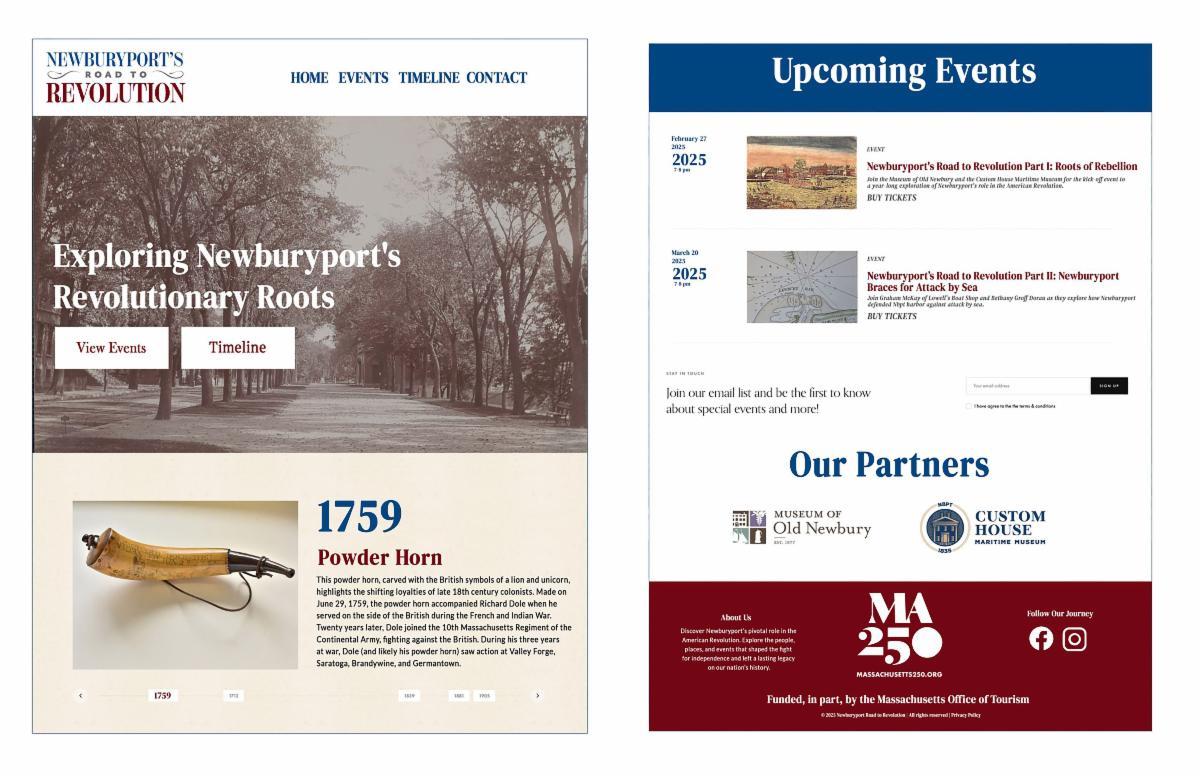
The event, funded by the Massachusetts Office of Travel & Tourism, is part of MA250, a statewide effort to promote the state's rich Revolutionary history, and included the design of a logo and website, Newburyport250.org, previewed at this event.
| |
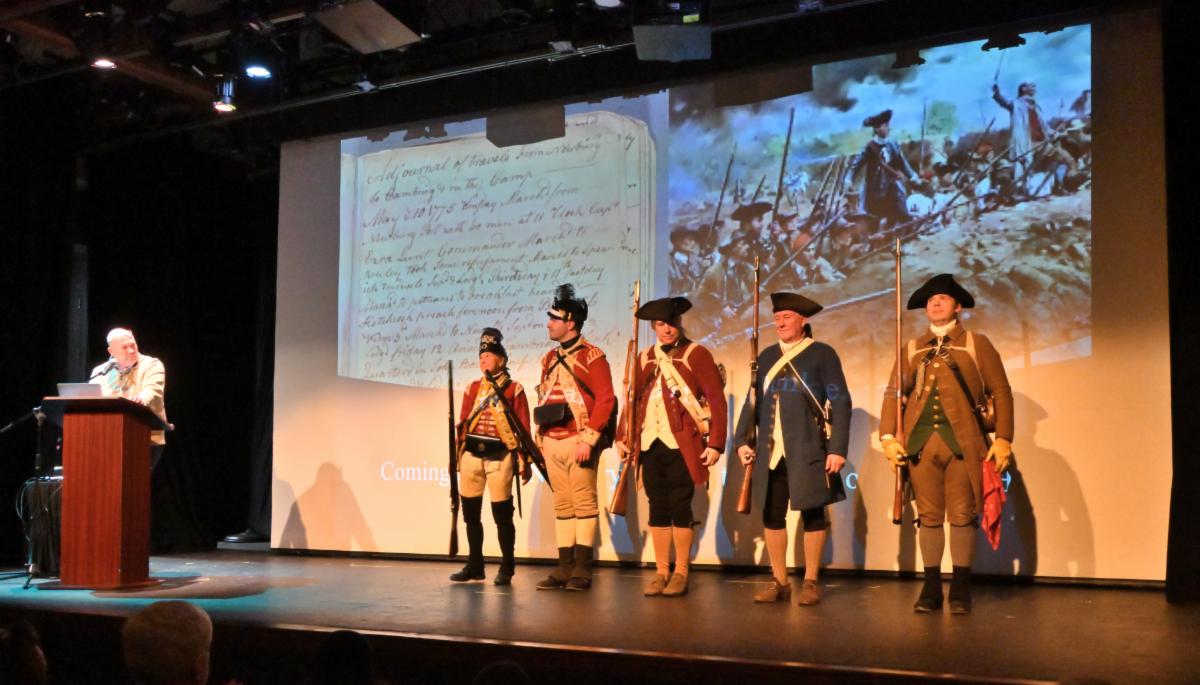
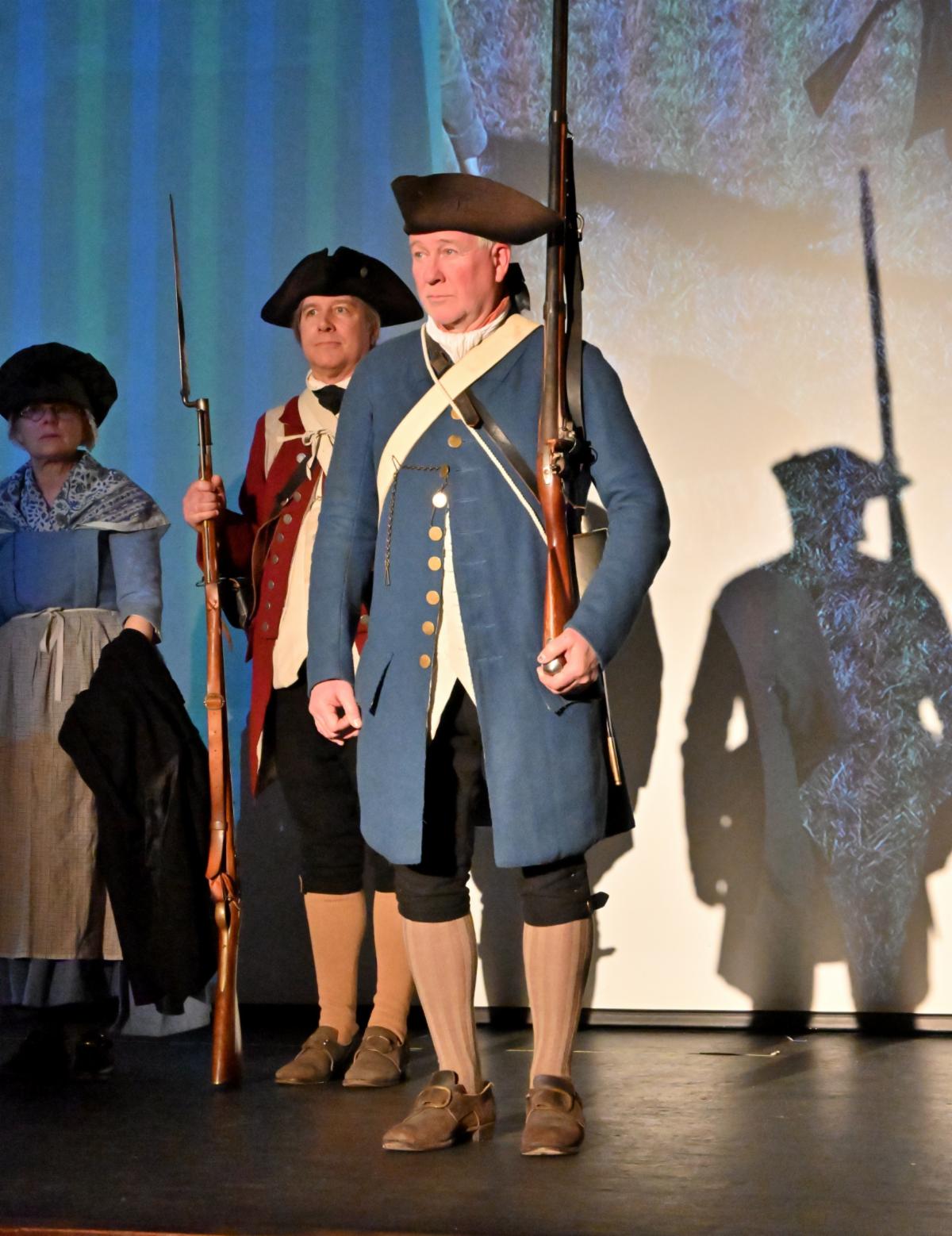
Alexander Cain offered an inspiring, often humorous look at how Newburyport responded to the colony's earliest efforts to mobilize as British rule became increasingly oppressive. Cain offered evidence that Newburyport was among the best prepared, most dedicated communities as war loomed. As Cain said, "Boston is best known for their efforts to defend their rights, but at every turn, Newburyport took it one step further." | |
Image courtesy of Sharon Spieldenner | |
|
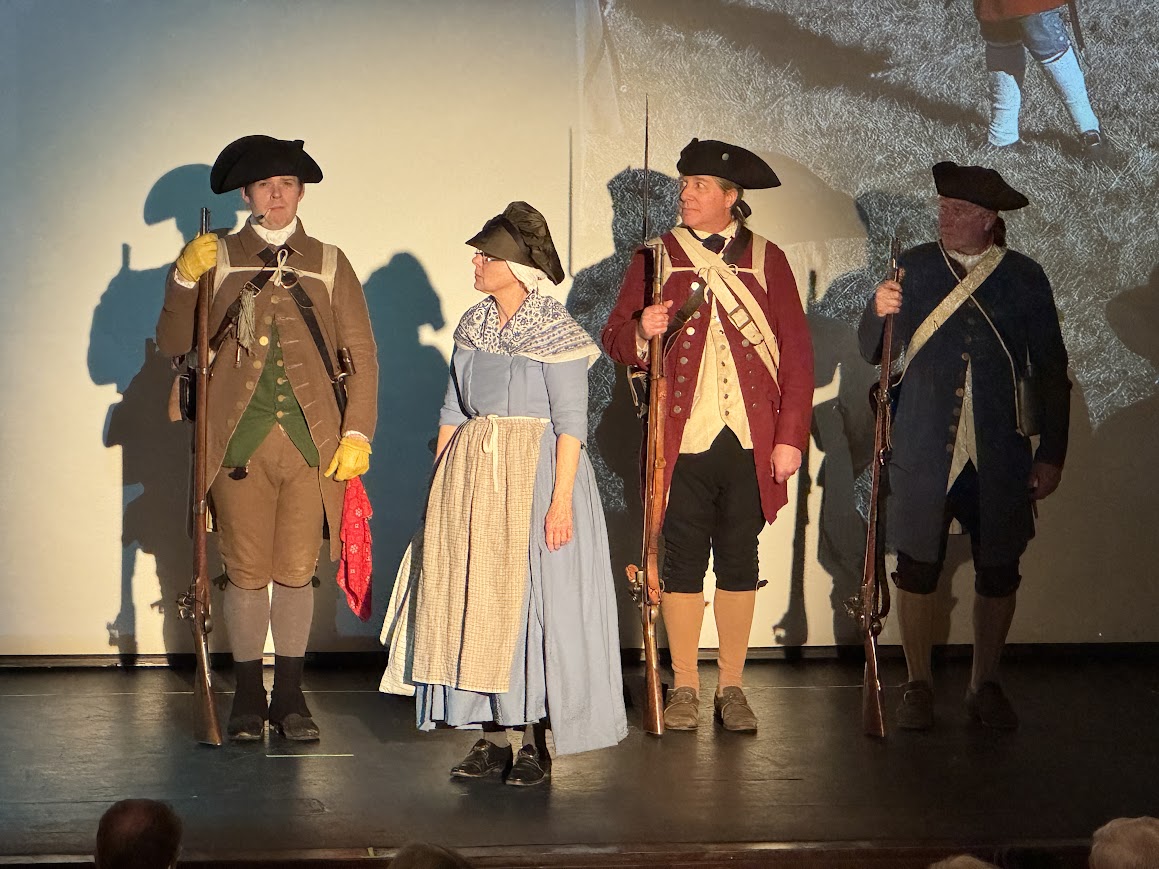
Image courtesy of Sharon Spieldenner
The highlight of the evening for many was Cain's explanation of how minutemen, militia company and alarm list members, civilians, and British soldiers dressed and the weapons and supplies they carried. Special thanks to the six men and women who modelled for us all, and to Newburyport's own Steve Crosby, shown above in blue, who helped to organize this event.
Thank you all for coming and for your support of community history in Newbury(port)! Check out our upcoming events here.
| |
We know it is frustrating when events sell out quickly, so we are staggering registration dates to give everyone a chance. Please click the image or link below to check out all of our upcoming events! | |
Funded, in part, by the Massachusetts Office of Travel and Tourism | |
|
Save the Date for these Upcoming Events (just a sampling!) Click here for more information.
Burying Ground Tour 1: Old Hill and Newburyport's Road to Revolution
Friday, April 18, 2025, 6:30 PM
Old Hill Burying Ground - Tickets available March 20
Bridges & Boats, Trains & Planes: Local Innovations in Transportation
Sunday, Apr 27, 2025, 1:00 p.m.
Museum of Old Newbury - Tickets available March 3
Newburyport’s Road to Revolution Part IV:
Black Newburyporters
Thursday, May 8, 7:00 p.m.
Newburyport City Hall Auditorium - Tickets available March 14
Newburyport’s Road to Revolution Part V:
Powder & Shot
Thursday, May 22, 7:00 p.m.
Museum of Old Newbury - Tickets available March 28
Newburyport’s Road to Revolution Part VI:
Bunker Hill - Heroes & Cowards
Thursday, June 18, 7:00 p.m.
at Firehouse Center for the Arts - Tickets available April 24
| |
|
Captain Morgan of the Slaver Orion in the Newburyport Jail Part II
by Bethany Groff Dorau
| |
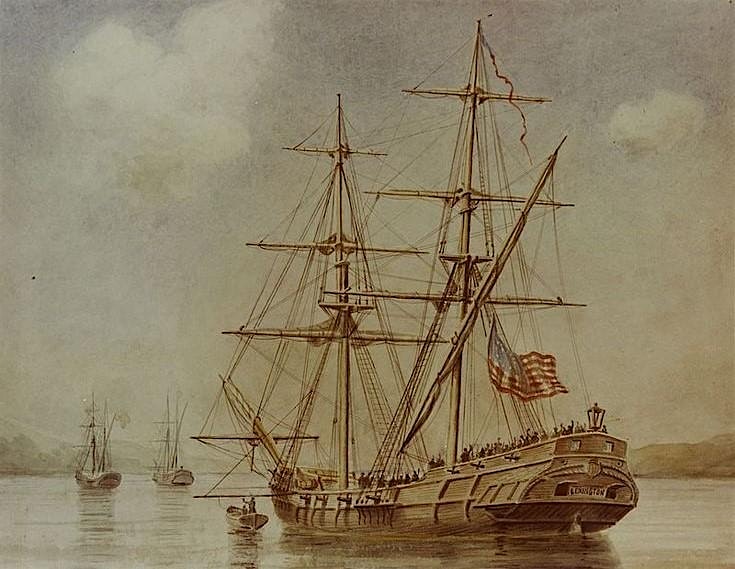
HMS Pluto captures the Orion in this April, 1860 image from The Illustrated London News. | |
|
Author's note: This is the story of Thomas Morgan, captain of the Orion, who was convicted in 1860 in Boston of knowingly participating in the illegal trade in enslaved men, women, and children, off the coast of Africa. He was sent to serve his time at the Newburyport Jail. This has been a difficult case to research, as the witness statements are filled with suffering and cruelty. Also, because the case involved smuggling and piracy, identities were hidden and facts obscured. It is also a somewhat tangential tale, as Thomas Morgan's connection to our community seems to be only his years in our jail. In the end, however, it is a story of just how tied we in New England were to the institution of slavery on the eve of the Civil War. Thomas Morgan was sailing a ship built in Newcastle, Maine, financed by Boston and New York investors. Morgan was a sympathetic figure to Newburyport's leading citizens, and even, astonishingly, to Abraham Lincoln, in the end. This story is complicated and often frustrating, but compelling, nonetheless. Read Part I here.
Captain Thomas Morgan's long journey to the Newburyport Jail began near the mouth of the Congo River, on April 19, 1859. The sloop of war U.S.S Marion, under Lieutenant Thomas Brent, was a member of the Africa Squadron, a unit of the United States Navy that patrolled the coast of West Africa to suppress the illegal trade in enslaved Africans. On that day, Brent spotted the Orion, a 450-ton American vessel, in the company of the HMS Triton, a British steamship who was also patrolling for enslavers. The Triton, suspecting that the Orion was a "slaver", had boarded and then detained her.
When the Marion pulled up, Thomas Morgan, who was then the first mate of the Orion, came onboard to complain about their detention by a foreign vessel. Brent then visited Captain Burton of the Triton, and agreed with him that the Orion had the telltale signs of its intended illegal use.
The evidence that the Orion was fitted out to transport humans was overwhelming.
Lieutenant Campbell searched her and found that her cargo consisted of 126 water casks, each capable of containing 136 gallons; 30 tierces (1260 gallons total) of very common rice, a quantity of hoop iron in bundles 8 feet long, and about 200 feet in all, similar to that used for water casks. The Lieutenant also discovered between five and ten thousand feet of plank, enough to make a spare deck. The between decks were so arranged that one thousand persons could have been placed there with three minutes preparation. There was a bill of lading handed to the Lieutenant but no manifest. In respect to the boxes retaining medicines, the bill of lading called them merchandise. The vessel had two sets of copper kettles, which the bill of lading did not mention. The coppers each consisted of a boiler, etc. The hoop iron was not named, and there were also over one thousand gallons of fresh water which the bill of lading called saltwater.
-Albany Evening Journal, June 18, 1859
Brent sent an armed contingent onboard the Orion, clapped her crew in irons, and sent them to New York for trial. Though it had been a fairly straightforward capture, things quickly went south after the death of the Orion's captain, John E. Hanna, during the homeward passage. On his deathbed, Hanna admitted that the Orion was engaged in the slave trade, but swore that then first-mate Thomas Morgan had no knowledge of this. Then, after the Orion arrived in New York, there were allegations that Hanna had been harassed by the British captain and had died "of a broken heart".
New York City was deeply invested in the transport of enslaved people. According to historian Ron Soodalter, "during the first 60 years of the 19th century, New York City financed and fitted out more slaving expeditions than any other American port". Morgan and his lawyers publicly complained about the initial seizure of the Orion by HMS Triton, arguing that the British had violated American sovereignty. Morgan, charming and articulate, proved a sympathetic figure, and public opinion soon turned against the prosecutors.
In the end, the case against Morgan and the rest of the crew was dropped, and the Orion was returned to its owner, Harrison S. Vining. Vining transferred ownership of the vessel to Thomas Morgan, now the captain, on August 19, 1859. It is worthy of note, however, that the ownership of a vessel involved in piracy and smuggling was often obscured. After her capture, the American Lloyds insurance form listed a "Mr. A. Leary, of New York", but the New York Times surmised, "we suppose she was owned in Cuba before she sailed on her last voyage".
| |
|
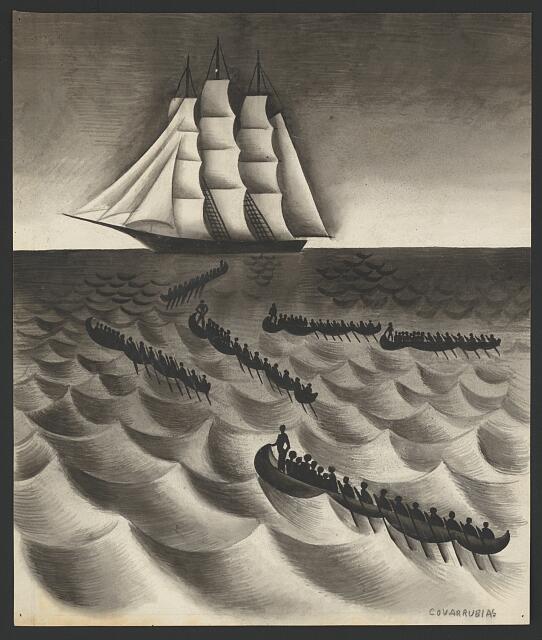
This 1918 ink wash over graphite illustration by Miguel Covarrubias depicts the delivery of enslaved Africans to an American ship. Courtesy of the Library of Congress
The Orion, clearly outfitted as a slaver, was cleared on August 10, 1859 in New York to sail once again for Africa. She was watched carefully by the Africa Squadron. Between October 10th and November 22nd, as she cruised toward her rendezvous, she was boarded by the United States Navy no less than five times. But as the New York case had demonstrated, the bar for conviction for slave trading was so high that the Orion was released each time.
After cruising around the mouth of the Congo River and unloading some cargo just to the north in Cabinda, in the province then known as the Portuguese Congo, the Orion was turned over to "some Portuguese", according to the testimony of first mate J. Byron Chamberlain. The Portuguese then sailed the ship "down the coast about fifty miles from the Congo (River), dropping anchor on November 27." Then, with great speed, nine hundred enslaved Africans were loaded on board with "twenty Portuguese, who had charge of them", along with food, water, and other supplies. Within minutes the Orion had taken on her terrible cargo and "stood to the westward", sailing as fast as possible toward the Caribbean. Her ultimate destination was never revealed, but contemporary sources believed that the Orion was bound for Cuba.
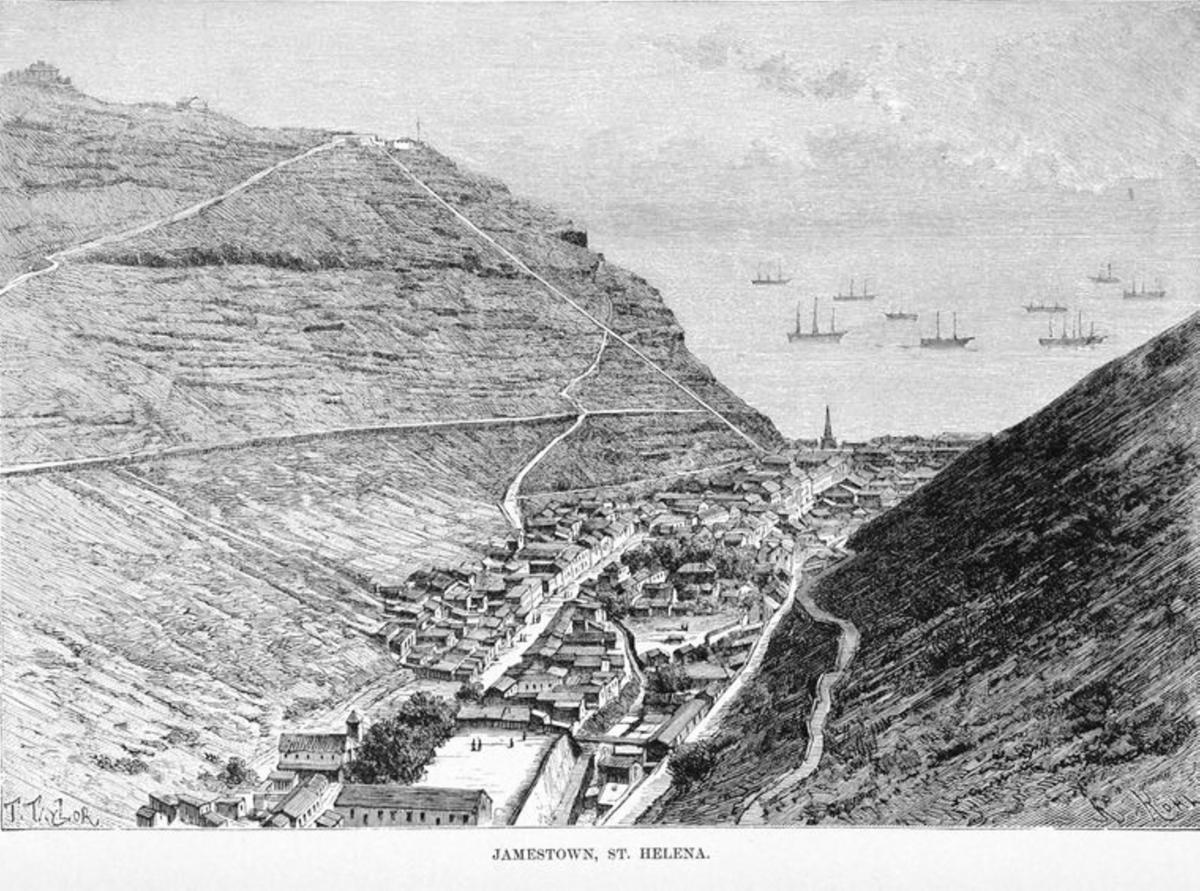
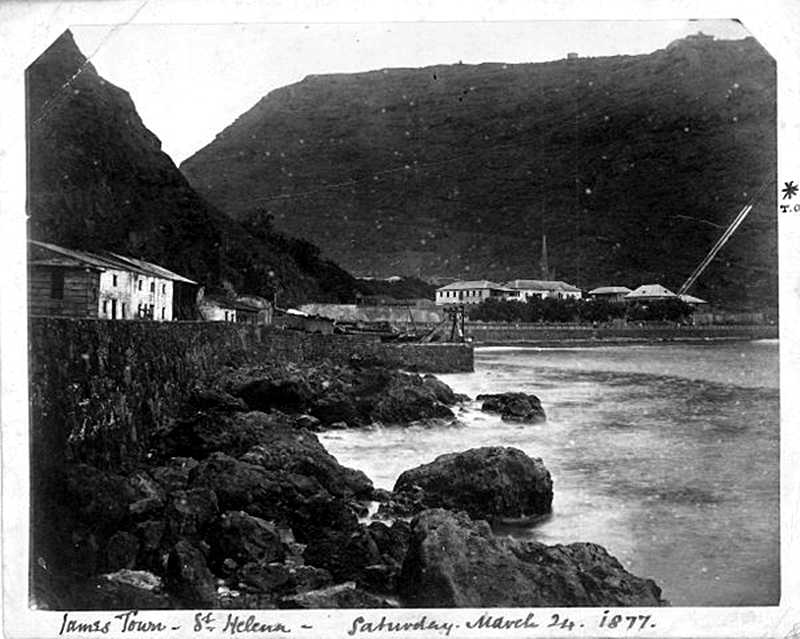
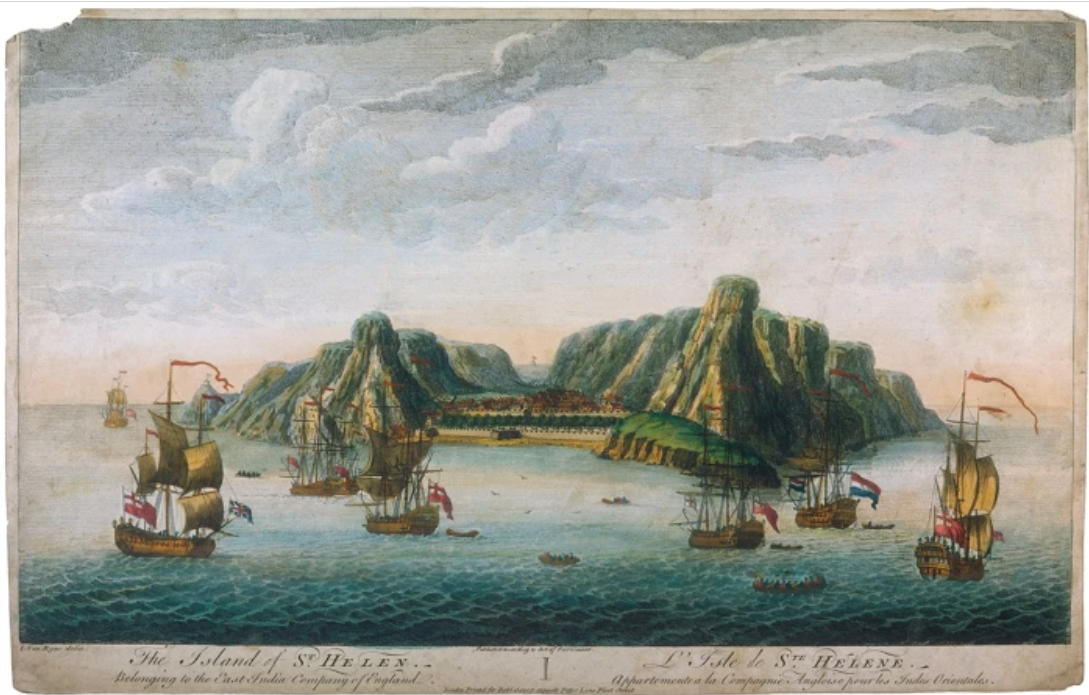
| St. Helena Island, best known as Napolean's home in exile, was also the seat of anti-slavery activities for Great Britain. | Three days later, on November 30, 1859, another British naval vessel, the steam ship HMS Pluto came alongside the Orion, who was sailing without a flag and had (sloppily) painted over its name, which was still legible. The Pluto boarded the Orion and found 874 enslaved Africans on board. Twenty-three people had died in just the first three days. Since the Orion had no flag or other identification visible, the Pluto took over the ship. The crew was brought ashore and left on the African coast, and Captain Thomas Morgan, first mate J. Byron Chamberlain, and second mate William Dunham, were taken in the HMS Pluto on the 22-day journey to the British Vice Admiralty Court in Jamestown on the island of St. Helena. | Even before the HMS Pluto arrived in St. Helena, with the captured Orion in tow, the USS Mystic had arrived carrying a petition from Africa Squadron commander Commodore William Inman. Though the Orion was not sailing under an American flag and therefore lacked official American protection, the identity of the ship was clear. Inman had sent the Mystic to request custody of Morgan, Chamberlain, and Dunham. But first, the three were sent to answer to two British magistrates, Henry Mableton and Hudson R. Janisch. | |
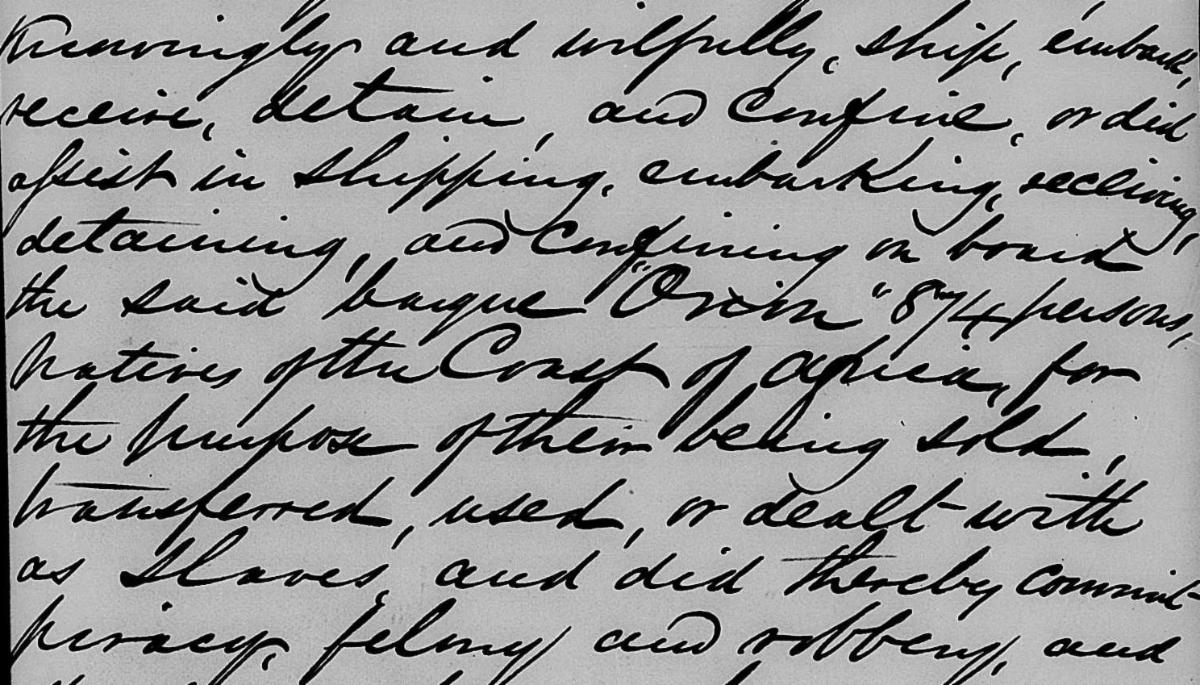
The indictment document from the Vice Admiralty Court stated that Morgan, Chamberlain, and Dunham "did knowingly and willfully ship, embark, receive, detain, and confine, or did assist in shipping, embarking, receiving, detaining, or confining on board the said Barque Orion 874 persons, natives of the Coast of Africa for the purpose of their being sold, transferred, used, or dealt with as slaves, and did thereby commit piracy, felony, and robbery.
The enslaved people on board, meanwhile, were examined by Alfred P. Spratt, assistant surgeon of the Admiralty, who found them "very emaciated and suffering from debility evidently the result of long journeys and little food". 146 men, women, and children had died in the 22-day interval between the capture of the Orion and its arrival in St. Helena.
The Orion was condemned and broken up.
Though they were briefly imprisoned by the British court, Captain Morgan and the other officers were soon handed over to the Mystic and left St. Helena "in irons". They sailed back down the African coast to the United States Africa Squadron base in Luanda, in present-day Angola, arriving on January 13, 1860.
| |
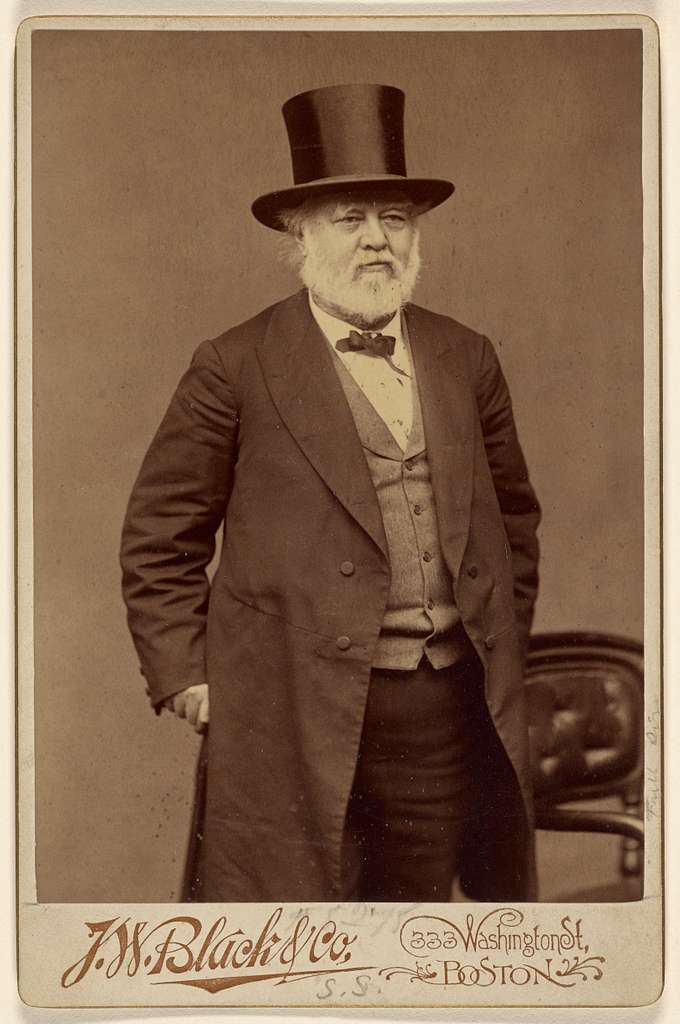
Commodore William Inman, born in Utica, New York, in 1797, commanded the Africa Squadron from 1859 to 1861, capturing numerous ships and returning 3.600 enslaved people to Liberia. Inman died in Philadelphia, Pennsylvania, in 1874.
It was no simple thing to arrange for transport from the coast of Africa to the United States for three prisoners, and Commodore Inman seems to have been in no hurry to send the three Orion officers back home. They were held aboard Inman's flagship Constellation for months. As various ships left Luanda for New York City, Morgan asked to be sent back for trial and was refused. It was only when the sloop of war USS Vincennes returned from a cruise that Morgan, Chamberlain, and Dunham were loaded on board, "in double irons", and sent not to their home port of New York, but to Boston. Inman likely knew there was some chance that they would be let off once again by a sympathetic court in New York and chose instead, to send them to Boston for trial. Thomas Morgan was furious, complaining that he was "unjustly detained a prisoner".
| |
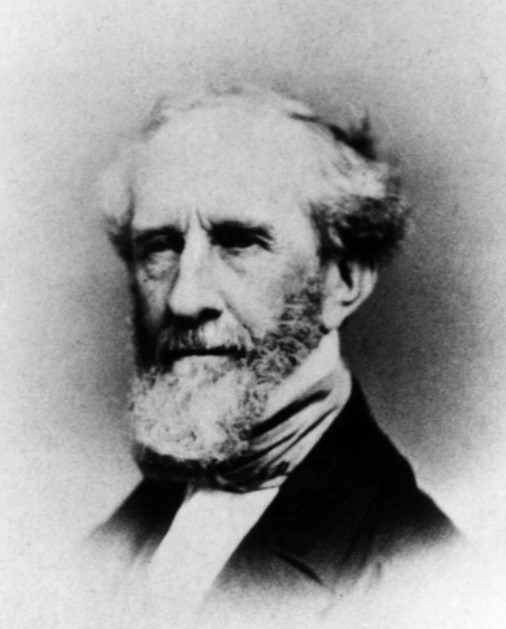
C. Levi Woodbury, born in Portsmouth, NH in 1820, had a long legal and political career and died in Boston in 1898.
Charles Levi Woodbury, U.S. Attorney for the District of Massachusetts, and son of a Supreme Court Justice, was responsible for the prosecution of Morgan, Chamberlain, and Dunham. He sent for witnesses, assembled a jury, and listened as Morgan repeatedly protested his imprisonment. Woodbury, who, coincidentally, was a descendant of Ipswich, Newbury, and Rowley families, may have noted the irony of Morgan's complaints, since Morgan had contributed to the imprisonment of hundreds of people.
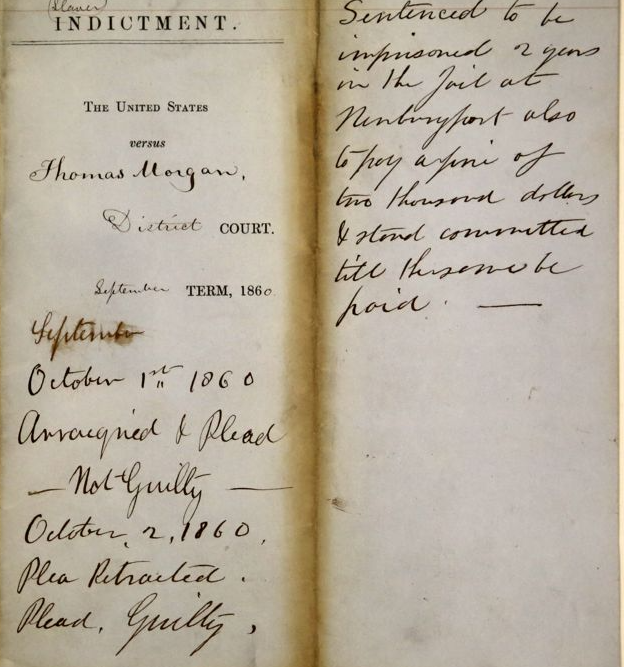
In any event, Morgan was in court on May 18, 1860, asking for a speedy resolution of his case. Woodbury was in no hurry, in part because the British government had agreed to send two of the crewmen of the HMS Pluto all the way from St. Helena to testify against the men. and it was a further five months before the case was heard. The court record packet tells the story, in brief.
| |
Thomas Morgan's indictment in federal court notes that on October 1, 1860 he pleaded not-guilty to the charge of participating in the slave trade. The following day, facing down overwhelming evidence and the possibility that a jury could find him guilty of piracy, a capital crime that carried the death penalty, rather than slave-trading, a misdemeanor with a maximum sentence of two years, he changed his plea to guilty.
Judge Woodbury sentenced Thomas Morgan to the maximum sentence allowed by law. He was "to be imprisoned two years at the Jail in Newburyport, also to pay a fine of two thousand dollars and stand committed until this sum be paid." The fine was the kicker. Morgan's wealth was tied up in the Orion, which had been forfeited and then disassembled and sold off for parts in St. Helena. He would likely never be able to pay the hefty fine, and so Woodbury had effectively, and seemingly intentionally, sentenced him to life in prison.
Join us in the next newsletter as we meet Thomas Morgan in the Newburyport Jail and explore the mystifying outcome of this complex case.
| |
Something Is Always Cooking... | |
|
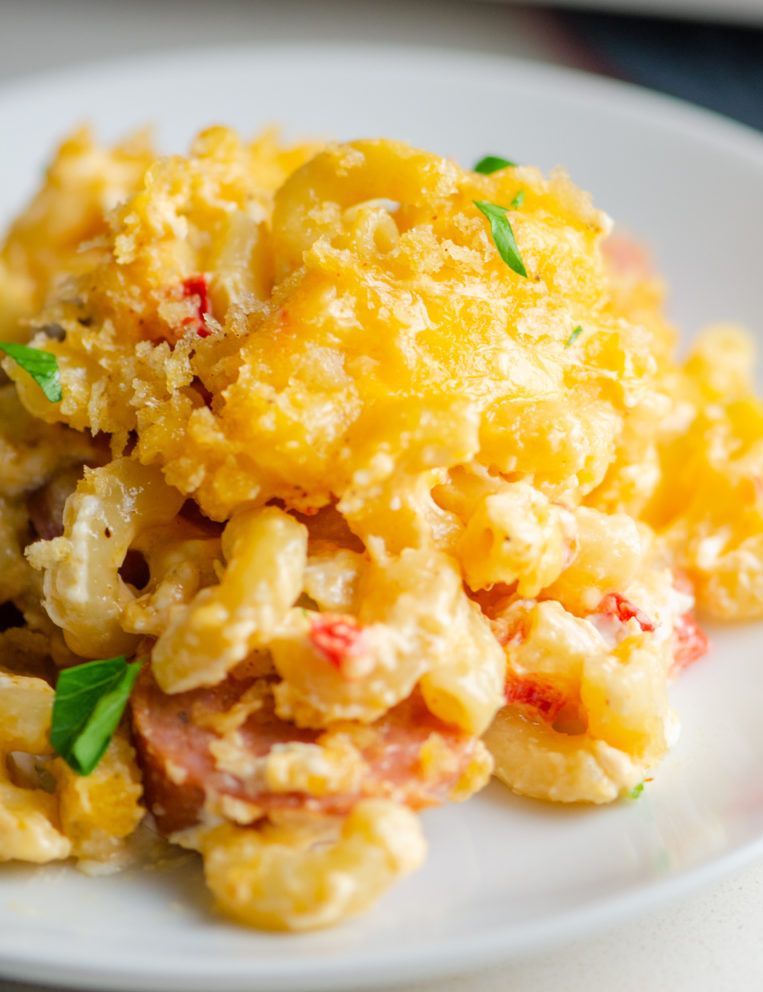
Pimento Mac and Cheese
My friend Beth, a wonderful hostess and cook, offered dueling mac and cheese options at a recent gathering. I was so taken with the pimento version that I went home and made some myself, based on the recipe in the New York Times in December, 2022.
-Bethany Groff Dorau
Ingredients
10 tablespoons unsalted butter, plus more for dish
Kosher salt and freshly ground black pepper
1 pound macaroni elbows
½ cup panko bread crumbs
1 small yellow onion, diced
2 garlic cloves, minced
1 jalapeño, minced (seeded if desired for mild heat)
½ cup all-purpose flour
1 teaspoon paprika
1/2 teaspoon Dijon mustard
4 cups whole milk
3 cups (12 ounces) grated sharp yellow Cheddar cheese
4 ounces cream cheese, softened
2 (2-ounce) jars sliced pimentos, drained (½ cup)
Directions
- Heat oven to 350 degrees. Grease a 9-by-13-inch baking dish with butter. Bring a large pot of salted water to a boil. Add pasta and cook until al dente according to package instructions. Drain, rinse under cold water and drain again.
- Melt 2 tablespoons butter in a small skillet over medium heat. Add the panko and cook, stirring often, until golden and toasted, 3 to 5 minutes. Immediately remove from heat and set aside to cool.
- Melt remaining 8 tablespoons butter in a large Dutch oven or heavy-bottomed pot over medium-high heat. Add onion, garlic and jalapeño and cook, stirring occasionally, until softened, about 4 minutes. Season with salt and pepper. Add flour, mustard, and paprika, stir well, and cook until vegetables are coated, about 1 minute.
- While whisking, carefully stream in the milk until smooth and incorporated. Bring to a simmer while continuing to whisk. Simmer, whisking often, until thickened, 5 to 7 minutes. Reduce heat to low and add the Cheddar cheese, cream cheese and pimentos, and stir until the cheese is completely melted and smooth. Season with salt and pepper to taste.
-
Add cooked pasta and stir to coat. Transfer to the baking dish and spread evenly. Evenly sprinkle the toasted panko on top. Bake until golden and bubbling, 20 to 25 minutes. Allow to cool for 10 minutes, then serve.
Enjoy!
| |
|
Click the image to do the puzzle
"The island of St. Helena belonging to the East India Company of England”, by Jan van Ryne (1712-1760)
| | |
Museum e-Newsletter made possible through the
generosity of our sponsors:
| |
| | | |