e-Newsletter | January 30, 2026

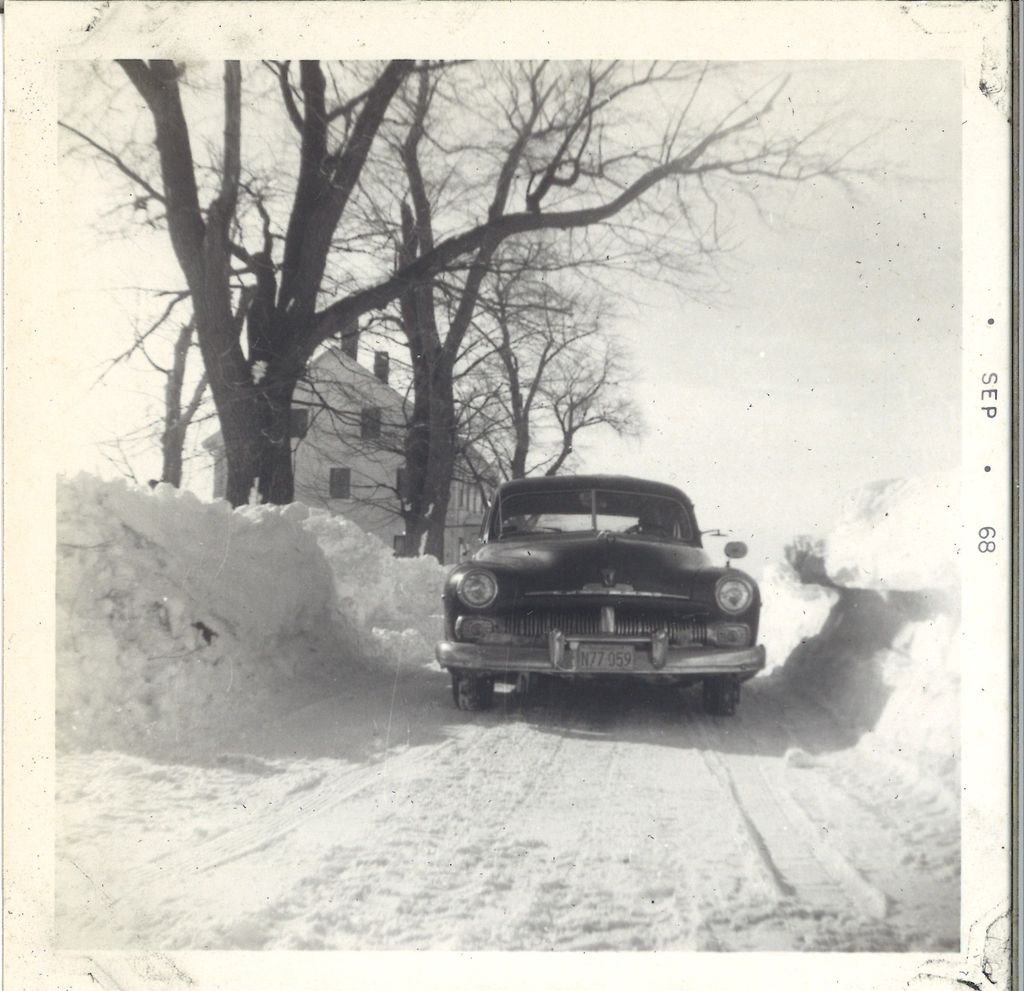
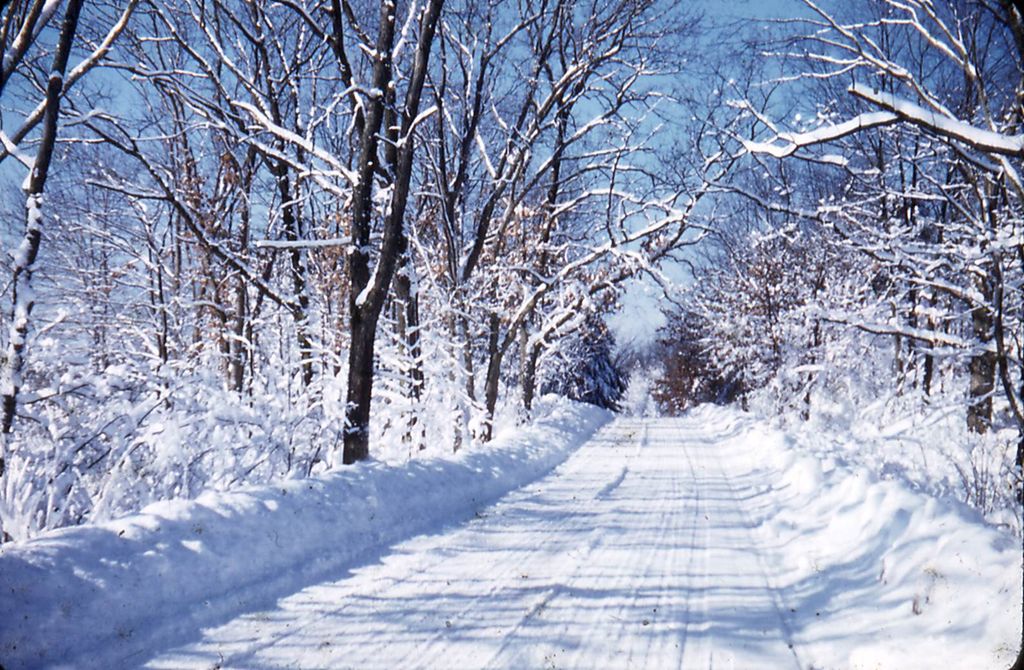
The Poore Farm looks exactly the same as it did on this day in 1968 (the car is c. 1946). Author collection.

"The Ice King Still Holds"

by Bethany Groff Dorau

Hello from inside the snowbanks surrounding the Cushing House! I know we have members and faithful readers all around the world, but if you are in the eastern US right now, it is very likely that you are chapped and chilled and cranky. Your back is probably bothering you, and you may be coming down with something.


We are in our second week of biting cold, and are still digging out from two feet of snow - 18.5" according to the National Weather Service, but it felt like a whole lot more - and thanks to the wind, in the gullies and swales of the Poore Farm in West Newbury, where I have plunged in up to my chest, balancing buckets of pig feed precariously on my head, it was a whole lot more!


I am sure that the last thing many of you want to think about, or see pictures of, is snow, historic or not, but, as always, whenever anything happens in my life, it sends me back to the historical record. In particular, up to my ears in a drift and with all plowing devices out of commission, I wondered how we all dealt with heaps of snow in centuries past...


Read the full story after announcements...

Upcoming Events

Seasonal Saturday Tours!

Saturdays (weather permitting) 11am - 4pm

(last tour at 3pm).


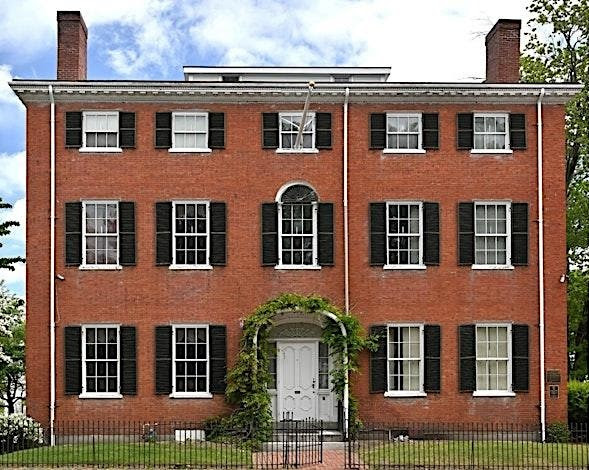
Guided tours of the Museum of Old Newbury’s 1808 Federal-style home, offered Saturdays this winter. History comes alive on every floor!


For Tickets

Newburyport's Road to Independence, Part I: The Long, Dark Winter of 1776

Friday January 30, 2026, 7:00pm


Step into the fraught winter of early 1776 with historian Alexander Cain. As Boston freezes under siege and smallpox shadows the lines, tensions ignite from barracks to backrooms. Then the spotlight shifts to Newburyport: independence is in the air, or is it treason?


For Tickets

Newburyport's Road to Independence, Part II: QUÉBEC 1775-1776: The Last Siege

Friday February 6, 2026, 7:00pm


Step into the Continental Army’s 1775–76 Quebec campaign with Canadian historian Luc Nicole-Labrie, from Benedict Arnold’s grueling wilderness march to the siege and Battle of Québec City. Discover how Canadians reacted—and why this bold invasion ended in retreat..


Tickets here

Newburyport's Road to Independence III: Loyalists, Prisoners, and the Homefront

Friday March 6, 2026, 7:00pm


Step into wartime Newburyport with Alex Cain as loyalists face persecution, prices soar, and fear hangs heavy as we move to independence.


Tickets Here

Newburyport's Road to Independence IV: American Rebels: Hancock, Quincy, Adams

Friday April 3, 2026, 7:00pm


American Rebels: The Hancock, Adams, and Quincy Families Fanned the Flames of Revolution...in Newburyport and Beyond.


Tickets Here

"The Ice King Still Holds"

by Bethany Groff Dorau

Hello from inside the snowbanks surrounding the Cushing House! I know we have members and faithful readers all around the world, but if you are in the eastern US right now, it is very likely that you are chapped and chilled and cranky. Your back is probably bothering you, and you may be coming down with something.


We are in our second week of biting cold, and are still digging out from two feet of snow - 18.5" according to the National Weather Service, but it felt like a whole lot more - and thanks to the wind, in the gullies and swales of the Poore Farm in West Newbury, where I have plunged in up to my chest, balancing buckets of pig feed precariously on my head, it was a whole lot more!


We have a small tractor with a bucket that was no match for this week's snow, and the snowblower ("YOU HAVE ONE JOB", James was heard to bellow), snapped a cable after one long pass through the field. Our back-up plow guy's truck broke down. Oh, and the furnace conked out (we un-conked it eventually). If it were not for a kind neighbor and a whole lot of shoveling, we would have been well and truly snowed in.


Before our neighbor saved the day with his gargantuan loader, as James and I surveyed the unbroken arctic landscape before us, we knew one thing. Somehow, we had to get out there and fight through about a quarter mile of deep snow to feed the farm animals...


It is, perhaps unsurprising that I grew up reading Laura Ingalls Wilder - 6th cousin, 3x removed, for those of you playing at home - her paternal grand-mother was a Colby, of the Newbury variety. I considered tying a rope around my waist before I ventured into the field, a trick I gleaned from The Long Winter, but in the end I just went for it, my body the plow.


I am sure that the last thing many of you want to think about, or see pictures of, is snow, historic or not, but, as always, whenever anything happens in my life, it sends me back to the historical record. In particular, up to my ears in a drift and with all plowing devices out of commission, I wondered how we all dealt with heaps of snow in centuries past.

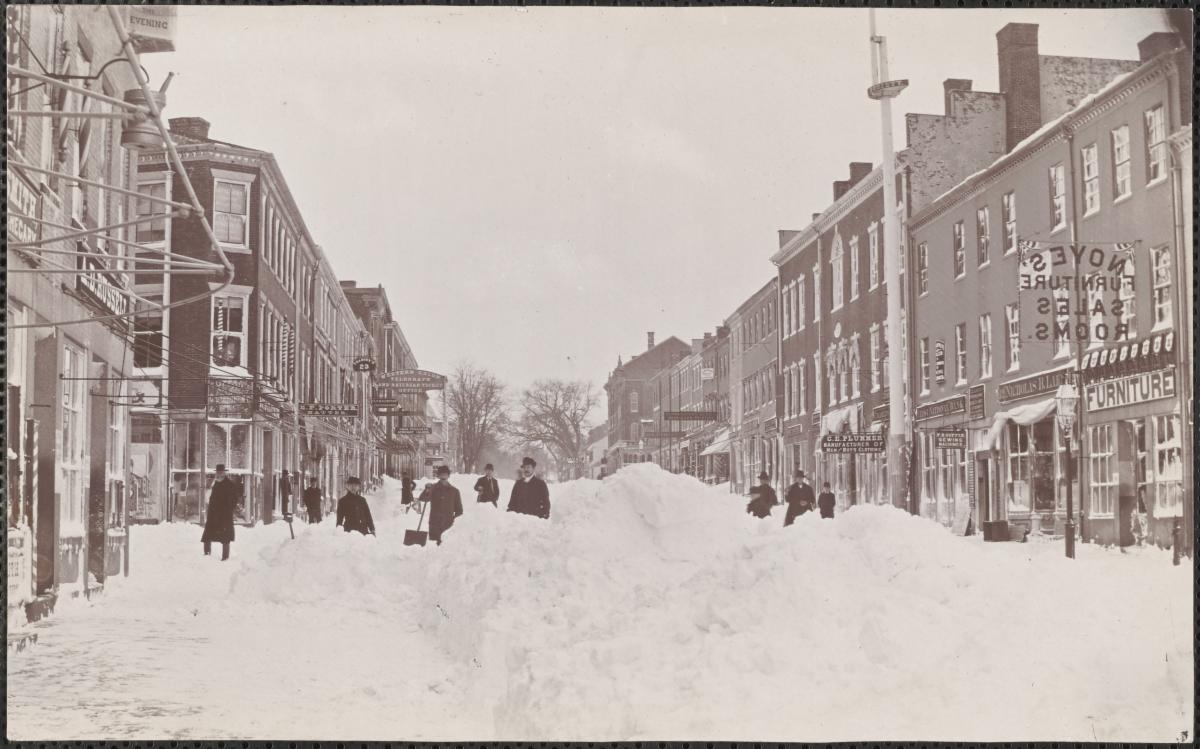
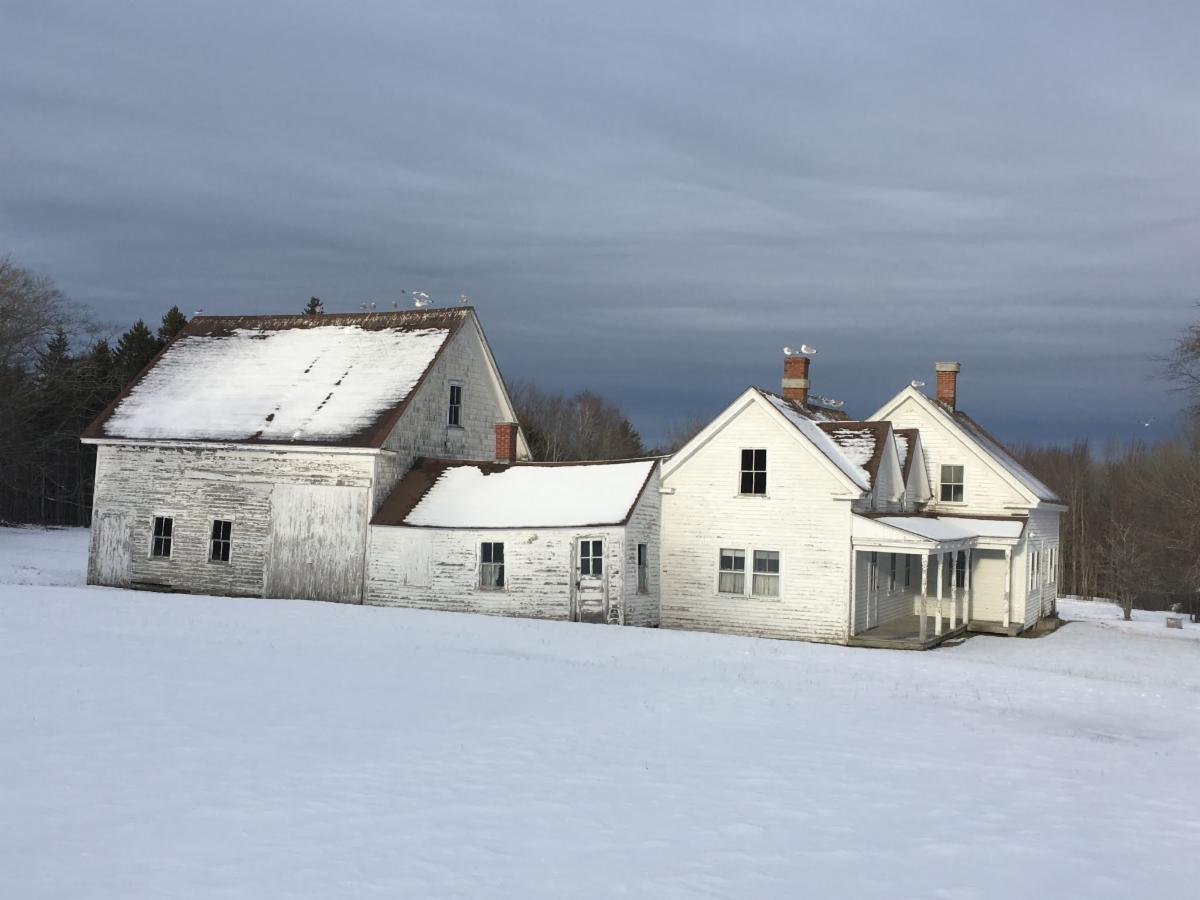
The long and the short of it is this - for most of our history, snow removal on Newbury(port's roads) was a job for the shovel. That is to say, there was little in the way of any municipal, organized effort to clear the roads of snow. Folks with shovels did what they could, and the desire to avoid the deep dive into a snowbank influenced rural architecture throughout New England, giving rise to the connected farm buildings known as Big House Little House Back House Barn, like the one below in Brooklyn, Maine.

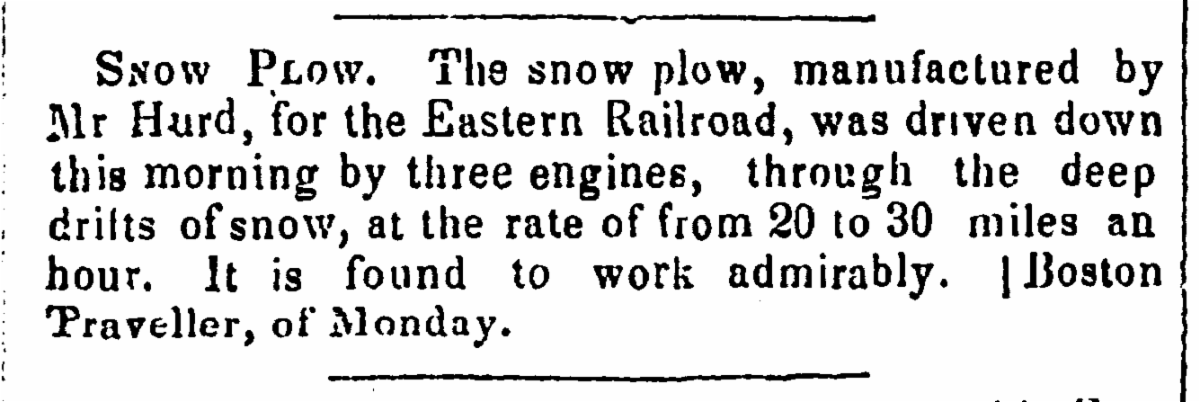
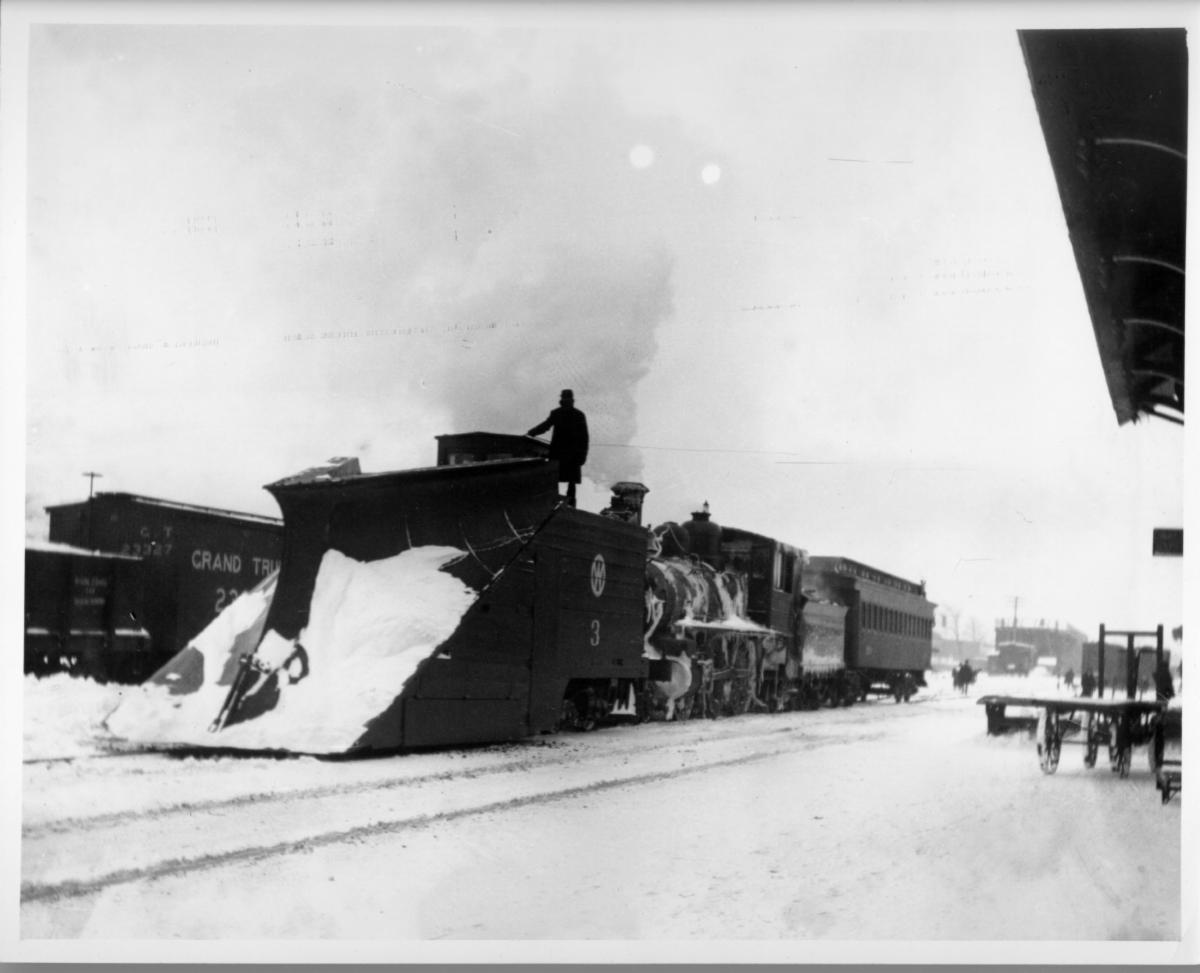
Roads could be traversed with sleds or sleighs or snowshoes or on horseback, or on foot. Snowplows came into common use alongside (actually in front of) the railroad, whose functionality depended on cleared track. The first reference to a snow plow that I can find is a newsy note from the Newburyport paper in February, 1846.

New York Ontario & Western Railway (O&W) plow, c. 1880. Image courtesy of Cornell University.


By and large, municipal snow removal was a 20th century phenomenon in Newburyport, worthy of its own study. We shall see if I can bring myself to do more research on the white stuff in the future. For now, I bring you excerpts from the harrowing, though somewhat humorous tale of the Rowley snowdrift that won against the locomotives and railroad plows of January 28, 1881.

145 years ago, the Ice King still held the Boston & Maine.


A BIG BLOCKADE.


Two Eastern Railroad Trains Ten Hours Frozen In.

The Ice King Still Holds the Boston & Maine.

TERRIBLE EXPERIENCE OF THE RAILROAD MEN.

And Not a Whit Better For Unlucky Passengers.


Friday, the twenty-eighth day of January, 1881, will be booked in diaries as one of the

most bitter cold days and nights for years, and will be remembered by railroad men and

unlucky snow bound passengers with a devout wish that it may not soon be repeated.


The Driven Snow.

All day long the wind blew in fearful gusts and the mercury hovered about the point

known as “very cold;” but it was not for the passers to and fro on the streets to

experience a tithe of the gale, which blew with such fearful fury just outside the limits

of the city, when the air was laden with flying snow as thickly as during the heaviest

snow storm, and of a quality that cut, drifted and packed in like Plum Island sand. The

fearful drifts of snow was the occasion of blockades on the two railroads running into

this city, such as has not happened since the famous snow storm of January 17, 1857.


The Eastern Railroad Blockade—How It Started.

Freight train 95, left Boston as usual, at 5 o’clock, Friday morning. It was due in this

city at 10.20 and everything went fairly well, until about 12 o’clock. At that time the

train had reached a point near Rowley’s Floyd’s Lane, to call it by its modern name,

and here found a drift of snow, which had blown in in a most solid manner. The engine

valiantly butted the drift and soon found it as unyielding as a rock.


Two of a Kind.

While thus struggling the Amesbury freight train came along and innocently tried to

push its companion through. In vain, however, and after a consultation it was decided

“to strip,” so to speak. Accordingly the engine of the Amesbury train drew both freights

back to Knight’s crossing, left them on a side track, and returned to the encounter. An

attack was then made upon the drift, and resulted no better than before.


No 3 On the Spot.

At this turn of the game the passenger train in this city at 2.05 came along, on time.

Having doubled up, with no avail, it resolved to try three of a kind, and accordingly the

pin was pulled, and engine No. 3 was hauled or shackled on to the other two. Three of

a kind is generally pretty good, but a little pile of snow successfully baffled the

combined efforts of these monsters, and it was given up, and aid sent for to this city.


Reinforcements Held In Check.

The next move was to dispatch two engines from the depot, attached to a snow plow; but

the stubborn snow drift here presented a new phase. It wouldn’t allow the reinforcements

to come up with the main body, and in spite of their efforts the engines could not push

the plow through the drift, and the five pumping and panting locomotives stood completely

baffled.


Waiting for Something to Turn Up.

Meanwhile the day waned and other trains arrived. Conductor Garland’s train due at 4.40,

came up, took in the situation and backed to Knight’s crossing, a most happy anchorage,

right under the lee of Tibbett’s bakery, from which Mr. Garland regaled passengers, with

hot coffee, tea and eatables. The passengers of the first train, all this time were in a

most miserable state of feeling, being “a mile from nowhere” and with nothing to eat.

They were a most unhappy lot, when found by a representative of the HERALD, who faced

the blinding gusts of wind in search of news, and who brought them the first provisions.

Some few of the men from these two trains, walked to town, and one or two returned with

eatables of various sorts, so that after a time they were more comfortable.


Other Trains Laid Up.

When one train gets completely blocked, of course all are in the same predicament.

Accordingly the 4.45 train out of Boston, due here at 6.15 came to a stop at Rowley;

Conductor Johnson’s train, due here at 7.30 came down to the blockade and waited; and

Pullman train, due here at 8.20 made a halt at Ipswich; the two afternoon up trains, one

due here at 3.33, arrived somewhat late, and halted in the depot; and the train due here

from the east at 6.15 remained at Salisbury. The numerous freight trains were hardly

considered.


Breaking Through.

For hours a gang of men worked with picks and shovels, and at 10 o’clock in the evening

the first point was gained, when one of the engines succeeded in getting to the depot.

Taking in a fresh supply of water and fuel she returned to the drift, and at 11 o’clock

all five of the engines came through and stopped at the round house for food and drink.

This done, the work of hauling in the trains began.


The Track Clear.

At just five minutes past twelve o’clock the first passenger train ten hours late arrived

at the depot. This was drawn by two engines, and had a snow plow attached; after a stop

of a few minutes it started east, bound for Portland. Close behind came Conductor Johnson’s

train, and never were pilgrims more pleased when their journey over than were the

Newburyport passengers. Next the train for Boston which should have left at 3.55 started,

drawn by two engines, and never was the “lurid glare of the locomotive” more fully

illustrated. Everything seemed frozen stiff, frozen to the rails it were, and as the huge

drivers of the two engines went round and round, the sand which was laid down under the

wheels was turned to sparks by the friction, and the drivers looked like immense pinwheels

whirling swiftly around. At the same time the puffs lighted up the cold sky with a glaring

flame from the smokestack, and the great machine looked more like subterranean and infernal

monsters than the mere tools of man. After this train the others passed through, though

somewhat varied from their usual order.


On the Boston & Maine—Another Ill Omened Freight.

On the Boston & Maine road the blockade was also caused by a freight train left this city,

about noon, with coal for Lawrence. At the first cut, just beyond the River and about a mile

from here, it encountered a snow drift and there it stopped. The passenger train 2.22 came

along on time, until it struck the lumbering freight, when it also stopped. Conductor

Skinner’s train, due [illegible], also found itself in a similar condition.

The telegraph wire on this road was down; the station agent thought that Coombs’ and

Conductor Hoyt’s train were between the blockade and Georgetown, forward at Byfield.

If the passengers of the Eastern road were blockaded in a close wilderness those on the

Boston & Maine were in worse wilderness; but some hardy ones had the courage and kindly

spirit to face it and come to town for provisions; hoped they passed a night as comfortable

as possible under the circumstances. The freight had to have its fires watched; seemed no

chance of their getting out before this forenoon...


Items and Incidents.

-A number of persons who were out in the wind were badly frost bitten in the face, and

frozen ears can be numbered by the dozen.


-The snow was so solid that in places axes had to be used. Stephen Gardner led a horse out

to bring home the entire party, including the driver, over the tops of drifts several feet,

without breaking through.


-As the engineers came into the office at the Eastern railroad to get orders, after the road

was cleared, [someone] delivered the encouraging admonition to go out for a big drift at

Hampton Falls.


-We are indebted to D. C. Worcester, J. B. Brown, and others for copies of Boston evening

papers. The news-boys did not receive their bundles.


-Postmaster Noyes drove out mid-way and walked the rest, and our mail due here at 2.30. This

was about six o’clock and was the last received last night.


-Roadmaster Stevens, of the Eastern, was at the scene of the difficulty and managed affairs.

-One of Lucy’s coaches was drifted at Turnpike crossing, upset, and was buried in the snow

that it had plowed here and the horses rode loose.


-All the laborers that could be were hired by the two roads to dig out the trains, at

twenty-five cents per hour. Laborers were pretty scarce, however.


-The restaurants of the city, those near the Eastern depot, fared well. Conductors Johnson

and Garland are entitled to credit for feeding their trains.


-Little’s Haverhill stage encountered a drift, near Charlie Gardner’s, West Newbury yesterday

afternoon, and was abandoned.


-The late Amesbury horse cars did not run last evening. It was bad enough in getting the

6 o’clock Amesbury down.


-Dispatches received at 3 o’clock this morning announced that the up and down trains had

arrived all right at Salem and Portsmouth.


-Several stop-over passengers, who said that they would take no farther risks over in the

woods, when the mid-day train left, undertook to find a hotel. They did not succeeded in rousing

any one, but lay the rest of the night very comfortably at the police station.


-E. S. Moseley made two attempts home from the train. The second fell in a snow bank and was

found by Northend and John Moore, who with difficulty assisted him back to the train.

Moseley was badly frost-bitten.


-A supply engine, with food, was dispatched by passenger agent Richardson, about 9 o’clock, and it was welcome to the passengers.


A Celebrity Guest...and a journey to Macau in 1844...

by Ashley Adams Serveiss

Last week, we were very fortunate to receive a celebrity visitor, Ambassador R. Nicholas Burns, along with his wife, Libby Baylies, and their guests, Larry and Patty Stone of Newburyport. We were thrilled to welcome Amb. Burns, Libby, and the Stones for a lively tour of the Cushing House, followed by an afternoon of research spent in the Perkins Art & Research Center.


Amb. Burns is the former United States Ambassador to China (2022-2025), among many other distinguished accolades. The primary reason for his visit (besides visiting beautiful Newburyport, and his friends here), was to learn more about our very own Caleb Cushing in anticipation of his forthcoming book.


For those who may need a reminder, Caleb Cushing (1800-1879) was a diplomat, statesman, and lawyer who held various roles in all three branches of government. Caleb spent his formative years at the Cushing House and considered it his home throughout his life, despite not always living in Newburyport. He navigated a multitude of complex situations in the 19th century, though his legacy is somewhat marked by his shifting political allegiances and failure to take a stand against slavery, among other things. Most notably, perhaps, Cushing served as the United States Minister to China in 1844, during which time he secured the Treaty of Wangxia, effectively opening up trade between the United States and five critical Chinese ports -- this was an exceptional moment in history, as we'll later discuss.

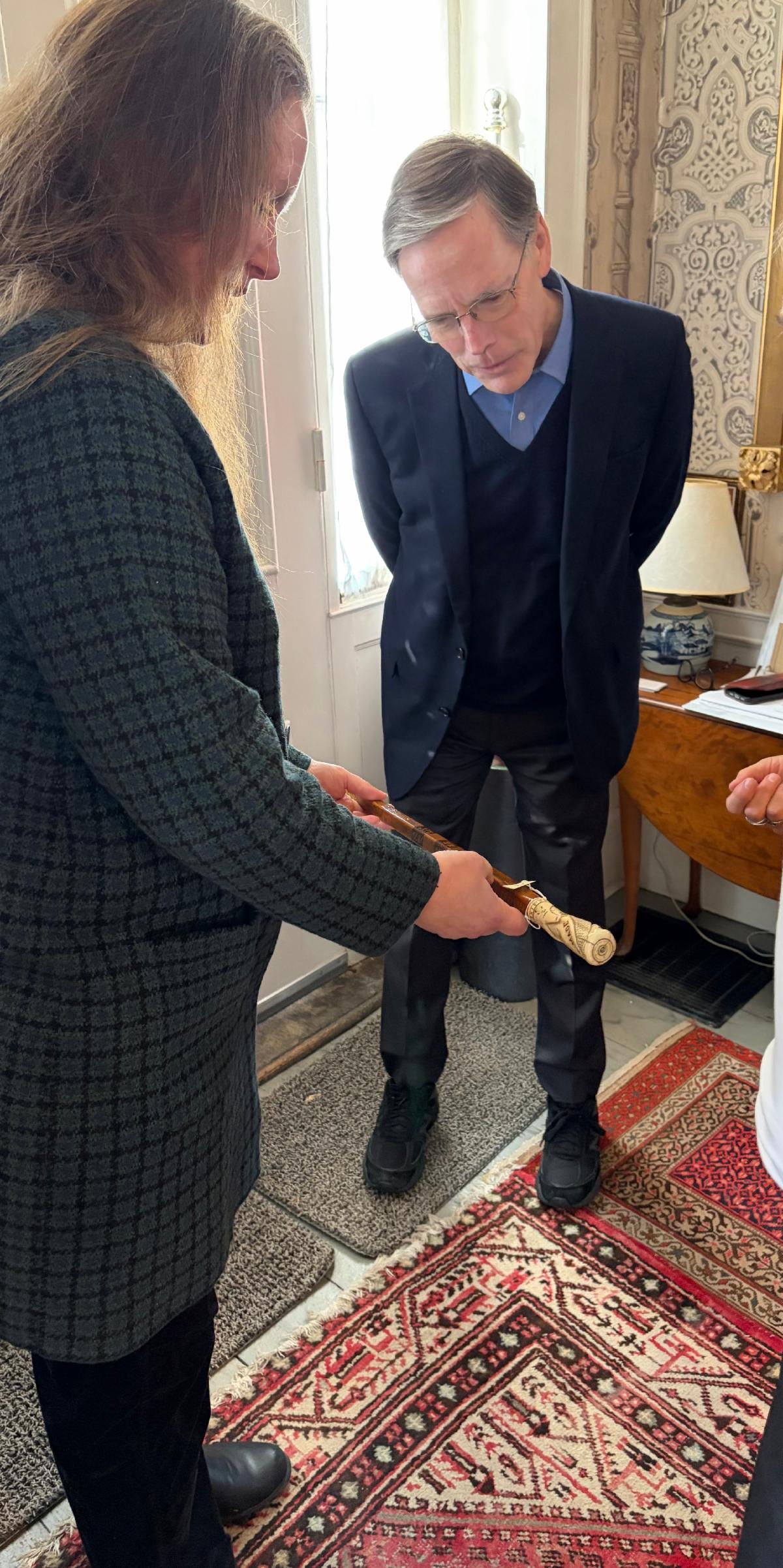
Above, Executive Director Bethany Groff Dorau shares the Masterpiece Cane made by John Burke with Amb. Nick Burns. Another cane in the collection is believed to have been brought back from China by Cushing.

We were excited, not only to host an American diplomat and scholar, but to have the chance to showcase a small piece of our world-class museum and archival collections. The bulk of Caleb Cushing's papers are held by the Library of Congress in Washington, D.C., yet his diaries, research notes, and memoranda are housed in the Perkins Art & Research Center here at the Museum of Old Newbury.


Pulling the papers in advance of this visit was perfunctory -- as with all research requests, we locate the box(es) on the shelf, pull for research, and check that all materials are accounted for and are in good condition. I hadn't been the one to process these papers so I wasn't entirely familiar with their contents. What I found was an unprecedented take on an American's entry into China in the 19th century. Before Cushing's time, trade was restricted to the Port of Canton, and foreigners were strictly forbidden to enter China's interior. The Treaty of Wangxia permanently altered the economic landscape for the United States, China, and the rest of the world - fixed tariffs stripped away Chinese control over import taxes, extraterritoriality meant American legal sovereignty, and ultimately the United States asserted itself as a dominant economic world power - and all this was facilitated by a guy from Newburyport!

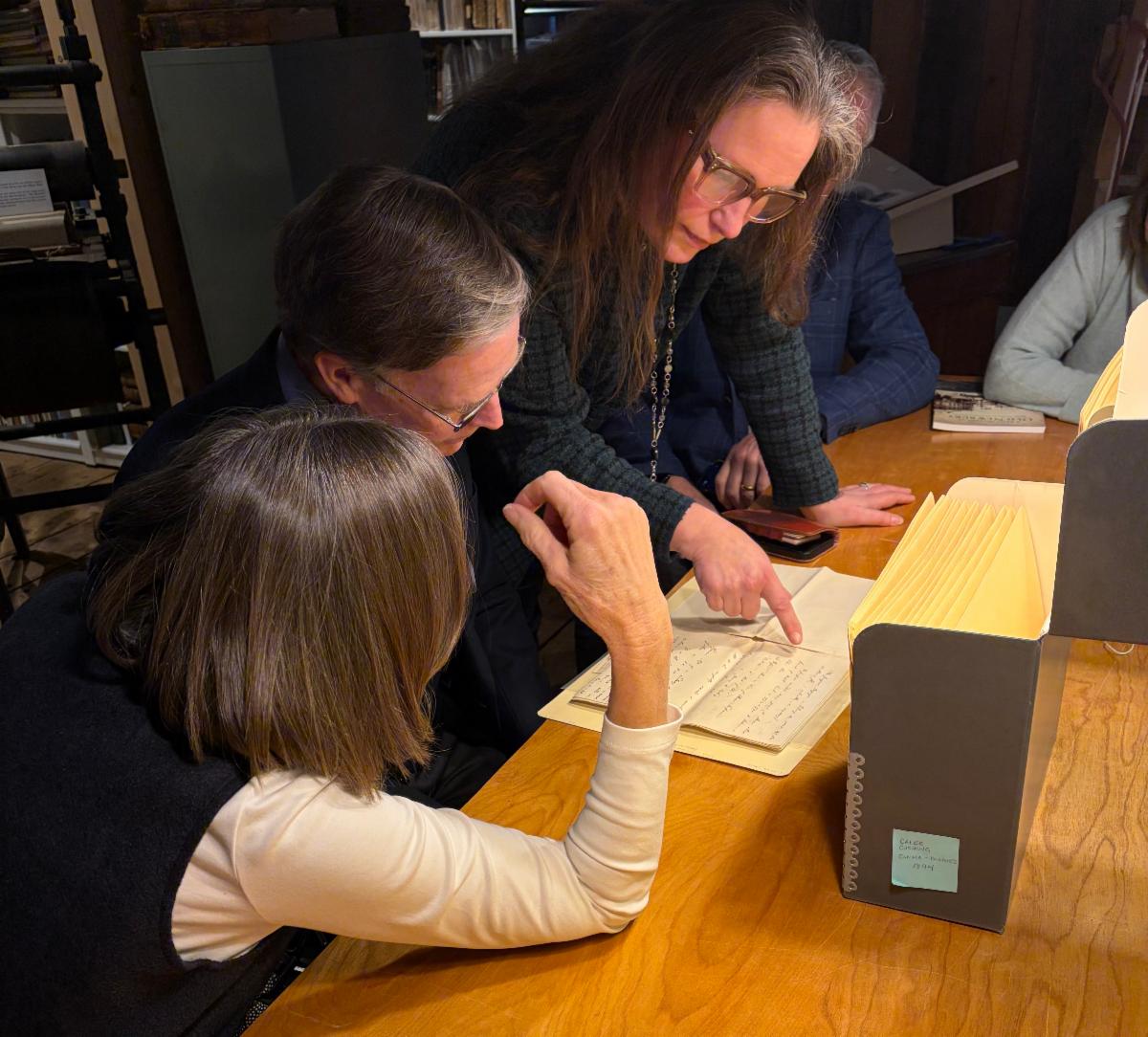
Above, Executive Director Bethany Groff Dorau, Ambassador Nick Burns, and Libby Baylies sit in the Perkins Art and Research Center to review Cushing's research notes about his time in Macau in 1844.

Cushing prepared for his ambassadorial post by extensively studying the work of Joseph de Guignes prior to his arrival in Macau. In his research notes, Cushing cites the sinologist as a major influence on his diplomatic experience in China. He made notes on customs, vernacular, and the appropriate behavior for a United States Minister visiting China for the very first time. With this particular request, I reviewed the contents of each box in the collection with a bit more enthusiasm than usual, which likely came from knowing the weight of these records and their enduring impact on history.


Cushing's notes on etiquette, diplomatic relations, and his diaries about the Treaty of Wangxia were of special interest to Amb. Burns and Libby. Some of the traditions Cushing mentions in his diaries are still an expectation in China today; notably, the custom of kowtowing. In 1793, just 51 years prior to Cushing's arrival in Macau, British envoy Lord Maccartney declined to kowtow to the Qianlong Emperor, defying a longstanding tradition, and instead offered a greeting considered most appropriate in a Western setting -- Lord Maccartney took a knee. As Amb. Burns reviewed Cushing's diaries, he shared his thoughts on the subject as he prepared to present his diplomatic credentials to Chinese President Xi Jinping in 2022. This is a fantastic example of how the archival record shapes and reinforces our understanding of history and all of its interdisciplinary threads.

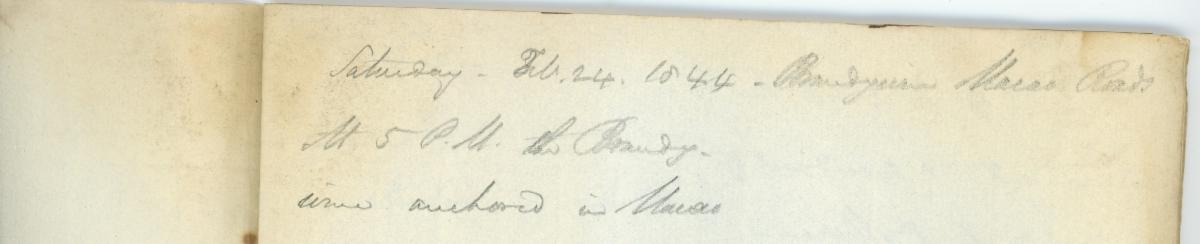
Above, a small excerpt from Cushing's diary dated February 24, 1844, the day he arrived in Macau.

Perhaps one of the most gratifying aspects of the work we do as archivists, historians, and curators is witnessing the reactions from researchers when pouring over manuscript materials. In this instance, Amb. Burns was genuinely delighted by Caleb Cushing's diaries and made a number of fascinating observations and connections between his own work and Cushing's, despite the 181 year difference between the two.

Above, from left to right: Ambassador Nick Burns, Collections Manager & Archivist Ashley Adams Serveiss, and Libby Baylies. The trio stands in the Perkins Art & Research Center, where Caleb Cushing's papers are held.

Are you interested in seeing Caleb Cushing's papers? Members and the public are welcome to see Caleb Cushing's papers by visiting the Perkins Art & Research Center during Open Research Hours or by appointment.

Something Is Always Cooking...

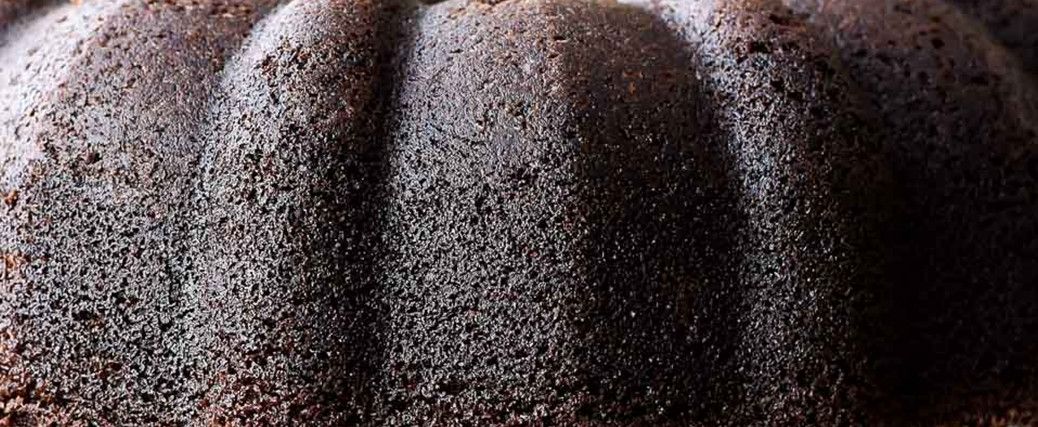
Chocolate Whiskey Cake


This recipe is so decadent without tasting overly sweet. It does take a little effort to complete but is totally worth it. Make it to share with the special people in your life or make it for yourself, you deserve a little treat right about now! Adapted from a New York Times recipe.


Ingredients


1 1/2 cups butter.

1 cup unsweetened cocoa powder, plus more for dusting.

1/2 cup (strong!) brewed coffee.

1/2 cup good whiskey, plus more for soaking (optional, but worth it!)

1 cup sugar.

1 cup dark brown sugar.

2 cups flour.

1 1/2 teaspoons baking powder.

1/2 teaspoon salt.

1/4 teaspoon finely ground black pepper.

1/4 ground clove.

3 large eggs.

2 teaspoons vanilla.

1 cup quality dark chocolate chips.

Powdered sugar for dusting (optional).


Instructions

Brew coffee.

Set oven to 325.

Heavily butter a bundt or springform cake pan and dust well with cocoa powder.

In a heavy bottomed pot over low heat, whisk coffee, whiskey, butter, cocoa powder and sugars until dissolved. Set aside to cool completely.

In a large bowl sift together remaining dry ingredients.

In a medium sized bowl, whisk together eggs and vanilla, then slowly add in the cooled cocoa/sugar mixture to combine.

Finally gently combine wet and dry ingredients, but don't over mix. Fold in chocolate chips at the end.

Carefully pour batter into prepared cake pan and bake for 55-65 minutes or until an inserted toothpick comes out clean. Don't over bake!


Let cake cool for at least 15 minutes before turning it out onto a plate.


Cool completely.


At this point, you can dust with powdered sugar and/or cocoa powder and serve. Or if you like, poke some holes in the cake and soak in a bit more whiskey. It's divine!


Enjoy guilt free (It's been a long winter already!)

Puzzle Me This...

Click the image to do the puzzle


Middle Street, West Newbury, 1957. Courtesy of Mary Anderson Poore


Museum e-Newsletter made possible through the generosity of our sponsors:

Museum of Old Newbury

98 High Street

Newburyport, MA 01950

978-462-2681

www.newburyhistory.org

Facebook  Instagram  Twitter