e-Newsletter | June 9, 2023 | |
This weekend! 44th Annual Garden Tour, June 10 and 11. | |
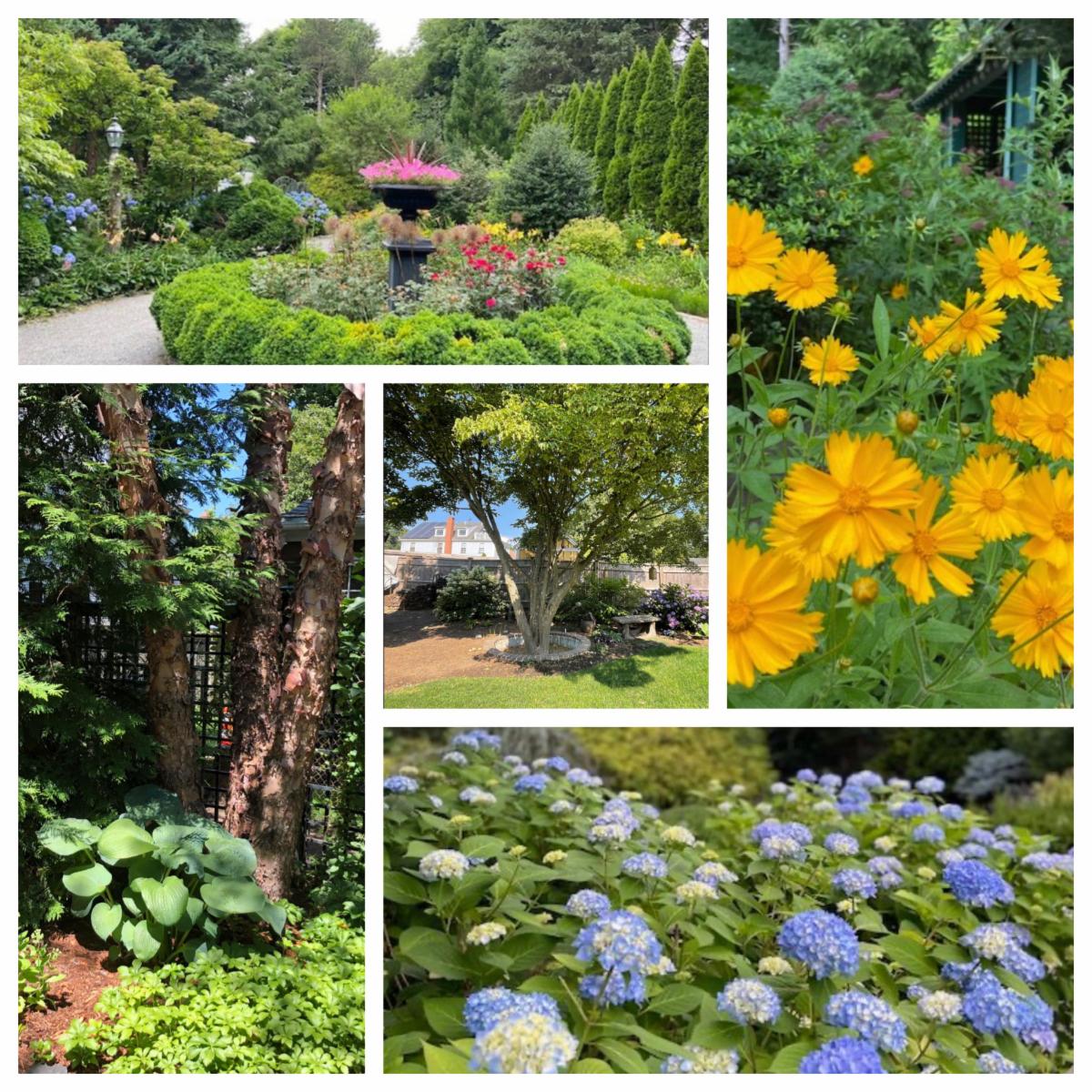
Here are just a few of the 12 gardens you will see on the 44th Annual Garden Tour, June 10 & 11. Tickets are available in person in the museum garden, Saturday and Sunday from 10am-4pm. Your ticket is good both Saturday and Sunday. Buy ahead online for an electronic program and map. Stop by the museum to get the paper program book. Buy your garden tour tickets here! | |
Theo Alice Ruggles Kitson: Atkinson Common and the Unknown Sculptor of America's War Memorials | |
|
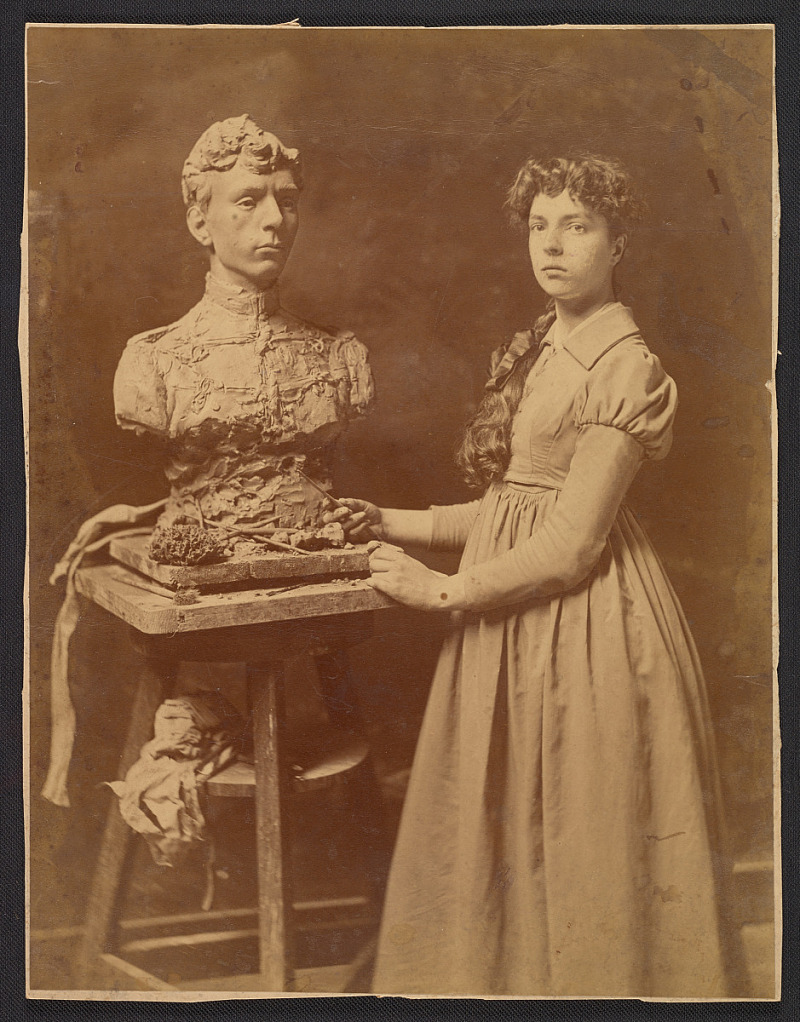
Theo(dora) Alice Ruggles Kitson in 1889 with an early sculpture.
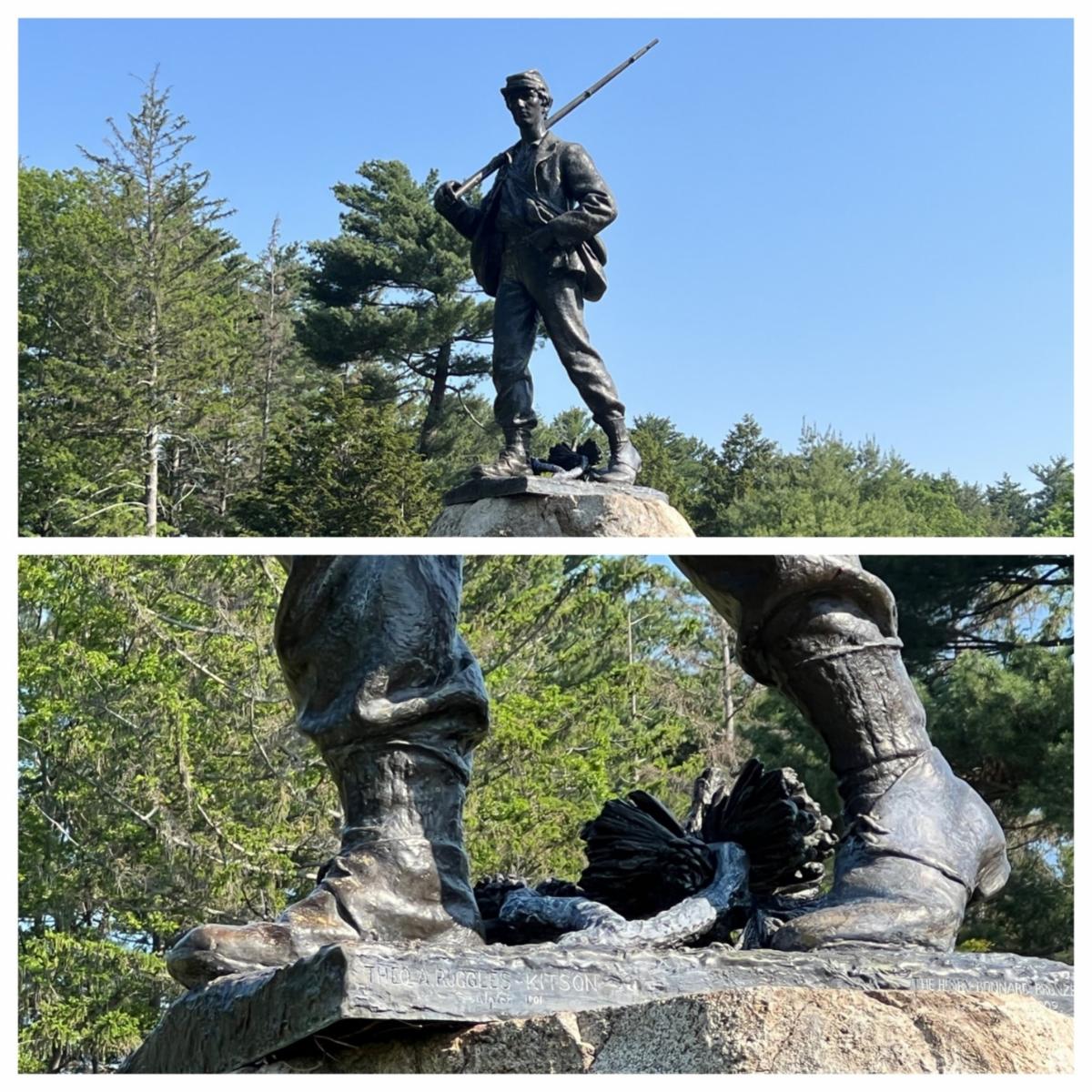
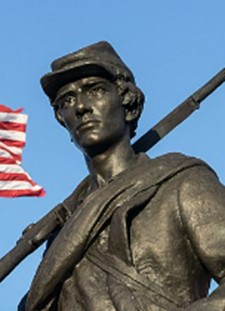
On Thursday, December 20, 1900, the Newburyport Daily News reported that the Soldiers’ and Sailors' Monument Association had met the previous evening at the Grand Army Hall. Their purpose, to vote on whether to proceed with the installation of a Civil War memorial at Atkinson Common was carried out and decided in the affirmative. The proposed sculpture would depict, not a general or captain, but “a typical soldier as he would appear after battle” and would hopefully be ready for unveiling by the following Memorial Day. The monument’s anticipated design was described in detail: the soldier’s gun position (right shoulder shift), his facial expression (“high purpose and determination”) his clothing and accessories (“fatigue uniform,” “cap inclined toward the back of his head,” “shoes badly worn;” “canteen and haversack swinging at his side.”) He would be made of bronze and would be a “heroic” 8’ tall - nearly 20 once installed upon his boulder base. He was promised to be “one of the most attractive soldiers’ monuments in any city,” a work of art that would be “appreciated by everyone who views it.” Though funds still needed to be raised to pay for it, the monument would no doubt be erected, and the contract, according to the Daily News, had been awarded to renowned British sculptor Henry Hudson Kitson.
| |
|
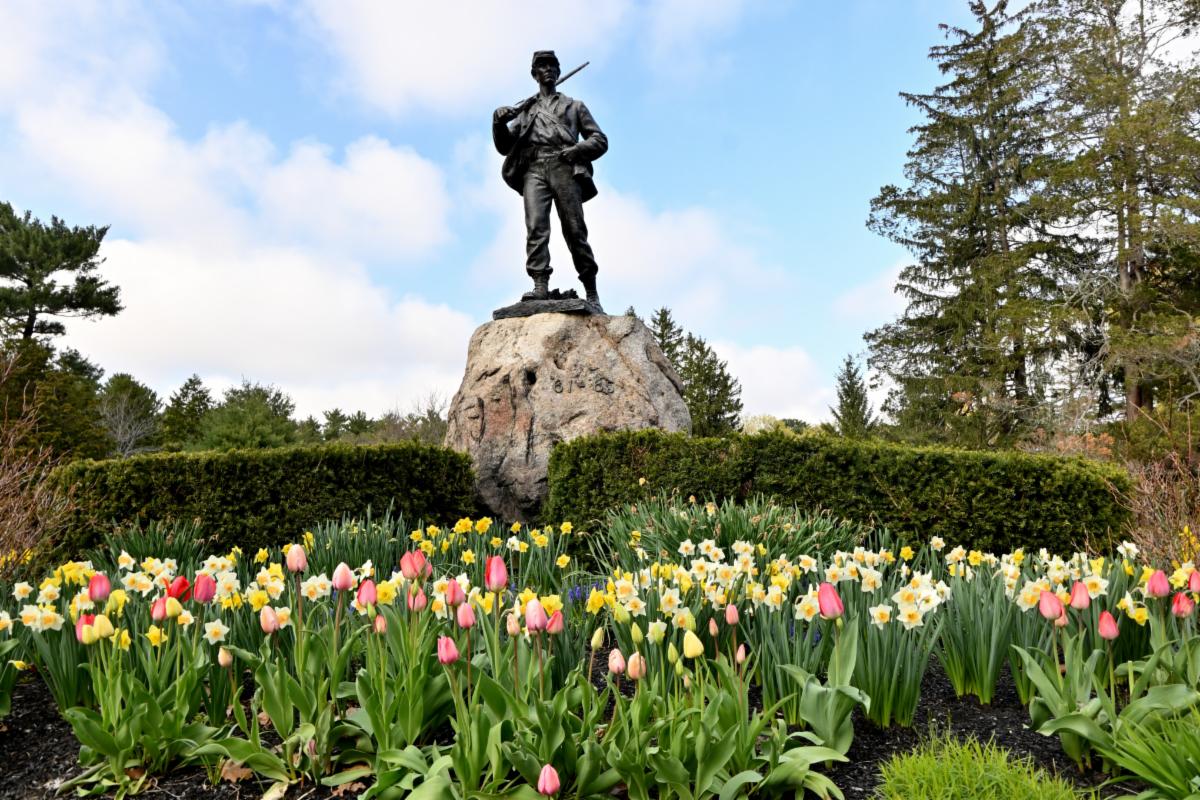
Newburyport’s The Volunteer, with detail of the soldier’s worn shoes and the Southern pine boughs over which he treads.
Sufficient funds were raised, though the sculpture was not installed by the following Memorial Day, or the one after that. In fact, The Volunteer, as it would be called, wouldn't be unveiled until Independence Day of 1902. A great procession was assembled, and throngs of spectators lined the streets as the Amesbury Fife and Drum Corps, several Grand Army of the Republic posts, the Newburyport Cadet Band, the Belleville Boys Brigade, and thirteen carriages full of City officials and their guests made its way with much pomp and ceremony from Pleasant Street to Atkinson Common for the monument’s unveiling. The July 5, 1902 Daily News praised The Volunteer for both its “sentiment and its artistic worth.” They ran a photo of the statue we would all recognize today - the dignified soldier mid-stride, coat unbuttoned and his face weary yet determined, gun resting on his shoulder. The statue was just as described nearly two years before, with one crucial difference – Henry Hudson Kitson, to whom the initial contract was awarded, did not sculpt it. His wife did.
|  | |
|
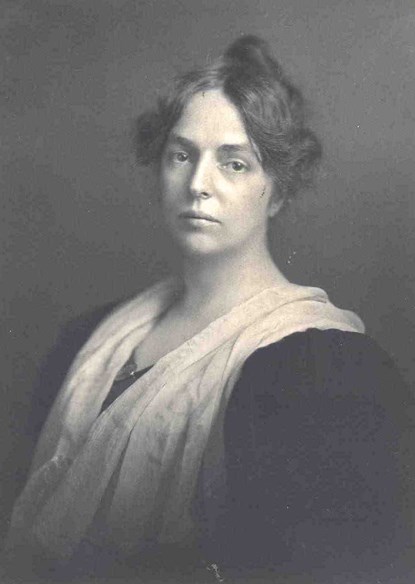
Theo Alice Ruggles Kitson in 1903. Courtesy of the Smithsonian.
Theodora Alice Ruggles, called Theo for most of her life, was born in 1871 in Brookline MA. Her artistic talent was first recognized when, at the age of 14, Boston architect Edward Cabot happened to see a horse in repose that young Theo had sculpted out of snow in her family’s yard. Impressed with her natural skill, he urged her parents to enroll her in art classes, but they had trouble doing so. Theo was turned away from the Boston Museum of Fine Arts School. It is unclear whether this was due to her youth or her gender, but she was rejected by several other art schools as well, until finally one school director suggested a private tutor and introduced Theo and her mother to Henry Hudson Kitson.
In 1886 Ms. Ruggles, 15, began studying with the 23-year-old Kitson, and the following summer, with her mother as chaperone, she accompanied him to Paris where she immersed herself in her studies. In 1888 at the age of only 17, she exhibited two works, one in plaster and one in bronze, at the Salon des Artistes Francais, becoming the youngest sculptor ever accepted to the exhibition. An article about the Salon gave credit to “Mr. Ruggles” - perhaps because she had adopted the nickname Theo, or maybe because critics at the time could not conceive that someone so young, let alone a woman, had created such fine work. She was accepted again the following two years. In 1889 her sculpture On the Banks of the Oise made her the youngest woman, and the first American, to be awarded an honorable mention at the Paris Salon, and in 1890 her Young Orpheus earned another. She was the only woman with pieces in the exhibition that year, and she was given a standing ovation by her much-older, male competitors. Judges and critics alike praised her work for its acuity and sensitivity, and she returned to America a minor celebrity, bolstered by her achievements in France.
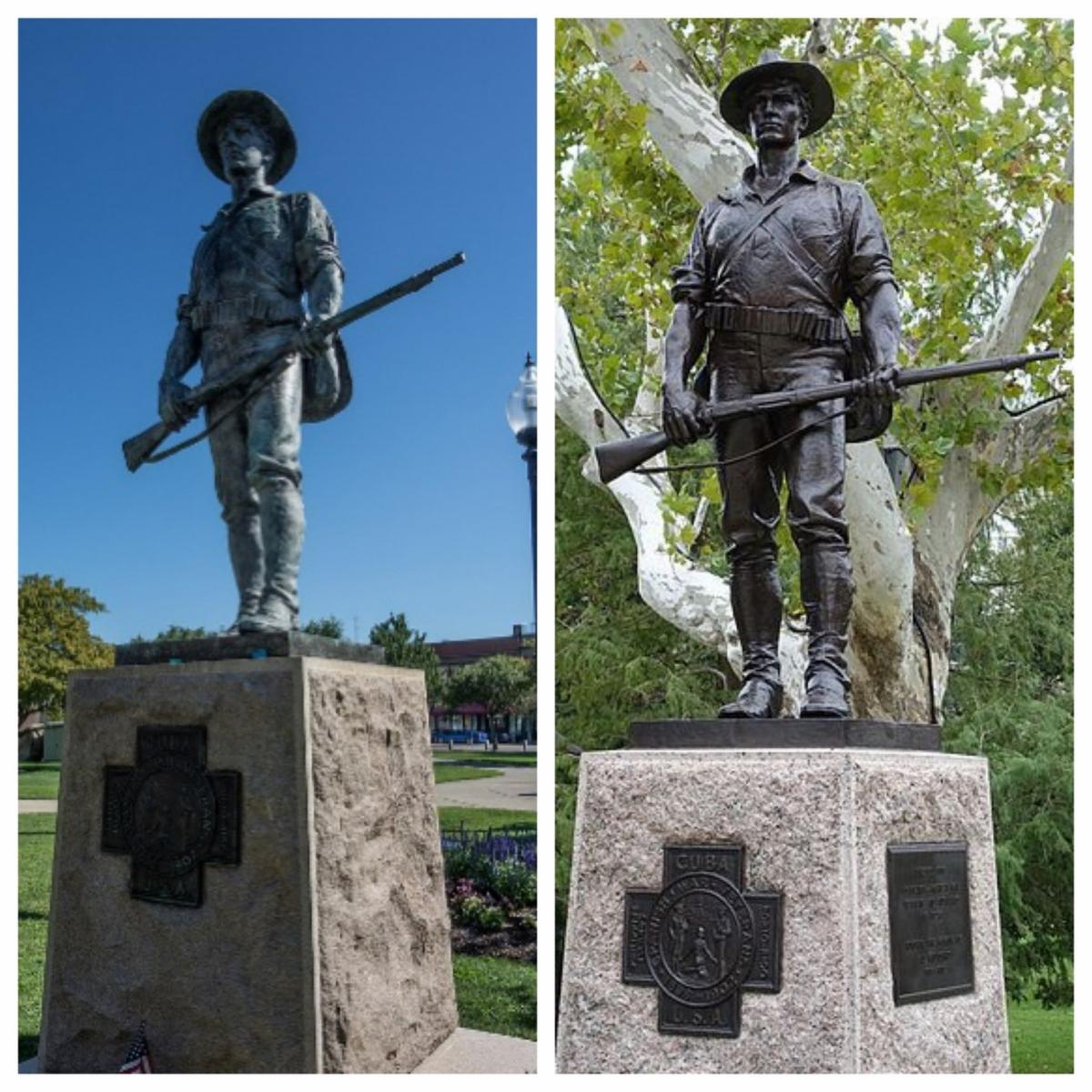
In 1893, in what was called the “social event of the season,” Theodora married her former tutor Henry Hudson Kitson in Boston. Over the next several years she found much success in America, becoming the first woman admitted to the National Sculpture Society in 1895 and exhibiting four works in 1893 Chicago World’s Fair. She received commissions for The Athlete from Brown University and another from the city of Providence, Rhode Island, honoring native son and Revolutionary War hero Esek Hopkins. War monuments would become her specialty in the ensuing years, and several of her pieces, like Newburyport’s The Volunteer, would be reproduced again and again, installed in every state in the nation. Her most reproduced work, The Hiker, in honor of the common foot soldiers of the Spanish-American War, was cast at least 50 times and is likely one of the most replicated sculptures in the country.
|  | |
|
The Hiker, Taunton MA (L) and Austin TX (R)
Her 1914 Civil War monument, The Wounded Color Sargent was commissioned by the Topsfield Historical Society and stands today on Veterans Memorial Green. Between 1910 and 1920 Ruggles Kitson created an impressive 73 busts and reliefs of Civil War leaders for Vicksburg National Military Park in Mississippi. Representing Massachusetts, a variation on Newburyport’s own The Volunteer stands atop a 15-ton boulder imported from Quincy MA and was the first monument erected at Vicksburg. Other variations exist in North Providence, RI; Walden, New York; and Sharon, North Attleboro, Ashburnham, Townsend, and North Andover, Massachusetts, as well as other cities across the state and the nation.
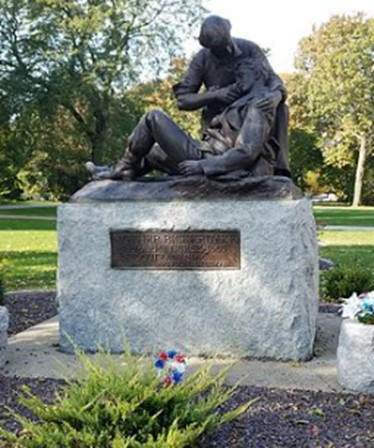
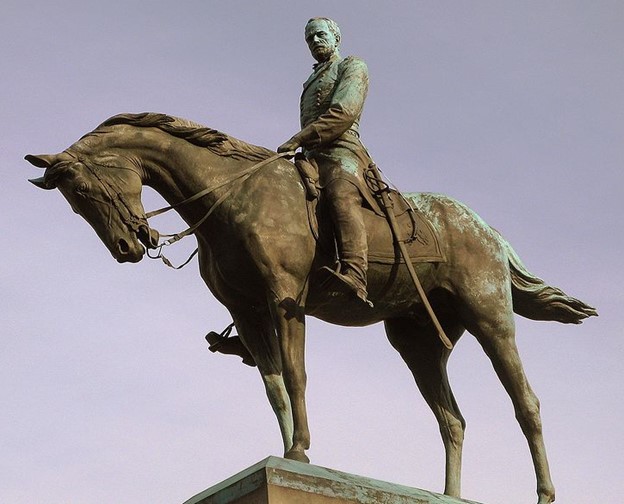
In 1920 Kitson created one of the first war monuments to a woman. Mother Bickerdyke in Galesburg, Illinois honors Civil War nurse Mary Ann Ball Bickerdyke - praised by General Sherman (whom Ruggles also memorialized in Washington D.C.) as “outranking him,” and is the only Civil War monument featuring a female subject by a female sculptor.
| |
The Mother Bickerdyke Monument at Galesburg, Illinois | |
|
William Tecumseh Sherman Monument in Washington D.C.
Ruggles Kitson’s work was groundbreaking in other ways. While war monuments had usually memorialized high-ranking officials glorified and triumphant on horseback, Ms. Ruggles Kitson’s sculptures often honored the everyday enlisted men - the minuteman, the volunteer, the wounded warrior - depicting them not only as courageous and strong but possessing a vulnerability and humanity that made them all the more relatable, and the devastating reality of war all the more apparent. Her sensitivity to her subjects’ experiences on and off the battlefield, as well as her skill at rendering the often-symbolic nuances of their postures, uniforms, and expressions made her one the most popular sculptors of the early 20th century, though her name is little-known today despite her prolific career.
| |
|
Detail of The Volunteer, North Providence RI
Ms. Ruggles Kitson defied the expectations of women of her day by pursuing a career and an education, but she also gave birth to four children between 1897 and 1903, though it appears only three survived into adulthood. Her most productive years as a sculptor were ironically the same years she was raising children and caring for her husband. She often put her own work on hold to help Henry complete his, or served as the executor of his designs. The inconsistent income she and Henry earned through commissioned projects, as well as Henry’s health concerns, which today might be diagnosed as mental illness, put a strain on their marriage and the two separated in 1909, though they maintained a studio together and would continue to collaborate for the rest of their lives.
| |
|
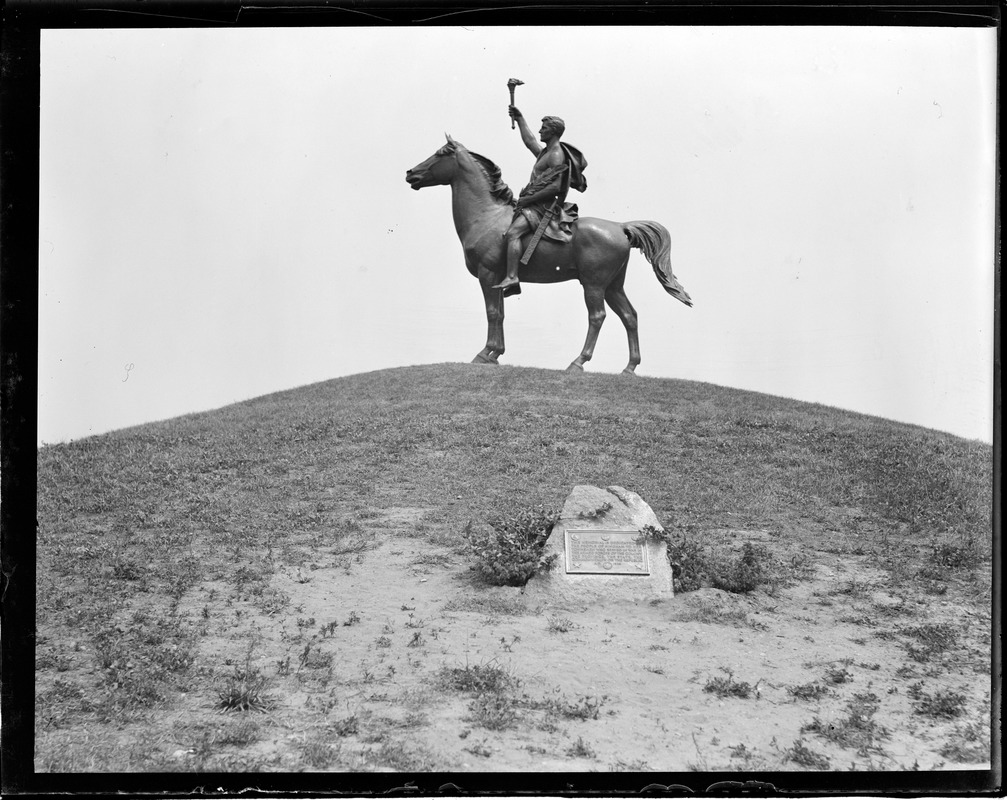
Hingham war memorial, Victory. Courtesy of the Boston Public Library.
Kitson’s final large-scale piece, Victory, dedicated in 1929 to the war veterans of Hingham, MA, features a bare-footed warrior, shield on his back, mounted bareback on his horse, and holding a raised torch in one hand while a lowered laurel branch rests in the other. The duality of war - triumph and tribulation - are captured here in Classical style, a moving tribute to those who served our country in war, and a fitting end to Ms. Ruggles Kitson’s career nearly 50 years after she first sculpted a horse in the snow. She died on October 29, 1932 at the age of 62.
| |
|
Museum tours are in full swing!
Come visit the museum and learn about the history of Old Newbury! Free for members and residents of "Old Newbury" (Newburyport, Newbury, West Newbury and Byfield). Open Thursday - Sunday, 11am - 5pm (last tour at 4pm).
| |
|
Reading Frederick Douglass Together - Newburyport
Sunday, June 25, 2023, 10:00 AM
The Museum of Old Newbury and First Religious Society Unitarian Universalist will host an in-person community reading of Frederick Douglass's impassioned 1852 speech, “What to the Slave is the Fourth of July?” Lend your voice to this powerful participatory event.
We will gather near the Garrison statue in Brown Square, Newburyport. Seating is limited - please bring a chair or blanket to the reading.
The reading will be followed by a discussion led by project scholar Doneeca Thurston, Executive Director of Lynn Museum/Lynn Arts.
This program is funded in part by Mass Humanities, which receives support from the Massachusetts Cultural Council and is an affiliate of the National Endowment for the Humanities.
In case of inclement weather, the reading will happen on the same date & time at a nearby indoor location. Registrants will be notified of any change in location.
| |
|
Women on the MOON
...a blog by Bethany Groff Dorau, Executive Director
| |
|
True Tour Confessions: Sleeping on the Job
In 1998, I got married, and the trajectory of my life changed. Of course, the marriage itself had a lot to do with that, and the two children that followed, but a special wedding gift had an outsized impact. You see, friends and former dorm-mates from Butterfield at UMass gave me a membership to Historic New England (then SPNEA). My husband, Adam and I were history graduate students. Though we married in Newburyport, we went quickly back to Amherst. I wondered when on earth I would find a minute to go on a house tour.
| |
|
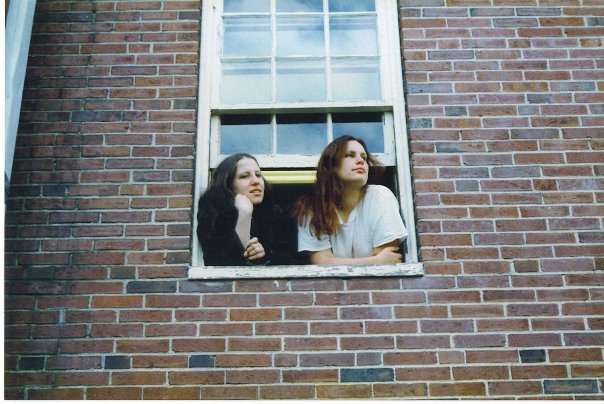
Hanging out the Butterfield window at UMass with my friend Kathleen in those carefree Amherst days.
The membership was a thoughtful gift, though. I was in love with history, dipping my toes into “public history,” UMass’s certificate program for practitioners. Still, I thought I would write and teach, not work in museums. Up to that point in my life, the transformational experiences I had in historic spaces had been disconnected from the mechanics of historic sites. I had failed to see all the ways that I had been guided through those experiences, whether by a human or printed guide (oh, the days of wandering about with a book in my hand), or by the scaffolding of signage, landscape wayfinding and text panels. I think, like so many must, that a historic place exudes some sort of special magic, and I was drawn to that. Until I worked in museums, I failed to understand what it takes to bring these places to life.
| |
|
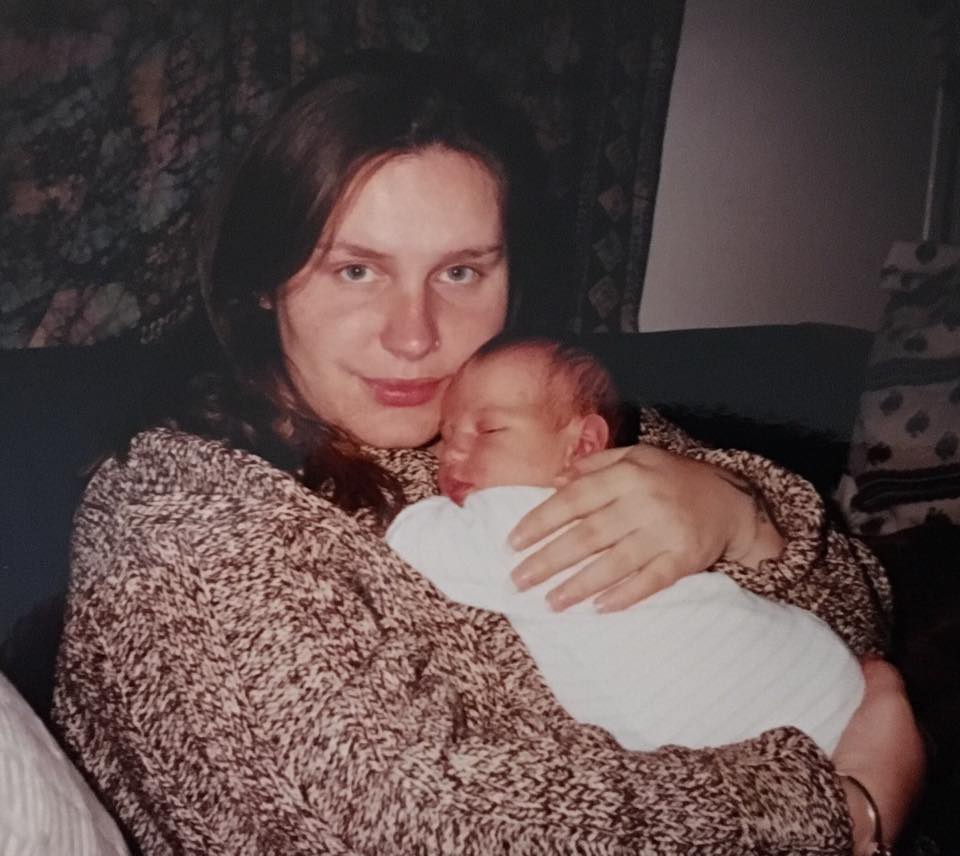
Yours truly with a rare moment of quiet with newborn Jed in 1999. Do I look tired? I certainly was.
At any rate, my son was born in 1999, and for all the confidence I had that women can do anything, (which I still believe to be true), it was an exhausting and humbling experience. Jed was an intense baby – wanting to be held, then put down, then held again, squirming and always on the move. I was still in graduate school and, for a brief time, the acting co-director of two dormitories with 700 residents. It was a whole lot, and I made it through in part because I had a committed co-parent, though we both struggled. I took an additional year to complete my graduate studies, declined my offers for PhD programs, and in the spring of 2000, while Adam remained in Amherst, I moved back home to West Newbury, to the warm lap of patience and help that was my mom and Aunt Emily. And for the first time in years, I slept. Oh, boy did I sleep.
| 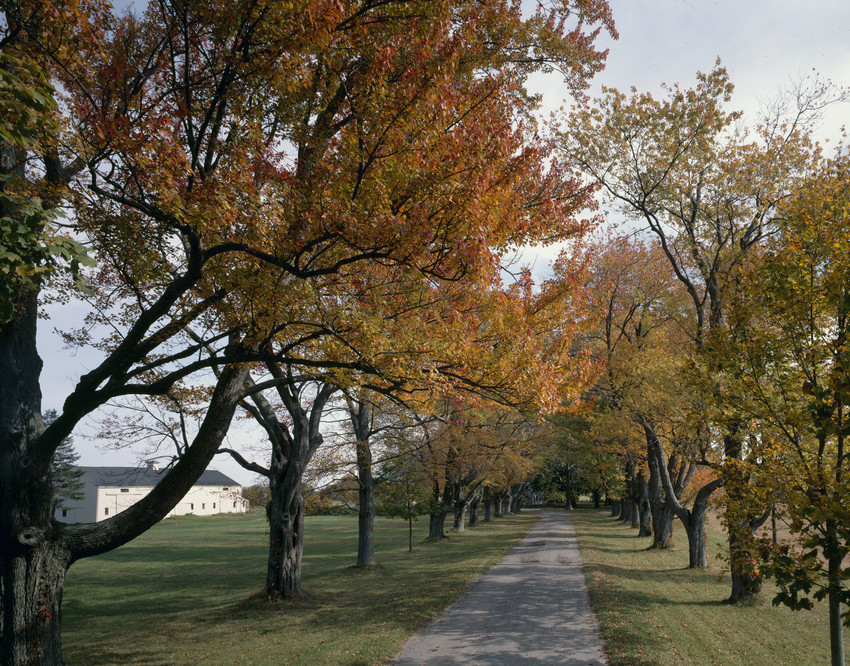 | |
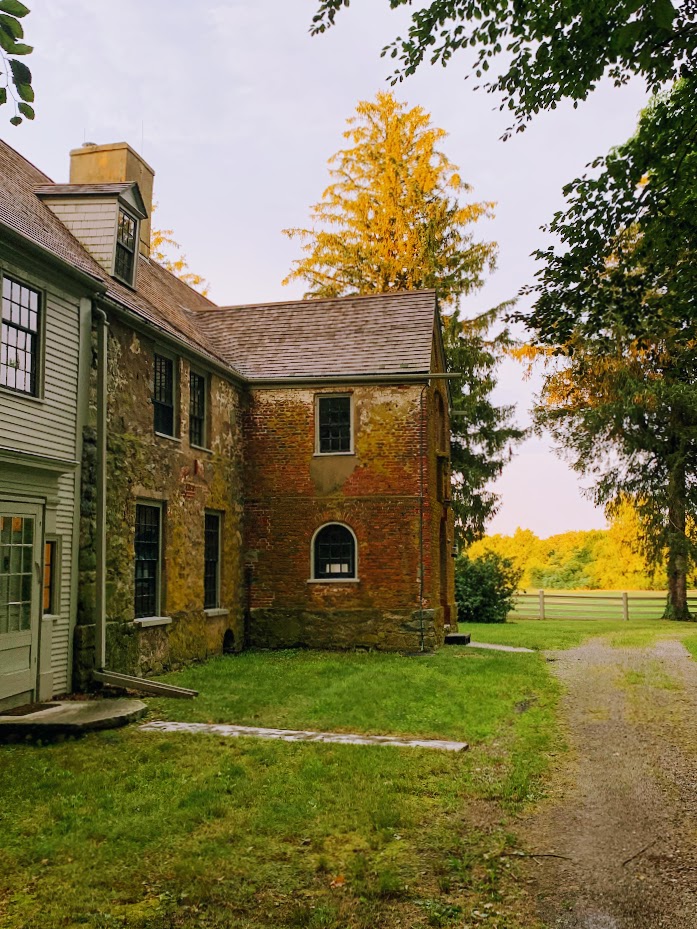
My first view of the Spencer-Peirce-Little Farm was down this bucolic lane, widened somewhat since then.
When I finally pulled myself together a bit, I decided to put my wedding gift to use, though it had expired a year earlier. I called the nearest Historic New England site. I was a newly-minted history grad, I said. Did they need any help? I offered to live at a property, clean the house, anything. It just had to be flexible as I had a baby at home. I had no idea how it all worked. Maggie, the manager of the Spencer-Peirce-Little Farm at the time, asked me to come in. I remember driving up Little’s Lane to meet her and Tracy, the regional manager. It was, and is, breathtaking.
| 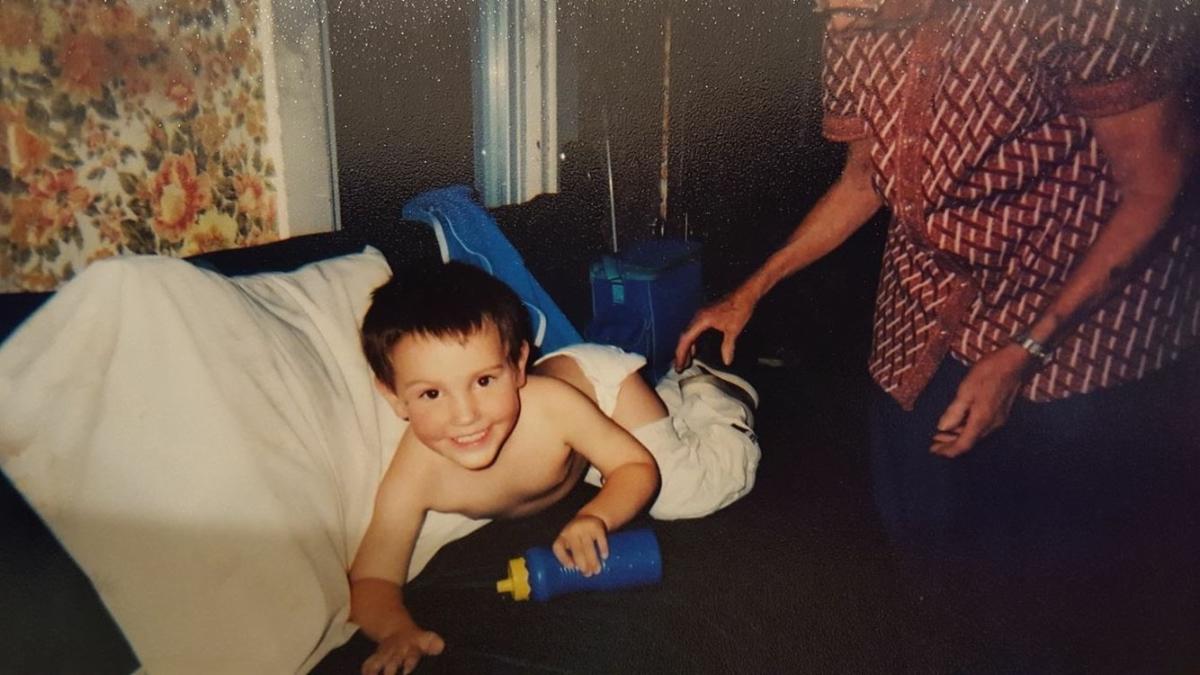 | |
While I worked, Aunt Emily tried to convince toddler Jed to put his pants on.
I was hired as a seasonal lead guide, and handed a pile of materials, including a tour outline and a heap of background information. I had never given a tour of anything in my life. Though I had worked at St. Paul’s Cathedral in London, we were more like guards than guides, always able to answer questions but mostly trying to make sure nobody spat their gum off the Golden Gallery at the top of the dome. I met other tour guides from around New England, had a couple of training sessions, and that was that. I was now responsible for telling the story of a National Historic Landmark – accountable to hundreds of people who had lived their lives in that place, and especially beholden to the family that had given the property to be preserved in perpetuity.
| 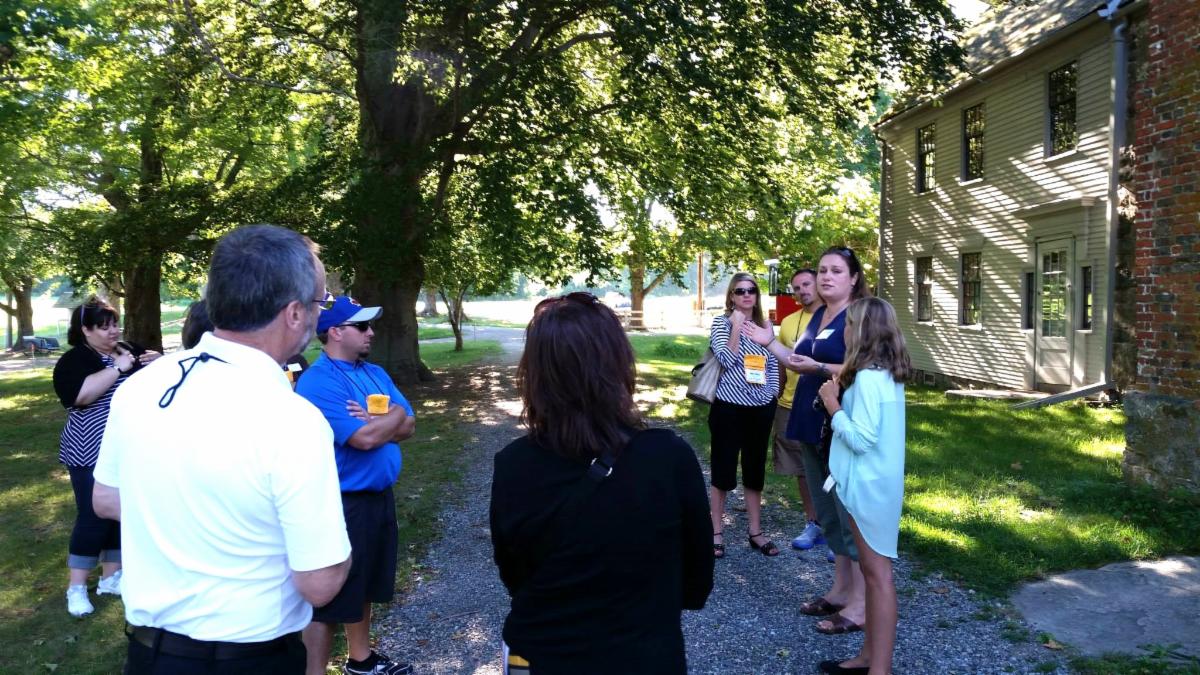 | |
A rare glimpse of an SPL tour in action.
It was nerve-wracking trying to quickly get to a place where I could lead a group through nearly four centuries of history in 50 minutes, but with practice, I learned how to move smoothly through the house, using visual cues, objects, even sounds, to connect with visitors. Most importantly, I learned how to say that I did not know the answer, but I would find out.
At that time, I was the only tour guide on most days, entirely alone on weekends. I opened the door on the hour, welcomed whoever was there, locked it behind me, spent 50 minutes walking through the house, returned to the front door, said goodbye, and took the next group in on the hour. Some days there were no tours and I cleaned and puttered and read my packets of information. I had not been alone in years, and I was still just so exhausted.
One summer day, with no visitors and thunderstorms blowing through, I sat on the floor of the brick porch where tours began and fell into a deep sleep. I was awakened by the sound of visitors outside, and I realized that I had five minutes to pull myself together before the next tour began. I was about to be spotted, slumped over and disheveled, through the porch window. I army-crawled into the house, splashed some water on my face, took a deep breath, and threw open the door.
“Welcome to the Spencer-Peirce-Little Farm! What brings you here today?...”
I remember that day so clearly – my thoughts still gummy from sleep, the porch full of happy, chatty people, descendants of the Little family, excited to see their distant cousins’ house. I remember the surly teenager who had no interest in being there, and who therefore became my inspiration to give the best tour ever, the rain outside the wavy windows, the woman who asked, with no prompting, how old the baby was, and gave me such a smile...
| |
|
On my last day at the Spencer-Peirce-Little Farm, I took this picture of the porch where I had fallen asleep waiting for visitors two decades before.
As my career unfolded, I moved into increasingly managerial and administrative positions, and I rarely lead tours these days. Still, when I can throw the doors open to a group of expectant faces, talk with them about some essential part of the human experience, represent my community in the most inclusive and nuanced way I am able while still keeping everyone engaged, I am brought back to those early days alone at the farm.
Tour guides serve as a conduit between the living and the dead, the present and the past. We help people place themselves in time and space. It is honorable, important work.
| |
|
Join our Docent Team at the Museum of Old Newbury!
| |
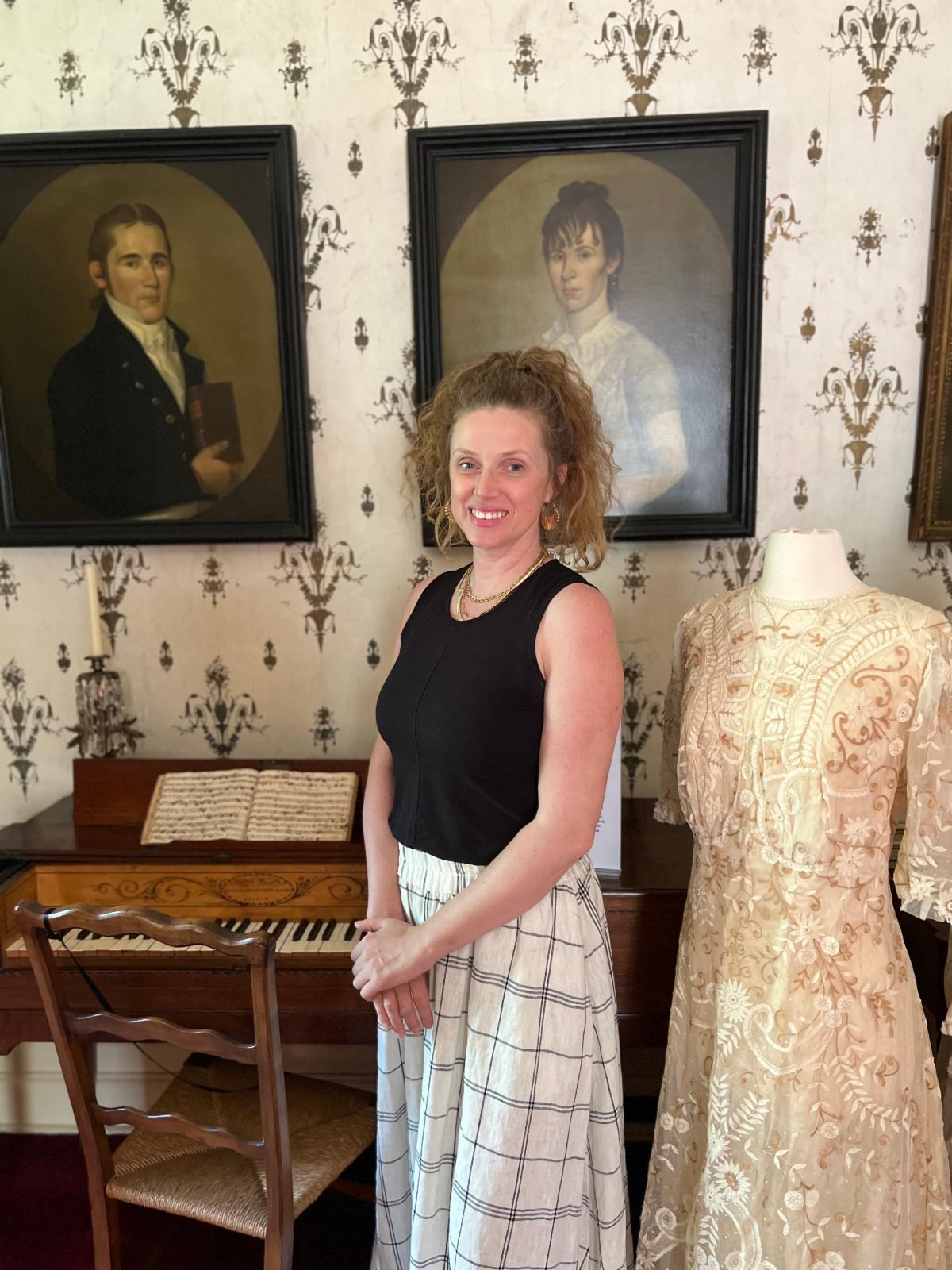
Are you interested in joining our talented crew of docents? The time commitment is 3 hours/week; training provided. Call 978-462-2681 or email kristen@newburyhistory.org. Meet some of our docents in their favorite rooms of the house, speaking about what they like about volunteering in this way. | |
|
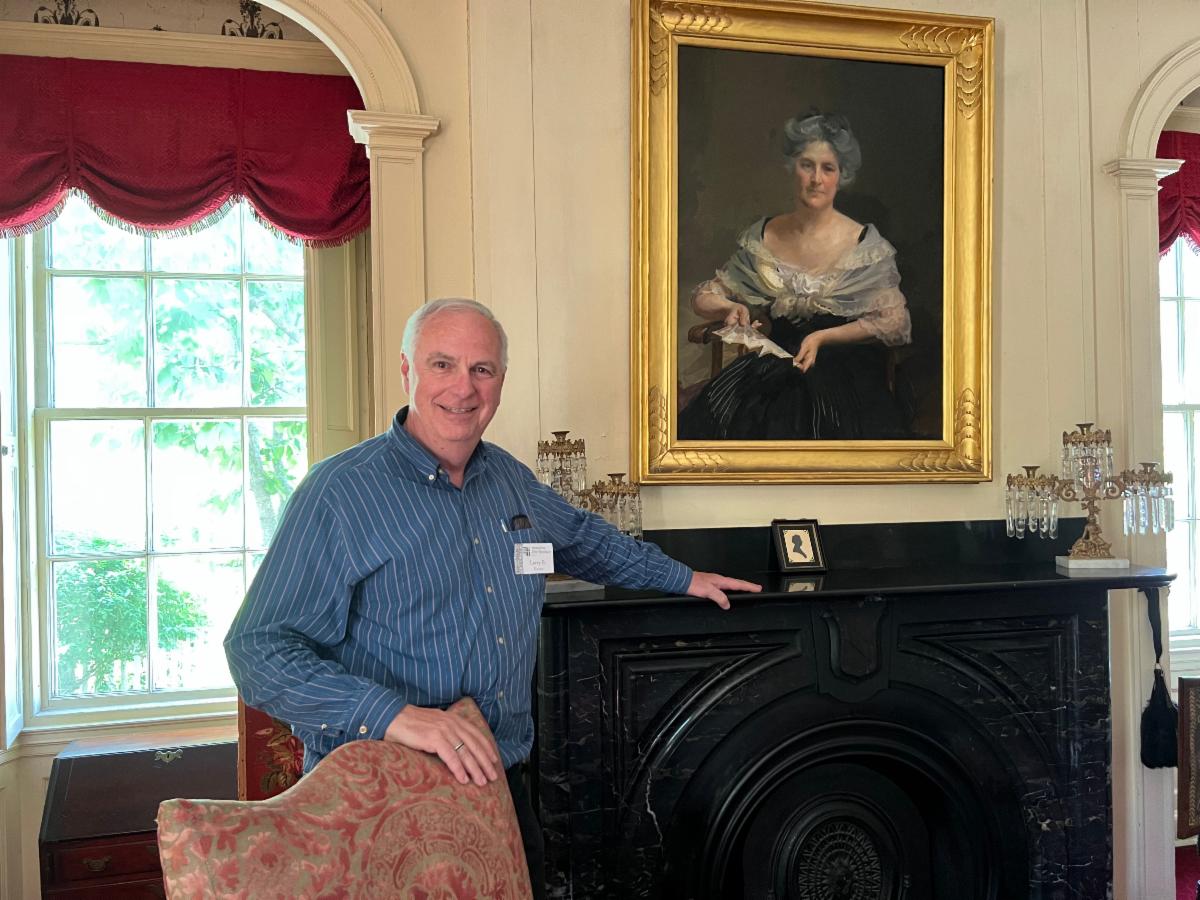
"Being a docent allows you to share local history and the Cushing Museum with interesting people who want to know more of the history of the area. Also, other docents and the staff of the museum are fun to be around!"
-Larry
| |
|
"I have spent most of my life in Newburyport, and my background in Literature and Theater make me passionate about people, history, and storytelling. Being a docent here at the Museum of Old Newbury has allowed me to blend all those interests. I love the opportunity to learn something new everyday, connect with interesting people, and share the fascinating history of this remarkable city."
-Sierra
| |
|
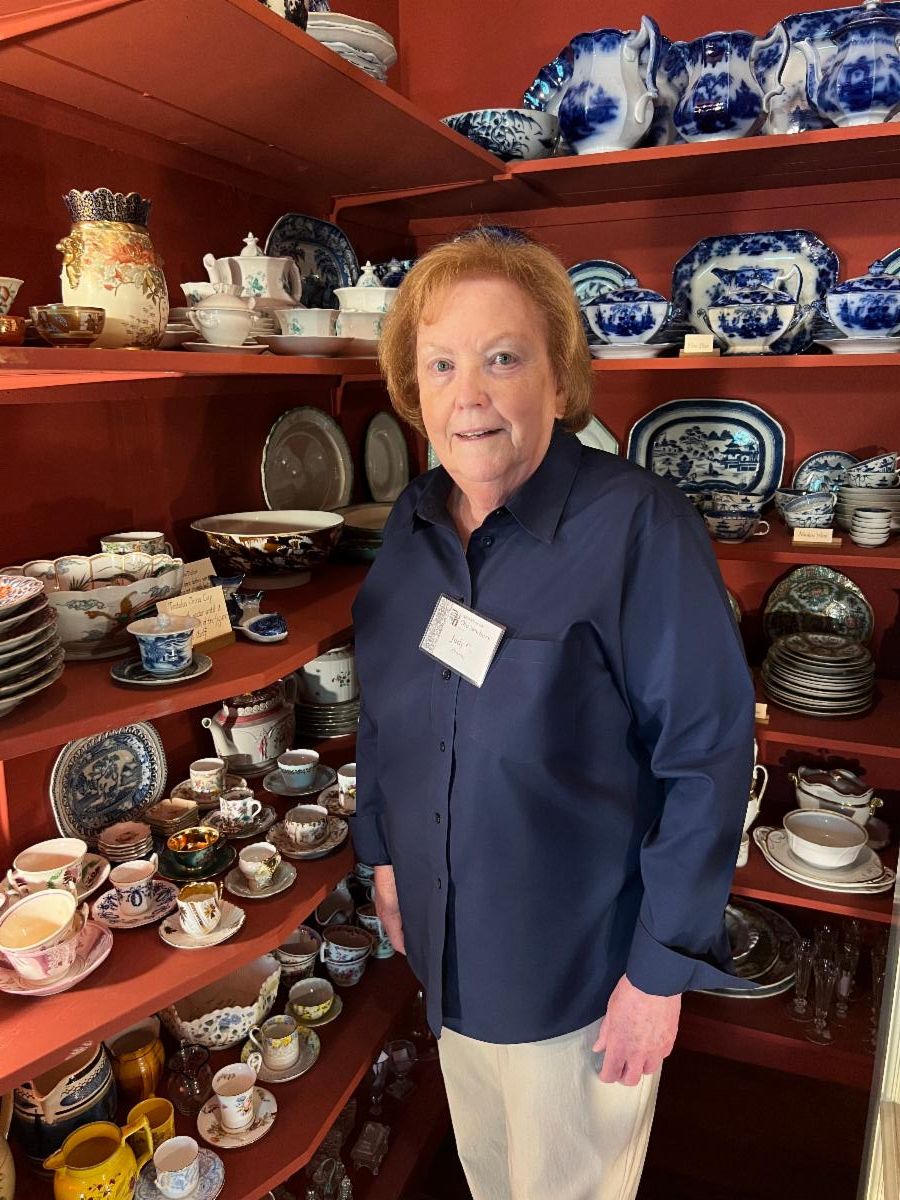
"Being a docent at MOON has been a wonderful experience. Learning a lot about local history and being able to share that with visitors is very rewarding. It’s great to explore all the museum has to offer with visitors and team members alike."
-Judy
| |
Something Is Always Cooking... | |
|
River Road Chutney Spread
This was made by Kim Mack and served at a recent function attended by Bethany Dorau. When asked for the recipe, Mack reminded her that it is in the Cushing House Cookbook, for sale here! This is also delicious without the bacon - substituting chopped smokehouse almonds keeps that rich flavor in the dish.
2 8 oz pkgs cream cheese, softened
1 ½ tsp curry powder
1 tsp fresh lemon juice
2 T mayonnaise
Garlic to taste
1 10 oz jar of your favorite chutney
1 small can black olives, chopped
2 hard boiled eggs, chopped
1 bunch (6) scallions sliced thin
8 slices bacon, cooked and crumbled or 1 cup chopped smokehouse almonds
½ can dry roasted or salted peanuts chopped
Shredded coconut
Combine the first 5 ingredients and spread in a quiche dish. Next layer the following in order on top of cheese mixture: chutney, olives, eggs, scallions, bacon and peanuts. Sprinkle the coconut over all. Serve with plain rice crackers. Serves many.
| |
|
Click the image to do the puzzle
Theo Alice Ruggles Kitson’s The Volunteer can be seen at Atkinson Common, the public garden portion of this weekend’s Museum of Old Newbury Garden Tour. Photo by Bob Watts.
| | |
Museum e-Newsletter made possible through the
generosity of our sponsors:
| |
|
Museum of Old Newbury
98 High Street
Newburyport, MA 01950
978-462-2681
| | | | | |