e-Newsletter | March 19, 2021 |
|
Part 1: Vigor in Arduis (Strength in Trials)
by Dr. Marc Cendron
|
|
Allow me to tell you about a remarkable woman, who, in my family was always mentioned with great respect and admiration. I was fortunate to have, at my disposal, a trunk full of her notes, diaries and photos. It is from these that I been able to conjure up this paper.
“May I look at your eyes?” The woman spoke with a soft, stern voice. Because of the heavy bandage on his face and eyes, the young Algerian soldier could not see her. Nor could he see the room where he had been lying for what seemed to be forever. He had been transported to this Red Cross Hospital somewhere in Normandy after being pulled out of his trench near Verdun.
It was two weeks before the armistice, fighting in the mud when the gas came, enveloping his unit and causing utter misery: choking, coughing, eyes stinging, unable to see or move. He became lost, wanting to die.
He felt the woman’s hands gently unfurl the bandage. The light seared through his eyelids and he pressed his head back into the hard pillow. “Here, let me put this wet cloth on your eyes.” Finally, he could see the blurry silhouette, the smiling face with the broad forehead and the wire-rimmed glasses. She leaned down: “Je suis le docteur Little, allow me to examine you.” He thought of his mother back in the village outside of Algiers, back home.
|
|
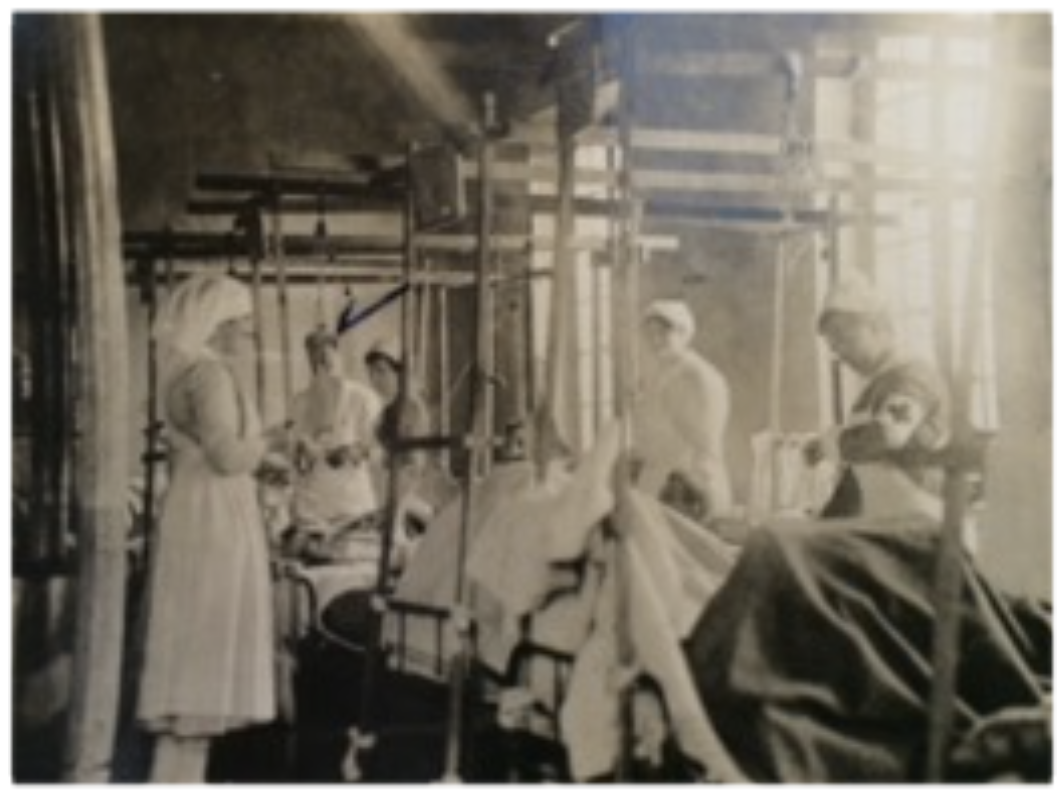
Dr. Abby Noyes Little at ARC military hospital number 109, Evreux, France. |
|
Dr. Abby Noyes Little had arrived at the ARC military hospital number 109 in Evreux, France a month earlier. She came as a member of the Red Cross expeditionary corps to help with the war effort.
She wrote: “I felt I could do more abroad than here at home and to fill a need that they said was urgent.” When she walked in the converted convent and saw rooms full of wounded soldiers from France, North Africa, Senegal and other French colonies, the full extent of the ravages of World War One were in plain view. And so, she went to work, first “etherizing” and then in charge of a ward.
In a letter to her family dated September 20, 1918, she noted: “The war is overwhelming, so stupendous that we cannot put into words. It is wound up with all that is most intimate and sacred even, that it is like baring ones most soul. And then again, it is so hideous that one intuitively pushes it away and dwells in the little details of life.”
What Dr. Little saw and experienced in the year she spent in France at the end of the Great War was so far removed from the life she had led in the quiet city at the mouth of the Parker River.
|
|
She was born January 5, 1872 during a very cold winter in Newbury, MA. So cold in fact, that her father William Little had been very worried about feeding his herd of cows.
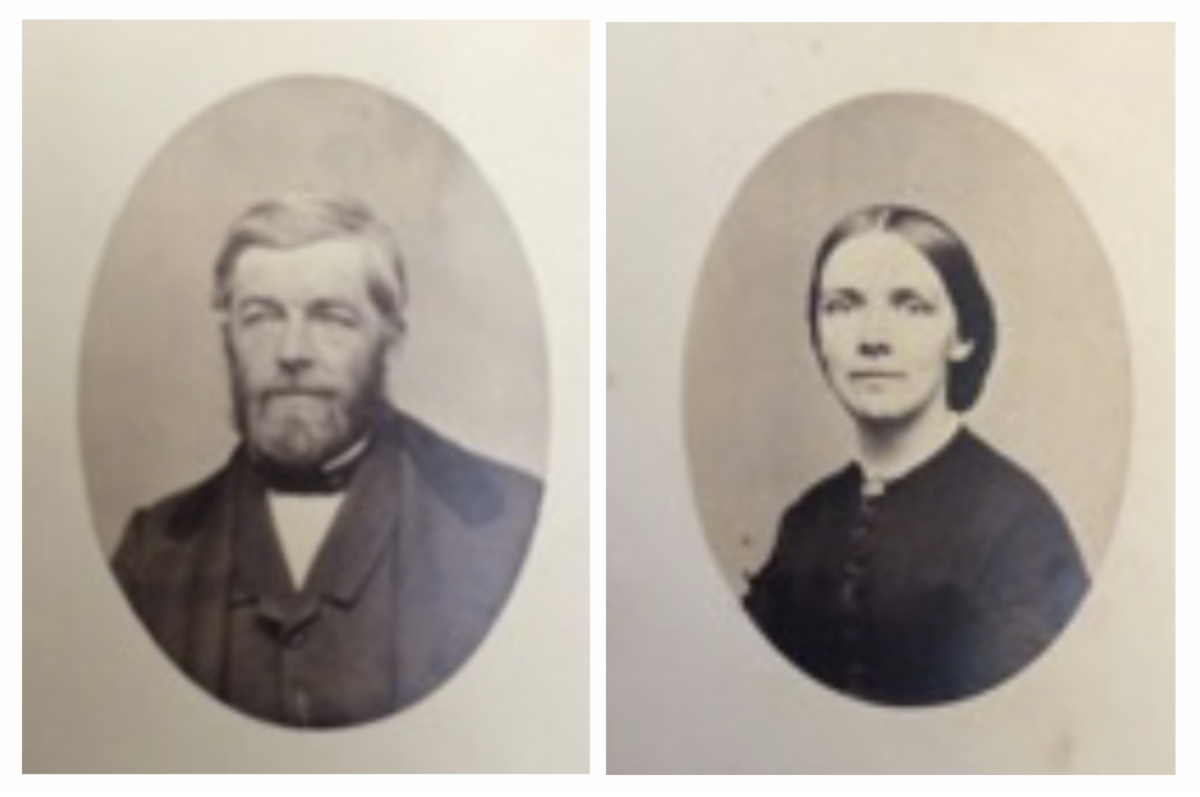
While being a dairy farmer helped him provide for his family, William was a man of many talents: he was town clerk, tax collector and treasurer, he could quote the Bible and Shakespeare and was a keen local historian. He helped found the Historical Society of Old Newbury and was its first president. He had married a schoolteacher, Mary Carleton from Haverhill.
|
|
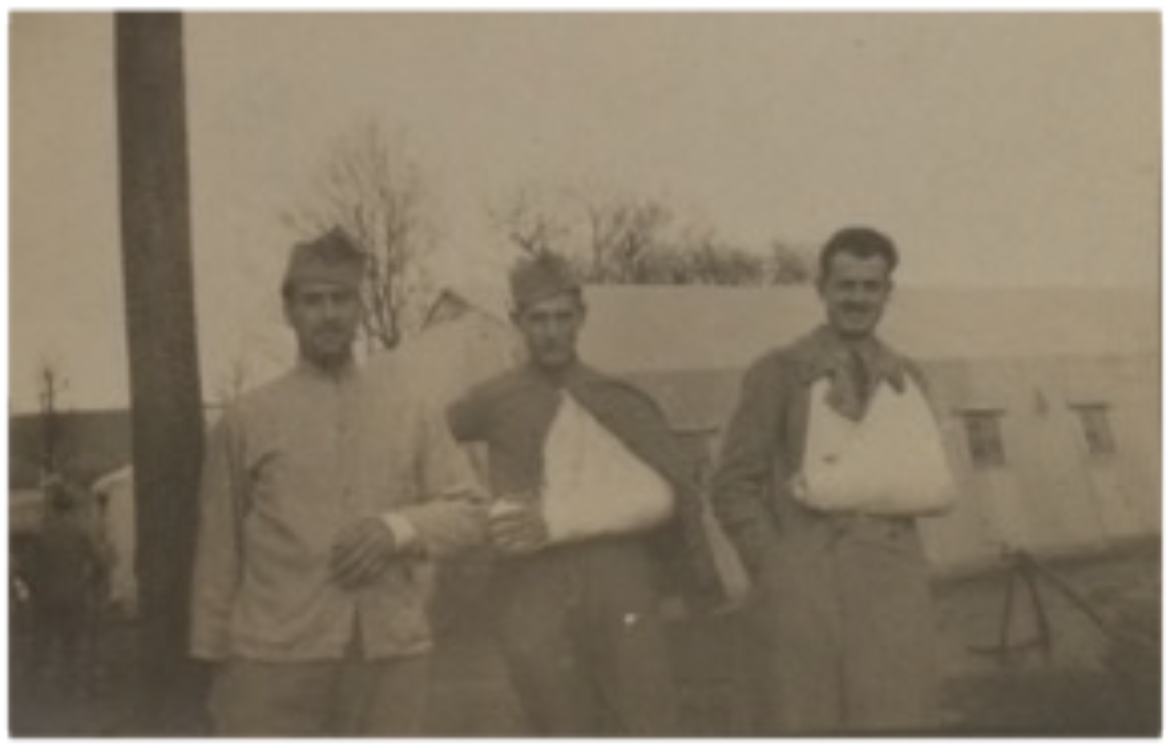
Recovering soldiers from World War I. |
|
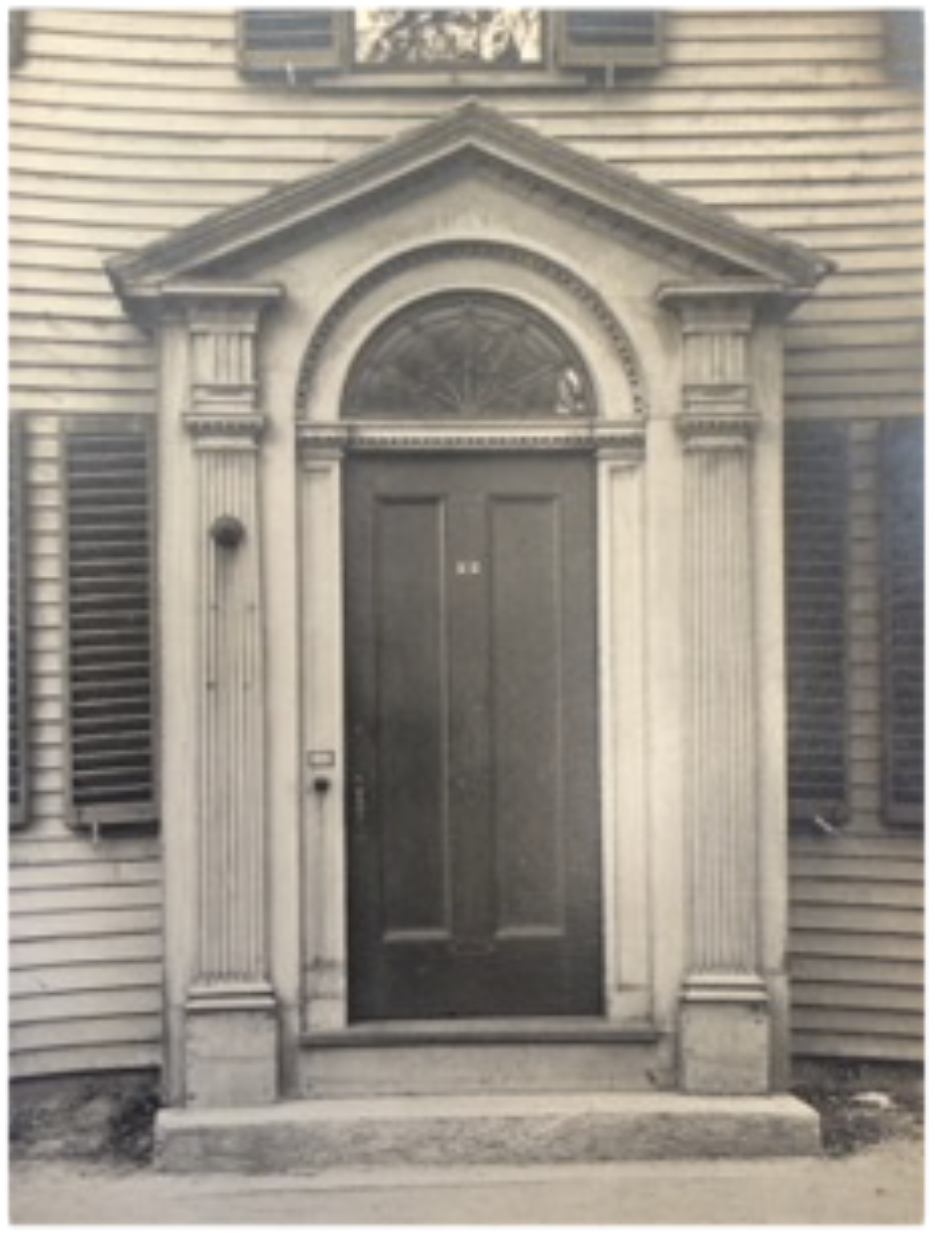
Dr. Noyes parents, William Little & Mary Carleton Little, and entrance to Dr. Noye's Essex Street home. |
|
William and Mary went on to have seven children, four of whom died at young ages from scarlet fever. What influence her siblings’ death may have had on Abby’s future career would be food for thought.
After graduating from Newburyport High School, she wished to become a physician, but her father prevailed on her to go to nursing school. After all, that was what was expected from young ladies of that time.
Abby attended the Children’s Hospital training program for nurses but within a year she had applied and was accepted to the Women’s Medical College of Philadelphia from which she graduated in 1894. Her father loaned her the money for tuition and charged her interest.
After a yearlong internship at the New England Hospital for Women and Children, she became a physician, opened a practice in Newburyport, and was on staff at the Anna Jacques Hospital while living at 22 Essex Street.
|
|
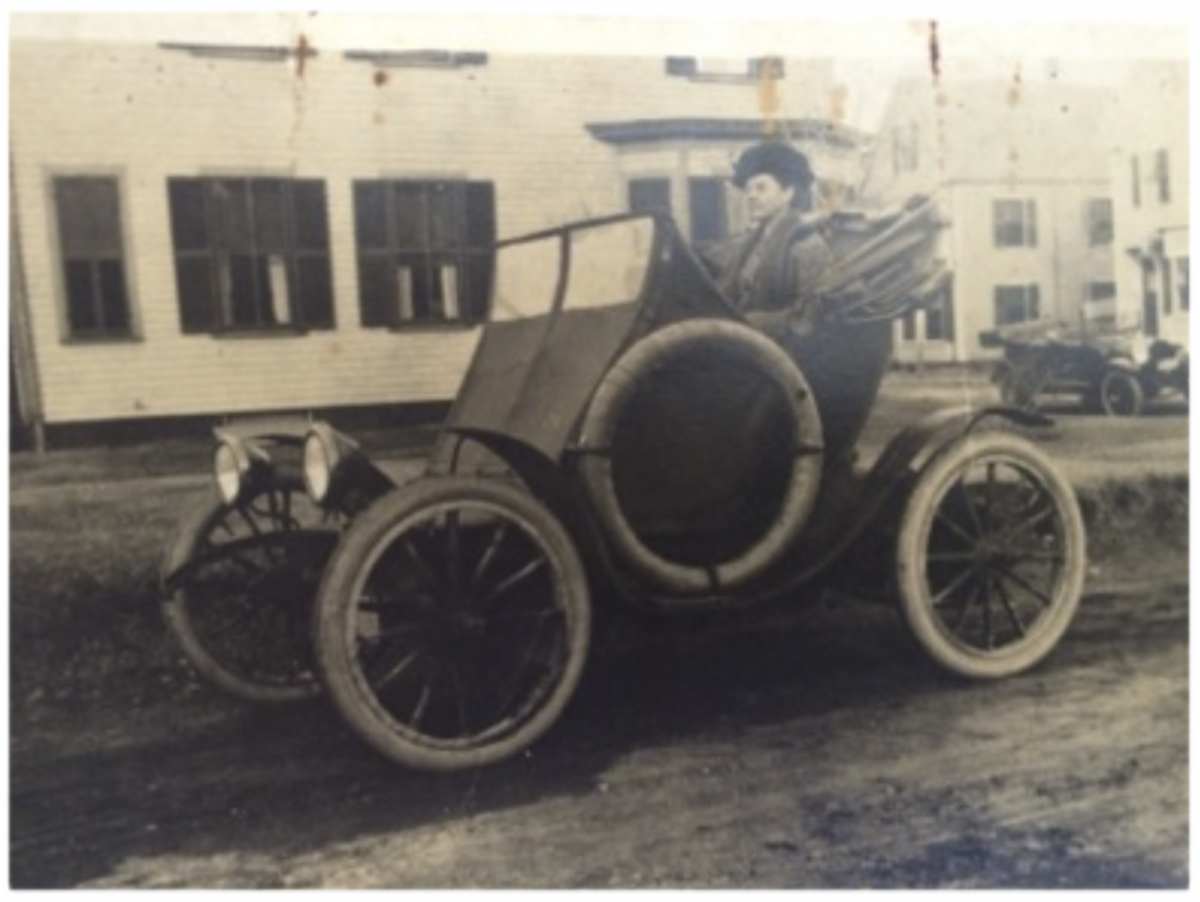
Dr. Little in one of Newburyport's first electric vehicles. |
|
Quite rapidly Dr. Little became involved in matters of public health, specifically, health education and preventative medicine.
She was instrumental in organizing a school nurse program and introduced the concept of sex education for teenagers. She was active in efforts to enhance the cooperation of churches in order to foster improved medical care and hygiene.
Through meetings and conferences, she promoted efforts to reduce infant mortality and safety in the workplace. Her correspondence attest to her activities and involvement with the AMA, the Women’s Municipal League of Boston and various other philanthropic organizations.
Always a bit ahead of her time, she was one of the first owners of an electric automobile in Newburyport.
|
|
Look for Part 2 of Dr. Little's amazing life in next week's "98 High" e-newsletter. Contributed by Dr. Marc Cendron, a direct descendant of Newburyport's Moulton family and the Little family through his grandmother Mary Elizabeth (Little) Whiting. Dr. Cendron serves as Co-chairman of the Museum's Collections Committee.
Editor's note: Inconsistencies in spelling of names, etc., are from the historical record and not a typographical error.
|
|
Learn about upcoming programs, register, find Zoom links and catch up on previous presentations here. |
|
Miss a Recent MOON Program? Watch here. |
|
Thanks to the wonder of the Zoom platform, all of our programs are recorded and available online shortly after presentation. Visit our website for upcoming events, previous recordings, including the four 2020 Virtual Garden Tours, our Annual Meeting, children's and holiday programs, as well as all episodes of "Yeat Yeat, Don't Tell Me!"
In lieu of a printed program book, we will be featuring monthly events here, as well as maintaining a complete list on our website: www.NewburyHistory.org.
All of our virtual programs are free, however donations are gratefully accepted to help defray speaker fees.
|
|
Jack Santos, Custom House Maritime Museum, and Colleen Turner Secino, Museum of Old Newbury, welcome Camile Garro, committee member of Newburyport's 2021 Women's HerStory Month, on today's episode of "Yeat Yeat, Don't Tell Me!"
Garro explains, "The symbol of the Suffragists movement was the 'Iron Butterfly.' This past year's pandemic put the breaks on 2020's celebration, but I couldn't let the 100th anniversary of the right to vote pass without proper recognition."
As a group, it was decided Iron Butterflies would be the inspiration for all performances. A symbol of determination and strength, Garro considers it the perfect metaphor for not just women, but every person who has lived through this unprecedented time.
She explains, "The quarantining, so similar to the cocoon; then reinvention and regrowth, not unlike the transformation of the chrysalis to caterpillar; to vaccination and ultimate survival – the triumphant butterfly!"
This weekend presents The Metamorphoses of Women Part 1 (Friday) and Part 2 (Sunday); on Saturday, guests are invited to tell their personal story during the Full Moon Story Slam, Theme: Iron Butterflies. The last weekend in March we meet three Iron Butterflies from the 18th, 19th and 20th centuries: Anne Lister, Matilda Joslyn Gage and Marie Louise Bottineau Baldwin, respectively. For more information and to register, visit here.
|
|
Register for Upcoming Programs Now! |
|
REGISTER: Thursday, March 25, 2021
Naomi Wade: A British Woman in 18th Century New England. Meet an 18th century woman from London who became a camp follower with a British Regiment during the American War for Independence. Register here.
|
|
REGISTER:
Thursday, April 8, 2021 @ 7:00 p.m.
Wallace Nutting and the Invention of "Old America" Shelburne Museum's Tom Denenberg digs deep into Nutting's shaping of "Old America."
|
|
REGISTER:
Thursday, April 22, 2021 @ 7:00 p.m.
The Governor's Academy student symposia concludes with China's Rocket Man: A Deportee from the US Launches China into Space. Presented by Tianyu Fang, '20, this program serves as a cautionary tale for our time.
|
|
Puzzle Me This...
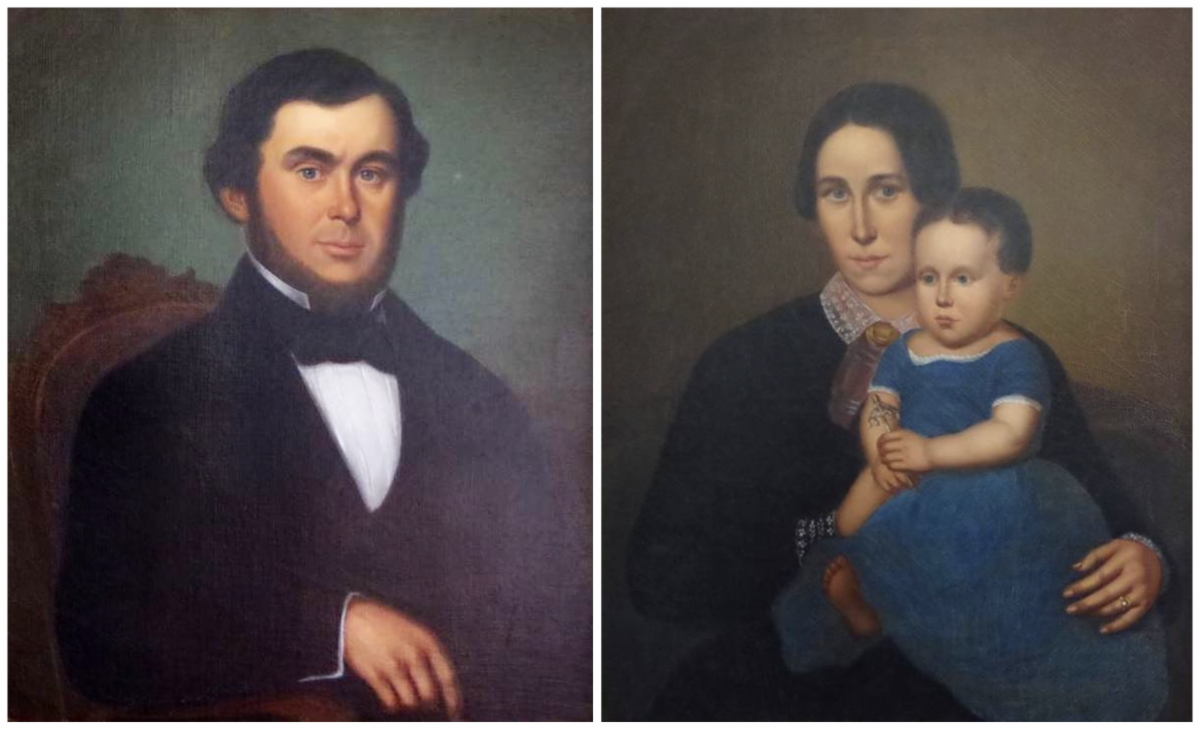
These portraits of Captain Oliver D. Pillsbury (1816-1852) and his wife, Adeline Pillsbury, and daughter, Addie Pillsbury, were painted by August Van der Borght in Antwerp, Belgium, in 1852. In the mid-19th century, it was not uncommon for a captain’s wife and children to accompany him at sea.
Captain Pillsbury left home for the high seas at age sixteen, attained the status of “master mariner” by age 29, and made his home in Newburyport after marrying Adeline Dole in 1845. The couple had two children, Addie, born in 1850, and Oliver, born in 1852.
Captain Pillsbury died in Charleston, South Carolina, in 1852, likely while commanding a ship sailing through that port. After his death, his wife and daughter were left to find their way home and to face how they would support themselves – a suitable case for the Newburyport Marine Society.
From the collections of the Museum of Old Newbury.
Click on the image to begin.
|
|
Something is Always Cooking at the Museum
Invented by James Naismith at the YMCA in Springfield, Mass., circa 1891, it is almost as if Ashley Newbert knew March Madness would kick off this weekend after a two-year pandemic-related absence. File under: let the pita (or tortilla) chips fall where they may!
Cheesy Artichoke Dip with Prosciutto & Mushrooms
2 tablespoons butter
1 tablespoon garlic, minced
1 bunch scallions, chopped
6-8 white or Baby Bella mushrooms, diced
1 tablespoon rosemary
3 ounce prosciutto, chopped
1 1/4 cups artichoke hearts, chopped
1 cup Fontina cheese, grated
1/2 cup cheddar cheese, grated
1/4 cup Parmesan cheese, grated
1/2 cup mayonnaise
Salt and pepper to taste
Preheat oven to 375ºF. Melt butter in a skillet over medium heat. Add garlic and scallions and cook about 30 seconds. Add diced mushrooms. Let sit without stirring for a few minutes. Add rosemary, salt, pepper and prosciutto and cook until mushrooms are cooked through and prosciutto is browned. Spoon into a large bowl; add chopped artichoke hearts, all cheeses and mayonnaise. Pour into a 8x8-inch baking dish. Cook in oven for 20-25 minutes, until golden brown. Serve with crackers, chips or toasted French baguette. Serves 6.
|
|
During this difficult period of COVID-19, we rely on your support more than ever. We continue to develop new, online programs for you to enjoy and keep us connected and look forward to in-person events as protocols for safety loosen. We hope, if you are able, that you will consider a donation to the museum. Thank you for your continued support.
|
|
Museum e-Newsletter made possible through the
generosity of our sponsors:
|
|
|
Museum of Old Newbury
98 High Street
Newburyport, MA 01950
978-462-2681
|
|
|
|
|
|
|
|