e-Newsletter | March 26, 2021 |
|
Part 2: Vigor in Arduis (Strength in Trials)
by Dr. Marc Cendron
|
|
Continued from last week's story (available here).
When Dr. Little’s parents, for whom she had been caring, died, Mary in 1915 and William in
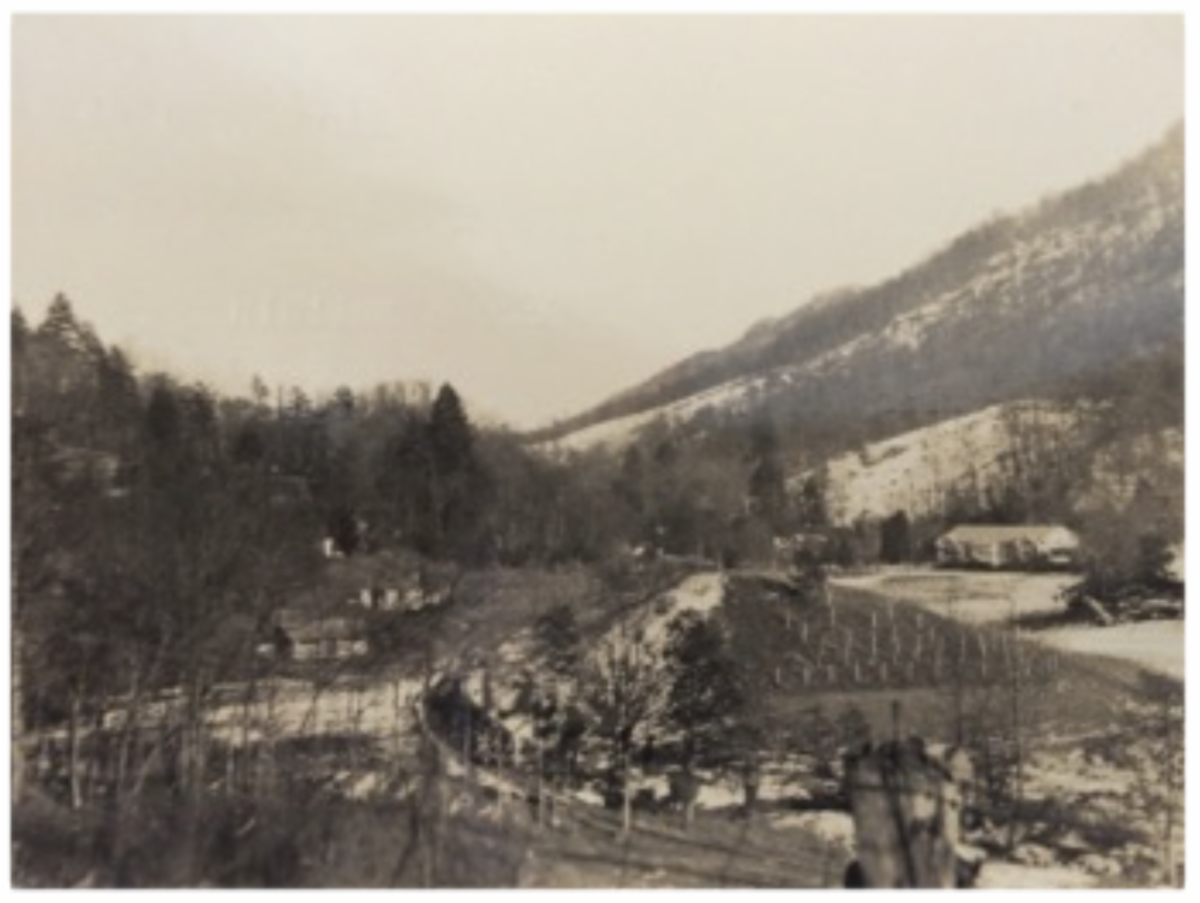
1916, her life took a very sharp turn and she decided to leave Newburyport. It is not entirely clear what motivated her to journey to Pineville, Harlan County, Kentucky, but it certainly altered the course of her life.
|
|
At the death of her parents, Dr. Little left Newburyport for a log cabin in Pineville, Kentucky. |
|
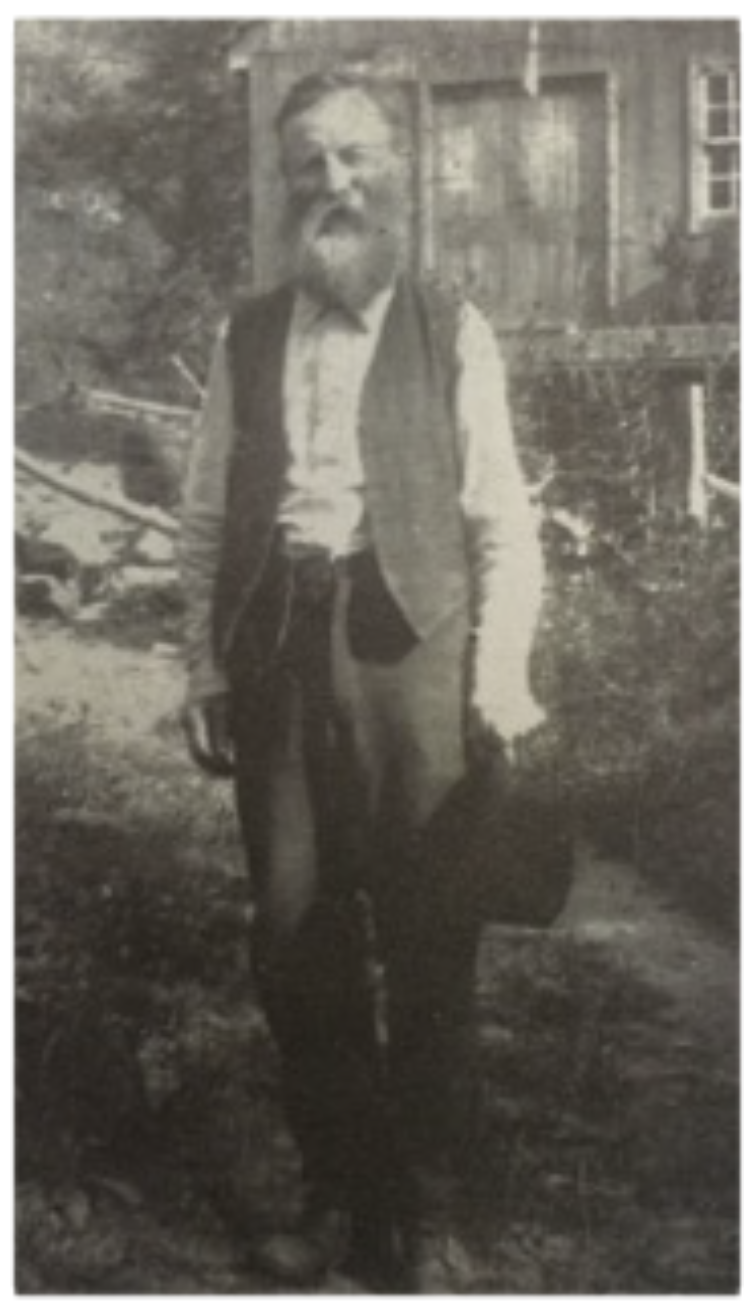
There, she went to work for the Pine Mountain Settlement School. The school had been founded by William Creech who deplored the lack of morality and education of the “Mountain People.” His hope for the school was to “make better people out of our wild mountain folk.”
Dr. Little joined a staff of volunteers, nurses and teachers who looked after children of the mountain people. Some were orphans, others had been abandoned, some just came to get some semblance of an education.
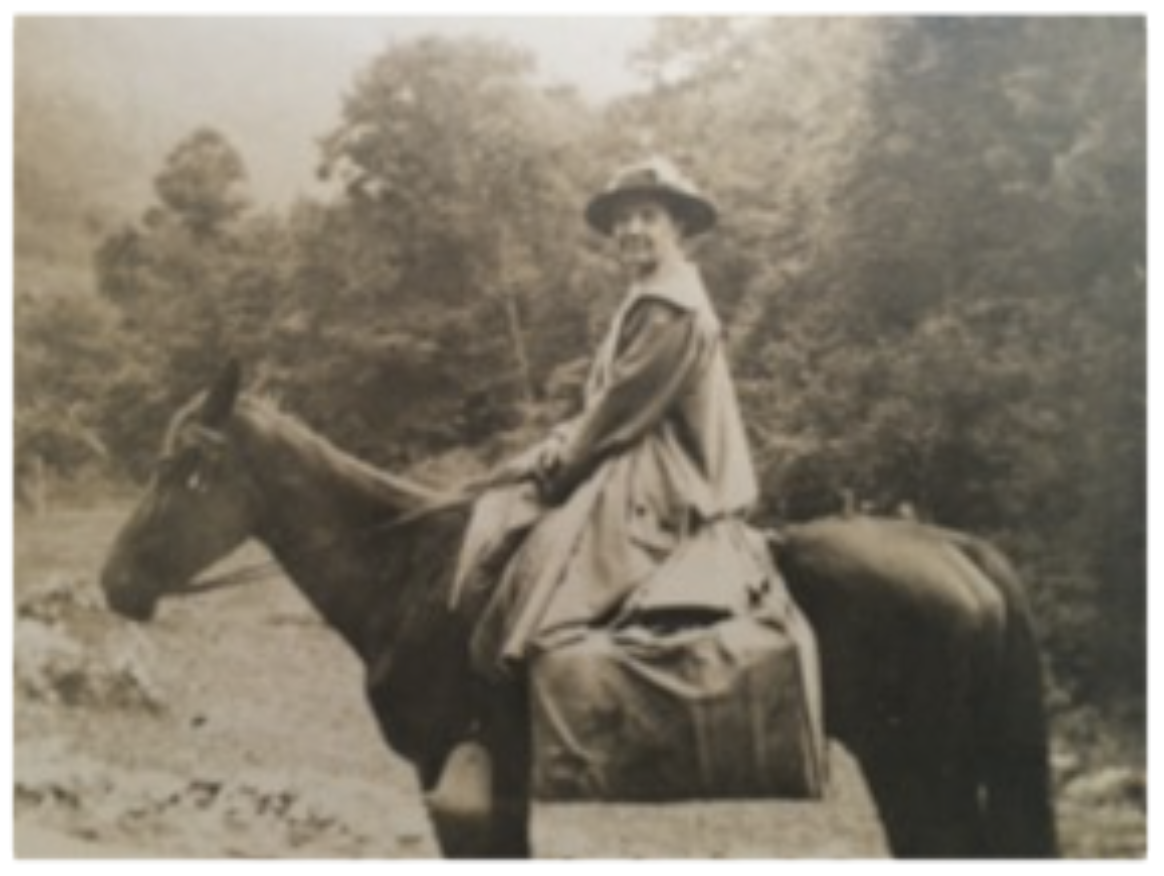
In her travels by horseback, she encountered poverty, squalor and disease. She writes: “From this unhygienic living has come the two great scourges of mountains, trachoma and hookworm...and these have been prolific causes of discouragement and stagnation.”
Living in the hills of Kentucky taught Dr. Little resiliency, adaptability and an understanding of the “have nots.” She felt that she could influence in a small but lasting manner the dismal conditions her fellow humans confronted on a daily basis.
|
|
William Creech, founder of the Pine Mountain Settlement School. |
|
Dr. Little on horseback, riding in the hills of Harlan County, Kentucky. |
|
She experienced the joy of a nine-year-old girl who, having lived a life of abuse and poverty, was given a birthday party at the school. Dr. Little describes Sadie’s “sweetness” at her party: “...then the children lingered round their tables, the door opened and Sadie’s birthday cake was brought in...Sadie was sitting, almost overcome with joy, shy, smiling, speechless, flushing red with excitement. She had on a crown of laurel blossoms and leaves and [with] her black hair and shining eyes [she] was a radiant picture.”
While life in the Kentucky mountains may have been harsh and challenging, what Dr. Little encountered in the Middle East from January 1919 to August 1923 was unimaginable.
With the collapse of the Ottoman Empire after WWI, the swath of land encompassing Egypt all the way up to Northern Greece was in a state of turmoil and chaos. The Turks and Kurds set about to massacre their neighbors from Armenia. The French and the British were attempting to settle what is now Iraq, Syria, Lebanon and Israel. Thousands of refugees were fleeing South into areas that were relatively free of strife.
Dr. Little, who had signed up for a year with the Red Cross in France, was sent then to Palestine after the administration of the hospital she worked in was taken over by the French army. She visited Paris and some of the nearby battle fields and then headed across the Mediterranean to Egypt.
After a few days in Cairo which she describes as “a city of indescribable filth and squalor,” Dr. Little ultimately landed in Jerusalem where she arrived by train (she recalls being in a boxcar where she tried to make some coffee and spilled it all over herself and her traveling companions).
She worked in Jerusalem for a month treating all manner of illness but especially “sore eyes” caused by trachoma. She writes: “It was a marvelous experience in spite of the dirt and commercialism, there was a feeling of sacredness and mysticism, three great religions centering here.”
|
|
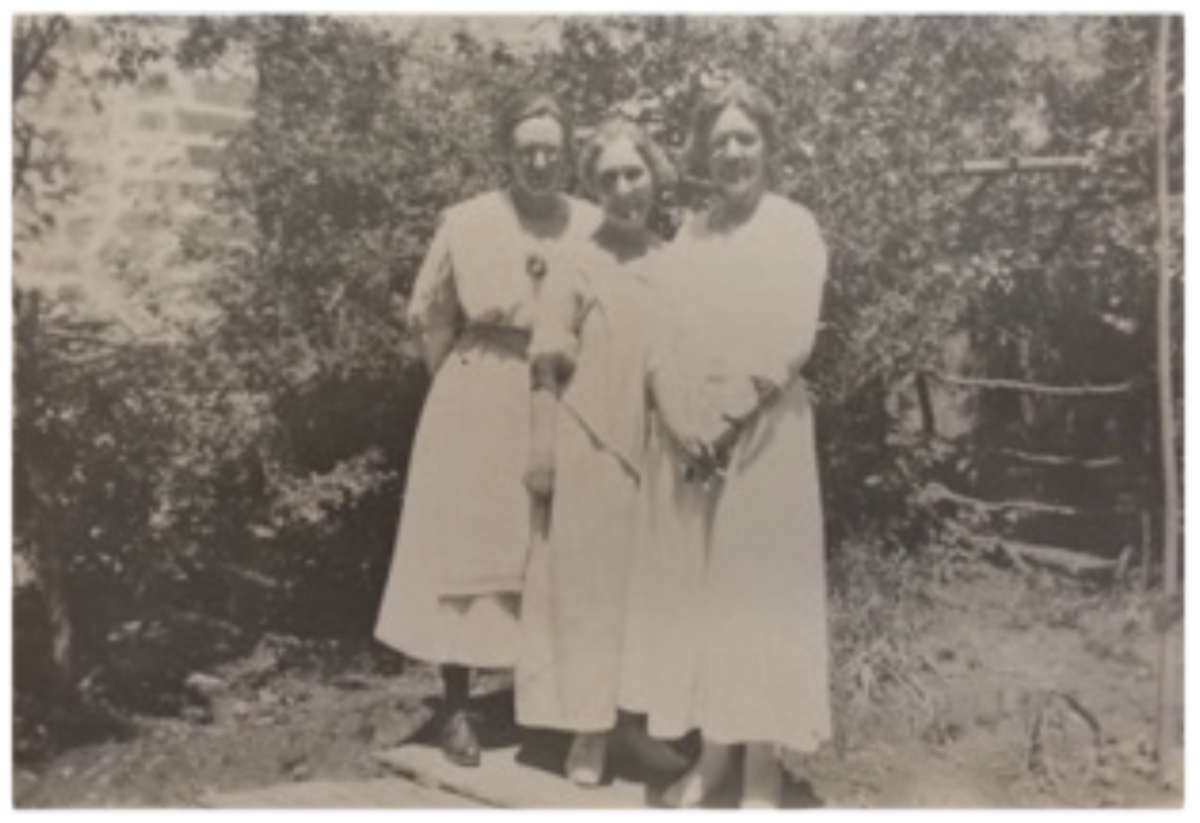
Dr. Little (left) and colleagues in Southern Turkey where the missionary lady was "not impressed with our light ways and skirt hems above the ankle." |
|
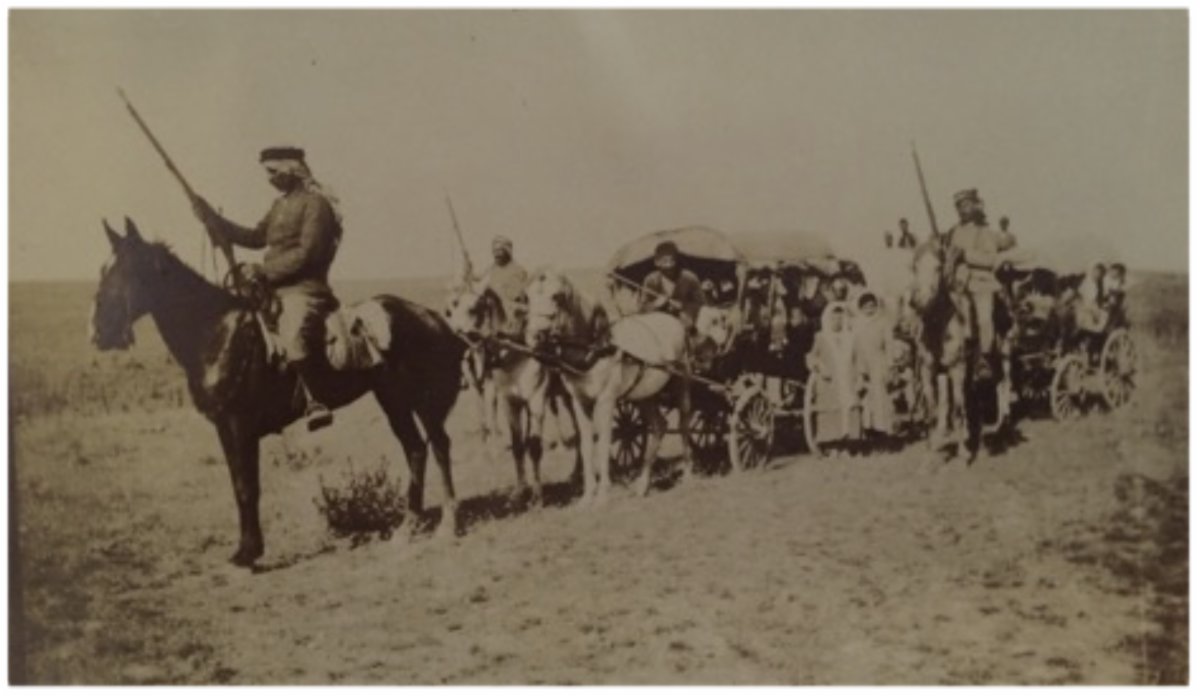
But soon she was on her way by car and train to Aleppo and then further North into Southern Turkey to Aintab or Antep which was an old missionary center of the American Board. She arrived in December 1919 and started work in the orphanages, clinics, rescue homes for girls and women, industrial workshops, caring for the sick and malnourished refugees and organizing the distribution of supplies. The missionary lady who had set up the orphanage in Aintab was, according to Dr. Little, “not impressed with our light ways and skirts hems above the ankle.”
Malaria is a most unpleasant disease, and while rarely fatal, it can be severe. Dr. Little had her first bout of malarial fever after being in Aintab for a month and “what a blow it was,” she reports.
Paroxysmal episodes of fever with nausea, vomiting, headaches would keep her in bed, incapacitated. “Oh, the cold, the shivering and the shaking! The fever really was not so bad.” She writes of being discouraged by the length of time it took for her to recover from the illness which would reoccur several times during her stay in the Middle East. After only six months in Aintab, the physician in charge of the district asked her to stay and she did - for another four years.
|
|
Dr. Little is escorted by Turkish soldiers to the clinic in Mardin. |
|
Her description of her trip into the interior of Turkey read like pages out of Into the Heart of Darkness. She was to set up a clinic in Mardin where she arrived after a “bitter journey.”
By then, coordination of the work had been transferred to the Near East Relief, which, in response to the Genocide of the Armenians, had organized the world’s first large scale humanitarian relief project. The organization cared for over 60,000 children during that time.
With the growing instability of the political conditions caused by a resurgence of Turkish power, the relief workers could feel how precarious their situation had become. Dr. Little had to travel with an escort of Turkish soldiers and an interpreter. Though she does not express her anxieties clearly in her diary, it becomes obvious that with little or no news from Newburyport, growing insecurity and repeated episodes of malarial fever, she was ready to return home.
She made plans to leave but only got as far as Istanbul, where she turned around “so strong was the lure of the country and of the work.” Conditions had not improved by the time she
was back in Aleppo. The Greeks and the Turks were at it now and, after the retaking of Smyrna by Turkish troops, more refugees went streaming South.
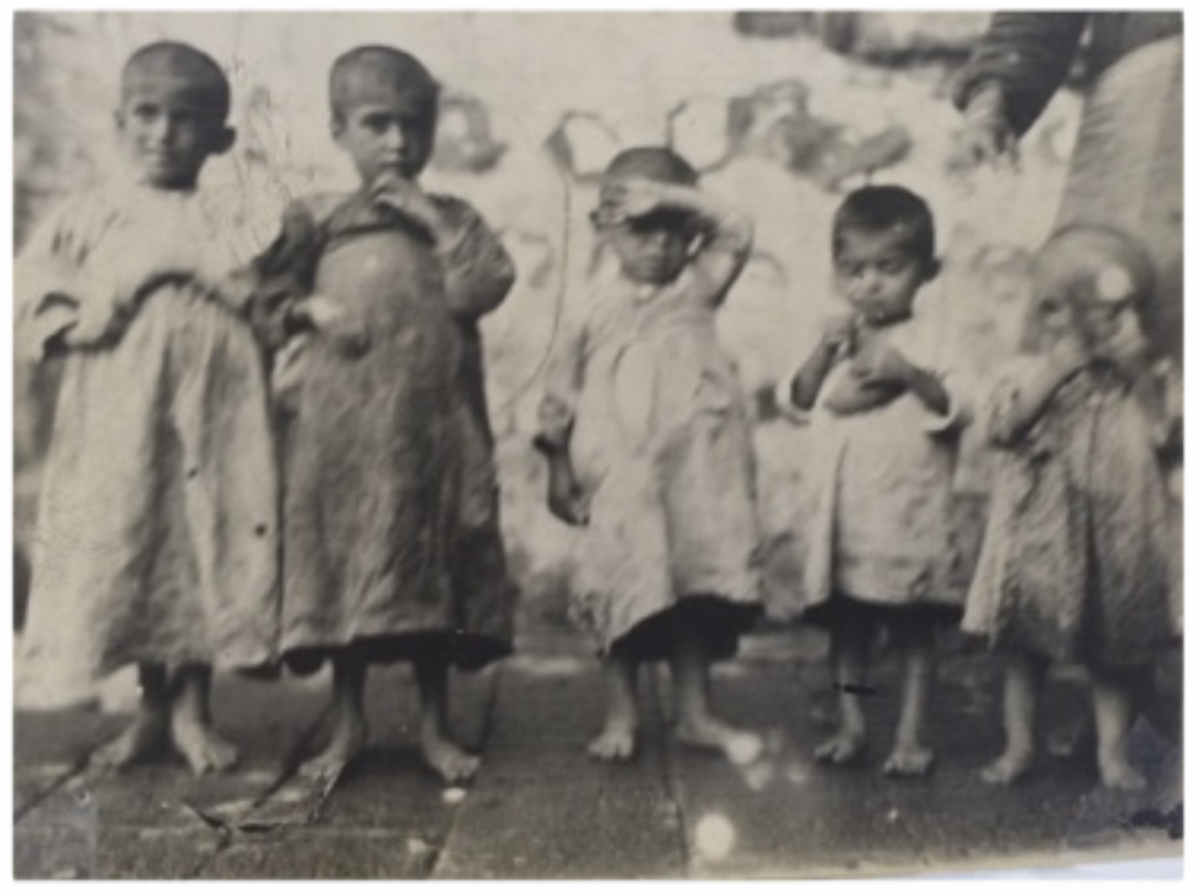
Back in Diarbekr in January 1922, she and another American volunteer, Miss Wade “did what they could to comfort and help the thousands of Greek deportees on their way from the northern provinces to Syria. They came in hordes, starving and nearly naked, many ill and dying. The sick and orphaned children we kept, opened a house for them.”
|
|
Just a few of the sick and orphaned children Dr. Little cared for during her service. |
|
So, what is there left to do when one comes back to the peace and quiet of New England after spending five tumultuous years in WWI France and the Middle East, a witness to pain, suffering and despair?
When she left Southern Turkey in May 1923, Dr. Little relished in the trip home through the Euphrates Valley, on to Beirut, where she was offered the charge of a TB hospital by the head of the Presbyterian Board. She chuckled “To me a Unitarian, wonder of wonders!”
While sight-sighing around Beirut, she contemplated the thought of staying but finally boarded the French ship SS Madonna and after a circuitous trip in the Mediterranean and then across the Atlantic, she finally glimpsed the Statue of Liberty on August 1, 1923.
At age 51, she was a single woman with no job and no prospects, only her family in Newbury and Newburyport. Within three months, she had accepted the position of assistant physician at the School for the Feeble Minded in Laconia, NH, later known as the Laconia State School where she worked until her retirement in 1946.
Her cheerful kindness and tireless efforts to help and understand the children was remembered at a testimonial dinner just before her death in 1953 at age 81. In addition to her work at the school, she remained associated with the American Red Cross for whom she was a NH Chapter Director and then Honorary Director. A colleague wrote: “It is a friendly, sympathetic touch that characterizes all of Dr. Little’s efforts and makes her outstanding.”
|
|
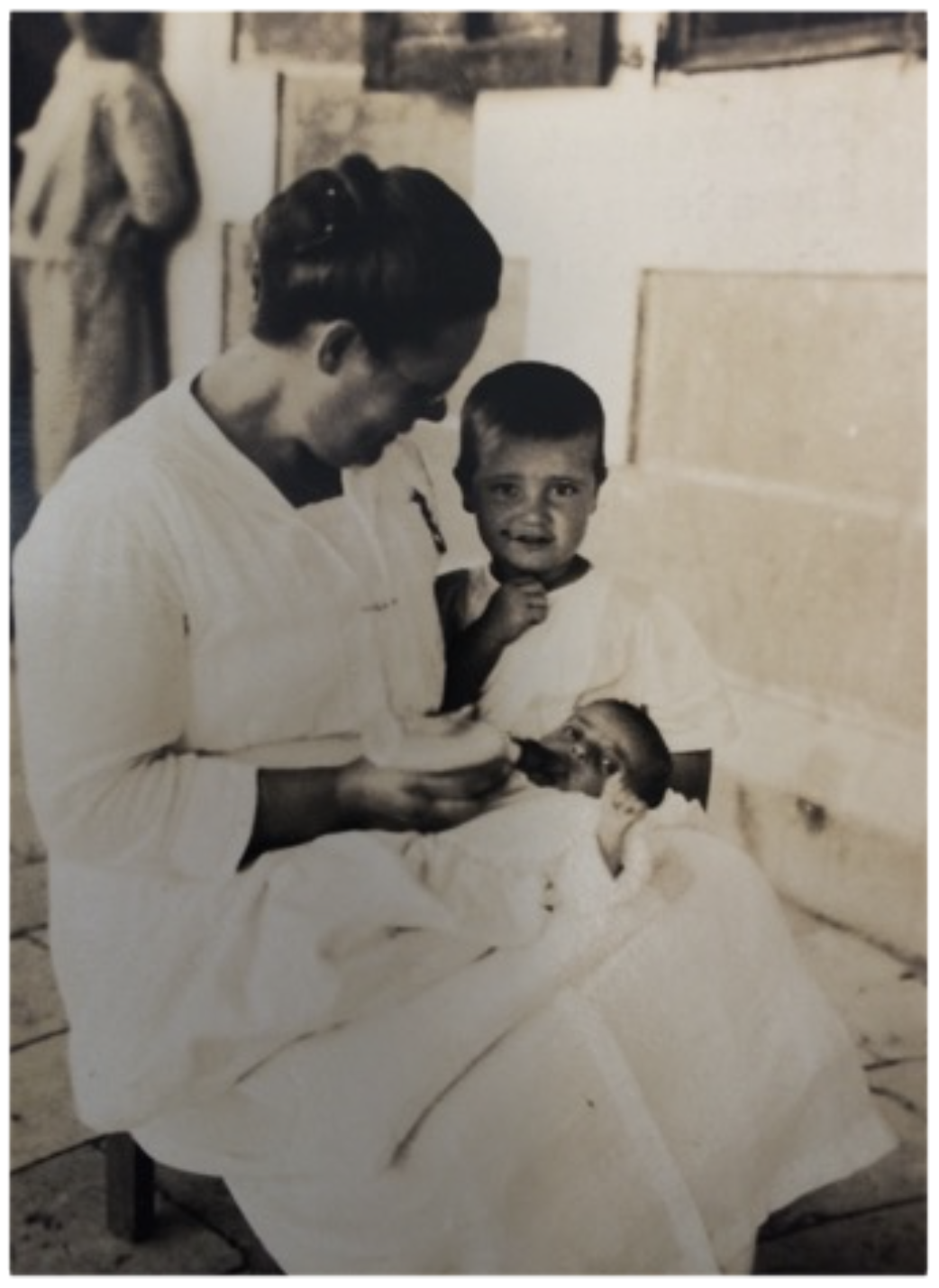
Dr. Abby Noyes Little, mother to children, men and women around the world. |
|
Dr. Little never married.
She never had children of her own. Yet she cared for so many children.
She was a mother to her patients in Newburyport; she was a mother to the children of the mountain people of Kentucky; she was a mother to the wounded soldiers in France; she was a mother to all the men, women and children from Armenia and Greece and she was a mother to the “feeble minded” children in NH.
She was my great-great aunt.
As a physician, she saw and experienced more devastation wrought on humans by war and disease than anyone could in such a short period of time and yet she found solace in the caring and helping she provided all the while marveling at the beauty of the world.
|
|
Today, few people know of this woman who, when thanked for all she had done for the school in Laconia, stated simply: “In my thirty years here, I have received more than I have given. Listen, it has given me the beauty of the hills, the lakes, the countryside, beautiful summer and winter. It has given me a profession I love.” |
|
Contributed by Dr. Marc Cendron, a direct descendant of Newburyport's Moulton family and the Little family through his grandmother Mary Elizabeth (Little) Whiting. Dr. Cendron serves as Co-chairman of the Museum's Collections Committee.
Editor's note: Inconsistencies in spelling of names, etc., are from the historical record and not a typographical error.
|
|
Learn about upcoming programs, register, find Zoom links and catch up on previous presentations here. |
|
Miss a Recent MOON Program? Watch here. |
|
Thanks to the wonder of the Zoom platform, all of our programs are recorded and available online shortly after presentation. Visit our website for upcoming events, previous recordings, including the four 2020 Virtual Garden Tours, our Annual Meeting, children's and holiday programs, as well as all episodes of "Yeat Yeat, Don't Tell Me!"
In lieu of a printed program book, we will be featuring monthly events here, as well as maintaining a complete list on our website: www.NewburyHistory.org.
All of our virtual programs are free, however donations are gratefully accepted to help defray speaker fees.
|
|
Naomi Wade Comes to Life with Jennifer Emerson's Interpretation
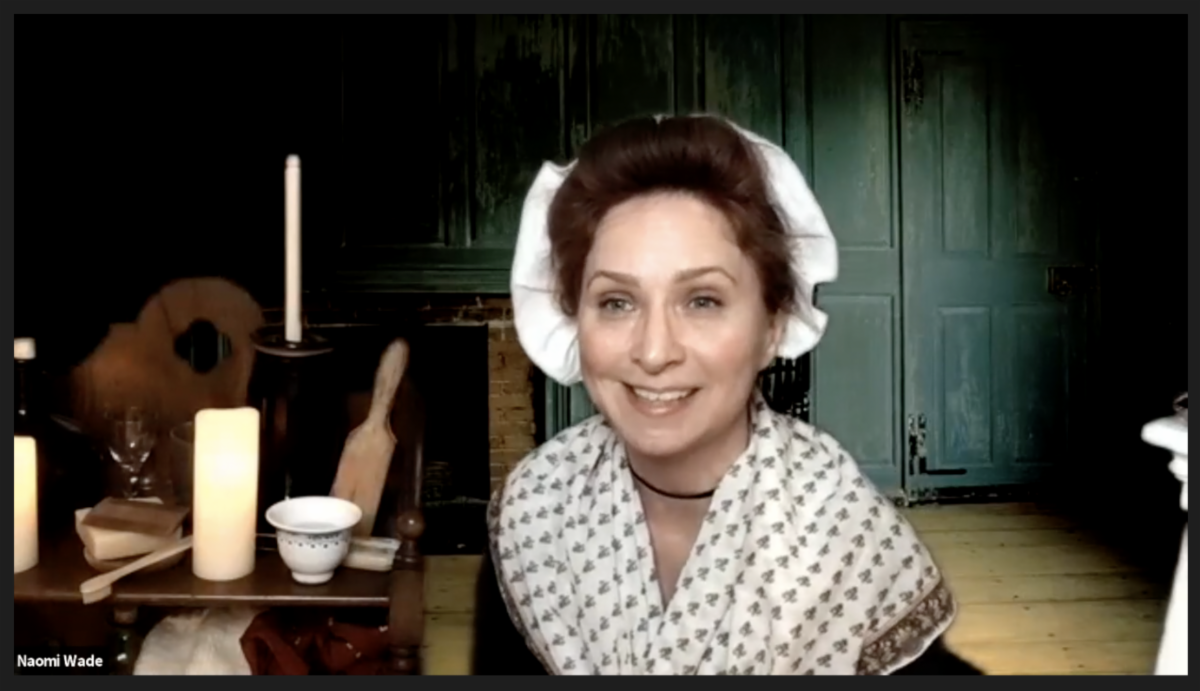
The Museum of Old Newbury closed out Women's HerStory Month with a powerful performance by artist, Jennifer Emerson. More than 100 people registered to experience life as Naomi Wade: A British Woman in 18th Century New England.
A First-Person Interpreter, writer and playwright, Emerson told the story of an 18th century woman from London who became a camp follower with a British Regiment during the American War for Independence.
Naomi Wade grew up in a cook shop in a poor section of London, England. She learned cooking and other domestic skills both at home and on her uncle’s farm in Kent, where she sometimes visited in order to help when her aunt was with child. Sadly, a fever ripped through her neighborhood, and only she survived. Rather than stay and starve, Naomi decided to try her luck in the Colonies. Loyal to His Majesty King George III, she had a difficult time adjusting to the sentiments of liberty in Boston whilst working in a tavern.
Just before the Siege of Boston, Naomi left for Newport, Rhode Island, to hire herself as a cook and laundress for the British Army...but for the whole story, watch here.
|
|
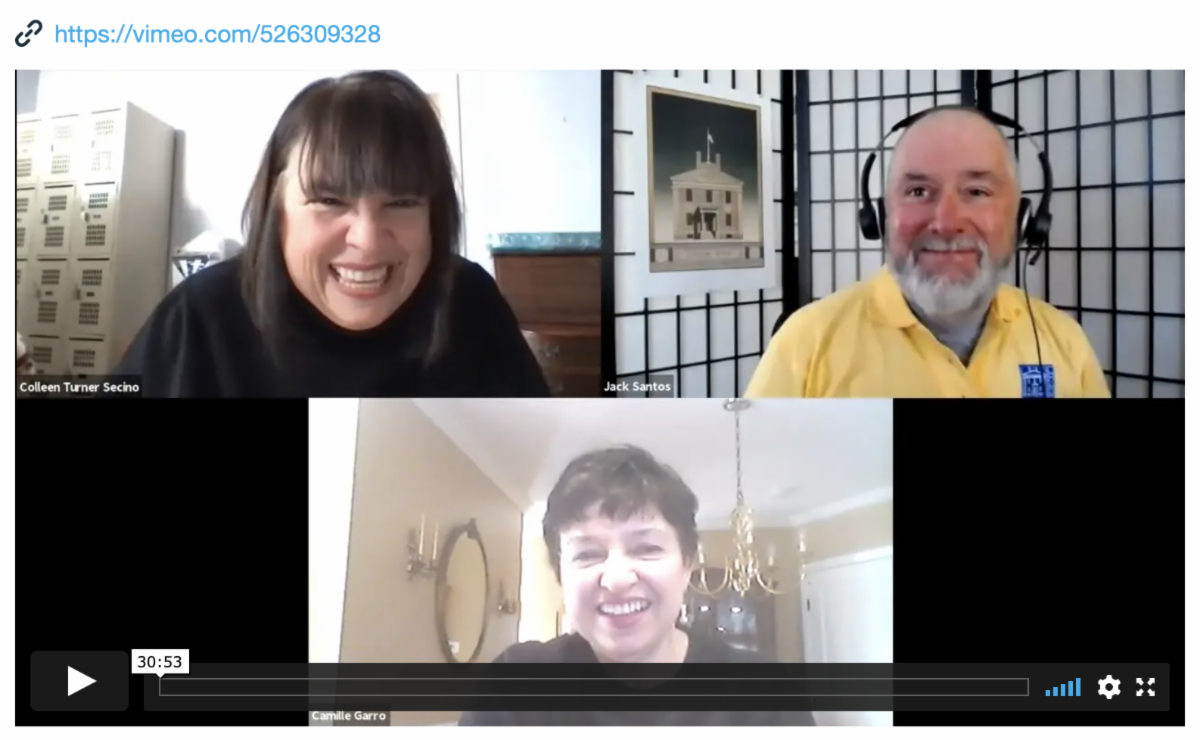
Jack Santos, Custom House Maritime Museum, and Colleen Turner, Museum of Old Newbury, welcomed Camille Garro, historian, founder and chairperson of Newburyport's HerStory Month, on last Friday's episode of "Yeat Yeat, Don't Tell Me!"
|
|
Register Now for April's Programs |
|
REGISTER:
Thursday, April 8, 2021 @ 7:00 p.m.
Wallace Nutting and the Invention of "Old America" Shelburne Museum's Tom Denenberg digs deep into Nutting's shaping of "Old America."
|
|
REGISTER:
Thursday, April 22, 2021 @ 7:00 p.m.
The Governor's Academy student symposia concludes with China's Rocket Man: A Deportee from the US Launches China into Space. Presented by Tianyu Fang, '20, this program serves as a cautionary tale for our time.
|
|
Puzzle Me This...
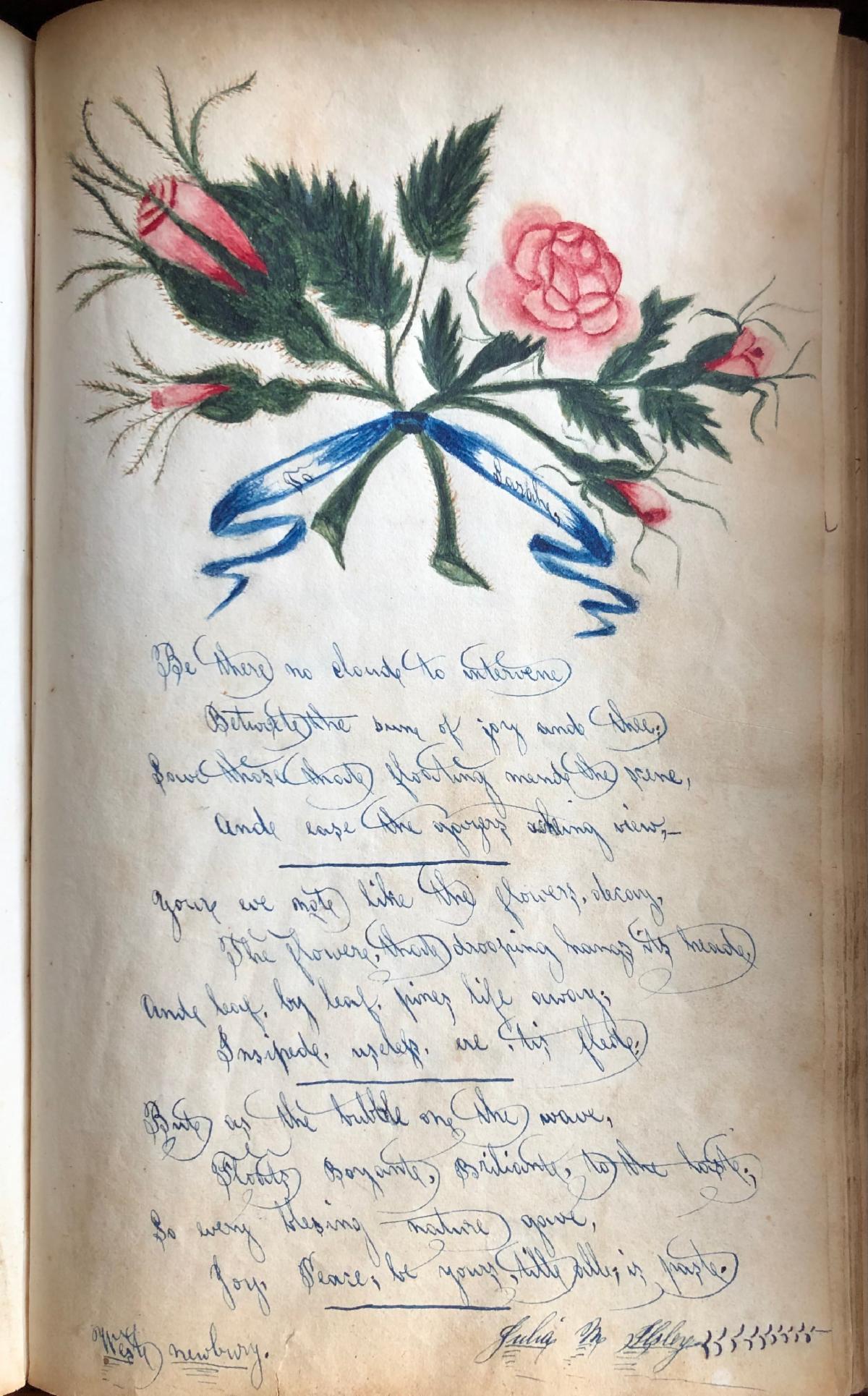
A poem by Julia Illsley of West Newbury to Sarah Dole, 1826.
From the collections of the Museum of Old Newbury.
Click on the image to begin.
|
|
Something is Always Cooking at the Museum
Because grape tomatoes tend to always be in season, this simple pasta salad from Emily Hoffman sounds like the perfect way to get into a Spring mood.
Sun-Dried Tomato Fettuccine Salad
1 package grape tomatoes, sliced in half
8 ounces fettuccine
4 large sun-dried tomatoes, chopped
5 large basil leaves, sliced
Grated Parmesan cheese to taste
Dressing
10 large basil leaves
2 cloves garlic
4 large sun-dried tomatoes
6 tablespoons olive oil
1/4 cup balsamic vinegar
1 teaspoon salt
1/2 teaspoon sugar
1/4 teaspoon red pepper flakes
In food processor, purée/mix the ingredients for the dressing. Cook the fettuccine per directions; drain. Assemble salad in layers, fettuccine, tomatoes, sun-dried tomatoes, basil, dressing. Top with grated Parmesan.
|
|
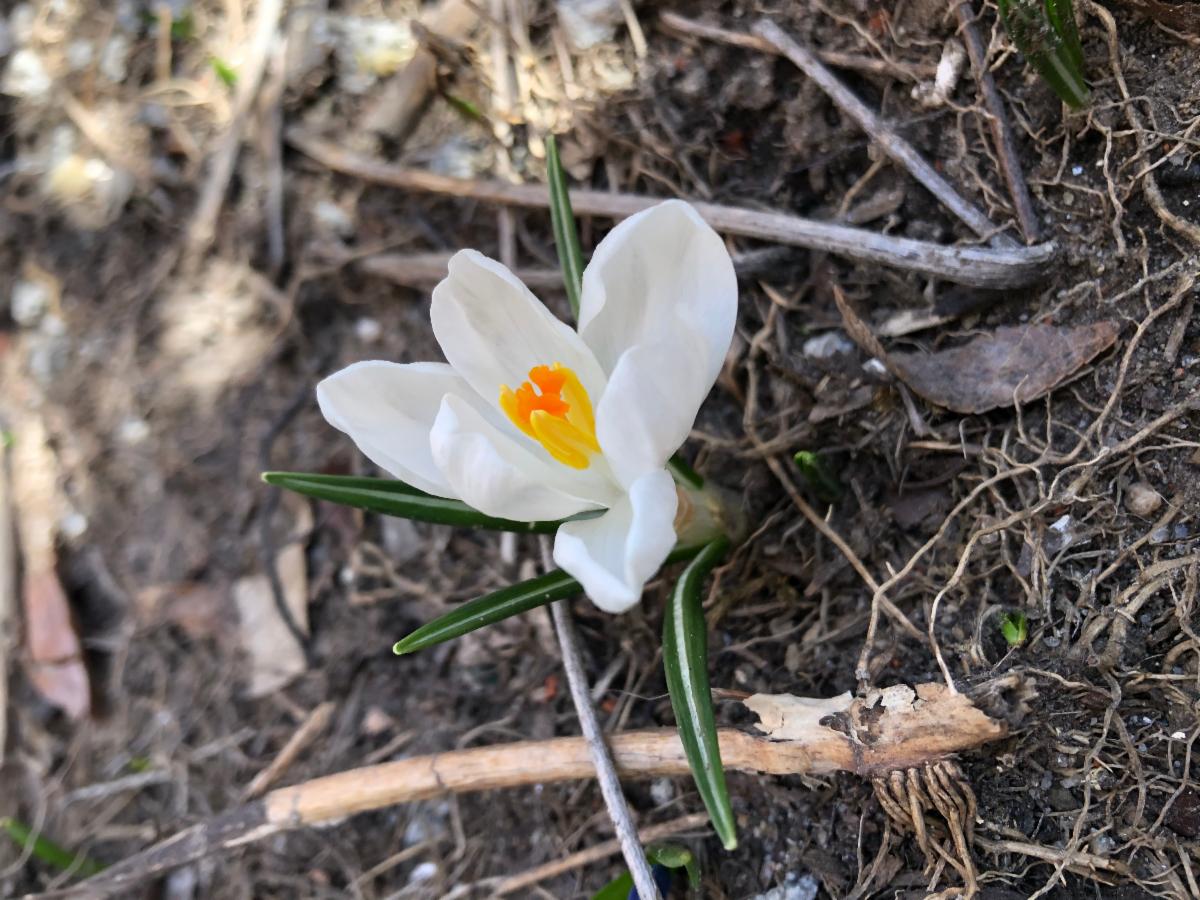
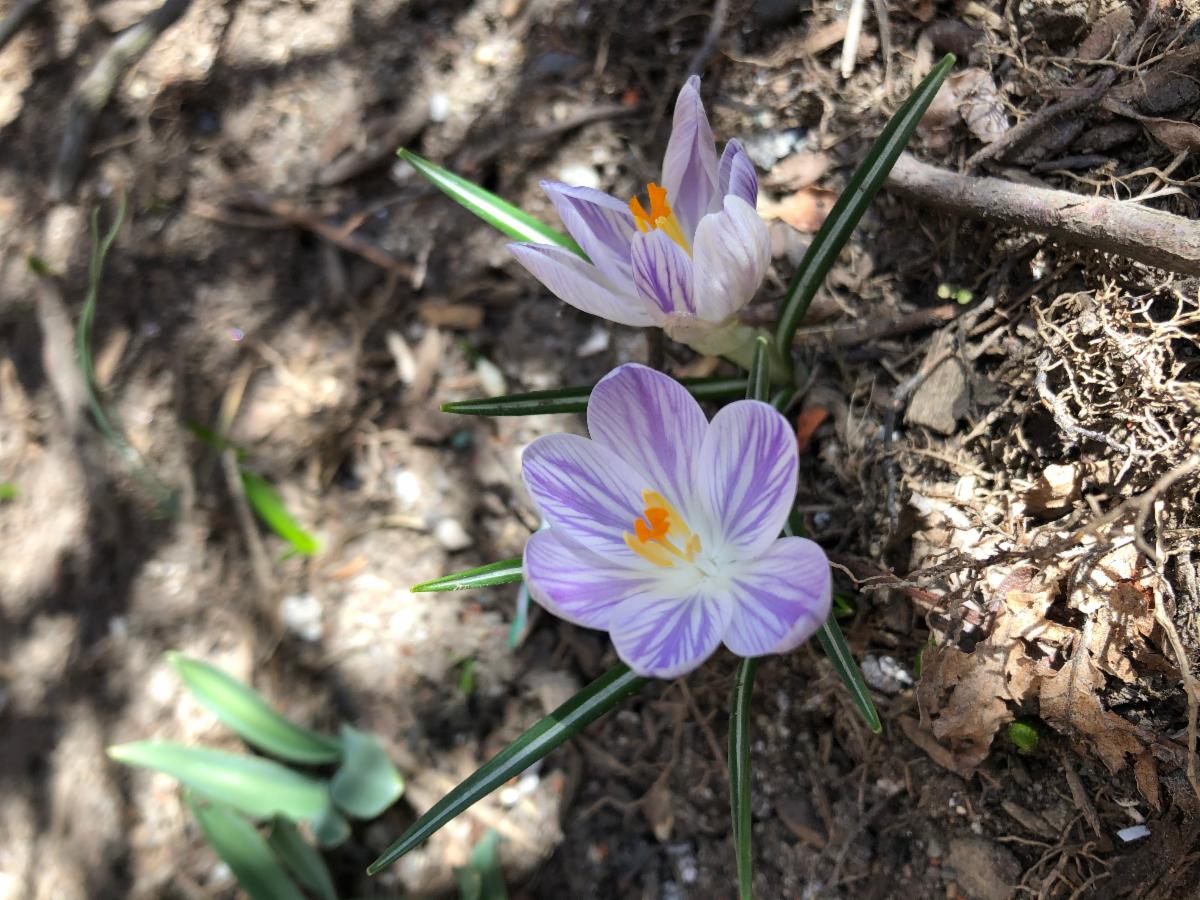
Spring has Sprung!
The Cushing House Garden is shedding its winter look for a pop of color...the perfect harbinger of the 42nd Annual Garden Tour, set for June 12 & 13, 2021.
Sherry Evans, committee chair, shares, "We are looking forward to sowing the seeds to a new normal with our in-person, COVID-safe event."
Information on ticket sales and more to follow. Photos by Madison Vlass.
|
|
During this difficult period of COVID-19, we rely on your support more than ever. We continue to develop new, online programs for you to enjoy and keep us connected and look forward to in-person events as protocols for safety loosen. We hope, if you are able, that you will consider a donation to the museum. Thank you for your continued support.
|
|
Museum e-Newsletter made possible through the
generosity of our sponsors:
|
|
|
Museum of Old Newbury
98 High Street
Newburyport, MA 01950
978-462-2681
|
|
|
|
|
|
|
|