e-Newsletter | November 12, 2021 |
|
A Hammer Wielding Woman
by Dr. Marc Cendron
|
|
The craft of working an ingot of silver into a spoon, porringer or teapot is physically demanding and requires years of training.
This may be why the craft was carried out by men throughout the ages. And yet a few women did wield the forger’s hammer and fashioned silver utensils during the 18th century.
Some names come to mind: Hester Bateman, a prominent member of a dynasty of silversmiths from London, and Louisa Courtauld, née Ogier, daughter of a French Huguenot who settled in England.
There is even a rumor that Paul Revere’s (another Huguenot) mother may have also been involved in silver making. Most likely these women silversmiths were trained by family members.
|
|
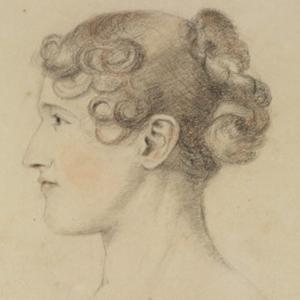
Portrait of Louisa Courtauld, circa 1800. Image courtesy of The Samuel Courtauld Trust, The Courtauld Gallery, London. |
|
So could it be that Lydia Leonard Moulton, born in Newbury on February 11, 1757, could have been an apprentice to her father William Cleveland Moulton (1720 to circa 1793)? After all, the Moultons were a local dynasty of silversmiths in the greater Newbury-Newburyport area, with several members of the family recognized for their skills as goldsmiths and silversmiths (see Simple Elegance monograph).
The Moulton wares are highly collectible and are displayed in several museums across the country. Lydia’s brother, Joseph III (1744-1816) who referred to himself as a goldsmith, had most likely apprenticed with and was in business with his uncle, Joseph II (1724-1795). He had twelve children with his wife Abigail Noyes.
Four of his sons, Ebenezer, William, Enoch and Abel also became noted silversmiths. Given the incestuous nature of working silver (and possibly gold) in the Moulton family, it is possible to surmise that Lydia may have been drawn into the craft.
While there are no written records (either day books, letters or receipts) documenting Lydia’s activities as a silversmith, circumstantial evidence would show that she was, indeed, involved in making silver ware.
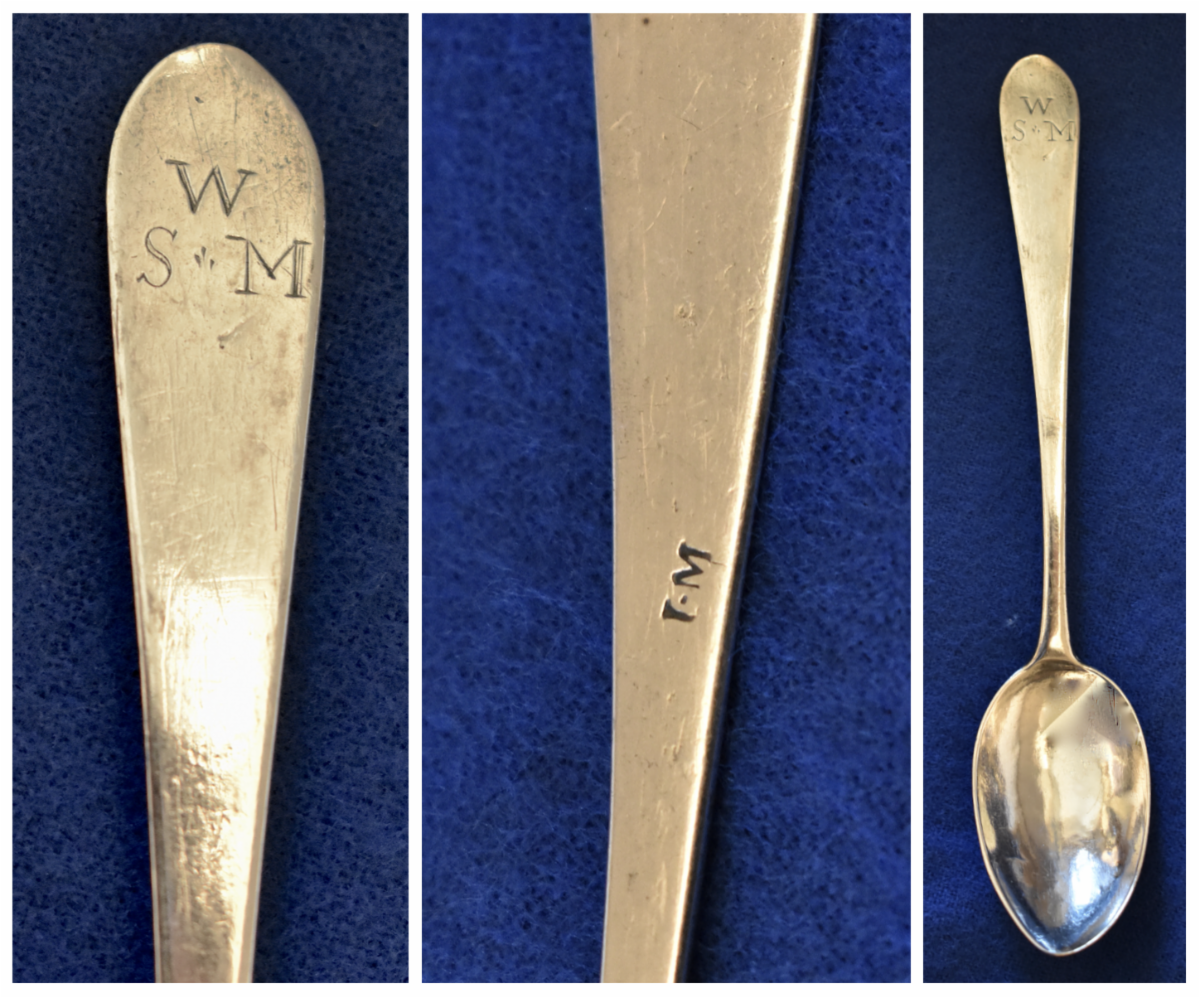
A number of teaspoons and serving spoons (image from Simple Elegance, p. 17) and a pair of sugar tongs bear the maker’s touch or mark of LM, her initials. These spoons usually have been found in the Newburyport area and are coveted by collectors as they are quite rare.
The teaspoons are made of coin silver (silver melted down from coins and is an alloy composed of 90% pure silver and 10% copper) and are delicate with simple bright-cut designs on some, but not all are decorated. Given the style of the spoons, they would appear to have been made between 1780 and 1800 when Lydia would have been in the prime of her life and certainly able to cope with the rigors of working silver.
|
|
Teaspoon bearing the touch mark of Lydia Moulton (center); closeup of owner's initials and full image of spoon. From the collections of the Museum of Old Newbury. |
|
It is entirely conceivable that Lydia could have been swinging a forging hammer over an ingot of silver side-by-side with her father and brother working in the glow of a blazing forge where the silver was heated and made more malleable. Heavy molds, in which molten silver would be poured to shape spoons, lined the wall. She also would have used files and brushes to burnish the wares. She probably was also involved in the retail of the various house utensils.
Joseph Moulton III is known to have had a shop on State Street. One has to wonder why she espoused this career and did not, like many women of her age, marry and bear children as was customary. What is for certain is that she received the support from the male members of the family and that she contributed to the common good, albeit in an unusual manner.
The influence of her father is not to be ignored. William Cleveland, born in Newbury and married Lydia Greenleaf in 1742, was a man on the move. Having established his business in Newburyport, he then moved his family to Hampstead, New Hampshire, 30 miles away, where he became a landowner in addition to pursuing his craft of gold-smithing.
He became involved in the post-revolutionary war migration west and at age 68 moved to Marietta, Ohio, which was, at the time, a Frontier settlement (see David McCullough’s book “The Pioneers, the Heroic Story of the Pioneers Who brought the American Ideal West”).
It is reported that Lydia, considered a skilled craftsperson at the time, and her elderly father provided local residents of eastern Ohio with eating and kitchen utensils. Together, they traveled the area by wagon, selling their wares in various settlements along the Ohio river. They may have traveled by boat as roads were quite primitive.
They even were involved in an Indian raid on Marietta in 1791. Julia P. Cutler, author of The Founders of Ohio: Brief Sketches of the Forty-Eight Pioneers published in 1888, recounts those admitted to the blockhouse at the garrison, "... then old Mr. William Moulton, aged seventy, with his apron full of old goldsmith's tools and tobacco. Close at his heels came his daughter Anna, with the china teapot, cups and saucers. Lydia brought the great Bible. But when all were in, their mother was missing. Where was mother? She must be killed! 'No,' says Lydia, 'mother said she would not leave the house looking so; she would put things a little more to rights, and then she would come.' Directly mother came, bringing the looking-glass, knives and forks."
Such was the life for the Moulton family in Ohio. Having been spared by the “Indians,” Lydia’s father passed away in 1793.
She went on to marry Dr. Leonard, an English surgeon “of great eccentricity of character.” He had been a surgeon in the British army but was imprisoned for trying to bring machinery into the United States for the purpose of making woolen cloths, the export of the machinery having been prohibited by the embargo between the former colonies and Britain. Dr Leonard died in 1806.
Lydia may have married twice thereafter, to a Mr. Fulton and then to a Mr. McKowan. There is no documentation of any children she may have had, but it seems unlikely she had any. She died in Marietta, Ohio, circa 1823.
|
|
Silver sugar tongs. (Courtesy photo: Marc Cendron.) |
|
What is left of this woman’s fascinating, yet incomplete story, are these few silver objects (spoons and sugar tongs) that were possibly made by one of the very few women silversmiths in America during the 18th century.
These are precious witnesses to a time where the place of woman in society was so different than today. Nevertheless, Lydia may have been able to overcome the established order and distinguish herself, because of her family, as a unique creative force in a manner worthy of attention and certainly admiration.
Contributed by Dr. Marc Cendron, a direct descendant of Newburyport's Moulton family and the Little family through his grandmother Mary Elizabeth (Little) Whiting. Dr. Cendron serves as Co-chairman of the Museum's Collections Committee.
|
|
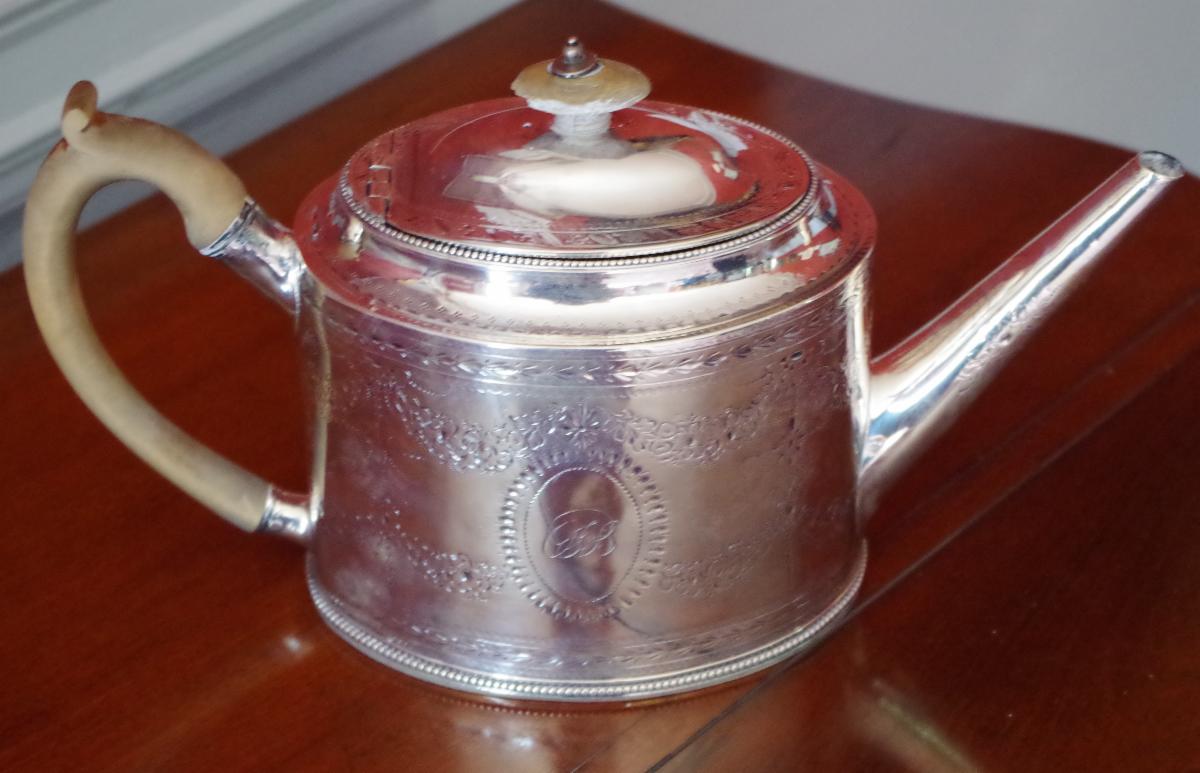
Silver teapot with boxwood handle, London 1783-1784, bears the touch mark "HB" for Hester Bateman. The teapot was acquired by shipmaster Offin Boardman and his wife Sarah Greanleaf Boardman in the 1780s or 1790s. From the collections of the Museum of Old Newbury. |
|
Running now through the end of the year, the team at the MOON will share their favorite family recipes, including a blog about its evolution and the significance of the item. Next week, Kristen shares her story of a giant wooden Dutch cookie mold the spice cookies it has inspired. |
|
A Princess in the Pantry
My "Berry" Good Friend, Milly...guest blog by Colleen Turner Secino
The summer I turned 10, my family moved to Cape Cod. I left behind my best-friend-in-the-whole-wide-world, Alan Burke, convinced days of fun and frivolity were in my rearview mirror. Happily, they weren’t. Alan is still my best pal and I made an unlikely new friend with my neighbor, Mildred Martha Theresa Studley Kelly. A 50-year-old home economics teacher in the Newton school system who vacationed in Yarmouth, we were inseparable that summer and just about any weekend she visited.
Milly was a wonderful friend and teacher. It was under her careful tutelage that I learned to bake, cook and decorate cakes. I still have the first pastry bag, select stainless steel tips and a flower nail (for making iced roses, petal-by-petal) that she gave me for my 11th birthday. She also taught me how to make a boneless, stuffed chicken dinner, using onions, olive oil and a little flour as a base in the pan so that a ready-made onion gravy would only need a bit more butter and stock to be completed.
|
|
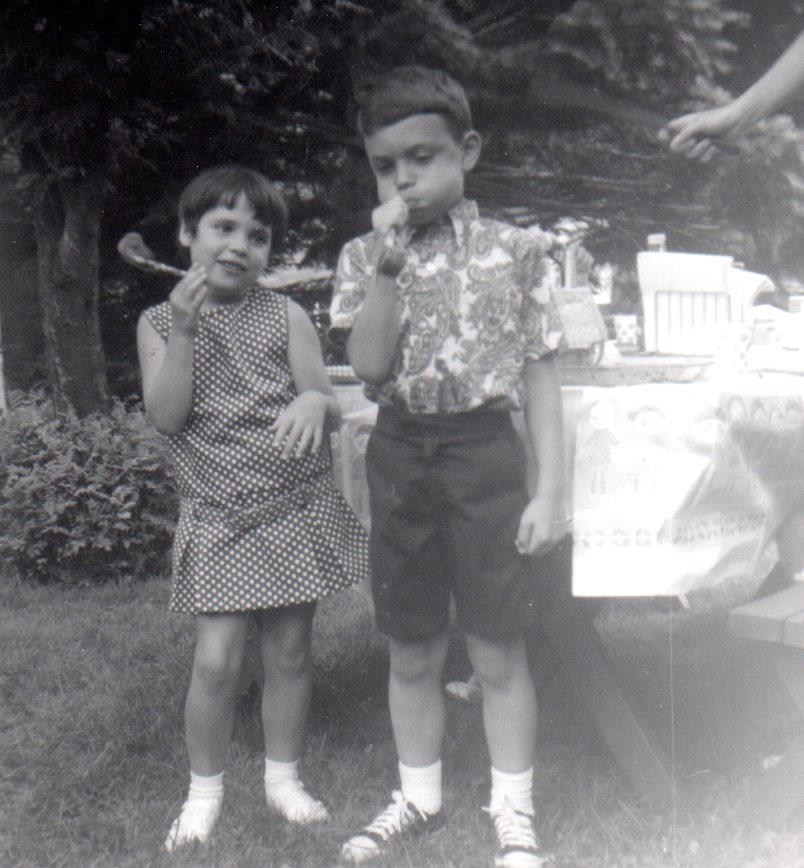
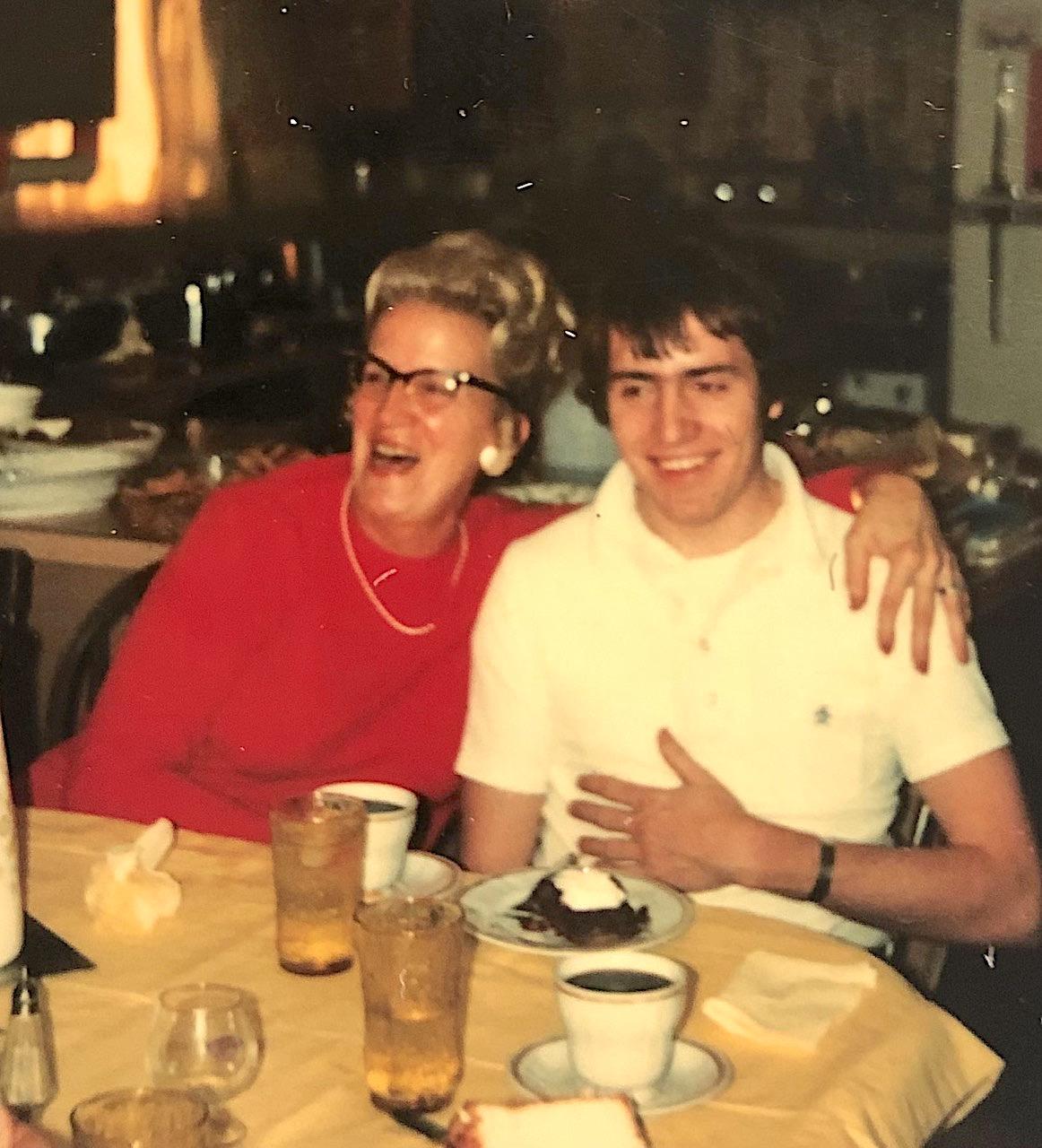
Colleen with her best-friend-in-the-whole-wide-world, Alan Burke, at her 8th birthday (1969) and Mildred Martha Theresa Studley Kelly with the author's brother, Chris Turner, at a family party (1976). (Courtesy images.)
|
|
A tall woman (I remember hearing the words ‘big-boned’ when people spoke of her), Milly wore a lot of makeup. In fact, I don’t think I ever saw her without it.
From her signature flame red lipstick, always perfectly applied so as to leave a mark on my cheek after a smooch, bright blue eye shadow and heavily applied blush to her cat eye glasses and beehive platinum blonde hair-do that was washed and set each week at the salon, she was bold, a little brash, occasionally bawdy (though I didn't always get it) and absolutely fabulous. And she treated me as an equal in the kitchen, dispatching life long skills and bits of history that I recall each and every day.
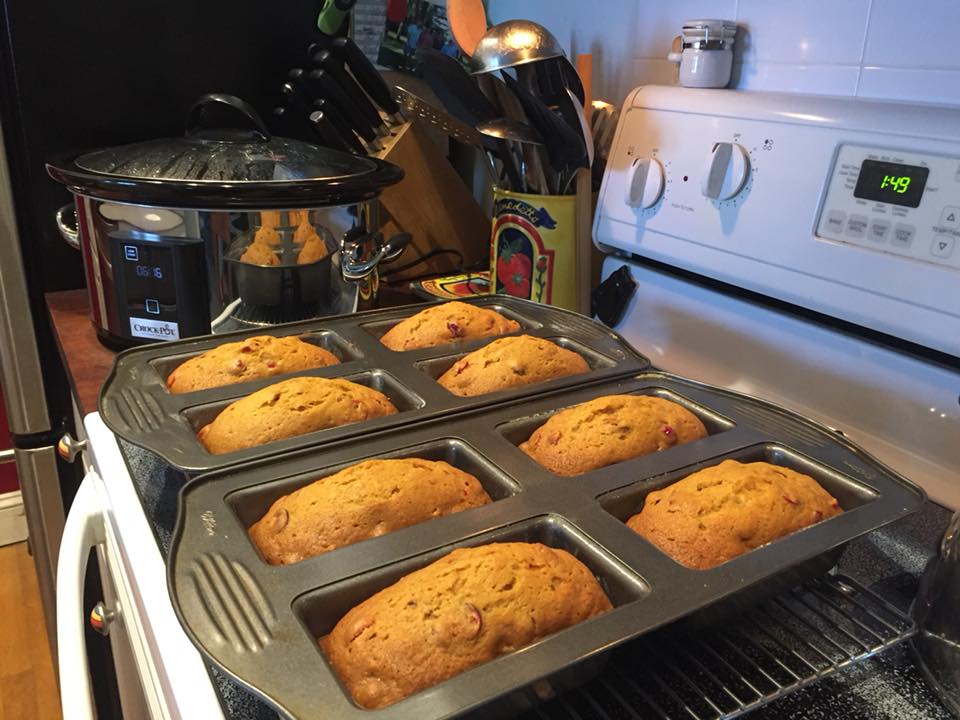
My favorite thing to cook was her self-proclaimed Perfect Pumpkin Bread. I still bake this moist, yummy treat every fall…for myself and to give away as hostess or holiday gifts. The fresh cranberries are the perfect balance to what could be an overly sweet treat.
We would stand together at the sink to wash the cranberries, removing any twigs or leaves, then scooping off the floaters, while avoiding any rotten berries that sank to the bottom. After a quick shake in the colander to drain excess water, Milly would carefully "dump" the berries on a cutting board, many rolling off onto the floor and under the refrigerator. Giggling, we’d retrieve those that we could, re-wash them, and get to the task of cutting.
Perhaps the most time consuming part of this recipe, let me tell you, as a 10-year-old, halving fresh cranberries was precise work. They are slippery little devils and being so tiny, it is easy to cut your fingers as well as the fruit. But Milly took the time to help me hone my knife skills, explaining the importance of using a well-sharpened blade, always paying attention to the task at hand and the art of perfecting a gentle rocking motion. She would tell me, “Let the blade do the work, Colleen."
Cranberries were her favorite. She used them in everything…changing the traditional Matrimonial Squares (aka Date Squares) to feature her homemade whole cranberry sauce to her cast iron baked Crustless Cranberry Pie, a one-bowl confection that begs to be served with a scoop of vanilla ice cream. She also made cranberry jam, cranberry juice and dried her own cranberries for stuffing and snacks. She even decorated with them, using the berry as a pop of color on a table scape or stringing together with popcorn for use on outdoor trees during the holiday season (and to feed the birds, of course).
As we worked, she would tell me facts about the magic berry. “Did you know Native Americans used ‘crane berry' for medicinal purposes and as a natural dye?” “Yes, it was originally called a crane berry because its cone-shaped blossom reminded early Massachusetts settlers of the beak of a crane." Or “Captain Henry Hall, just over in Dennis, Mass., first cultivated cranberries on a large scale.” Her knowledge was endless, her kindness without bounds.
She was my first friend in my new home. She was also the first friend I lost as a young adult. She died at the age of 60, my age now. Mildred Martha Theresa Studley Kelly, my Pantry Pal, will always live on in my heart.
|
|
Perfect Pumpkin Bread
3 1/2 cups flour
2 teaspoons baking soda
1 1/2 teaspoons salt
1 1/4 teaspoons cinnamon
1 teaspoon ground nutmeg
3 cups sugar
1 cup vegetable oil
4 eggs
2/3 cup water
1 can One-Pie pumpkin
1/2 bag fresh cranberries, halved
Combine all but cranberries and mix until smooth. Fold in berries. Fill greased and floured pan halfway. Bake at 350ºF...9”x5” loaf 45 minutes to 1-hour (make 2-3 loaves) or 5.75”x3” mini loaves 40-45 minutes (makes 8 small loaves). Toothpick should come out clean, top may be a little wet, but that’s okay. Cool on rack, in pan. Remove and individually wrap in plastic, then tin foil for freezing/gift giving. Store in refrigerator.
|
|
Perfect Pumpkin Breads cooling on a rack. |
|
Learn about upcoming programs, register, find Zoom links and catch up on previous presentations here. All of our virtual programs are free, however donations are gratefully accepted to help defray speaker fees.
|
|
November Events
In case you missed it...
|
|
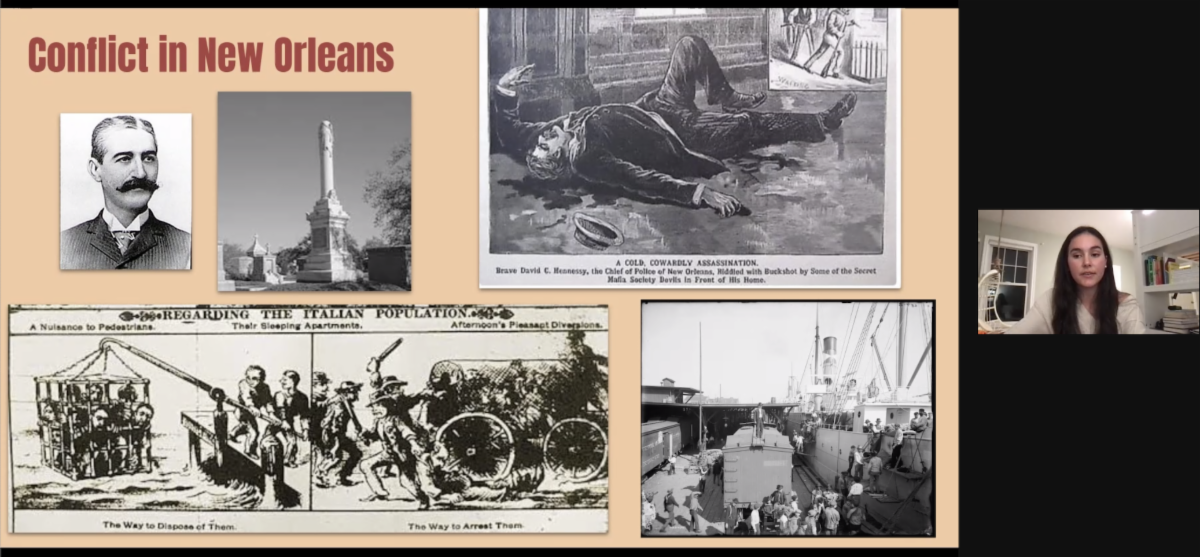
WATCH NOW: Columbus Day’s Origins in the Crescent City: Re-evaluating the Current Controversy
Olivia Crisafi, '22, a senior at The Governor's Academy takes a look at how Americans are moving away from celebrating Christopher Columbus's "discovery" of the New World and choosing, instead, to observe the holiday as Indigenous People's Day, acknowledging the native peoples whom Europeans displaced and critiquing their treatment by colonizers and by citizens and governments in the United States.
Drawn to controversial issues, Olivia is passionate about public policy and engineering and spends her free time running, building robots and fundraising for her chosen social causes. Her investigation of Columbus Day, for her junior-year AP US History class, sparked her interest in historical research, which she pursued as an intern at the MOON this past summer, and plans to continue in college. Click here to watch the presentation.
|
|
Play Now: "Yeat, Yeat! Don't Tell Me!" |
|
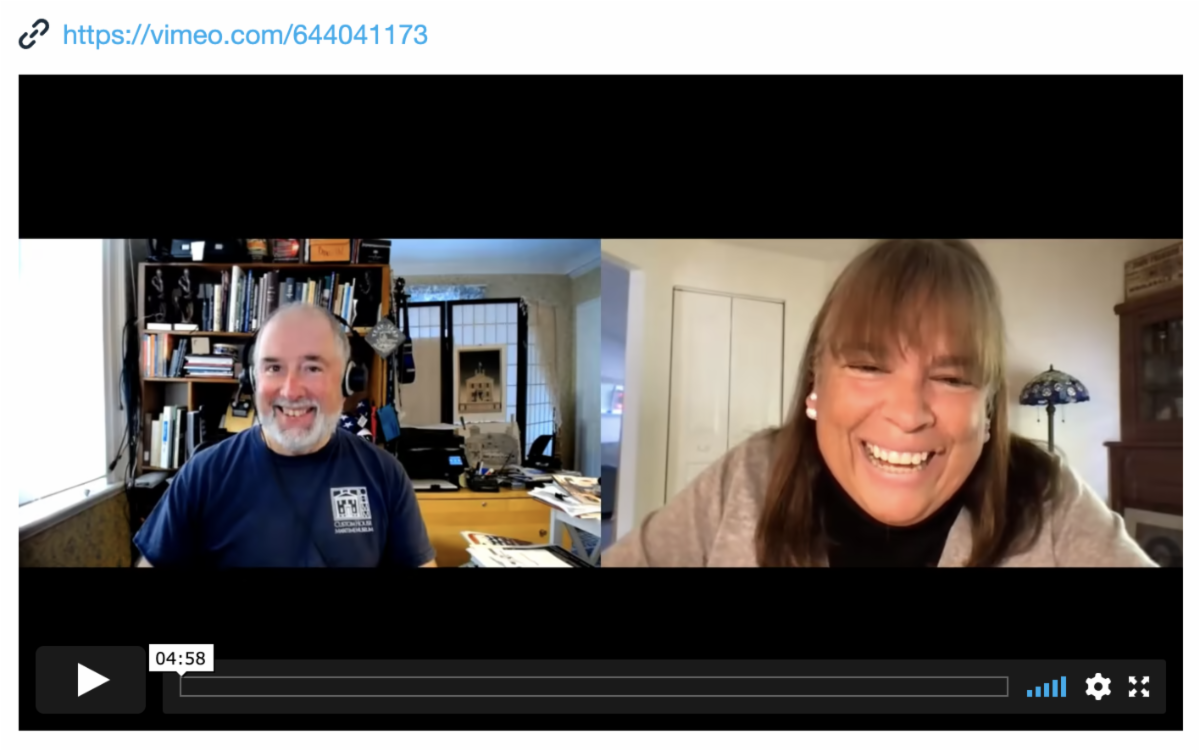
Season 3's first episode of "Yeat Yeat, Don't Tell Me!" is now available online and can be played anytime before December 1, 2021.
Enjoy Jack Santos and Colleen Turner Secino's witty riposte here or skip right to the questions by typing joinmyquiz.com/pro into your browser, then enter the code 5771 9233 to join.
Remember to hit "SUBMIT" in the bottom right corner after making your selection for the answer. NOTE: this is a timed quiz, so read the questions and get your choice made as quickly as possible.
Quiz is available for approximately two weeks. Winners vie for bragging rights, based on highest score, and a random participant is eligible for a wonderful prize from either the Museum of Old Newbury or the Custom House Maritime Museum. Both will be announced in the video preceding next month's quiz.
Yeat Yeat, this is going to be fun!
|
|
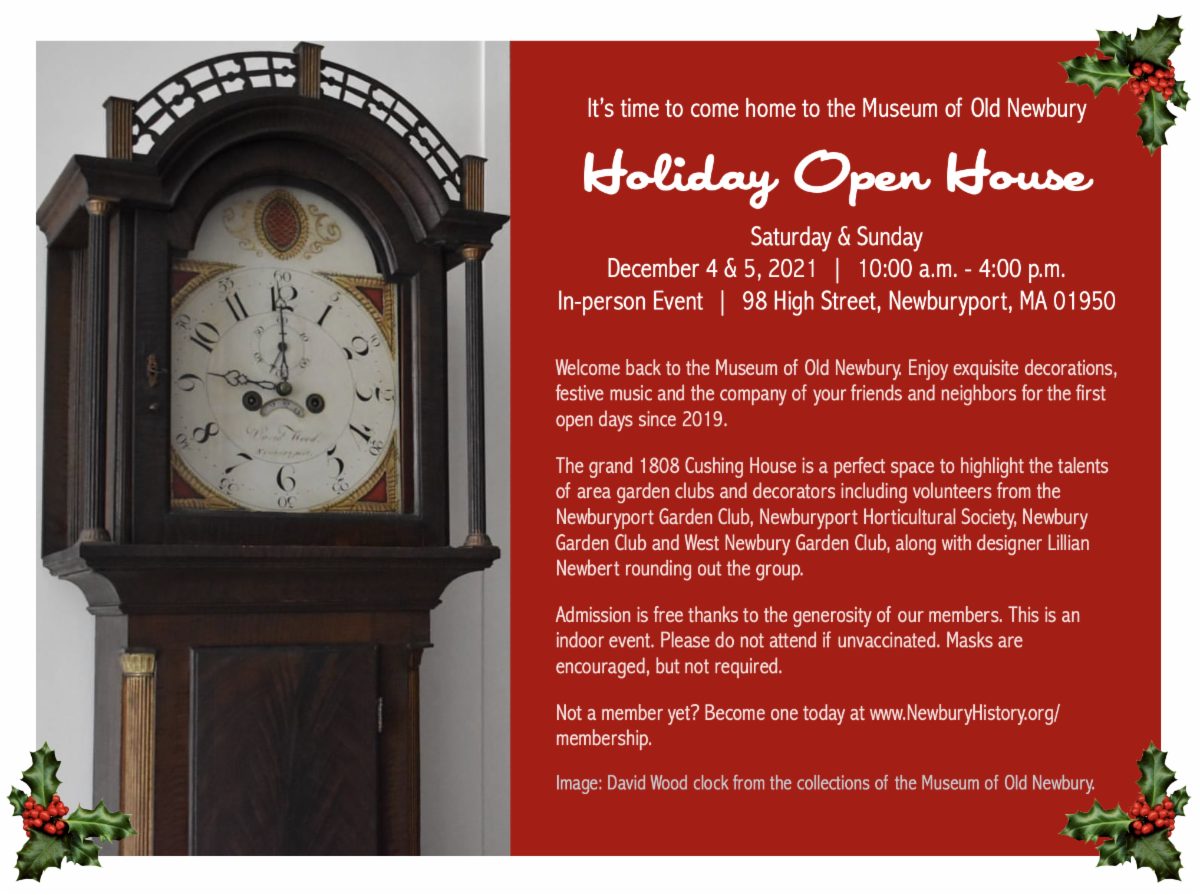
Holiday Open House
Saturday & Sunday, December 4 & 5, 2021 | 10:00 a.m. - 4:00 p.m.
In-person event | 98 High Street, Newburyport, MA 01950
|
|
Stay tuned for info on the member-only holiday party on Sunday, Dec. 5 from 4-7pm, featuring festive food, drinks and music. Not a member yet? Join here.
|
|
Newburyport's Annual William Lloyd Garrison Lecture featuring Edward Carson
Friday, December 10, 2021 | 7:00 p.m.
Old South Presbyterian Church | 29 Federal Street, Newburyport, MA
Every year, Newburyport celebrates William Lloyd Garrison's legacy on his birthday with a lecture from a well-known author, historian, or public speaker about Garrison's life, and how it is still relevant today.
This year the talk is “The Gospel According to William Lloyd Garrison: Anti-Racism and the American Truth” and will be given by Edward Carson, the Dean of Multicultural Education at the Governor’s Academy and a leading organizer and activist in the Greater Boston area. Carson will discuss Garrison’s relevancy in twenty-first century issues like voting rights, Critical Race Theory, and Black political thought.
Join us in-person (masks required for attendees) on December 10, 2021 at the Old South Presbyterian Church in Newburyport at 7:00 p.m. For more information and to watch live go to lecture.porthistory.com. No registration required.
|
|
The Civil War: Crucible of American Christmas
In-person Event | 98 High Street, Newburyport, MA 01950
Bill Hallett, a former radio announcer covering Baltimore to Boston, as well as locally at 100.3 WHEB and 92.5 the River, has always had a passion for the past with an emphasis on Civil War history.
A re-enactor and board member of two Civil War Roundtables, he’s given talks on various Civil War topics from Maine to Maryland. He stumbled upon some small stories of soldiers at Christmas and further digging brought him to his topic, “The Civil War: Crucible of American Christmas.”
He will take us through the early years, when Americans did or didn’t celebrate Christmas, depending on their location in the new country. But with European immigrants arriving in the early 19th century, the American Civil War accelerated the customs and manners nationally bringing the holiday to what we know today.
When the Civil War began, Christmas was slowly on the verge of becoming what we see now, but as with many parts of our culture, the war accentuated and promoted such a holiday. We owe so much of our American Christmas customs to the years 1861-1865, as the country fought itself. Small customs in various corners or part of the country, emerged with new national traditions that are still carried on today.
This is an in-person event. Free for members of the Museum of Old Newbury; $10 for non-members. Not a member? Join now by clicking here.
|
|
Puzzle Me This...
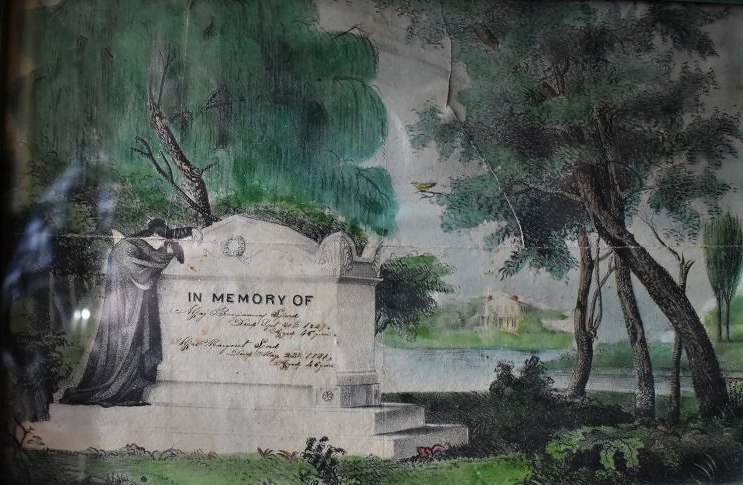
Mourning picture for Major Benjamin Lord and Mrs. Margaret Lord.
Lithographic print with watercolor and ink additions, circa 1830.
The tomb is inscribed "Major Benjamin Lord / Died Sept 20th 1827 / Aged 46 years" and "Mrs. Margaret Lord / Died May 23rd 1831 / Aged 46 years."
Benjamin Lord served during the War of 1812 and was in command of the Fort at Plum Island. He was a merchant tailor whose shop was located on Inn Street, Newburyport.
From the collections of the Museum of Old Newbury.
Click on image to begin.
|
|
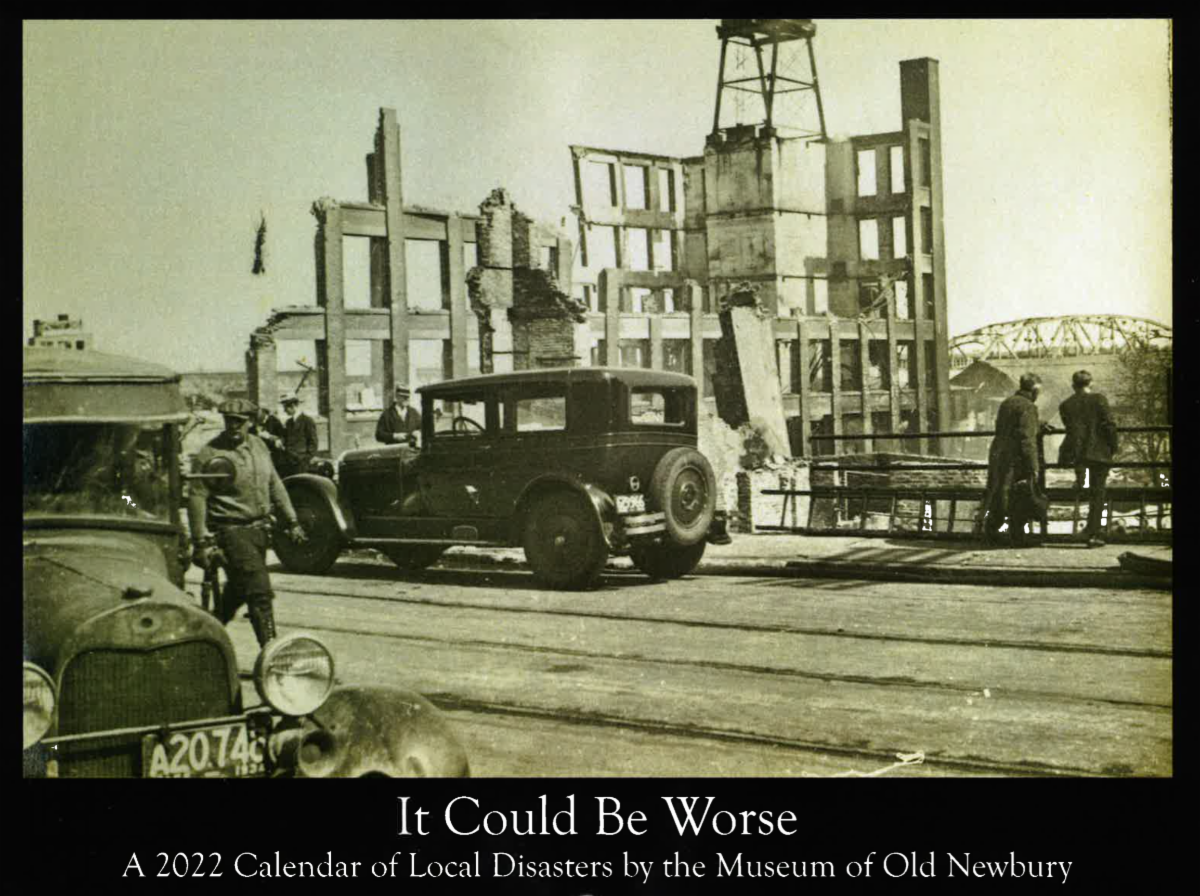
Cushing House Calendar is Back!
|
|
History, Month-by-Month
Want the perfect gift for friends and family? Like the idea of supporting the Museum of Old Newbury?
We are excited to bring you the second annual Cushing House Calendar, featuring a month-by-month collection of Newbury area images of assorted disasters and mishaps. It really could be worse.
We are taking pre-orders now and will ship to you when ready (about late-November).
$27.00 per calendar, shipping included (or select pick-up and save the postage). Click here or on the image above.
(For orders of 5 or more, please email us: info@newburyhistory.org to arrange pick-up/shipping.)
|
|
During this difficult period of COVID-19, we rely on your support more than ever. We continue to develop new, online programs for you to enjoy and keep us connected and look forward to in-person events as protocols for safety loosen. We hope, if you are able, that you will consider a donation to the museum. Thank you for your continued support.
|
|
Museum e-Newsletter made possible through the
generosity of our sponsors:
|
|
|
Museum of Old Newbury
98 High Street
Newburyport, MA 01950
978-462-2681
|
|
|
|
|
|
|
|