e-Newsletter | November 21, 2025 | | |
"Strong Beer, Cream...and a Great Fat Turkey..."
by Bethany Groff Dorau
| | |
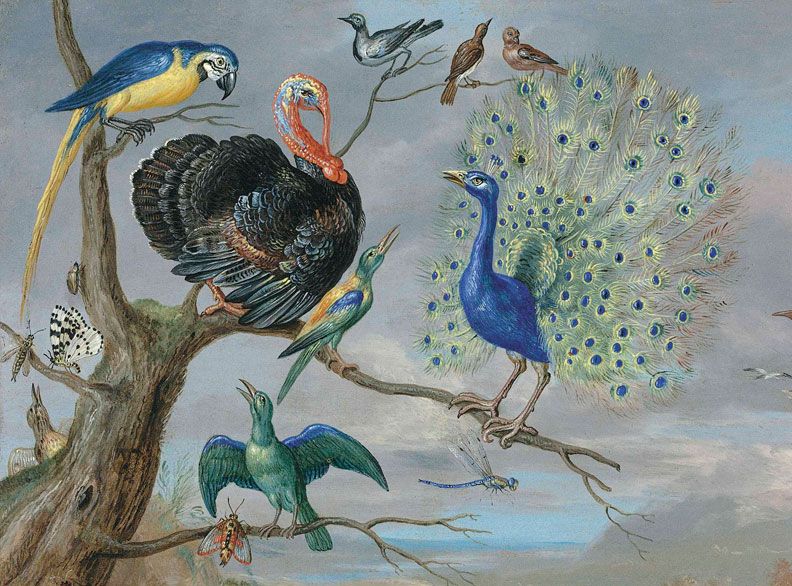
Allegory of Air (detail), 1661 by Jan van Kessel the Elder (1626-1679)
In 1661, John Carr was brought to the Essex County Quarterly Court for stealing a breathtaking array of food, including "piggs, capons, malt, bacon, butter, eggs, etc.". Carr was caught because he had turned Robin Hood, hosting pig roasts in the woods and feeding half of the servants in the county.
He boasted to his friends at one such party that when he had worked for "master Jackson", most likely John Jackson of Ipswich, he had shimmied down the chimney into a locked room in the house to steal "strong beer and cream", and had also stolen a "great fat turkey which was fatted for Jackson's daughter's marriage and roasted it in the woods..."
| | Read more about our long relationship with turkeys, wild and domesticated, after our event announcements... | |
| |
October to May, 2026
11:00 a.m. to 4:00 p.m.
Seasonal Saturday Tours!
Take a tour through this 1808 Federal mansion, containing art and artifacts from the past four centuries. Hear the story of Old Newbury and the growth of Newburyport.
New starting the fall of 2025, the Museum will be open most Saturdays (*weather permitting, some dates excluded).
Tickets here
| | | |
| |
Saturday, December 6, 2025
10:00 a.m. to 4:00 p.m.
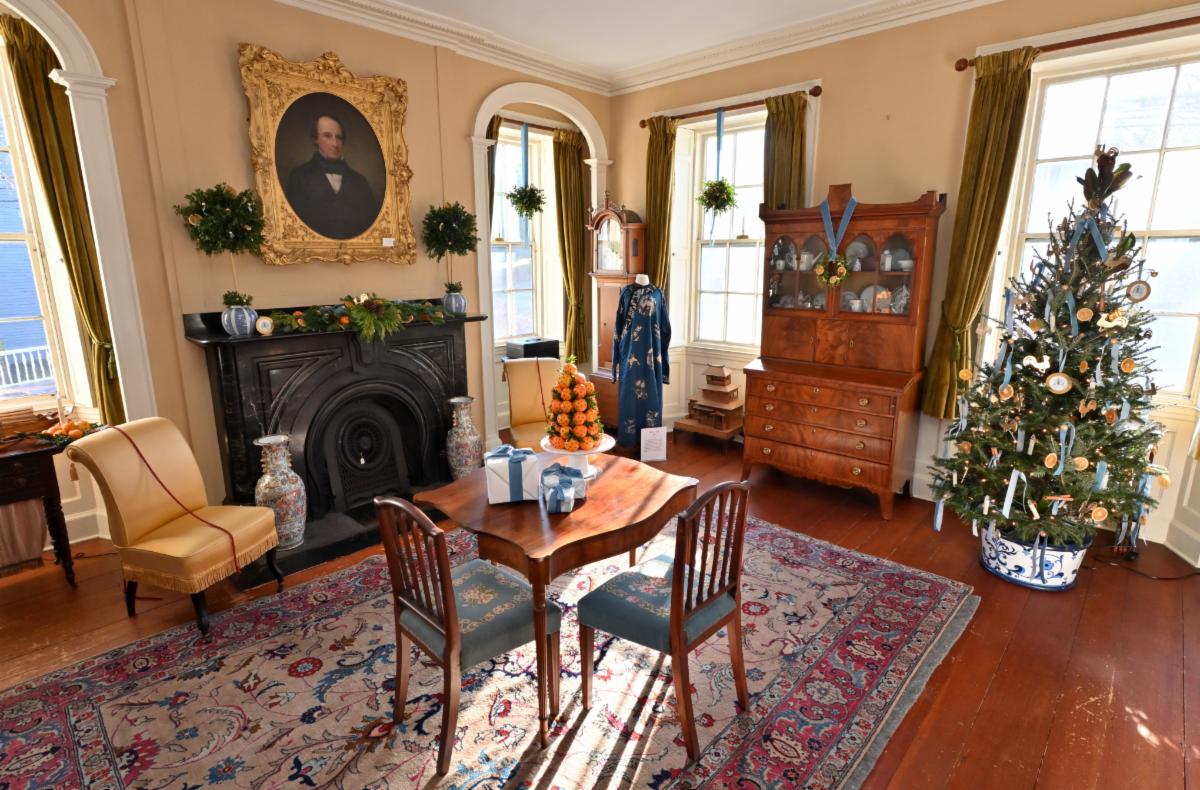
Holidays at the Cushing House
An annual tradition! Come enjoy the 1808 Cushing House decorated for the season by local garden clubs and volunteers.
Tickets Here
| | | |
| |
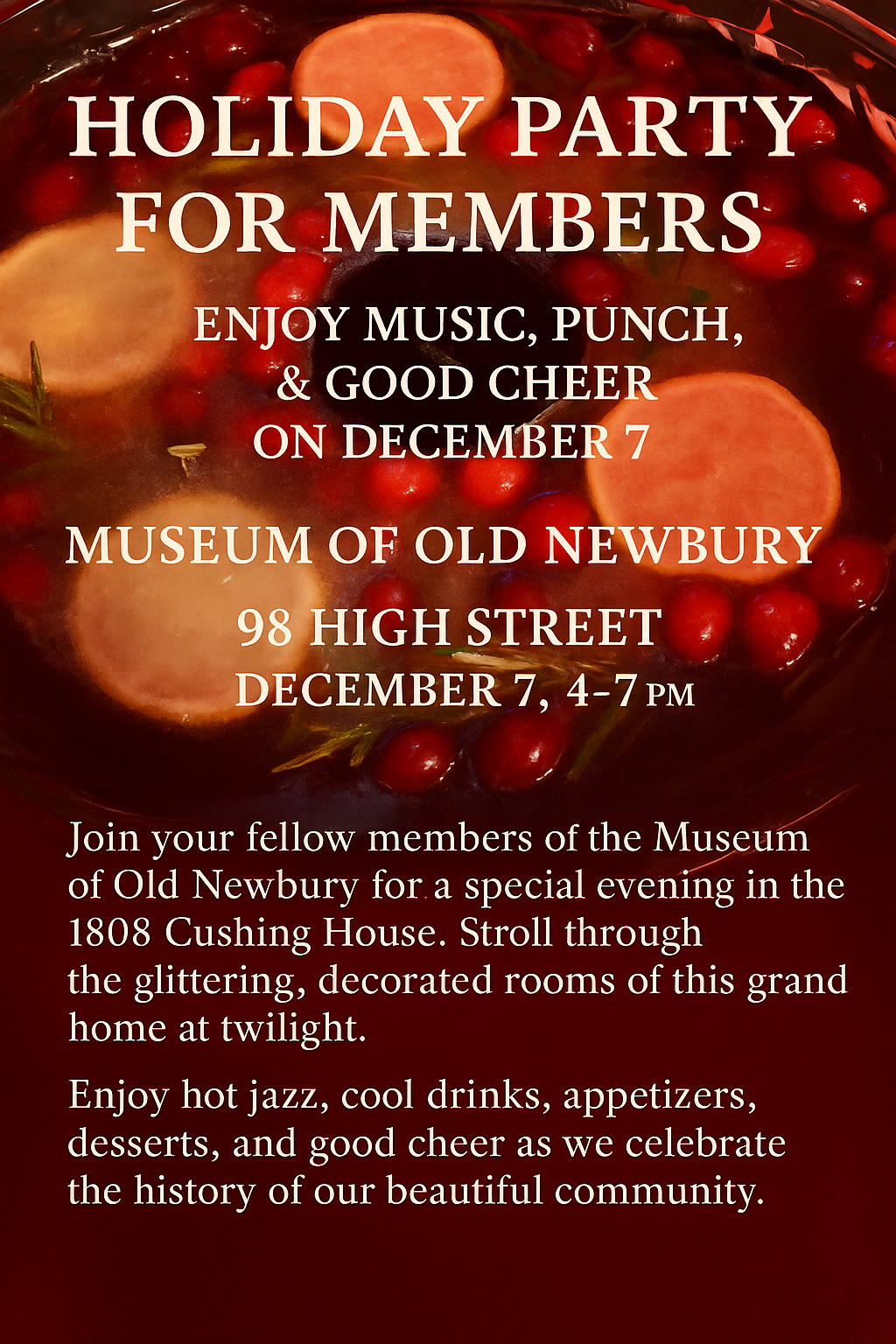
Sunday, December 7, 2025
10:00 a.m. to 4:00 p.m.
Holidays at the Cushing House
An annual tradition! Come enjoy the 1808 Cushing House decorated for the season by local garden clubs and volunteers.
Tickets Here
| | | |
| |
Sunday, December 21, 2025
6:30 p.m.
Solstice in the Cemetery: Night Walk Through Oak Hill
Join noted author and historian Ghlee Woodworth, a 12th generation Newburyport native, and Museum of Old Newbury executive director Bethany Groff Dorau for a nighttime stroll through the historic 1842 Oak Hill Cemetery. We will say hello to several Ebenezers, though none of them Scrooges, and toast the longest night with hot cider, cider donuts, and good cheer.
Tickets Here
| | | | |
"Strong Beer, Cream...and a Great Fat Turkey..."
by Bethany Groff Dorau
| | |
Allegory of Air (detail), 1661 by Jan van Kessel the Elder (1626-1679)
In the summer of 1660, Simon Bradstreet's indentured servant John Carr, like many hard-working 21-year-old men, was hungry all the time. He complained to his friends that his boss underfed him, his bread was "black, furry, moldy, and ropey". As his revenge, he said he would only do "two days work for one week's diet". Bradstreet, soon to be Governor of Massachusetts, had a well-stocked barn and pantry, which further angered young Carr.
A year later, Carr was brought to the Essex County Quarterly Court for stealing a breathtaking array of food, including "piggs, capons, malt, bacon, butter, eggs, etc." Carr was caught because he had turned Robin Hood, hosting pig roasts in the woods and feeding half of the servants in the county.
He boasted to his friends at one such party that when he had worked for "master Jackson", most likely John Jackson of Ipswich, he had shimmied down the chimney into a locked room in the house to steal "strong beer and cream", and had also stolen a "great fat turkey which was fatted for Jackson's daughter's marriage and roasted it in the woods."
John Carr is a bit of a mystery - I came across this case when I was researching the Carr family of Newbury and Salisbury, and he is likely a relative, though not documented in the family histories. Last week, as I watched a parade of wild turkeys wind their way across the field, I thought about the "great fat turkey" this young man stole, and wondered idly what that turkey might have looked like.
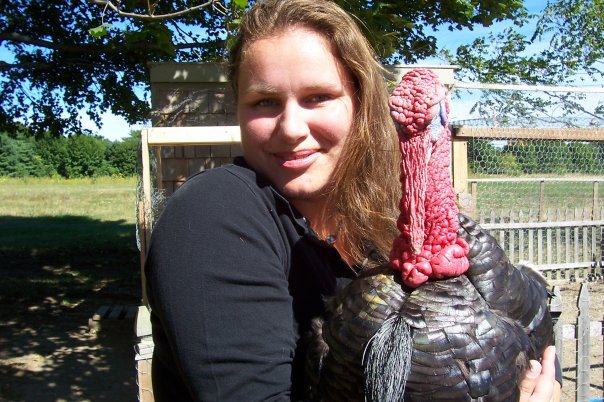
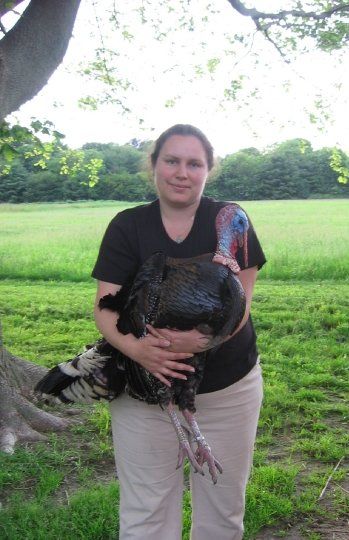
Turkeys are one of my many peculiar interests, you see, not the roasted variety, but the walking-across-the-field variety. A turkey named Socrates, who died in 2009, but who many of you also remember, was one of the great loves of my life.
| | |
Socrates came into my life in 2005, when the MSPCA was kind enough to place him at the Spencer-Peirce-Little Farm, where I was the regional site manager and principal animal wrangler. Little was known about his background. He was taken in while trying his best to impress passers-by with a full tom turkey display, inadvertently blocking traffic. His owner never appeared and so he was classified as a stray.
I remember going to Methuen to pick him up. It was the only time he tried to woo me, fanning his tail, dragging his wings, thumping his chest, and strutting. I remember clearly that I asked him if he would like to come with me, and he stopped, cocked his head, and gobbled. Driving home, he proved to be an entertaining passenger, responding to my chatter and the music on the radio with a series of chirps and purrs and trills that I would later come to understand as his particular language.
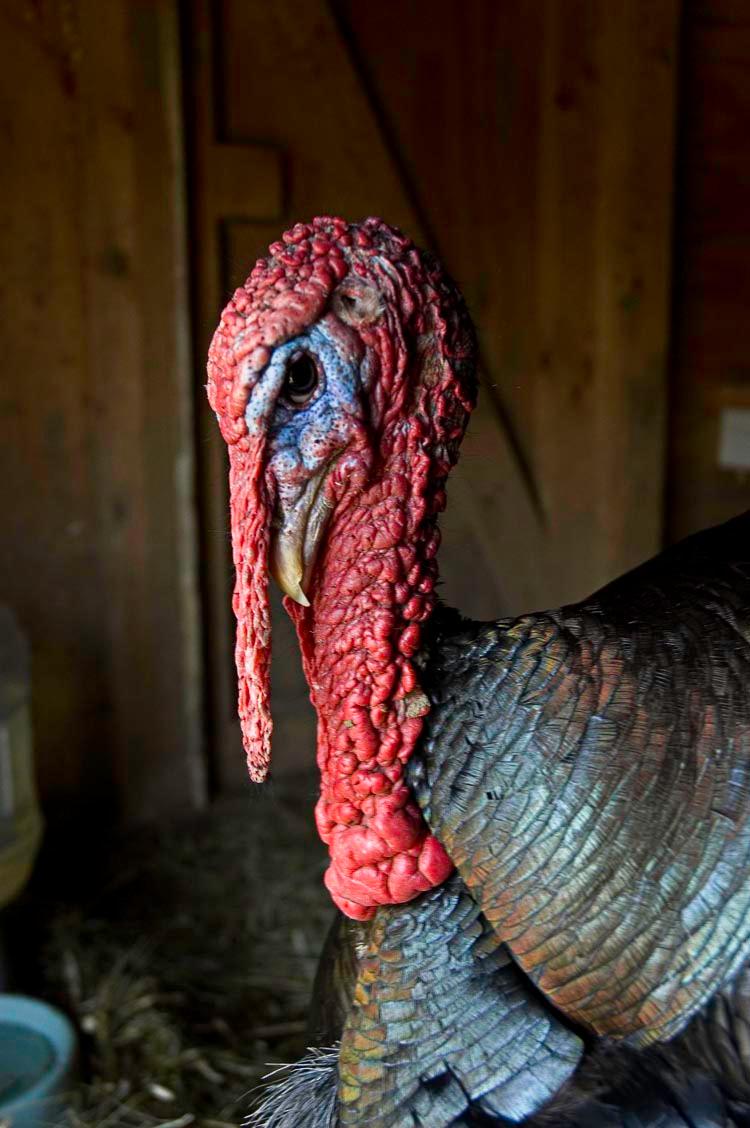
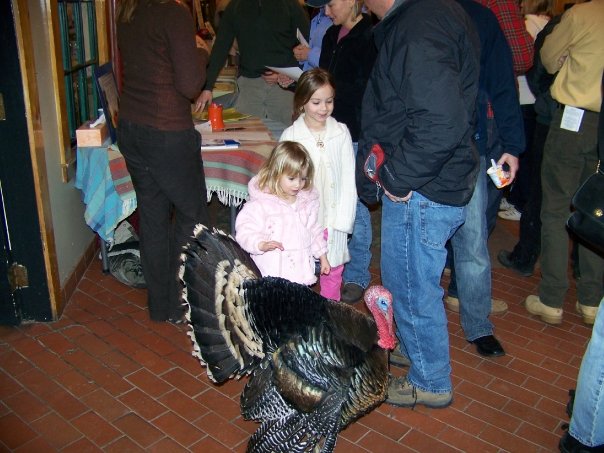
Socs was the first of many turkeys to come into my life, and he was one of a kind. A lover of children, music, and men with big shoes (don't ask), he accompanied me into town on several occasions, rode in the car like a champ, and would run gobbling down Little's Lane whenever a school bus departed. He taught me to understand his language, and that turkeys, that most insulted and denigrated of birds, are complex, communicative, and, yes, even smart.
| | |
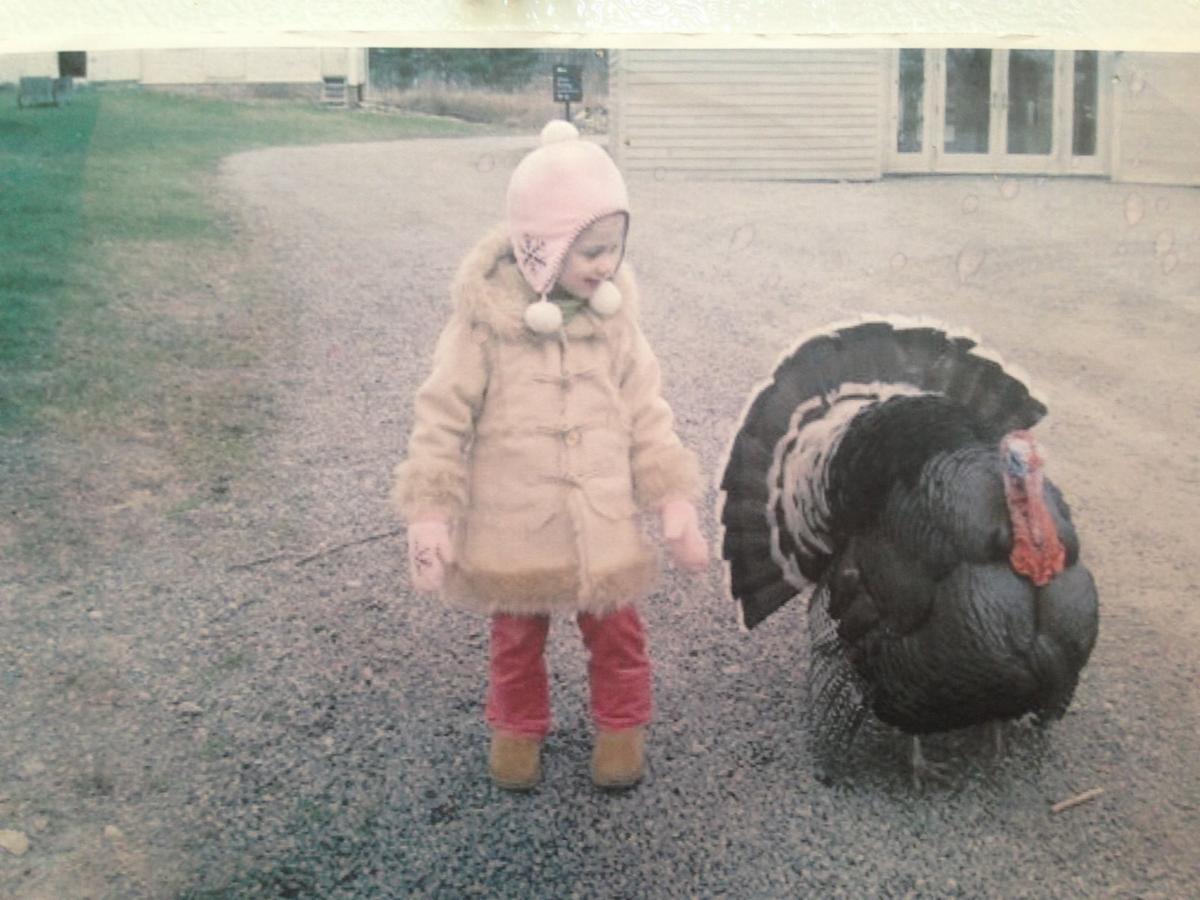
Socrates enjoys a walk with Ava Neely, one of his many young friends. Courtesy of Kimberly Myers Neely
Socrates was an "unimproved Bronze" breed developed by crossing European domesticated turkeys with wild North American turkeys. The "improvement" made to the Bronze breed was the ubiquitous broad breast, but the old style can fly, live longer, and are generally healthier than their top-heavy counterpart. They are very much like the birds that would have been raised in Newbury in the 17th century, long before the broad-breasted white turkeys of today were developed.
My relationship with Socrates and the other turkeys who have graced my life, was, of course, a historical anomaly. I do have a bit of kinship with Benjamin Franklin, who famously admired the turkey as "respectable", and "a Bird of Courage", willing even to fight a "Grenadier of the British Guards". Over the centuries, however, most people have been more interested in eating a turkey than hugging one.
The first English settlers to arrive in Newbury in 1635 would have recognized the wild turkeys that made their home here. They were everywhere - some 10 million of them along the Eastern seaboard. Though turkeys are native to the Americas, they had been imported from Mexico to Spain and the rest of Europe in the 1500s, and recipes for turkey appeared in cookbooks such as A Booke of Cookery, first published in 1584, and Thomas Dawson’s The Good Huswifes Jewell, first published in 1585.
| | |
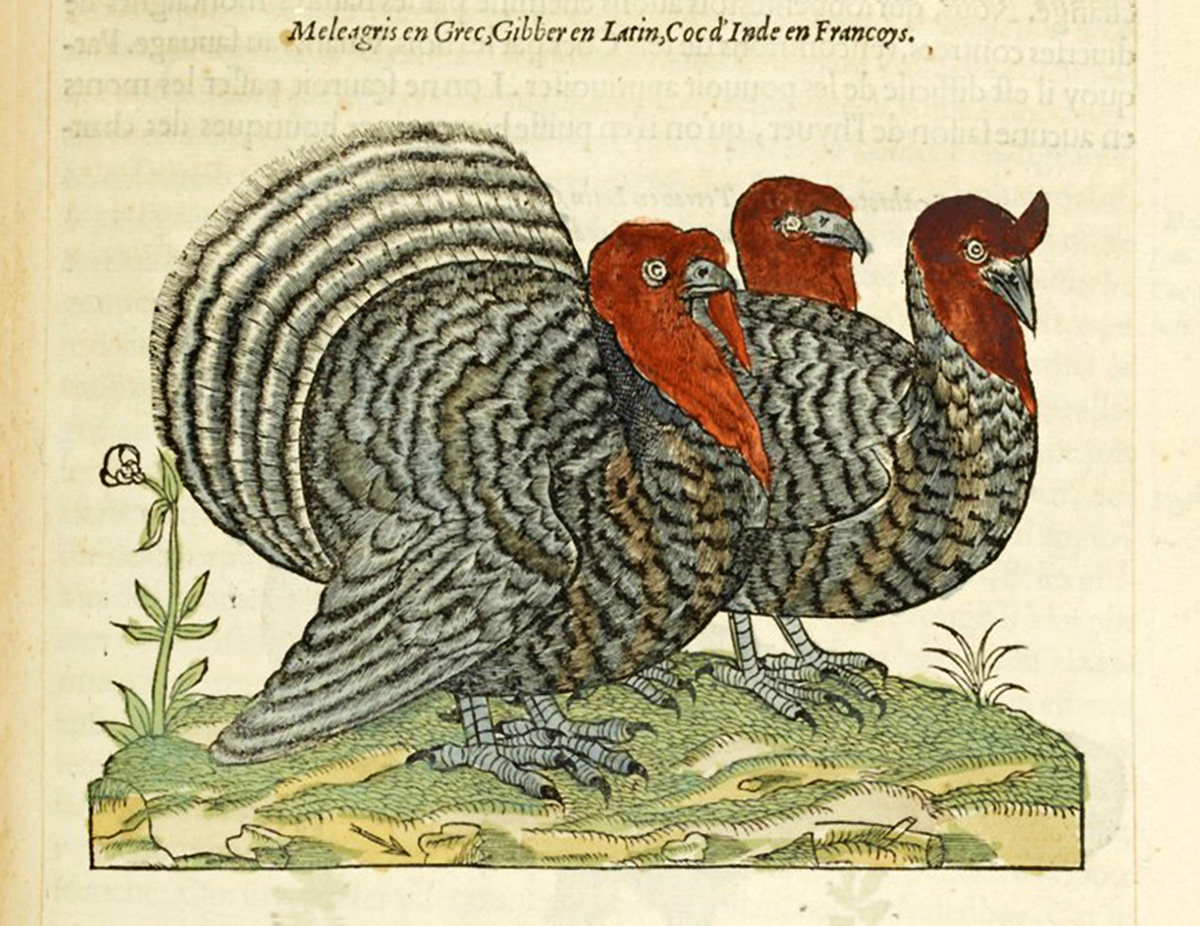
Illustration of turkeys from the 1555 Illustrated History of Birds (De l’histoire de la nature des oiseaux avec leurs descriptions et naïfs portraicts) by Pierre Belon.
Turkeys had the bad luck to be a familiar foodstuff to English men and women, and so the wild version was a welcome addition to their diet. The flocks of birds that gave Newbury's Turkey Hill its name were decimated within fifty years of settlement from overhunting and the destruction of Newbury's stands of oak, whose acorns had provided critical winter food for the birds.
The turkey swiped by John Carr in the 1650s was, most likely, a hybrid. Wild New England turkeys were larger than their English counterparts, and the settlers crossbred them with their imported domestic flocks. Though domesticated turkeys continued to provide food for the settlers, however, wild turkeys were killed by the thousands. The last wild turkey native to Massachusetts was killed on the ironically named Mount Tom in 1850. They had disappeared from Newbury decades before. In 1854, four years after the last wild turkey had been killed in Massachusetts, the Newburyport Herald reported that William Williams of Rowley had to send to Illinois when he wanted to import a wild turkey, an effort to "very much improve" farm turkeys in the region.
In the 1930's biologists tried to reestablish a turkey population in Massachusetts by releasing these hybrids, but they could not survive in the wild.
| | |
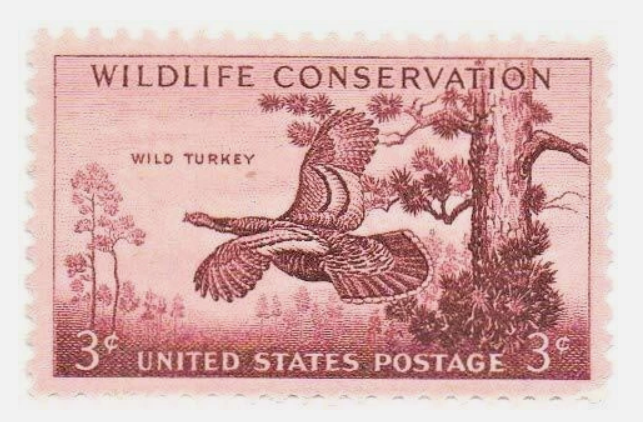
This stamp was created to highlight the conservation efforts aimed at protecting wild turkeys across the United States. The Newburyport Daily News announced that it would be available for sale in all local post offices in May, 1956.
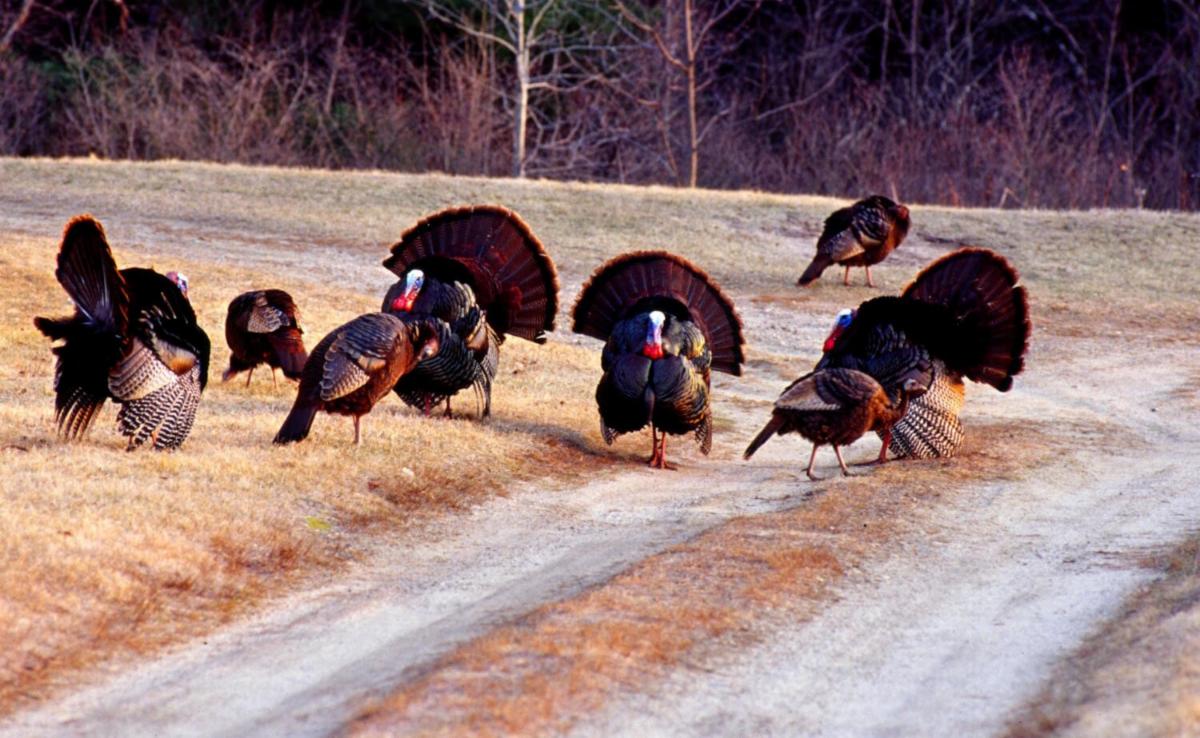
In the 1960's, biologists tried again, this time trapping some of the few wild turkeys that had survived in remote areas of the Adirondacks. 37 wild turkeys were released in Western Massachusetts in the 1970's. The forests had begun to return to New England as farmland was abandoned, and predators were scarce. The imported birds flourished, and their descendants were distributed across the state. In 1988, 21 birds were released at the John C. Phillips Wildlife Sanctuary in Boxford, and in 1991, another 18 landed at the Bradley Palmer State Park in Topsfield. The turkeys that you see on Turkey Hill Road today are descendants of these birds, happily blocking traffic just like Socrates those many years ago.
| | I will not begrudge you your own "great, fat turkey" this Thanksgiving, if it is your tradition. I will ask, however, that you think about the long and intertwined relationship we have had with these birds over the centuries, and the next time you come across a gang of these tenacious New Yorkers, now equally at home in Newburyport suburbia as in the West Newbury forest, tell them I said "putt, putt, cluck, cluck, purr". They'll know what I mean. Gobble is for amateurs. | | |
Remembering Alice...
by Ashley Adams Serveiss
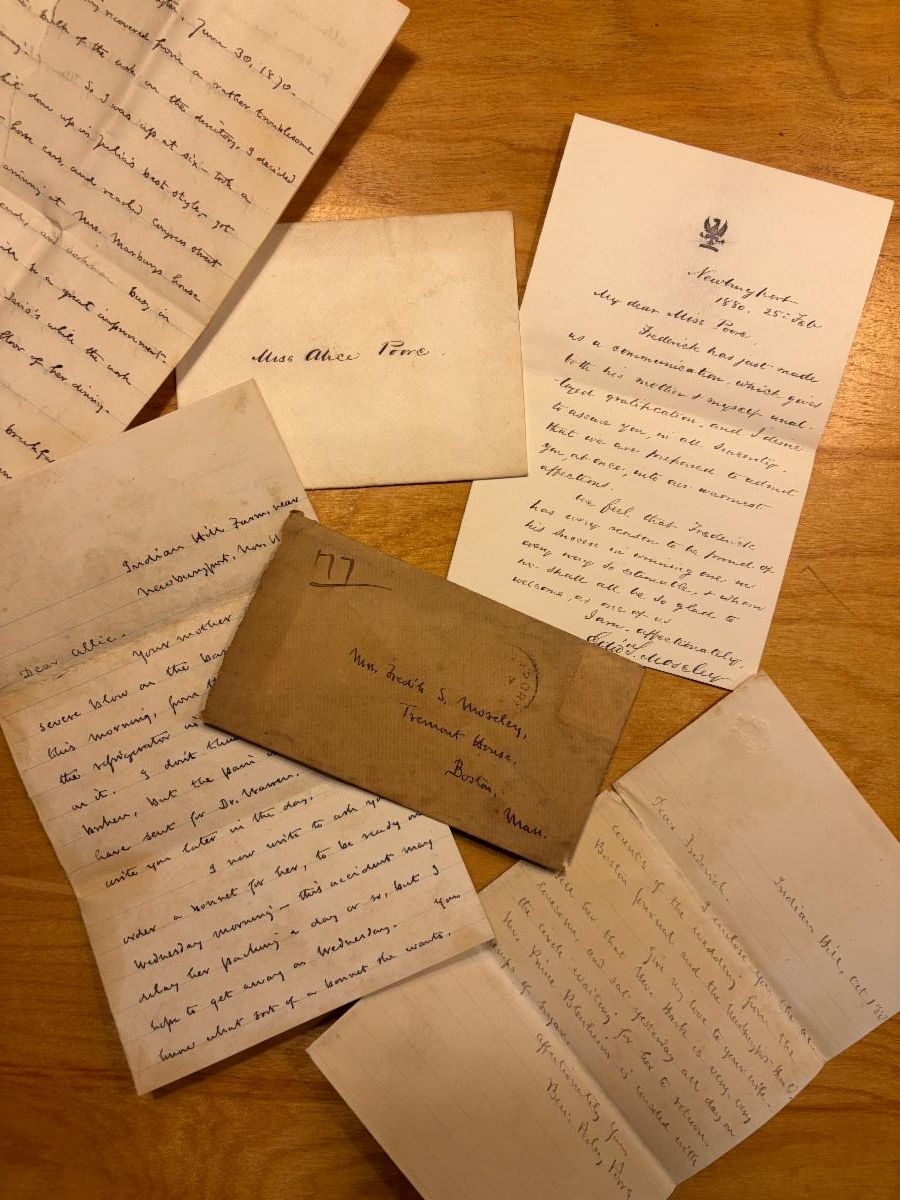
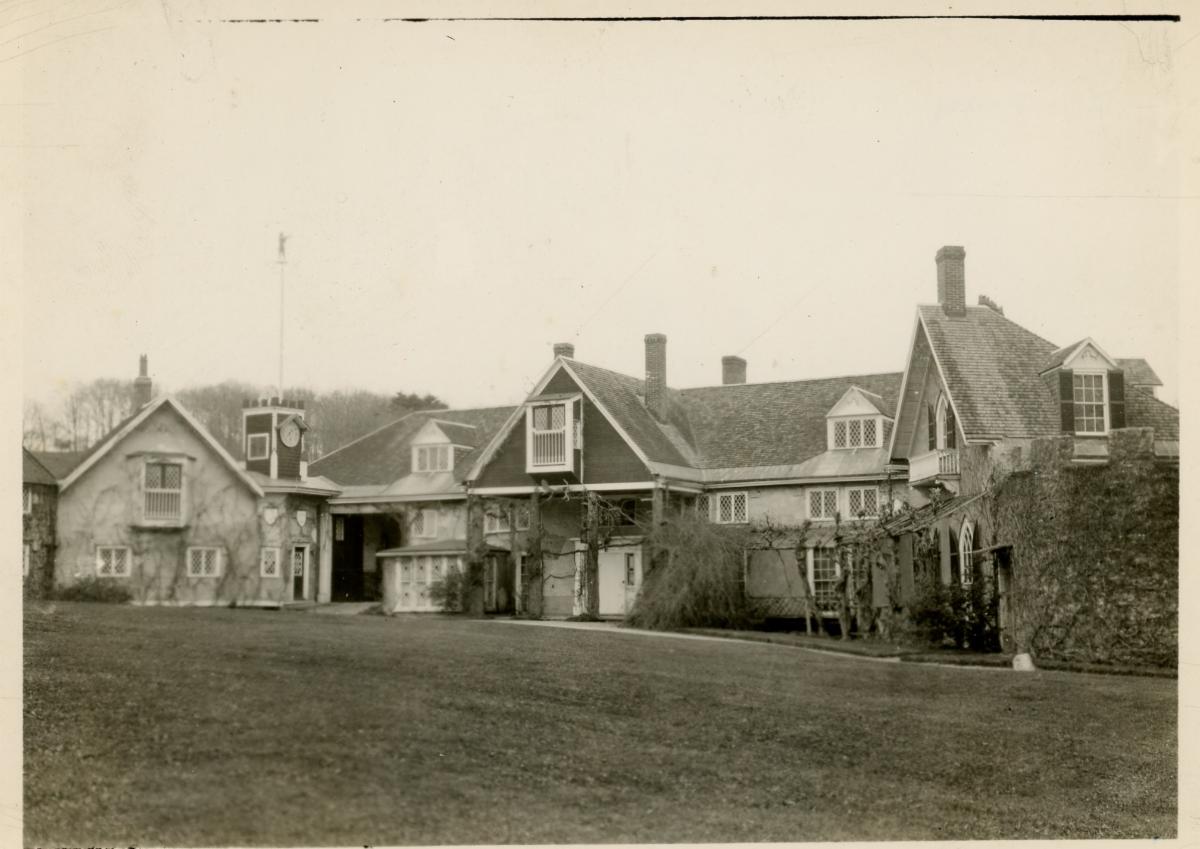
| | One of the aspects of archival work I enjoy most is processing a collection, whether large or small. While it can occasionally be daunting, the process is more frequently an exercise in gratification. The result is always a well-arranged collection, and I usually come away with a new slate of knowledge about someone or something. | | In September, we were fortunate to receive a donated collection of correspondence and ephemera from the estate of Major Benjamin Perley Poore (1820-1887) of West Newbury’s famed Indian Hill Farm. Growing up in West Newbury, Indian Hill provided much intrigue for my friends and me. I think many folks are able to recall the stereotypical haunted house in their hometown. The “haunted house” in question is often an imposing Victorian mansion set atop a hill, located on a less-traveled road, and usually inhabited by the last remaining members of a very grand family. For those of us in West Newbury, Indian Hill mostly fits the bill. | | |
Set atop the hill that bears its name, the house on the property, which dates to the early 19th century, is an eclectic mix of architectural styles. For my friends and I, it stood as a source of fascination. The house was reminiscent of a castle and, when you’re young and have an active imagination, appeared shrouded in mystery.
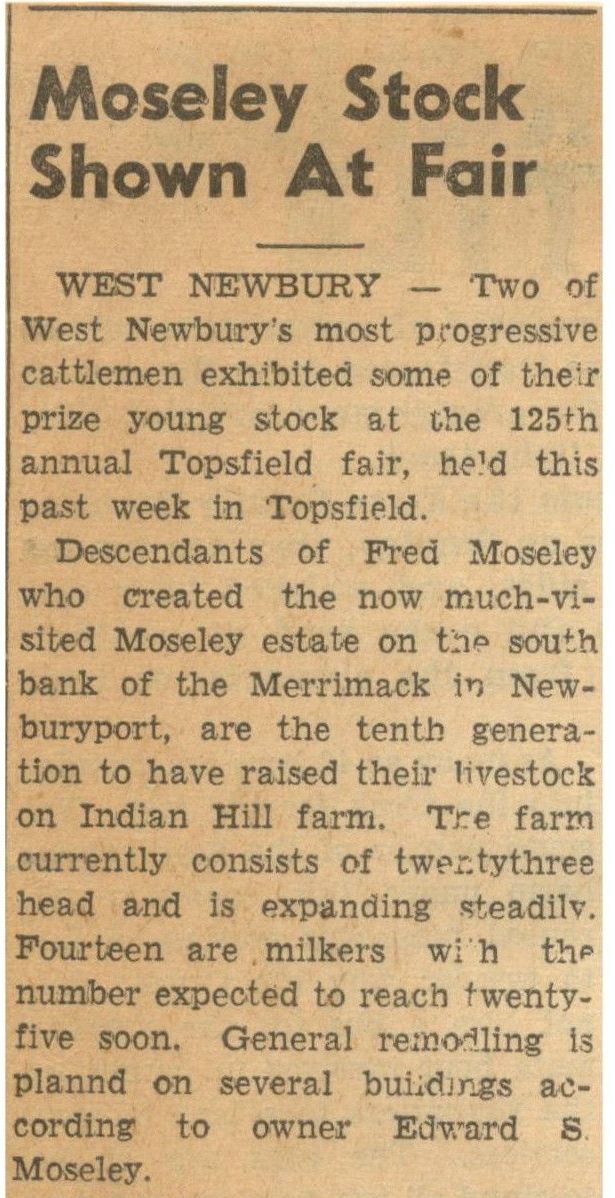
The reality, however, is that Indian Hill is a lovely historic property which has been (mostly) owned by members of the Poore and Moseley families over the course of the last two centuries. The Society for the Preservation of New England Antiquities (now Historic New England) took ownership in the mid-20th century. The property was later purchased back by members of the Moseley family, where it remains today.
| |
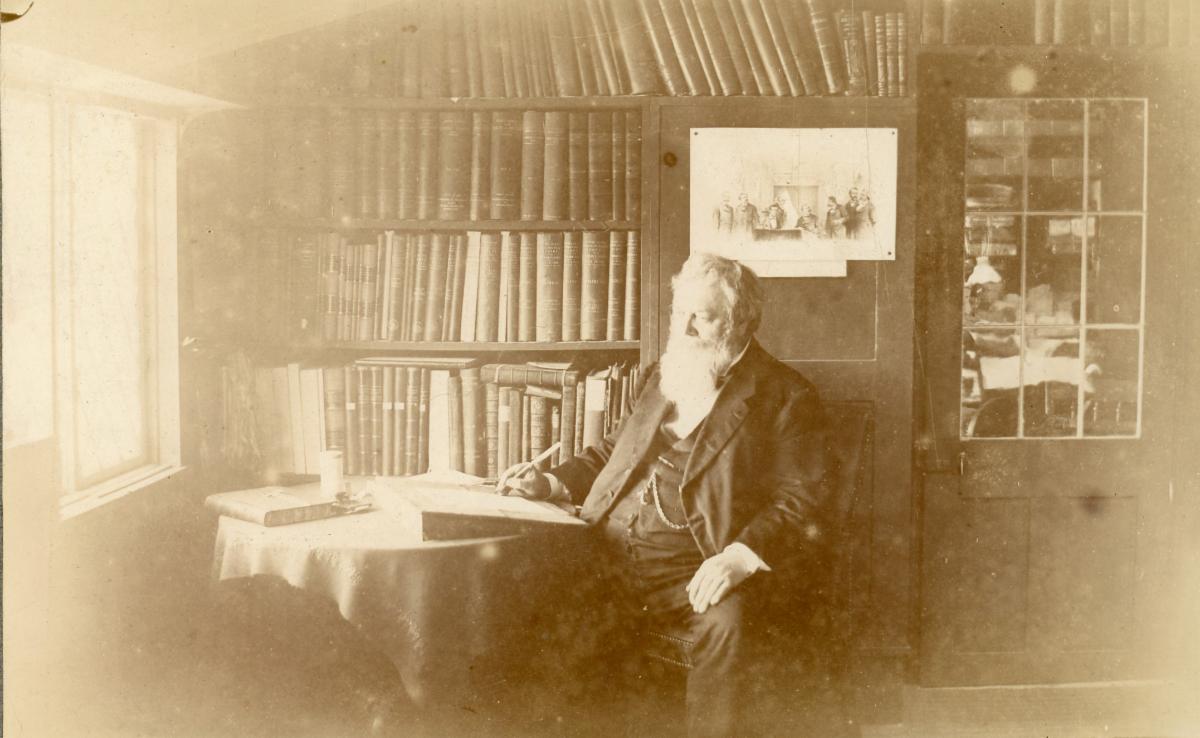
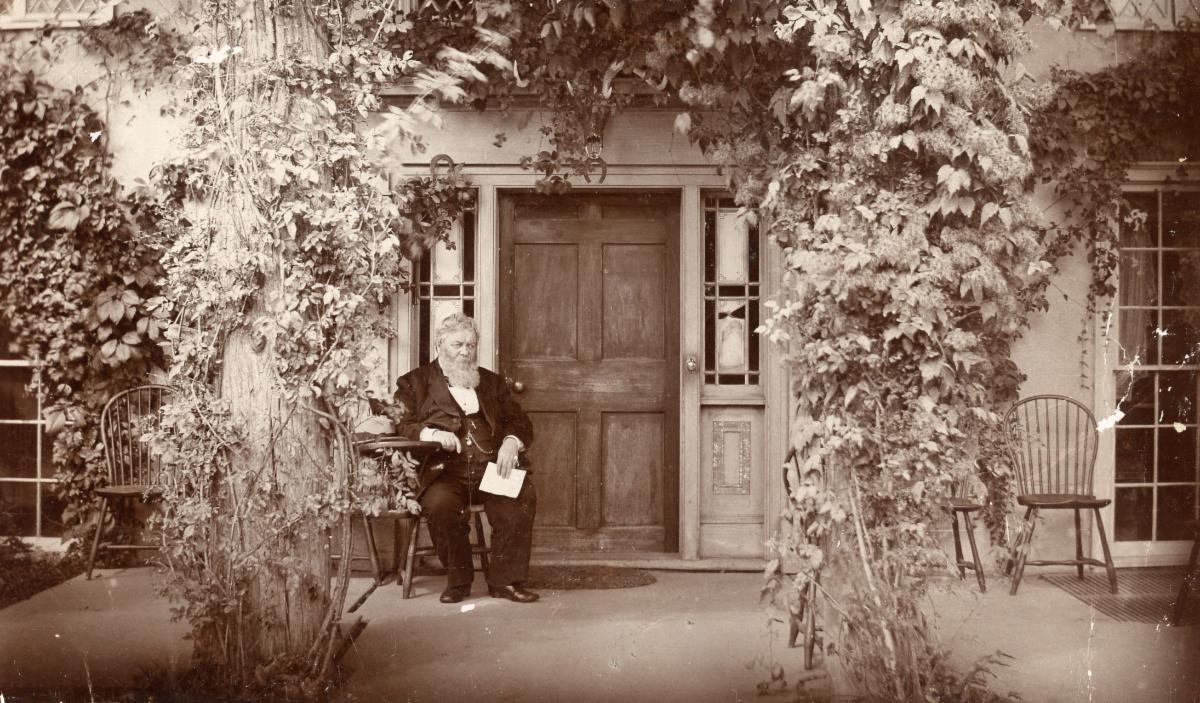
Major Benjamin Perley Poore, who stylized his name as “Major Ben: Perley Poore,” inherited the farm from his grandfather, Dr. Daniel Noyes Poore (1758-1837), and his father, Benjamin Poore (1797- 1853). Inspired by his travels, Major Poore saw to it that the home be fitted with an array of historic accoutrements, salvaged and purchased wherever possible. The home and property are really quite impressive. But I digress – this is not all about Indian Hill, magnificent as it may be. This is about the correspondence we received as part of a generous donation from Indian Hill’s current owner.
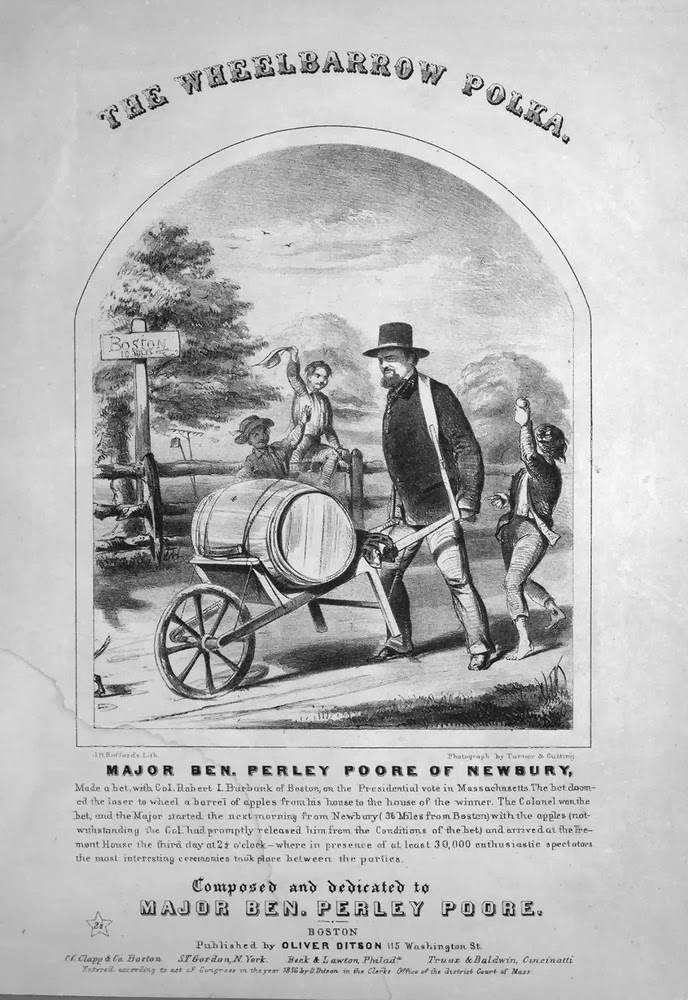
Major Ben: Perley Poore was born in Newburyport and educated at The Governor’s Academy (and was allegedly expelled for unruly behavior). He ended up working as a newspaper editor and later became one of the most established journalists of the 19th century. He lived primarily in Washington, D.C., with Indian Hill serving as his summer residence until he permanently retired there. Major Poore served in the 8th Massachusetts Volunteers during the Civil War, hence the Major designation. By all accounts, Benjamin Perley Poore was a respected journalist in Washington, a friend to the likes of presidents, senators, congressmen, and dignitaries, and a guy who enjoyed a good-humored bet (just search up the Wheelbarrow Polka and you’ll know what I mean).
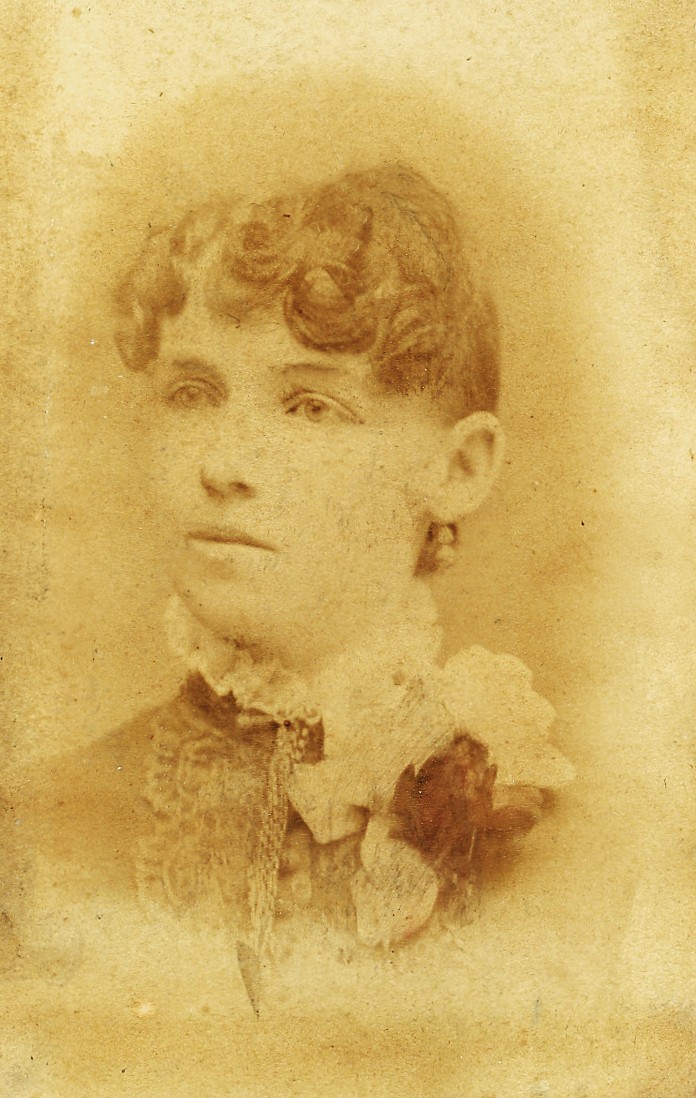
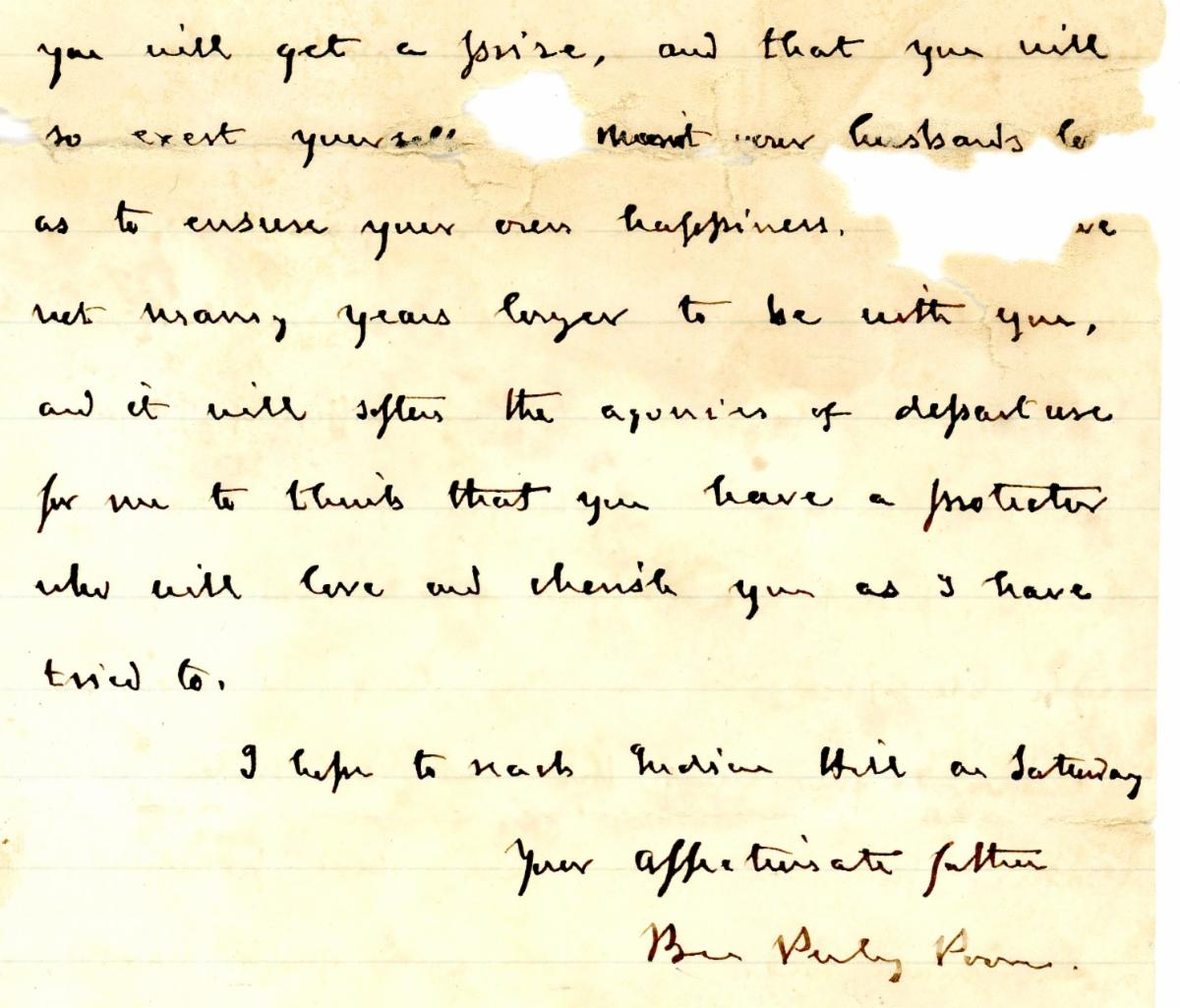
| What I found in the correspondence we received in September, however, shed an entirely new light on Major Ben: Perley Poore, who we know publicly as the political commentator and editor. To me, he was the devoted husband of Virginia Dodge (1826-1894) and loving father of Emily (1850-1879) and Alice (1851-1883). In a letter to his wife, dated June 30, 1870, he recounts the social news around Washington and closes by saying, “There, ma’am, I have given you all the Georgetown gossip I could glean, in exchange for your pleasant letters…Your affectionate husband, Ben.” | His letters to his daughter Alice Poore Moseley are perhaps the most lovely, sweet, and evocative of the entire collection. Major Poore writes to Alice with such deep affection and thoughtfulness. It was an absolute treat to process this collection simply because of how wonderful the correspondence was to read through. On June 28, 1880, on the occasion of Alice Poore’s engagement to Frederick Strong Moseley (1852-1938), Major Poore writes, “…and you will exert yourself to ensure your husband’s love as to ensure your own happiness…many years longer to be with you, and it will soften the agonies of departure for me to think that you have a protector who will love and cherish you as I have tried to.” I wept while reading this. | |
Another letter, written from Indian Hill after a visit from Frederick, Alice, and their child, dated March 11, 1881, illustrates Major Poore’s affection for his only grandchild, Benjamin Perley Poore Moseley: “We all miss the boy so much, and the house seems quite deserted. Tell him ‘Baa baa is coming to see him.’”
Sadly, much of the correspondence is not as sweet as the letters from Benjamin to Alice. In 1883, Alice passed away of kidney failure, leaving her husband and only son behind. A series of condolence letters follow this tragedy, and the collection moves along chronologically, ending in the latter 20th century with Indian Hill Farm being known for its prized herd of cows.
| |
Whenever I finish processing a collection, I usually feel a sense of accomplishment and gratification, and this time was no different. It was special, too, because it’s the first collection I’ve processed in its entirety since I started in my new role as Collections Manager & Archivist. In addition to those happy feelings, I was left feeling a little bit in despair. I’d spent several weeks getting to know the members of the Poore and Moseley families on an intimate level, or as close as one can get through personal letters. I’d picked my favorites in the family – Major Poore, Frederick Moseley’s brother Edward, and Alice, of course.
As soon as I’d put the Hollinger boxes on the shelves in Perkins and sent the finished finding aid to Bethany, I felt as though I’d lost something. I had become so involved with this family, despite us being separated by 142 years. I yearned for more time with the Poores and Moseleys, while at the same time feeling grateful for this feeling of connection with those who are long gone. This is one of the great rewards of working in this space. It is a privilege to work with such interesting materials and to be able to preserve the history of these people in perpetuity. Plus, the Moseley-Poore Family Papers will never be too far away, and I can always pull them from the shelf to visit with old friends again.
A note: the public is welcome to view the Moseley-Poore Family Papers during Perkins Open Hours on Thursdays from 9-11 am and Saturdays from 10am – 2pm, or by appointment. Be sure to ask about our copy of The Wheelbarrow Polka.
| | Something Is Always Cooking... | | |
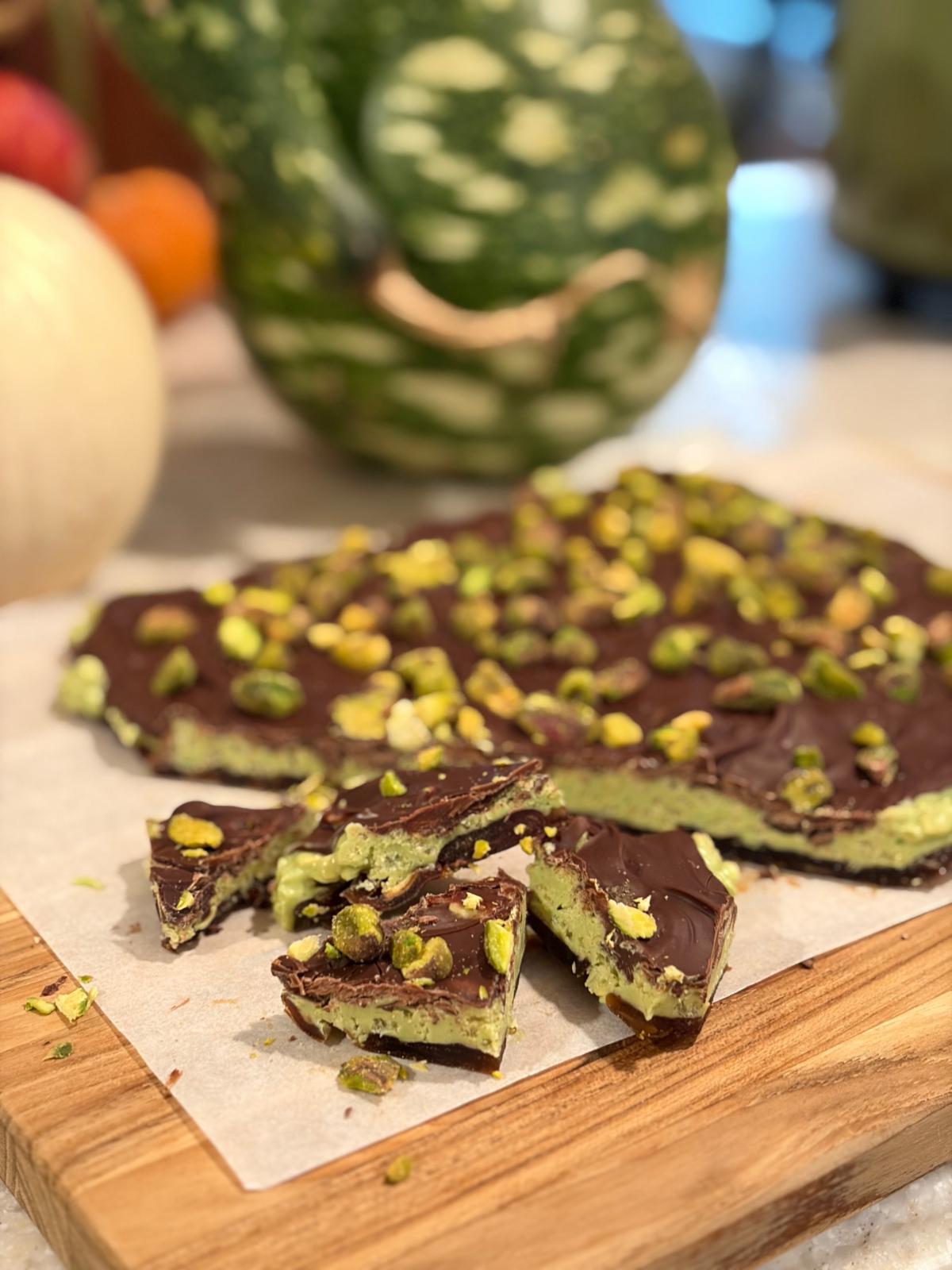
Crispy Pistachio & Chocolate Bark
Editor's Note: Our friend and MOON board member Holly Cashman is one of our favorite bakers. Her bread is legendary in Newburyport, so when asked to share a recipe, we were surprised and delighted when she chose this gorgeous chocolate bark. The staff at the museum were the fortunate taste-testers, and if there were Michelin awards for Newburyport, we would have handed her three stars. You can taste more of Holly's creations at the Holiday Party for Members on December 7! Click here to reserve your spot!
Ingredients
12 large medjool dates, pitted and cut open (or 16-20 regular-sized dates)
1 c. crispy rice cereal
1 jar (7.05 oz.) pistachio cream (or make your own with 1 c. shelled, raw pistachios and around 1 Tbs. of a neutral oil like coconut or avocado)
1 c. chocolate chips (semisweet, dark, milk – use what you like!)
½ c. roasted, salted, shelled pistachios, roughly chopped
Directions
Arrange the opened dates close together on a piece of parchment paper in a rectangular configuration (6” x 8” approximately) and top with a second piece of parchment paper. Using a rolling pin, flatten the dates by pressing down on them firmly then rolling until they form one solid layer. Carefully peel the top sheet of parchment off and transfer bottom parchment with the date layer to a baking sheet.
In a small bowl, combine crispy rice cereal and pistachio cream. Spread evenly over the flattened dates.
Melt chocolate chips either in a double boiler on the stove or in the microwave, checking and stirring periodically. Spread melted chocolate evenly over the pistachio crispy rice layer.
Sprinkle the chopped pistachios over the chocolate layer evenly.
Put the baking sheet in the refrigerator for an hour so everything will harden. Remove from refrigerator, lift onto a cutting board using the parchment, and cut or break into 1- to 2-bite pieces. Enjoy right away or keep in an air-tight container in the refrigerator for up to a week.
Enjoy!
| | |
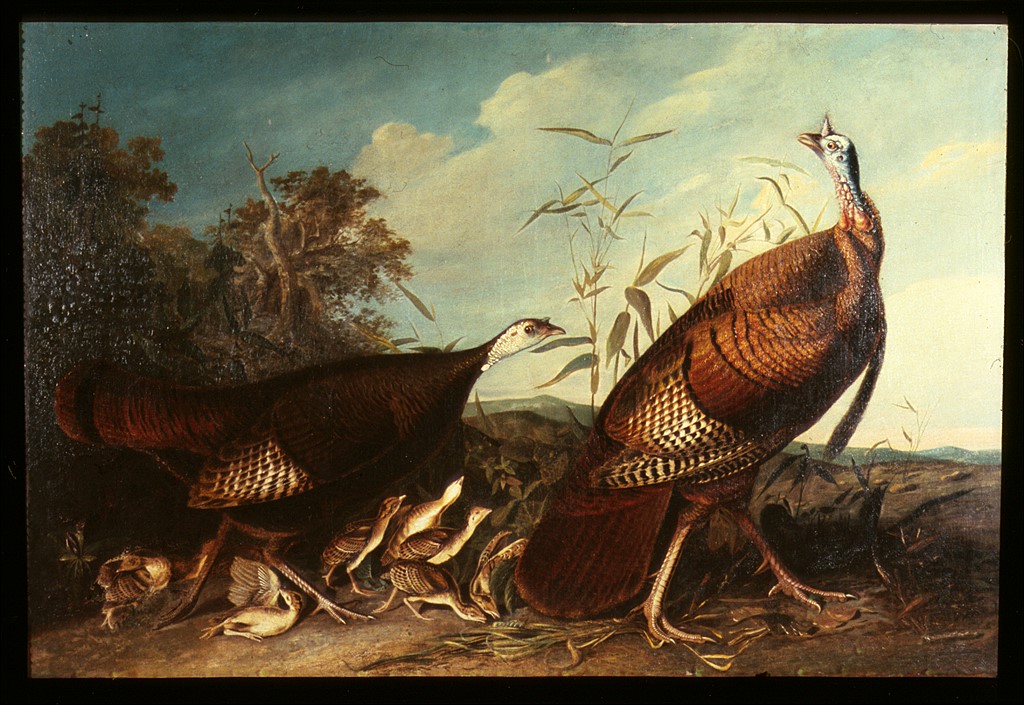
Click the image to do the puzzle
Wild Turkey Cock, Hen and Young, 1826 by John James Audubon
Collection of Ernst Mayr Library, Harvard University
| | |
Museum e-Newsletter made possible through the
generosity of our sponsors:
| | | | | |