e-Newsletter | October 10, 2025 | | |
The Tenacious and Compassionate Margaret Atwood
by Elizabeth Harris and Linda Miller
| | |
At the beginning of the nineteenth century, citizens of Newburyport who fell on hard times relied on a combination of public assistance in the form of incarceration in the poorhouse or jail (if a debtor), or some limited subsidies that paid for some expenses of the truly indigent. One major poorhouse was on the upper part of Federal St. and housed families, but parents were expected to go to work to support their families if they were able. The jail was also used as an almshouse, with debtors allowed out during the day for work. There was, of course, no Social Security or Medicare, and private benevolent institutions were established to provide assistance to the destitute and unfortunate, particularly women and children.
Private societies, such as the Female Charitable Society, were formed to help neighbors and were often sponsored by, or affiliated with, a religious organization. The Female Charitable Society has, as its titular head, the Rev. Daniel Dana of the Old South Presbyterian Church, but the entire Board of Directors was made up of women. Margaret Atwood, one of the founders of the Female Charitable Society in 1803, became its first Treasurer and held that position for twenty-seven years. The position was required to be held by "an unmarried woman" as the laws of that time did not favor women handling money or deciding financial affairs and husbands could take over the assets of wives. In July, 1830, just two years before her death at age 78, she asked to be relieved of her role, asking the "Directress and members of the Newburyport Female Charitable Society...to discharge her from her office as treasurer (since) the responsibilities are such that she cannot retain it longer." She thanked the organization for "all of their past kindness", and promised that she would be "as much interested in the management and welfare of the Society as ever." She certainly followed-through on that promise.
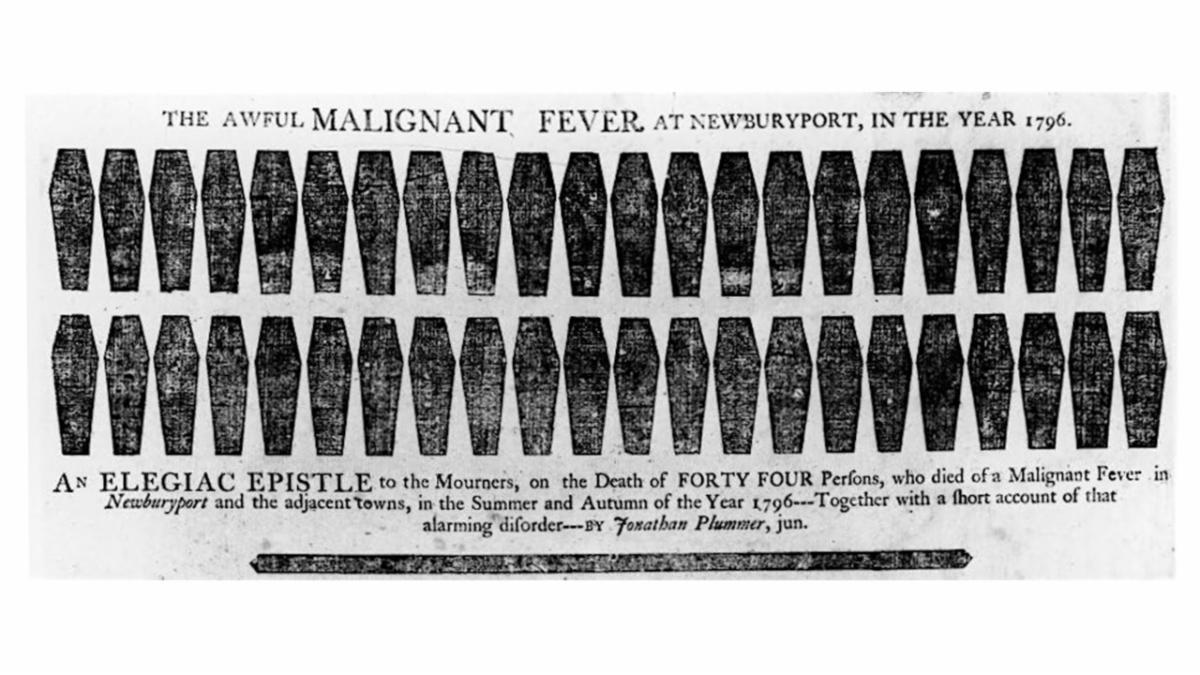
Margaret Ford was born in Newbury in 1752 and married Zachariah Atwood , a ship owner, captain and merchant, in 1793. They had two sons and owned four ships, houses on High St. and a brick shop and wooden wharf at the bottom of Fair St. where it meets Water St. The poet laureate of the day, Jonathan Plummer, called her "the lovely Mrs. Atwood", although there are no likenesses of her known. When Zack died young in 1796 of a scourge of yellow fever that swept through the town, Margaret defied convention and took over the management of their businesses and assets and ran them directly and aggressively, filing lawsuits in her own name and buying and selling property. As her sons matured, they assisted with the family business, but tragically both died before their mother - Henry in 1821 and Zachariah Jr. in 1831.
| |
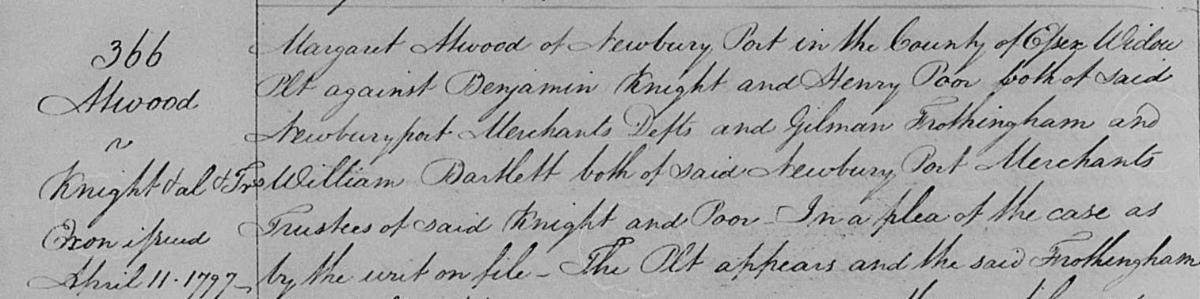
In this 1797 court record, "Margaret Atwood of Newbury Port in the County of Essex, Widow" sued leather merchants who owed her money.
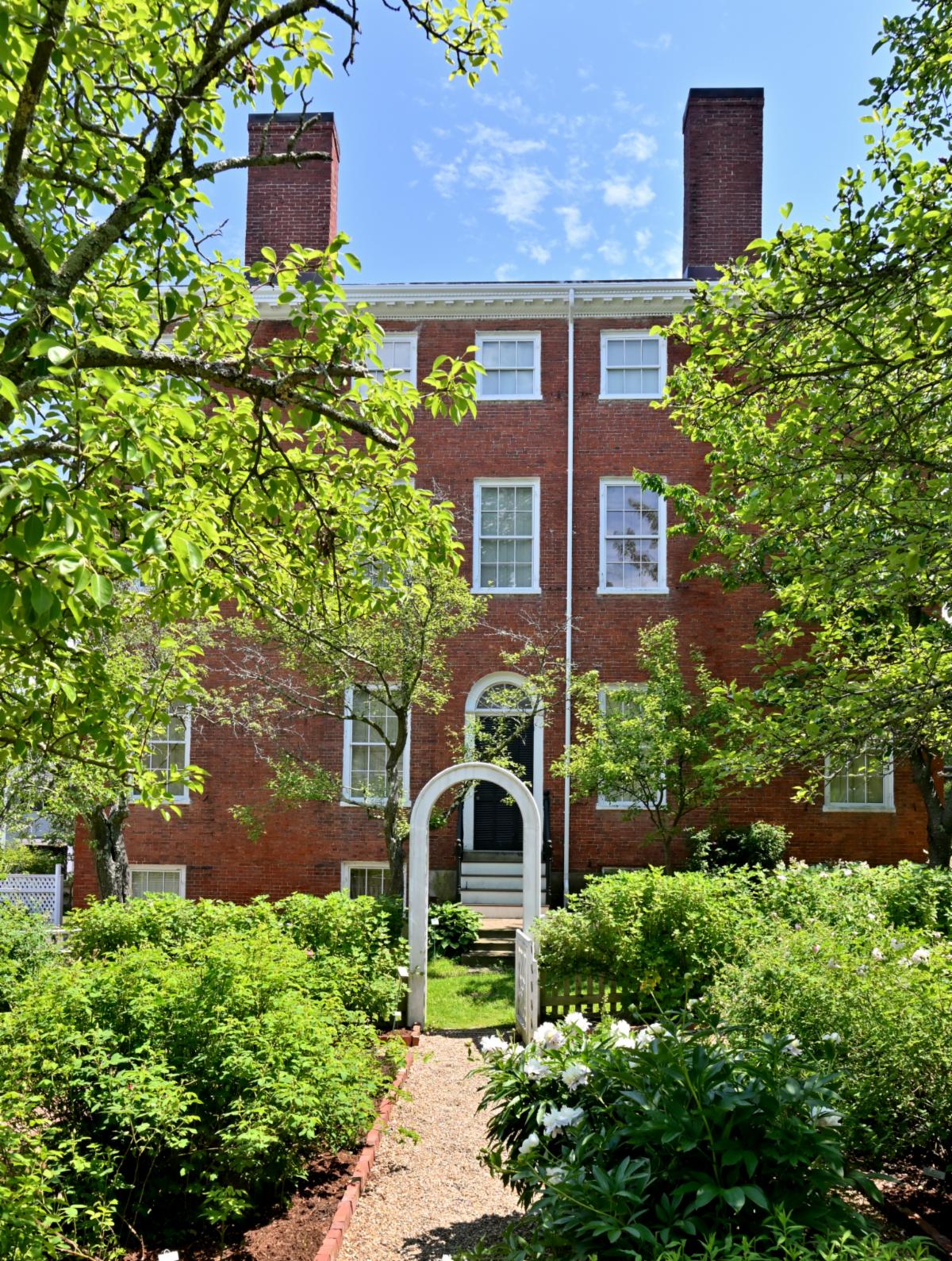
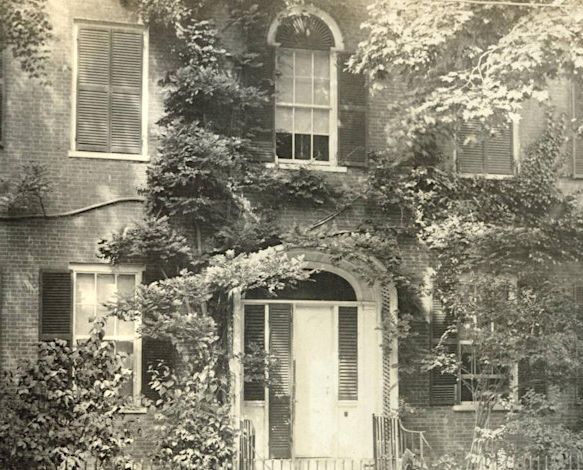
The Jefferson Embargo was lifted in 1809 and trade prospered. Peggy, as she was known by her friends, bought a new brick house at the corner of Ann (now Atwood) St. and Lime St., built by Robert Hale in 1810. When the "Great Fire" hit Newburyport in 1811 she lost her wharf and shop but the ships were unharmed. She built back her properties and rebuilt her finances.
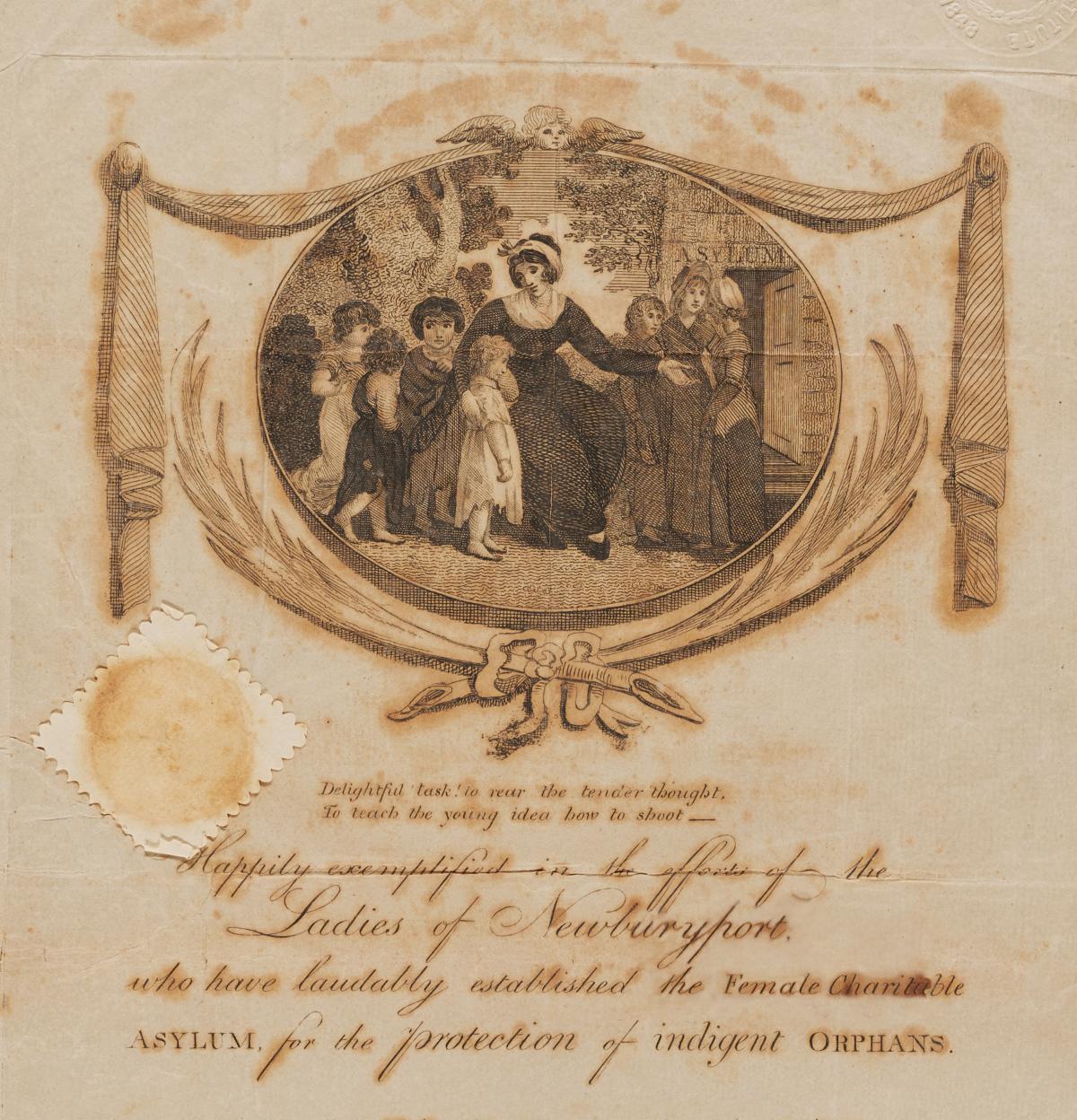
The Female Charitable Society took in young, often orphan, girls and taught them to be self-sufficient and tried to place them in households as servants or helpers. The local public schools of the time were for males only and there were private schools available for those who could pay. The indigent and poverty-stricken girls of the town could not afford to attend them and had no other educational opportunities. Margaret Atwood lived and worked in the South end where many of the recipients of the Female Charitable Society also lived. Some of the girls may have been taught in her house as there were many chairs and books and a lot of space for them to hold classes. The Female Charitable Society also helped women who had lost their husbands because of accidents, disease or mayhem, to provide food and housing for themselves and their children, trying to help keep families together and stave off the creation of more orphans.
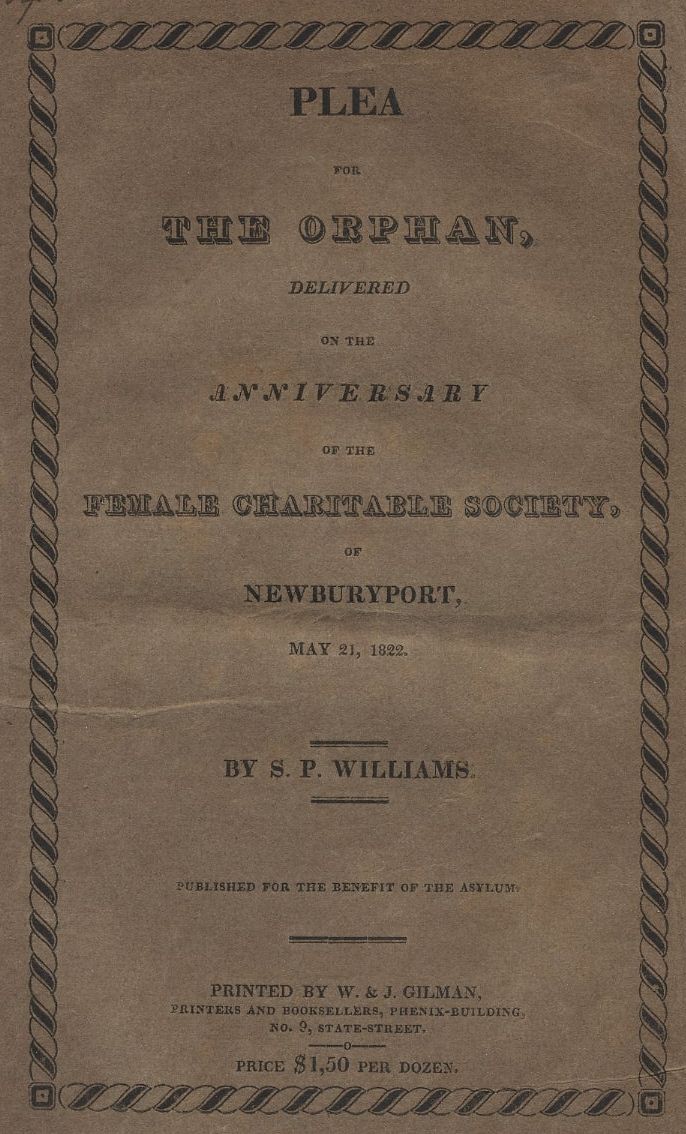
The Board of Directors received requests from many sources, relying on the churches and neighbors to advocate for the poor in their neighborhoods. The Board, along with advice from others, decided what to give and recorded everything in their meeting minutes. This was a community of women who volunteered to help others, pledged a certain amount of money each year to the Society, and kept it running. A stirring speaker, whose words were published and sold to benefit the organization, was a feature of their annual meeting, as this pamphlet from a private collection, attests.
| | |
Margaret Atwood died in 1832 but the Female Charitable Society continued until the late 1840's. In 1850, the General Charitable Society was formed by a group of women from the same neighborhood, and the mission was about the same but without the gender distinction.
The General Charitable Society has been helping Newburyport neighbors for 175 years with short-term relief so applicants won't suffer more long-term bad consequences. It is still going strong and may or may not be a direct outcome of the Female Charitable Society. Its mission is to "lend a helping hand to those who are struggling through poverty and discouragements". Today, they are "quietly supporting Newburyport residents".
When Margaret Atwood died, both her sons had predeceased her. She left funds for the support of individual people that she had helped in the past, and also funded annual payments to the Newburyport Infant School, the Fourth Religious Society in Newburyport, and missionary work. She also left part of her fortune as a Trust to the City of Newburyport for "support of the poor and religion". This exists today as the Margaret Atwood Trust with about $18,000 in its coffers, according to City records. Trustees are members of the Trust committee of the City and they give out up to 3% of the balance per year in honor of Margaret Atwood's legacy.
| |
| |
This weekend
Saturday and Sunday
11:00 a.m. to 5:00 p.m.
Museum of Old Newbury Guided Tours
Take a tour through this 1808 Federal mansion, containing art and artifacts from the past four centuries. Hear the story of Old Newbury and the growth of Newburyport.
Tours on the hour, last tour at 4 p.m.
Tickets here
| | | |
| |
Sunday, October 12, 2025
10:00 a.m.
Architectural Walking Tours: Newburyport’s Fashionable Old Houses
Join us for a walking tour of Newburyport’s architectural styles from the 18th and 19th centuries as found along High Street and the neighborhood near the Museum of Old Newbury.
Tickets here
| | | |
| |
Starts October 18 to May, 2026
11:00 a.m. to 4:00 p.m.
Seasonal Saturday Tours!
Take a tour through this 1808 Federal mansion, containing art and artifacts from the past four centuries. Hear the story of Old Newbury and the growth of Newburyport.
New starting the fall of 2025, the Museum will be open most Saturdays (weather permitting). Tours on the hour, last tour at 3 p.m.
Tickets here
| | | |
| |
Saturday, November 1, 2025
11:00 a.m. , 1:00 p.m. & 3:00 p.m.
Memento Mori Tour: Oddities from Old Newbury on All Hallows Day
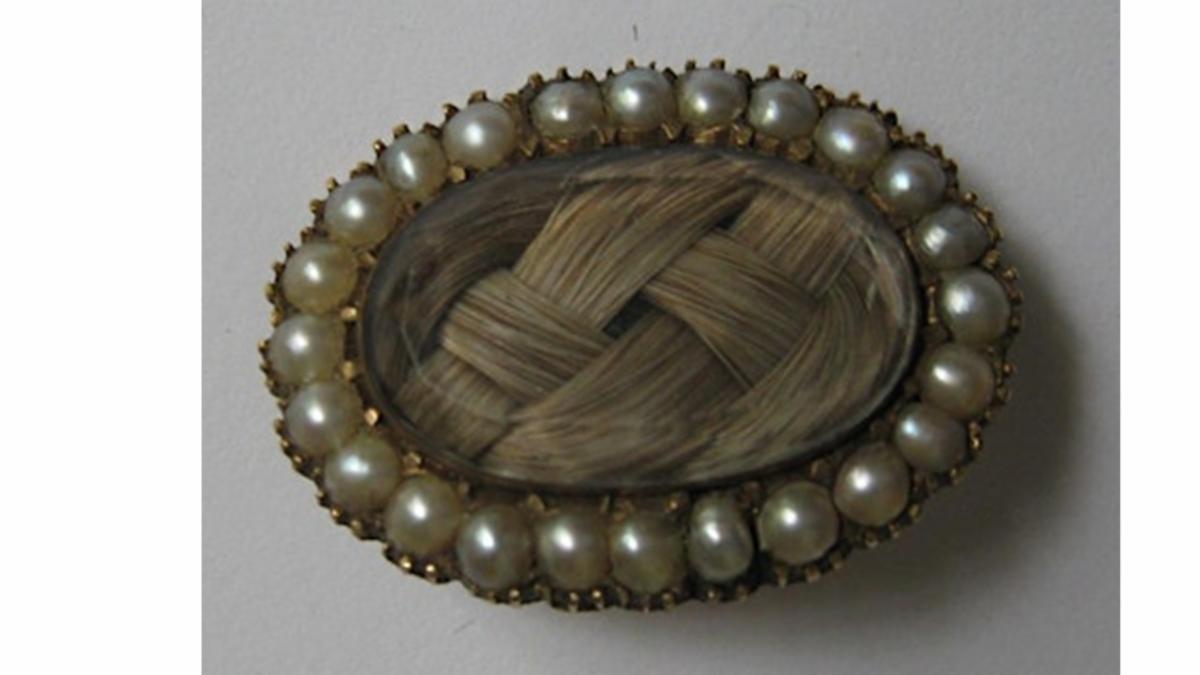
On All Hallows Day—a time set aside for remembering the dead—the Museum of Old Newbury invites you to a rare, behind-the-scenes experience. For this one-day-only event, the museum will offer three special guided tours of the Cushing House and Perkins Archive and Research Center.
Tickets Here
| | | |
| |
Saturday, November 1, 2025
7 p.m.
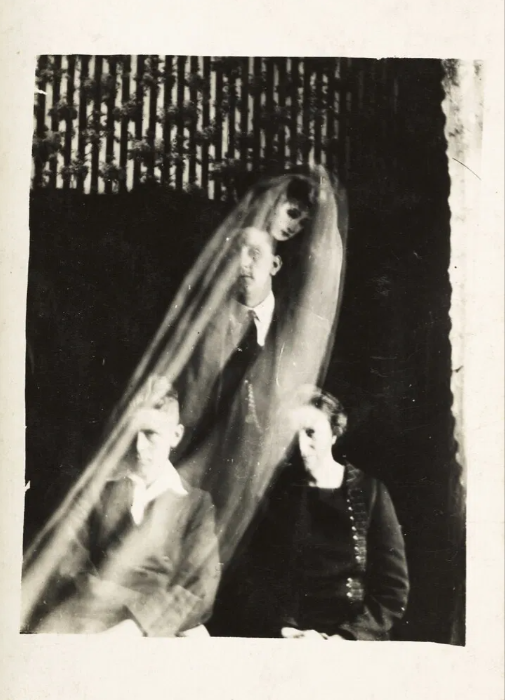
Secure the Shadow: Spirit & Post-mortem Photography in the 19th Century
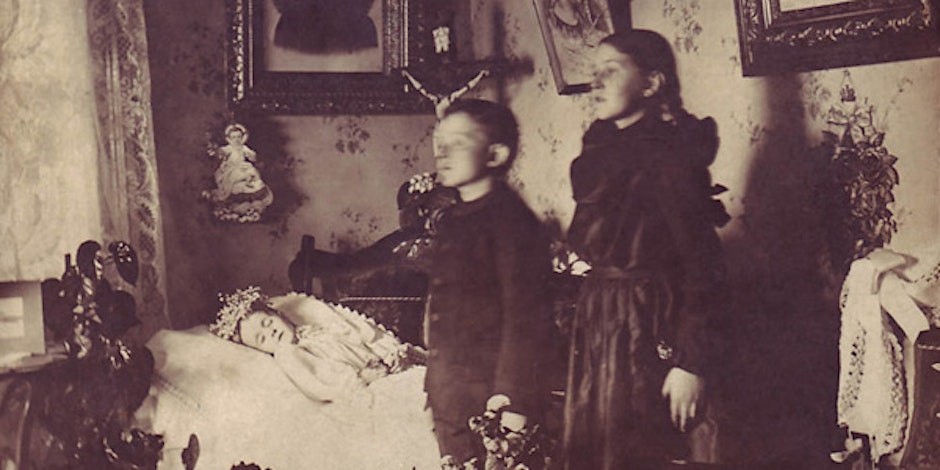
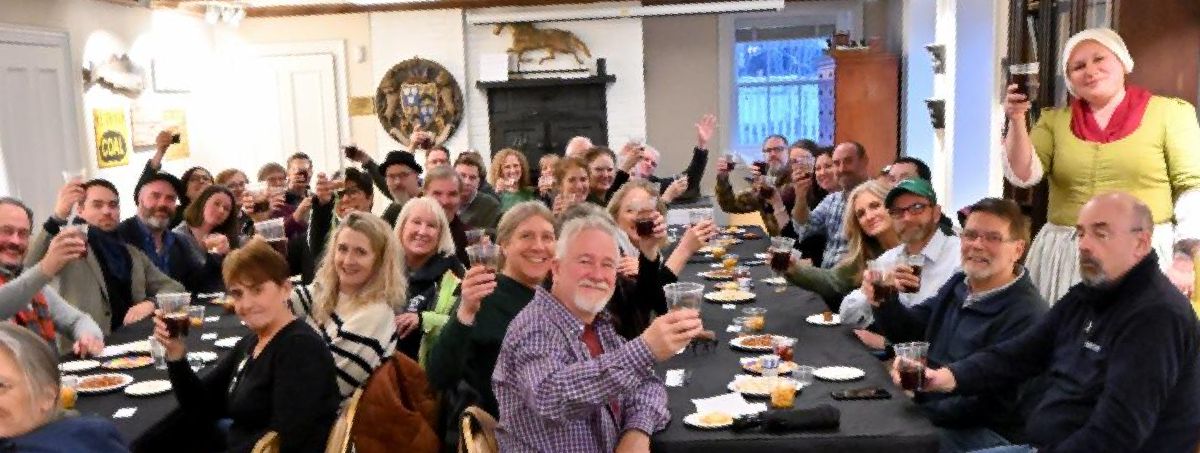
This All Hallows Day, explore post-mortem & spirit photography in the 19th century and beyond —plus dark chocolate, stout, red wine & cider donut tasting.
Tickets Here
| | | |
| |
Saturday, December 6, 2025
10:00 a.m. to 4:00 p.m.
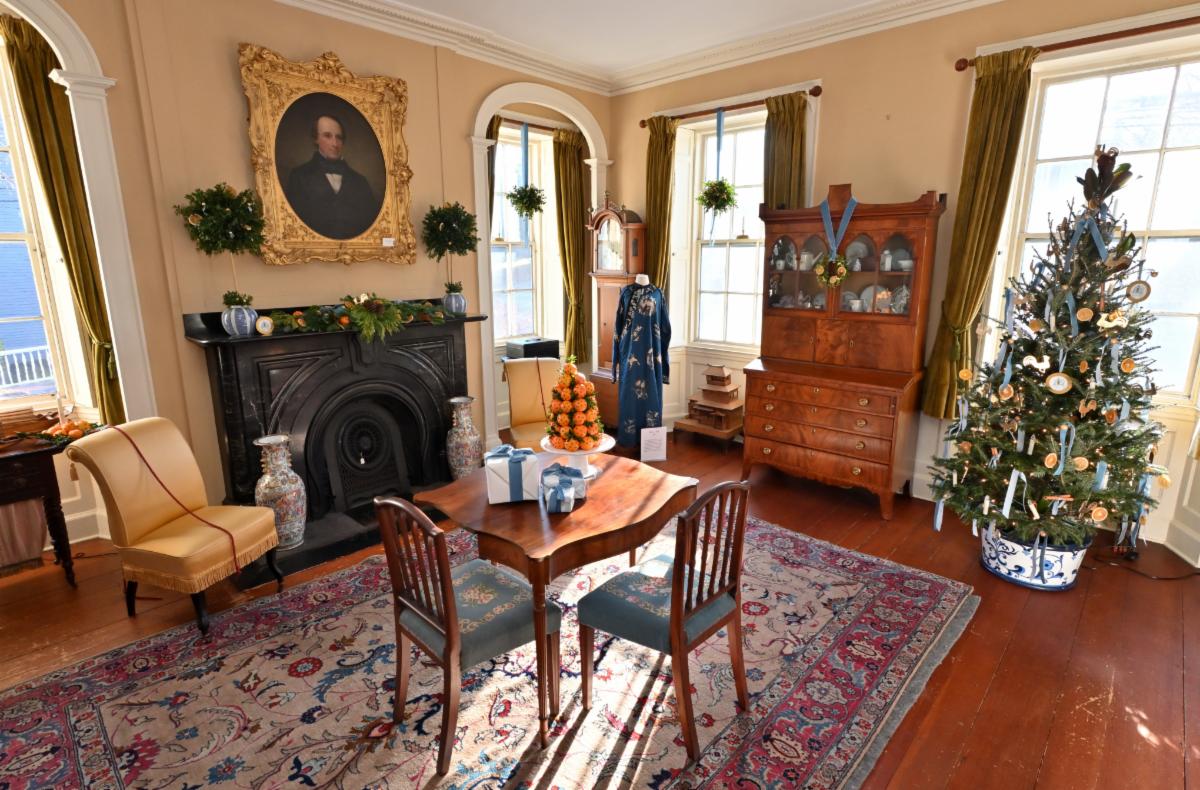
Holidays at the Cushing House
An annual tradition! Come enjoy the 1808 Cushing House decorated for the season by local garden clubs and volunteers.
Tickets Here
| | | |
| |
Sunday, December 7, 2025
10:00 a.m. to 4:00 p.m.
Holidays at the Cushing House
An annual tradition! Come enjoy the 1808 Cushing House decorated for the season by local garden clubs and volunteers.
Tickets Here
| | | |
Cheers to our Members!
It's easier than ever to keep your membership current!
| |
✨ Join or Renew Your Membership Today!
Your membership to the Museum of Old Newbury not only helps preserve Newburyport’s only National Historic Landmark, but also connects you to the stories and people who shaped our region over three centuries.
Whether you are interested in fashion, photography, firefighting, or family history (or just about anything else), our collections and programs explore every facet of local life—introducing you to your ancestors, your community’s evolution, and the remarkable spirit of Old Newbury.
💎 Membership Benefits
· Free admission to the Museum and the Perkins Art & Research Center year-round
· Discounts on programs, events, and Museum Shop items
· Invitations to special members-only receptions and previews
· $100+ members join the North American Reciprocal Museum (NARM) Association, with free entry to 1,000+ museums across the U.S., Canada, and beyond!
➤ Learn more about NARM Here
🌿 New in 2025: Recurring Membership
Convenient. Cost-effective. Eco-friendly.
This new annual renewal option ensures your benefits never lapse—and it helps the museum save time and resources.
· Your card renews automatically once a year
· You’ll receive a reminder before renewal
· You can easily update your information anytime
If you’re renewing, we hope you’ll switch to this new, sustainable way to support the Museum of Old Newbury.
🔗 Join or Renew Today
| | |
Mattie Allen, Fleeting Motorwoman of the Newburyport Street Railway
By Ashley Adams Serveiss, Archivist
| | |
Public transit as we know it today is a far cry from its 19th century predecessor. In 1864, the Newburyport area’s first iteration of the street railway was formed – the Newburyport and Amesbury Horse Railroad was created with the intention of establishing frequent “rapid” local public transportation between the two cities (steam railroad service of a half-dozen trips a day via Salisbury had existed since 1848), connecting them via the Chain Bridge and former Essex-Merrimack Drawbridge.
The Newburyport and Amesbury Horse Railroad was electrified in 1891, becoming the Citizens Electric Railway in 1899 and was absorbed into the
Massachusetts Northeastern Street Railway in 1913 – these changes were driven by financial underperformance. By 1873, the street tracks and infrastructure had been constructed, horses purchased, and our forebears were able to hasten themselves like never before.
The street railway was not glamorous by our current standards any means.
However, especially after electrification, it provided a service that was faster, cleaner, and more comfortable than the horse-powered or smoke-shrouded alternatives.
Articles in local newspapers highlighted sensational accidents, and derailments were all too frequent. Streetcar operators often found the tracks unreliable. Inclement weather, too, made it difficult for workers to manage the streetcars, even after the system modernized by transitioning from horse to electric power in the 1890s.
An article in the Newburyport Daily News, dated November 14, 1906, tells of Winn Felch, a motorman who ended up with a broken collarbone and fractured leg when his trolley car left the rails as the loaded gravel car he was pushing lone trolley car separated from the other cars and derailed. Similarly, in December of 1921, a streetcar went off the tracks on Main Street in West Newbury, leaving thirteen of its fifty passengers injured.
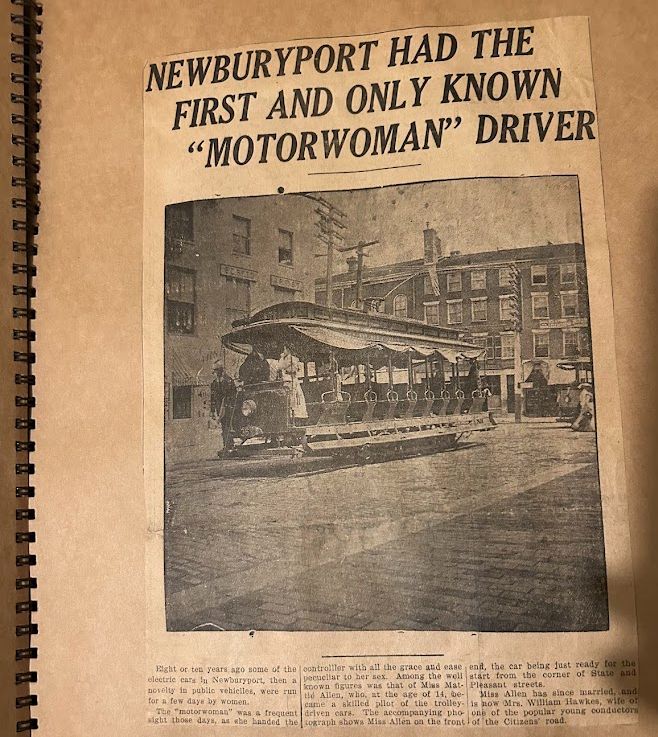
In these articles, and especially in O.R. Cummings’ series of publications on the street railways of Massachusetts, I only found talk of motormen as operators of these hazardous yet important transit systems. It was by complete happenstance that I came across an article about a motorwoman. A few weeks ago I was searching through a set of scrapbooks in the MOON’s collection (for a completely unrelated photograph) when I came across a clipping about Mattie Allen, dubbed Newburyport’s, “First and Only Known ‘Motorwoman’ Driver.” My interest was piqued!
In all transparency, very little is known about Mattie Allen’s motorwoman career (though we encourage those who might know more to reach out!). She was born in Newburyport on September 5, 1884, to George Allen and Emma (Barrett) Allen. Her father, a native of Yarmouth, Nova Scotia, is listed on Mattie’s birth record as a coal heaver. Mattie is mentioned a dozen or so times in the local papers, mostly as a congregant and volunteer at Belleville Church and as a student at the former Currier School. The streetcar article, however, was thoughtfully pasted into a scrapbook, and describes Mattie Allen as the “graceful” 14 year old operator of the Newburyport Branch of the Boston and Northern Street Railway (In the picture she is on a Citizens Electric car, same railway as her future husband).
A photograph in the article shows a young Miss Allen at the front of a streetcar at the corner of State and Pleasant Streets in Newburyport – the image makes for a nice tribute.
Mattie left her streetcar stint prior to 1906 when she began working at Towle on Merrimac Street in Newburyport. She married William Hawkes on Christmas Eve in 1907.
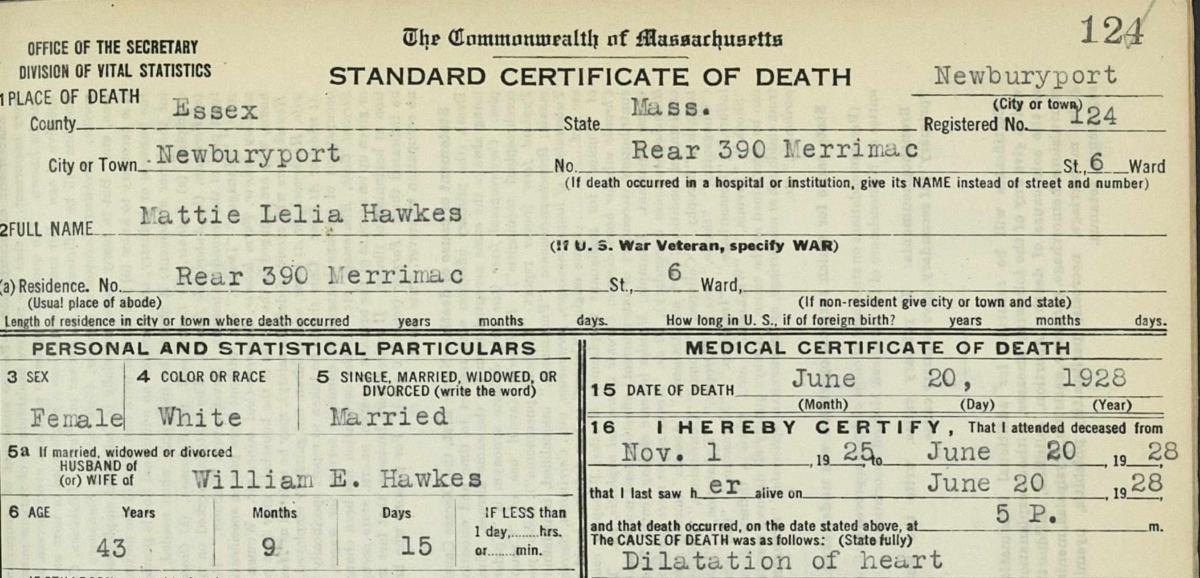
William Hawkes was a noted conductor of the Citizens Electric Street Railway, which connected Newburyport with Amesbury and Hampton. After some time in Salisbury, where their eldest son was born, they returned to Newburyport. William worked as a shoe cutter while Mattie ran the family’s boarding house at 4 Orange Street in Newburyport. She and William had two sons, Fred and Harold, who both appear to have spent much of their lives in Newburyport. In 1927, the year before Mattie's death, the family has moved back to her childhood home at 390R Merrimac Street.
| | |
On June 20, 1928, Mattie Allen Hawkes died at home of cardiomyopathy, age 43.
As I wrapped up my research on Mattie (Allen) Hawkes, I felt somewhat
despondent. I’d found a brief yet fascinating hint of a woman who, at age 14, was driving streetcards alongside Newburyport’s most seasoned motormen, and yet little else could be found about the rest of her life. A comfort, if there is to be one, is that this brief article highlighting a very young woman's role in a male-dominated field has endured through the last century.
This is one of the great things about the collection at the MOON – we are the stewards of these little ephemeral intricacies which are tucked away amongst the most impressive art, objects, and manuscripts we so frequently emphasize. I am encouraged and fascinated by little finds like the one I’ve written about here.
Note: Board member and transportation expert Ed Ramsdell wonders if Mattie Allen was an employee of the Citizen’s Electric, or drove the cars along with the man she would later marry.
Ramsdell points out that there were a few Motorwomen working in 1898, however, just not in Newburyport. Since we cannot locate the source of the image, the mystery continues.
| | Something Is Always Cooking... | | |
Fresh Corn Chowder
Every year at about this time, I crave this corn chowder. This year, the mild weather has meant a long corn season, and the fresh corn that I get from Long Hill Orchard and Brown Spring Farm, my West Newbury favorites, is still sweet and tender.
The key to this dish is, rather unsurprisingly, loads of corn. I use 8-10 cobs and use cobs in the broth to take advantage of every last bit of flavor. - Bethany Groff Dorau
Ingredients
2 tablespoons butter
1 medium onion, coarsely chopped
1 red bell pepper, chopped (optional)
2 ribs celery, chopped
1 pound (about 3) boiling potatoes, peeled and cut into 1/2-inch dice
8 ears of sweet corn
1 bay leaf
1 (32-ounce) can vegetable or chicken stock
2 teaspoons kosher salt
1/4 teaspoon curry
1 cup milk
1 cup half-and-half
Freshly ground black pepper
Directions
Drop corn into boiling water. Turn off heat. Let sit for 5 minutes. Remove corn from water, strip kernels, and reserve 4 cobs for the broth. In a large saucepan, melt butter over moderately low heat. Add onion, bell pepper, and celery. Cook, stirring occasionally, about 10 minutes.
Stir in potatoes, 2 cups corn, bay leaf, broth, and salt. Bring to a boil. Add corn cobs. Reduce heat and simmer, stirring occasionally, for 15 minutes. In a blender or food processor, puree remaining 2 cups corn with milk and half and half.
Remove cobs, allowing liquid to drain back into the pot. Stir puree into soup along with black pepper. Simmer until soup thickens slightly, 5 to 10 minutes. Remove bay leaf. Serve with oyster crackers, crusty bread, or if you're feeling funky, jalapeno Goldfish crackers.
| | |
Click the image to do the puzzle
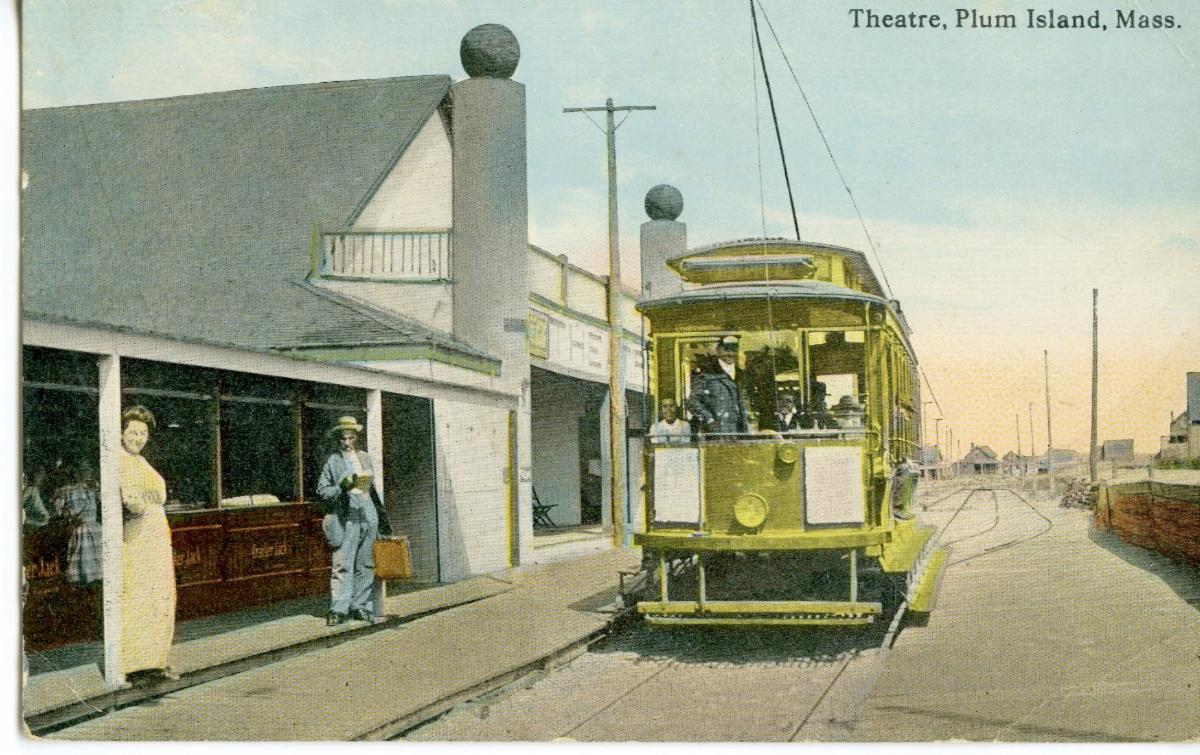
This postcard of a streetcar in front of the Plum Island Theater is part of our collection.
| | |
Museum e-Newsletter made possible through the
generosity of our sponsors:
| | | | | |