e-Newsletter | October 12, 2024 | |
|
The Misfortunes of Samuel Gerrish, Cowardly Colonel of Bunker Hill
by Bethany Groff Dorau and Alexander Cain
| |
|
It all seemed so promising at the start...
Samuel Gerrish was born and raised in Newbury, and was from a large, well-connected family. He had done good service to the town and his country as Colonel of the 38th Massachusetts Regiment during the French and Indian War.
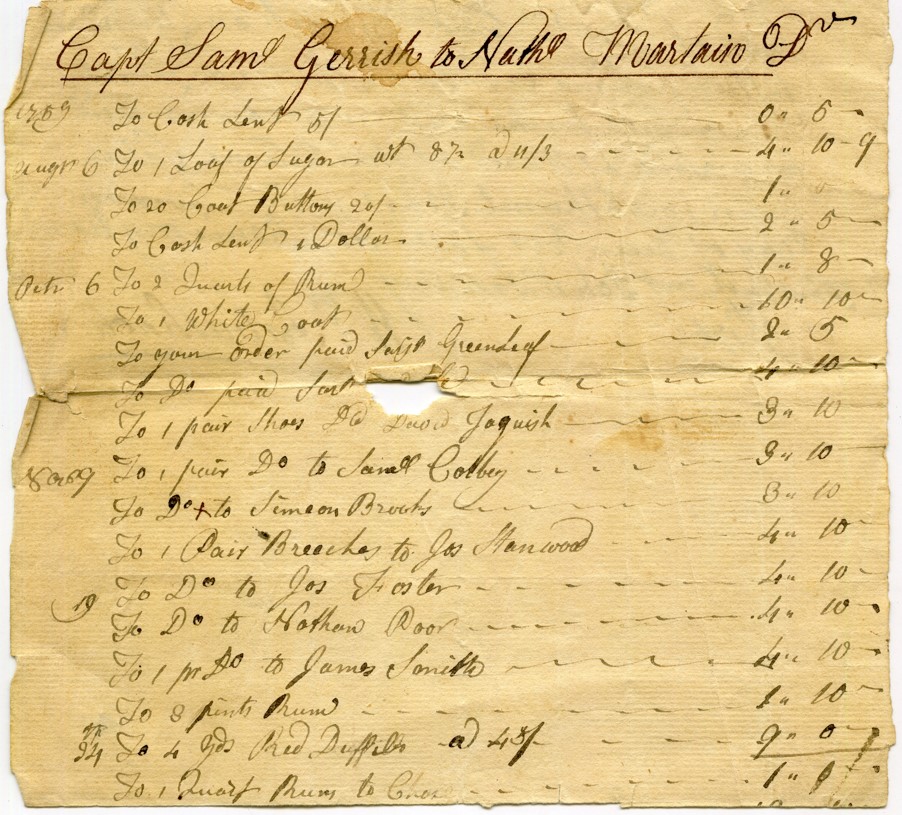
In the archives of the Museum of Old Newbury is an 1759/1760 receipt for supplies for Gerrish and his men, then stationed at Fort Frederick on the Saint John River in present-day New Brunswick. He was in his early thirties during this campaign, and had risen quickly through the colonial ranks, matching the rank of his first cousin and neighbor, Moses Little.
Fifteen years later, Gerrish, now a rotund 47-year-old, was the first infantry officer to receive a commission from the Massachusetts Provincial Congress. In the days after the upheaval of Lexington and Concord, the provincial troops surrounding Boston had begun to go back to their homes and farms - it was spring plowing and planting time. Fearing the mass exit of their men, and the loss of the hard-won advantage gained at Lexington and Concord, on April 23, 1775, the legislative body resolved to raise a “Massachusetts Grand Army of 13,600 men (with fixed enlistment terms), and appoint a Committee of Supplies to collect and distribute the necessary commodities."
Colonel Gerrish was commissioned to lead a regiment of the new Massachusetts Grand Army on May 20, 1775, and almost immediately, trouble began...
Read the title story following event announcements!
This is the first of a series of articles about the early days of the American Revolution, and is supported by the MA250 grant from the Massachusetts Office of Travel and Tourism.
| |
|
Last weekend of Museum of Old Newbury Guided Tours!
Thursday - Sunday, 11:00 a.m. - 4:00 p.m. on the hour.
Last regular open day is Sunday, October 13, 2024.
| |
Twilight Amongst the Tombstones: Night Walk in Highland Cemetery
Saturday October 19, 2024 6:30 p.m. - 8:00 p.m.
| |
|
Conference on Newburyport and the China Trade, 1844-2024
Monday, October 28, 2024 8:30 a.m.- 3:30 p.m.
| |
|
The Misfortunes of Samuel Gerrish, Cowardly Colonel of Bunker Hill, Part One
by Bethany Groff Dorau and Alexander Cain
| |
|
It all seemed so promising at the start...
Samuel Gerrish was born and raised in Newbury, and was from a large, distinguished family. His great-grandfather, Bristol-born William Gerrish, was elected Newbury's first militia captain in 1651, and subsequent generations also served as military officers. He had done good service to the town and his country as Colonel of the 38th Massachusetts Regiment during the French and Indian War.
In the archives of the Museum of Old Newbury is an 1759/1760 receipt for supplies for Gerrish and his men, then stationed at Fort Frederick on the Saint John River in present-day New Brunswick. He was in his early thirties during this campaign, and had risen quickly through the colonial ranks, matching the rank of his first cousin and neighbor, Moses Little.
Fifteen years later, Gerrish, now a rotund 47-year-old, was the first infantry officer to receive a commission from the Massachusetts Provincial Congress. In the days after the upheaval of Lexington and Concord, the provincial troops surrounding Boston had begun to go back to their homes and farms - it was spring plowing and planting time. Fearing the mass exit of their men, and the loss of the hard-won advantage gained at Lexington and Concord, on April 23, 1775, the legislative body resolved to raise a “Massachusetts Grand Army of 13,600 men (with fixed enlistment terms), and appoint a Committee of Supplies to collect and distribute the necessary commodities."
Colonel Gerrish was commissioned to lead a regiment of the new Massachusetts Grand Army on May 20, 1775, and almost immediately, trouble began.
| |
|
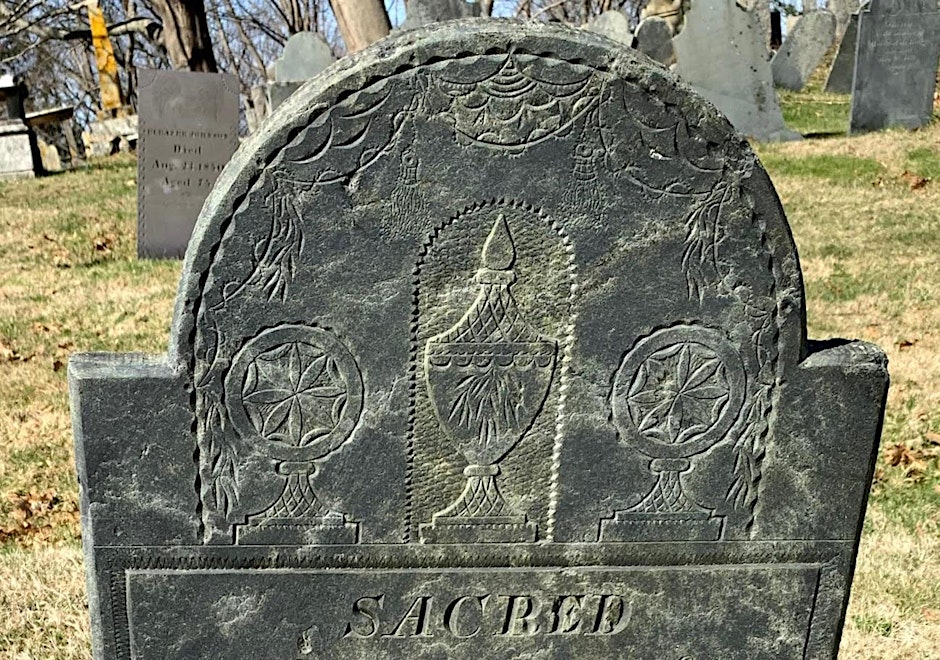
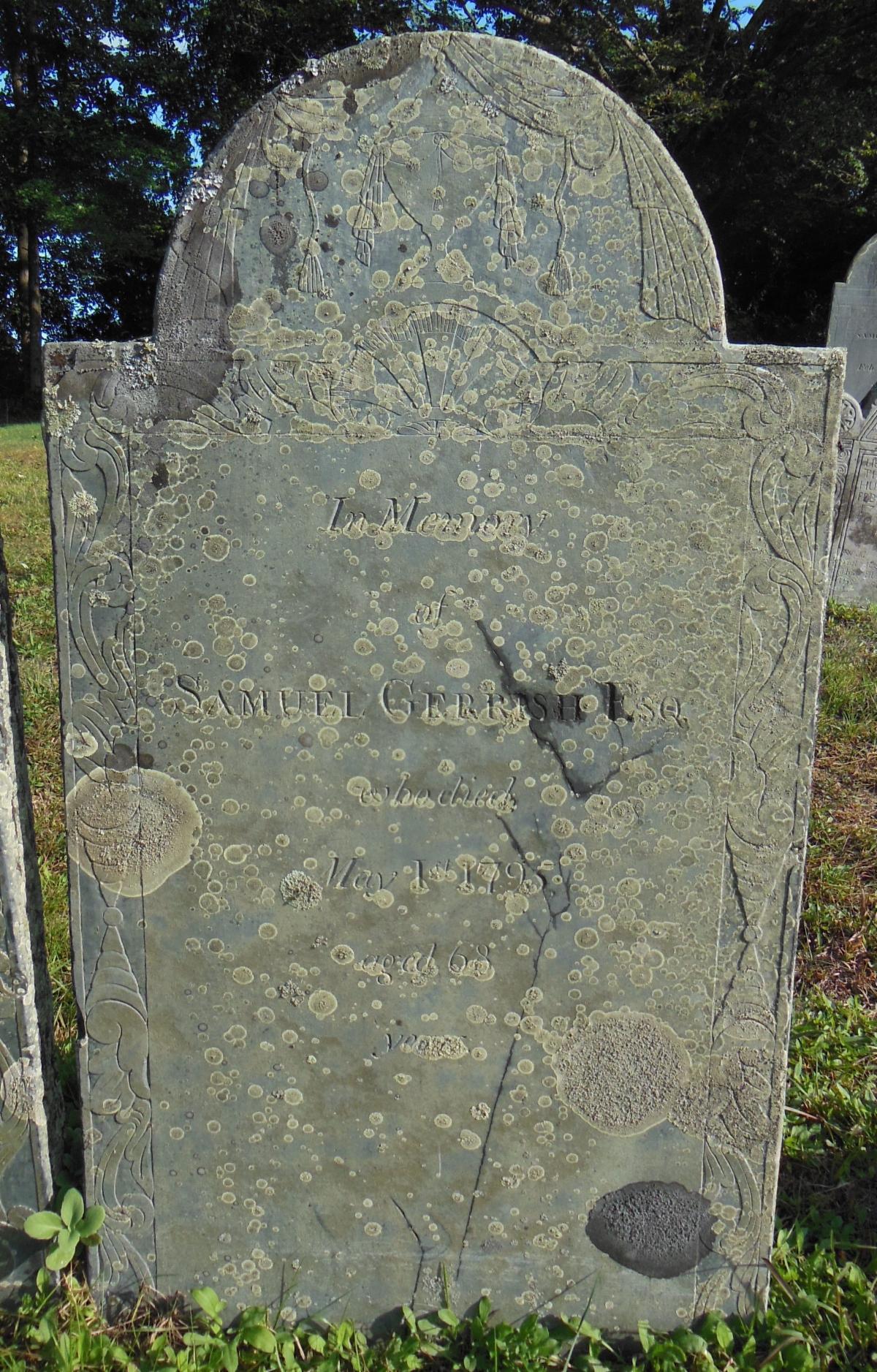
Samuel Gerrish, who died May 1, 1795, is buried in the Bridge Street Cemetery in West Newbury. His military title of colonel is conspicuously absent on his stone.
Colonel Gerrish’s 25th Regiment of the Massachusetts Grand Army was composed of 421 men from the Massachusetts towns of Lexington, Woburn, Wenham, Ipswich, Newbury, Manchester, and Rowley and was assigned to the left-wing of the army that was then surrounding Boston. Three companies were stationed in Chelsea, two at Sewall’s Point and the remaining three were stationed in Cambridge.
| |
|
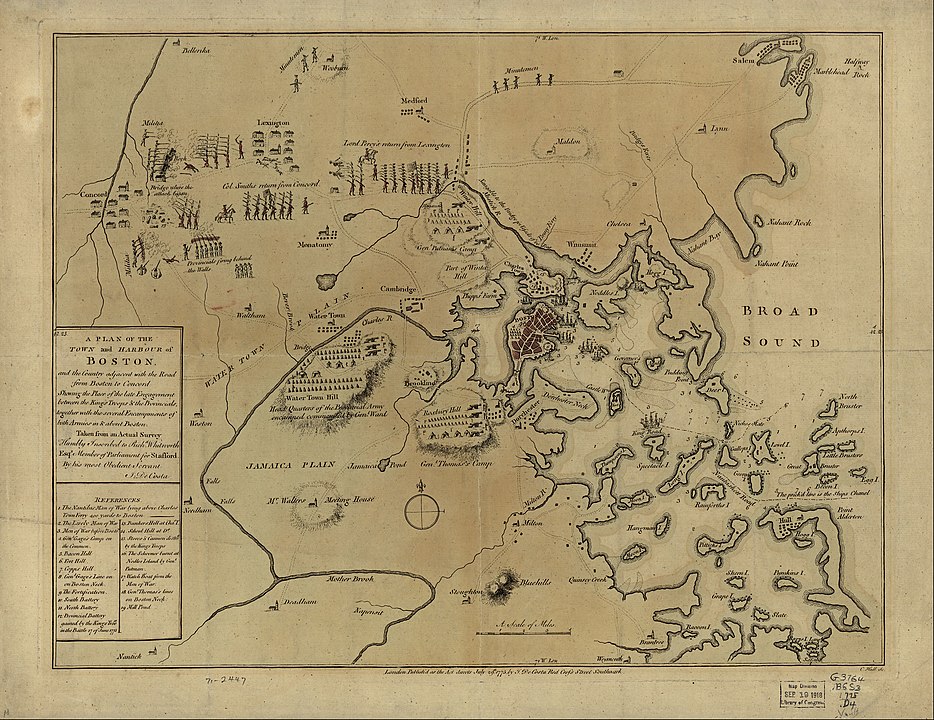
"A plan of the town and harbour of Boston and the country adjacent with the road from Boston to Concord, shewing the place of the late engagement between the King's troops & the provincials, together with the several encampments of both armies in & about Boston. Taken from an actual survey." J. DeCosta, 1775. Courtesy of the Library of Congress.
As the weeks passed after the regiment’s formation, the men of the unit quickly discovered that their regiment was plagued with misfortune and mismanagement, both of which were directly attributable to its colonel. Although Gerrish reported his regiment was at full strength on May 19, 1775, receiving his commission the next day, it was actually only at half strength. Worse, his soldiers were poorly supplied and in desperate need of additional clothing, equipment, and ammunition.
When a militia company from Newbury learned it was to be annexed into the regiment, the men threatened to return home rather than serve under him. On June 2, 1775, six companies petitioned to leave Gerrish’s command and form a new unit under the leadership of Gerrish's first cousin, Newbury's Moses Little. Gerrish was notified that “a number of gentlemen have presented a petition to this Congress in behalf of themselves and the men they have enlisted, praying that Captain Moses Little and Mr. Isaac Smith may be appointed and commissioned as two of the field officers over them..."
The Committee of Safety conducted a full hearing on the officer’s grievances and permitted the companies to depart and form Little’s Regiment.
|  | |
|
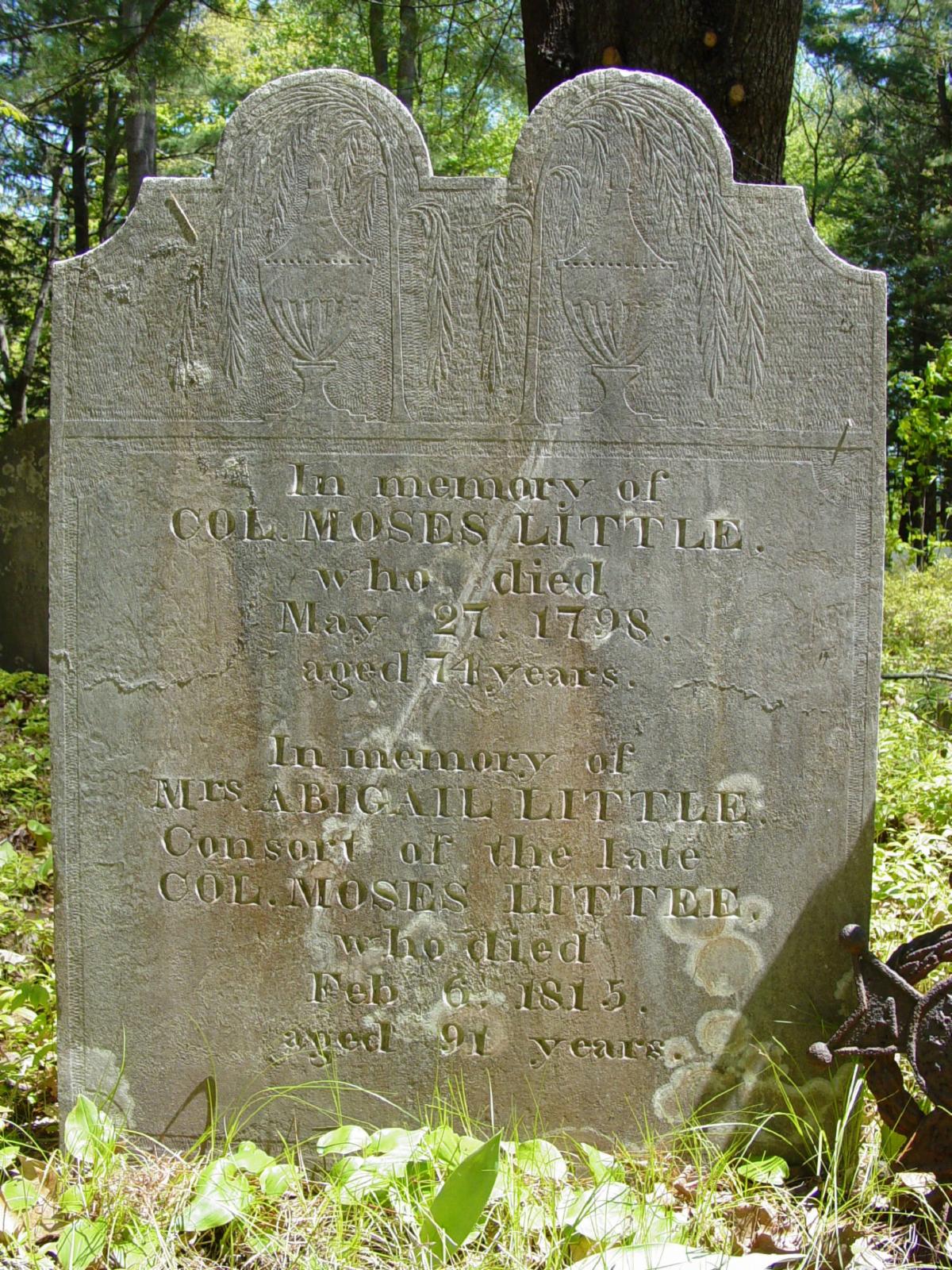
Colonel Moses Little, Gerrish's cousin, neighbor, and fellow officer, is buried in Sawyer Hill Burying Ground. He outlived Gerrish by three years.
Gerrish's regiment first saw combat on June 17, 1775. As the British army advanced on Breed’s Hill, General Ward found it impossible to reinforce the American position. The militiamen were more than reluctant to join their comrades in the front lines on Breed's Hill; the majority categorically refused to move forward. Most militia companies simply walked away from the fight. An alarmed General Ward correctly surmised that if the desertions continued, not only would the British win the day, but they might sweep away the colonial left flank, leaving the way open to an assault on the American headquarters in Cambridge. Ward called upon every available regiment to the fight. Gerrish’s Regiment quickly assembled and marched off towards Charlestown Neck.
The battalion arrived at Charlestown Neck shortly after the first assault on Breed’s Hill and immediately came under heavy fire from the Royal Navy. As the regiment’s major recalled, “[I] went with the recruits and met men from the fort or breastwork where there was a great number of cannon shot struck near me, but they were not suffered to hurt me.” Upon seeing the narrow roadway being raked from both sides by British warships, Colonel Gerrish was overcome with fear. “A tremor seiz’d [Gerrish]. He began to bellow, ‘Retreat! Retreat! Or you all be cutt off!’ which so confused and scar’d our men, that they retreated most precipitately.” .
|  | |
|
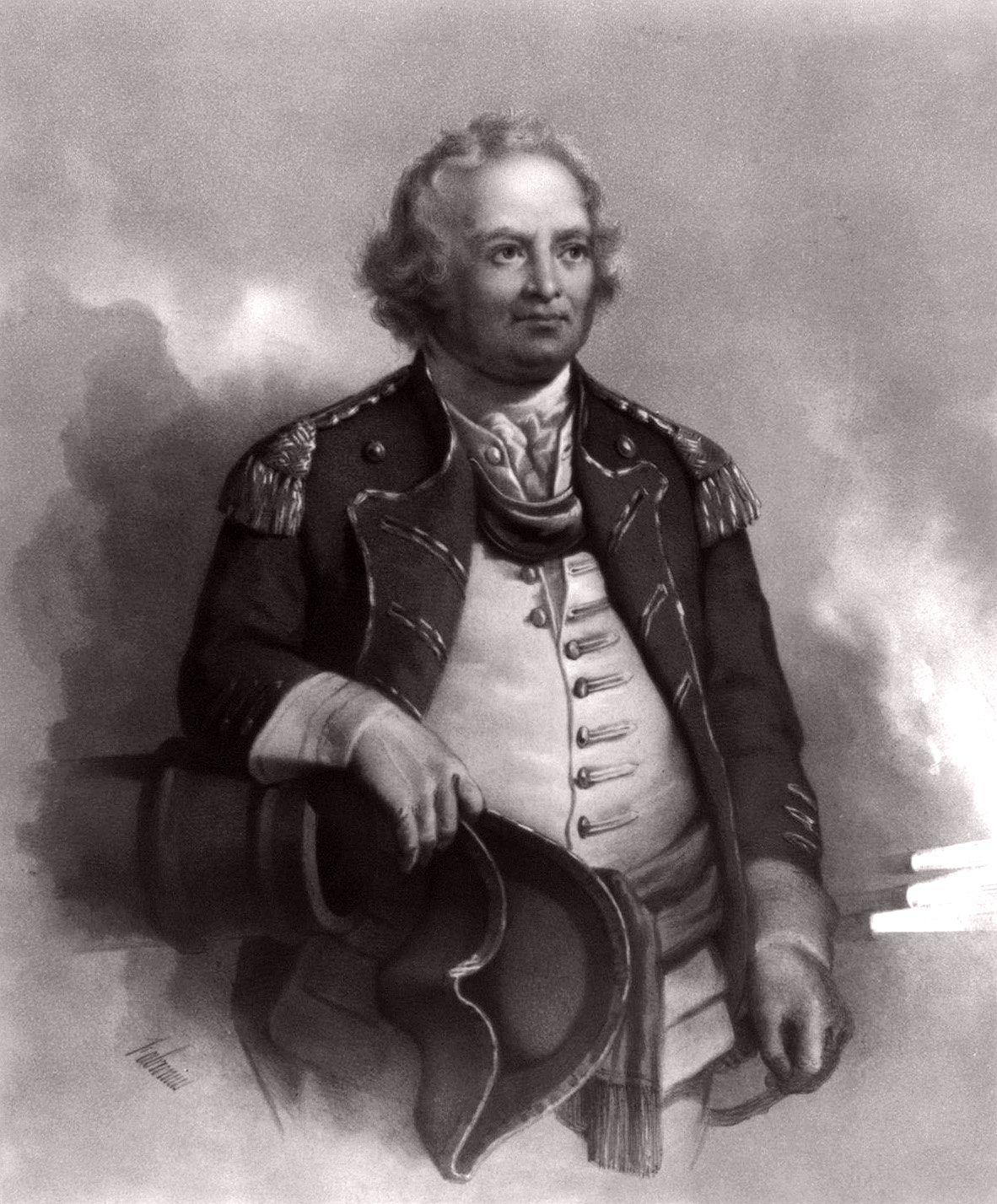
Major General Israel Putnam,1718-1790, from the Library of Congress Print Collection.
Moments later, Danvers-born General Israel Putnam arrived on the scene and found Gerrish prostrate on the ground, professing that he was exhausted. Historian Samuel Swett repeated the report of some of his men that Gerrish “was unwieldy from excessive corpulence”. Another source has Gerrish collapsing behind a haystack. Putnam pleaded with Gerrish to lead his troops onto the field. Finding both the colonel and the entire regiment unresponsive, Putnam resorted to threats and violence. He cursed the men and even struck some with the flat of his sword in an attempt to drive them forward. Only Danish-born Newburyporter Christian Febiger, the regimental adjutant, and a handful of men who rallied around him, crossed over the neck, climbed Bunker Hill and moved forward to take up a defensive position on Breed’s Hill. In the midst of the confusion, Thomas Doyle, a private in Captain William Roger’s Company, was killed. The remainder of the regiment scattered and fled back towards Cambridge, where they remained for the rest of the day.
Following the American defeat at Bunker Hill, “a complaint was lodged against [Gerrish], with (American commander) Ward, immediately . . . who refused to notice it, on account of the unorganized state of the army.” In other words, Gerrish narrowly avoided punishment only because there were so many other issues to contend with.
Years later, General Putnam’s son would bitterly complain about Gerrish’s Regiment, stating “But those that come up as recruits were evidently most terribly frightened, many of them, and did not make up with that true courage that their cause ought to have inspired them with.” Perhaps even more damning, in a coded letter, the spy Dr. Benjamin Church blamed the "cowardice of the clumsy Col. Gerrish" for the "lucky occasion of (the American) defeat" at Bunker Hill.
Stay tuned for Part II, where Samuel Gerrish hides behind a wall and George Washington himself has something to say about it!
Alex Cain is the author of "We Stood Our Ground: Lexington in the First Year of the American Revolution". A new edition of this book is available here.
| |
Courage, Cowardice, China, and Cushing
by Bethany Groff Dorau
| |
|
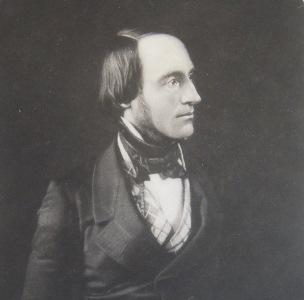
On June 17, 1843, Caleb Cushing went to dinner at Faneuil Hall. It had been a bruising year, and Cushing had barely managed to snatch victory from the jaws of humiliating defeat.
Cushing, then a Congressman from Massachusetts, was becoming known for his inconsistency and willingness to vote both for and against bills and change political parties as he saw an advantage. He had been nominated by President John Tyler to serve as Secretary of the Treasury, but the Senate refused to confirm him. He was nominated three times in one day, and as many times rejected. President Tyler, whose long relationship with Cushing deserves more than a passing line here, then appointed his friend to lead a delegation to China to secure a trade treaty. It was an opportunity for Cushing to rebuild his reputation, and he took full advantage of the months between his appointment and his departure to talk up the importance of his mission. Hence the dinner at Faneuil Hall, at which both President Tyler and Daniel Webster were also guests.
The occasion was the dedication of the Bunker Hill Monument, memorializing the battle where Cushing's fellow Newburyporter, Samuel Gerrish, had ignominiously contributed to the American defeat.
This seems to be a theme in my life and work, dear reader. Begin the week thinking about Caleb Cushing and the China Trade as we plan the China Trade Conference on October 28 (you should come, of course - click here for more), and then take what seems to be a completely left turn to write about Samuel Gerrish. Then, oh serendipity, find Cushing doing what you could not have imagined could be done - linking, as only a career politician could - the Battle of Bunker Hill and trade with China. I'll let Cushing take it from here...
Not merely relating to the conflict of 1775; not to the ever-remembered victory which ushered in our national existence ; nor to the scene which was the glorious dawn of our existence ; nor to the mere military triumphs, glorious as they were in that battle-day which is first among our annals of the war. I...see now, that peace has her triumphs, no less than more brilliant war...
I have myself been honored with a commission of peace, and am entrusted with the duty of bringing nearer together, if possible, the civilization of the old and new worlds - the Asiatic, European and American continents.
For though, of old, it was from the East that civilization and learning dawned upon the civilized world, yet now the refluent tide of letters - knowledge, was rolled back from the West to the East, and we have become the teachers of our teachers."
Cushing then turned dramatically to President Tyler, addressing him directly. "I go to China, sir, if I may so express myself, in behalf of civilization, and that, if possible, the doors of three hundred millions of Asiatic laborers may be opened to America. And if there is to be there another Bunker Hill monument, may it not be to commemorate the triumph of power over people, but the accumulating glory of peaceful arts, and civilized life."
| |
|
Cushing's vision of China as an ancient center of learning, now fallen so far behind the United States that "we have become the teachers of our teachers", is patronizing at best. There are many other elements of Cushing's vision of his mission "on behalf of civilization" that are deeply problematic. Closer to the truth was his telling line about the "three hundred million" who would be "opened to America". Whatever else Cushing sought to achieve, his mission was clear. Through threat and flattery, coercion and conviction, he was to secure for the United States a treaty that would open up Chinese markets to American goods and vice versa. If he were to fail, England would have a critical advantage over the United States in international trade.
If the subsequent journey to China and the 1844 Treaty of Wanghia interest you, come to the conference, where Eric Jay Dolin and Dane Morrison will describe its impact far more eloquently than I ever could.
| |
|
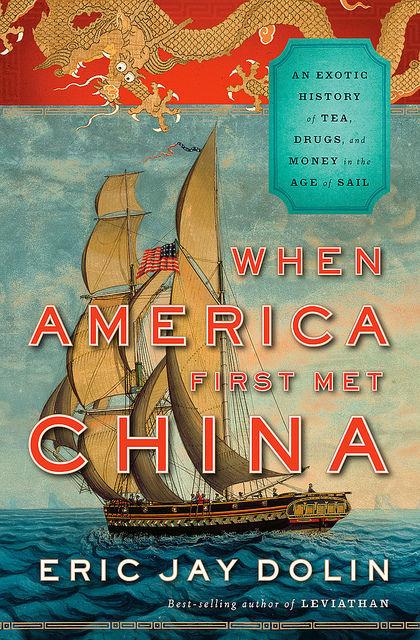
When America First Met China by Eric Jay Dolin, is an excellent overview of the early years of the China Trade. Dolin is a featured speaker at the Newburyport and the China Trade Conference on October 28.
Memory and meaning are my obsession. The Battle of Bunker Hill was, to Cushing, and many others, "the glorious dawn of our existence" as a nation, and there is some truth to that. Though the Provincial troops were defeated that day, they inflicted horrific casualties on the British troops, killing or wounding some thousand of them, out of a force of 2400. It was a watershed event, worthy of remembrance. Cushing employed the memory of Bunker Hill to argue that peace, and, self-servingly, diplomacy and trade were the new path to American victory. His speech was widely quoted in the publications of peace leagues across the country. It is worth mentioning, however, that Cushing arrived in China in February 1844 in a convoy of warships.
| 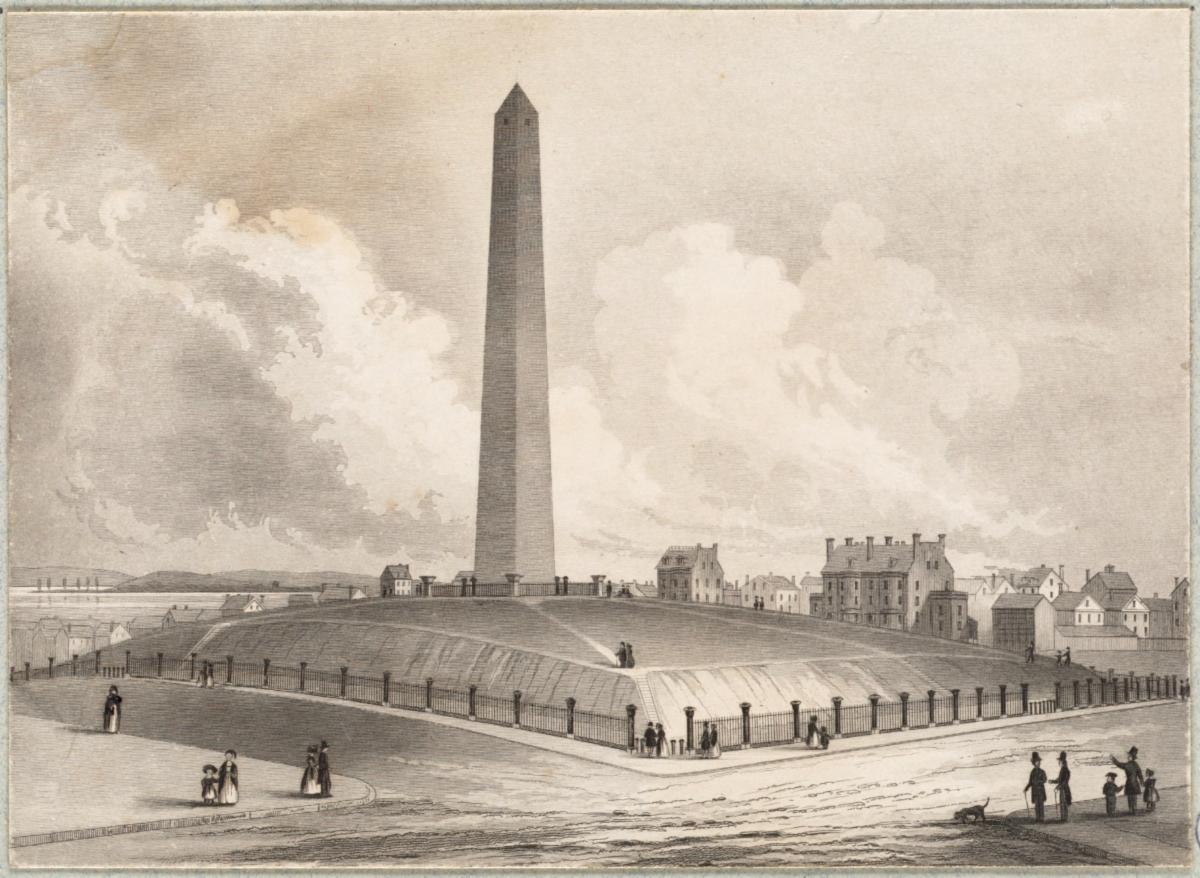 | |
1848 View of Bunker Hill Monument, Charlestown, built 1824-43, Solomon Willard architect. Digital Commonwealth
Any historical event is unknowable, in a way. It is experienced differently by every person, whose perspective, experience, bias, and status influence what meaning they make of it. Facts can be secured, carved in stone, but meaning is endlessly shifting. Samuel Gerrish hiding behind a haystack, the blood and chaos and smoke of the fight before him, may be a coward, or a realist, or he may have been suffering the traumatic effects of decades of bloody military service. Several later writers argued that he had been a scapegoat for widespread failures of leadership at the battle. Caleb Cushing was certainly not representing his experience as he prepared to sail for China.
It is easy to distill a whole life to one line. The title of the earlier piece does just that. "Cowardly Colonel of Bunker Hill" is not the sum of Samuel Gerrish's life, though there is ample evidence that this is an accurate description of his observed behavior. Nor is Caleb Cushing's celebrated negotiation of the Treaty of Wanghia in 1844 an accurate summation of the life and work of a very complex man whose failure to speak and work against slavery may have been typical of his time, but still stands out as a failure of conviction. Today I am mulling over the meaning of courage, how it shifts in one's life, how I have been courageous or cowardly, and at times both simultaneously. It is part of the human condition to look for inspiration in the past. I think we can learn as much from moments when our courage fails.
| |
Something Is Always Cooking ... | |
|
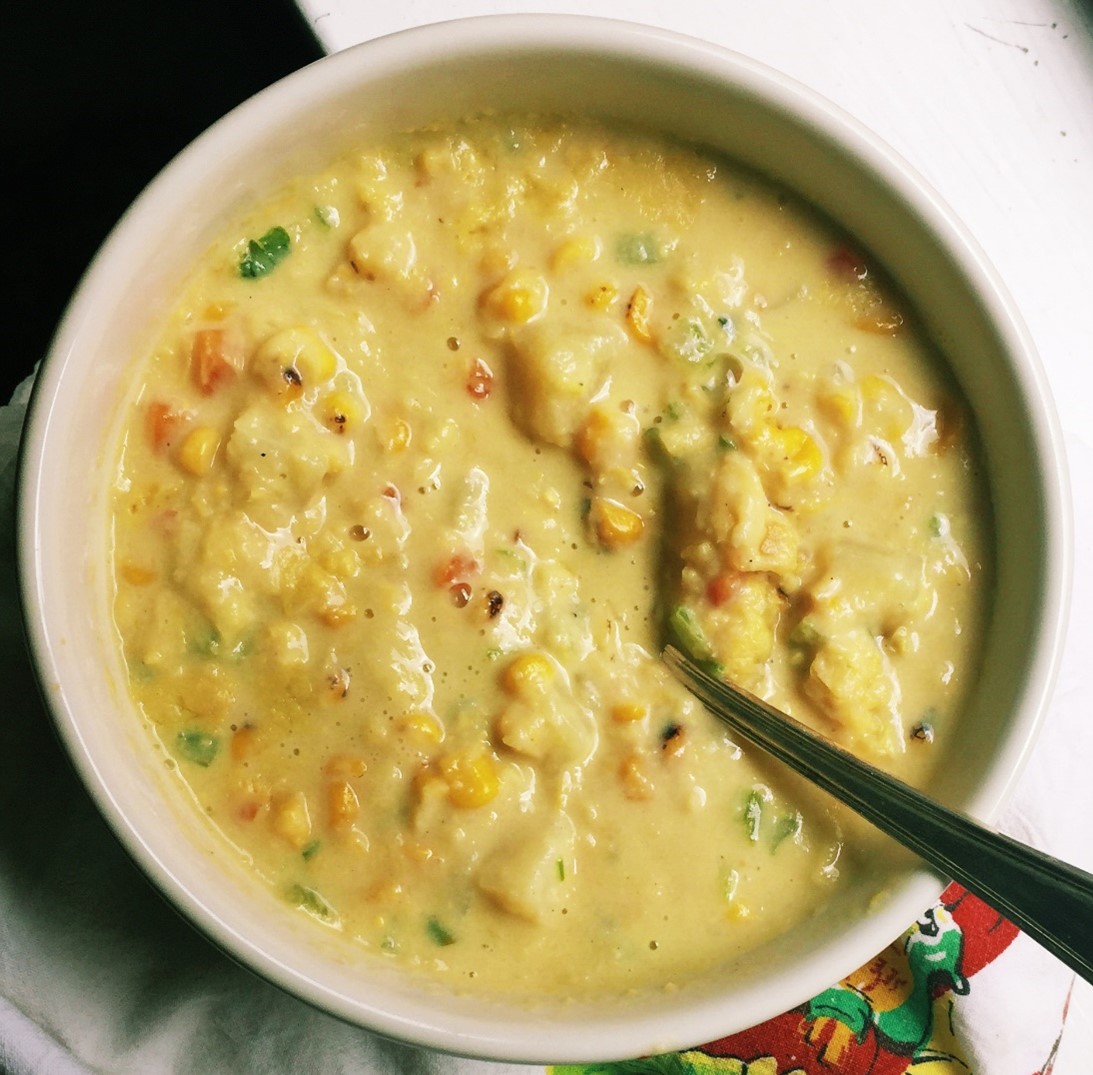
Spicy Corn Chowder
It's that perfect time of the year, when fresh sweet corn is still available but it's cold enough to eat soup for almost every meal. This version of a homey classic is best made with fresh corn, but can also be made with frozen or canned corn. It is a favorite of our operations manager Shelley, who loves all things smokey and spicy.
Ingredients:
3 or 4 cups roasted or grilled fresh corn cut off the cob (can use frozen in a pinch).
2 large or 3 medium yellow onions.
1 or 2 fresh jalapeños (to taste).
5 good sized potatoes.
1 quart half and half.
½ gallon milk (approximate).
1 stick butter.
1 teaspoon smoked paprika
½ teaspoon chipotle powder.
2 tablespoons Olive oil (for sautéing).
Salt and pepper to taste.
Instructions:
Begin by peeling and boiling potatoes in a large pot till just before they are fully soft. Drain off water and roughly mash.
Add milk and butter to make very lumpy mashed potatoes (you want lots of small chunks still present) and set aside.
While potatoes are boiling, roast or grill the corn on the cob till lightly blackened and cut off the kernels when cool enough to handle, add corn to potato pot.
Finely chop the Jalapenos and dice the onions.
Sauté onions and peppers till soft (if using frozen corn kernels, add to sauté pan and cook together).
Add onion/pepper mix to large pot and set to a low heat.
Add half and half and remaining milk to pot and mix until the desired chowder consistency is achieved.
Add smoked paprika, chipotle, salt and pepper to taste.
Stir frequently till heated through.
Serve with crusty bread for dunking and enjoy this smokey spicy take on a classic soup.
Substitute almond milk & Earth Balance spread for a vegan version.
| |
|
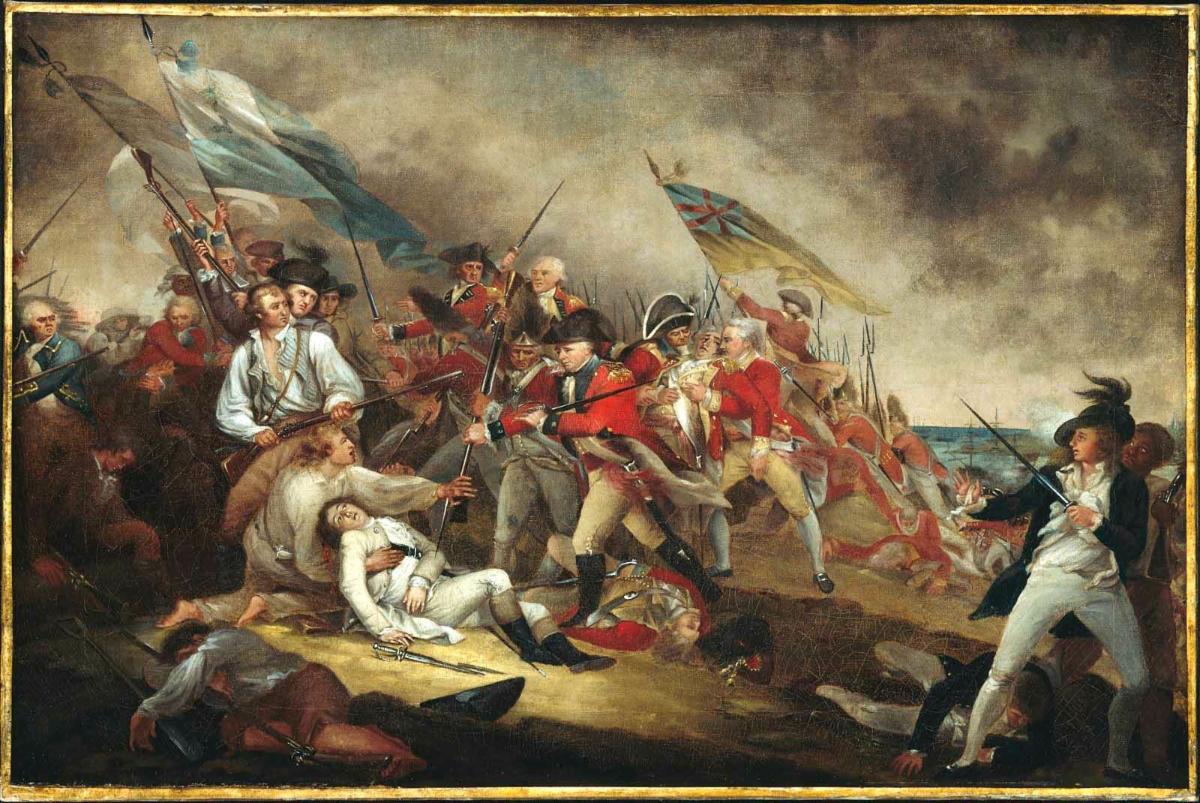
The Death of General Warren at the Battle of Bunker's Hill by John Trumball, courtesy of the Museum of Fine Arts Boston. Samuel Gerrish is nowhere to be seen. :-)
Click the image to do the puzzle
| | |
Museum e-Newsletter made possible through the
generosity of our sponsors:
| |
| | | |