e-Newsletter | September 1, 2023 | |
|
William Garnet Dodge and the Strike of 1933
by John M. Dodge
| |
In honor of Labor Day, we asked John M. Dodge, retired journalist and avid history blogger, to write about an incident in Newburyport's not-so-distant past. Newburyport’s largely forgotten shoe factories flourished from the 1860s into the 1930s with remnants surviving into the 1950s. Shoemaking replaced ship building as the dominant industry. The shoe workers strike of 1933 illustrates the conflict between labor and manufacturers some 90 years ago. | |
|
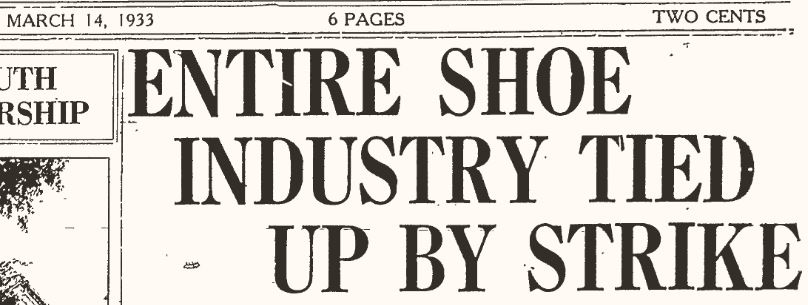
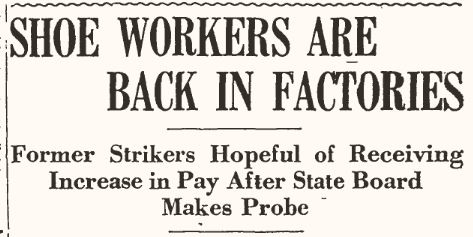
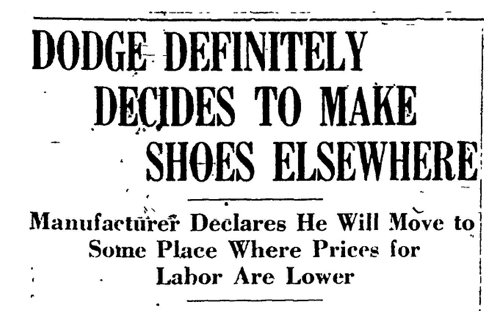
Page one headline on the shoe workers strike. March 14, 1933, Newburyport Daily News & Daily Herald.
In the spring of 1933, three and a half years into the Depression, Newburyport’s shoe industry was hurting. Its slow demise started in the post-WWI years and accelerated as the Depression increasingly gripped the nation. Cheap labor lured shoe manufacturers away from Massachusetts. Some local factories resisted new technologies such as adopting adhesives instead of continuing with labor intensive stitching.
Its decline added up to lower wages and more sporadic work for 2,000 shoe workers toiling away in Newburyport’s ten or so shoe factories. By early March, 1933, the rumors of a work stoppage started to percolate as strikers from Haverhill’s shoe factories paraded through the downtown exhorting Newburyport workers to join them. A meeting of the workers to consider a strike was convened two days later at the Knights of Pythias Hall on State St., according to the Saturday, March 11 edition of The Newburyport Daily News.
By the following Tuesday, 1,200 workers had left their benches and brought Newburyport’s shoe industry to a standstill. The workers wanted “fair pay” and their ‘New Deal.’
| |
|
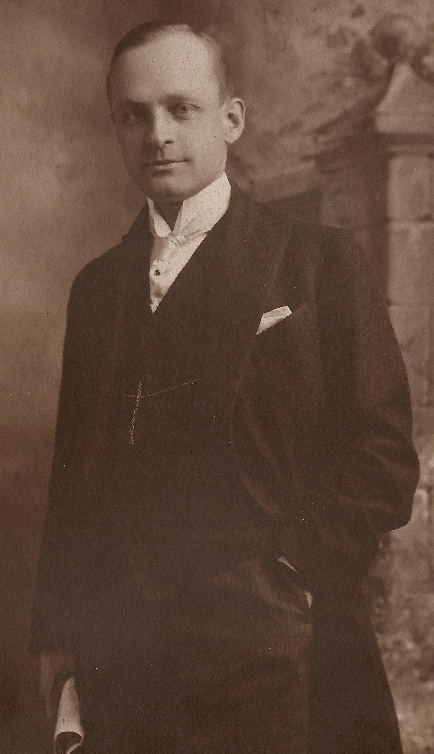
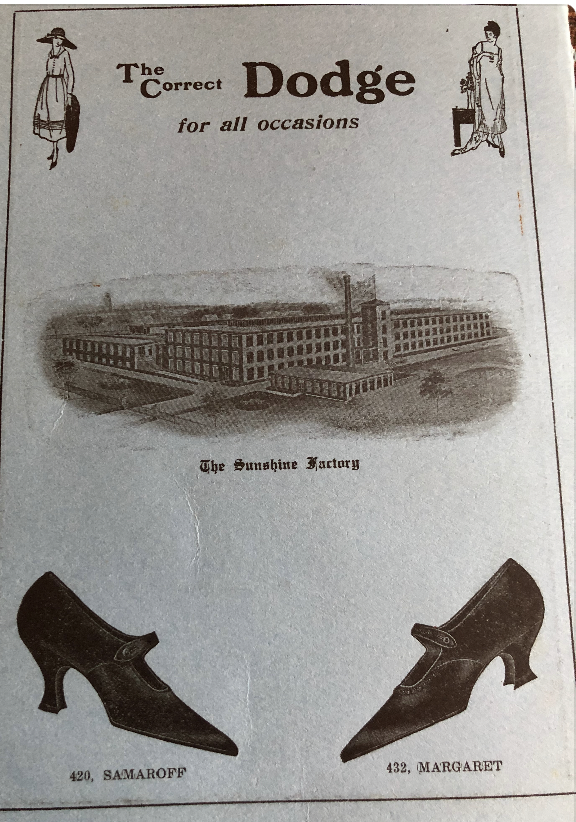
Taking up the cause of the workers was the Shoe Workers Protective Union founded in Haverhill in 1899. Its president John Nolan would initially negotiate with the three largest Newburyport shoe concerns – Dodge, Bliss & Perry; Rowe & Thurlow; and Gold Seal. Chiefly representing the owners was William Garnet Dodge, who had merged his namesake firm (aka Sunshine Shoe Co.) with Bliss & Perry in 1930.
W. G. Dodge’s forebears owned and ran multiple Newburyport shoe making concerns from 1865 to well into the 1930s. Dodge or ‘Cousin Will’ as my family knew him was my great-great-grandfather’s nephew. He inherited his Kent St. and Prince Place shoe factories from his father Nathan and was desperately trying to keep the Kent St. operation alive by the time of the strike. (the factory complex bordered Kent, Warren and Munroe Streets).
| |
|
William Garnet Dodge as a young man. Author's collection.
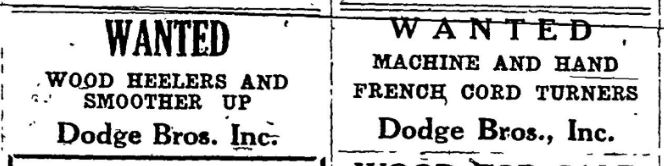
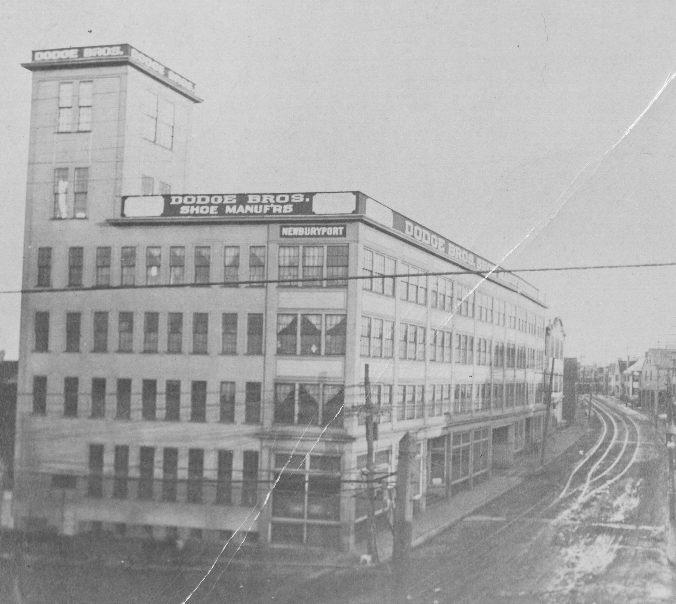
Another large concern, the Dodge Brothers, was anchored by my great grandfather Chauncey Dodge and his brother Harry, who died in 1927. I have been unsuccessful in determining when The Dodge Bros. closed their large factories at the corner of Bridge Rd. and Merrimack St. They were still advertising for help as late as Oct. 1, 1929, four weeks before “Black Tuesday,” when the stock market imploded. It was the seminal event triggering a decade-long depression. I always believed the Dodge Brothers went bankrupt in the late twenties, but a relative told me the company was still trying to find the magic into the thirties.
| |
Dodge Bros. was still advertising on October 1, 1929. Newburyport Daily News and Daily Herald. | |
|
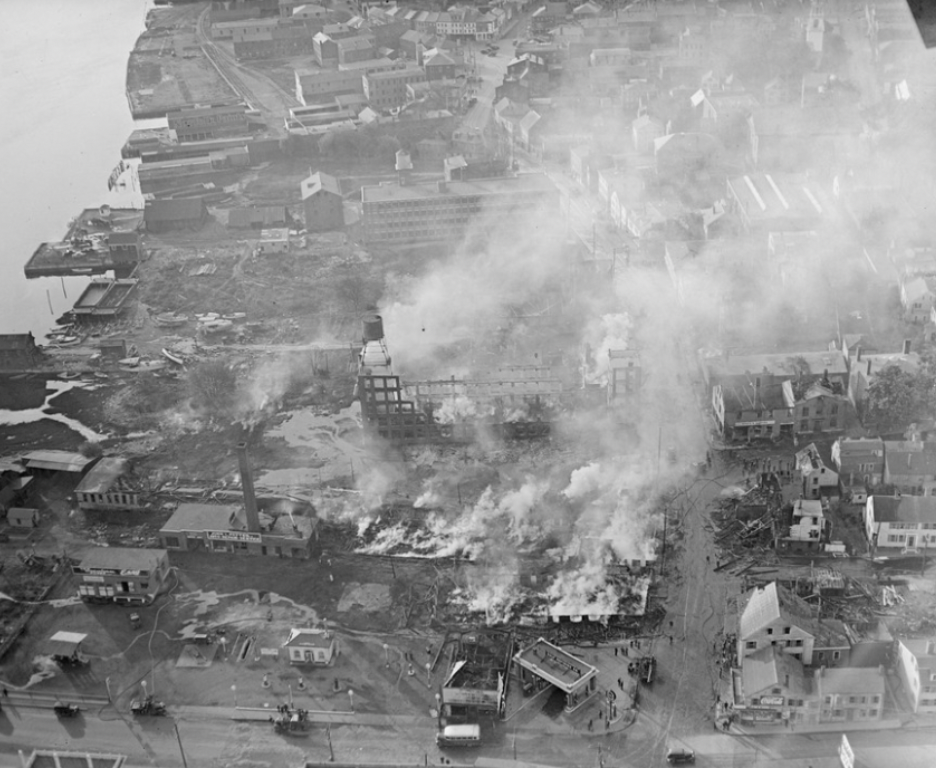
Dodge Bros. factory at Bridge Rd. and Merrimack St. before it burned in 1934. Newburyport Public Library Archival Center.
In 1933, W. G. Dodge’s personal life was in turmoil. While his wife Ellen, mother of their two sons, was in and out of Danvers State Hospital suffering from depression, he had an affair with a French Canadian shoe worker who gave birth to two children he fathered in 1933 and 1935.
| |
|
Dodge's Sunshine factory in Newburyport primarily made women's shoes. Collection of Museum of Old Newbury.
The workers demanded restoration of wages of two years earlier before they were eroded by the Depression. They also wanted steady work in a business that had been notoriously seasonal and dependent on fickle tastes.
Newburyport Mayor Gayden Morrill promised to act as a “neutral” party to help the two sides reach an agreement. It should be noted that Morrill, who was married to my grandfather Milton’s sister, had earlier bailed out the Dodge Brothers with a loan. Newburyport shoe making was an incestuous affair to say the least.
Much of the four-week strike played out in the pages of The Newburyport Daily News with each side laying out their plights. More negotiation, it seemed, was done in the Daily News than behind closed doors.
The manufacturers blamed depressed shoe sales on the nation’s economic woes and fierce competition. Workers wouldn’t budge until their union was recognized as their sole bargaining agent.
A letter signed by W. G. Dodge in The Daily News rang conciliatory, but was just as stubborn.
“It is our intent to pay the help in Newburyport a wage equal to the pay for like work of any other New England shoe manufacturer, making turned shoes. Under existing conditions, it is utterly impossible to pay rates of a year or two ago and continue to sell our shoes.”
In other words, no shoe orders, no shoe wages.
As the manufacturers resisted the union, pickets were set up in front of several factories. The strikers were orderly and the mood at times festive in the larger union meetings.
“There was music by an orchestra made up mostly by men strikers and there was singing by Celine Duggan, John Sullivan and Joseph Harrigan, acrobatic dancing by Margaret Louise Bernard, a comedy act by Bertha Plante (her son Bill Jr. would become editor and publisher of the Daily News where I interned as a budding journalist in 1976-77), harmonica selections by Dave Fowler and brother and selections by Tom Talas and his mandolin group,” according to the March 21 edition of The News.
No detail was too small for The Daily News whose front page led with the strike almost every day for as long as it lasted. Free coffee and donuts provided by store owners sympathetic to the workers were staples on the picket line.
The two sides remained at an impasse as the strike entered its second week. Charges and counter charges were made in The Daily News, which editorialized that it was neutral and like the mayor implored the manufacturers and workers to settle.
Thomas F. Carey workers accused the manufacturers of providing “starvation wages and deplorable conditions.” However, he struck a conciliatory note suggesting shoe buyers - the so-called middlemen - had enjoyed the upper hand for years over both workers and manufacturers. “Why have good concerns like Dodge Bros., Bliss & Perry, Harry M. Husk Co., F.E. Adams gone out of business?” he asked, the point being buyers were squeezing the manufacturers which in turn squeezed the workers.
| |
|
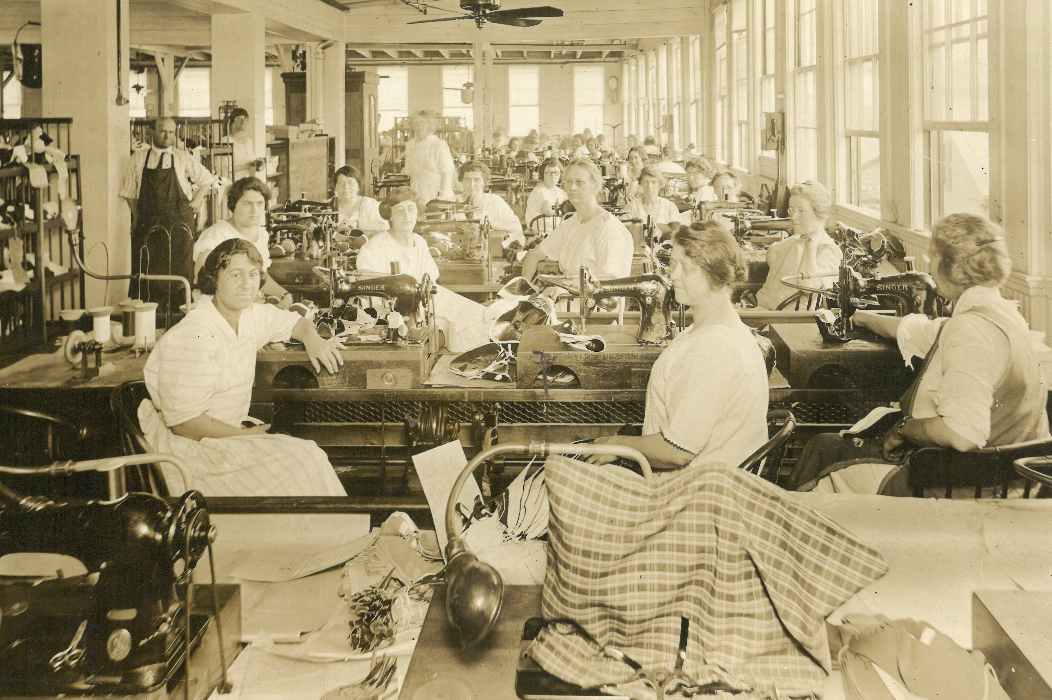
The stitching room at Bliss & Perry, 1923. Author's collection. Collection of Museum of Old Newbury.
Next to Carey’s column was a response from the “packing room girls” disputing WGD’s claim that the lowest wage was $10.80 a week. The “girls” charged that manufacturers took the highest wages and averaged them when some packers made a paltry $5 to $6 a week. The next day, a half dozen manufacturers, inching closer to union recognition, claimed they could run the factories 50 weeks a year.
| |
|
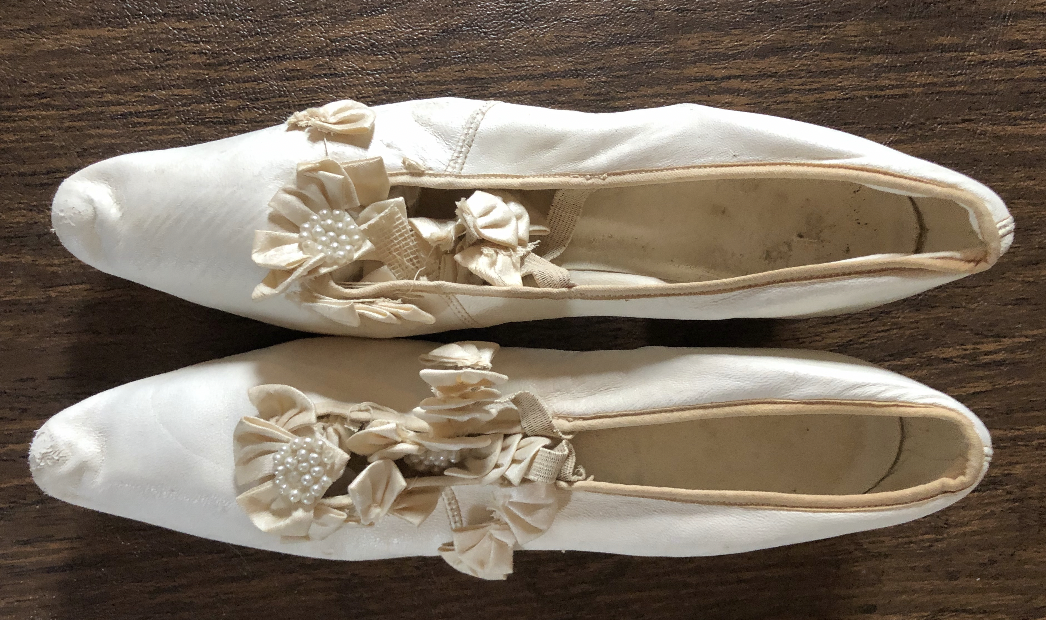
Stitchers wanted to be compensated for all their fancy extra work. Collection of Museum of Old Newbury.
On March 27, the union turned down a proposal by a Labor Dept. mediator (called a “conciliator” in the pages of The Daily News) because union recognition was still not a reality. The next day, Carey was back in the paper arguing with W.G. Dodge over what constituted a living wage. He again adopted a conciliatory tone.
“Now Mr. Dodge, Show your spirit by being the first to sign up with the union. We will be with you 100 percent even if we have to march with you to Washington to get a higher tariff on shoes.”
The next day the union said it would submit to arbitration on wages if an agreement was not reached in 10 days and if factory owners recognized Local 39 of SWPU. Still the two sides remained deadlocked. The manufacturers refused union recognition which by this point might have been what the workers wanted most. The manufacturers, which opened their factories in a gambit sure to fail (it did), withdrew all their offers that the arbitrator had put on the table.
By April 5, an estimated $112,000 in payroll had been lost ($2.537 million today). Tempers flared when Paul Thurlow of Rowe & Thurlow slammed down a $50 bill on a table during negotiations and challenged union leader Nolan to a fight. Cooler heads, fortunately, prevailed.
The logjam was finally broken when Dodge, Perry & Bliss and the Fisher Shoe Co. agreed to union recognition on April 7. The workers said all the shoe concerns had to follow suit before they agreed to return to work. That happened the next day and the four week strike was over. The union would be recognized and wages (both hourly and piece work) would be settled via arbitration.
| |
|
Shoe workers return to work, April 10, 1933. Newburyport Daily News & Daily Herald.
Dodge, Perry & Bliss would subsequently close in late 1935. The other manufacturers followed suit except the Ruth Shoe Co., which was still operating in the city into the 1960s when I was growing up. W.G. Dodge moved to an apartment in Haverhill where he labored in obscurity in a shoe factory, working for someone who had once worked for him. He came alone to our house every Thanksgiving until he died in 1964.
| |
|
Dodge announces Newburyport factory will close, Oct. 28, 1935. Newburyport Daily News & Daily Herald.
Meanwhile, the largely empty Dodge Bros. factory burned to the ground on May 19, 1934 in the so-called “million dollar fire.” Several homes, businesses and an adjacent shoe factory were also total losses. The fire, it was believed, was intentionally set, but no “firebug” was ever caught.
| |
|
New Acquisitions for Old Newbury: 2023 Member Reception and Annual Meeting
Wednesday, September 13, 6:30-8pm, free.
Join us for an exciting evening at the New Acquisitions for Old Newbury event! This is your chance to connect with fellow members and celebrate our organization's achievements over the past year.
Only a few spots left!
| |
|
Free Black Sailors in the Antebellum South: An Epidemic of Moral Contagion
Thursday, September 21, 7:00 pm
Exactly 200 years ago, a free Black Jamaican named Henry Elkison was arrested when the vessel on which he worked arrived in Charleston, South Carolina. Law enforcement officials boarded the ship, interrogated the captain, and then escorted Elkison to the city jail. His crime? He violated the state’s new quarantine law. But Elkison was not suffering from any sickness, contagious or otherwise. Instead, the quarantine law targeted him for his moral contagion.
South Carolina lawmakers were convinced that free Black men like Henry Elkison were infected with a contagion of liberty that might infect local enslaved people and initiate an epidemic of slave unrest. Elkison was not alone. Some 20,000 free Black maritime workers faced similar treatment at the hands of officials in Southern port cities. Dr. Schoeppner’s talk explores these so-called quarantines and the Black sailors who suffered under them. This event is free for museum members and $10 for non-members.
| |
|
Wash Day at the Cushing House
Friday and Saturday, September 22 and 23, 9:00 am - 11:00
Come by and be ready to roll up your sleeves and get wet. Visit the wash yard of the 1808 Cushing House in Newburyport and try your hand at cleaning clothes the old-fashioned way, with a washboard and wash tub. Learn where the house’s water would have come from, see where clothes were dried in the rain, and hear about the people who would have done this work for the Cushing family in the late 1800s. All ages welcome. Event will take place rain or shine. 98 High Street, Newburyport. Free to all. Registration not required but appreciated! Part of the 2023 Trails & Sails event.
| |
|
History and Cultures of the Great Marsh
Monday, October 23, 2023, 8:30 am - 4:30 pm
The Governor's Academy
| |
 | |
Join us for the History & Cultures of the Great Marsh Conference on Monday, October 23, 2023 at The Governor's Academy. This is an in-person event with limited capacity - get your tickets soon! Museum of Old Newbury members and members of Essex County Greenbelt: $30, General Admission, $45. Add-on field trips an additional $10-15.
Topics include:
"The Great Marsh, Newbury, and the Indigenous Worlds of the Merrimack River Valley System and Beyond."
"Contention in the Commons: The Open Field Land System in 17th Century Newbury"
"Slavery and Memory in the Great Marsh"
"Splendour in the Grass: Art Inspired by the Great Marsh"
"Agriculture, Fishing, Hunting, & Conservation in the Great Marsh"
Optional field trips include:
- Bird watching with Laura Vehring in the Parker River marsh surrounding The Governor’s Academy
- Guided tour of Plum Island’s cranberry bogs
- Guided tour of the Spencer-Peirce-Little Farm & its salt marsh hay production, past & present.
Attendees will also be invited to tour the Academy's brand-new Alfond Coastal Research Center (completed just this summer), a state-of-the-art marine study facility overlooking the south bank of the Parker River near Thurlow's Bridge.
| |
|
Woman on the MOON
...a blog by Bethany Groff Dorau, Executive Director
| |
|
Port to Port: A Sojourn to Remember
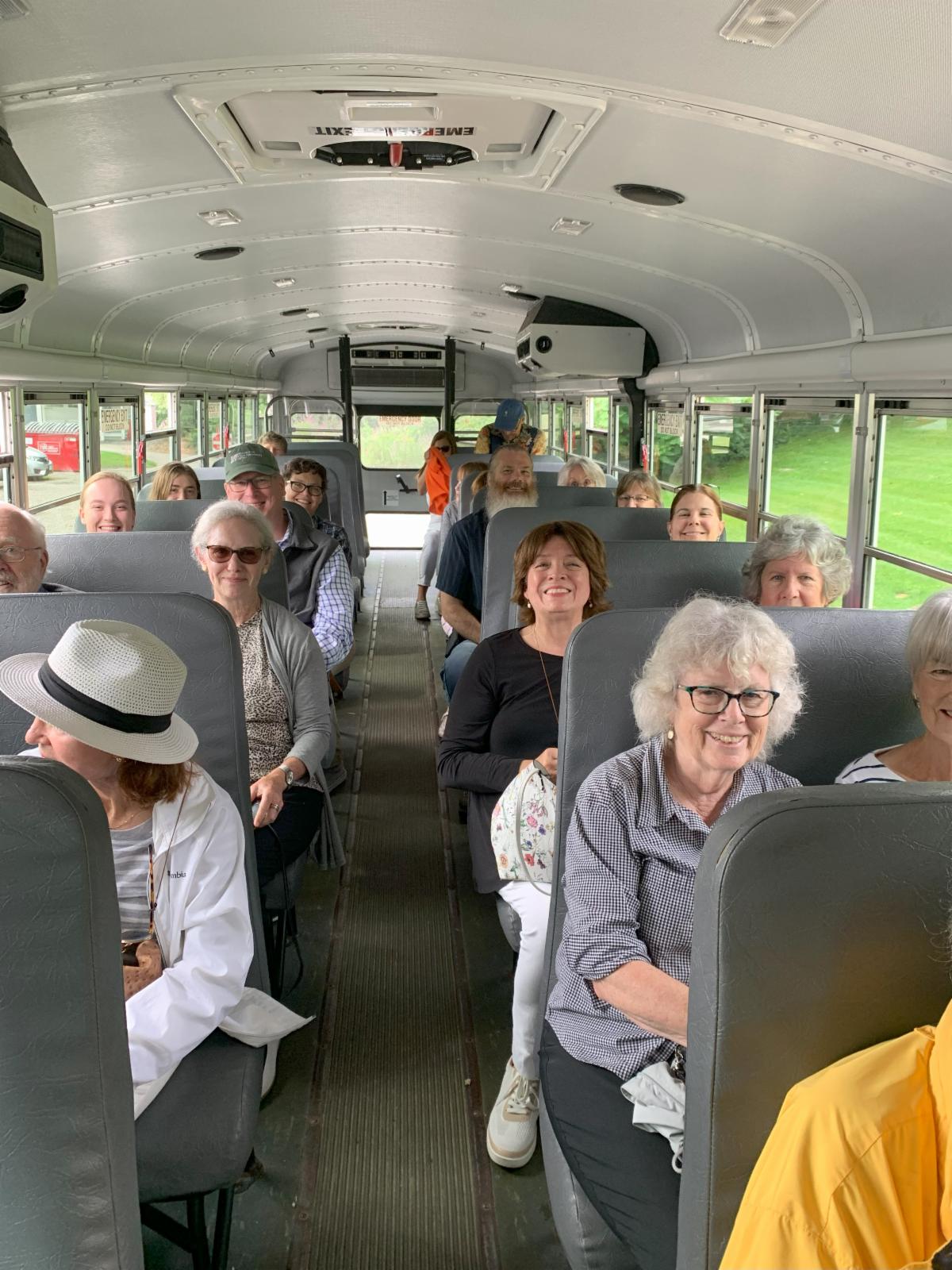
Two weeks ago, I filled my ageing minivan with members of the Museum of Old Newbury, and we set off on our (second annual) Summer Sojourn to Portsmouth. Last year we followed artist Cecilia Beaux around Gloucester. Each year we set off in a merry band to test my theory that Newbury(port) is the center of the universe.
| |
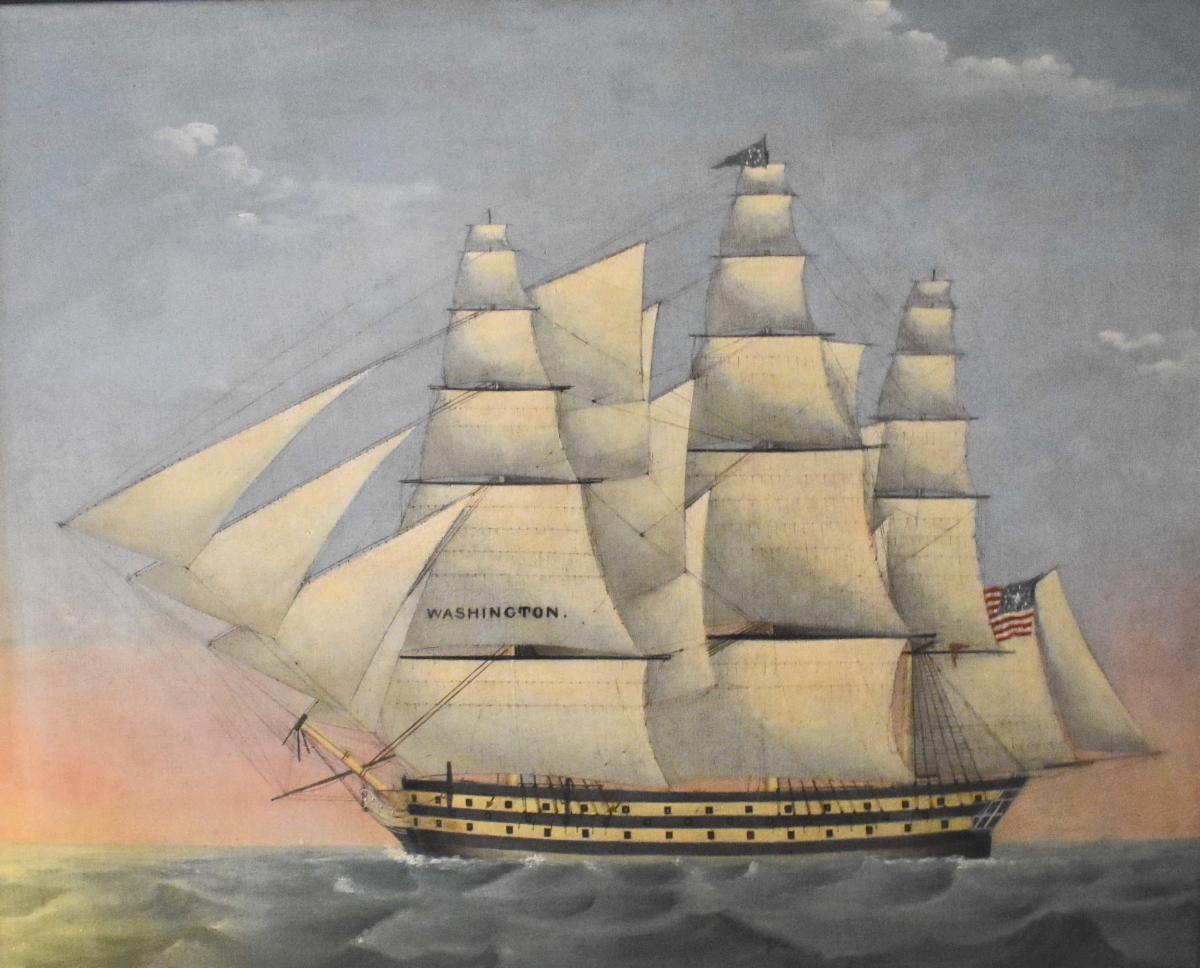
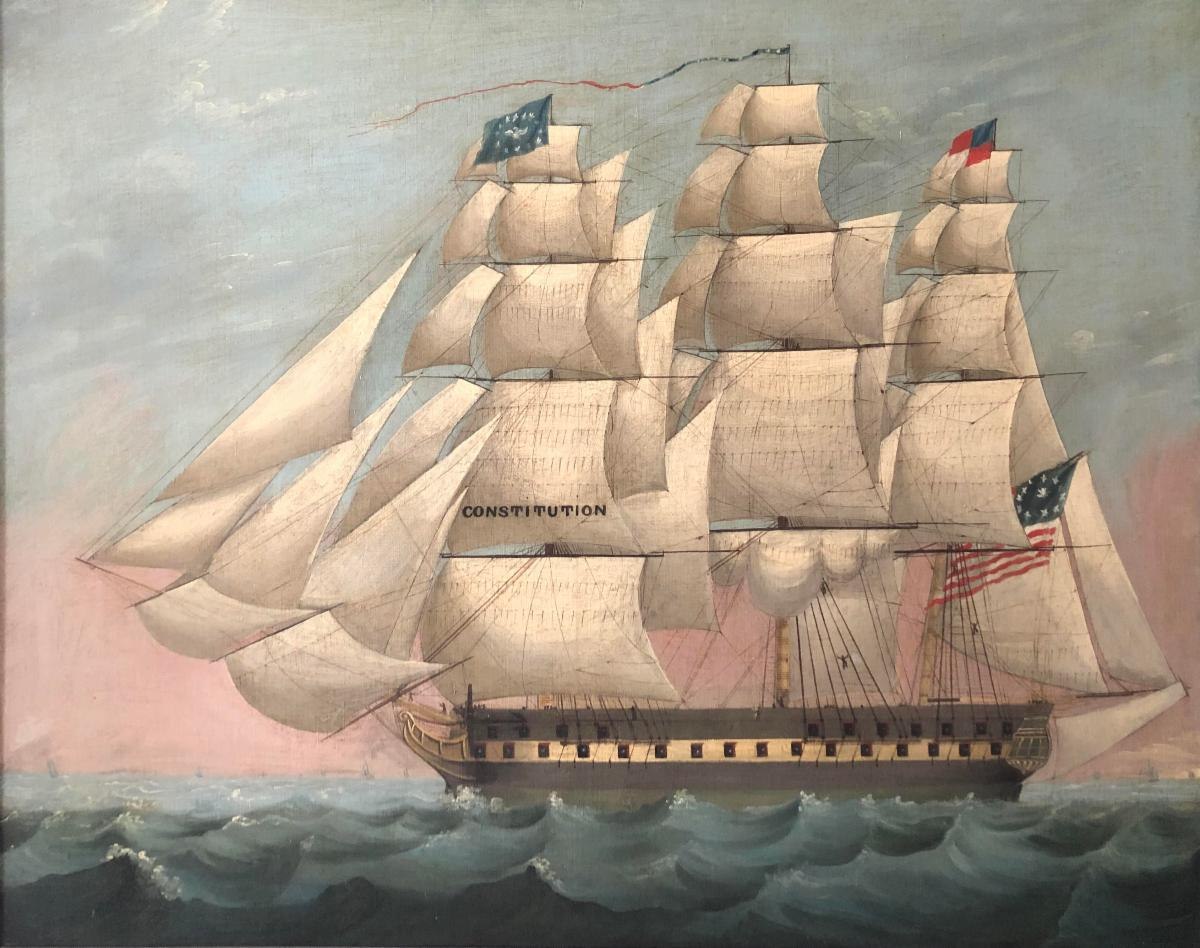
This year’s sojourn began with a close examination of paintings of the Washington and the Constitution by artist John Blunt that hang in the front hall of the Cushing House. Board member and American art expert Monica Reuss kicked off the day with an insightful examination of the paintings, and then we were off to Portsmouth. The Washington (above, launched in 1814) was the first ship built in the Portsmouth Naval Shipyard (PNSY), and so this was our first stop. Actually, we stopped in the parking lot of the USS Albacore, where we loaded onto a United States Navy bus where, as the carefully vetted guests of the Navy, we were charmed and enlightened by historian Joseph Gluckert. | |
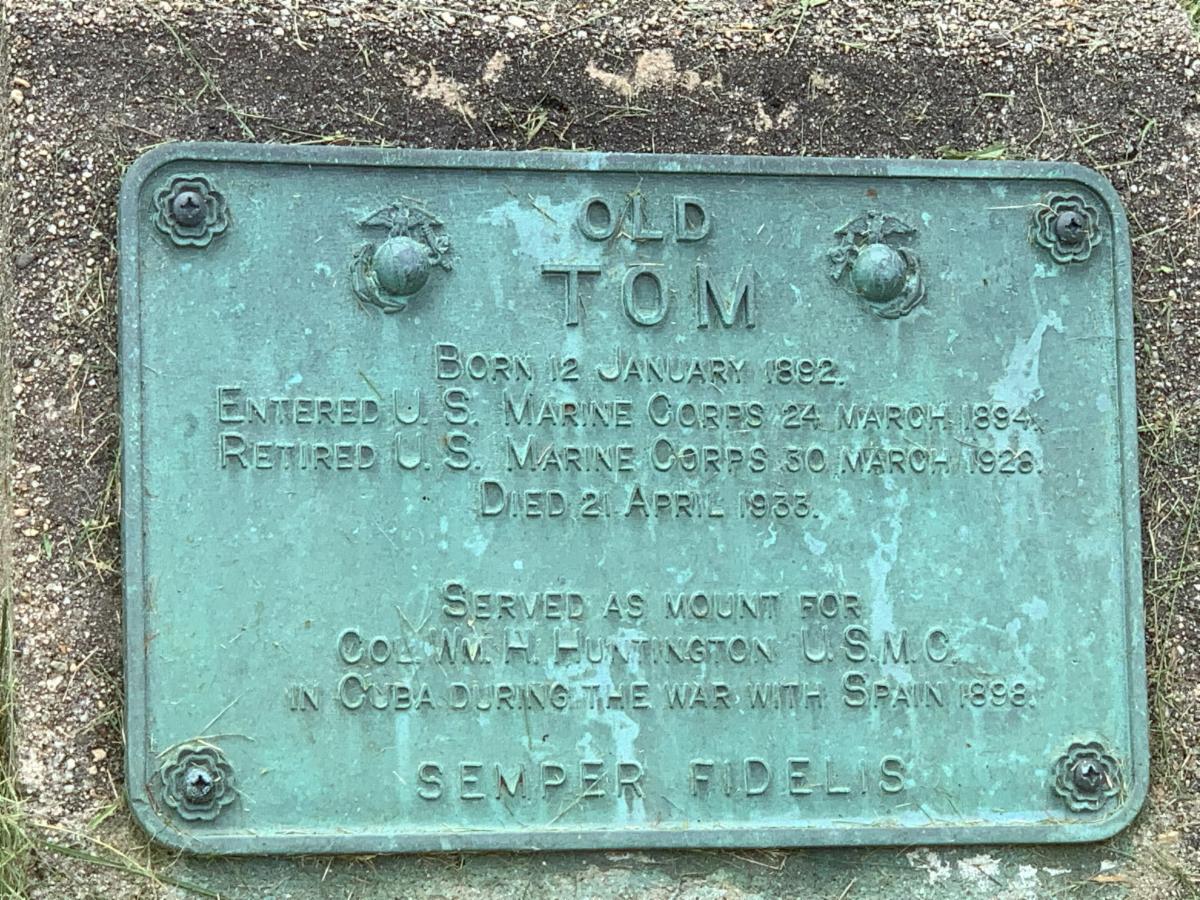
I’ll spare you the full travelogue, but anyone who knows me has heard about the PNSY cemetery, though I was unaware that behind the Portsmouth Naval Shipyard Heritage Center, there is also a pet cemetery that contains the worldly remains of Old Tom, a United States Marine (horse), born in 1892. He served in Cuba and was retired in 1928 before dying in 1933, at the ripe old age of 39. I connect to the experience of animals the way some people connect to ceramics or wear patterns on floorboards, and so, perhaps uniquely for me, visiting Old Tom enriched the experience immensely. | |
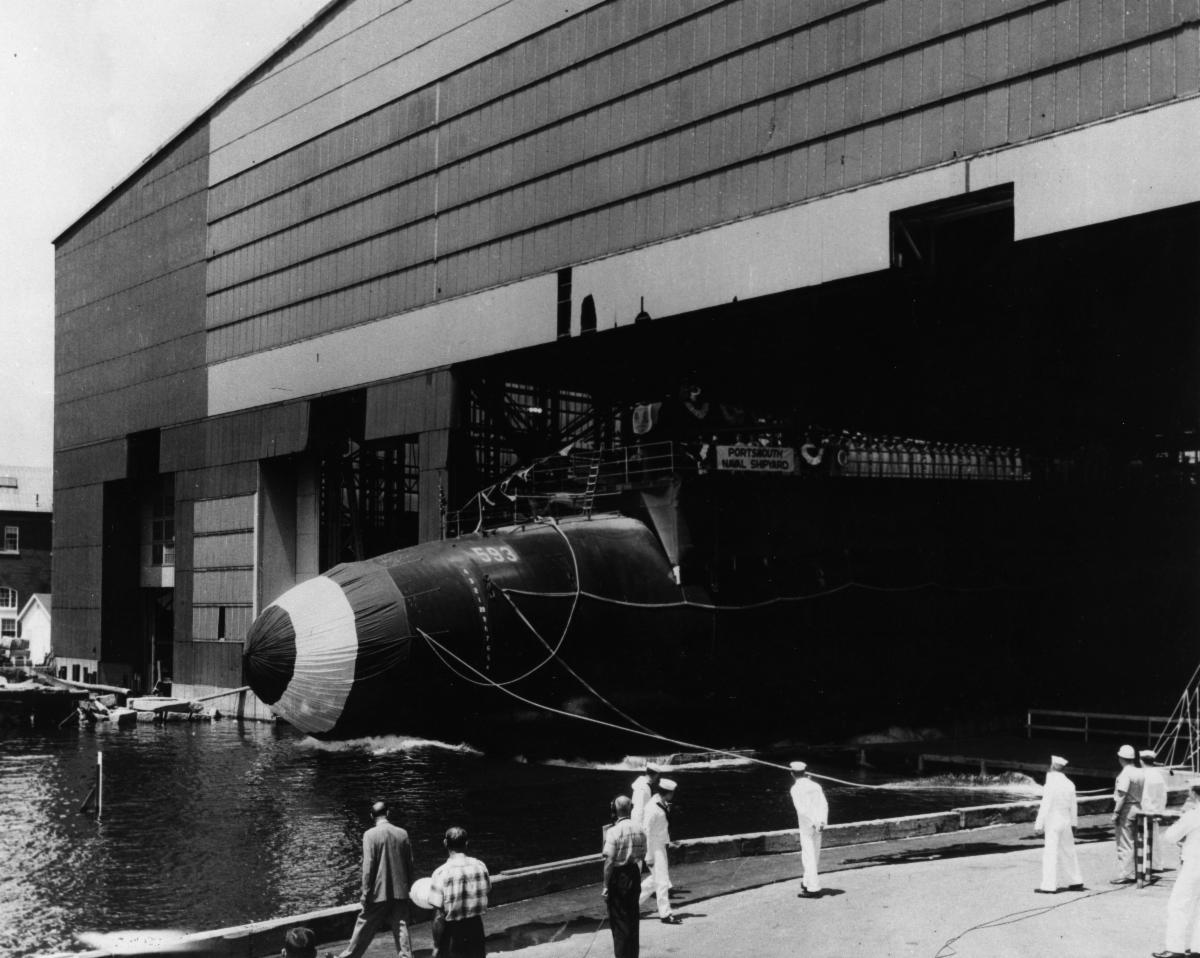
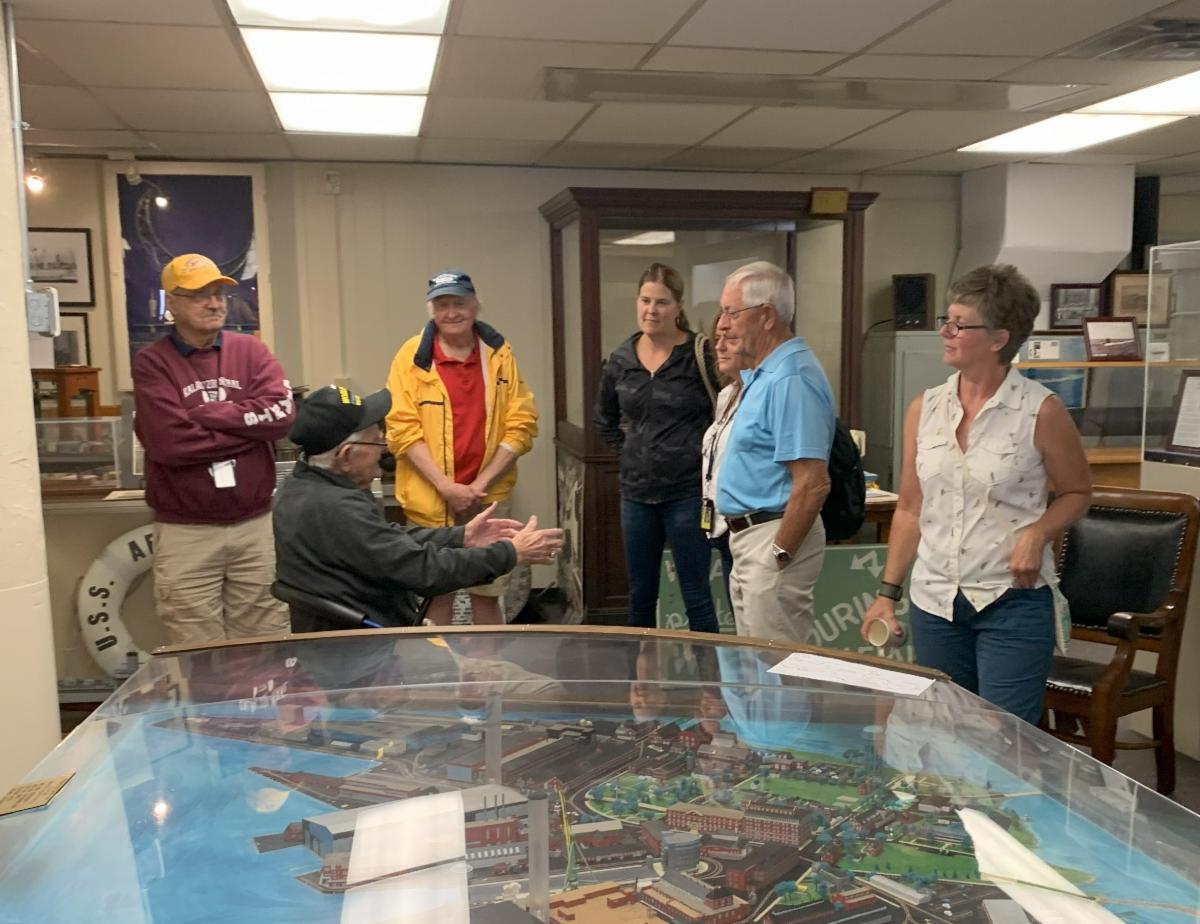
Inside the center is a great deal of information on the activities of the PNSY from the distant to the recent past, presided over by a group of enthusiastic volunteers, including World War II veteran Bill Tebo. Many of us spent some extra time with the model and memorial to the Thresher submarine, lost in 1963 with all hands, many with ties to Newburyport. | |
The U.S.S Thresher, seen here at her launch in 1960, was lost on April 10, 1963. The entire crew of 129 died and are memorialized at the Portsmouth Naval Shipyard Heritage Center. | |
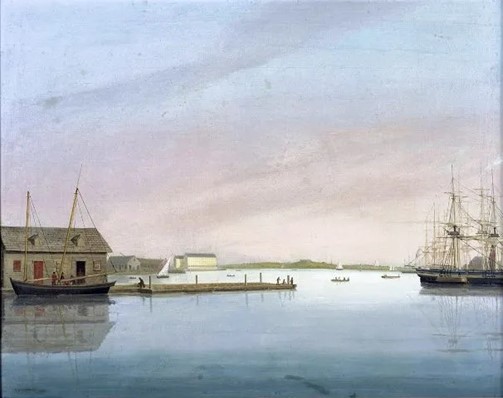
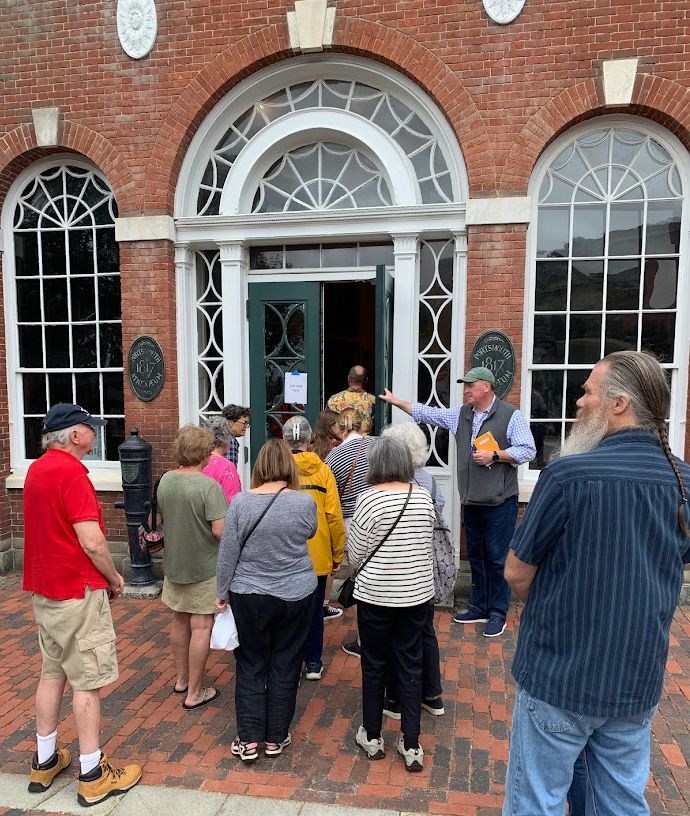
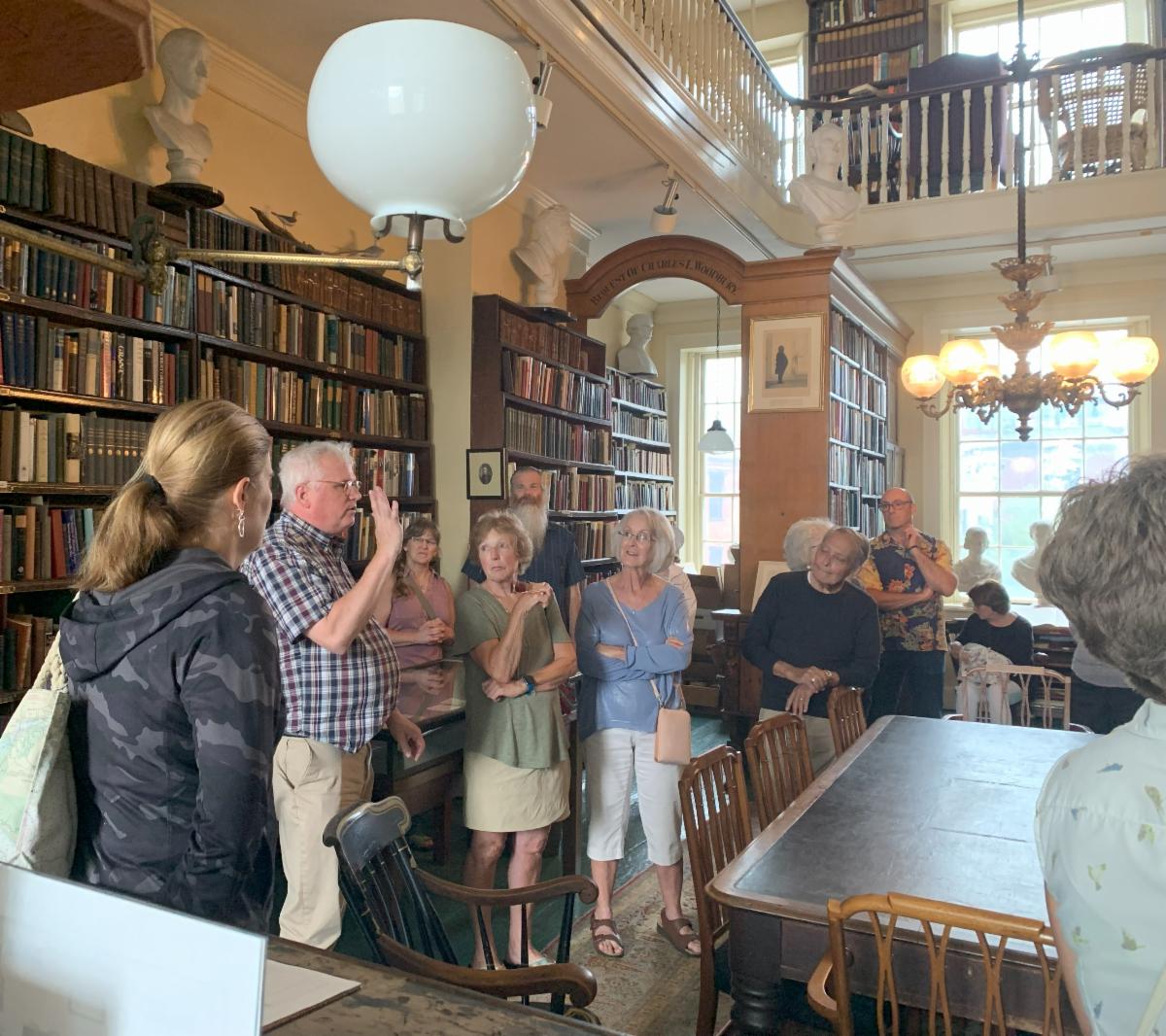
The afternoon began standing outside the Portsmouth Atheneum, discussing all the ways that Newburyport and Portsmouth had inspired each other. Once inside, we ogled the “pinky sky” in their famous Blunt painting, Piscataqua River from Noble's Wharf and discussed the future (and the past) of books and newspapers in the company of their gracious director, Tom Hardiman. | |
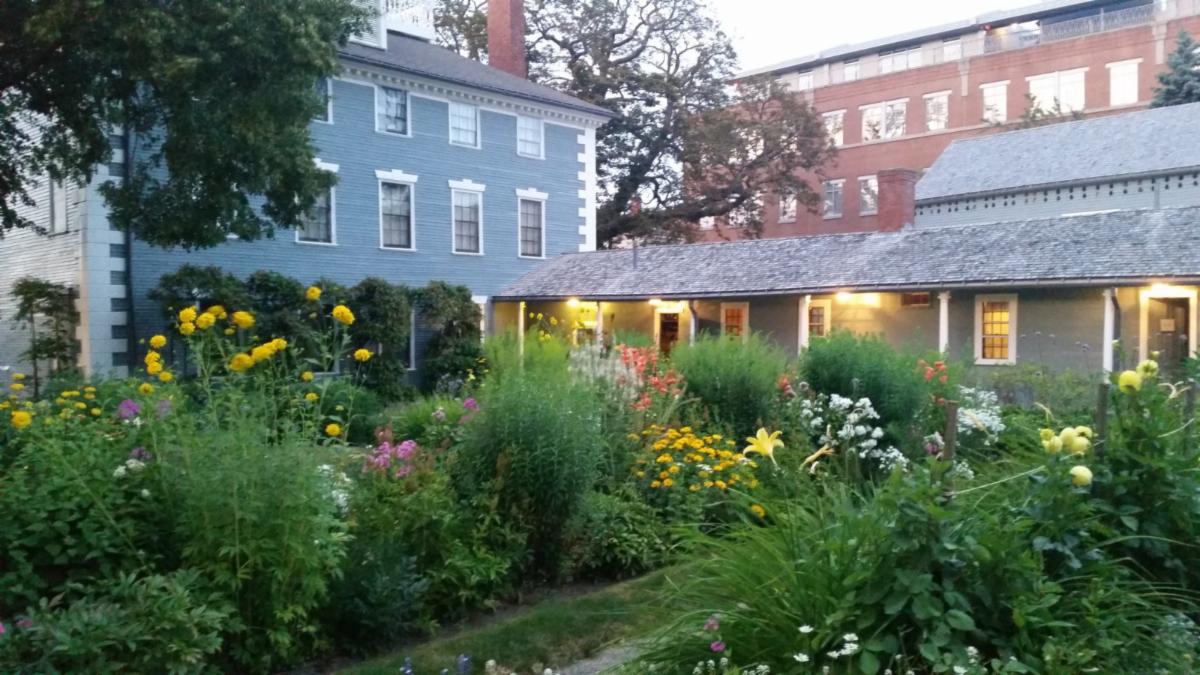
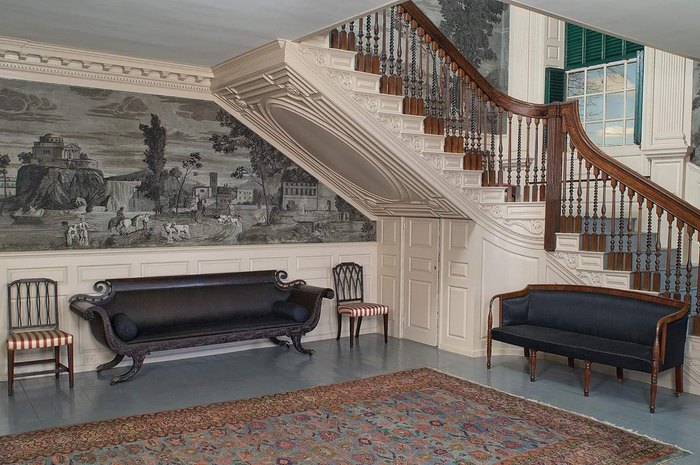
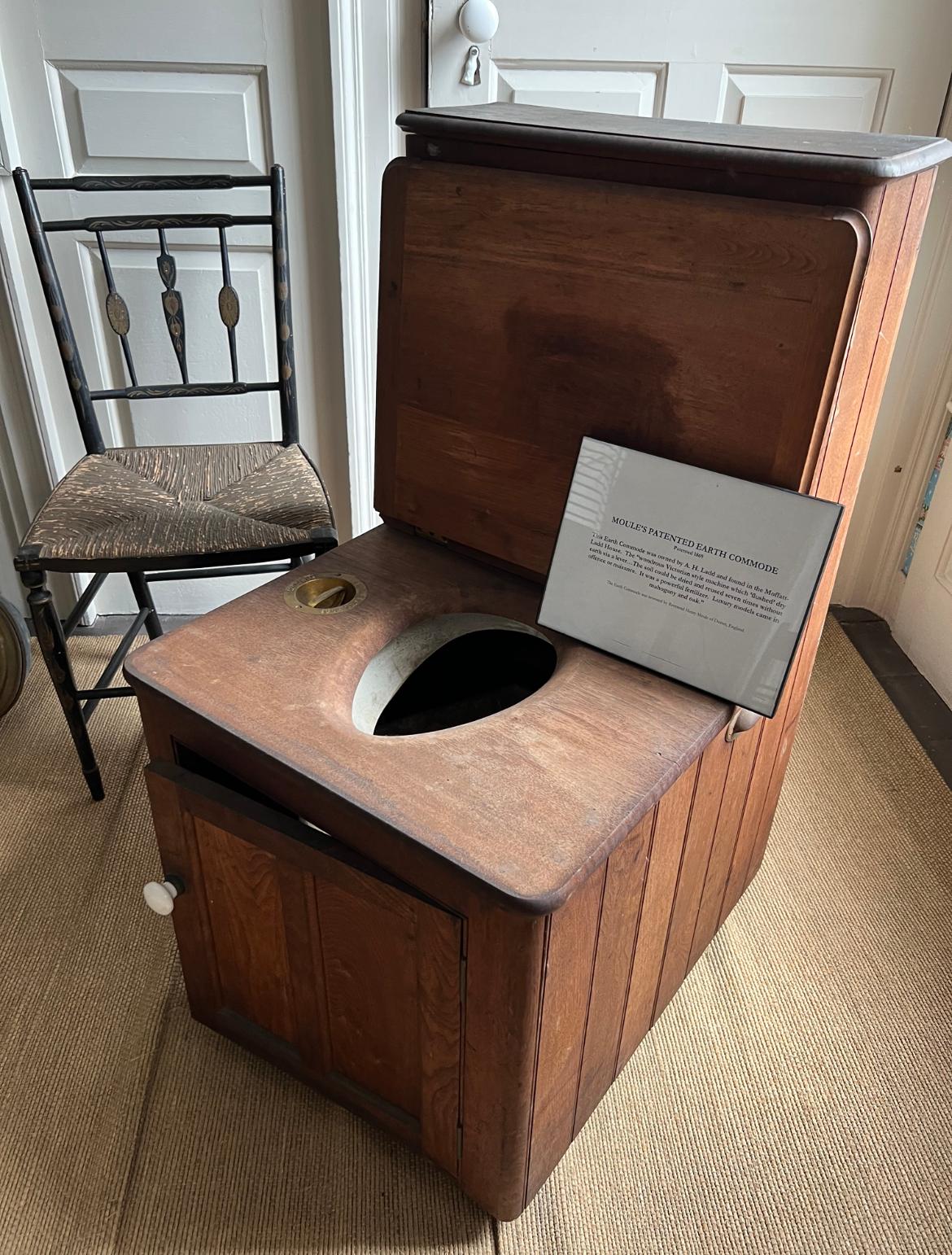
We closed our day wandering through the enchanting gardens and exploring the jaw-dropping décor (and a staff favorite, the 1869 composting toilet) at the Moffatt-Ladd House. | |
|
The height of modern convenience - a Moule's Patented Earth Commode, c. 1869, fascinated our group during the house tour.
I rolled back into town late in the afternoon, grinning from ear to ear. My history cup was full. I can’t wait to find more proof that Newbury(port) is the center of the universe as we plan next year’s sojourn!
The annual Summer Sojourn is a members-only event. Join us for this and many other adventures all year-round by becoming a member.
| |
Something Is Always Cooking... | |
|
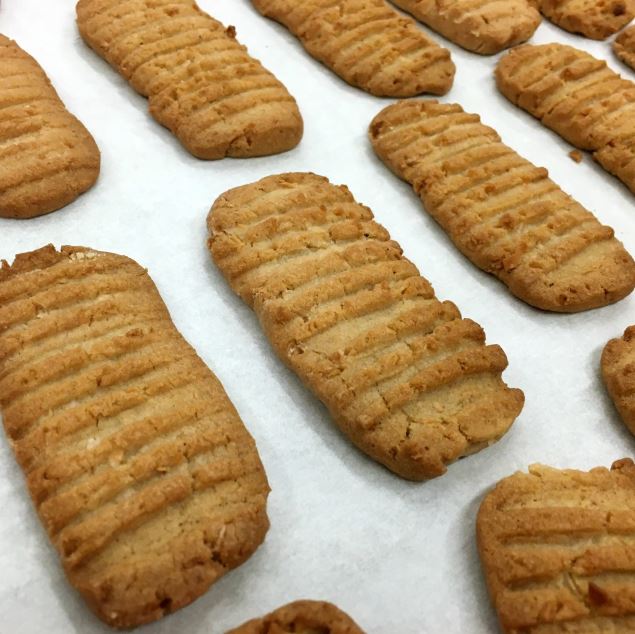
Coconut Washboard Cookies
Inspired by our upcoming "Wash Day at the Cushing House" event on Sept. 22 & 23, here's a classic cookie. It's thin and crisp with ridges that resemble a washboard.
Makes 36 cookies
Ingredients:
- 2 1/2 C flour
- 1/2 t baking powder
- 1/4 t baking soda
- 1/4 t salt
- 1/4 t nutmeg (optional - I leave it out)
- 1 egg
- 2 T milk
- 1/2 C butter, softened
- 1 C brown sugar
- 1 C sweetened, shredded coconut
- 2 C semisweet chocolate chips (for optional glaze)
- Extra coconut for sprinkling
Directions:
Combine flour, baking powder, baking soda, salt and nutmeg. Set aside.
Combine egg and milk. Set aside.
In an electric stand mixer, use the paddle at medium high to cream butter and brown sugar until light and fluffy. Add egg mixture. Scrape sides if needed.
Reduce speed to low, add flour mixture and coconut. Do not over mix. Dump dough onto lightly floured surface. Use a ruler and shape into a 15 inch log. Mine was 15 x 3 x 1 approximately. Wrap tightly with plastic wrap and refrigerate for an hour. Dough can also be frozen at this point for up to 1 month, be sure to thaw in the fridge overnight before baking.
Heat oven to 350. Remove chilled dough and slice into 1/4 inch pieces. Use a fork to make perpendicular grooves (think old-fashioned washboards). You may have to dip the fork in flour.
Set cookies on parchment lined baking sheet. Bake 15-18 minutes until lightly golden. Allow to set on cookie sheet, transfer to cooling rack.
When cookies are cool, melt chocolate chips in microwave safe bowl in 30 second bursts. Dip half the cookie in chocolate, sprinkle with extra coconut. Set on wax paper until chocolate hardens. Serve with milk or coffee.
Recipe from King Arthur Flour. Photo by Anna Lookingbill.
| |
|
Click the image to do the puzzle
This painting of the USS Constitution was done by Portsmouth artist John S. Blunt (1798-1835), sometime between 1815-1820. It was given to the Newburyport Marine Society by Rufus Wills (1814-1875), for whom Wills Lane is named. The painting might have been originally commissioned by Commodore Isaac Hull. Come see the painting in person at the Museum of Old Newbury.
| | |
Museum e-Newsletter made possible through the
generosity of our sponsors:
| |
| | | |