e-Newsletter | September 15, 2024 | |
|
Breaking News: Newburyport's Road to Revolution
Museum of Old Newbury and Custom House Maritime Museum lead the way with Massachusetts 250 Grant!
| |
|
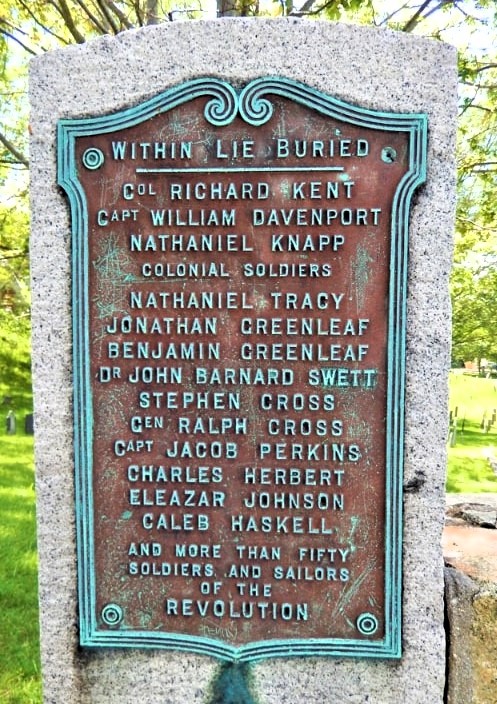
The gateposts of Old Hill Burying Ground in Newburyport list occupants who served in the American Revolution.
This just in! We have just received notice that we (MOON and the CHMM) are one of the fortunate recipients of a Massachusetts 250 grant from the Massachusetts Office of Travel and Tourism for $65,000, making our application one of the most successful in this extremely competitive process. We are also working with Lowell's Boat Shop, Central Congregational Church, and numerous other partners in the community as Newburyport celebrates its important role in the earliest days of the Revolution.
Newburyport's Road to Revolution, explores the events and decisions, from the Battle of the Plains of Abraham in Quebec and its links to Newburyport's legendary Wolfe Tavern, to public "tea party" protests, that led inexorably to Newburyport's early and ardent support of the Revolutionary cause. Newburyport's militia marched out after Lexington in April, 1775, and played an important role in the Battle of Bunker Hill on June 17. As Newbury's Daniel Adams said, "Our Union, liberty, and independence were defended by the best blood of every American.".
Read the title story following event announcements!
| |
|
5 more weeks of Museum of Old Newbury Guided Tours!
Thursday - Sunday, 11:00 a.m. - 4:00 p.m. on the hour.
Last regular open day is Sunday, October 13, 2024.
| |
Twilight Amongst the Tombstones: Night Walk in First Parish Burying Ground
Saturday, October 5, 2024 6:30 p.m. - 8:00 p.m.
| |
Twilight Amongst the Tombstones: Night Walk in Old Hill Burying Ground
Saturday October 12, 2024 6:30 p.m. - 8:00 p.m.
| |
Twilight Amongst the Tombstones: Night Walk in Highland Cemetery
Saturday October 19, 2024 6:30 p.m. - 8:00 p.m.
| |
Twilight Amongst the Tombstones: Night Walk in Oak Hill Cemetery
Saturday October 26, 2024 6:30 p.m. - 8:00 p.m.
| |
|
Conference on Newburyport and the China Trade, 1844-2024
Monday, October 28, 2024 8:30 a.m.- 4 p.m.
| |
Breaking News: Newburyport's Road to Revolution
by Bethany Groff Dorau
| |
|
On Friday, September 13, we were notified that we were one of the fortunate recipients of a $65,000 Massachusetts 250 grant from the Massachusetts Office of Travel and Tourism. This grant is especially gratifying because it has been a partnership endeavor from the very beginning.
What will follow is probably more than you ever wanted to know about the internal workings of the grant-writing process. The grant guidelines were released on July 24 with an informational webinar on August 6 and the grant application due on August 26. This is an unusually tight turn-around time, and with no guarantee of success and thousands of applications expected from all around the state, it was difficult to add this grant application to an already-packed summer workload.
In addition to a tight deadline, grant activities must be completed by June 30, 2025, and the grant is intended to commemorate Revolutionary War events that happened BEFORE June 30, 1775. Lexington and Concord on April 19, 1775 mark the beginning of the Revolution for many, and these watershed events took place in Massachusetts, so of course we would be getting a head start on the national 250th commemorations. We needed to figure out what was happening in Newburyport in the spring and early summer of 1775, and fast.
| |
|
Enter the Custom House Maritime Museum. Our reasons for pairing up are partly practical. It is unlikely that two organizations from the same city would have received a grant. We may have effectively cancelled each other out. It is also true, however, that we share not only aspects of our mission with the CHMM, but a long and storied history as well. The initial CHMM collection, which established the museum and helped to save the building in 1974, came from the Museum of Old Newbury, then known as the Historical Society of Old Newbury. We have long been invested in each other's success.
So, for logistical reasons, MOON is the lead applicant on this grant, but from the beginning, we were in it together.
| |
The collection of the Custom House Maritime Museum grew from early loans and gifts from the Museum of Old Newbury (then known as the Historical Society). From the Newburyport Daily News, November 14, 1989. | |
|
As we prepared to apply for this grant, volunteers and staff at the MOON and CHMM combed through the record and found, perhaps unsurprisingly, that Newburyport was involved in every aspect of the long road that led, ultimately, to the United States of America. This grant will help us tell this story.
Though Newburyport is perhaps best known for privateering during the American Revolution, and deservedly so, we are shifting the focus to explore, through public events and activities, how a community with significant (and lucrative) mercantile ties to England became so dedicated to the cause of independence. Our relationship with England was deeper than commerce, however. Just a decade earlier, Newbury(port) citizens gave their lives as loyal subjects while fighting the French in Canada, to the extent that there was a tavern in Newbury(port) named after British General Wolfe long after other communities had riddled their Wolfe Tavern signs with bullets and burned English commanders (even those long dead) in effigy.
Despite complex and conflicting loyalties, as England imposed harsh penalties on the colonies, Newburyport men volunteered for the militia, sailors became privateers, and a local Committee of Correspondence communicated regularly with surrounding communities about their plans and actions. We were on the "Road to Revolution", and when Lexington and Concord brought the conflict to a head, we were ready.
| |
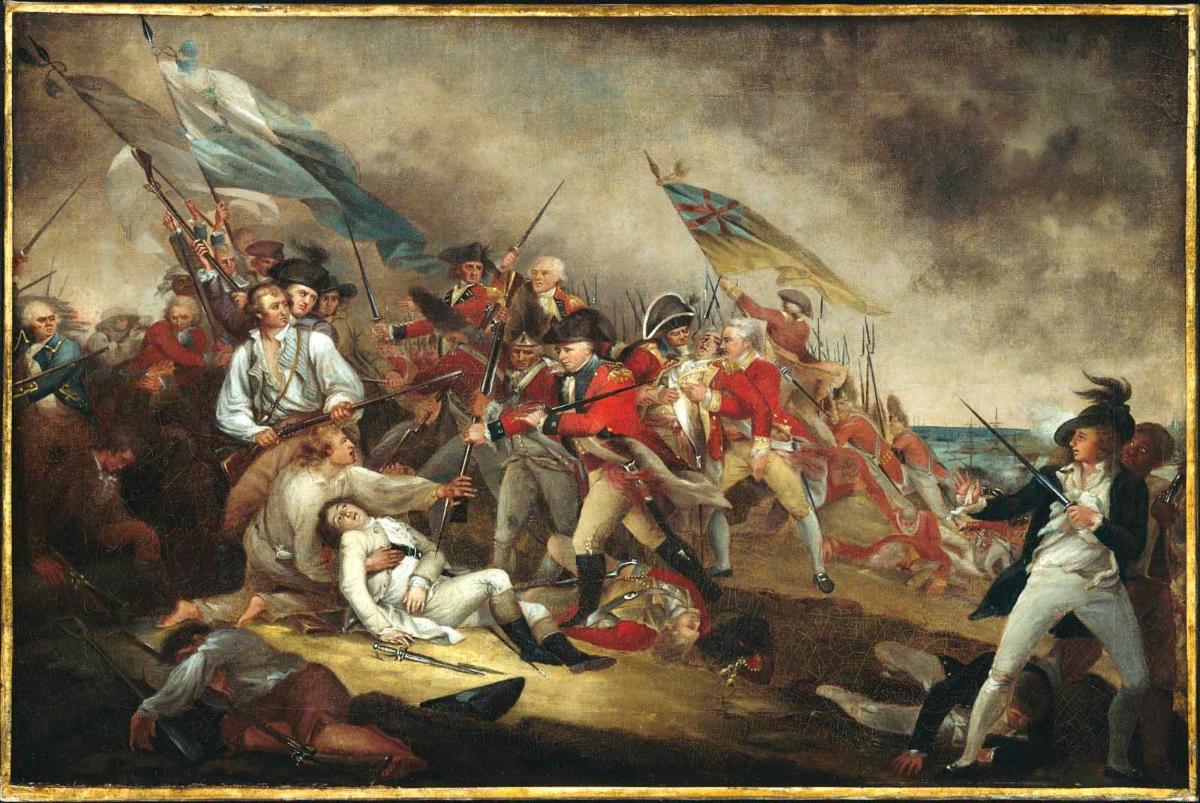
The Death of General Warren at the Battle of Bunker's Hill, 17 June, 1775 by John Trumbull. Courtesy of the Museum of Fine Arts Boston | |
|
Though the Newburyport militia was too far away to have a decisive role at Lexington and Concord, numerous accounts point to our community's role at the Battle of Bunker Hill. In fact, the most famous quote from that engagement was recorded for all time by a Newburyport man (Stephen Swett), quoting an eyewitness - nineteen year old Philip Johnson, a soldier from Swett's hometown.
While [Johnson] was at the rail fence, and just before the battle commenced, he saw Gen. [Israel] Putnam on horseback very near him, and distinctly heard him say, 'Men, you know you are all marksmen; you can take a squirrel from the tallest tree; don’t fire till you see the whites of their eyes.’
We look forward to sharing more about this grant, and the projects it will help to support, in the coming months.
| |
|
The Magnetic Mr. Poyen, Part III
by Bethany Groff Dorau, Executive Director
| |
|
Well, friends, we have returned for the third and final edition of the mesmerizing (see what I did there?) tale of Charles Poyen, member of the French refugee family of Poyens who escaped to Newburyport during the French Revolution. In case you missed the previous installations of this series, Part One is here, and Part Two is here.
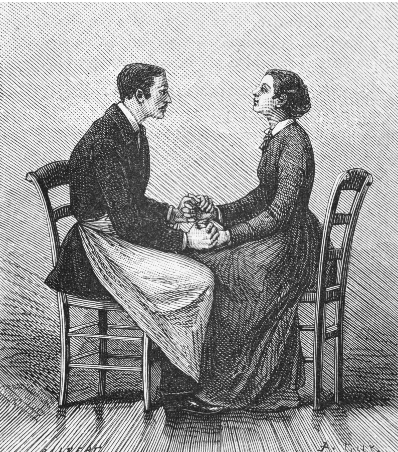
When we last saw our gentleman friend, it was 1836, and Charles Poyen was just embarking on a career as a passionate advocate of Animal Magnetism, the belief that magnetic forces could be channeled and manipulated by trained mesmerists, and this process could cure disease, depression, and anxiety. It could even get you to work on time.
In February 1836, Poyen had gained a measure of success when the Boston Medical and Surgical Journal (BMSJ) published an essay that included parts of his lectures on mesmerism. With interest thus piqued, Poyen managed to publish his translation of a French treatise on the subject. His real bread and butter, however, came from the lecture circuit.
There are no images of Charles Poyen on stage or otherwise, so we must rely on the description of the man given in the BMSJ.
"In person, Dr. Poyen was of a middle height; rather slender, yet well formed. Nearly one half of his face was covered, or rather discolored, by a naevus, of a dark-red hue, which greatly modified the natural expression. The cranial region for firmness was raised quite high enough to indicate obstinacy. He was habitually grave, thoughtful, industrious and studious, but not a close reasoner, nor by any means an original or profound thinker. Whatever was marvellous or extraordinary engaged his earnest consideration, particularly if it could be dragged into the service of the dearest of all interests—animal magnetism."
| |
|
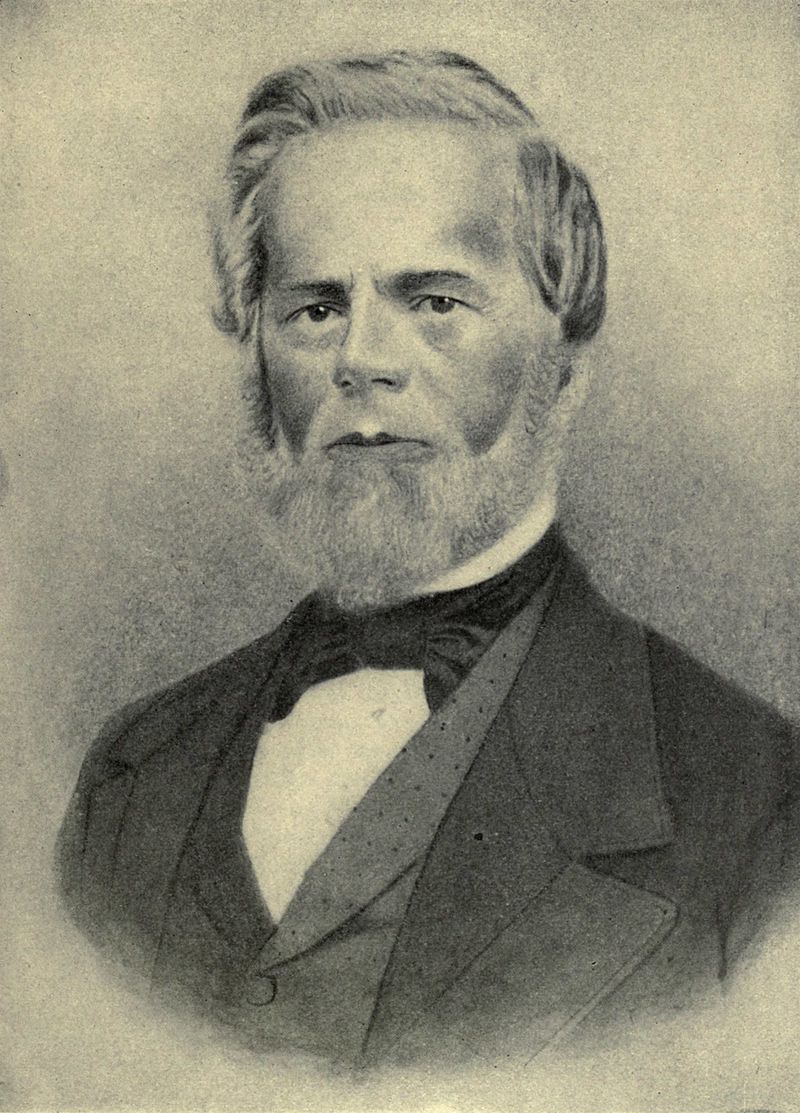
Phineas Parkhurst Quimby (1802-1866), famed spiritual healer, who was an early supporter of Charles Poyen.
Poyen went to Portland, Maine to see his cousin Abigail (Poyen) Whitter, who had married John Greenleaf Whitter's brother Matthew. While he was there, he gave some lectures which proved modestly popular. He also gained a few ardent fans, one of whom, Phineas P. Quimby, went on to famously mesmerize Christian Science founder Mary Baker Eddy.
As 1836 wore on, however, the lecture circuit was proving to be a bit of a slog. Worse yet, Poyen's book was hardly flying off the shelves. He needed money, and sent home to his family's sugar plantation in Guadeloupe for an infusion of cash. As author Emily Ogden noted, "had it not been for the proceeds of slavery, American mesmerism might never have gotten off the ground."
Thus financially fortified, Poyen headed off to the mill city of Pawtucket, Rhode Island, where his lectures could command a whopping 75 cents a head. This was several days wages for a (generally female) textile factory worker, so attended primarily by the (male) management of the mills. Women were a cheaper workforce than men, and the use of power looms meant that the labor, though dangerous and tedious, was not hard labor. Women were also considered more tractable and easier to manage. Still, productivity at the mills declined when their workers, who put in six 12 to 14-hour days a week, suffered from exhaustion, depression, and physical illness.
Poyen understood his audience, and his lectures began to focus on the benefits of animal magnetism for worker productivity. He also realized that his enthusiastic speeches needed a little more sparkle. He needed a dramatic demonstration, and for this he needed a partner.
Meanwhile, power loom operator Cynthia Ann Gleason was having stomach pains and trouble sleeping. She slept too much, too little or too late, and when she woke up, she felt groggy and listless. Though we may ascribe this to her grueling schedule, Niles Manchester, the part-owner of the factory in which she worked and also a factory physician, thought that Gleason might be "cured" through magnetism.
|  | |
|
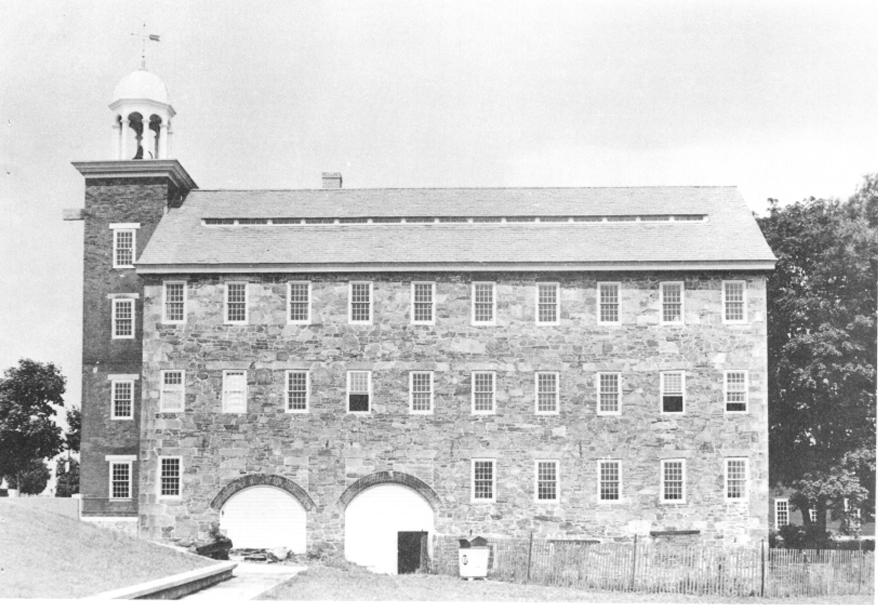
The Wilkinson Mill in Pawtucket, Rhode Island, built in 1810, would have been a familiar sight to factory worker Cynthia Ann Gleason. Courtesy of the Library of Congress.
Poyen and Gleason must have sensed an opportunity in their pairing. Poyen met with her, under the watchful eye of factory management, for over a week before their meetings culminated with Poyen placing Gleason into a trance. He “mentally requested the somnambulist (sleepwalker) to go to bed… and told her mentally to sleep until 8 o’clock exactly." And in the presence of senior management, Cynthia Gleeson managed to get her first full night sleep in years, awakening refreshed and ready for her 14-hour shift at 8 a.m. sharp.
Poyen remained in Rhode Island for nearly two months, and when he left to continue his lecture tour, he took Cynthia Gleason with him. They perfected their stage show, with Poyen putting Gleason into a trance and then demonstrating his power over her by having her identify objects held up behind her head, remain asleep despite loud noises or bright lights, and, in one notable case, pass out suddenly at a party while he magnetized her from another room in the house. Bells were rung next to her head, ammonia passed under her nose, pistols shot near her, but Gleason remained entranced. The pair became an overnight sensation and spent 1837 touring around New England. Poyen also published the scintillating Progress of Animal Magnetism in New England: Being a Collection of Experiments, Reports and Certificates, from the Most Respectable Sources. Preceded by a Dissertation on the Proofs of Animal Magnetism. In this book he responded to the criticism that if he really had such magnetic powers, they would work on anyone, not just the talented Miss Gleason. He was not at the height of his powers, Poyen explained, what with the tour and all, and because Gleason was an "experienced somnambulist", she required less of his "magnetic fluid" to get in the zone.
The Newburyport Herald took notice of the pair early in 1838, and was unimpressed. Under the headline "How to Wake a Somnambulist", the paper related a story from a demonstration in Waltham where someone had shouted "Fire", and Miss Gleason, "having no notion of being burned to a crisp", jumped out of her seat and ran.
| |
|
In December, the Newburyport paper feigned sympathy as it reported that Gleason was "dreadfully frightened" when some young men shot a pistol near her head as she "pretended to be in a profound magnetic sleep". To make matters worse, in the ensuing melee, Gleason was kidnapped by a member of the audience, who "succeeded in running away with the fair imposter" and hiding her for two days.
The story of Gleason's disappearance spread across the country - it was reported from New Orleans to Bangor, Maine. In the end, despite his fervent, and perhaps genuine belief in the healing power of magnetism, it was all too much for the delicate sensibilities of our friend Charles Poyen. In the summer of 1839, he packed up and returned to France.
And then a curious thing happened. Other practitioners of animal magnetism took up the mantle and Charles Poyen's book sales picked up. As his fame grew and he contemplated a return to America, Charles Poyen died suddenly in Bordeaux in 1843, just 36 years old.
| |
|
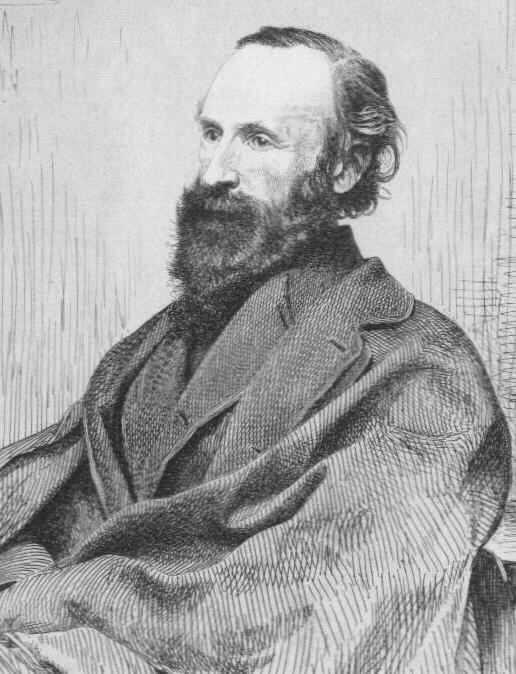
Charles Poyen's cousin by marriage, writer and journalist Matthew Franklin Whittier (1812-1883). Private collection.
Animal magnetism obsessed the nation in the 1840's and beyond, attracting the attention (and derision) of Ralph Waldo Emerson and Nathaniel Hawthorne, and even making its way into Moby Dick in 1851 as Captain Ahab wields hypnotic power through his "magnetic life". It even became a trope in pornographic literature of the time, with writers describing debauches with mesmerized women.
By the 1860's, animal magnetism had been eclipsed almost entirely by spiritualism, which offered a grieving nation the ability to communicate with the dead. Still, here in 2024, amazon.com will happily sell me a magnetic fork with which to heal myself and my loved ones, and the National Institutes of Health includes magnetic therapy on its list of alternative healthcare options.
Much as I will miss our adventures, I will pull the curtain on Charles Poyen, for the moment anyway, with the kind words spoken of him by his cousin-in-law, Matthew Whittier, in the Portland (Maine) Transcript.
Doctor Poyen...will be remembered as the first propagator of the now popular science of Animal Magnetism in the United States. (He) seemed to see with prophetic vision through the clouds of prejudice the almost universal favor with which that theory is now received. Doctor P. was...an urbane, upright gentleman."
| |
Something Is Always Cooking (or Mixing) ... | |
|
Image courtesy of Bob Watts and Barbara Gregory.
Violette Punch
Note from the bartender: Punch, like soup, is very forgiving. You can vary the color, strength, and sweetness of this punch, so start with less sugar, rum, and Creme de Violette, and add to taste. The key to this punch is simplicity. The violet flavor is delicate and easily overwhelmed, but as a floral note in this late summer drink, it is just perfection. This punch was created as a last nod to summer, and served at the museum's annual meeting on Wednesday, September 11.
Ingredients:
- 750 oz bottle Privateer New England White Rum
- 2 cups Creme de Violette liquor
- 14 oz fresh lemon juice
- 1 liter Polar Bitter Lemon soda
- 2-4 liters lemon seltzer
- Sugar to taste
Directions
- Make an ice ring by floating lemon wheels and blueberries in a Bundt pan and freezing.
- Mix punch ingredients together
- Pour into punch bowl
- Adjust all ingredients for taste and color
| |
|
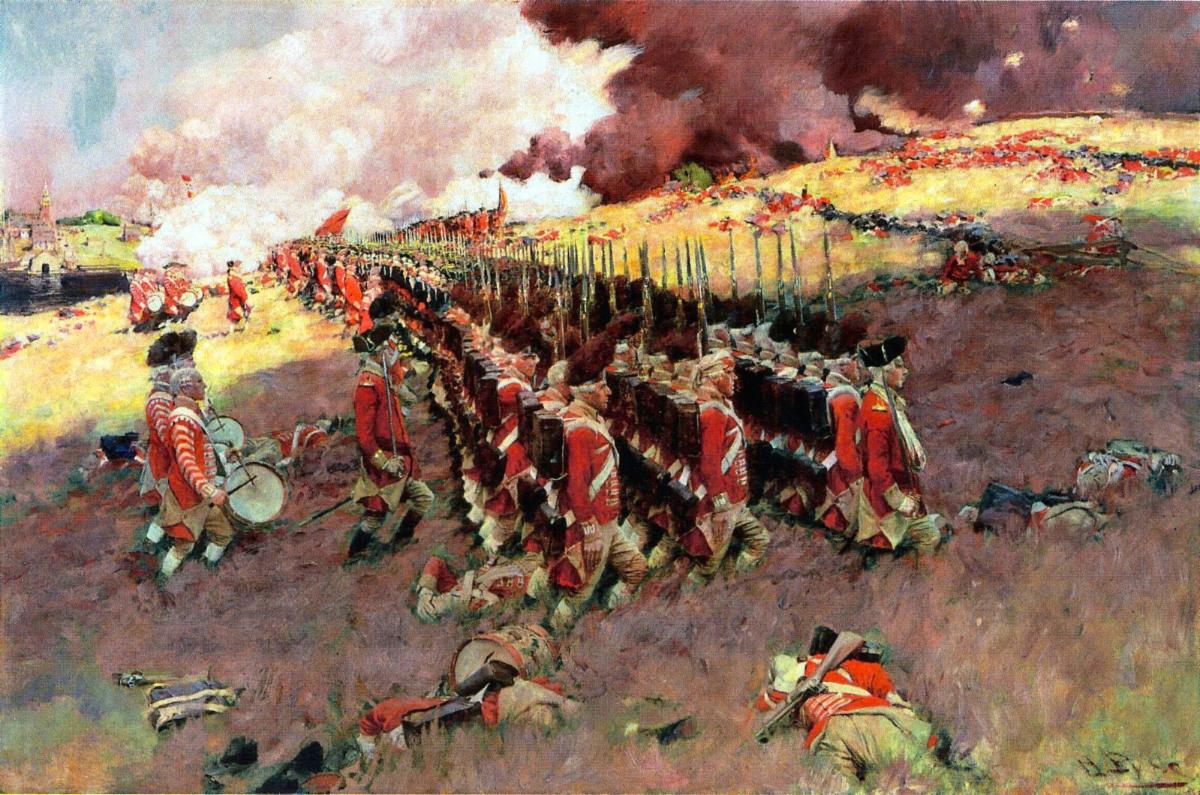
The Battle of Bunker Hill by Howard Pyle, 1897. As published in Scribner Magazine, February 1898.
Click the image to do the puzzle
| | |
Museum e-Newsletter made possible through the
generosity of our sponsors:
| |
| | | |