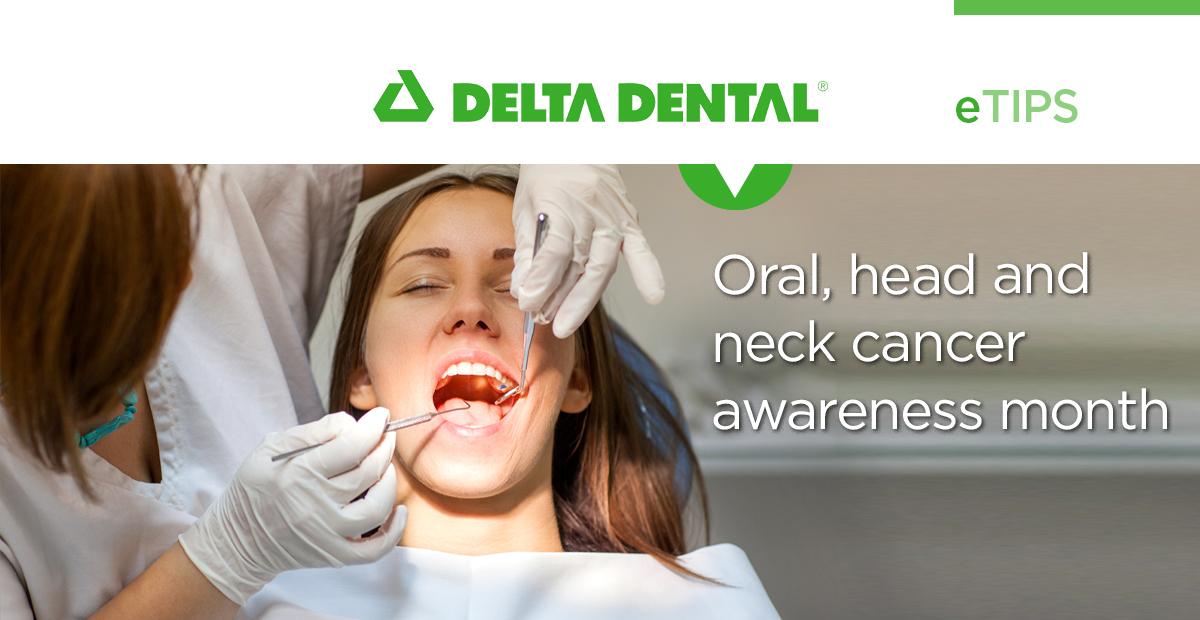
According to the Oral Cancer Foundation, close to 54,000 Americans will be diagnosed with oral or oropharyngeal cancer this year. It will cause over 9,750 deaths, killing roughly 1 person per hour, 24 hours per day. Poor oral health is linked to the development of oral cancer, but you can help prevent oral cancer with proper preventive care.
Research shows that people who visit the dentist at least once a year do not develop oral cancer at the same frequency as those who skip their dentist visits. One study found that individuals who "went to the dentist less than once a year had nearly twice the risk of developing non-HPV oral cancer than those who went once a year or more." Your dentist will also check for signs of oral cancer during these routine visits.
What are oral, head and neck cancers?
Cancers in "the moist, mucosal surfaces inside the head and neck (for example, inside the mouth, the nose, and the throat)" include the saliva glands, pharynx, larynx, and more. Oral Cancer can affect your throat, lips, mouth, tongue, cheeks and more.
What does oral cancer look like?
Let your dentist know if you experience any of the following symptoms:
- Areas in your mouth that bleed frequently
- Swelling that isn't normal or has no discernible cause
- Sores or white or red patches on the lips or mouth that aren't healing
- Difficulty or pain when swallowing
- Lumps in the mouth, head or neck
- Loose teeth
- Mouth or ear pain
- Unexplained or sudden weight loss
- A change in the way your teeth fit together when you close your mouth
- A family history of cancer
Risk factors
Alcohol and tobacco are two of the leading causes of oral, head, and neck cancers, accounting for nearly 75 percent. Researchers are now finding that poor dental health practices are also a risk factor for developing oral cancer. The American Association of Cancer Research found that poor oral health practices change the bacteria in the mouth. The presence of harmful bacteria promotes inflammation, and this constant irritation can lead to non-HPV oral cancer.
Treatments
Preventive measures
Start by taking care of yourself. Maintain a healthy diet and a regular oral health routine, remember to brush and floss, limit alcohol intake, avoid tobacco products, and visit the dentist regularly. Take note of any strange symptoms or issues you're having and discuss them with your dentist or doctor as soon as possible.
|
|