|
Monthly News & Opportunities | |
November 11, 2025 | V2 #11 | | |
EAST Announces Registry-Based Randomized Controlled Trial Award Recipient Dr. Christopher Guidry | |
Christopher Guidry, MD, FACS, Director of Clinical Research in the Department of Surgery at the University of Kansas Medical Center, is the very first recipient of the Eastern Association for the Surgery of Trauma RRCT Trial Award.
Dr. Guidry will employ TQIP data to conduct a pragmatic multi-center registry-based cluster-randomized crossover superiority trial. Titled Study of Trauma Outcomes with Prophylaxis for Ventilator-Associated Pneumonia (STOP-VAP), the proposal includes two aims:
- Confirm the findings of the PROPHY-VAP trial and determine the efficacy of a single dose of prophylactic ceftriaxone given at reducing VAP-associated mortality in a general population of trauma patients who are intubated prior to or upon arrival
- Determine the impact of other commonly prescribed prophylactic antibiotics on both VAP rates and inpatient mortality in a general population of trauma patients who are intubated prior to or upon arrival.
EAST's new funding mechanism is designed to support an RRCT that addresses a research gap identified in CNTR's National Trauma Research Action Plan.
|
|
New Resource for Brain Injury Patients & Caregivers, Thanks to Patients & Caregivers
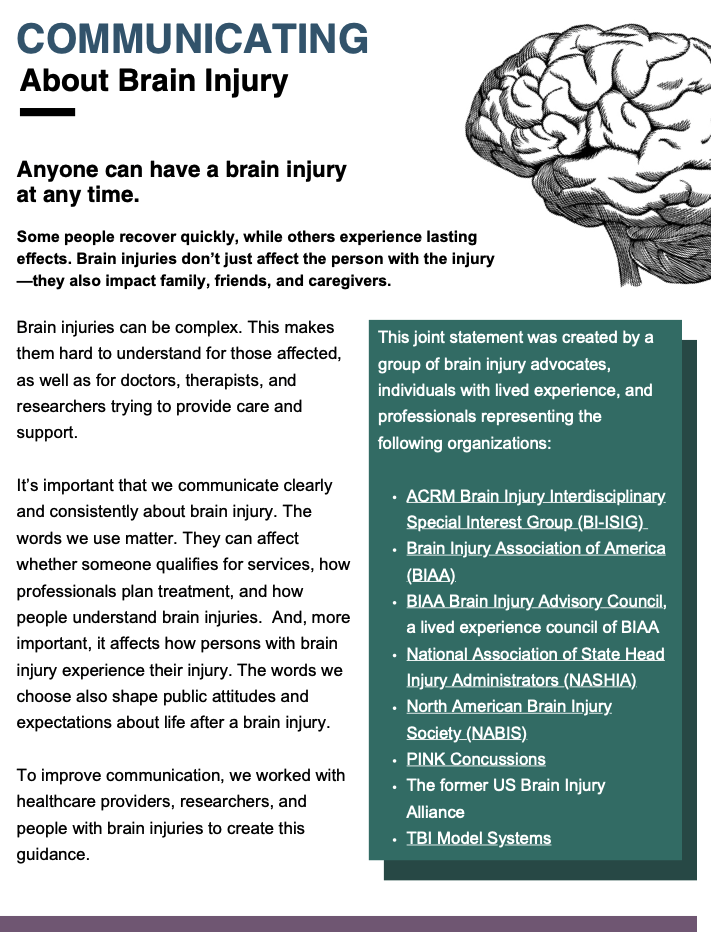
When Kelly Lang joined a national collaborative to develop "Communicating About Brain Injury," she brought more than two decades of lived experience to the table.
The initiative—created by the American Congress of Rehabilitative Medicine (ACRM), the Brain Injury Association of America (BIAA), the North American Brain Injury Society (NABIS), and other partners—aims to establish consistent, inclusive, and patient-centered language for discussing brain injury across healthcare, research, and community settings.
Lang, who co-leads the Survivor Advisory Council for the BIAA and is also a member of CNTR's I-REP Patient and Caregiver Panel, participated in shaping the document to ensure that it could be understood and applied by a wide audience. “We wanted a resource written in plain language that anyone could use—providers, survivors, family members, and friends,” she explains.
| | New Resources Provide Insight into the Value of the Research Enterprise | |
Amidst current funding recisions and proposed steep federal funding cuts for research, it’s never been more important to communicate to new audiences about the value of science and illuminate how improvements to our health care system are realized.
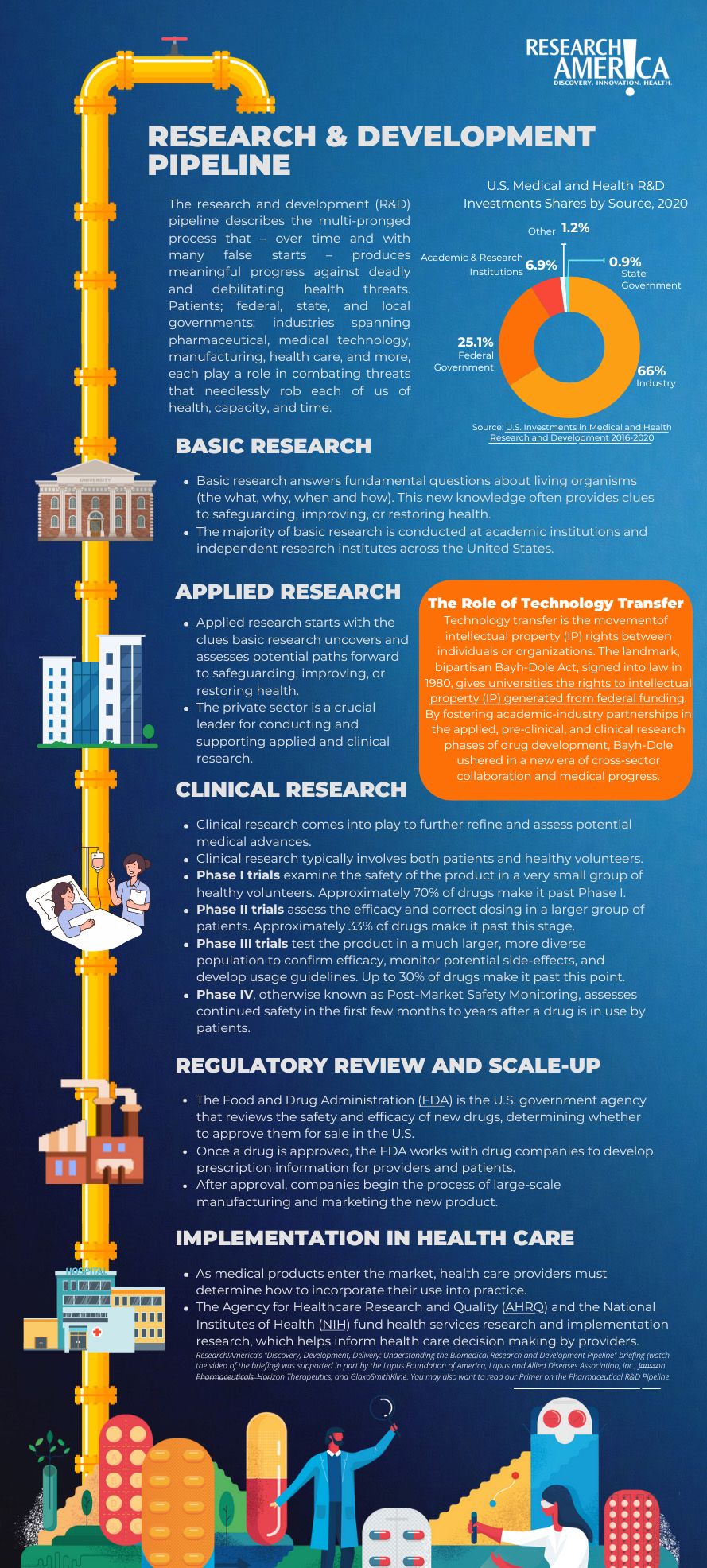
A new infographic developed by the Research!America coalition (of which CNTR is a member) illustrates the collaborative nature of research through all its stages. This can be a great tool for educating public audiences and policy makers, and is available for download at the link below.
Even better, a promising new AI tool that shows how science funding shapes society will soon be publicly available. Researchers in the U.S. and China developed the AI visualization system, called Funding the Frontier, which provides a multi-faceted look at the role science plays in society.
Rather than focusing solely on papers and citations, the platform links millions of research grants to outcomes like patents, public policy developments, clinical trials, and even media coverage.
Learn more about this tool and register for the waiting list to gain access when it becomes publicly available at the link below.
| | | CNTR Investigator Resources | | | | | Learn More About NTRR Modules | Take time to learn more about the National Trauma Research Repository. Even if you missed the second webinar in our series, you can still gain familiarity with the functions of each module in the system. The webinar is now available on the NTRR page of the CNTR website. Go there to learn watch all our webinars. | | |
CNTR Leaders and Patient Partners Participate in 2025 PCORI Meeting
Researchers, patients, and caregivers—including several affiliated with CNTR—convened last month at the Patient-Centered Outcomes Research Institute (PCORI) Annual Meeting to network and share results of the latest PCORI-funded research.
Dr. Elliott Haut and CNTR Executive Director, Dr. Michelle Price, presented a poster on the PCORI-funded VTE Prophylaxis Education Implementation project. That project implemented a nurse education module at nine trauma centers and examined the impact on missed and refused doses and ultimately on VTE outcomes in trauma patients.
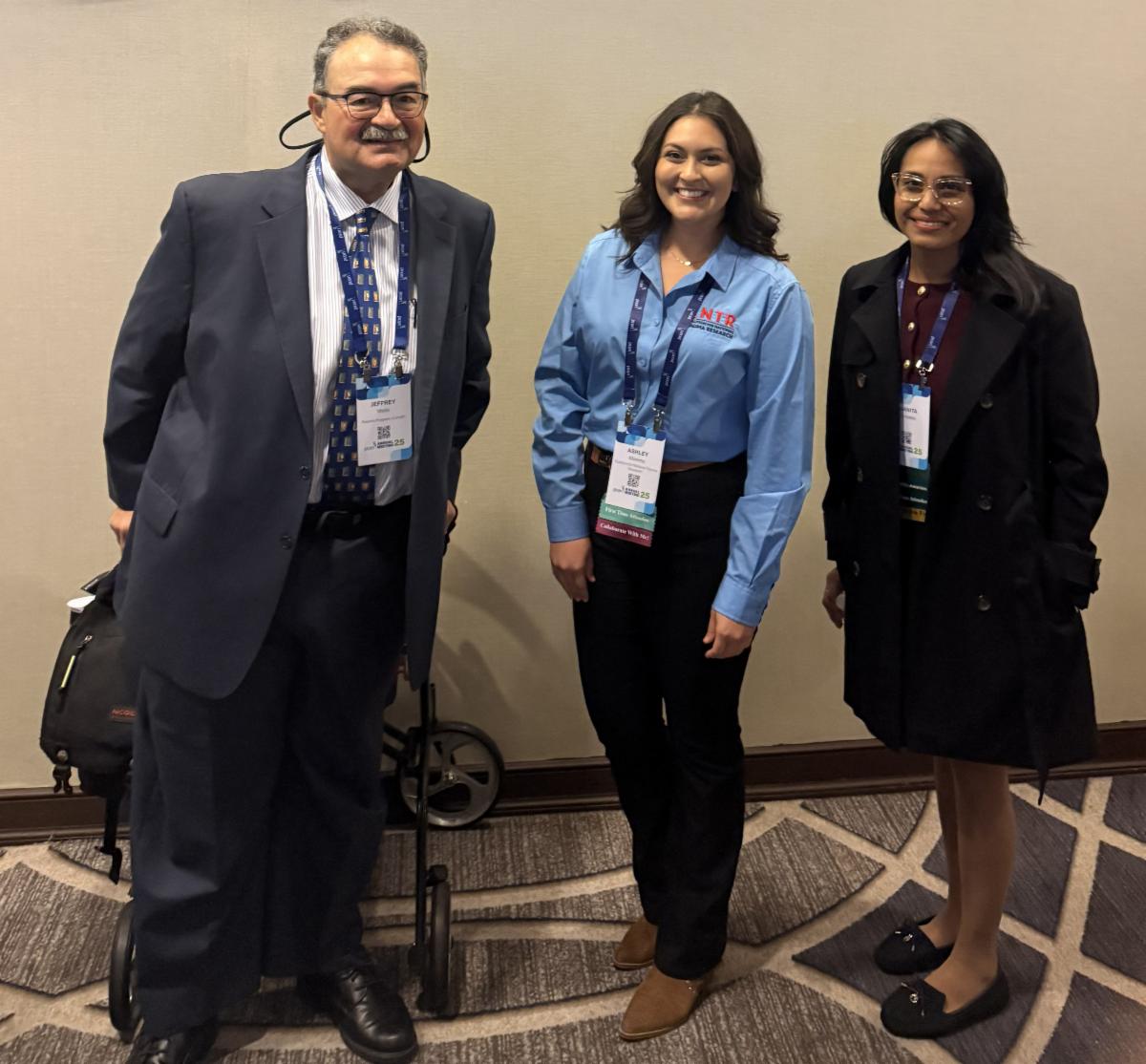
Two of CNTR’s Injury Research Engagement Panel (I-REP) members, Jeffrey Wells and Juanita Gonzalez, also attended the meeting (pictured in the phone on the left and right, respectively, with CNTR research associate Ashley Moreno).
Read more
| | | |
Third DFI Conference to be held February 25-26, 2026 in Chicago
The three-year Design for Implementation: The Future of Trauma Research & Clinical Guidance conference series wraps up in early 2026 with a focus on refining the structure of clinical practice guidance, enhancing its accessibility, and ensuring broad engagement to promote lasting improvements in trauma care, with the patient remaining at the heart of the solution.
The meeting will explore the trauma quality improvement program as a means of assessing CPG adoption and application. While in-person attendance is limited, all interested trauma community members are invited to attend and participate remotely.
| | | |
Several Manuscripts from Second DFI Conference now available in TSACO
Stemming from the 2025 Design for Implementation Conference, three manuscripts have been published in Trauma Surgery and Acute Care Open. Get an overview of the conference and learn about the Purpose-to-Practice approach to reaching consensus. Several other manuscripts are forthcoming.
Editorial
Current opinion
Conference proceedings for the 2025 Design for Implementation: The Future of Trauma Research and Clinical Guidance Conference Series
Original research
Application of evidence into practice in trauma: the Purpose-to-Practice (P2P) approach to consensus generation
| |  | |
CNTR Exhibits with ASA Committee on Trauma & Emergency Preparedness
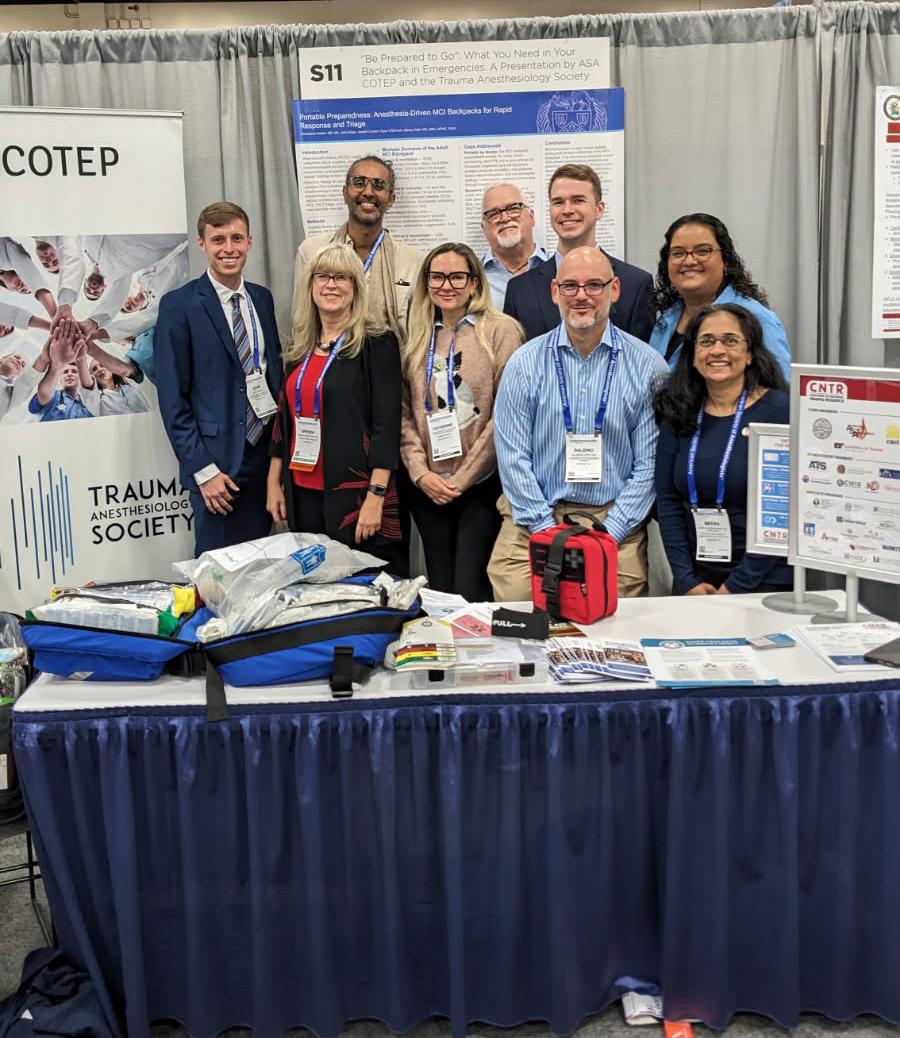
At the American Society of Anesthesiologists annual meeting in San Antonio last month, CNTR shared ASA's COTEP table to introduce members to CNTR resources and services for investigators. CNTR Director of Applied Research, Lizette Villarreal, said conversations have begun with anesthesiology investigators who have an interest in working with CNTR.
As a first step, researchers are planning to determine what research gaps related to anesthesiology surfaced in the National Trauma Research Action Plan and work with CNTR to develop a study.
A Stakeholder member of CNTR, ASA representatives serve on several CNTR bodies, including the Stakeholder Advisory Council, Scientific Advisory,, Evidence to Practice, SAFER-Trauma, and NTRR CDE Steering Committees.
| | | | |
CNTR I-REP Panelists Contribute to Definition of Global Standards for Trauma Outcomes
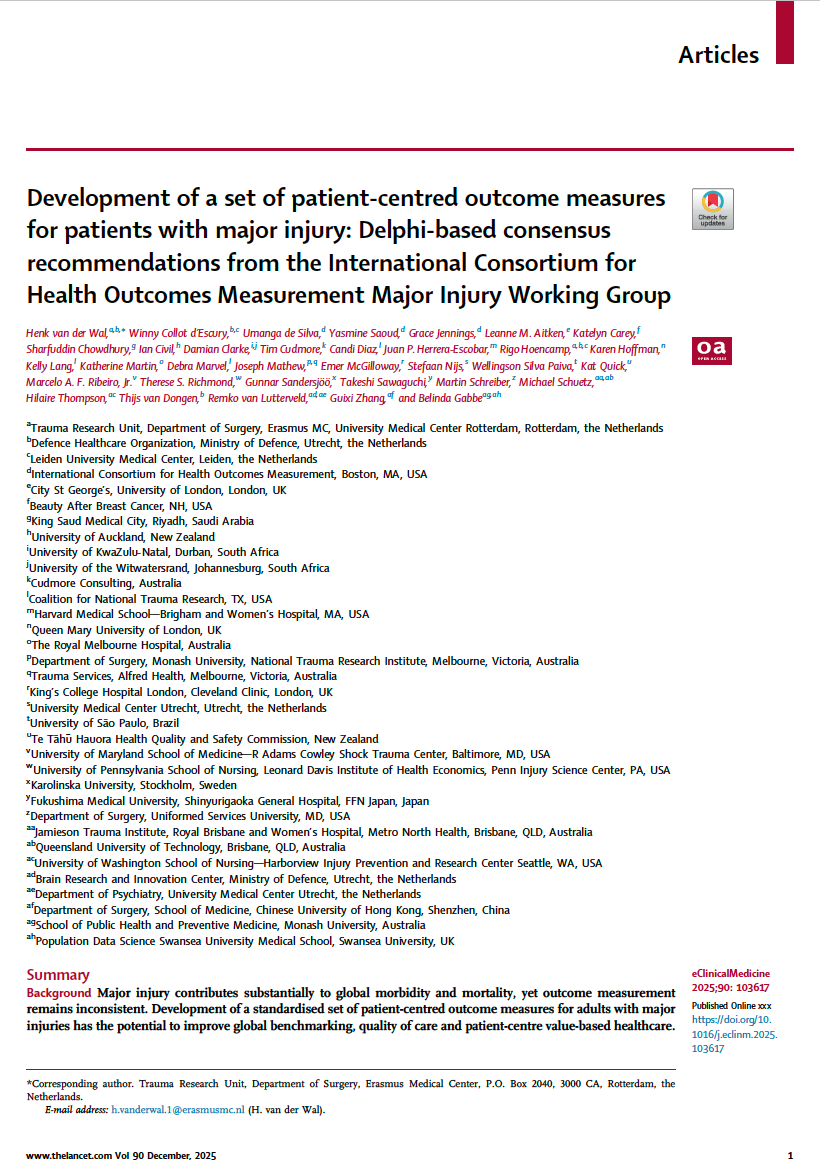
In a landmark international collaboration published in The Lancet’s eClinicalMedicine, researchers have, for the first time, defined a globally standardized set of patient-centered outcome measures for adults with major injury.
This initiative was developed by the International Consortium for Health Outcomes Measurement (ICHOM) Major Injury Working Group and included vital contributions from CNTR and its Injury Research Engagement Panel (I-REP)—notably Kelly Lang, Candi Diaz, and Debra Marvel, whose lived experience as trauma survivors informed every stage of this consensus process.
Read More & Get the Article
| | |
ABA-Verified Burn Centers: Ensuring Optimal Care for Burn Patients
For patients with severe burn injuries, outcomes improve when care is delivered in specialized centers with the right resources, trained staff, and systems in place. The American Burn Association (ABA) Verification Program offers an external review of burn centers, ensuring they meet rigorous national standards for patient care, staffing, facilities, and organizational structure.
Verification is not just a designation; it’s a commitment to quality. Verified centers undergo an in-depth site review every three years by experienced, independent reviewers. The process examines everything from emergency response capability and multidisciplinary team composition to quality improvement programs and patient support services.
For trauma and emergency professionals across the continuum of care, knowing which centers are verified can help guide transfer decisions and ensure patients receive the most appropriate care.
Explore the full list of ABA Verified Burn Centers and learn more about the verification process: HERE
| | | | | | |