July 2024 Newsletter

Please see our website for more information. For Gmail users, to view entire message, click view entire message at the bottom of this email.

ECA Mass Meetings

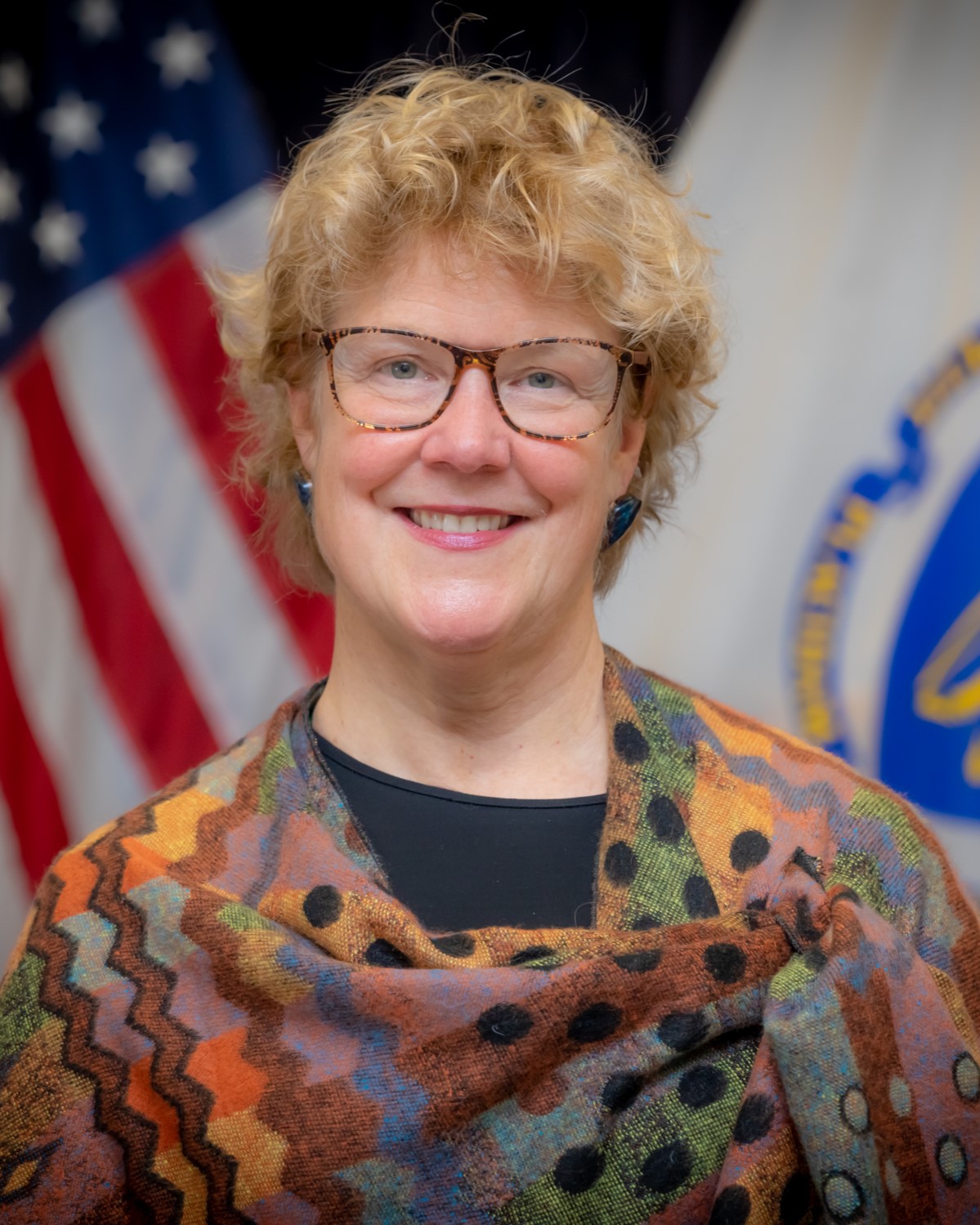
Melissa Hoffer, Massachusetts Climate Chief

MONTHLY CHAPTER MEETING

TUESDAY, JULY 9

Noon - 2 PM On Zoom

Join at 11:45 if you want to socialize.


Zoom link: https://us02web.zoom.us/j/735454252?pwd=QkZMcnA4YVVkcGRDM29PcEN4VnhIUT09

Meeting ID: 735 454 252

Passcode: 223189 (You may have to try more than once)


We will welcome Melissa Hoffer, Massachusetts’ first ever Climate Chief. She joined the Biden Administration as a Day 1 political appointee, serving as the Acting General Counsel and Principal Deputy General Counsel of the Environmental Protection Agency. She led the EPA’s Office of General Counsel through the transition until November 2021, and continued to serve as Principal Deputy General Counsel. Prior to that, she worked in the Massachusetts Attorney General’s Office as Chief of the Environmental Protection Division beginning in 2012 and was named Chief of AG Healey’s newly formed Energy and Environment Bureau in 2015. She became Gov. Healey's CLIMATE CHIEF when the Governor took office.


Hoffer will speak with us about her meetings with other countries' climate leaders, give us an update on the status of state climate legislation, and talk about what's next for us as advocates. Our Legislative Team will have questions for her - and you can ask yours too! 


At 1:00 pm, we'll discuss the current climate bill legislation and advocacy. Then we’ll engage in breakout groups to have a conversation about what’s going well at ECA and ideas for future engagement. 


Our CHOICES and our VOICES make a difference and WE can change what we do AND what happens.


We look forward to seeing you on Zoom!


YES! We do record our meetings and they’re usually posted on our website within a few days here.


Maiyim Baron

DEEP DIALOGUE

MONDAY, JULY 22

4 - 5:30 PM On Zoom


Watch the ECA Mass Events Calendar for Info about this Month's Topic.


Zoom link:  

https://us02web.zoom.us/j/83538742353?pwd=YUU5QU16VVlDMExOMmlPSWVwTG9xUT09


Come be Social in Belmont!

In-Person Summer Social Gathering


While the weather allows, we're getting together in person in a member's beautiful backyard in Belmont. Our goal is to get to know one another better and support each other. What lifestyle changes are you working on in response to climate change, and how can ECA Mass help you with that? Join us to talk about these issues in a relaxed setting with other local members.


When: Tuesday, August 6

Time: Noon - 2 PM

Bring: Your lunch and something to drink + munchies or a dessert to share


Watch for your invitation, being sent to members in that local area. 


And if you'd like to host or plan a gathering in your area, let our Membership Team lead MaiyimBaron@gmail.com know and she'll help you organize that.


Maiyim Baron

Acting on Climate in Acton

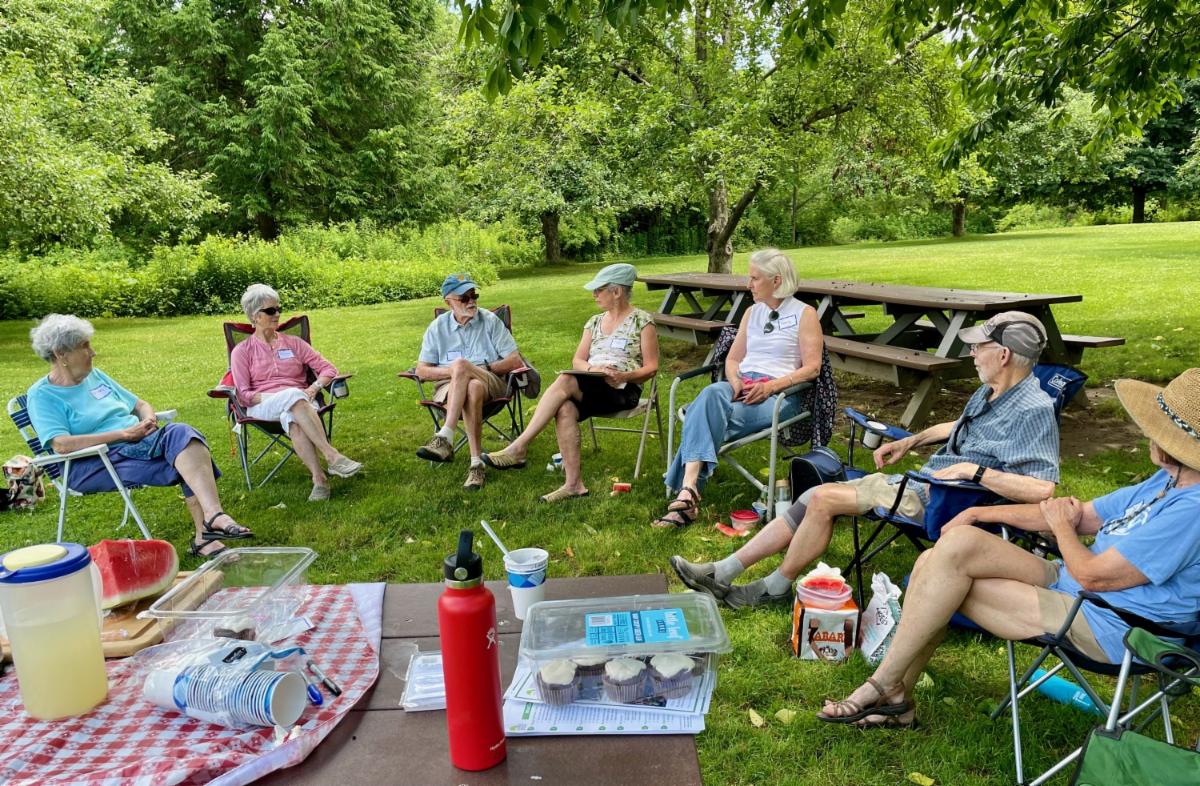
On Thursday June 27, a group of Acton area ECA members gathered at the Acton Arboretum to have lunch, socialize, and discuss what’s going well with ECA and what they wanted to see ECA Mass engage in going forward. Margie and Tony Lee, Sharon Brownfield, Rick Lent, Orion Greene, Nancy Maynes, and Tina Grosowsky enjoyed seeing each other in person as well as the delightful gaze of a small red squirrel. 


Among many great ideas for future action were to address the larger picture of the climate crisis, work on the 2024 election, have ECA Mass provide a connection between the election and the environment by developing some good messaging. They also discussed the challenge of talking about climate change and how to engage others in the solutions to the problem. Everyone expressed interest in meeting again in person in the fall. 


Tina Grosowsky

Statewide Plastic Bag Ban Passes Senate

The Massachusetts Senate has passed a bill that includes a statewide ban on single-use plastic. The Plastics Reduction Act passed Thursday by a vote of 38-2. The bill will prohibit carry-out plastic bags statewide and require stores to charge 10 cents for recycled paper bags. The bill provides a limited exemption from the requirement to collect 10 cents for small local retailers.


The Senate also adopted an amendment from Majority Leader Cynthia Creem that would double the five-cent bottle deposit to 10 cents and expand it from just beer and soda to apply to most beverage containers. Creem said the changes could generate as much as $210 million in new revenue for the state per year, while saving communities over $36 million a year.


The bill will also prevent plastic utensils and straws from automatically being provided, end purchase of single-use plastic bottles by state agencies and create a statewide program for recycling large plastic items.


We will let you know soon when it’s time to write your Representative to urge them to vote in favor of this (and other) important climate measures.


This article is based on comments by WBUR and Sen Brownsberger.


Rick Lent

Sprint to the Finish in the State House

Good News and Uncertainty

The Legislative Team worked in early June to finetune and focus our advocacy, gather intelligence, and connect with allies while waiting for some version of a climate bill to come out. On June 19, a climate bill (S.2838) emerged from Senate Ways and Means. We then jumped to an analysis of the bill and amendments and advocating for several amendments on a gas moratorium, large building decarbonization, cumulative impacts, and other issues while opposing some amendments that would have weakened the provisions on transitioning off gas. The bill passed by a vote of 38 to 2 along with 24 amendments out of 123 that were submitted. Eight of the amendments we supported were passed and all we opposed were rejected (see details here).


Much to Like in Senate Bill

We and many of our allies are pleased with much of what is in the Senate bill. It includes language on clean energy siting and permitting reform that mirrors the administration’s views on reforms, which we support with some reservations on cumulative impact analysis and local control over solar siting. Cumulative impact analysis aims to add up all of the environmental and public health damage from the siting of energy facilities in a community (e.g. air pollution, loss of land) so that the historical burden of the community can be taken into account in siting and permitting decisions.


Phasing Out Gas and Other Provisions

The Senate bill also includes key provisions that will facilitate gas utilities moving whole neighborhoods off gas when costly pipeline replacement may be needed and requiring the utilities to develop plans for decommissioning the gas system while protecting their workers from the adverse impacts of the transition. Amendments calling for a moratorium on gas system expansion did not pass, but the bill includes language that requires utilities to present a strong justification for any new major pipeline development. 


The Senate bill also includes many other provisions aimed at accelerating decarbonization of buildings and transportation (electrifying commuter rail, more EV charging stations) and at recycling (expanded bottle bill), cutting electricity costs for lower income residents, improving drought management and other issues (see here for a full summary). In addition, the Senate passed a plastics bill (S.2833) that focuses on reducing the use of single use plastic, especially shopping bags.


Next Steps

Both Senate bills are now in House Ways and Means awaiting action. While the plastics bill may move on its own, it is expected that the House will link together several elements of other House climate bills (e.g. permitting/siting, EV charging) that were reported out favorably and amend the Senate bill. If that happens as expected the week of July 8, then, once amended and passed by the House it would go to a conference committee where the Senate and House versions would be reconciled. There is not a lot of time for all this to happen, so there remains some concern that we may not get a climate bill this session.


Muni Reforestation Still in Play

On the natural solutions front, the municipal reforestation bills (S.452, H.869) remain in House and Senate Ways and Means and are still in play. Advocates are proposing to postpone funding of the bill while passing the program elements in anticipation of getting some funding from the Environmental Bond Bill next session. This may make the bill more appealing to legislators and get it moving this session.


We Still Have Concerns

Our and our allies’ main concern about upcoming House climate action is that they will strip the gas system reforms from the Senate bill and resist including them in a final bill in the conference committee. Speaker Mariano has hinted that he may be looking for a bill that is more narrowly focused on permitting and siting rather than a broad climate bill like the Senate bill. Our Environmental Justice Allies are also advocating for a cumulative impact provision that more clearly addresses their goals, and we will be supporting their efforts.


Please stay tuned for any Action Alerts over the next couple of weeks!


If you would like to learn more about what the Legislative Team is doing, or offer some of your time and talents to our effort, contact Roger Luckmann (roger.luckmann@umassmed.edu) or Tina Grosowsky (tgrosowsky@gmail.com).


Roger Luckmann

Managing Peak Demand

What is Shave the Peak?   

Did you know that you can sign up for “Shave the Peak” alerts from Green Energy Consumers Alliance (GECA)? How do you help everyone by “Shaving the Peak?”


Our power in New England is delivered through ISO New England. ISO is the Independent System Operator that provides power to 7.5 million homes and businesses across six states. At times when peak energy use is expected, GECA notifies people by text or email alerts that the demand for electricity is anticipated to exceed 22,000MW. Shave the Peak notices are issued recommending that people reduce power use from 4-8 pm by not running dishwashers, washers, or clothes dryers and by not charging electric vehicles.   


ISO New England is required to maintain power at specified reserve levels. When many customers run air conditioning during the hottest days of summer, the grid operator may need to purchase additional power to maintain enough reserves. When that happens, ISO New England is forced to purchase some of the dirtiest power (from burning oil) and the price of that power is much higher. 


On Tuesday, June 19, ISO New England declared a level 1 emergency alert which meant that more power supplies were needed, but blackouts were not imminent. Backup power produced by burning oil was brought online and that backup power accounted for 4% of the power supply at 6:37 pm. 


Why is it important to help “Shave the Peak?”

  1. When ISO New England is forced to purchase power produced from burning oil, we are releasing higher levels of greenhouse gases into the atmosphere. 
  2. Power purchased during peak hours is the most expensive power that ISO New England uses, and our utility bills include the cost of peak power. Our utilities factor in those costs when setting costs for electricity. Just 1% of the hours in the year account for 8% of the electricity costs, and 10% of the hours account for 40% of costs! 


What you can do to help

You can reduce your energy use by ensuring that your house is well-insulated. Actions you can take during times of high power use include installing window coverings to prevent heat gain into your house; limiting the use of your washer, dryer, and dishwasher; unplugging unused electronics; turning off unnecessary lights; cleaning air intake vents; and replacing the filters on your air conditioner; and by not charging your electric vehicle when Shave the Peak alerts are sent out.


Sign up here for alerts from GECA and help all of us save on our electricity rates, as well as reduce greenhouse gas emissions.


Sherry Morgan

Want to get educated on climate?

Have you heard of the “Can We Stop Climate Change?” course? It’s a five-part program that got its start four years ago in ECA’s Education Committee. The course has evolved through revisions and updates. To date, it has been given over 50 times to more than 600 people. In the past year, we have worked largely through OLLI (Osher Lifelong Learning Institute) programs in several areas of the country.


The course is for people interested in learning more about climate change and climate justice; becoming more effective in communicating with others; and taking action to mitigate the impacts of climate change on ourselves and our planet. It covers the basic science, impacts, and equity issues behind climate change; introduces participants to the EnROADS simulator, a powerful simulation tool for determining the most impactful actions; provides details on a wide range of solutions including remarkable progress in renewable energy; and opens discussion on how we can effectively communicate, and join others in acting on climate change.


This course of five 90-minute sessions covers the following topics:


  1. The science and impacts associated with climate change
  2. Climate modeling that explores the effectiveness of various solutions
  3. Advances in renewable energy, primarily wind and solar
  4. New ways of thinking about our relationship with each other and with the planet
  5. Understanding public attitudes, how to start conversations, becoming more active, and creating a personal action plan


Classes are limited in size to a maximum of 20 to allow for student participation. Supplemental readings and videos are recommended for each meeting, along with outreach opportunities that have been well received.


We invite you to participate and/or invite others to this course. Information and sign ups can be found at canwestopcc.org.


Margie Lee

Join Our Google Group!

We send announcements of our meetings and Action Alerts to eca-mass@googlegroups.com, which includes all those on our active list. 


Please contact Dawn Edell if you want to confirm you are on our active list.


Maiyim Baron 

Did you miss a past meeting?

Did you miss an ECA Mass chapter meeting or deep dialogue? Or do you want to share one with friends and family? 

We have you covered! Videos of past chapter meetings are here and videos of past deep dialogues are here.
WHAT ARE YOU READING?
Would you like to review a book for our newsletter?
Contact the newsletter editor Debora Hoffman.

Find us on Social Media

Follow us on Facebook!

Join over 1300 ECA Mass members who have been following us on Facebook. Our Facebook page features listings of upcoming events (in-person and Zoom), news about climate change solutions, carbon saving ideas, and links to other organizations’ events, and more.


Visit the ECA Mass Facebook page and click the like button!

This Newsletter is Published for Members and Friends of

Elders Climate Action - Massachusetts Chapter

ECA Massachusetts is a chapter of the national Elders Climate Action. We are a movement of elders committed to making our voices heard to change our nation's policies while there is still time to avoid catastrophic changes in the Earth's climate. Visit the ECA Massachusetts website, event calendar, and Facebook page to learn more about our chapter's activities and climate news. JOIN ECA MASSACHUSETTS AND STAY CONNECTED! Subscribe to our monthly newsletter, and for more active participation, sign up to receive Action Alerts and meeting announcements. Fill out our subscription form.


newsletter@ecamass.org

https://ecamass.org

Facebook