|
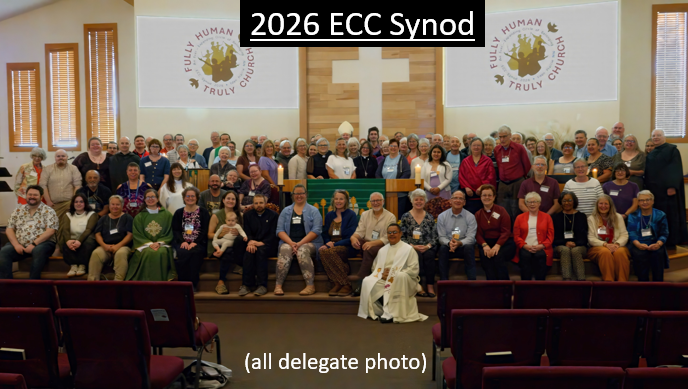
2026 ECC Nationwide Synod in Minneapolis
Instead of a Social Justice reflection, I’d like to recap what happened at the 2026 ECC National Synod in Minneapolis. 110 delegates from ECC parishes across the country gathered from Friday Oct 9 to Monday Oct 12. Mary of Magdala’s delegates included our pastors, Carol and Mike Persons, David Cloyd and myself. Cindy Cloyd attended as an observer. In the coming weeks, the other delegates will be invited to reflect on Synod experiences that excited or inspired them most. But today, I’m giving context, a quick overview of the 4 days.
Given Metro Surge which hit Minneapolis back in January, the Synod had strong Social Justice overtones.
There were four amazing keynote speakers. Kevin Beckford (who preached a homily to MoM over Zoom for our Juneteenth Mass) did a workshop on racism. The other keynote speakers were Minister J’anae Bates Imari: Exec director of ISAIAH MN, Rev Blaire Pogue: Canon for Episcopal Church in MN, and Rev Tyler Sit: Founding minister of New City Church, all activists against Metro Surge.
There were morning and evening prayer services led by members of various ECC groups such as the Franciscan and Benedictine Orders, the deacons, the chaplains, and the Truth and Reconciliation Commission. Helen Majzler from Light of Christ (LOC) led a bell ringing, paralleling the ceremony at LOC that has occurred on the 11th of every month for the last 6 years to raise awareness about climate change.
There were many meals, some at the hotel where we stayed and some on our own. There were also other opportunities to socialize, meet and interact with ECC folks from around the country, expanding our sense of connection to the larger ECC church.
We had an all-Communion Mass at Charis, the ECC community that took the lead in hosting the Synod. Rev Jane will talk more about the Mass (during our Mass).
About half the delegates went on a pilgrimage to the “Say Their Names” memorial cemetery, a neighborhood initiative honoring over 100 Black Americans killed by systemic violence or police brutality. The exhibit includes high-profile figures like Emmett Till and Breonna Taylor as well as many lesser known names. I found it particularly shocking to see how many victims were elderly, aged over 70 or children under 16. We also prayed and sang at sites where George Floyd, Renee Good and Alex Pretti died at the hands of police or ICE agents.
Meanwhile back at the hotel, other delegates put together classroom supply boxes for a local school that focuses on reclaiming Dakota and Ojibwe indigenous traditions in its academic programs.
One function of the Synod is to make legislative changes to our ECC governing documents. We passed four pieces of legislation:
• An amendment clarifying that the ECC Constitution is the primary document of the Communion and that any other documents we create, like regional or local statutes, constitutions, or bylaws, must agree with the national Constitution.
• We passed amendments to ECC Statutes describing the roles of ECC deacons and religious orders, as well as a new Statute describing the role of the bishop when parishes call a new pastor.
Five other legislative proposals were not voted because they needed more refinement. The Synod was not officially closed so work can continue on these proposals until they are voted sometime in 2027.
We also passed an ECC budget for the next 2 years until we meet again in 2028. We elected leaders for the HOL and HOP and affirmed Bishop Pablo as the presiding bishop of the ECC for another 4-year term.
I hope this gives you a sense of the work of the national ECC Synod, an opportunity every 2 years for creating and strengthening relationships, for prayer, and engaging the laity and clergy to discern together the direction of the Ecumenical Catholic Communion.
|