|
Coaching
Going Outside Extends Curriculum for Infants and Toddlers
Spending time outdoors every day is a rich and important part of the program's chosen research-based curriculum for infants and toddlers. The following are examples of knowledge and skills that young children develop through the curriculum's outdoor experiences.
Social and Emotional Development
Infants and toddlers learn to play together when they take turns using pails and shovels, share a ride in a wagon, and chase each other. "Deep bonds can form between children or a child and adult when they share experiences with nature.
Gross Motor, Fine Motor, and Perceptual Development
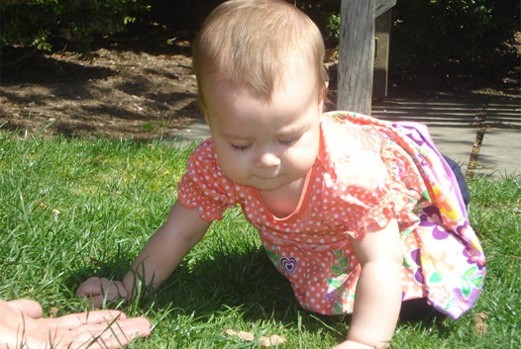
Because outdoor play spaces are often more varied and less structured than indoor spaces,3 infants and toddlers have more freedom of movement to develop their gross motor skills in novel ways. This may include crawling or rolling on grassy hills, standing and balancing on bumpy or unlevel surfaces, and jumping over puddles and sidewalk cracks.
Cognition
Contact with the outdoors helps infants and toddlers learn concepts such as cause and effect and problem-solving. As they experience and practice dressing and undressing, infants and toddlers learn which clothes to wear for different types of weather.6 They learn that the sun dries puddles and melts snow and that wind makes things move.
Language and Literacy
Infants and toddlers can use their "outdoor" voices without disturbing others, as well as their "indoor" ones.7 As adults talk or sign with them about the outdoor environment, infants and toddlers learn new words; as they begin to talk, they use those words to identify interesting things they see and ask questions.
3Burdett and Whitaker, "Resurrecting Free Play," 48.6Trister Dodge et al., The Creative Curriculum, 180.
|